
Avainsana: university of applied sciences
Sustainability in Fashion and Clothing Education: More Business Understanding is Needed

Sustainable fashion isn't just about using eco-friendly materials or reducing waste; it's also about financial stewardship. When discussing various sustainability issues of the fashion industry, the financial concerns are easier neglected than environmental and social ones. This is understandable, since climate change, decrease in biodiversity and inhumane working conditions (just to name a few) are real and we are seeing evidence of those through different mediums every day. Sustainable fashion isn't just about using eco-friendly materials or reducing waste; it's also about financial stewardship. In the last couple of years, the Finnish media has reported on several textile and fashion businesses that are struggling financially or have filed for bankruptcy. That touches also upon many companies who have invested in responsible practices and alternative business models. By adopting practices that are economically, environmentally, and socially responsible, fashion businesses can attain long-term success. In this teachers’ series blog post on sustainability in education, we explore the question: How can we, as teachers in a university of applied sciences, equip students in fashion and clothing programs with the green skills and knowledge needed for sustainable practices that enable their future businesses to grow without harming the environment or society? Essential green skills in textile and clothing sector The question about the most essential green skills in the textile and clothing sector in the future was addressed in the recent SusTexEdu project. The main outcome was, that a more critical and holistic understanding of sustainability is needed from future professionals. It is not enough to focus on environmentally friendly materials and technologies or factory audits, but one should also understand the basics of running a business (SusTexEdu, forthcoming). A more critical and holistic understanding of sustainability is needed from future professionals. Topics that should be covered more in textile and clothing education from sustainable business point of view include: knowledge of the circular economy business (and their scalability) setting and monitoring sustainability goals price formation of sustainable products consumer behaviour, marketing and communication. This is based on the analysis of 68 survey responses and 17 thematic interviews that involved company representatives from five European countries (Belgium, Estonia, Finland, Hungary and Sweden) in 2022-2023 (SusTexEdu, forthcoming). Green skills in the context of textiles and clothing can include, for example, knowledge of sustainable production processes, eco-design, environmental impact assessments, latest standards or legislation (Euratex, 2021). In the SusTexEdu research, these aspects were also mentioned by the research participants as important future competences (SusTexEdu, forthcoming). As stated in the SusTexEdu report: “There are already highly qualified people who master different sustainability topics, but they lack the business know-how, even if that would be extremely important for companies. It is crucial that those people who have the knowledge on durability, responsibility and ethical and moral motivation, can also convert that knowledge into business.” Sustainability in Fashion and Clothing Degree Programmes The textile and clothing sector is making progress towards a circular economy. It is a transformative concept that has the potential to alleviate the financial concerns of business owners while promoting sustainability. For the fashion industry this can mean designing clothes that are durable, repairable, and recyclable. It involves creating systems for returning and repurposing garments, thus reducing waste and creating new revenue streams. Through innovative research and educational programs, universities of applied sciences can equip students and industry professionals with the knowledge and skills needed to implement circular practices effectively. Circular economy not only addresses environmental challenges but also opens up new avenues for economic growth and competitive advantage. By focusing on the principles of reducing waste, extending product lifecycles, and regenerating natural systems, the universities’ initiatives help businesses transition from a linear to a circular model. This not only addresses environmental challenges but also opens up new avenues for economic growth and competitive advantage. The integration of circular economy principles into the curriculum and partnerships with industry leaders ensures that graduates are prepared to lead the transformation towards a more sustainable and profitable future in the textile and clothing sector. Key components of the sustainability-focused fashion and clothing education should include: Sustainable Design Practices: Students learn about eco-friendly materials, energy-efficient production techniques, and sustainable fashion design principles. Circular Systems: Courses cover the principles of the circular economy, teaching students how to design for longevity, reuse, and recyclability. Financial Stewardship: An emphasis on the importance of financial stewardship, helping students to critically think how sustainable practices can enhance profitability and business resilience. Industry Collaboration: Partnerships (incl. internships, thesis projects) with sustainable brands and organizations provide students with real-world experience and insights into sustainable business practices. Sustainability competence is for example at the core of Metropolia University of Applied Science Fashion and Clothing Degree Programmes. After completing the Bachelor’s degree, the student understands the main principles of circular economy and how their individual choices impact sustainable development within the textile value chain. The Master's Degree equips the students with an even more holistic understanding of various sustainability challenges, circular businesses and the ability to manage processes and projects while creating a new kind of operating culture in the field. Even when sustainability and circularity are already well considered in the fashion and clothing education, the curricula should be regularly reviewed from those perspectives. Following the trends and different phenomena that impact the textile and clothing industry is crucial here. Sharing views and experiences with other educational institutions is equally important. Here are two examples of international projects that aim to study and enhance the sustainability education. SusTexEdu - Nordic and Baltic Educational Roadmap for Sustainability in the Textile and Clothing Sector, funded by Nordplus (2021-2022) SusTexEdu - Education Partnership of Textile and Clothing Sector Materials & Sustainability, funded by Erasmus+ (2022-2024) Business Understanding as a Core Sustainability Competence Integrating sustainability into teaching is not just about imparting environmental awareness but also about equipping students with the ability to apply sustainable practices in a business context. Therefore, it is essential for educators to bridge the gap between theoretical knowledge and practical business applications. By doing so, they will enable students to leverage their expertise in sustainability to drive innovative, responsible, and profitable business strategies. Integrating sustainability into teaching is also about equipping students with the ability to apply sustainable practices in a business context. This holistic approach ensures that graduates are not only well-versed in sustainability principles but also capable of implementing them effectively within the corporate world, thereby meeting the increasing demand for sustainable business practices in the industry. This blog post is part of a series for teachers focusing on sustainability in education. Previously published posts in the series include: Ensuring Sustainable Wellbeing and Work for Teachers in a Changing World, Exploring the Intersection: AI and Sustainability in Higher Education and the introduction to the series Stories in Education for Sustainability: A Teachers' Series. Writers Essi Karell serves as a Senior Lecturer and Head of Master's Degree Programme in Fashion and Clothing at Metropolia. She has worked in the industry as a sportswear designer, but nowadays aims to train the future fashion professionals with a sustainable and circular mindset. She holds a PhD in Art and Design. Her research addresses sustainable clothing design practices and future competences in the textile and clothing sector. She is also a member of the Metropolia Sustainability in Education team. Tricia Cleland Silva serves as the coordinator for the Metropolia Sustainability in Education team. She is a senior lecturer in the master degrees of Health Business Management and Leadership and Development in Nursing. She holds a PhD in Management and Organization. Her co-created method of Collaborative Story Craft and Story Mediation inspires her roles in sustainable development and inclusion within higher education and various communities of practice. She is also a parent, owns and runs a family business with her partner and an immigrant professional from Canada. References Euratex (2021). Pact for Skills for the EU TCLF industries. SusTexEdu (forthcoming). Sustainability in the Textile and Clothing Sector (TCS): Competence Requirements Identified in the SusTexEdu Partner Countries. WP1 report / 2024.
Sustainability in Osteopathic Education: A Call for Professional Actions

What would you say are some of the topics people often bring up in a conversation on sustainability efforts? Avoiding flights, meat or certain foods, right? Well, the narratives and actions on sustainability extend of course beyond personal choices, but individual actions still remain crucial. In 2015, the United Nations acknowledged this shift in focus with the Brunt report, recognizing that for sustainability to truly resonate, it must align with people's values, motivations, and capacities to act wherever they are in the world and in life. An innovative approach to engaging students, educators, and practitioners in the field of Osteopathy is explored. In this Teachers’ series blog post, we explore an innovative approach to engaging students, educators, and practitioners in the field of Osteopathy with the United Nations Sustainable Development Goals (SDGs) #3, Wellbeing and Health, by using the Finnish Social Innovation Fund tool. This tool enables students to explore the meaning of sustainability, understand its significance, and identify opportunities for social innovation in their studies and future practices. Similar to the United Nations SDGs as a framework, the tool affords a language for discussion and opportunities for collective actions towards a sustainable future that resonates with people values, scientific evidence and communities of practice. Sustainable Innovation Tools and Solutions for Global Health and Wellbeing Osteopaths have the potential to play a pivotal role in driving social innovation for health and wellbeing within and beyond healthcare systems. The profession empowers critical change agents who enhance service quality and patient outcomes through innovative practices. By integrating social innovation tools into osteopathy education, there are opportunities to tackle global sustainability challenges within complex social-ecological systems. Social innovation tools can foster discussions, idea sharing, and immersive experiences that cultivate a creative force for evolutionary change. A notable highlight at the Spring Conference and General Meeting of Osteopathy Europe in Milan, Italy, was the introduction of the Finnish social innovation tool of Sitra by Laura Lee Calonius. This introduction spurred attendees to explore the perception of the Sustainable Development Goals (SDGs) through a series of thought-provoking questions. Participants engaged in discussions on how these goals impact professional operations, identified the most resonant goals, assessed potential opportunities or threats to osteopathy, and envisioned responses to the challenges posed by the SDGs. A major focus was the alignment of the osteopathy profession with the SDG of Health and Wellbeing. Reflecting on this goal, participants underscored osteopathy's unique capabilities and contributions, especially in the realm of musculoskeletal (MSK) health. This was further contextualized by insights from the Global Burden of Disease study (Institute for Health Metrics and Evaluation, 2021), which highlighted the critical role of osteopathy in addressing MSK health issues. Addressing the Global Burden of Musculoskeletal Disorders for sustainable innovation The escalating global burden of musculoskeletal (MSK) disorders and the urgent need for sustainable health solutions were emphasized at the conference in Milan. By 2020, 203 million people worldwide suffered from neck pain, a number projected to rise to 269 million by 2050. Additionally, 494 million people were affected by MSK disorders in 2020, a figure expected to increase by 115%, reaching 1.06 billion by 2050 (Institute for health metrics and evaluation 2021). Despite these staggering numbers, MSK health is not automatically seen as a priority in healthcare discussions. There is a notable initiative among physiotherapists, chiropractors, occupational therapists, and other health professionals to improve MSK health for all, but osteopaths have been largely absent from this conversation. This absence creates a vacuum that other professionals fill. It leaves the profile and potential of the osteopathic profession unknown to many, and yet, can provide opportunities for the profession to innovate through sustainability by addressing these global challenges. Empowering Osteopathy for Sustainable Global Health and Wellbeing: A Path Forward To address the gap from sustainability to actions, several solutions for osteopathic education and advocacy can be considered. This integrated approach not only empowers students and practitioners to take responsibility for the profession but also fosters a culture of innovation and adaptability within osteopathic education. Enhanced Visibility and Advocacy: Osteopaths need to reinforce lobbying efforts to ensure their role in MSK health is recognized. Global organizations must take responsibility for increasing the profession's visibility on a worldwide scale. Local and Global Actions: While local actions are essential, there is a critical need for expansion. Osteopaths must engage in larger-scale initiatives and collaborations with other health professions to solidify their place in the healthcare landscape. Education and Awareness: Osteopathic education should emphasize the importance of MSK health and integrate the SDGs into their curriculum. This would prepare future osteopaths to contribute effectively to global health goals. Interprofessional Collaboration: By collaborating with physiotherapists, chiropractors, occupational therapists, and others, osteopaths can help develop comprehensive strategies for improving MSK health. This collaboration would also help in raising the profile of osteopathy. Nurturing Resilient Professionals: Equipping future osteopaths with the skills and mindset needed to address global health issues and adapt to changing environments. Through these steps, the osteopathic profession can better position itself to address the growing burden of MSK disorders and contribute significantly to sustainable global health and wellbeing. The discussions in Milan highlighted the critical need for osteopaths to engage more actively in broader health conversation, ensuring that their unique skills and contributions are recognized and utilized to their full potential. It's crucial for osteopathic professionals to step up in addressing global health challenges. As we conclude, it's crucial for osteopathic professionals to step up in addressing global health challenges. By boosting visibility, fostering collaboration, and integrating sustainability into education and advocacy, we can make osteopathy a key player in tackling musculoskeletal disorders. Let's work together towards a future where osteopathy ensures health, wellbeing, and sustainability for all. Writers Laura Lee Calonius a Finnish-American osteopath graduated from Metropolia UAS in 2015. She works as a senior lecturer in osteopathy and head of the Master’s Degree Programme in Osteopathy at Metropolia. In addition to taking care of patients and teaching, she is politically active and a proud board member of two international organizations; Osteopathy Europe and Osteopathic International Alliance. Since her graduation Laura has worked as a part of a co-operative, currently consisting of 13 Metropolia-alumni osteopaths. Tricia Cleland Silva serves as the coordinator for the Metropolia Sustainability in Education team. She is a senior lecturer in the master degrees of Health Business Management and Leadership and Development in Nursing. She holds a PhD in Management and Organization. Her co-created method of Collaborative Story Craft and Story Mediation inspires her roles in sustainable development and inclusion within higher education and various communities of practice. She is also a parent, owns and runs a family business with her partner and an immigrant professional from Canada.
Ensuring Sustainable Wellbeing and Work for Teachers in a Changing World

As we emerge from the post-COVID era into ongoing economic uncertainty and geopolitical instability, the world is changing quickly. Many educators feel overwhelmed with concerns about financial instability, excessive workloads, work-life balance, and future uncertainty, leading to exhaustion, stress, and, in some cases, burnout. Over one-quarter of workers reported experiencing burnout symptoms at work. In 2024, the Finnish Institute of Occupational Health (FIOH) released a report on the wellbeing of workers in Finland. Initiated in 2019, the study aimed to establish a "traffic light" model for detecting workplace burnout, focusing on symptoms like chronic fatigue, detachment, and impaired cognitive and emotional control. The multi-year study found that workers' ability to function effectively has weakened, with symptoms of burnout increasing. By the end of last year, over one-quarter of workers reported experiencing burnout symptoms at work. In addition, there is an increasing level of employees at work when sick, with 41% of employees who FIOH surveyed reporting that they have worked at least twice while sick in the past six months, a trend due to poor wellbeing at work. How can universities support teachers’ wellbeing in preventing burnout and empower them in sustainable ways? Understanding Burnout: More than Just Stress Burnout is a prolonged state of mental weariness arising from chronic exposure to stress, distinct from ordinary stress, and often linked to absenteeism and turnover. It includes exhaustion, cynicism, and inefficacy like feelings of lack of support, poor relationships, and limited participation. Alongside burnout, work-related stress and work-life imbalance are significant issues affecting employees' well-being (Stankevičiūtė & Savanevičienė 2021). For us teachers, these challenges can be particularly pronounced, as the demands of educating and supporting students often extend beyond the classroom. This intensifies stress and impacts overall well-being. Sustainable work and wellbeing for teachers: A "Win-Win" approach Sustainable work and wellbeing for teachers involves more than just addressing immediate stressors; it requires a comprehensive approach to human resource management and organizational culture. Sustainable work and people management involve maintaining, renewing, and restoring human resources while reducing harm to employees and enhancing organizational profitability (Stankevičiūtė & Savanevičienė 2021). Sustainable work and wellbeing for teachers requires a comprehensive approach to human resource management and organizational culture. The sustainable principles include: Employee Competencies: Developing employees' potential and focusing on long-term orientation through strategic HR planning and future-focused recruitment. Voice of Employees: Creating conditions for employees to contribute ideas, engage in decision-making, and receive information. Employee-Employer Relations: Treating employees as equal partners, ensuring procedural fairness, and promoting equal opportunities. Care of Employees: Maintaining a healthy workforce through well-being initiatives, stress reduction, work-life balance, and fair compensation. Care of the Environment: Integrating sustainability by promoting eco-friendly working conditions, alternative commuting options, environmental training, and aligning environmental considerations with HR. By embracing these principles, educational institutions can create environments where teachers feel valued, supported, and empowered to succeed in their multifaceted roles as educators. They will be better equipped to mentor and guide their students and also provide emotional support and motivation. Inner Development Goals: A Framework for Teacher Wellbeing Sustainable well-being requires attention to our inner world, including caring for our minds, bodies, and hearts, and being aware of the environmental, social, and economic systems we inhabit. In May 2021, a collective of international scientists, experts, HR and sustainability professionals established the Inner Development Goals (IDG) framework, which outlines transformative skills for sustainable development. The IDG framework comprises five dimensions and 23 skills necessary to address the 17 interrelated UN Sustainable Development Goals (UNSDGs). The five dimensions are: Being – Relationship to Self Thinking – Cognitive Skills Relating – Caring for Others and the World Collaborating – Social Skills Acting – Enabling Change Although educational settings have a good track record of addressing the dimensions of thinking, relating, collaborating, and acting, there needs to be skill development and prioritized space for contemplation and reflection of the teachers’ relationship to themselves. What does wellness feel like? And, also as important, what does unwellness feel like? Embracing Wellness Dimensions in Educational Settings In our book "Making Sense of Work Through Collaborative Storytelling" (Silva & Silva 2022), we write about how we introduce eight wellness dimensions at the workplace that can help individuals, including teachers, prioritize aspects of their lives, fostering a holistic approach to well-being: Emotional: Awareness and expression of feelings. Environmental: Responsibility for maintaining a healthy personal and wider environment. Financial: Satisfaction with financial situations and control over resources. Intellectual: Desire to learn new concepts and seek mental challenges. Occupational: Alignment of work roles with values, talents, and purpose. Physical: Maintaining good nutrition, activity, and sleep. Social: Developing a sense of connection and support systems. Spiritual: Connection with meaning and purpose in life. These dimensions can serve as an inner inventory as to what makes teachers feel well and unwell to support teachers in recovering from negative work outcomes as well and be proactive in tending to their needs. Some steps to communicate and prevent unwellness at work include Name It: Recognize and acknowledge harm. Be Present: Recenter and focus on physical sensations. Take Space: Appropriately take time for oneself. Shift State: Use recovery strategies to shift one's state. Respond: Address the situation constructively. Making wellbeing a priority for sustainable working life In an ever-changing world, sustainable well-being and work in higher education require a holistic approach to prevent exhaustion and chronic stress. By integrating sustainable practices and focusing on both internal and external wellness dimensions, we can create healthier, more resilient educational environments. Prioritizing the well-being of teachers is not just beneficial for them but also for the students they educate and the broader educational community. Embracing frameworks like the IDG can help us navigate the complexities of mental health and sustainability in the workplace, fostering a balanced and supportive ecosystem for all. Prioritizing the well-being of teachers is not just beneficial for them but also for the students they educate and the broader educational community. As Gabor Maté, author of “When the body says no”, states: “knowing oneself comes from attending with compassionate curiosity to what is happening within." This blog post is part of a series for teachers focusing on sustainability in education. Previously published posts in the series include: Exploring the Intersection: AI and Sustainability in Higher Education and the introduction to the series Stories in Education for Sustainability: A Teachers' Series. Writer Tricia Cleland Silva serves as the coordinator for the Metropolia Sustainability in Education team. She is a senior lecturer in the master degrees of Health Business Management and Leadership and Development in Nursing. She holds a PhD in Management and Organization. Her co-created method of Collaborative Story Craft and Story Mediation inspires her roles in sustainable development and inclusion within higher education and various communities of practice. She is also a parent, owns and runs a family business with her partner and an immigrant professional from Canada. References Cleland Silva, T., & de Tarso Fonseca Silva, P. 2022. Making Sense of Work Through Collaborative Storytelling: Building Narratives in Organisational Change. Switzerland: Palgrave Macmillan. Maté, G. 2003. When the Body Says No: Exploring the Stress-Disease Connection. Hoboken, NJ: Wiley. Stankevičiūtė, Ž., & Savanevičienė, A. 2021. Can sustainable HRM reduce work-related stress, work-family conflict, and burnout? In International Perspectives on Employee Engagement. New York: Routledge. pp. 88-107. Suutala, S. Kaltianen, J. & Hakanen, J. 2024. How is Finland Doing? Report on wellbeing at work from summer 2021 to 2023. Helsinki: Finnish Institute of Occupational Health (FIOH). Transformational skills for inner development. Inner Development Goals -website.
Stories in Education for Sustainability: A Teachers’ Series

In today's rapidly changing world, the concept of sustainability has become central in higher education and the broader society. Sustainability is a multifaceted term that encompasses environmental stewardship, social equity, and economic prosperity. What does sustainability mean to us teachers? As educators, we are uniquely positioned to nurture a deeper understanding of sustainability among our students and inspire them to become catalysts for positive change. But what does sustainability mean to us teachers? How can we go beyond mere organizational strategy and embrace sustainability in our work that is meaningful and impactful? In the upcoming months, Metropolia’s Sustainability in Education team will embark on a journey of exploration and storytelling, as we share our experiences and insights on sustainability in both our personal and professional lives. From the use of AI moodle plugins to other innovative approaches from our communities of practice, we aim to inspire and engage others, defining what sustainability means to us as teachers and providing possibilities to integrate our understandings into our educational practices effectively. Understanding Sustainability in education To understand the significance of sustainability, it's crucial to trace its historical roots and evolution. Originating from the environmental activism of the late 1960s, sustainability initially focused on addressing pressing global issues such as climate change and resource depletion. Over time, its scope expanded to encompass not only environmental concerns but also social and economic dimensions. The adoption of the Sustainable Development Goals (SDGs) by the United Nations in 2015 marked a pivotal moment, emphasising the interconnectedness of environmental sustainability, social justice, and economic development. Our team has recognised that a holistic approach for sustainable development cannot be achieved in isolation but requires collaboration and collective action across sectors and disciplines. We can instill a sense of responsibility and empower students to become active agents of change. As educators, we play a pivotal role in shaping the attitudes, values, and behaviors of future generations. By integrating sustainability into our teaching practices and curriculum, we can instill a sense of responsibility and empower students to become active agents of change. This goes beyond mere dissemination of information; it requires fostering critical thinking, empathy, and a deep appreciation for the interconnectedness of all living beings, which our team will explore with the Inner Development Goals. By cultivating a culture of sustainability within educational institutions, we can nurture the next generation of leaders who are equipped to tackle complex global challenges with creativity and compassion. Embracing Our Sustainable Journey together Since its establishment in 2022, the Sustainability in Education team at Metropolia University of Applied Sciences has played a crucial role in translating sustainability strategy into actionable practices. Our team comprises educators from diverse fields of study, each bringing unique perspectives and expertise to the table. Dedicated to fostering dialogue that encourages teachers and students to engage in ways that align with their fields of study and personal values for a sustainable future, our team believes in the power of sharing stories and experiences to uncover new meaning, innovation, and possibilities for collaborative action. Join us as we explore, reflect, and act on our shared commitment to building a more sustainable world. As the team's coordinator in 2024, I have initiated the collection of stories for this blog series, co-authored by a team member and myself. Additionally, we regularly convene at what we call "Sustainability in Education Cafés" to share stories and discuss our activities towards sustainability. Join us as we explore, reflect, and act on our shared commitment to building a more sustainable world. Together, let's cultivate a culture of sustainability within education and beyond, ensuring a brighter and more equitable future for generations to come. I would like to end this post with an InCANtation for sustainability in education, which I was inspired to write after my yearlong collaboration with the team in 2023: Our world provides | So there is no reason to comply To a system that is stuck | With a bunch of guck Let yourself go | And every living system will flow Life is not tragic | But alive with magic Explore your dreams | And join teams That co-create wonder | As luminous and magnificent As lightning and thunder Writer Tricia Cleland Silva serves as the coordinator for the Metropolia Sustainability in Education team. She is a senior lecturer in the master degrees of Health Business Management and Leadership and Development in Nursing. She holds a PhD in Management and Organization. Her co-created method of Collaborative Story Craft and Story Mediation inspires her roles in sustainable development and inclusion within higher education and various communities of practice. She is also a parent, owns and runs a family business with her partner and an immigrant professional from Canada. References Cleland Silva, T. 2023. Teaching Sustainable Leadership Skills through Collaborative Storytelling. In Unkari-Virtanen, L., Kuusisto-Ek, H., & Brandt, T. (eds). Tulevaisuudenkestävä bisnes — ratkaisuja kompleksisuuden haasteisiin. Konferenssi 27.4. 2023: 186-190. TAITO-sarja 117. Metropolia Ammattikorkeakoulu. Cleland Silva, T. & Fonseca Silva, P. 2022. Making Sense of Work through Collaborative Storytelling: Build narratives for organizational change. Switzerland: Palgrave MacMillian.
What Are Good Instructors Made Of?
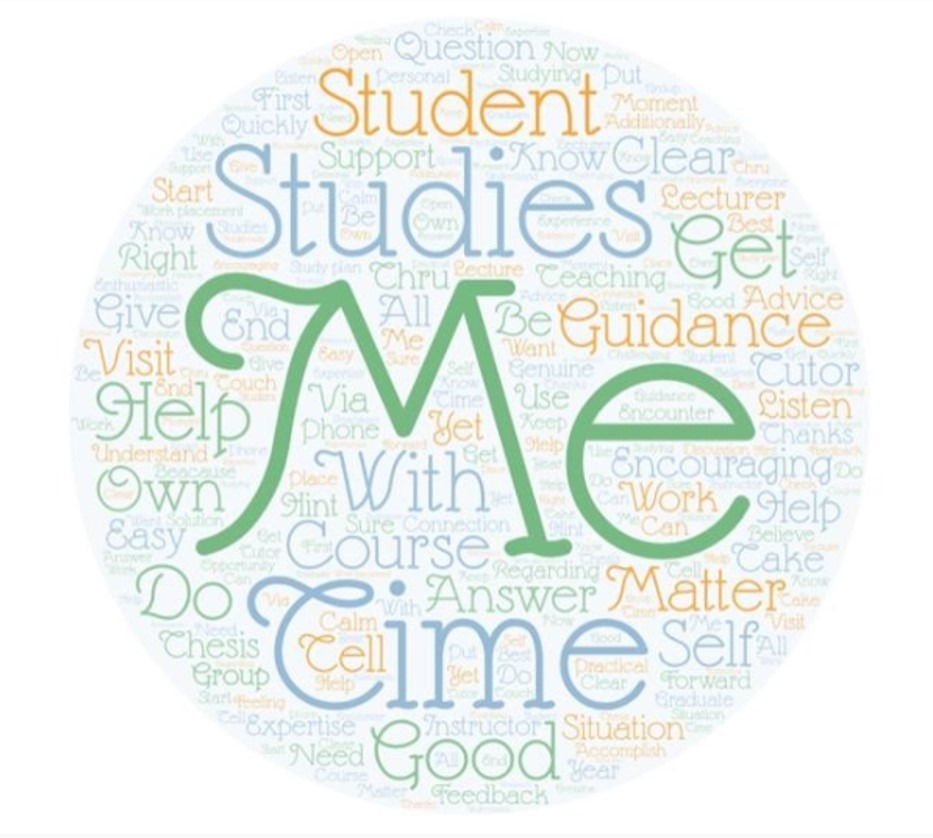
At the end of year 2020, Metropolia asked students and alumni to share their stories of good student guidance and counselling that they have received during their studies at Metropolia. This survey was a part of the on-going development project where a student-oriented guidance model is being created for Metropolia. The nearly 200 responses drew a picture of numerous Metropolia staff members as compassionate and versatile professionals as well as genuinely empowering and supportive instructors. The development of student guidance is one of the goals in the current Metropolia strategy. One concrete part of it is building a student-oriented guidance model. The development of the model started in autumn 2020, and the goal is to complete the model during 2021. One of the basic building blocks in the student-oriented guidance model is understanding that guidance belongs to everyone. It is not only top-down, information flowing from a teacher to a student, but guidance takes place in all encounters. In this article, we focus on the interaction and guidance between the teacher (instructor) and the student. The quotes presented in this article were received from the student survey. The citations were edited to protect the privacy of the respondents, but the contents were not changed. Good Guidance Needs Time, Attention and Respect According to the classic view of Onnismaa (2007), good guidance needs time, attention and respect. In a guidance situation, the relationship between the instructor and the student is equal and confidential. Guidance should not be grounded on the instructor's assumptions or beliefs, but rather on solutions derived from facts, listening and interaction. Good guidance strengthens the student's self-confidence and sense of agency. There was a feeling that the situation will work out and they have faith in me. No fuss, but straightforward nudging. My thesis process was stretched, but the teacher didn’t blame me for it. Doing the work was more motivating when you were trusted and things were handled with a positive mindset. In accordance with the holistic guidance model (Watts & Van Esbroeck 1998), guidance is a layered and comprehensive collaboration between different actors for the benefit of the guided person. These actors include teachers and guidance counsellors, tutors and student services coordinators, informaticians and janitors. The counselling of learning and studies includes also guidance of professional as well as personal growth. I received individual guidance through a video call for information search within my field of studies and for using the school library. I am rethinking my career choice. I received tips and advice from my guidance counsellor on putting my studies on hold and possibly resuming after the pause. The different aspects of guidance are integrated into each other when everyone working with the student gives their share – either knowingly or unknowingly. The interaction between the student and the teacher plays a particularly important role in the student's learning process. In the survey answers guidance counsellors also came out as a significant supporters in students' study paths and lives. Guidance Is Part of Every Teacher’s Work Every teacher is involved in student guidance and counselling, whether they knowingly make a decision to do so or not. The guidance situation is always a threat and an opportunity at the same time - what the teacher does and says can have far-reaching consequences. Even after decades, someone still remembers the frustrated gust of an elementary school teacher: "You'll never be anything!" On the other hand, the teacher's supportive words can give the student faith in their own competence and support them in their life for a long time. The teacher's feedback was sincere, so I knew it was true. She heard and understood me and said I don’t have to do more than I’m able to. The teacher didn’t allow me to get it too easy. Teacher should and must require performance based on what the student is capable of. Whenever a teacher encounters a student, he or she influences the student's self-perception as a learner, student and person, but in addition the teacher has an influence on the student’s attitudes, motivation, self-confidence as well as perception of hope and faith. That is why it is important to think about and be aware of how you act in different guidance situations. Consider these: How do I influence this student through my own actions and my verbal and non-verbal communication? Do I create hope or despair, courage or fear? Do I teach life-long skills? Do I offer quick advice and pre-chewed answers or do I respect the student's right to make choices and decisions about his or her own life, whether they are right or wrong in my opinion? Does my guidance stem from compassion and genuine desire to help? A Little Guide to Good Guidance In the student survey, a few themes were often mentioned together with good guidance. These themes can be summarised as a four-item guide: 1. Stop and listen Listening actively is sometimes easier said than done. However, the supportive effect of presence and active listening can be significant. Correspondingly, without these, the speaker may be left frustrated (Freese, 2021). Compassion, a sense of personality. An equal, sincere encounter. I remember the warmth and how easy it was to approach this teacher. The teacher encouraged me to get in touch. 2. Ask and encourage Coaching is an approach where the coach helps the coachee to harness their strengths when targeting their goals. A coach operates with open-ended questions and refrains from ready-made answers. (Ruutu, 2020). The instructor can also help the student to see things from new perspectives, which can already be a sufficient help to initiate the student´s own problem solving (Mattila, 2011). The instructor’s encouraging words concerning the student’s ability to move forward in a situation can be crucial. In fact, a strong self-reliance seems to protect well-being and reduce stress, according to some research (Ruutu, 2020). The teacher challenged me to think. I received good and encouraging, but above all critical and challenging guidance that changed my self-perception as a researcher and a professional in my own field. In a difficult situation, I received gentle and encouraging guidance. I was able to put my studies on hold since I had clear plans for the future. 3. Focus on the encounter, not the tool During the Covid pandemic the chance for real-life encounters was dramatically decreased. But luckily we have had the opportunity for genuine connection via online tools. The video call connection is more reminiscent of face-to-face interaction than we might have thought (Hietanen & co, 2020), and psychological security can be built in the encounter regardless of the medium (Raivio, 2021). The guidance via Zoom went great. No rush at all, the teacher had enough time to figure out the basics. I can email the teacher and the he will respond quickly. If necessary, he offers to explain in Teams if something is unclear. When I needed help in recognition of prior learning, the teacher helped with it “hand in hand” via Zoom. 4. Trust in yourself and know your boundaries There’s no requirement for the teacher to be an expert in all fields. A good instructor is a genuine, compassionate person who stays present and listens actively. A good instructor also knows their boundaries and when the student needs more specialised services. Respecting your boundaries is also a way of cherishing your own well-being. Guidance is nor brain surgery nor rocket science. Even with a little guiding touch it’s possible to help the student to solve problems that would otherwise be difficult to overcome. Sufficient guidance could be for example as simple as asking questions or helping to break a bigger problem down into smaller parts (Säljö, 120). In fact, over-caring can make it difficult for the student to stay active and increase their sense of dependence (Lindqvist, 129). The teacher knew how to prioritise, bring focus and encourage. One challenge at a time, the teacher helped us move forward in our studies. He encouraged and supported us whenever we needed. Developing Guidance Skills is a Part of Strategy Implementation at Metropolia Metropolia's strategy 2021–2030 emphasises eg. respect for humanity and support for continuous learning. In addition, Metropolia's values – openness, community, high quality and expertise – are the core pillars of good guidance. One of the goals in the student-driven guidance model is to enable the teacher and the student to meet each other honestly and intentionally. This kind of encounter requires time, attention and respect – which cannot take place if the student is only a part of a faceless student mass for the teacher. Genuine encounters require an open and confidential atmosphere. All members of the higher education community, both students and all staff, are responsible for creating and maintaining it. We all have what it takes to be a good instructor. Often the tiniest consideration is enough: a smile and a sincere question “How are you?” can give the student the experience of being seen and heard. A good instructor is not expected to be perfect or to apply a particular top-down guidance role; the personal approaches to guidance are a richness! Teachers enthusiasm inspired me. No hyping or fake pushing but a lot of work! You can talk to a teacher about things by the real names without interfering with issues of prestige and status. Authors Ulla Forsström, Paula Lindqvist, Mari Rupponen, Raisa Varsta, Anne Ojala-Soini and Anne-Mari Raivio are members of Metropolia's steering development group. The development of the learner-driven guidance model started in 2020, and the aim is to complete and use the model during 2021. The model's core idea is summed up in our service promise: You will receive appropriate guidance on your own study path in a way that suits different situations and at the right time. Appreciating and interactive guidance supports your learning and goals at different stages of life. Sources Freese, Pekka 2021: Aktiivinen kuuntelu – Psykologi kertoo miksi, mitä ja miten. Read 22.4.2021. Hietanen, Jonne O.; Peltola, Mikko J. & Hietanen, Jari K. 2020: Psychophysiological responses to eye contact in a live interaction and in video call (Wiley Online Library). Read 22.4.2021. Lindqvist, Martti 2016: Auttajan varjo. Kustannusosakeyhtiö Otava, Otavan kirjapaino Oy, Keuruu. Mattila, Antti S. 2011: Näkökulman vaihtamisen taito. WSOY, in co-operation Bonnier Books Finland. Printed in the EU. Metropolian strategia 2021-2030. Onnismaa, J. 2007: Ohjaus- ja neuvontatyö: Aikaa, huomiota ja kunnioitusta. Gaudeamus Helsinki University Press. Raivio, Anne-Mari 2021: Voimavaraistava kohtaaminen – myös verkossa! In Varsta, R.; Raivio, A. & Ruotsalainen, T. (Eds.): Kohtaatko ihmisiä uralla? Voimavaraistava ohjausote (Theseus). 21–31. Metropolia Univeristy of Applied Sciences, Helsinki. Read 22.4.2021. Ruutu, Sirkku 2020: Coachin työkalupakki. Alma Talent Oy, Balto Print, Lithuania. Säljö, Roger 2004: Oppimiskäytännöt. Sosiokulttuurinen näkökulma. WSOY, WS Bookwell, Juva. Watts A.G. & Van Esbroeck R. 1998: New Skills for New Futures. Higher Education Guidance and Councelling Services in the European Union. Fedora: VubPress. Lue tämä blogikirjoitus suomeksi: Mistä on hyvät ohjaajat tehty?
Hiiltä ja timanttia -blogi pohtii korkeakoulun roolia nyt ja tulevaisuudessa. Se tutkii korkeakoulun merkitystä kouluttajana, alueellisena vaikuttajana, työelämän kehittäjänä ja innovaattorina, jonka toiminnan suolana ovat pedagogiset sisällöt, kokeilut ja kehityskulut. Bloggaajat ovat ammattikorkeakoulun henkilöstöä sekä muita alan asiantuntijoita.
Johanna Tirronen, päätoimittaja, lehtori, p. 050 5850 350
Sonja Holappa, lehtori (kielet)
Merja Hintsa, julkaisemisen asiantuntija
Sähköpostiosoitteet: etunimi.sukunimi@metropolia.fi
Hiiltä ja timanttia -blogin tekstit käsitellään toimituskunnassa ennen niiden julkaisua. Blogissa on ollut toimituskunta 1.2.2018 alkaen.
Haluatko julkaista Hiiltä ja timanttia -blogissa? Ota yhteys päätoimittajaan sähköpostitse.







ammattikorkeakoulu ammattikorkeakouluopetus ammattikorkeakoulupedagogiikka ammattikorkeakoulutus asiantuntijaviestintä digipedagogiikka digitalisaatio etäopetus julkaiseminen Kansainvälisyys kehittäminen kielenopetus kielenoppiminen korkeakoulu korkeakoulupedagogiikka Metropolia ohjaus opettajuus opetuksen digitalisaatio opetus opinnäytetyö Oppeja HyMy-kylästä oppiminen osaaminen palaute pedagogiikka pelillisyys sosiaali- ja terveysala Sosiaalinen media sustainability tekoäly terveysala tiedonhallinta tietotyö toimintakulttuuri työelämätaidot työelämäyhteistyö täydennyskoulutus verkko-opetus verkko-opinnot verkkopedagogiikka Viestintä vuorovaikutus yhteiskehittäminen yhteistyö
