
Avainsana: innovaatio
The Crucial Role of Collaborative Spaces in Developing Innovators

Society, our work, and our everyday lives require us all to be more innovative and more intentional. Since around 500BC when the ancient Greek philosopher Heraclitus allegedly noted that ‘Change is the only constant’, the world has been in flux. This has not only continued, but it has accelerated. If we want to develop more innovators, we need to provide spaces that allow for innovators to develop. Responding to this challenge requires everyone to be ready and skilled in how to think more strategically about change, adaption, and innovation. Higher education institutions are a great place to hone these innovation skills, for both the students and the staff that fill them. But for these skills to be taught, the spaces that support this kind of learning need to be appropriate. This need is for the continued relevance of the institution itself but also for the society around it. There must be more innovation both inside and outside of the institution. If we want to develop more innovators, we need to provide spaces that allow for innovators to develop. The Importance of Developing Innovators For people to be innovative in their work, they need to learn the skills of incremental innovation. How it happens, what it looks like, how you get from the starting point to the deployment, and to fundamentally understand that deployment is not the end of the process. This is the kind of understanding that employers are beginning to expect from their employees. Continuous improvement is using innovation skills in everyday work and required structured collaboration. It is how institutions and the alumni from them continue to be relevant in this ever-changing world. Innovations vs. Innovators Developing innovations and developing innovators are different. One is an investment in your core business (or future business opportunities) while the other is an investment in people. This investment in people will provide them some agency over the development of how they do (and develop) their own work. To support individuals to become innovators in their own areas of expertise, we need to give them the right spaces to learn those skills and then to deploy them. The necessary skills are not going to be developed in traditional classrooms or in ordinary meeting rooms. The necessary skills are not going to be developed in traditional classrooms or in ordinary meeting rooms. There needs to be environmental cues (both physical and atmospheric) that this space is different. That you are here to work differently and to learn differently. It must also indicate that we are here to work collaboratively and that we are willing to change how we interact and work together to get different results. Tailoring Spaces for Impactful Collaboration Different actions and outcomes have different needs and what the space provides. It is difficult to have a deep, personal conversation if a group of people are sitting at desks looking in one direction (away from each other and at the back of heads). Different configurations are needed for different parts of any innovation process whether this is in a company, an educational institution, or in a public service. Discussion When there is a discussion, whether it is for learning new things or for sharing knowledge, a circle is often the way this should be done. Everyone can see each other, it promotes communication, and it isn’t hierarchical. Research shows that if you want people to be more collaborative, feel a sense of belonging, and participate more, you should seat them in a circular pattern. This gathering pattern is something that is quintessentially human. When we imagine small groups gathering at all times through history, we imagine circles. We see circles everywhere information is shared and discussions are had: campfires, grade school storytelling, the United Nations, U.S. Congress, the Finnish Parliament, indigenous peoples’ gatherings, healing circles, etc. Gathering in circles is essential to humans feeling seen and heard. “Circular physical arrangements such as these endure because of the powerful influences that people can have on each other when participating in these formations.” - J. Falout, 2014 Ideation When we need to do some intense ideation, we may or may not need tables. Or we may need a small table space to write or draw our idea and some clear wall space to display our ideas. This one part of the process will need to use two different kinds of spaces. This flexibility in spatial design becomes a catalyst for fostering flexible minds. If there is a need to create more innovative and flexible people in our organisations, then the spaces that they work in also need to reflect this. Traditional office setups, with cubicles and open offices, fall short in being able to cultivate true innovators. Small group work Ideas are often developed by small groups. Individuals can be too myopic (seeing only their own ideas) while too big groups will become unwieldy and stagnate as it becomes difficult to find consensus to move on. This means that there needs to be spaces where groups of 3-5 people can develop ideas into concepts. These concepts will need to be developed further into something that can be prototyped. This can only happen in smaller groups. This is a great opportunity to either have multiple different ideas taken to the prototype stage or to have different versions of the same thing be created. This gives everyone a chance to fully participate in the development and prototyping stages as well as to see the options that different groups can produce. There is never one solution to any given problem. Building/prototyping When an individual and a group wish to build a prototype or even two or three, having spaces and tools available to accomplish this is important. Prototypes, for both products and services, come in all shapes and sizes - from room-sized cardboard layouts to handheld tools and Lego floor plans. This means that you can never be sure if people will need tables to display their final prototypes or just need them in the building phase. If they just need them in the building phase, they may need a larger open bit of floor space to roleplay the service/product or to walk people through it. This means that tables need to be easily stored away. Presentations/Pitches Presenting as a skill, whether to your peers or to co-workers, is an important part of finding buy-in and being understood. Presenting to a group can be done either while they are seated in the circular position or in a more standard theatre pattern. But what research tells us is that a circular seating pattern “can activate fundamental human needs and consequently affect persuasion.” When you are pitching an idea to a group, a circular pattern can help persuade them to agree with you. Interesting research finding that may be useful for those people who find themselves in that situation and can affect the environment and how people are seated. All Spaces Are Designed It is important to understand that spaces are always designed. Someone makes a decision about what kind of furniture will be used, where the focus of the room will go, how much furniture is to be ordered. Each little decision is the design. Determining how the space will be used will define what is available for the users. When Static Spaces Fail to Meet Dynamic Needs Consider this: what happens when the needs of the space are dynamic and change even within the confines of one 3-hour block? What happens to those in the room when the space is not changeable? At some point a decision was made to define the space's purpose, closing the door to any alternative considerations. This is most of the built spaces around the world. When we look at learning and teaching environments, they are primarily organised so that the students look at the teacher or to teach professional skills. Neither of these are appropriate for learning or developing innovation skills. The next evolution was to make desks movable, so students could participate in group work. But still the desks took up most of the classroom floor space. Again, what happens when you don’t really need the desks and what you need is for people to do less listening and more doing? Now the desks are a bit of a liability. It reminds me of the poster that compared different modes of transportation and the space they take up (car vs bus vs bicycle). It exemplifies how much space “things” take up in the surrounding space. In their example it was cars, in mine, it is desks. Many are expecting different results from the same environment. I don’t disagree that there are still concepts that need to be learned individually and, in an orientation, where you are looking at a teacher. But it is important to remember that this is not how everything needs to be taught. Increasingly, spaces are being set aside for different ways of learning. But they are rare and maybe not fully understood. This is the same problem in many corporate settings. Many are expecting different results from the same environment. In big companies there may be open spaces available but they are not necessarily set up for impactful collaboration, some will be meeting spaces, some will be presentation spaces. Shaping Tomorrow’s Innovators We all need to make sure that our learning spaces are future focused and fit for purpose. The goal is to make sure that both inside and outside educational institutions people are able to confidently face and address the challenges ahead. We all need to make sure that our learning spaces are future focused and fit for purpose. At the beginning of allocating learning spaces and planning teaching, it would be important to considering the five above needs: discussion, ideation, group work, prototyping, and presentations, to achieve the best learning outcomes. Writer Pamela Spokes, BA, MA, MBA, AmO works as a Service Designer in Metropolia’s RDI team. Originally from Canada, Pamela has many years of experience working in higher education institutions in different countries and in different roles. She teaches the English Pre-Incubator Programme and Service Design in different Schools.
Monialaisuuden voima
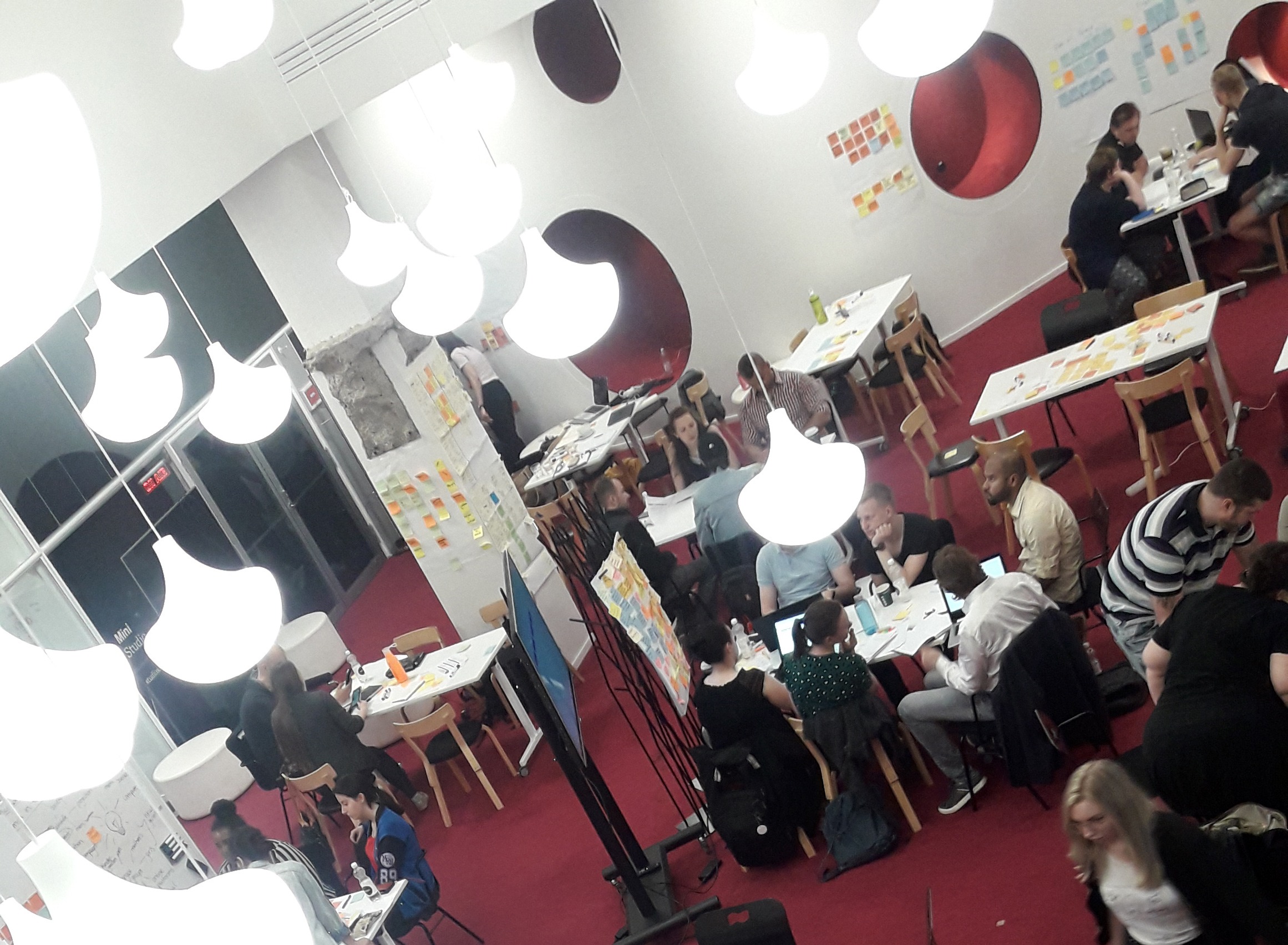
Mikä on…. ….Korkeakouluopiskelijalle erinomainen tilaisuus päästä työskentelemään ohjatussa ympäristössä yritysten kanssa? ….Yrityksille mahdollisuus tutustua uusiin osaajiin, olla mukana avoimessa kehittämisen ekosysteemissä ja samalla tarkastella, millaisia kasvumahdollisuuksia jollekin uudelle idealle tai teknologialle olisi tarjolla? Tätä on 10 Days 100 Challenges - kolmen pääkaupunkiseudun ammattikorkeakoulun, Haaga-Helian, Laurean ja Metropolian, yhteistyössä vuosittain toteuttama innovaatio-ohjelma. Ohjelman synnyn taustalla on työelämän murros, joka haastaa perinteiset ammatit, mullistaa työelämää ja kyseenalaistaa perinteisen oppimisen mallit (Vuorio 2018). Mitä käytännössä tehdään? Ohjelma perustuu neljään perusasiaan: Yritykset antavat haasteita, jotka nousevat todellisesta työelämästä. Opiskelijat luovat uusia konsepteja haasteiden ratkomiseksi. Haasteiden ratkominen tapahtuu moniammatillisissa opiskelijaryhmissä. Ryhmiä ohjaavat valmentajana toimivat, pääsääntöisesti palvelumuotoiluun ja innovaatiotoimintaan erikoistuneet opettajat ja asiantuntijat. Tiivistä työskentelyä ja palvelumuotoilua Yksi olennaisimmista asioista mallissa on tiiviys: työskentely tapahtuu lyhyellä, mutta intensiivisellä 10 päivän periodilla. Näiden päivien aikana työskentely etenee vaiheittain: ongelmaan tutustuminen, ongelman määrittely, ongelman uudelleenmuotoilu, varsinainen työskentely ongelman parissa. Toimenpiteinä mm. tiedonkeruu, (esim. haastattelut ja yritysvierailut), tietojen ryhmittely ja organisointi käyttämällä ryhmittelykaavioita, käyttäjä- ja asiakasprofiilien luominen, NABC-mallin luominen, konseptin jalostaminen ja kirkastaminen, prototyypin toteuttaminen ja esittelymateriaalin valmistaminen, loppuesitys, jossa ryhmät esittelevät tekemänsä konseptit muille ryhmille, opettajille ja haasteiden antajille. Keskeisinä työkaluina uusien konseptien kehittämisessä käytetään palvelumuotoilun keinoja ja metodeja. Palvelumuotoilu (Service Design) on laajahko käsite, mutta tiivistettynä se tarkoittaa uusien palveluiden ja tuotteiden kehittämistä ja suunnittelua muotoilun menetelmiä hyödyntäen. Keskiössä on loppukäyttäjän tarkasteleminen ja ymmärtäminen. Tyypillinen esimerkki palvelumuotoilun menetelmästä, joka on peräisin muotoilun konseptointityökalujen valikoimasta on iteratiivinen ajattelu: toistetaan riittävän kauan sykliä, jossa havainnoidaan jotakin ongelmaa, joka sitten visualisoidaan, arvioidaan ja jalostetaan. Riittävän monen kierroksen jälkeen voidaan koettaa ymmärtää, mistä kyseisessä ongelmassa on kyse. Palvelumuotoilu on moniammatillista tiimityötä ja siksi se on valittu kehittämisen metodiksi, ja koska 10 Days 100 Challenges haasteet ovat juuri pääsääntöisesti palveluihin ja uusiin tuotekonsepteihin liittyviä. (palvelumuotoilusta on löydettävissä paljon verkkoaineistoa, ks. esim. This is Service Design doing, Stickdorn / Lawrence / Hormeß / Schneider. n.d.). Luennot Jokainen päivä aloitetaan innostavalla luennolla, jossa käsitellään päivän ohjelmaan liittyviä teemoja eri näkökulmista. Esimerkiksi palvelumuotoilun osaamista ei siten tarvitse etukäteen olla, vaan perusteita käydään läpi luennoilla. Luennoista vastaavat ohjelmassa opiskelijoiden valmentajina mukana olevat asiantuntijaopettajat, haasteet antaneiden yritysten edustajat ja mukaan kutsutut vierailevat luennoitsijat. Tavoitteena on antaa työkaluja ja uusia näkökulmia ja ajatuksia tiimien työhön. Valmentajat Jokaiselle tiimille on nimettynä omat valmentajat, joiden tehtävänä on tukea ja ohjata tiimin työskentelyä. Valmentajat ovat pääsääntöisesti opettajia ja ohjelmassa työskentely omalta osaltaan muuttaa tapaa toimia opettajana. Perinteinen, opettaja-opiskelija-vuorovaikutus muuttuu enemmänkin asiantuntijan antaman konsultoivan roolin suuntaan, jossa opettaja, kuten Mari Virtanen (2018) on blogissaan todennut, on innostava [ja] oppimisen mahdollistaja, ohjaaja ja valmentaja. Ryhmän jäsenten roolit Tiimien tehtävänä on organisoitua niin, että jokaiselle tiimin jäsenelle on jokin rooli. Roolitus on tiimin toiminnan kannalta tärkeää, jotta jokaiselle on mielekäs tehtävä ja että työkuorma jakautuu mahdollisimman tasaisesti. Tiimien tehtävänä on myös valita keskuudestaan projektipäällikkö, joka vastaa kokonaisuudesta. Muut roolit vaihtelevat haasteiden ja tiimien jäsenten osaamisten mukaan. Joku saattaa huolehtia esim. visuaalisesta suunnittelusta, joku toinen taas huolehtii koodaamisesta ja kolmas tiedonkeruusta ja dokumentoinnista. Työskentelylle varatun lyhyen ajan takia on kuitenkin välttämätöntä, että kaikki tekevät tarvittaessa kaikkea: työskentelystä ei voi kieltäytyä sillä perusteella, että on jo hoitanut oman osuutensa. Moniammatillisuus toimii 10 Days 100 Challenges toteutuksessa erityisen hyvin. Se on palvelumuotoilun toimintatapa, jota opiskelijat voivat ohjatusti harjoitella. Lisäksi monialaiset tiimit, joiden jäsenet eivät välttämättä ole haasteen alan asiantuntijoita, voivat "ulkopuolisina" nähdä haasteessa kehittämiskohteita, jotka asiaan syvällisesti vihkiytynyt esim. opiskelija ei ehkä huomaisi. Edellytyksenä toimivalle monialaisuudelle kuitenkin on, että keskeinen ongelma (haaste) on määritelty riittävän geneerisesti. Projektihaasteet eivät siis voi olla tilaustöitä. Arviointi Käytännössä opiskelijalle prosessi on kymmentä työpäivää pidempi, koska se aloitetaan orientoivalla ennakkotehtävällä ja päätetään tiivisjakson jälkeen tehtävään oppimisportfolioon, jonka palauttamiselle annetaan aikaa kesän yli. Tämä antaa aikaa oppimiselle ja opittujen uusien taitojen läpikäymiselle. Opiskelija saa ohjelmaan osallistumisesta 10 opintopistettä, mikäli suorittaa ennakkotehtävän, osallistuu hyväksytysti työskentelyyn ja toteuttaa 5 opintopisteen laajuisen oppimisportfolion. Arvioinnissa otetaan huomioon myös prosessin aikana saatavat palautteet. Palautetta kerätään monella tapaa: opiskelijat tekevät tiimikohtaiset vertaispalautteet, valmentajat seuraavat tiimien työskentelyä ja arvioivat sitä päiväkohtaisesti. Myös yritykset antavat omat palautteensa. Toimiiko tämä? Kesäkuussa 2019 10 Days 100 Challenges -ohjelma järjestettiin kolmannen kerran. Lähes sata kolmen ammattikorkeakoulun opiskelijaa kokoontui Aalto-yliopiston Harald Herlin-oppimiskeskuksessa ja Metropolian Arabian kampuksella kahdeksan yrityksen antamien aiheiden ympärille. Millaisia palautteita ohjelmasta on kolmen vuoden kokemuksella saatu? Palautteiden ja paikan päällä nähdyn ja koetun perusteella työskentely oli useimpien mielestä erittäin mieluisaa, aikataulusta ja työskentelyn intensiivisyydestä huolimatta. Monet opiskelijatiimit tekivät pyöreitä päiviä haasteensa parissa, aamusta iltamyöhään. Myös monet oppimisportfoliot olivat kattavia ja korkeatasoisia ja osoittivat, että työskentelyyn oli todella paneuduttu, ja että ohjelmasta oli opittu uusia hyödyllisiä taitoja. Myös haasteiden antajat olivat tyytyväisiä lopputuloksiin. Mukanaolijat, mukaan lukien myös opettajat ja yritykset ovat kokeneet oppineensa uutta. Tärkeää on myös, että entuudestaan toisiaan tuntemattomat opiskelijat ja henkilökunta muodostivat uusia keskinäisiä verkostojaan. Mukanahan eivät ole vain yritykset ja korkeakoulu, vaan myös uudenlainen kolmen ammattikorkeakoulun verkosto. Ratkeavatko haasteet? Tämän vuoden ohjelma osoitti edellisten vuosien tapaan, miten eri korkeakouluista tulevien, monessa tapauksessa toisiaan tuntemattomien opiskelijoiden yhdessä työskentely voi olla samaan aikaan haastavaa, mutta mielekästä ja myös tuloksellista. Ohjelmassa syntyneet konseptit ja muut tulokset ovat selkeä osoitus siitä, että oikein ohjattuna ja ohjeistettuna monialainen tiimi, jonka jäsenillä ei välttämättä ole aiheeseen erityisosaamista, kykenee lyhyessäkin ajassa tuottamaan ratkaisuehdotuksen monimutkaiseenkin ongelmaan. Siitäkin huolimatta, että lähtökohta olisi hahmoton, ja vaikka tiimin jäsenet eivät entuudestaan tuntisikaan toisiaan. Sitä on monialaisuuden voima. Kaikille avoin ohjelma ★ 10 Days 100 Challenges-ohjelmaan voi ilmoittautua kuka tahansa 3AMK-opiskelija, mutta se on avoin kaikille muillekin kiinnostuneille. Joka vuosi toteutuksessa onkin ollut mukana muutamia ulkopuolisia, jotka ovat halunneet tulla kokeilemaan monialaista työskentelyä tai täydentämään osaamistaan. Ohjelmaan mukaan pääsy edellyttää kirjallisuuteen ja omaan motivaatioon perustuvan ennakkotehtävän tekemistä hyväksytysti. ★ Tämän vuoden teemana olivat tulevaisuuden työ ja kestävä kehitys. Millaisia haasteita tulevaisuuden työelämä tuo tullessaan ja miten yritysten pitäisi ennakoida kestävän kehityksen edellyttämiä muutoksia tuotteissaan ja markkinoinnissaan? Varsin laaja aihepiiri kattoi muiden muassa tällaisia kysymyksiä: Miten teknologia-alat voisivat olla nykyistä houkuttelevampi uravaihtoehto myös naisille? Mitä pitäisi tehdä, että kestävän kehityksen mukaiset tuotteet ja valinnat löytyisivät kaupasta helpommin? Tai millaisia vakuutusmuotoja tarvitsisi työelämä, jossa keikkatyö yleistyy kovaa vauhtia? ★ Ohjelmaan voi tutustua mm. osallistujille suunnatun manuaalin avulla: 10 Days 100 Challenges Handbook (Spokes & Vuorio 2018). Kirjoittaja Juha Järvinen työskentelee innovaatioasiantuntijana Metropolian TKI-palveluissa. Hän on koulutukseltaan taiteen tohtori ja teollinen muotoilija. Uusien innovatiivisten ratkaisujen, oivallusten ja toimintamallien löytäminen ja edistäminen innostavat häntä. Paremman tulevaisuuden kehittämiseen tähyävän päivätyön vastapainona hän harrastaa menneisyyteen liittyviä asioita, kuten sukututkimusta, keräilyä ja vanhoja autoja. Lähteet: Haaga-Helia ammattikorkeakoulu, Laurea-ammattikorkeakoulu & Metropolia Ammattikorkeakoulu. n.d. 10 Days 100 Challenges. Verkkosivusto. Saatavana osoitteessa: http://10days100challenges.fi/ Stickdorn / Lawrence / Hormeß / Schneider. n.d. #TiSDD Method Library. This is Service design doing. Verkkosivusto. Saatavana osoitteessa: https://www.thisisservicedesigndoing.com/methods Spokes Pamela & Vuorio Tiina. 2018. 10 Days 100 Challenges: Handbook. Julkaisija: Metropolia Ammattikorkeakoulu. Saatavana osoitteessa: http://urn.fi/URN:ISBN:978-952-328-127-1 Virtanen, Mari. 2018. Korkeakouluopettajan ammatillisuuden kehittyminen. Blogipostaus. Hiiltä ja timanttia -blogi. Metropolia Ammattikorkeakoulu. Saatavana osoitteessa: https://blogit.metropolia.fi/hiilta-ja-timanttia/2018/03/13/korkeakouluopettajan-ammatillisuuden-kehittyminen/ Vuorio, Tiina. 2018. 10 DAYS 100 CHALLENGES – syväsukellusta tulevaisuuden työelämätaitoihin. Blogikirjoitus. Tikissä-blogi. Metropolia Ammattikorkeakoulu. Saatavana osoitteessa: https://blogit.metropolia.fi/tikissa/2018/09/18/10-days-100-challenges-syvasukellusta-tulevaisuuden-tyoelamataitoihin/
Hiiltä ja timanttia -blogi pohtii korkeakoulun roolia nyt ja tulevaisuudessa. Se tutkii korkeakoulun merkitystä kouluttajana, alueellisena vaikuttajana, työelämän kehittäjänä ja innovaattorina, jonka toiminnan suolana ovat pedagogiset sisällöt, kokeilut ja kehityskulut. Bloggaajat ovat ammattikorkeakoulun henkilöstöä sekä muita alan asiantuntijoita.
Johanna Tirronen, päätoimittaja, lehtori, p. 050 5850 350
Sonja Holappa, lehtori (kielet)
Merja Hintsa, julkaisemisen asiantuntija
Sähköpostiosoitteet: etunimi.sukunimi@metropolia.fi
Hiiltä ja timanttia -blogin tekstit käsitellään toimituskunnassa ennen niiden julkaisua. Blogissa on ollut toimituskunta 1.2.2018 alkaen.
Haluatko julkaista Hiiltä ja timanttia -blogissa? Ota yhteys päätoimittajaan sähköpostitse.









ammattikorkeakoulu ammattikorkeakouluopetus ammattikorkeakoulupedagogiikka ammattikorkeakoulutus asiantuntijaviestintä digipedagogiikka digitalisaatio etäopetus julkaiseminen Kansainvälisyys kehittäminen kielenopetus kielenoppiminen korkeakoulu korkeakoulupedagogiikka Metropolia ohjaus opettajuus opetuksen digitalisaatio opetus opinnäytetyö Oppeja HyMy-kylästä oppiminen osaaminen palaute pedagogiikka pelillisyys sosiaali- ja terveysala Sosiaalinen media sustainability tekoäly terveysala tiedonhallinta tietotyö toimintakulttuuri työelämätaidot työelämäyhteistyö täydennyskoulutus verkko-opetus verkko-opinnot verkkopedagogiikka Viestintä vuorovaikutus yhteiskehittäminen yhteistyö
