Avainsana: higher education
Traffic Light Service Model: a visual counselling tool in Metropolia Student Wellbeing Services

A significant number of higher education students face difficulties during their university studies. Loneliness, isolation from social networks, lack of academic study skills and problems with study motivation have been found to have a detrimental effect on progress in studies (Klemola et al., 2020). Self-regulation and co-regulation skills have also been linked to study exhaustion in university studies (Räisänen, 2021). In addition, the COVID-19 pandemic, which lasted for almost three years, has contributed to a decrease in enthusiasm for learning and a strong increase in study burnout (Salmela-Aro & Uotinen 2022). Especially first-year higher education students are at risk of burnout in the beginning of their studies, and have a strong need for study guidance (Hyytinen et al. 2022). Students in Metropolia University of Applied Sciences have also experienced study burnout. During the last academic year 2021–2022, 650 students contacted Metropolia Student Wellbeing Services, and on an average, had three meetings with a study psychologist, student wellbeing advisor or wellbeing coach. According to the reporting of the Student Wellbeing Services counselling professionals, approximately one in six of these students had worries related to exhaustion and fatigue, and one in five students had study stress listed as at least one of the reasons for seeking support from Student Wellbeing Services. Due to the ongoing decrease in higher education students’ wellbeing we decided to address this challenge in Metropolia Student Wellbeing Services and develop a custom-oriented model for low-threshold counselling services. Study ability and wellbeing in Metropolia Student Wellbeing Services The ability to study refers to the student's ability to work (Kunttu, 2021). Studying can be considered as the daily work of a full-time student with its own specific features. The concept is similar to work ability, which in turn, has been viewed through the relationship between work and the resources of the individual. Correspondingly, study ability is formed through the interaction of the student and factors related to studying. The Finnish Institute of Occupational Health (FIOH) and the Finnish Student Health Service (FSHS) have developed a Study Ability Model which, in addition to the student’s own personal resources, consists of study skills, study environment and teaching and counselling activities (Figure 1). The model for ability to study was first created by Kristina Kunttu in FSHS and then the FIOH published it in a student health guide in 2006. The model for ability to study was based on the work ability model. (Kunttu, 2021.) Metropolia’s Student Wellbeing Services utilize the FSHS’s model for ability to study as a counselling tool. The development of the Traffic Light Service Model (TLSM) has the same idea as the traffic light poster for coping at work published by Mieli ry (2022). Mieli ry's traffic lights remind the work community to follow and listen to the sensations of their own body, follow the warning signs given by their thoughts, feelings and bodily symptoms, and, if necessary, stop and take a breath. Metropolia’s TLSM combines both of these models. Shared, visual and simple model for counselling In Metropolia's TLSM for study wellbeing, three customer groups (the three different colors of the lights) provide a refined understanding of the so-called student-customer's ability to study and study wellbeing. It is more appropriate to design and develop customized services for three different target groups than to look at all students as one customer group that, in reality, has different service needs and a variety of factors affecting their study ability and wellbeing experience. The Student Wellbeing Services team in Metropolia supports students when they are concerned about issues related to their ability to study or study wellbeing. This includes topics such as: time management study skills motivation concentration problems difficult or unexpected life situations stress and exhaustion relationship worries minor concerns about mood or anxiety. Finnish Student Health Service, one's own communal health center or other healthcare providers respond to challenges concerning students' mental health. If students would need more of therapeutic support, their ability to study has clearly decreased or they have long-term or recurring mental health issues, they are guided to contact health care providers instead of the Metropolia Student Wellbeing Team. In Metropolia's Student Wellbeing Services, student wellbeing advisors, study psychologists and a wellbeing coach support and guide students in challenges related to personal life, coping or studying. Over the past year, the Student Wellbeing Services’ team has been developing customer-oriented services, and as part of this created their own Traffic Light Service Model for student wellbeing. In the TLSM model, the key elements are students’ ability to study and their sense of wellbeing, and the green, yellow and red light services offered to support them (Figure 2). Green light services are meant for students whose study ability and wellbeing experience are good. Studies are progressing in a goal-oriented manner (40–60 ECTS credits/academic year) and the wellbeing experience is also good (8–10/10 on a scale of 0–10, 10 being the highest value). The study ability and wellbeing experience are good and therefore guidance counselling provided by the degree program and other study support activities, e.g. tutoring, student associations and peer-support, are sufficient measures to promote the student's higher education studies. Yellow light services are for those students whose study ability and wellbeing experience have decreased. Their progress in studies has slowed down because of individual reasons (20–<40 ECTS/academic year) and/or the personal sense of wellbeing is only moderate (4–7/10 on a scale of 0–10). The students contact Student Wellbeing Services themselves or they are guided to use the service by staff members or student health care. Student wellbeing advisors, study psychologists and the wellbeing coach offer 1-5 individual counselling sessions aimed at restoring the study ability, promoting wellbeing and reconnecting with one’s studies. During and after the individual counselling process students can be guided to use both green and red light services. Students whose studies are progressing poorly or have been interrupted (< 20 ects/academic year or less) and/or whose wellbeing experience is poor (0–3/10 on a scale of 0–10) are included in the scope of red light services. In red light services, students usually need frequent and stronger support from for example Finnish Student Health Service (FSHS), other social and health services or public or non-governmental organizations to regain their ability to study, improve their wellbeing and continue their studies. Depending on the individual situation, sometimes the short-term individual counselling process provided by Metropolia Student Wellbeing Services is enough to boost study ability and wellbeing, but often this kind of low-threshold counselling service can help relieve the student’s situation while waiting for access to FSHS or other social and health services. Examining traffic light colours in counselling Compared to regular traffic lights, in the Traffic Light Service Model the order of the lights is the opposite, as the green light is at the top and the red light is at the bottom. With the unusual arrangement of the lights, we want to emphasize the importance of preventive counselling work in higher education. The more preventive services are invested in and the students have good study ability and wellbeing, the less health care or rehabilitation services are needed later. When developing the TLSM, it has been acknowledged that the student's ability to study can be good and, at the same time, the wellbeing experience may be poor or, on the contrary, the ability to study may be weakened but still the wellbeing experience may be good at the same time. The TLSM takes into consideration the pace in which the studies are progressing and the student’s personal experience of their wellbeing. The TLSM helps the employees of the Student Wellbeing Services design customer-oriented services for students who have similar concerns about their ability to study or study wellbeing. The advantages of the Traffic Light Service Model outweigh the disadvantages by far In Metropolia's Student Wellbeing Services, two student wellbeing advisors, three study psychologists and a wellbeing coach tested the TLSM during counselling meetings in March 2023. At the end of the test period, the team made a summary identifying the following advantages and disadvantages regarding the use of the TLSM model during individual counselling processes. Advantages of using the Traffic Light Service Model A visual tool in guidance and counselling helps the student and the counsellor to stay focused and keep the goals of the process actively in mind. It helps to recognize obstacles and steps forward in improving one’s study ability and wellbeing. The model provides the student with an opportunity to evaluate subjectively the study ability and wellbeing experience. Students can recognize the different factors affecting their wellbeing and notice that even though one area of their life could be in the red light area, other areas could be ok in green area. The model is a tool for observing and recognizing the change in study ability and wellbeing. “to paint a big picture”: how study ability and wellbeing have been before, how they is now, and how they could be in the future difficult phases in one’s study path are not just disturbing ruptures rather they become like a chapter or a theme in the big story of one’s university years helps to see the value of the process in improving one’s study ability and wellbeng The model helps in guiding students to utilize other services (e.g. study coordinator, student health services, social worker etc.). This way, it is easier for the student and the counsellor to decide which topics to work on during the short-term individual counselling process in the Student Wellbeing Services. It works for both the student and the counsellor as a way to build common understanding of the student’s life situation, study ability and wellbeing experience. TLSM is simple enough and easy to use in the beginning, during or the end of the counselling meeting. It can be used in different phases of the counselling process for initial evaluation and goal setting or for evaluating the change process. Disadvantages of using the Traffic Light Service Model The model is not suitable during initial phases of crisis interventions, especially the first meeting. However, it would be usable in the end of the intervention when the focus has shifted to recovery and returning back to studies. TLSM does not provide information about students’ study ability and wellbeing on a general level. The color of the traffic light and the evaluation can change quickly during the counselling process. University students seek individual counselling for study ability and wellbeing in many different situations. The TLSM helped to keep the focus of individual counselling meetings in the study context. The most prominent advantage was the simplicity and flexibility of the model as a visual counselling tool. As noted above, difficulties in one or several areas of life could make the wellbeing experience or study ability weak momentarily. The situation can still improve rather quickly even during short-term individual counselling provided by Student Wellbeing Services. To sum up, not everyone in the red light area of the TLSM need further referrals to health care or other support services, and oftentimes students use these services simultaneously. Would you like to be our Traffic Light Service Model development partner? Concerns about study exhaustion and burnout of higher education students during their studies have grown over the past few years. For this reason, educational organizations should include elements that support mental health as a natural part of their structures, operating culture and educational content. It has been noted that the personnel of educational organizations should have stronger knowledge and competences to address mental health worries among university students. At the same time, we should improve and ensure the accessibility of well-functioning student health care and low-threshold counselling in student wellbeing services and promote multidisciplinary cooperation between different professionals and service providers. This way, by preventing problems and identifying study exhaustion and burnout at an early stage, delays in studies could be reduced and the transition to further studies and working life accelerated. (Falck & Ärling 2020.) Metropolia has responded to the above-mentioned development proposals for study ability and wellbeing by launching the development of the above-mentioned customer-oriented Traffic Light Service Model for study wellbeing. The development of the TLSM is a fairly new project in Metropolia Student Wellbeing Services. TLSM helps to create a shared framework for guidance personnel to promote student wellbeing and coordinate support services. The aim is to further develop the TLSM with the help of our students in order to strengthen positive study experience and wellbeing. At the same time, there is an opportunity to develop guidance and counselling services among the team's employees and the communication about the services will also become easier with both customers and network partners through a shared and simple service model. The Traffic Light Service Model described here is the first version (1.0), and the development of customer-oriented student wellbeing services is still in the start-up phase. Metropolia's Student Wellbeing Services team welcomes feedback from students, staff members and networks for further development of the model. Authors Katri Luukka works as a wellbeing coach and a principal lecturer in Metropolia Student Wellbeing Services. As a wellbeing coach, Katri uses solution focused working methods in client work. Katri is interested in developing student wellbeing services through service design. Katri has a PhD degree in health science and a masters degree in health science education. She is also a solutions focused psychotherapist. Further information about the Traffic Light Service Model: katri.luukka@metropolia.fi. Noora Mononen works as a study psychologist in Metropolia Student Wellbeing Services. Noora’s main areas of interest are individual counselling and developing international students’ wellbeing. Noora has a masters degree in psychology and education and has previously specialized in career counselling. Noora is currently in cognitive-analytical psychotherapy training. References Falk, S. & Ärling, M. (2020). Voimaa opiskeluun – otetta ohjaukseen: Voimaa opiskeluun -hankkeen loppujulkaisu. Diakonia-ammattikorkeakoulu. Finnish student health service (2023). Ability to study. Retrived 30.3.2023. Hyytinen, H., Tuononen, T., Nevgi, A. & Toom, A. (2022). The first-year students' motives for attending university studies and study-related burnout in relation to academic achievement. Learning and individual differences 97, 102165. Klemola, U., Ikäheimo, H. & Hämäläinen, T. (2020). OHO-opas – opiskelukykyä, hyvinvointia ja osallisuutta korkeakouluihin. OHO!-hanke. Kunttu, K. (2021). Opiskelukyky. Teoksessa Kunttu, K., Komulainen, A., Kosola, S., Seilo, N., Väyrynen, T., Aalto-Setälä, R. & Ripatti-Toledo, T. (toim.). Opiskeluterveys. 2., uudistettu painos. Helsinki: Kustannus Oy Duodecim. 37-53. MIELI ry (2022). Työssäjaksamisen liikennevalot. Retrieved 30.3.2023. Räisänen, M. (2021). The interaction between self- and co-regulation of learning and study-related exhaustion during university studies. Tiedepolitiikka 46(3), 35. Salmela-Aro, K. & Uotinen, S. (2022). The pandemic put university students’ study engagement to the test and greatly increased burnout. University of Helsinki. Retrieved 30.3.2023.
Attracting the next generation: gamification in education
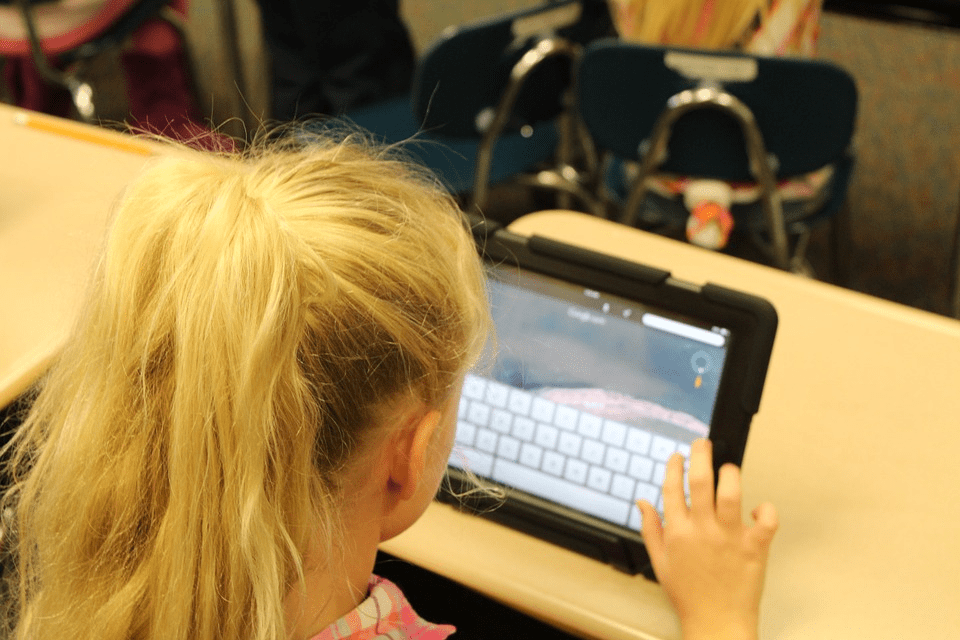
At Metropolia University of Applied Sciences we recently tested gamification with different target groups in educational contexts, online events and webinars. We will describe our experiences with the two target groups: the high-school students as well as the degree students. Metropolia wishes to attract high-school students to join the community of learners, as degree seeking students. These students were invited to attend informative and gamified webinars, which allowed them to learn about the study opportunities that we offer at Metropolia. Once they are admitted to Metropolia as degree seeking students, digital games can also be used in order to help students deal with the flood of information. According to the CONNEXT for inclusion project, games support e-inclusion which “lower thresholds and open up the opportunity of entering into dialogue with participants on important topics. Through games, we are able to connect more closely with the young person’s world and appeal to their intrinsic motivation. This has a remarkable, positive effect on their learning experience. In this way we want to strengthen people not only in their knowledge and skills but also create a space for them to feel safe and grow (further) in self-reliance and active citizenship.” (Van Herck et. al., 2020) Game challenges were used to increase the feeling of inclusivity with both target groups at Metropolia. Diversity among students is something that can be addressed by designing more playful and interactive digital services. This is something that both experiments wanted to achieve. Setting the building blocks for higher education Lifelong learning is a topic that concerns society at large. At Metropolia’s webinars, students were able to approach the topic of moving into higher education in a relaxed online setting. Through the gamified webinars we achieved an active rather than a passive atmosphere, and allowed students to familiarize themselves with Metropolia’s study possibilities with the help of game challenges on the seppo.io game platform. Student understanding was crucial since they were already familiar with the seppo.io application through their high-school studies. As students move from being high-school students to students in higher education, they need guidance and information. The guidance that students receive from their own high-school can be supported by services that are provided by the higher education institutions Gamified webinars introduce opportunities at Metropolia The team of lifelong learning specialists experimented with different types of services in 2020. One service was a clear success: the gamified webinars. Metropolia produced 17 informative webinars for high-school students in 2020, with attendants from all over Finland. The game itself was played by 61 players during this period. The game challenges on seppo.io platform were added to the established webinars, and was piloted four times. With the webinars, Metropolia wanted to increase brand recognition and allow students to gain information about the study possibilities at Metropolia. The possibilities included free sneak-peek courses, events, and guidance from Metropolia’s students and guidance counsellors, that were all developed and conceptualized in 2020. The author served as the producer of these webinars. Co-creating services for and with high-school students During the development period of the game, the lifelong learning specialists went through an extensive data gathering process to identify the true customer needs. The team wanted to understand these needs and include the students in the co-creation process. Customer co-creation is a tool that allows the customer or user to be active in the development process. The insights were collected through: student interviews a questionnaire form analysing research data from journals and reports. The co-creation process helped to develop service solutions in the digital context. The team identified key strengths, challenges and needs of the students and reflected on these aspects when developing the services. Fun and exciting An element of fun was brought to the webinar, as the students were able to answer questions relating to their future interests. The picture in the background of the game challenge represented a group of teenagers looking into microscopes. The picture was taken during one of the Metropolia Sprint high-school events at the Myyrmäki campus in 2020. The visualisation allowed the students to see how the campus grounds look, and was an entertaining way to get the students excited to take part in the game challenge. One challenge was to understand what the students wanted to hear, in the 45 min to 1 hour sessions. Later on, we realised that the guidance counselors could report to us, what study programs interested their students the most. The webinars catered to the specific needs of each group. This of course meant that each webinar was different. The activation of participants was a challenge in the beginning, as students remained quiet and shy to ask questions. The gamified webinars instantly changed the dynamic during the webinar sessions. It was also difficult to gather feedback from the webinars, so the feedback form was added as a link in the seppo.io game, and was actually part of the game itself. Answer percentage skyrocketed as a result. Lifelong Learning in the degree programme at Metropolia As stated earlier, the next stage of learning happens after high school in tertiary studies within the universities of applied sciences. In the Degree Programme in Social Services at Metropolia, there has also been a digital leap. At this level of studies, learning through digital games has become more common during individual courses as teachers learn how to use games to support students’ learning. This year, 2021, we incorporate the game challenges on seppo.io platform into Orientation Studies. Each year teachers discuss how to share large amounts of information with their students without increasing their anxiety or sense of being overwhelmed. We want them to have a visual, experiential as well as an auditory, lecture-based learning experience. Facilitating student empowerment is a key goal Empowerment is defined in many ways but here we will focus on social and digital empowerment as part of e-inclusion. Social empowerment is defined as a multidimensional process that helps individuals gain control over their own lives and fosters power, which is seen as the capacity to implement ideas or act on issues that they define as important. According to the CONNEXT for Inclusion definition, e-inclusion focuses on ICT related skills, awareness, social capital and the ability to grow it; with gamification being one way of supporting this e-inclusion. Beginning university studies The start of a new course, area of study or degree programme is always one of the most exciting and nerve wracking times for a student. The amount of new knowledge about structures and expectations that must be learned in order to fully function is formidable. During orientation studies at Metropolia, students are welcomed and immediately introduced to the group of people they will be studying with. The push to find like-minded study partners and develop friendships begins. As they negotiate their new relationships they are introduced to the tools for their studies such as: the intranet page structure how to find information what study platforms are used rules and regulations as well as the curriculum they will follow over the next three and a half years. As you can imagine this leads to confusion, feelings of insecurity and a sense of being overwhelmed. We initially developed a game, visualized as a path since ‘Learning Path’ is the terminology used in the curriculum. We met with first year students to test the game and gather feedback. These students were previously exposed to the seppo.io platform in an introductory seminar during their orientation studies. The game challenges are meant to take new students on a visual journey through their studies. Together with the first year students we fine-tuned different activities such as short videos, links to internet pages and quizzes based on what the players find while exploring. The students very actively participated and were excited about co-creating as they felt their own experiences were taken into account. We plan to have one more focus group session with first year students during the spring semester. We will pilot the game with new students in the autumn semester 2021. Our hope is that with a more dynamic, visual and collaborative way to access and learn important data, students will have a fun, experiential memory of the topics and retain more information. Takeaways from the adventure By testing new methods, such as games challenges, we found that diverse voices can be heard and addressed. The main takeaways were as follows: We realised that using tools and methods that are familiar to the students increases their interest in their future study opportunities. The services thus became customer-centric, rather than organisation-centric. Higher education institutes should more often take into account the needs of the students, and experiment with different forms of communication and technology. Co-creation with students supports their sense of empowerment as well as helps us to create more relevant and fun activities as defined by the students. In the end, the webinars and the orientation tool went through a transformation, and became student-centred experiential learning environments, rather than a mix of organisational jargon and ennui. All of this co-creation was made possible for our UAS students by funding from Metropolia’s Agile Development Pilots (Ketterä ohjauskokeilu, in Finnish), which was supported by experts from CONNEXT for inclusion project. Authors Elsa Mäki-Reinikka is a service designer, producer and coordinator of lifelong learning services at Metropolia. She holds a MBA in Service Innovation and Design, as well as a Master’s Degree in Social Sciences. She is currently working as a Business Coordinator in the SIMHE-team. Leigh Anne Rauhala is a Licensed Clinical Social Worker (FL-USA) turned Social Work Educator living in Finland. Her background is in the Mental Health sector working with severe and persistent mental disorders in the Community Health Care setting prior to moving to Finland. She has been teaching Bachelor of Social Services students since 2007. She serves as the Mobility Contact for Social Services students and is involved in several international teaching and research projects focusing on Social Work in Urban Contexts (Urban SOS) and Teaching Qualified Empathy. References Bleumers et al., (2012). State of Play of Digital Games for Empowerment and Inclusion. JRC Technical Report. Accessed 13.01.2021 Kaplan, D. et al. (2005) e-Inclusion: New challenges and policy recommendations. (PDF) Freire, P. (1972). Pedagogy of the Oppressed. Liedtka, J. & Ogilvie, T. 2011. Designing for Growth: A design thinking toolkit for managers, Columbia University Press, USA Luttrell, C., Quiroz, S., Scrutton, C., & Bird, K. (2009). Understanding and Operationalizing Empowerment (PDF). Accessed 13.01.2021 Sitra (2019). KOHTI ELINIKÄISTÄ OPPIMISTA: Yhteinen tahtotila, rahoituksen periaatteet ja muutoshaasteet (PDF in Finnish). Van Herck, G.; Missinne, L.; Vanhooren, V.; Allegaert, B.; Mottar, L.; Lehto-Lundén, T.; Salmenkangas, M.; Andersson, M. & Mohammadi, S. (2020) Games Seriously? Serious games as a tool to empower people. CONNEXT for Inclusion Handbook. Artevelde University of Applied Sciences. (Gamewise.io)
Hiiltä ja timanttia -blogi pohtii korkeakoulun roolia nyt ja tulevaisuudessa. Se tutkii korkeakoulun merkitystä kouluttajana, alueellisena vaikuttajana, työelämän kehittäjänä ja innovaattorina, jonka toiminnan suolana ovat pedagogiset sisällöt, kokeilut ja kehityskulut. Bloggaajat ovat ammattikorkeakoulun henkilöstöä sekä muita alan asiantuntijoita.
Johanna Tirronen, päätoimittaja, lehtori, p. 050 5850 350
Sonja Holappa, lehtori (kielet)
Merja Hintsa, julkaisemisen asiantuntija
Sähköpostiosoitteet: etunimi.sukunimi@metropolia.fi
Hiiltä ja timanttia -blogin tekstit käsitellään toimituskunnassa ennen niiden julkaisua. Blogissa on ollut toimituskunta 1.2.2018 alkaen.
Haluatko julkaista Hiiltä ja timanttia -blogissa? Ota yhteys päätoimittajaan sähköpostitse.









ammattikorkeakoulu ammattikorkeakouluopetus ammattikorkeakoulupedagogiikka ammattikorkeakoulutus asiantuntijaviestintä digipedagogiikka digitalisaatio etäopetus julkaiseminen Kansainvälisyys kehittäminen kielenopetus kielenoppiminen korkeakoulu korkeakoulupedagogiikka Metropolia ohjaus opettajuus opetuksen digitalisaatio opetus opinnäytetyö Oppeja HyMy-kylästä oppiminen osaaminen palaute pedagogiikka pelillisyys sosiaali- ja terveysala Sosiaalinen media sustainability tekoäly terveysala tiedonhallinta tietotyö toimintakulttuuri työelämätaidot työelämäyhteistyö täydennyskoulutus verkko-opetus verkko-opinnot verkkopedagogiikka Viestintä vuorovaikutus yhteiskehittäminen yhteistyö
