
Author: Katri Halonen
The Most Important Outcome of the LUME Project Was Not Web3 – It Was the Courage to Face the Next Technological Shift

When the LUME project was launched in 2024, Web3 raised more questions than answers. Technology was evolving faster than project plans, artificial intelligence dominated the headlines, and many professionals in the creative industries wondered whether this transformation had anything to do with them. At the same time, the rapid pace of technological change challenged us to consider how different generations and professionals with diverse digital backgrounds encounter the next generation of the internet. I later explored this perspective in my blog post Are You Ready for the Web3 World? Meeting of the Digital Generations in the Cultural Sector (Halonen, 2025a). I admit that, as the project manager, I also felt uncertain. Although I was surrounded by an experienced project consortium and colleagues from every Finnish University of Applied Sciences offering a degree in Cultural Management, none of us could rely on established practices. Together, we were exploring a phenomenon that kept changing throughout the project. Looking back, I now believe this uncertainty became the project's greatest strength. While writing the final report, I realised that the most important outcome was not Web3 competence itself. Instead, it was the decision to begin embedding change already during the project planning phase rather than waiting until the results were ready for dissemination (Halonen, 2021). This approach offered a new way of engaging with a rapidly evolving phenomenon: creating a shared language around it, making it understandable, and finding ways to integrate it into education, professional practice, and the development of the creative industries. We Did Not Just Create Content The project produced a remarkable number of tangible outputs: more than forty blog posts, a facilitator's handbook, webinars, podcasts, learning materials and innovation experiments. They can all be easily found online. Yet, in retrospect, these were not the project's greatest achievement. They were tools. The real work was making a rapidly evolving phenomenon understandable and usable in different contexts. We quickly realised that Web3 could not be taught like a finished software application or a digital tool. First, we needed to build a shared language. That required dialogue, examples, experimentation and, above all, space for questions. Our discussions repeatedly revealed uncertainty, technology anxiety and, at times, outright resistance. As a result, the project's most important task gradually became the pedagogical translation of emerging technologies—far more than we had anticipated during the planning stage. Over time, we realised that uncertainty was not an obstacle to learning but its natural starting point. Similar concerns about Web3 technologies were discussed by Mayreth Wolff in her blog Web3: Concerns About Digitalisation Are Understandable, where she highlights the importance of education, concrete examples and user-friendly approaches in supporting the adoption of new technologies (Wolff, 2024). One Solution Did Not Fit Everyone Another important lesson was that the same approach did not work in every environment. Students, teachers, entrepreneurs and cultural professionals approached Web3 from very different starting points. This became evident, for example, in the fact that engaging entrepreneurs proved more challenging than expected, while educational institutions quickly began integrating the discussions into curriculum development. Rather than promoting a single predefined model, we continuously adapted our content to the needs of different target groups. This made the project itself a learning process—not only for participants but also for us as project developers. The diversity of perspectives also became visible in the ways different audiences perceived the opportunities offered by Web3. Some were fascinated by digital communities, others by digital ownership, while others focused on new business and revenue models. For example, I explored the changing role of fan communities in the creative economy in my blog Your Fans Are the New Patrons. Here's How Web3 Makes It Possible (Halonen, 2025b). The Greatest Change Happened in People European Social Fund reporting focuses heavily on participant numbers, materials and publications. For me, however, the most significant outcome was found elsewhere—in people. Throughout the project, teachers strengthened their expertise, collaboration between universities deepened, and conversations about technology gradually shifted from technical discussions to pedagogical ones. Web3 was no longer viewed simply as another emerging technology but as a phenomenon that challenged us to rethink community building, digital ownership, cultural accessibility and new value creation models. Countless small shifts in thinking emerged during the project. They cannot be measured by quantitative indicators alone, yet they become visible when new ideas begin influencing everyday teaching and professional practice. Such change is difficult to capture through project metrics. It becomes evident in the ways people start thinking and acting differently. Shared understanding does not produce identical solutions; instead, everyone develops their own interpretation of a new phenomenon. One person becomes interested in digital communities, another explores NFTs or virtual worlds, while a third adopts just a single new tool that feels useful—or at least less intimidating than before. These different variations demonstrate that new knowledge has begun to take root in people's thinking. The Project Ends, but the Conversation Continues One aspect of compiling the final report brought me particular satisfaction. The project's outputs did not remain confined to the project itself. The learning materials were published openly, collaboration networks continue to operate, and many of the ideas developed during the project are already inspiring new initiatives. I am especially pleased that the project also produced an extensive blog series. Across more than forty articles, project experts examined Web3 from multiple perspectives—culture, pedagogy, community building, digital ownership, accessibility and new business models. Together, these blog posts form a collective learning diary of how a rapidly evolving phenomenon can be understood through dialogue, experimentation and multiple perspectives. That was the moment I felt the project had truly succeeded. Not because Web3 is somehow "finished", but because the work continues beyond the project's lifetime. The LUME Blog (2024–2025), the openly available learning materials and the networks established during the project continue to provide opportunities for discussion and for developing new interpretations of our evolving digital environment. When the project came to an end, I realised I had learned something I had not anticipated when we started. In a world of constant technological change, the most important competence may not be keeping up with every new technology. More important is creating learning environments where uncertainty is welcomed, emerging phenomena can be explored together, and diverse perspectives have room to flourish. We do not yet know what the next technological shift will be. But perhaps we are now a little better prepared to face it. And the creative industries have exactly the strengths this requires: curiosity to experiment, the ability to imagine alternatives, and the capacity to build the future together. Sources Halonen, K. (2021). Projekti loppuu, mitä jää? Sosiaalisten innovaatioiden juurruttaminen. Metropolia ammattikorkeakoulu, Oiva-sarja 33, Helsinki 2021. https://urn.fi/URN:ISBN:978-952-328-292-6 Halonen, K. (2025a). Are you ready for the Web3 world? Meeting of the digital generations in the cultural sector. Metropolia ammattikorkeakoulu, Lume-blogi 22.5.2025. https://blogit.metropolia.fi/lume/en/2025/05/22/are-you-ready-for-the-web3-world-meeting-of-the-digital-generations-in-the-cultural-sector/ Halonen, K. (2025b). Your fans are the new patrons. Here’s how Web3 makes it possible. Metropolia ammattikorkeakoulu, Lume-blogi 25.3.2025. https://blogit.metropolia.fi/lume/en/2025/03/25/your-fans-are-the-new-patrons-heres-how-web3-makes-it-possible/ LUME-blog (2024–2026). Explore more than 40 expert blog posts on Web3, digital culture, pedagogy, and the future of the creative industries. Metropolia ammattikorkeakoulu, Lume-blogisto. https://blogit.metropolia.fi/lume/en Wolff, M. (2024). Web3 – huoli digitalisoitumisesta on ymmärrettävää. Miksi uusi teknologia herättää epävarmuutta ja miten oppimisen kynnystä voidaan madaltaa. Metropolia ammattikorkeakoulu, Lume-blogit 17.12.2024. https://blogit.metropolia.fi/lume/2024/12/17/web3-huoli-digitalisoitumisesta-on-ymmarrettavaa/
LUME Does Not End with Results, but with a Transformation in Thinking

Projects are often evaluated through their outputs and outcomes: what results were pursued, what kinds of outcomes were achieved, what was published and communicated about the topic, and how different outputs are implemented after the project ends. But perhaps we should also pause to consider what does not appear in publications, reports, blogs, or handbooks, yet still remains as a lasting part of the thinking of those involved, such as us teachers and experts working in universities of applied sciences. Perhaps the most significant contribution of a project is not its individual outputs, but rather the hidden expertise it generates: the kind of knowledge, skills, and ways of thinking that are difficult to name, measure, or productize. This article argues that the LUME project has also played a major role in transforming ways of thinking and developing tacit knowledge. From Tacit Knowledge to Visible Expertise Hidden expertise can be understood through the concept of tacit knowledge. Polanyi (1966, p. 4), one of the first scholars to study the concept, described tacit knowledge with the statement: “we can know more than we can tell.” According to him, a significant part of human expertise is of a nature that cannot be fully verbalized or documented. Polanyi (pp. 9–13; 25–32) also emphasized that tacit knowledge is built through experience and action. Tacit knowledge has become an important concept especially in organizational studies. As Hadjimichael et al. (2024, p. 546) note, whether a task is practical or expert-oriented, simple or complex, routine or creative, its successful execution always depends partly on tacit knowledge. Tacit knowledge is particularly evident in context-sensitive, experience-based judgment, where individuals recognize essential situational factors, respond intuitively, and learn within uncertain and changing environments. From this perspective, the learning process within the LUME project, along with all the materials produced and experiments conducted, created a strong foundation for tacit expertise. This expertise enables us to approach new technological phenomena critically and identify new, essential needs, problems, and solutions—especially in situations where no ready-made answers yet exist. Hidden expertise can also be examined through the lens of situated learning. This perspective emphasizes that expertise does not emerge as isolated individual activity, but through participation in shared practices and communities. According to Lave and Wenger (1991, pp. 29–33; 67–69; see also Ackermann et al., 2024, pp. 596–597), situated learning develops gradually within communities as part of everyday practices. In this sense, expertise is not only visible in outputs and results, but also accumulates as collectively shared ways of thinking. Tacit knowledge becomes social, context-bound expertise. Many of my own views, assumptions, and attitudes related to Web3 technologies changed through regular project meetings. By discussing, exchanging ideas, and experimenting together, I learned far more collectively than I ever could have alone. My own, at times perhaps even childlike, enthusiasm and curiosity toward the new topic certainly supported this learning process. Learning manifested itself, for example, in the courage to admit to others that I did not understand something. The expertise produced together was not tied to any specific role or organization. Rather, it was based on shared ownership that continues to live on and spread as tacit knowledge among us participants even after the project has ended. Web3: An Object of Learning or a Catalyst? When reading a project report focused on Web3 themes, attention is easily drawn to technologies, tools, or applications. Naturally, one tends to ask what was learned about technological concepts such as blockchains, NFTs, DAOs, or smart contracts. However, as the LUME project progressed, it became increasingly clear to me that the most important learning was not related to any specific technical solution. Many of the learning transformations that emerged during the project were subtle in nature. The project fostered new enthusiasm for asking questions and experimenting, new ways of relating to technological change and constantly evolving operational environments, and new ways of understanding commercialization opportunities in the creative industries. At the beginning of the project, Web3 appeared to me primarily as a new phenomenon that I, as a teacher, should explain, clarify, and make understandable. Gradually, however, this perspective shifted. Web3 was no longer primarily something to be taught. Instead, it became a catalyst that forced us to rethink our perspectives in new ways. Web3 highlights many questions related to ownership, value creation, and revenue models (Perboli et al., 2026). These are not entirely new issues unique to the Web3 world, but the technology gives concrete form to otherwise rather abstract concepts. Instead of technology itself, the core of learning becomes user-centeredness, values, and choices. At the same time, Web3 loses some of the technical mystique surrounding it, which in turn makes it more approachable. One of the most important lessons concerns teaching itself. When dealing with emerging and rapidly evolving technologies, complete mastery of the subject is simply unrealistic—at least if you are not teaching in a technology field. Nevertheless, as a teacher, you inevitably found yourself outside your comfort zone: how can you teach something that is entirely new even to you? Yet this discomfort did not prove to be a problem. On the contrary, it may actually have created space for shared learning, critical discussion, and acceptance of incompleteness. This mindset certainly does not apply only to Web3 themes, but can also be transferred to future technological disruptions—ones that teachers and educators in the creative industries will inevitably continue to encounter. When the Hype Fades, the Expertise Remains – How Can It Be Sustained? The hype surrounding Web3 has been intense, but according to Gartner’s Hype Cycle model, the decline of hype is a typical and expected phase for emerging technologies (Stephan, 2025). From the project’s perspective, however, this is not necessarily a problem. The rise and fall of hype can actually function as a gateway to deeper learning. The hidden expertise developed within LUME represents precisely this more enduring form of capital. It appears as a readiness to approach new technologies critically yet openly, an ability to distinguish the essential from the irrelevant, and the courage to leave some solutions unused. Not everything must be adopted, and not everything requires participation—this too is part of expertise. Not all expertise can be productized or documented within systems, because a significant part of professional expertise is based on tacit knowledge that cannot be fully verbalized or formalized (Hadjimichael et al., 2024, pp. 546–547). This does not mean that such expertise lacks value. Hidden expertise can be nurtured by recognizing it, allowing time for it, and enabling it to develop as part of everyday practice. This transformation cannot easily be demonstrated or quickly measured; its effects are long-term. LUME does not end with the outputs produced during the project, but continues to live on as a transformation in ways of thinking. References Ackermann, F., Pyrko, I., & Hill, G. (2024). Mobilizing landscapes of practice to address grand challenges. Human Relations, 77(5), 593-621. Hadjimichael, D., Ribeiro, R., & Tsoukas, H. (2024). How Does Embodiment Enable the Acquisition of Tacit Knowledge in Organizations? From Polanyi to Merleau-Ponty. Organization Studies, 45(4), 545–570. https://doi.org/10.1177/01708406241228374 Lave, J., & Wenger, E. (1991). Situated learning: Legitimate peripheral participation. Cambridge University Press. Perboli, G., Merlo, F., & Vandoni, C. (2026). Decentralizing the future: Value creation in Web 3.0 and the Metaverse. Horizon Europe. https://open-research-europe.ec.europa.eu/articles/5-226 Polanyi, M. (1966). The tacit dimension. Doubleday & Company. Stephan, C. (8.9.2025). Get Grounded With the 2025 Gartner Hype Cycle™ for Emerging Technologies. https://www.gartner.com/en/articles/hype-cycle-for-emerging-technologies Author:Satu Lautamäki is a Principal Lecturer in Cultural Management at Seinäjoki University of Applied Sciences (SEAMK). She works as an expert in the LUME – Creative in the Web3 Era project, co-funded by the European Social Fund of the European Union.
Digital Presence, Identity and Avatars in Creative Production

How does digital presence reshape creative work and art? This text is a summary based on an interview with internet historian and artist John Reis. In the discussion, he explains how game worlds and avatars are evolving from mere entertainment elements into building blocks of professional identity. Digital identity and the use of avatars are no longer limited to entertainment. They have become part of creative work, art, and cultural production. At the same time, they are transforming how people present themselves and build their presence online. This is not only about technology, but also about new ways of understanding existence in digital environments. Avatars are no longer just profile pictures or game characters. They are tools for constructing social, temporal, and spatial experiences. Digital presence no longer adapts to the limitations of the physical world in the same way it once did. It can stretch, layer itself, and transform across different contexts. However, understanding digital identity in creative production requires a broad perspective. Internet historian, designer, and digital artist John Reis (known online as Chaize) offers his own viewpoint on the subject. His expertise lies at the intersection of product design, sociology, and internet art. For six years, Reis has explored what digital existence means for contemporary creators, and in recent years these theoretical reflections have merged into practical experimentation within his own artistic work. From Virtual Theme Parties to Art Concepts Reis’s journey into using sandbox games as tools for cultural production began from a social need during pandemic lockdowns. At first, it involved virtual themed parties organized with friends, where the walls of game spaces were decorated with inside jokes. These experiments quickly expanded into graphic design and immersive concepts, such as a virtual cat exhibition where guests presented imaginary pets that defied the laws of physics. Later, the platform became a meeting place for a long-distance relationship, where Reis recreated, together with his partner, a fake terrace inspired by a photograph taken in Italy. These intimate experiments led to an important realization: game environments attract audiences who are genuinely curious and eager to explore content presented within digital spaces. Years later, Reis’s early sandbox experiments evolved into prototypes for presenting art, eventually leading to the inclusion of his work as part of the Helsinki Festival. Virtual Space as Part of Identity IMAGE: Screenshot by John Reis, Tower Unite (PixelTail Games, 2016) In Reis’s work, the virtual gallery space is not merely a backdrop, but a direct extension of the avatar and digital identity. As a tool for cultural production, the game environment enables the multiplication of the creator’s presence. Visitors entering the exhibition are greeted by a digital guide character (NPC, Non-Player Character) modeled after the artist’s own avatar. Identity and self-portraits are therefore not simply hung on walls; they come alive through the interactive elements of the environment. Space also becomes a tool for shaping identity when physical and digital histories merge together. Reis has, for example, reconstructed his former apartment in Tampere within a game environment. This creates a disorienting illusion between two- and three-dimensionality, blurring the line between real-world history and the digital present. Game mechanics, such as teleporting through walls into hidden rooms, can become methods for choreographing how audiences experience the artist’s digital world. Professionalism and Freedom in a Surreal Environment One of the most fascinating questions surrounding digital presence is how to maintain professional integrity within surreal environments. How does an audience react to an artist who communicates with strong professionalism while operating through an avatar? According to Reis, the absurdity of the environment can actually become an advantage. In game worlds where everyone is already performing some kind of role, the traditional “gallery curator character” can appear surprisingly restrained. In virtual spaces, people often ask more direct and professional questions than they would face-to-face, even when conversing with a flying game character. The digital body also enables faster fine-tuning of one’s personality and communication style. Online, there is freedom to experiment and perform in ways that are much harder in the physical world, where social codes and physical cues are considerably more rigid. In this environment, trolls and disruptive individuals can simply be muted or excluded — the digital gallerist always retains control over their own space. John Reis’s Three Pieces of Advice for Building a Digital Identity Drawing from years of experience designing digital spaces and identities, Reis offers three practical building blocks for creative professionals who want to develop their online presence as a professional tool: The power of rebranding.When thinking about your online persona, remember that you can always rebrand yourself and change direction at any time. Do not worry about whether others notice the changes. It does not matter. Think outside the “human box.”Online, you can be anyone or anything. How would your understanding of yourself change if you began to think of yourself as something other than human? Does that feel good? Play!I believe you can present yourself as anything online and still remain professional. Personally, I draw inspiration from the furry community, which I see as one of the best examples of serious professionals fully expressing themselves through internet personas. Sources Reis, J. (2026). Haastattelu 13.05.2026. Haastattelija: Anna Puhakka. [Julkaisematon aineisto]. Steam. (i.a.). Tower Unite -pelin kauppasivu. Haettu 18.05.2026 osoitteesta https://store.steampowered.com/app/394690/Tower_Unite/
From Basements to Blockchains: How Roleplay Gamers Pioneered the Creator Economy

The cultural history of the internet is often told through silicon chips and fibre-optic cables. A more human story, however, began in the basements and wood-panelled dens where tabletop roleplaying games (RPG) first took shape in the 1970s. This article traces the evolution of the web through the experiences of tabletop roleplaying communities, with a particular focus on Dungeons & Dragons (D&D) players during periods of platform change. The key takeaway from RPG communities for cultural producers lies in understanding how creative work is increasingly shaped by digital infrastructures. The Analogue Roots of Participatory Culture When D&D was published in 1974, it was structurally unusual: a rule system designed not as a finished product but as a framework to be expanded, modified and shared by its players. Innovation scholar Eric von Hippel used the term "lead users" to describe groups encountering emerging social and technological needs, often years prior to wider marketplace recognition. RPG communities fit Hippel’s description well. These communities immediately began producing their own adventures, distributed through photocopied newsletters, hand-stapled zines and convention networks. In the language of contemporary media theory, this represented participatory culture in its earliest analogue form (Jenkins, 2006). As tabletop RPG communities moved online during the Web1 era, they carried with them a culture built around open standards, collaborative worldbuilding, and shared creative ownership. Early internet forums, fan sites, and digital archives became spaces where players openly modified rulesets, expanded fictional universes, and circulated community-created content. The idea that a creative framework could be shared for others to build upon, without giving up control of the core intellectual property, was already embedded in RPG culture long before Creative Commons licensing was formalised in 2001. These communities were, in effect, conducting an extended live experiment in what Yochai Benkler terms commons-based peer production: the collaborative creation of shared cultural resources outside both the market and the state (Benkler, 2006). Players were no longer passive consumers. They were active stewards of a shared creative space. From Forums to Platforms The transition into Web2 dramatically expanded the reach of tabletop gaming culture. Virtual tabletops (eg. Roll20 and Foundry VTT) made remote play accessible, while streaming platforms transformed collaborative storytelling into spectator entertainment. Critical Role, a live-streamed Dungeons & Dragons actual-play series featuring professional voice actors, demonstrated that tabletop roleplaying could attract a global audience. In 2019, Critical Role's crowdfunding campaign for its animated series The Legend of Vox Machina raised more than eleven million US dollars. This signalled the commercial maturity of the RPG creator economy. This commercial growth came with a structural cost that took years to become visible. As creators moved their work onto centralised platforms, their roles became that of tenants than owners. Characters, campaign worlds, fan wikis and streaming archives lived on servers controlled by corporations whose priorities were shaped by shareholders, not communities. Algorithm changes could bury years of content and platform closures could erase entire archives of lore. Writer Cory Doctorow has described this dynamic, originally developed in the context of social media, as 'enshittification', a process by which digital platforms initially attract and serve users before gradually prioritising extraction and monetisation over community wellbeing (Doctorow, 2023)." The Open Game Licence Moment The risks of platform dependency became clearly visible in 2023. That year, the corporate owners of the D&D game, Wizards of the Coast, proposed revisions to the Open Game License. The licence had governed third-party D&D content for more than two decades. The proposed changes would have significantly increased corporate control over community-created work. The backlash was swift. Publishers, developers and players began migrating toward alternative open systems almost immediately. Although the revisions were ultimately withdrawn, this incident exposed a structural vulnerability that had for a long time been concealed behind convenience. Creative work built on corporate permission remains subject to corporate decisions. For many creators, this was the moment that made the theoretical risks of platform dependency feel real. Web3 and the Question of Ownership This tension helps explain why some of the most influential Web3 experiments have emerged from RPG and creator communities. One example is the Loot project, released in 2021, which echoes the original design philosophy of D&D in a significant way. Like the 1974 D&D rulebooks, Loot began as a minimal framework rather than a finished system. It consisted of 8,000 text-based “bags of adventuring gear” (NFTs), released without artwork, formal mechanics, or a central development team (Loot Project, 2021). The project functioned as an open-ended prompt for community-driven worldbuilding and experimentation (Adventure Gold DAO, 2021). The ecosystem that formed around Loot also experimented with NFT-based forms of character representation. The ownership of a “bag” could act as a portable on-chain identifier through a crypto-wallet signature across community-built applications. While not a formal decentralised identity system, it anticipated later discussions around interoperable digital identity and composable user-owned assets. This experimentation emerged alongside growing interest in standards such as W3C Decentralized Identifiers (DIDs) and self-sovereign identity (SSI), which seek to formalise user-controlled digital identity. In parallel, decentralised autonomous organisations (DAOs) have explored governance models that distribute decision-making through token-based voting and smart contracts which could be compared to the distributed narrative authority found in tabletop role-playing games. However, empirical studies have shown that governance activity within DAOs is often disproportionately driven by a small subset of highly active members (World Economic Forum, 2022). This concentration of influence challenges the ideal of full decentralisation, even while these systems echo the shared authority of RPG cultures. Ultimately, these developments highlight a central tension in creative digital systems. Whilst ownership and governance are described as decentralised, they remain tethered to uneven participation and the realities of infrastructural control. Cultural Production as Infrastructure Management For cultural producers, this history suggests that the decisive question is not which technology they use, but how it structures power: Who retains the ownership of the work and does the technology support continuity within creative communities? The aim is not to reject platforms, but to understand their role more precisely from visibility, and collaboration to how they define what can be preserved, shared, or monetised over time. Web3 offers one avenue to make this logic explicit. It embeds ownership, identity, and governance into infrastructure itself. But its lesson is broader than any single technology. Cultural production in a digital era is always also about infrastructure management. The question I propose cultural producers ask themselves is not whether new systems are “better”. Rather ask whether these systems strengthen the capacity of creative communities to sustain themselves and ownership of their work across technological change. Sources Adventure Gold DAO (2021). Adventure Gold and the Loot Ecosystem. AGLD Whitepaper. Available at: https://adventuregold.org Benkler, Y. (2006). The Wealth of Networks: How Social Production Transforms Markets and Freedom. Yale University Press. https://www.benkler.org/Benkler_Wealth_Of_Networks.pdf Doctorow, C. (2023). "Social Quitting." Locus Magazine, January 2023. Available at: https://locusmag.com/feature/commentary-cory-doctorow-social-quitting/ Goel, A.; Rahulamathavan, Y. (2025). "A Comparative Survey of Centralised and Decentralised Identity Management Systems: Analysing Scalability, Security, and Feasibility." Future Internet. https://doi.org/10.3390/fi17010001 Jenkins, H. (2006). Convergence Culture: Where Old and New Media Collide. NYU Press. https://nyupress.org/9780814742952/convergence-culture/ Loot Project (2021). "Loot (for Adventurers) FAQ." lootproject.com. Available at: https://www.lootproject.com/faq von Hippel, E. (2005). Democratizing Innovation. MIT Press. Available at: https://web.mit.edu/evhippel/www/books/DI/DemocInn.pdf Wizards of the Coast (2023). "An Update on the Open Game License (OGL)." D&D Beyond, 13 January 2023. Available at: https://www.dndbeyond.com/posts/1423-an-update-on-the-open-game-license-ogl World Economic Forum (2022). Decentralized Autonomous Organizations: Beyond the Hype. White Paper, 23 June 2022. Available at: https://www.weforum.org/publications/decentralized-autonomous-organizations-beyond-the-hype
Virtual Memory: A New Home for the Culture of the Island Nation of Tuvalu

Tuvalu is a small island nation that is, due to climate change, in real danger of disappearing from the world map. Rising sea levels threaten not only to submerge the islands themselves but also to erase the cultural and social life tied to them. The ecological catastrophe is not only a crisis of nature -- it is also a threat to the existence of people, communities, and traditions. That is why protecting the environment alone is not enough. Sustainable development must also include cultural and social sustainability: the preservation of identity, memory, and meaning in a changing world. In this, digital technology can play a vital role. I wrote about Tuvalu in the publication of the Creatives in the Metaverse project (Halonen 2023). Tuvalu is a nation vanishing from the Earth as it is submerged by rising seas. In the previous year, Tuvalu’s Foreign Minister Simon Kofe (2022) gave a stirring speech at COP26 about how the island nation aims to preserve at least part of its cultural heritage in the metaverse. That speech launched Tuvaluans, heritage documentarians, and metaverse developers on an innovative journey. This blog post takes a closer look at how the process has progressed. Digital Twins: Keeping Culture Alive By the end of 2023, Tuvalu had completed detailed 3D renderings of all 124 islands and islets, documenting topography, shorelines, and environmental data. Collaboration with organizations such as SPC Digital Earth Pacific and PLACE enables climate monitoring and planning of sustainability actions through this digital twin model. Cultural heritage often arises in connection with specific physical locations. For instance, stories and dances may be tied to a particular stone or tree that gives context to the content. While video recordings allow such elements to be preserved for viewing, in the metaverse, users can walk around the stone, wander through villages, and participate collectively in preserving and passing on cultural heritage to future generations. The metaverse thus allows for the re-experiencing and continuation of life connected to Tuvalu’s islands, shores, and communities. In addition to mapping physical spaces, a systematic digital collection of intangible cultural heritage has been built. The collection already includes a vast archive of images, audio recordings, and videos of Tuvalu’s vibrant cultural expressions—songs, dances, storytelling, and interviews. A web repository created in collaboration with the German Archaeological Institute’s Rising Nations Initiative (n.d.) makes these treasures globally accessible, allowing Tuvaluans and anyone interested to explore the nation’s rich culture. At present, the metaverse models themselves (Unreal Engine versions) are being published gradually, though they are currently available primarily to research partners. Digital Sovereignty: A Nation Without Physical Borders In his classic book Imagined Communities (1983), social theorist Benedict Anderson argues that a nation is primarily a cultural construct, maintained through shared stories, memories, and symbols—not necessarily through physical contact or geographic borders. At the time of the book’s publication, there was no UN climate panel or internet, let alone extended reality, which was mostly confined to science fiction. Yet Tuvalu’s digital transition illustrates the very essence of Anderson’s thesis: even if a country disappears from the map, its cultural and societal identity can persist without physical presence. Tuvalu is also a pioneer in developing digital governance models to support its digital nationhood. Blockchain-based digital identity documents, passports, and registries for births and marriages are being introduced. The country’s constitution has been updated to ensure state sovereignty regardless of physical territory, creating a legal precedent for other nations threatened by climate change (Tuvalu: the Digital Nation State Programme, 2024). Several countries have already recognized Tuvalu as a digital nation. In practice, the aim is to safeguard Tuvalu’s international status, citizens’ voting rights, and maritime boundaries, even if the country were to sink. (https://www.tuvalu.tv/; Gonzalez 2025.) Challenges Ahead This ambitious initiative also faces challenges. Ongoing debates question whether digital preservation can truly replace the deep connection to physical environments. Critics, including former leaders, highlight the difficulties of achieving international legal recognition for digital citizenship. Nevertheless, Tuvalu’s groundbreaking project has brought the country to the forefront of global discussions on climate change, sovereignty, and cultural survival. Tuvalu is not alone. Other nations such as Kiribati, the Marshall Islands, the Maldives, and Vanuatu face a similar fate: rising seas threaten to erase their physical territories. For instance, Kiribati has already purchased land in neighboring countries for potential population relocation, and the Maldives is constructing artificial islands to sustain its population. These countries stand on the frontline of climate change. They are not responsible for the crisis, but they are among its first and worst-affected victims. That is why Tuvalu’s digital twin is not just a technical innovation—it is a vital strategy for cultural survival, the preservation and continuation of cultural heritage, and the maintenance of an entire nation's identity. It offers continuity and acts as a powerful example for other communities confronting the same existential challenges. I sincerely hope it will also function as a space for maintaining community, passing down traditions to future generations, and creating new heritage together. In the face of catastrophe, it offers hope for continuity and serves as a model for other communities facing similar threats. References Anderson, B. (1983). Imagined Communities: Reflections on the Origins and Spread of Nationalism. London. Gonzalez, F. (2025). The First Planned Migration of an Entire Country Is Underway. 25.7.2025 Wired Science. https://www.wired.com/story/the-first-planned-migration-of-an-entire-country-is-underway Halonen, K. (2023). A New Home in the Metaverse? New Art is Born in the Metaverse. In Halonen & Hero (Eds.), Creatives in the Web3 Era: Dreams, Challenges and Earning Opportunities (Taito series, pp. 89–96). Metropolia University of Applied Sciences. Kofe, S. (2022). Tuvalu Minister Gives COP26 Speech from the Sea. https://www.youtube.com/watch?v=9EkSrtlapZQ Rising Nations Initiative. (n.d.). GCCM – Global Centre for Climate Mobility. https://climatemobility.org/initiatives/rising-nations/ Thomson Reuters Foundation. (2024, March 6). Tuvalu Preserves History Online as Rising Seas Threaten Existence. Eco-Business. https://www.eco-business.com/news/tuvalu-preserves-history-online-as-rising-seas-threaten-existence Tuvalu: The Digital Nation State Programme. (2024). Global Forum on Migration and Development. https://www.gfmd.org/pfp/ppd/19211 Tuvalu TV. (n.d.). https://www.tuvalu.tv/ and https://www.youtube.com/watch?v=m0KoYarxX3E&t=208s Varada, P. (2023, April 7). Tuvalu’s Fight to Exist: Interview with Minister Simon Kofe. Harvard International Review. https://hir.harvard.edu/tuvalu-fight-to-exist/
Are you ready for the Web3 world? Meeting of the digital generations in the cultural sector

Some of us will remember the time when theater tickets were bought at the box office with cash and movies were rented on VHS tapes. For others, TikTok videos and Netflix marathons have been part of everyday life since they were young. The digital divide between generations is visible in many everyday situations: one colleague still prints out emails to read, while a younger team member wonders why information isn’t retrieved from the cloud on a mobile device here and now. In the same workshop, there may be both a digitally savvy young person and a more experienced veteran who remembers a world without the internet. So it’s no wonder that views on the possibilities of new technology can differ. In this blog post, I reflect on how different generations think digitally – and how you could update your own thinking by recognizing these differences Digital worlds of different generations – from analog childhood to the Web3 era Generations have surprisingly different attitudes towards technology. In her book Ihminen 2030: Ihmislähtöisyyden uusi aika (Human 2030: The New Age of Human Orientation), Titta Vaulos (2024) examines different development trends and also considers the digital divides of generations. The technological generational divide – that is, which digital generation you belong to – can have a significant impact on how we relate to the new internet, Web3, and, for example, data sharing or digital ownership. Finnish generations have been defined slightly differently in different publications, so I will continue along the same lines, from a technology perspective: Baby boomers (1945-1960) are known as the large age group that began their working lives without a computer and still remember the widespread use of color television in Finland. They enjoy watching TV, also read printed newspapers, and many can best be found on social media on Facebook. Generation X (1961-1980) prefers to shop in brick-and-mortar stores, but also enjoys the ease of online shopping. They are like bridge builders in the digital world between the analog and digital worlds. Millennials, or Generation Y (1981-1997), have been introduced to the digital world early on: many millennials remember a crackling modem and their first cell phone from their childhood. Now they are creating on social media like a fish in water and are among the first to test innovations. Generation Z (1998-2010), also called the swipe generation, is a completely digital generation. Generation Z youth have grown up surrounded by technology and do not know the world before smartphones and the internet. For the global Generation Z, the internet is part of everyday reality: if a product is not available online, it does not exist. Alpha Generation Alpha (2010–2025) is growing up amidst smart devices, voice control and algorithm-driven content. Their digital world is increasingly built on artificial intelligence and personalized data. Alphas don’t just use technology – they converse with it. Although these generational definitions are inevitably generalizations, they help us to understand phenomena. Still, an individual's attitude, curiosity and experience are more decisive than the year of birth. There are seniors who master the secrets of 3D modeling, and young people who struggle with sending an attachment. Sitra's (2022) digital profile test offers an excellent tool for introspection. It measures information, attitudes and ways of acting in a digital environment – and as a result, you get a digital user profile from among nine types. Web3 challenges all generations – perhaps the alphas least of them all Common to all current adult generations is growing up in Web1 and Web2 environments. Web3, a new kind of internet, challenges our previous ways of thinking about digital. It is based on decentralized technologies such as blockchains, cryptocurrencies and NFTs. While these terms may sound foreign to younger generations, their attitude is often more curious and fearless. They have already used virtual currencies in games and built their identities as avatars. Even if they don't understand everything technically, their mindset is flexible. This doesn't mean that every veteran in the cultural sector should start their own crypto project - but it does mean that it's worth updating your thinking. The younger generation doesn't make such a sharp distinction between the online and the real world. For them, Web3 is a natural continuation. What does Web3 look like in the cultural sector? In the cultural arena, Web3 may mean that audiences expect more participatory experiences: for example, the ability to influence the course of a performance or own a digital collectible that has value in the community. Young people may consider NFTs as valuable as physical fan merchandise. Three ways to bridge the digital generation gap: Talk across generations. Ask your younger colleague, for example, “What do you think about this NFT thing?” and listen with an open mind. Maybe you’ll end up comparing ideas over a cup of tea – and you’ll both learn something new. Try something new. When you come across a new tool, don’t first think “I can’t do this”. Click, try it and be amazed. Create an account on a Web3 service or follow a discussion on the topic. Curiosity is the best digital literacy. Use everyday metaphors. If NFT seems difficult to understand, think of it like a print from a fine art print: a limited, unique piece, but digital. Analogies help you visualize new technology through familiar things. In the midst of all this technology, the human being is still at the center – regardless of age (Vaulos 2024). Generational differences in digital thinking are not obstacles, but opportunities to build bridges. This ability to empathize is already strong in the cultural sector – now it is also needed in understanding technology. So, dare to update your thinking, try something new, and jump in to build bridges between generations. The next creative breakthrough may be waiting right where tradition and new technology meet. And best of all, no one is left alone in this development: together we can ensure that the new internet is equally our internet. Sources DNA (2024). Digitaalinen elämä 2024 tutkimus. https://corporate.dna.fi/documents/94506/11594975/DNA%20Digitaalinen%20elämä%202024_open_päivitetty.pdf/ Kanervo, R. & Soikkeli, E. (2923). Digitaidot – uhka vai mahdollisuus? Laurea Journal 1.3.2023. https://journal.laurea.fi/digitaidot-uhka-vai-mahdollisuus/ Kurio Social media agency (2023). Gen.ALPHA. Meet the Lardest & Wealthiest Generation in History. Simy Alliance. https://samy.com/en/insights/en-landing-page-gen-alpha/ Sitra (2022). Digiprofiilitesti – digiprofiilit ja vinkkejä. Sitra. https://digiprofiilitesti.sitra.fi/ Suomen Tiedeakatemia. (2022). Digitaalisen median vaikutukset lapsiin, nuoriin ja ikäihmisiin. https://acadsci.fi/tiedeakatemian-julkaisut/sofi-hankkeen-julkaisut/digitaalisen-median-vaikutukset-lapsiin-nuoriin-ja-ikaihmisiin/ Vaulos , T. (2024). Ihminen 2030: Ihmislähtöisyyden aika. Alma Insights.
Fan 3.0 – From passive consumer to active owner

Web3 technologies offer fans new ways to participate in the careers of their favorite artists, not only as consumers but also as active actors and investors. In this blog, I will examine how fans can leverage the opportunities offered by Web3 to become involved in artists' decision-making, participate in the financing of works, and receive a share of the artist's earnings in return for their input. Active time of micropayments Traditional music streaming services like Spotify act as intermediaries between artists and listeners, often meaning that artists only receive a fraction of the revenue. Web3 technologies offer the opportunity to bypass these intermediaries and allow fans to pay artists directly in micropayments for each listen using smart contracts. For example, Snoop Dogg has taken his production to the TuneFM streaming service, where fans pay directly to the artist for listening. The fee is 10-100 times higher than Spotify's fees (Dalugdug 2024). In addition, the range of services is significantly wider than on a traditional streaming platform. For example, TuneFM offers fans unique benefits and experiences, such as backstage access, meetings with artists, VIP packages, merchandise products, video calls, and limited access to fan clubs and group chats with the artist, where news and behind-the-scenes content are shared. (Dalugdug 2024.) Digital ownership opens access to the artist's world Virtual communities of the new internet DAOs: (Decentralized Autonomous Organizations) are decentralized communities where members can collectively make decisions and manage shared resources. They could be compared to a group of friends who make decisions together without a designated leader, using rules that everyone has agreed on in advance. In the context of this blog, the common interest of that group is the creator of creative content. As a shared DAO for fans, they can, for example, manage a shared fan fund to raise funds for joint projects or financially support creators of creative content. Such activities can be found, for example, in The Sphere DAO, which brings together theorists, artists, and those interested in technology. The Sphere community publishes original works that have been edited into digital entities and placed in the Metagallery for further development by other artists. Fans can financially support the creators of these original works, and when a certain level of funding is reached, rewards are offered for creating new versions. Through this, many artists have found a new life with the support of the community. (https://www.thesphere.as/ ) Audius offers fans the opportunity to invest directly in their favorite artists by acquiring and staking tokens on the platform. This not only supports the artists’ work, but also gives fans a say in the development of the platform. The platform features major electronic music names such as Skrillex and deadmau5, who distribute their music directly to fans without traditional intermediaries. (Audius.) The right of fans to participate in decisions changes the dynamic between the fan and the content creator. For example, fans can plan and implement marketing activities to increase the artist's visibility or influence, for example, where the artist performs, what kind of fan products are released, or in which direction the content creator's style develops. By owning these tokens, fans are no longer just consumers, but become part of the artist's decision-making process (Pools 2023). Becoming a partner For example, Snoop Dogg has released an NFT-formatted mixtape that encourages fans to remix his songs. This allows fans to participate in the creative process and potentially earn revenue from their own versions while sharing a portion of the revenue with Snoop Dogg. (Gottsegen, 2023). Another example is Canadian singer Grimes, who found her singing voice widely exploited by deepfakes. Feeling powerless to combat the phenomenon, she decided to instead release a better version of the deepfake and take a share of the revenue. Grimes launched a platform called Elf.Tech, which allows fans to use her voice in their own songs. Grimes shares the revenue with the creator of the new song in half. (Ross, 2023.) These examples demonstrate how Web3 technology enables fans to participate in artists' creative work and financial success, shifting traditional fan culture towards a more active and inclusive direction. Investing with love, but with consideration Web3 technology opens up new opportunities for fans to participate in and even invest in the projects of their favorite artists. However, it is important to approach these opportunities thoughtfully and with an awareness of the potential risks. One significant risk is emotional investing. Fans may make investments primarily for emotional reasons without thorough consideration, which can lead to financial losses. It is important to remember that while the emotional connection to an artist is strong, investment decisions should be based on careful analysis and an understanding of the potential risks. It is also important to carefully research the background, team, and goals of each project before making an investment decision. For example, clearly defined goals, open communication, and an active community are hallmarks of a trustworthy project. It is also good to keep in mind that the NFT and cryptocurrency markets can be very volatile, and the value of investments can fluctuate greatly in a short period of time. This can significantly affect the returns and value of investments. Therefore, it is recommended to invest only in assets that you are prepared to bear the potential loss of, and to keep a long-term perspective in mind when investing (see fiksukuluttaja.fi; sijoittajablogi.fi). Taking these factors into account will help fans make more informed decisions and reduce potential risks in their Web3 investments. In any case, the new internet seems to usher in an era where fans, in addition to their role as content consumers, have the opportunity to be active members of the community, influencing, supporting, and directly connecting with their favorite artists. This shift creates new opportunities for deeper and more meaningful interactions. Towards a new kind of fan investor culture While Web3 brings new challenges, it also offers the opportunity for a deeper, more inclusive, and more meaningful relationship between artists and fans. With technology, fans can be more than listeners or viewers – they can be influencers, supporters, community builders, and even participants in the creative process. New times require new thinking, but also the courage to experiment. By keeping in mind the principles of openness, consideration, and community, we can build a fan culture where the love of art is not just a private experience but a shared force. Fans 3.0 don’t just follow – they also create. And therein lies the power of the new generation of fan relationships. Sources Amplify (2024). AmplifyWorld Partners with Open Format to Successfully Reward Fans and Create Meaningful Artist-fan Communities. AmplifyWorld 10.12.2024. https://amplifyyou.amplify.link/category/fan-engagement/ Audius. https://audius.co/ Luettu 10.4.2025. Dalugdug, M. (2024). Web3 and ‘superfan’ platform Tune.FM raises $20m from LDA Capital. Music Business Worldwide 15.1.2024. https://www.musicbusinessworldwide.com/tune-fm-raises-20m-from-lda-capital/?utm_source=chatgpt.com Fiksukuluttaja.fi (2025). Sijoittamisen riskit ja riskienhallinta: Kattava infopaketti 2025. https://fiksukuluttaja.fi/sijoittaminen/riskit/?utm_source=chatgpt.com Gottsegen, W. (2023). Snoop Dogg's NFT Mixtape Invites Remixes. Does It Authorize Them? Coin Desk 11.3.2023. https://www.coindesk.com/layer2/2022/03/02/snoop-doggs-nft-mixtape-invites-remixes-does-it-authorize-them?utm_source=chatgpt.com Pools (2023). Crafting Immersive Fan Experiences: NFTs and Fan Tokens in Practice. Medium 7.8.2023. https://medium.com/@P00LS/crafting-immersive-fan-experiences-nfts-and-fan-tokens-in-practice-8222a8aecd47 Ross, G. (2023). Grimes launches new software to mimic her voice, offers 50% royalties. Mixmag international news 5.5.2023. https://mixmag.net/read/grimes-software-elftech-mimic-voice-percent-royalties-news?utm_source=chatgpt.com Sijoittaja blogi . https://sijoitusblogi.fi/sanasto/kryptovaluutta-selitetty-sijoittamisen-hyodyt-ja-haitat/?utm_source=chatgpt.com The Sphere. https://www.thesphere.as/ Luettu 10.4.2025.
Your fans are the new patrons. Here’s how Web3 makes it possible.
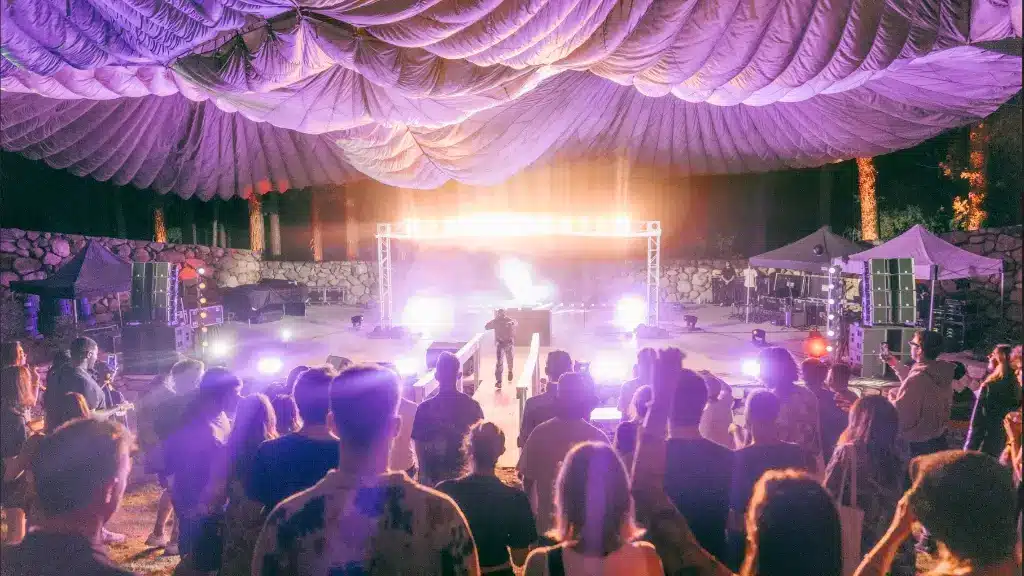
Web3 technology is fundamentally changing how creatives can monetize, connect with fans, and manage their content. Decentralized platforms, tokens, and smart contracts offer new ways to monetize, but they also challenge traditional intermediaries and business models. In this blog, I’ll explore how creatives can leverage the opportunities Web3 offers and new ways fans can participate in supporting and monetizing content. Tokens: new concert tickets and fan clubs From a revenue perspective, the core of an artist's relationship with a fan is a token, which is a digital token. A token could be compared to a Linnanmäki amusement park ticket: you can't get to the rides at an amusement park directly with euros, but by buying a ticket, you can get to the ride of your choice. In simple terms, a token is the digital equivalent of a single ticket, but in web3, the uses of a token are often more diverse, and their value can increase over time. No middlemen: direct connection to fans Traditionally, musicians have been dependent on major record labels and streaming services for the distribution of their music. This has often resulted in a significant portion of revenue going to middlemen: publishers, labels, agents, and other professionals who act as intermediaries between the artist and the audience. With the new internet, decentralized platforms enable direct communication with fans without intermediaries. For example, platforms based on blockchain technology allow artists to publish their music directly to the public, while retaining full ownership of their works. They can use smart contracts to determine how the use of the work is regulated and how, for example, the revenue from sales is allocated to the music creators. Traditionally, the connection with fans has been used as the basis for marketing: various mailing lists have been the basis for marketing, through which those who like the content created by the artist have been informed about new releases, for example. In the Web3 era, the role of the fan has been thought of differently: the fan is more of a partner than an object. "Engage-to-earn" at the heart of the new fan culture The engage-to-earn model is a new approach where both artists and fans benefit from active participation and interaction. In this model, artists can create digital tokens or NFTs (non-fungible tokens) that represent, for example, access to exclusive content, events, or other benefits. Fans can earn these tokens by engaging in various activities, such as sharing the artist’s content, participating in discussions, or completing certain tasks. This creates a two-way relationship where fans receive rewards for their activity, and artists benefit from increased visibility and an engaged audience. For example, in the music industry, Audius.co is a decentralized music streaming platform that aims to provide a fairer model for artists and fans compared to platforms like Spotify. The platform allows artists to release their new music directly to their fans without intermediaries and charges an introductory fee that gives the fan perpetual listening rights to the content. The content comes with access to a fan club that offers direct interaction between artists and fans. For example, electronic music composer and producer Dave Tipper has released his music on the platform and offered fans $AUDIO tokens, which give access to, among other things, fan-only events and through them become part of the subculture created by fans. Mirror.xyz, a platform for writers, allows content creators to publish their works. One of the platform’s successful experimenters was young author John Palmer, who wanted to publish an essay on his Mirror website. He sold tokens called $ESSAY, the proceeds of which were used to finance the writing of the essay. The agreement was that once the funding goal was reached, the essay would be published, and token holders would receive a share of something that could grow in value over time. The crowdfunded finished essay was sold on the online auction platform Zora. The proceeds were funneled back into the $ESSAY contract, increasing the value of each investor’s $ESSAY holding relative to the total value of the contract. Decentralized financial services enable fans to participate as investors in artists’ projects. For example, fans can invest their funds in an artist’s new album or film project and receive a share of future revenues in return. This model utilizes smart contracts that ensure automatic and transparent profit distribution to both the artist and fans and other parties specified in the smart contract. From fan to participant In the Web3 world, fan participation doesn’t necessarily stop at the role of an investor. They can also participate in decisions related to the development of artists’ careers and financial success by joining decentralized autonomous organizations (DAOs). In these communities, fans acquire tokens that give them voting rights and the ability to influence the artist’s activities. The Audius.co platform I mentioned earlier is governed by Audius token holders. These include both artists and fans. Token holders can vote on decisions related to the development of the platform, such as new features or terms of use. This model gives fans the opportunity to directly influence the operation of the platform and the visibility of artists, which can improve the financial opportunities of both fans and artists. One of the DAOs for artists, creative professionals, and fans is the Friends with Benefits (FWB) community. Membership in the community is achieved by acquiring a certain number of FWB tokens, which grant both entry and voting rights in community decision-making. FWB functions as both a social club and a funding crypto community. FWB organizes various events and festivals for its members, combining music, art, and cryptocurrency-related discussions. For example, the festival held in the summer of 2023 was open to members as well as a group of ticket holders (the ticket price was $399). The festival program included a diverse selection of speakers from technology to art. The event included a cinema, free generative art workshops organized by the NFT platform Highlight.xyz, yoga classes, DJ gigs, and a tennis tournament, where many participants dressed in all-white tennis attire. The educational speeches focused mainly on internet culture and in particular on the use of artificial intelligence in creative projects. In addition to the festival itself, the key benefit was a network of people interested in similar things, living as virtual and, at times, physical communities. Through DAOs, fan participation can lead to deeper engagement and financial benefits for both fans and artists. Fans are given the opportunity to influence the direction of artists' careers and financial success, and also to build activities that, in addition to inspiring content, promote networking and support the development of the creative industry. Only need 1,000 fans? In 2008, Wired magazine editor-in-chief Kevin Kelly introduced the idea of "1,000 True Fans," which states that an artist only needs 1,000 dedicated fans to succeed. Since then, Kelly's essay has been extensively updated and translated into many languages. The starting point of the idea is that if fans spend $100 per year on the products of the artist they admire, the artist would achieve an annual income of $100,000. This amount was therefore thought to be transferred more or less directly from fan to artist. However, in reality, complex production chains and professionals from different fields challenge the 1,000 fan theory. More and more artists can share their creations with the world at the touch of a button, enabling them to reach an ever-wider audience. They are drawn to the content, but also to the opportunity to interact with the creators of the creative content on a whole new level. But could the theory be reversed in the era of limitless digital communication, fueled by Web3? Could the reduction of intermediaries generate greater income for artists, or will the intermediaries simply change their roles while still receiving compensation for their professional contribution? Web3 may bring the 1,000 real fans theory closer to reality. Cutting out middlemen and engaging fans can increase an artist’s earnings, but they don’t eliminate the need for brand building, community management, and marketing. While blockchain and tokens bring new opportunities, they don’t automatically make an artist successful – it still requires audience engagement and ongoing interaction. The future will show how well Web3 delivers on its promise for the creative industries: is it a revolution or just another development in the digital economy? SOURCES Borg, J. (2024). Superfans: Why They’re Vital for Artists in the Algorithm Era. Amplify World Resources 18.1.2024. https://amplifyyou.amplify.link/2024/01/music-superfans/ Fenton, W. (2023). What is Web3 for music & how is it changing the industry? Midder. The Future of Music News 24.11.2023. https://middermusic.com/web3-for-music/?utm_source=chatgpt.com Fernandes, M.P. (2023). Crypto Clubs Throwing Summer Parties: Inside The Friends With Benefits DAO Festival. Forbes 10.8.2023. https://www.forbes.com/sites/digital-assets/2023/08/10/crypto-clubs-throwing-summer-parties-inside-the-friends-with-benefits-dao-festival/ fi.music396.com. Fanien sitoutumisstrategioiden mukauttaminen digitaalisiin alustoihin ja kulutustrendien muuttaminen (n.d.).https://fi.music396.com/topic/adapting-fan-engagement-strategies-to-digital-platforms-and-changing-consumption-trends/167277 Gottsegen, W. (2021). How Emily Segal Crowdfunded Her New Novel with Crypto. Deepdive Crypto profiles 24.2.2021. https://decrypt.co/68981/emily-segal-novel-crowdfund Marco J.D. (2022). The Musician's Guide to Web3. Mega Labs Article 6.7.2022. https://www.thelab.report/the-musicians-guide-to-web3/?utm_source=chatgpt.com Nittolo, T. (2024). A Peek Into The Tipper Community. Audius blogit 21.11.2024. https://blog.audius.co/article/a-peek-into-the-tipper-community Palmer, J. (2021). Using an Ethereum NFT to Crowdfund my Writing. Mirror.xyz 26.1.2021. https://j.mirror.xyz/OgVaYso25gEqxn7N4RyPnPbMO9pbNQJZQKEUvV9pxv8 Umana, D. (2024). Jack Harlow, Palaye Royale, and other music artists are using blockchain to connect with fans — and build profitable online communities. Business Insider TECH 16.2.2024. https://www.businessinsider.com/music-platforms-blockchain-artist-create-fan-clubs-communities Katri Halonen (Metropolia University of Applied Sciences) works as a project manager in the LUME – Creatives in the web3 era project, co-funded by the European Union, which focuses on new revenue models in the creative industry.
A new era of fan service
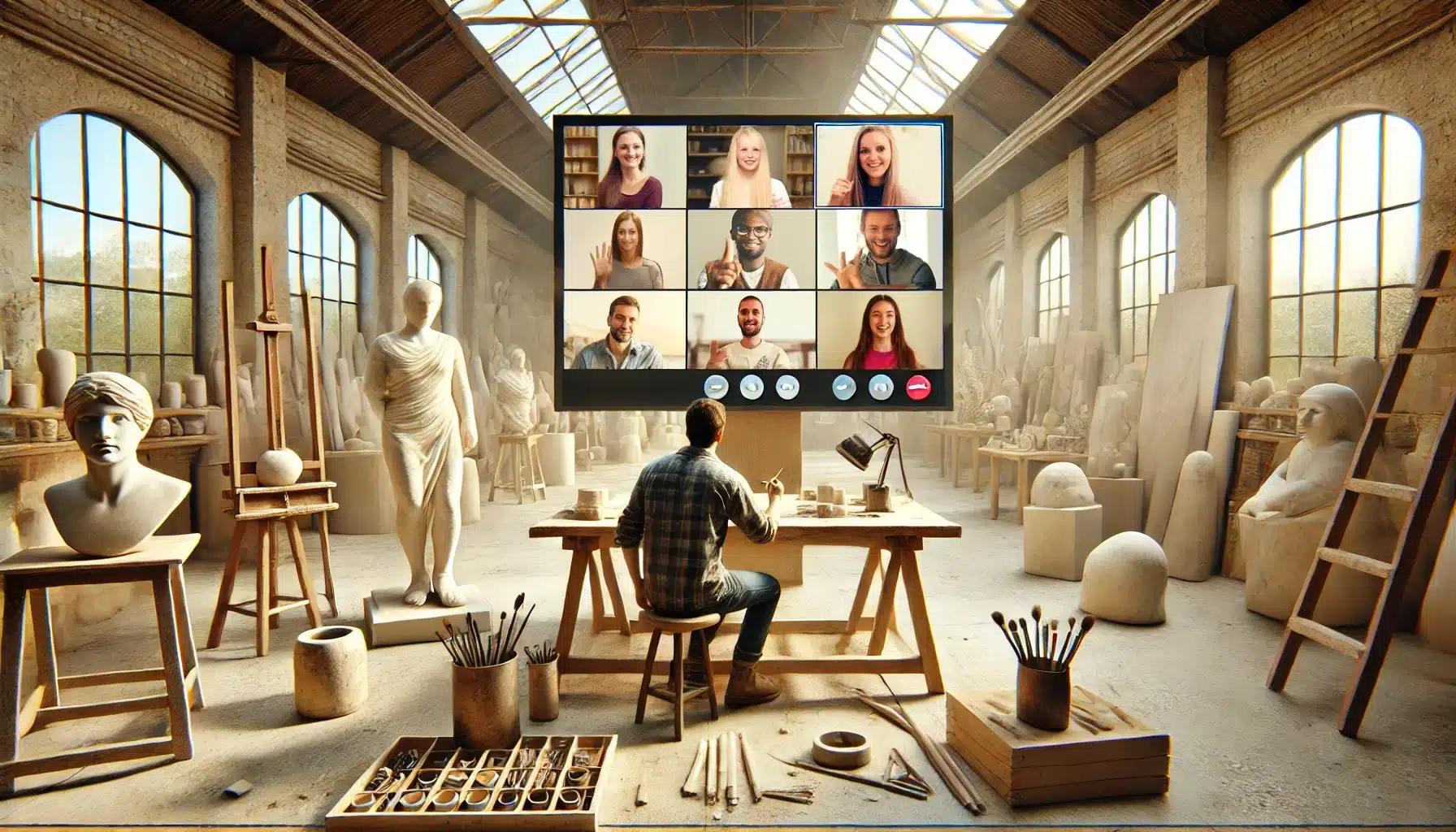
I was a Dingo fan when I was young. I first saw them on stage at my hometown vocational school and joined the fan club. My friend and I would share photos of our idols. Today, with social media, fan engagement has transformed into following, liking, and purchasing products. What if fans could be more involved – not just as distant admirers, but as part of a community where they could have a more personal experience and be recognized for their participation? The new internet (Web3) is opening doors to fan services, where tokens enable fans to experience unique experiences, exclusive content, and completely new types of fan services. In this blog, I dive deeper into how Web3 can change the way fans and artists meet. Tokens as a bridge between artist and fan A key challenge in fan relationships is communication. The new internet offers one solution to this challenge in the form of blockchain. The information stored in the blockchain is public, which allows artists to establish a direct connection with their fans by utilizing the fan's unique crypto wallet address. Knowing this address, artists can send their fans digital gifts in the form of tokens. However, it is important to note that the crypto wallet address alone does not contain personal information about the fan, which guarantees the privacy of users. A token is a digital unit that represents value or rights on a blockchain. It can act as a means of payment, a right to use a service, or an ownership interest in an asset, such as special content or services provided by a creator. Tokens act as a bridge in both directions. For example, American rap artist Snoop Dogg has moved his Death Row catalog to a platform called Tune.FM, thereby declaring that the era of Spotify is over. Tune.FM is a decentralized music streaming platform that utilizes blockchain technology and tokens called JAM. When a fan listens to Snoop Dogg's music on Tune.FM, he pays for his listening with tokens. These payments are transferred directly to Snoop Dogg without intermediaries. (Syväluomi 2025.) The payment is very small in nature, the price of one JAM token is approximately 0.0001753 (USD) at the time of writing. Compared to a traditional streaming service, this provides a fairer compensation for the artist by bypassing many intermediaries. Snoop Dogg also gets a direct connection to reward his fans, for example with a token that entitles them to purchase one concert ticket 2 hours before the actual sale starts. Stardust over content creators Traditionally, fan culture has been built around well-known creators and performers. Musicians, actors, and other major stars in entertainment have benefited from fan communities that are willing to purchase fan merchandise directed at them. That connection is nurtured and strengthened through performing. At the same time, many other creative content creators, such as visual artists, writers and designers, have been overshadowed as builders of fan services. Their work has not been based on direct, systematically maintained audience contact in the same way. However, fan services of the new internet can change this situation: they offer new ways to support and fan the creative professionals who traditionally work in the background. Any creative can build their own fan communities, where passionate supporters can participate, influence, and be recognized for their support. Specialized and even unique content can find their own fan base thanks to the global internet. Exclusive tickets – more than just an event ticket Traditionally, an exclusive ticket has meant a front-row seat to a concert, a premiere, or VIP access to a festival. In the new internet world, such tickets can be transformed into digital tokens owned by fans that offer additional benefits. Music and film fans can purchase special tickets that entitle them to, for example, an artist’s soundcheck or a film premiere discussion with the director. For example, Kentucky rapper Jack Harlow has sold VIP tickets to his concerts in the form of NFTs. Compared to regular tickets, the holders of these tickets had, among other things, faster entry and early entry to the concert venue to grab the best seats (see Kubinek 2023; Bincnce 2023; Halonen 2023). Entrepreneur Gary Vaynerchuk has launched the VeeFriends NFT collection. Each NFT grants entry to VeeCon (see VeeCon 2024). The event will run over several days, and the NFTs will serve as both collectibles and access to events hosted by the artist and other community members. For example, Elton John’s Rocket Club NFT membership gives access to the artist’s special photo collections (Sweetio.com), and Snoop Dogg’s The Passport Series NFT gives its owner the opportunity to accompany Snoop Dogg in the backrooms of concert venues and events on his tours (Langston, 2023). Martha Stewart and Quentin Tarantino also have their own NFT communities (Langston, 2021). The content of different VIP events is very diverse. Film fans can participate in NFT-based viewing experiences, where the film's director or lead actors discuss the film with fans. In the theater industry, closed readings can be organized, where fans can follow how a new play is being developed. In literature, VIP events can mean, for example, exclusive literary circles, where an author discusses his works with fans, and designers can invite their fans to design launches, where new collections are presented before official sales. A peek behind the scenes of creative work as a service for fans Especially during the corona years, a digital leap was taken towards remote participation. Zoom, Teams and Google Meet became familiar to many. These also led to the spread of digital artist meetings aimed at fans. There is no need to travel to the meeting, and everyone (including the artist) is physically safe behind their own screen. For example, director Kevin Smith (n.d.) released her film "KillRoy Was Here" in NFT form, giving NFT buyers not only the film but also the opportunity to participate in virtual meet & greets with Smith and access to behind-the-scenes footage. In addition to stars, people also want to meet creative professionals who stay behind the scenes. For example, the meeting site Charitybuzz.com has sold an hour-long Zoom remote meeting with, among others, The Walking Dead director Rosemary Rodriguez (Charitybuzz, 2025). Authors can sell special edition NFT books that entitle them to a private Q&A session, for example regarding alternative story endings. On the non-fiction side, Amanda Cassatt's (2023) Web3 Marketing book came with a limited-time purchase of the book, along with the right to join her private Discord group, where you can meet Amanda and other Web3 marketing developers. Visual artists can offer access to closed art tours that explore the creation stories of their works, while designers can sell limited tickets to prototype exhibitions where fans can provide feedback before the wider launch of products. A new era of fan culture In the Web1 era, mailing lists were collected from fans, in the Web2 era, various social media data and information provided by cookies in website tracking became the source of fan information. In the era of the new internet (web3), blockchain plays a key role in reaching fans. The tokenized services offered by the new internet not only deepen the relationship between artists and audiences, but also expand the concept of who can be fanned and how. Fanning is no longer just a domain dominated by the performing arts – writers, artists and designers can also build their own communities where fans can participate and influence more than before. So perhaps the title of my blog should have been a new era of fan culture instead of a new era of fan services. When I was young, joining the Dingo fan club and sharing photos with a friend, I felt a connection of sorts – even if it was a one-sided fandom. The new internet allows today’s fans to have a deeper and more personal connection with their favorite artists. With the help of blockchain, fans can own digital collectibles, participate directly in events organized by artists, and receive recognition for their activism. This development is transforming fandom from one-way admiration to an interactive community where fans are active participants and influencers. Sources Binance News (2023). Jack Harlow's Concert-Goers Experience Blockchain-Based VIP Tickets. Binance News 5.12.2023. https://www.binance.com/en/square/post/2023-12-05-jack-harlow-s-concert-goers-experience-blockchain-based-vip-tickets-983371762130 Cassatt, A. (2023). Amanda Cassatt on Web3 Marketing and the early days of Ethereum. Decrypt @DecryptMedia 25.10.2023 https://www.youtube.com/watch?v=p-LhIrf7Jco kohdassa 36 min). Charitybuzz (2025). https://www.charitybuzz.com/catalog_items/auction-1-hour-power-meeting-with-walking-dead-director-3129433 Halonen, K. (2023). NFT haastaa konserttien lippubisneksen. Metropolia AMK, LUME blogit 30.8.2023. https://blogit.metropolia.fi/lume/2023/08/30/nft-haastaa-lippubisneksen/ Kubinec, J. (2023). How MITH brought Jack Harlow fans to the blockchain. Blockworks newsletter 2.12.2023. https://blockworks.co/news/jack-harlow-mith-fan-engagement Langston, T. (2021). 15 Celebrities Who Are an Active Part of the NFT Community. NFT Now 10.11.2021. https://nftnow.com/culture/stars-active-in-nft-community/ Langstion T. (2023). Snoop Dogg Takes Fans on ad Digital Journey With New NFT Passport Series. NFT Now 14.6.2023. https://nftnow.com/news/snoop-dogg-takes-fans-on-a-digital-journey-with-new-nft-passport-series/ Smith, K. (n.d.). Kilroy was Here. Katsottu 13.3.2025. https://killroywashere.io/ Sweetio.com (n.d.). Elton John Rocket NFT Club Pass No. 1466. https://sweet.io/listings/pgWR0ajK Syväluomi, V. (2025). Snoop Dogg vie Death Row -kataloginsa Tune.FM:ään -- Soprityn aika on ohi. Klangi 28.2.2025. https://www.klangi.fi/uutiset/snoop-dogg-musiikki-tune-fm-web3-suoratoisto/ VeeCon event (2024). Lippukauppa. https://veecon.co/tickets Katri Halonen (Metropolia AMK) toimii projektipäällikkönä Euroopan unionin osarahoittamassa LUME – Luovat web3-ajassa hankkeessa, jossa keskitytään luovan alan uusiin ansaintamalleihin.
Forget the band shirt – new products for digital fandom

Traditional fan merchandise, such as shirts, posters and vinyl records, have been an important source of income for artists for decades. My teenage years were marked by experiences at gigs where I walked out as the proud new owner of a genuine band shirt, which my parents thought was a bit overpriced. Wearing it, I declared my fandom and that I was “there” at an important concert. When we jump to 2025, I may no longer have shirts in my closet. However, I want to support the band. Perhaps more and more people will buy fan merchandise as NFTs instead of shirts. In this blog, I will consider what NFT-based fan merchandise is like. What are NFT fan merchandise? NFT (Non-Fungible Token) is a unique digital product whose data is stored on a blockchain that serves as proof of ownership of the product. For example, a typical fan product, a poster, can be illustrated as follows: A poster is an image printed on paper. An NFT is like a digital original of that poster, but its authenticity and ownership are recorded on the blockchain. The blockchain is an open, decentralized ledger maintained by networks. The information stored on the blockchain tells you that the digital poster in question is an official edition from the collection of the band I admire and that my payment is going to the right party. NFTs can be digital art, music, or video footage, and can be bought, sold, and traded like physical collectibles. Sales often occur directly from artist to fan, without long chains of intermediaries. For example, American rap musician Snoop Dogg has made extensive use of NFT technology as part of his fan merchandise. He has released exclusive songs, digital artwork, and fan-owned products such as virtual merchandise in NFT format. He has also designed over 10,000 digital characters that make up The Doggies avatar collection (CNBCTV18, 2023). This creates a new, decentralized revenue stream for the artist without traditional intermediaries. When digital art meets ownership NFT technology has also transformed the digital art scene. For example, Australian 3D artist Andrew Price, founder of the popular YouTube channel Blender Guru, has used NFTs to sell his digital works directly to his fans. He became particularly famous for his NFT mosaic of 3D-modeled doughnuts (Lampel, 2024). The doughnuts were sold at auction without traditional intermediaries, and the sale brought the artist $18,000. Price’s case demonstrates how NFTs can serve as a means for artists to monetize their digital work and offer fans the opportunity to support their favorite artist by owning a unique digital piece. Compared to traditional commerce, the chain between artist and fan is typically much shorter – sometimes without intermediaries at all. Digital art is easily copied and shared, which has made its commercialization challenging. Crypto art utilizes NFT technology, which allows the origin and ownership of works to be verified. However, there are challenges in this field as well. For example, a person may sell an NFT to which they do not have the rights, or it may be a fake. Furthermore, ownership of an NFT is often only a link to the actual work, making ownership of the product dependent on the maintenance of the blockchain and the external storage service containing the work. (Rivero Moreno, 2024) Exclusivity and limited editions of NFT products NFT technology enables limited editions, which increases the value of products. For example, the number of NFT products aimed at fans has been limited to 500 pieces, allowing fans to compete to obtain them. This limited availability model has traditionally been used in vinyl releases and special editions, for example, but in the NFT world it is possible without physical production. Finnish fashion and virtual fashion designer Wilma Kurumaa, aka Kalista, is an interesting example of NFT fan products. Kalista has created NFT-based clothing. Fans can wear these clothes, for example, in the metaverse with their own avatars (Hero, 2025). This shows how NFT products can expand from mere images and audio recordings to interactive and usable digital products. Many NFT products contain both a physical and a digital component, i.e. are phygital. In this case, the NFT proves authenticity, ownership and ownership history - all of which are available for anyone to view on an open blockchain. The new market for phygital fan products T-shirts, pins and posters have been replaced by digital fan products with content that differs from what is customary. Artists can create fan products that are interactive and immersive experiences. NFT fan products can offer fans, for example, a personal digital artwork that includes the artist's signature, a unique animation or handwritten lyrics to a song. This adds value and uniqueness to NFT fan products, making them desirable collectibles. The content of phygital fan products has diversified with the development of digital technology. For example, Julien’s Auctions has sold phygital NFT products (i.e., NFTs that include a physical object and an NFT that proves ownership and origin) including Victoria Beckham’s evening gowns, Barack Obama’s golf shoes, and Leonard Cohen’s old front door key to his home on the Greek island of Hydra (Julien’s Auctions, 2025). Band shirts have moved on to a diverse, often unique world of fan products, where the NFT acts as a proof of authenticity and is a key part of the value of the fan product. Screenshots of the phygital products being sold at Julien's Auction NFT auction Fan shirt: a piece of the past or a future of fandom? NFT technology is still evolving, and there are many opportunities and risks surrounding it. Scams, challenges in understanding the technology, and market volatility can make it difficult for artists to transition to NFT fan products. However, when implemented well, NFTs can provide a more sustainable and fairer revenue model for artists who want to take advantage of the new opportunities offered by the technology (see Wolff, 2025). I'm still proud of my old band shirts. The stains on the prints are especially important. At the same time, the NFT world offers something I couldn't imagine before. It could mean access behind the scenes, exclusive experiences, or digital memories that can't be copied. Fandom isn't going away - it's just changing with the digital age. Or maybe my shirts are finding a new market where I could sell my old worn t-shirt as a phygital product to the highest bidder? SOURCES CNBCTV18.com (2023). 5 crypto and NFT projects that Snoop Dogg has been involved with. CNBTTV18 uutiset, 2.3.2023. https://www.cnbctv18.com/cryptocurrency/5-crypto-and-nft-projects-that-snoop-dogg-has-been-involved-with-16079141.htm Chalmers, D., Fisch, C. & Matthews, R. , Quinn, William & Recker, J. (2022). "Beyond the bubble: Will NFTs and digital proof of ownership empower creative industry entrepreneurs?," Journal of Business Venturing Insights, Elsevier, vol. 17(C). Hero, Laura-Maija (2025). Kalista ja muotiliiketoiminta web3 ajassa. Metropolia ammattikorkeakoulu, LUME-hankkeen blogi 15.1.2025. https://blogit.metropolia.fi/lume/2025/01/15/kalista-ja-muotiliiketoiminta-web3-ajassa/ Julien’s Auctions (2025). Lampel, J. (2024). What's New with Blender Guru ft. Andrew Price. CGcookie.com podcast 31.10.2024. Rivero Moreno, L. (2024). Art on the chain? On the possibilities of new media art preservation on the Web3. Digital Creativity, 35(3), 221-233. Wolff, M (2024). Web3: Huoli digitalisoitumisesta on ymmärrettävää. Metropolia ammattikorkeakoulu, LUME-hankkeen blogi 17.12.2024. https://blogit.metropolia.fi/lume/2024/12/17/web3-huoli-digitalisoitumisesta-on-ymmarrettavaa/ Katri Halonen (Metropolia AMK) toimii projektipäällikkönä Euroopan unionin osarahoittamassa LUME – Luovat web3-ajassa hankkeessa, jossa keskitytään luovan alan uusiin ansaintamalleihin.
Smart contracts for artists: An easy way to earn or a carefully considered risk?

Artist Emmi sat in a café, scrolling through her phone thoughtfully. She had been selling her art for years through traditional means – through galleries and commissioned works. She found herself thinking about the same problem more and more often: how could she make a more sustainable living from art? Then Emmi came across smart contracts. They allowed her to attach a piece of art to a digital contract that would ensure she would automatically receive a share of every resale of the piece. No negotiations, no sending invoices – just a clear, programmed model that took care of her rights. Emmi decided to try it out. She created her first digital series of works and attached a smart contract to it, which guaranteed her a 10% royalty on every resale. Sales were slow at first, but soon one of her works changed hands – and an automatic payment was made to her account without her having to do anything. This encouraged her to go even further in her experiments. However, the more Emmi learned about the subject, the more she realized that smart contracts are not risk-free. Implementing them requires consideration, understanding and preparation for potential pitfalls. Smart contracts open up a new way of earning Smart contracts are programmed agreements that automatically execute agreed-upon terms on the blockchain (Soon, 2024). This means that the artist does not have to negotiate separately how to receive payments or worry about how their works move through the market. The technology does it for them. One of the most significant advantages is the possibility of earning from the increase in the value of the work also in the so-called secondary market. Traditionally in the field of fine arts, when a work of art is sold, its ownership is transferred to the new buyer, and the artist no longer benefits from possible future resales. With the help of smart contracts, the artist can set an automatic royalty in the terms of the contract, which is paid to him for each new sale. In this way, he receives a share of the increase in the value of his work in the long term. (Murat et al. 2024, EU Blockchain Observatory and Forum 2023, EU Blockchain Ecosystem Developments 3, 2024.) A new kind of protection Payment security is also something that Emmi, like many other creative professionals, is used to stressing about. Invoices get stuck, payments get delayed, and you have to ask for them repeatedly. Smart contracts eliminate this worry: when pre-agreed conditions are met, payment occurs automatically without intermediaries or separate approval. Additionally, smart contracts offer a completely new level of protection for digital works. Blockchain technology allows a work of art to be registered in a way that its origin can always be verified. This reduces piracy and makes counterfeiting virtually impossible, as every transaction is permanently recorded and publicly visible. This is especially important for artists who sell digital works and want to ensure that the authenticity and ownership of their work can be easily verified. Overall, smart contracts can offer creatives like Emmi a new way to manage their rights and revenues without being tied to traditional and often rigid contractual models. The possibilities are attractive, but as with any new technology, there are also challenges and risks that need to be understood before full-scale adoption. (Murat et al. 2024, EU Blockchain Observatory and Forum 2023, EU Blockchain Ecosystem Developments 3, 2024) …and a new kind of vulnerability One of the first things Emmi learned was that once a smart contract is stored on the blockchain, it cannot be changed as easily as a traditional contract. Once a contract is made, it is really made. If you wanted to change the terms, for example by increasing the royalty, you would probably need a completely new contract (EU Blockchain Ecosystem Developments 3, 2024). This meant that even a small error in the contract code could be costly. In the traditional world, contracts can be renegotiated, but in a smart contract, the code is the law – and it is implemented exactly as it is written. The error can also be in the code. For example, in 2016, an attacker exploited a vulnerability in the code of the DAO organization’s smart contract to transfer about 3.6 million ether (ETH), which at the time was worth about 50 million US dollars (The DAO, 2024). The role of smart contracts in terms of traditional legal frameworks is uncertain. Smart contracts do not always fit into traditional legal frameworks, and in many countries it is not yet clear how disputes are resolved. This made their use riskier, as the security of the traditional legal system is not always available and it is not even necessarily known which country's legal protection would be used. In blockchains, there are also no guarantees that everyone will act fairly. The changing roles of cultural producers Smart contracts are associated with the idea of reducing the role of intermediaries. Traditionally, art sales have involved multiple actors – galleries, agents and other intermediaries – who take a share of the proceeds. When a smart contract manages payment transactions directly between buyer and seller, the artist can receive a larger share of the sales proceeds without having to negotiate commissions or fees. However, it is unlikely that the intermediary layer will disappear completely. Technological change will bring new job roles – also for cultural producers. They can develop new services that support the interaction between artists and audiences. Artists like Emmi need help in implementing these tools, and cultural producers can be key actors in helping them build sustainable and innovative revenue models. Choosing a blockchain platform and minimizing the risks of smart contracts may become new tasks (see Soon 2024). Traditionally, creatives have outsourced technical and commercial processes to intermediaries in order to focus on their creative work. While Emmi may find it challenging to find a physical gallery for her works, finding digital marketplaces may be easier. However, just as in the physical world, reaching the right audience in the digital environment is a key challenge. Perhaps the smart contract managers of the future will know marketplaces so well that they can help creative content creators find the right environment for their work. They can also draft smart contracts in such a way that their terms optimize the artist’s earning potential. Is it worth trying? Smart contracts offer many benefits to creatives, especially in terms of automated payments and resale revenue. However, their use still comes with many challenges, especially legal ambiguities and security risks. Therefore, before moving to smart contracts, it is important to ensure that the content of the contracts is properly programmed and that users understand the potential limitations of the technology. Smart contracts are not a solution to all problems, but they can offer creatives new and interesting revenue models, especially in the digital environment. They are best suited to situations where revenue is based on secondary markets, automatic payments or the management of digital works. Technology can be a powerful tool, but only when used consciously. For creatives, smart contracts can offer new revenue opportunities – but using them requires understanding, care and a bit of healthy skepticism. Perhaps the advice for Emmi and others like her could be: be cautious. It would be best to use only verified and proven contract templates and start small. Feel free to test low-risk use cases on reliable platforms and ensure the quality of the contract. Technology doesn't have to be scary – when understood and used correctly, it can be a powerful tool for building the future of art and creative work. SOURCES EU Blockchain Ecosystem Developments 3 (2024). EU Blockchain Observatory and Forum raportti.https://blockchain-observatory.ec.europa.eu/publications/eu-blockchain-ecosystem-developments-3_en Smart Contracts Report (2023). EU Blockchain Observatory and Forum. European Comission. https://blockchain-observatory.ec.europa.eu/news/smart-contracts-report-2023-03-13_en Soon, M. (2024). Älysopimusalustat ja niiden eroavaisuudet. Norhcrypto blogi 10.7.2024. https://www.northcrypto.com/learn/blog/alysopimusalustat-ja-niiden-eroavaisuudet The DAO (2024). Wikipedia. https://en.wikipedia.org/wiki/The_DAO?utm_source=chatgpt.com Tunc, M., Cavusoglu, H. & Zheng, Z. (2024) Resale Royalty in Non-Fungible Token Marketplaces: Blessing or Burden for Creators and Platforms?. Information Systems Research. https://doi.org/10.1287/isre.2023.0035 Blogin on kirjoittanut Euroopan unionin osarahoittaman LUME - Luovat web3-ajassa -hankkeen projektipäällikkö Katri Halonen Metropolia Ammattikorkeakoulusta.
Web3 tuo tullessaan osallistavan sosiaalisen median ja ansainnan mahdollisuuksia

Facebook on pitänyt viimeiset 10 vuotta ykköspaikka maailman käytetyimpänä sosiaalisena mediana. Sillä on maailmanlaajuisesti yli 3 miljardia käyttäjää, eli noin kolmannes maapallon ihmisistä (Kumar, 2024). Suomessakin Facebook on viikkokäyttäjien määrällä mitattuna suosituin sosiaalisen median kanava 3,25 miljoonan käyttäjän voimin (Innowise, 2024). Kymmenen vuoden aikana uusia kanavia on tullut ja poistunut Facebookin pysyessä kestosuosikkina. Sosiaalisen media kanavilla nousussa on TikTok, jolla on käyttäjiä noin kolmannes Facebookin lukemista (Innowise, 2024; Backlinko, 2024). TikTok kantaa mukanaan potentiaalisia muutoksen tuulia, sillä se kerää Facebookiin verrattuna selvästi nuorempaa käyttäjäkuntaa. Tässä blogissa pohdin etenkin eri sosiaalisen median alustojen ikäajakaumaa, joka on keskeinen tekijä muun muassa markkinointiviestinnän kohdentamisessa. Toinen kiinnostuksen kohde ovat algoritmit, jotka ovat monipuolistaneet sosiaalisen median toimintaa ja ansainnan mekaniikkoja. Nämä yhdessä avaavat kiinnostavia näkymiä myös luovan alan toimijoille. TikTokin algoritmi on mahdollistanut tuntemattomien tekijöiden sisältöjen leviämisen, ja se ohjaa ajattelua kohti web3-teknologioiden avaamia uusia sisällön tuottajan ja sisällön jatkokäyttäjän yhteistyön toimintamalleja. Web3 tarjoaa uudenlaisia tapoja hyödyntää luovaa sisältöä, jossa sekä tekijät että sisältöä käyttävä voivat hyötyä taloudellisesti. Esimerkiksi lohkoketjuteknologia mahdollistaa sen, että jokaisesta sisällön käytöstä voidaan ohjata korvaus suoraan alkuperäiselle tekijälle ja myös sisällön jatkokäyttäjälle. Tämä tekee jakamiskulttuurista paitsi arvokasta myös läpinäkyvää ja entistä oikeudenmukaisempaa. Ansaitse jakamalla: Web3 tekee kaikista sisällöntuottajia Facebookin ansaintamallissa rahaa ansaitaan esimerkiksi julkaistujen videoiden yhteyteen sijoitettujen mainosten katselukerroista tai yritysyhteistyön myötä tehtävän mainostamisen (Branded Contet Tool, 2023) avulla. Ansainta on vahvasti sidoksissa katselukertoihin ja kelpoisuuskriteerien täyttymiseen (esimerkiksi 10 000 seuraajaa). Samalla se on tuottanut vaikuttajien ammattikunnan, jolle on pikkuhiljaa rakentunut tärkeä rooli sosiaalisen median hallinnassa. Nuoren ikäryhmän sosiaaliseen mediaan mukaan tuomisen ohella TikTokin muutosvoima nojaa uusiin perusteisiin jakaa tuloja sisällön tuottajien kanssa. Alustan lähtökohta on avata sosiaalisen median menestyvien sisältöjen tuotanto kaikille tasavertaisemman oloisen algoritmin avulla, jonka piirissä kuka vain voi ansaita ja saada maailmanlaajuista näkyvyyttä. TikTok mahdollistaa tuntemattomien tekijöiden sisällön nousun pinnalle ilman uusia seuraajamääriä. Tärkeintä on, että sisältö puhuttelee ja se on liitettävissä viestinnän valtavirtaan. TikTokin käyttäjien For Your Page (FYP, 2024) näyttää sisältöä sitoutumisen mukaan, eli algoritmi suosii julkaisujen seuraajamäärän sijasta videoita, jotka saavat paljon tykkäyksiä, jakoja, kommentteja ja katseluaikaa. Näin lähtökohtaisesti mikä tahansa video voi saavuttaa miljoonayleisön, kunhan se vain vetoaa katsojiin. Pienemmän paikalliset taitelijat ja luovan alan tekijät voivat siis saada sisällöllään näkyvyyttä ilman globaalia seuraajakuntaa. Ei-tunnettujen sisällöntuottajien videoissa on usein läsnä aidon tuntuisia sisältöjä ja voimaannuttavia tai inspiroivia tarinoita sekä tee-se-itse tutoriaaleja esimerkiksi meikkaukseen liittyen. Usein niistä löytyy hauskoja sattumuksia tai spontaaneja ihmisten tai eläinten reaktioita. Myös erilaisiin tanssiliikkeisiin ja lip sync -haasteisiin liittyvät sisällön ovat saattaneet saada nopeasti miljoonia katsojia, mikä muokkaa tekijän roolia kohti kumppanuutta alkuperäisen kappaleen tekijän kanssa. Uuden sisällön alkuperäisen tekijän ja uudelleen käyttäjän välinen kumppanuus pohjautuu jakamiskulttuuriin, jossa sisältöjä ei vain katsella tai tykätä, vaan niitä jaetaan ja remiksataan edelleen. Tämä kulttuuri heijastuu suoraan web3-ajatteluun, jossa yhteisöjen ja käyttäjien osallistaminen sisällön kehittämiseen ja levittämiseen on keskiössä. Esimerkiksi DAO:t (ks. Mustikainen & Konttinen, 2023) voivat toimia yhteisöinä, jotka paitsi jakavat sisältöjä myös päättävät niiden kehittämisestä ja tuotosta yhdessä. Tämä tasapainottaa valtaa alustojen ja käyttäjien välillä, ja nuoret ovat usein innokkaita omaksumaan tällaisia osallistavia malleja. Musiikkia, trendejä ja viraaleja hittejä – miksi TikTok koukuttaa? TikTok asettaa äänen tärkeään rooliin alustallaan, joka houkuttelee luonnollisesti musiikkipainotteista sisältöä. Kun kappale tai äänileike saa nostetta, siitä voi nopeasti kasvaa viraali-ilmiö, joka voi nostaa tekijän laajaan tietoisuuteen. Tämä eroaa muista sosiaalisen median alustoista, joilla kuvat (Instagram) tai teksti (Twitter) hallitsevat. Esimerkiksi TikTokin viraalit kappalepätkät ovat johtaneet merkittävään suoratoistomäärien kasvuun ja joskus jopa merkittäviin levytyssopimuksiin nouseville artisteille. Tämä sitoutumiseen perustuva malli tarkoittaa, että TikTok voi tarjota suoria taloudellisia mahdollisuuksia, joita muilla alustoilla on vaikea jäljitellä. (ks. Coulter 2022.) TikTokin algoritmi suosii musiikkiin perustuvan sisällön versiointia. Käyttäjät tuottavat sisältöä esimerkiksi tunnetun tai tunnetuksi nousevan kappaleen ympärille. Esimerkiksi päälle laulaminen ja tanssiliikkeiden esittely ovat useiden trendin ytimessä, mikä tarjoaa kenelle tahansa mahdollisuuden liittyä hetkeksi sosiaalisen median päävirtaan. Luoville tekijöille, jotka haluavat maksimoida näkyvyytensä ja ansaintamahdollisuutensa, TikTok tarjoaa ainutlaatuisen tilaisuuden hyödyntää käyttäjien tuottamaa sisältöä. Sisällön tekijälle tarjolla on myös ketteriä yhteistyön ja sen kautta rakentuvan markkinoinnin keinoja, jotka erottuvat perinteisistä sosiaalisen median malleista. TikTok web3 ideologian airueena – mitä vuosi 2025 tuo tullessaan? Vuonna 2024 TikTok on ollut julkisen keskustelun keskiössä niin Suomessa kuin maailmallakin. Ylen kansanedustajille tekemässä kyselyssä jopa 84 vastaajaa 126:sta oli sitä mieltä, että TikTokin käyttö tulisi kieltää Suomessa (Hara, 2024). Huolenaiheita ovat erityisesti tietoturvariskit, valeuutisten leviäminen ja sovelluksen koukuttavuus, jotka ovat herättäneet kysymyksiä paitsi yksityisyydestä myös alustan yhteiskunnallisista vaikutuksista. Suhde Kiinaan tuottaa paljon epäilyksiä. TikTok on kiistänyt syytökset Kiina-yhteyksistään ja tietoturvaongelmista, mutta sovellus on joutunut kovan sääntelyn kohteeksi muualla, kuten Intiassa ja Yhdysvalloissa. Näiden maiden toimet saattavat toimia mallina myös Suomessa, mikäli paine sovelluksen rajoittamiseksi kasvaa. Vaikka TikTokin asema on kyseenalaistettu, on varsin todennäköistä, että lyhytvideomuotoinen sisältö on tullut jäädäkseen. TikTok siivittää osaltaan web3:n kehittymistä ajattelutavan muutoksella. Uudessa ajattelussa nuoret eivät enää ole pelkkiä kuluttajia, vaan myös sisällön osaomistajia ja sen hyödyntäjiä osana omaa sosiaalisen median toimintaansa. Tällainen muutos voisi älysopimusten siivittämänä tarjota heille uusia taloudellisia mahdollisuuksia. Sosiaalisen median murros on käynnissä, ja sen vaikutukset ulottuvat niin yksilöihin kuin yhteiskuntaankin. TikTokin nousu haastaa perinteiset toimijat, mutta se myös herättää kysymyksiä vastuullisuudesta, tietoturvasta ja nuorten hyvinvoinnista. Toisaalta sen tarjoamat uudet mahdollisuudet erityisesti luovan alan toimijoille ja pienille sisällöntuottajille ovat merkittäviä. Tämä kehitys alleviivaa tarvetta ymmärtää sosiaalisen median alustojen toimintaa, vaikutuksia ja tulevaisuuden suuntaa. Lopulta kysymys ei ole vain siitä, mikä alusta hallitsee markkinoita, vaan siitä, miten käytämme näitä työkaluja rakentavasti ja vastuullisesti yhteisen hyvän edistämiseksi. Tulevaisuuden web3 muovautuu juuri nyt – ja me kaikki olemme sen muovaajia. LÄHTEET Backlinko (2024). Social Media Usage & Growth. Backlinko 6.9.2024. https://backlinko.com/social-media-users Branded Content Tool (2023). Branded Content Policy. TikTok 11/2023. https://www.tiktok.com/legal/page/global/bc-policy/en Coulter. A. (2022). Marketing Agile Artists: How Music. Labels Can Leverage TikTok’s Virality. MEIEA Journal Vol. 22, No. 1. https://doi.org/10.25101/22.5 FYP. For your Page (2024). What is FYP. TikTok, luettu 18.11.2024. https://www.tiktok.com/channel/what-is-fyp?lang=fi-FI Hara, J. (2024). Iso osa kansanedustajista kieltäisi Tiktokin – katso, miten oma edustajasi vastasi. Yleisradio uutiset. https://yle.fi/a/74-20086759 Haidt, J. (2024). Ahdistunut sukupolvi. Kuinka älypuhelimen perustuva lapsuus on aiheuttanut mielenterveyden häiriöiden epidemian. Suomentanut Pietiläinen K. Terra Cognita. Innowise (2024). Sosiaalisen median tilastot ja käyttö Suomessa: somekatsaus 02/24. Innowise 07.2.2024. https://www.innowise.fi/fi/sosiaalisen-median-kaytto-suomessa-somekatsaus-022024/ Kumar, N. (2024) Facebook User Statistics (2024) -- Worldwide data. Demandsage.com statistics, 14.10.2024. https://www.demandsage.com/facebook-statistics/ McCormick, K (2024). The 6 Biggest, Baddest Social Media Platforms of 2024 (+How to Wield Their Power). Business 2 Community 19.3.2024. https://www.business2community.com/social-media-articles/the-6-biggest-baddest-social-media-platforms-02452016 Mustikainen, H. & Konttinen, M. (2023). Ovatko perinteiset organisaatiot tulleet tiensä päähän? Sitra artikkeli 25.5.2023. https://www.sitra.fi/artikkelit/ovatko-perinteiset-organisaatiot-tulleet-tiensa-paahan/ Sosiaalisen median tilastot 2024. (22.10.2024). Markkinointi Maestro blogi, luettu 18.11.2024. https://www.markkinointimaestro.fi/sosiaalisen-median-tilastot Katri Halonen (Metropolia AMK) toimii projektipäällikkönä Euroopan unionin osarahoittamassa LUME - Luovat web3-ajassa hankkeessa, jossa keskitytään luovan alan uusiin ansaintamalleihin.
Web3 Brings Participatory Social Media and New Earning Opportunities
For the past ten years, Facebook has maintained its position as the world’s most widely used social media platform. It has more than three billion users globally — roughly one-third of the world’s population (Kumar, 2024). In Finland as well, Facebook remains the most popular social media platform measured by weekly users, with approximately 3.25 million users (Innowise, 2024). During this decade, new platforms have emerged and disappeared while Facebook has remained a long-standing favorite. Among the rising social media platforms is TikTok, which has around one-third of Facebook’s user base (Innowise, 2024; Backlinko, 2024). TikTok carries significant potential for change because its user base is considerably younger than Facebook’s. In this blog, I explore especially the age distributions of different social media platforms, as these are central factors in areas such as targeted marketing communication. Another area of interest involves algorithms, which have diversified both the functionality of social media and its revenue mechanisms. Together, these developments also open intriguing possibilities for creative industry professionals. TikTok’s algorithm has enabled unknown creators’ content to spread widely, steering thinking toward the new collaborative models between content creators and content re-users made possible by Web3 technologies. Web3 offers new ways to utilize creative content in which both creators and those reusing content can benefit financially. For example, blockchain technology makes it possible for compensation from every use of content to be directed both to the original creator and to the secondary content user. This makes sharing culture not only valuable but also more transparent and fairer than before. Earn by Sharing: Web3 Turns Everyone Into Content Creators Facebook’s monetization model is based, for example, on advertising revenue generated through video views or through sponsored content partnerships enabled by branded content tools (Branded Content Tool, 2023). Revenue generation is strongly tied to view counts and eligibility criteria, such as reaching 10,000 followers. At the same time, this system has produced an influencer profession that has gradually gained a significant role in managing social media visibility. Alongside bringing younger generations into social media, TikTok’s transformative power also relies on new ways of distributing revenue among content creators. The platform’s core idea is to democratize the production of successful social media content through a more egalitarian algorithm, where virtually anyone can earn money and gain global visibility. TikTok allows unknown creators’ content to rise to prominence without requiring massive follower counts. The most important factor is whether the content resonates with audiences and connects to broader communication trends. TikTok’s “For You Page” (FYP, 2024) prioritizes engagement rather than follower numbers, meaning the algorithm favors videos that receive high levels of likes, shares, comments, and watch time. In principle, any video can therefore reach millions of viewers if it appeals to audiences. Small local artists and creative professionals may gain visibility without an existing global fanbase. Videos created by lesser-known content creators often contain authentic-feeling content, empowering or inspiring stories, and do-it-yourself tutorials such as makeup guides. Many feature humorous coincidences or spontaneous reactions from people or animals. Content related to dance challenges and lip-sync trends has also rapidly gained millions of viewers, transforming creators’ roles toward collaborative partnerships with the original creators of the music used. The partnership between original creators and re-users of content is rooted in a sharing culture where content is not merely watched or liked but actively remixed and redistributed. This culture directly reflects Web3 thinking, in which involving communities and users in content development and distribution is central. For example, DAOs (see Mustikainen & Konttinen, 2023) may function as communities that not only share content but also collectively decide how it is developed and monetized. This balances power between platforms and users, and younger generations are often particularly eager to adopt such participatory models. Music, Trends, and Viral Hits – Why Is TikTok So Addictive? TikTok places sound at the center of its platform, naturally encouraging music-focused content. When a song or sound clip gains traction, it can quickly become a viral phenomenon that propels creators into widespread public awareness. This differs from other social media platforms, where images (Instagram) or text (Twitter/X) dominate.For example, viral TikTok music clips have led to significant increases in streaming numbers and even major record deals for emerging artists. This engagement-driven model means TikTok can offer direct economic opportunities that other platforms struggle to replicate (see Coulter, 2022). TikTok’s algorithm encourages the remixing and reinterpretation of music-based content. Users create videos around popular or emerging songs. Singing along, dance routines, and trend participation are at the heart of many viral phenomena, offering virtually anyone the chance to momentarily become part of the social media mainstream.For creative professionals seeking to maximize visibility and monetization opportunities, TikTok offers a unique environment for leveraging user-generated content. The platform also provides agile collaboration and marketing mechanisms that differ significantly from traditional social media models. TikTok as a Herald of Web3 Ideology – What Might 2025 Bring? In 2024, TikTok became a major topic of public debate both in Finland and globally. In a survey conducted by Yle among Finnish members of parliament, 84 out of 126 respondents believed TikTok should be banned in Finland (Hara, 2024). Concerns focus particularly on cybersecurity risks, the spread of misinformation, and the addictive nature of the application, raising broader questions not only about privacy but also about the platform’s societal impacts.TikTok’s relationship with China generates significant suspicion. TikTok has denied allegations regarding connections to the Chinese government and data security concerns, yet the application has faced strict regulation in countries such as India and the United States. These measures could potentially serve as models for Finland if pressure to restrict the platform continues to grow. Although TikTok’s position has been questioned, it seems highly likely that short-form video content is here to stay. TikTok is also accelerating the development of Web3 through a broader shift in mindset. In this emerging model, young people are no longer merely consumers but also partial owners and active users of content within their own social media activities. Supported by smart contracts, this transformation could create entirely new economic opportunities for them. The transformation of social media is already underway, and its effects extend from individuals to society as a whole. TikTok’s rise challenges traditional platforms, but it also raises important questions about responsibility, cybersecurity, and young people’s wellbeing. At the same time, the platform’s new opportunities — particularly for creative professionals and small-scale content creators — are significant.This development highlights the need to better understand how social media platforms function, what impacts they have, and where they may be heading in the future. Ultimately, the question is not simply which platform dominates the market, but how we choose to use these tools constructively and responsibly for the common good. The future of Web3 is taking shape right now — and all of us are helping shape it. References Backlinko (2024). Social Media Usage & Growth. Backlinko 6.9.2024. https://backlinko.com/social-media-users Branded Content Tool (2023). Branded Content Policy. TikTok 11/2023. https://www.tiktok.com/legal/page/global/bc-policy/en Coulter. A. (2022). Marketing Agile Artists: How Music. Labels Can Leverage TikTok’s Virality. MEIEA Journal Vol. 22, No. 1. https://doi.org/10.25101/22.5 FYP. For your Page (2024). What is FYP. TikTok, luettu 18.11.2024. https://www.tiktok.com/channel/what-is-fyp?lang=fi-FI Hara, J. (2024). Iso osa kansanedustajista kieltäisi Tiktokin – katso, miten oma edustajasi vastasi. Yleisradio uutiset. https://yle.fi/a/74-20086759 Haidt, J. (2024). Ahdistunut sukupolvi. Kuinka älypuhelimen perustuva lapsuus on aiheuttanut mielenterveyden häiriöiden epidemian. Suomentanut Pietiläinen K. Terra Cognita. Innowise (2024). Sosiaalisen median tilastot ja käyttö Suomessa: somekatsaus 02/24. Innowise 07.2.2024. https://www.innowise.fi/fi/sosiaalisen-median-kaytto-suomessa-somekatsaus-022024/ Kumar, N. (2024) Facebook User Statistics (2024) — Worldwide data. Demandsage.com statistics, 14.10.2024. https://www.demandsage.com/facebook-statistics/ McCormick, K (2024). The 6 Biggest, Baddest Social Media Platforms of 2024 (+How to Wield Their Power). Business 2 Community 19.3.2024. https://www.business2community.com/social-media-articles/the-6-biggest-baddest-social-media-platforms-02452016 Mustikainen, H. & Konttinen, M. (2023). Ovatko perinteiset organisaatiot tulleet tiensä päähän? Sitra artikkeli 25.5.2023. https://www.sitra.fi/artikkelit/ovatko-perinteiset-organisaatiot-tulleet-tiensa-paahan/ Sosiaalisen median tilastot 2024. (22.10.2024). Markkinointi Maestro blogi, luettu 18.11.2024. https://www.markkinointimaestro.fi/sosiaalisen-median-tilastot
Inklusiivinen tekoäly: Naisten rooli vinoumien poistamisessa

Tekoäly (AI) on saavuttanut merkittäviä edistysaskeleita viime vuosikymmeninä, ja sen sovelluksia käytetään laajasti kulttuurin ja luovan talouden eri aloilla. Tekoäly voi olla hieno apu esimerkiksi ideoinnissa ja ideoiden jalostamisessa. Samalla sen käyttöön liittyy haasteita, joista yksi on sukupuolittuneet vinoumat. Nämä vinoumat voivat vaikuttaa merkittävästi siihen, miten AI-järjestelmät tekevät ideoijalle ehdotuksia ja kuinka ehdotuksissa kohdellaan eri sukupuolia. Tässä blogissa tarkastellaan tekoälyn sukupuolittuneiden vinoumien syitä ja seurauksia sekä keinoja niiden estämiseksi. Sukupuolittunut data voi johtaa sukupuolistereotypioiden vahvistumiseen Sukupuolittuneet vinoumat tekoälyssä johtuvat muun muassa yhteiskunnallisia rakenteita toistavista datan vinoumista. Jo nyt on nähtävissä, että tekoälyä on koulutettu datalla, joka voi itsessään sisältää syrjiviä elementtejä ja toistaa historiallisia sukupuolittuneita vääristymiä, mikäli niitä ei tietoisesti pyritä välttämään. Esimerkiksi jos työpaikkailmoitusten analysointiin käytetään dataa, joka sisältää voittopuolisesti miesten nimiä teknologia-alan työpaikoissa, AI saattaa suosia miehiä, kun siltä pyydetään teknologia-alan kuvauksia. Vääristymät voivat osaltaan johtaa sukupuolten välisen epätasa-arvon vahvistumiseen ja syrjivien käytäntöjen lisääntymiseen eri elämänalueilla. AI toistaa ja sitä kautta vahvistaa yhteiskunnassa vallitsevia ennakkoluuloja ja sukupuolistereotypioita. Tämän blogin pääkuvan on tehnyt LeonardoAI, jolta on pyydetty kuvaa, jossa on moninaisuutta sisältävä ICT-alalla työskentelevä joukko naisia. Tuloksena oli eri etnisiä taustoja symboloiva joukko, jonka keski-ikä viesti, ettei ICT-ala taida olla keski-ikäisen naisen työympäristö. Kuva ilman pyyntöä diversiteetistä johti jokseenkin samanlaiseen nuorehkojen naisten joukkoon, mutta ilman silmälaseja. Pyysin kokeilumielessä CoPilot Designeria piirtämään kuvan suomalaisesta toimitusjohtajasta ja suomalaisesta naispuolisesta toimitusjohtajasta. CoPilot Designerin ehdotukset mies- ja naistoimitusjohtajalle Esimerkin kuvissa on havaittavissa selkeitä sukupuolistereotypioita. Lähtökohtaisesti suomalainen toimitusjohtaja on keski-ikäinen mies. Pyydettäessä tekoälyltä nimenomaan suomalaista naispuolista toimitusjohtajaa se teki samalla melkoisen nuorennusleikkauksen ja kuvasi naisen huoliteltuina, barbimaisena henkilönä. On kuitenkin mahdollista, että muutos on jo käynnissä – tai kenties se on jo tapahtunut. Monissa yhteyksissä on pohdittu, voisiko web3 ja lohkoketjuteknologia tuoda mukanaan naismyönteisempää ICT-alaa. Tässä uudessa internetin vaiheessa sukupuolijakauma ei ehkä olisi yhtä miespainoinen kuin aiemmin. Voisivatko lohkoketjut tuoda mukanaan tasa-arvoa? Lohkoketjuteknologia, joka on tunnettu turvallisuudestaan, hajautetusta luonteestaan ja läpinäkyvyydestään, tarjoaa myös mahdollisuuksia sukupuolittuneiden vinoumien vähentämiseen tekoälyjärjestelmissä. Naisten rooli lohkoketjuissa on erityisen merkittävä, sillä heidän osallistumisensa ja johtajuutensa voivat auttaa varmistamaan, että sukupuolten monimuotoisuus otetaan huomioon teknologian suunnittelussa ja toteutuksessa. Lohkoketjupohjaisen kryptovaluutta bitcoin kehittäjä tai kehittäjät tunnetaan nimellä Satoshi Nakamoto (Malin, 2024). Vaikka Satoshin todellinen henkilöllisyys ja sukupuoli ovat yhä salassa, hänen toimintansa ja tavoitteensa ovat herättäneet huomiota ja inspiroineet erityisesti naisia, jotka ovat perustaneet #SatoshiIsFemale-liikkeen (Joffrion, 2018). Satoshin naisoletukseen liittyvät perusteet ovat mielenkiintoisia: Bitcoinin alkuperäisissä tavoitteissa korostettiin yhteistyötä ja avoimuutta, mikä mahdollistaa inklusiivisuuden. Lohkoketjuteknologia on yhteisöllisesti ylläpidettyä, ja bitcoinin käyttö on laajentunut myös hyväntekeväisyyteen. Esimerkiksi kryptomiljonääri "Pine" perusti Pineapple Fund -organisaation ja lahjoitti yli 55 miljoonan dollarin arvosta bitcoineja hyväntekeväisyyteen (Rodgers, 2018). On huomionarvoista, että bitcoinin alkuperäinen arvopohja oli merkittävästi erilainen verrattuna nykyiseen, usein huijauksien, ilmaston tuhoamisen ja pikavoittojen sävyttämään kuvaan. Vaikka halu yhdistää bitcoinin alkuperäisiä tavoitteita naisoletettuihin arvoihin ja toimintatapoihin saattaa olla stereotyyppistä, monet naiset kertovat törmäävänsä tähän ajattelutapaan tullessaan alalle. On yleistä, että bisnes ja teknologia yhdistetään miehiseen maailmaan, kun taas hyväntekeväisyys ja yhteisölliset DAO-projektit nähdään naisille sopivampina. Ehkäpä kuitenkin lohkoketjuteknologian parissa on avautunut mahdollisuus muuttaa sukupuolittunutta ajattelua ja saada ainakin hieman sukupuolineutraalimpi ja tasa-arvoisempi ympäristö. Toivottavasti ala houkuttelee myös naisia, jotka voisivat toimia niskaansa langetetun stereotypian sijasta uusien standardien ja käytäntöjen luojina ja sen myötä muokata koko alan kulttuuria. Sukupuolten tasa-arvo teknologiasektorilla: muutosta ilmassa? Tulevaisuutta rakennetaan jo kovaa vauhtia, ja vääristymiin tulisi siksi puuttua nopeasti. Ehkäpä niiden korjaaminen osaltaan antaisi mahdollisuuden luoda inklusiivisempi ja tasa-arvoisempi ICT-ala, jossa sukupuolijakauma on tasapainoisempi ja kaikkien ääni pääsee kuuluviin. Tällä hetkellä naiset muodostavat noin 35 % teknologiasektorin työvoimasta. Kehityssuunta on kuitenkin ollut hyvä, sillä 2000-luvun alussa naisia oli alalla vain 9 %. Euroopassa teknologia-alalla työskenteli vuonna 2023 noin 1,7 miljoonaa naista, mikä edustaa noin viidennestä (19,1 %) ICT-työvoimasta. (women in tech.) Suomessa tilanne on ainakin koulutuksen näkökulmasta parempi, sillä ICT-alan korkeakouluopiskelijoista lähes kolmannes (29,2 % vuonna 2023) on naisia. Suunta on kohti tasapainoisempaa sukupuolijakaumaa, mutta eteneminen on varsin hidasta, sillä vuosittain alalle hakeutuvien naisten määrässä on vain noin 1–2 % nousuja. Edistämällä naisten osallistumista, koulutusta ja vaikutusmahdollisuuksia lohkoketjuprojekteissa voidaan varmistaa, että sukupuolten monimuotoisuus otetaan huomioon ja sukupuolivinoumat vähenevät. Lohkoketjuteknologian tarjoamat läpinäkyvyyden, hajautetun hallinnan ja turvallisuuden ominaisuudet tukevat tätä tavoitetta mahdollistaen oikeudenmukaisemman ja tasa-arvoisemman tekoälyn kehittämisen. Lähteet Collins, K. (2022). How is Blockchain Technology Empowering Women? Blockchain Magazine 28.6.2022. https://blockchainmagazine.net/how-is-blockchain-technology-empowering-women/ Enkovaara, A. (2024). ICT-alan opiskelijoiden ja työllisten määrä kasvussa. FiComin tietopalvelu. https://ficom.fi/ajankohtaista/uutiset/ict-alan-opiskelijoiden-ja-tyollisten-maara-kasvussa/ Joffrion, E.F. (2018). Why This Cryptocurrency Leader Believes Blockchain Is A New Paradigm For Inclusion. Forbes 17.6.2018. https://www.forbes.com/sites/emilyjoffrion/2018/07/17/satoshi-is-female-why-this-cryptocurrency-leader-thinks-so/#4a4d06c04154 Malin, A. (2024). Bitcoinin luojaksi väitetty Satoshi Nakamoto on yhä arvoitus – ja suunnattoman rikas. Suomen kuvalehti 13.2.2024. https://suomenkuvalehti.fi/politiikka-ja-talous/bitcoinin-luojaksi-vaitetty-satoshi-nakamoto-on-yha-arvoitus-ja-suunnattoman-rikas/ Rodgers, N. (2018). Satoshi is Female. Medium 16.3.2018. https://medium.com/mama-hope/satoshi-is-female-b35034104d08 Women in Tech Stats 2024 (2024). Women in Tech Stats 2024. Uncovering Trends and Unseen Data by WomenTech Network. https://www.womentech.net/en-at/women-in-tech-stats Katri Halonen (Metropolian amk) toimii projektipäällikkönä Euroopan unionin osarahoittamasa LUME-hankkeessa, joka keskittyy luovan alan uusin ansaintamalleihin.
NFT challenges the concert ticket business
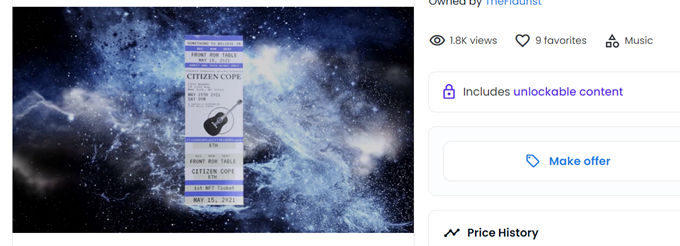
The ticket sales for pop rock band Coldplay's Helsinki gigs sparked a lot of discussion and even angry speeches in July 2023 (Partanen, 2023). The ticket sales used dynamic pricing, familiar from airplanes and hotels, in which the price changes according to demand. Dynamic pricing is one of the innovations in the field of performing arts ticket sales made possible by information technology and algorithms. The selling price of Coldplay tickets was not the only issue that sparked discussion. There were not enough concert tickets for everyone, so ticket resale began soon after the actual ticket sales ended. At the same time, concerns arose about the authenticity of the resold tickets, and those who had lost their tickets were warned about possible scammers (Linnake, 2023). Ticket sales seem to be changing, but dynamic pricing may just be the beginning of the next era. A much bigger change is just around the corner: NFT ticket sales. In the world of NFTs, a ticket to a Coldplay concert could have been a numbered NFT ticket purchased directly from an online store, with ownership transferred to the buyer upon purchase. Anyone could verify the authenticity of the ticket on the blockchain by looking at the ticket's history. An NFT ticket would have saved Coldplay fans many moments of excitement and frustration. In this blog, we explore how ticket sales can benefit from blockchain and NFTs. Anatomy of an NFT Ticket The special feature of an NFT ticket is related to the blockchain. The ticket is created by, for example, making a unique ticket identified by a number, which is recorded in a decentralized blockchain. The ticket can be sold, for example, on an online platform, and when making a purchase decision, the buyer can check the authenticity of the ticket by looking at the ticket's history on the blockchain. A ticket can be published as “nontransferable”, meaning it cannot be transferred to a new owner on the blockchain. It is also possible that the transfer is allowed under certain conditions. The original ticket holder can set additional conditions on the NFT ticket for resale. The conditions can include, for example, a royalty to be earned by the original holder on the resold ticket or a maximum allowed price. The information travels with the NFT on the blockchain and thus regulates the potential secondary market for the ticket. (Langston, 2023; Singh, 2023; Tan, 2023; Takyar.) In Metaverse, for example, in connection with concerts, “meet and greet” events are sometimes sold, where ticket holders get to meet the artist they admire in a virtual backroom. These limited VIP tickets are put on the market in a very limited number. The value of the ticket is often sought through an auction mechanism, where the ticket price is set according to supply and demand. If the ticket holder decides to sell the ticket, the original ticket holder also receives a share of the increased ticket sales price in their own virtual wallet. At the same time, the new buyer can always peek at the ticket history on the blockchain and thus ensure that it is not a pirated ticket. From paper ticket to QR code - what about collectibles? Paper concert tickets have their own loyal following. They also come with risks: getting lost, getting damaged in the rain or other misfortune can result in the entire ticket being lost. There is also a lot of counterfeiting of paper tickets. This has been addressed by QR code-based tickets sent to smartphones. The problem with QR codes is that it is difficult for the buyer to know for sure whether they have bought a genuine ticket, or whether they will be disappointed if the ticket turns out to be counterfeit (Takyar). An NFT-based ticket is more difficult to counterfeit. Each ticket is its own NFT managed on the blockchain (Langston, 2023; Singh, 2023; Tan, 2023). It is a unique product that directly contains information about which concert and which seat the ticket entitles its owner to. The ticket owner can show their NFT ticket upon entering the concert venue, and it can be scanned as a QR code or directly as a blockchain link to verify authenticity. Paper concert tickets can be valuable mementos and even collectibles. It is therefore reasonable to ask how the role of a ticket changes if its essence is a QR code that flashes on a smartphone. An NFT ticket can also be a valuable collectible, like a paper ticket, which can offer, in addition to admission, for example, music, an interview with the artist about an upcoming performance, or images of interest to fans. The content is only available in conjunction with the ticket, so exclusive content can increase the commemorative and collectible value of the ticket (Singh, 2023). An NFT ticket can also include products that are available for a limited time, such as a digital tour shirt to wear as an avatar during a concert and a physical version of the same shirt to be sent by mail. The ticket can therefore provide access to various additional services and products. Ticket services already exist There are already several commercial NFT ticket services available. They are distinguished from each other mainly by the different functionalities of the sales platforms, the blockchain used, the NFT standard used and the type of tickets. In addition to tickets, sales platforms can also have a significant number of other digital products related to the artist. For example, Dutch company GUTS tickets offers a blockchain-based ticket management service using the GET protocol it developed. During its existence, the company has sold over 4.2 million tickets for over 19,000 events (NFT ticket explorer 2.8.2023), and each ticket can be viewed on the blockchain. This creates a huge amount of data that can help concert organizers in data-driven potential assessment of ticket prices, sales times and concert occupancy rates. YellowHeart combines community participation with its tickets. Community members only get to see content targeted at them. They can also participate in, for example, ticket pre-sales and private events organized only for club members in the metaverse. The ticket therefore functions as a kind of web3 version of a fan club, uniting fans into a community, the activities of which are activated in YellowHeart's own metaverse, among other things. A somewhat similar club mentality has also been implemented in the field of music festivals, with the participation opportunity for Coachella integrated into the Fortnite game, which included lifetime access to ten auctioned NFT tickets (Disalvo, 2022; Langston, 2023). However, the ticket lost its value after the collapse of the FR cryptocurrency exchange operating in the Bahamas (Disalvo, 2022). The crypto world is still quite poorly regulated, and it has clear risks for users. Many things can go mainstream even with a single event. For example, the UEFA Champions League match between Real Madrid and Liverpool was delayed due to ticket counterfeiting. Police had to use tear gas to restore order (Polden, 2022). Michel Cadot, the French government’s Olympic ambassador, even proposed the introduction of blockchain tickets for the 2024 Paris Olympics. This could well be a step towards the normalization of NFT tickets for the event industry. Let's return to the Coldplay concert ticket dilemma mentioned at the beginning of this blog. The leap into the crypto world may seem complicated from a consumer's perspective. Ticket shops have indeed paid a lot of attention to user interfaces. One key step forward for consumers is, for example, the cryptocurrency eEuro, which is directly comparable to the euro. For the future, it is essential to ensure that shopping is also easy and risk-free for consumers in web3 environments. LÄHTEET Adele (2022). Paris 2024 Olympics May Introduce NFT Tickets. NFTevening news 14.6.2022. Disalvo, T. (2022). Coachella’s lifetime pass NFTs made unavailable due to FTX cryptocurrency crash. NME Music News 21.11.2022. Langston, T. (2023). NFT Tickets Are the Future of Live Events. Here’s Why. NFT now 30.3.2023. Linnake, T. (2023). Coldplayn loppuunmyydyt keikat synnyttivät ikävän ilmiön – näin Lippu.fi kommentoi. Iltasanomat 1.8.2023. Partanen, T. (2023). Coldplayn konserttien ennakkomyynnistä tuli uskomaton ryntäys – näin valtava ihmismassa yritti saada lippuja. Iltasanomat 25.7.2023. Polden, J. (2022). UEFA blame "fake tickets" for Champions League chaos as Liverpool demand investigation. Mirror sport news 29.5.2022. Singh, O. (2023). What is NFT ticketing and how does it work? Cointelegraph 14.2.2023. Tan, C. (2023). Seatlab NFT CEO Ryan Kenny Discusses How NFTs are Disrupting the Ticketing Industry. Metaverse post 23.3.2023. Takyar, A. (nn). Ticketing disrupt the ticketing industry? LeewayHertz blogit. KIRJOITTAJA Krista Jäntti on EventuallyXR-yrityksen perustaja ja toimitusjohtaja. Hänen erikoisosaamisalueenaan on metaversumiin ja tekoälyyn liittyvien uusien liiketoimintapalvelujen konseptoiminen sekä käyttäjäkokemusten suunnittelu ja tutkiminen. Krista on toiminut neuvonantajana lukuisissa suomalaisissa yrityksissä, kuten Varjo, Zoan, KONE, Sulava, LähiTapiola ja Nokia. Katri Halonen (Metropolian amk) toimii projektipäällikkönä Euroopan unionin osarahoittamasa LUME-hankkeessa, joka paikantaa web3:n mukana tulevia muutoksia luovien alojen ansaintaan.
Lohkoketjut avaavat uusia mahdollisuuksia musiikkialan sijoitustoimintaan
Musiikin kuluttajana voit tukea muusikoita esimerkiksi käymällä keikoilla tai ostamalla levyjä. Musiikkialalle sijoittaminen sen sijaan on ollut tähän asti melko hankalaa, sillä musiikin kuluttajille ei ole ollut sijoitusmekanismeja käytössä. Teknologian kehitys ja digitaalinen maailma voi kuitenkin tuoda tähän muutoksen. Tekijänoikeudet osana musiikkialan sijoitusmarkkinoita on mielenkiintoinen ajatus ja jo kokeiluihinkin johtanut ilmiö. Digitaalinen maailma luo meille uusia sijoituskohteita aineettomien hyödykkeiden ja niiden lohkoketjupohjaisen hallinnoinnin kautta. Tämä blogikirjoitus keskittyy pohtimaan, miten musiikkialalle voisi sijoittaa lohkoketjuympäristössä. Millaisia uusia sijoituskohteita tai sijoittajia lohkoketjut avaavat musiikkialle? Tekijöiden kustannusoikeudet nousevana sijoituskohteena Musiikkiteollisuuden asiakkaalle näkyvimpiä osia ovat usein esitys- ja levytystoiminta. Näiden takana on tekijän keskeisin pääoma: tekijänoikeuteen pohjautuva kustannussopimus. Sopimuksen puitteissa musiikin tekijät siirtävät oikeuksien hallintaa kustantajalle, joka saa osan tekijänoikeustuloista. Kustantajan tehtävänä on levittää, markkinoida ja hallinnoida biisejä. Kustannustoiminnassa pyörivät isot pääomat ja niistä käydään aktiivista kauppaa. Viime aikoina niistä on keskusteltu myös mahdollisina sijoituskohteina. Yksi musiikin sijoittamistoiminnan edelläkävijä on brittiläinen pörssiyhtiö Hipgnosis Songs Fund, joka on koonnut musiikkikappaleiden tekijänoikeuskatalogin ostamalla kymmenien tuhansien laulujen kustannusoikeudet. Katalogiartisteina on mukana huomattava määrä kansainvälisesti erittäin menestyneitä muusikoita. (Ylä-Anttila 2022; Sirén, 2021; Hipgnosis, 2022.) Joukosta löytyy esimerkiksi suuri osa pitkän linjan popyhtye Fleetwood Macin hittikappaleista ja yli puolet Neil Youngin kappaleista (Ylä-Anttila 2022; Määttänen 2021). Hittikappaleet saattavat säilyttää arvonsa hyvinkin pitkään, ja niitä on mahdollista jaella digitaalisena useita eri kanavia pitkin. Tämä nostaa niiden kiinnostavuutta sijoituksena. Rahoitusmarkkinoiden heilahtelut eivät juurikaan vaikuta musiikin kuunteluun, ja yksittäinen hittikappale voi pyöriä kymmeniä vuosia elokuvissa ja mainoksissa tuottaen sijoittajalle rojaltimaksuja (Hermansson, 2022), joiden kertyminen jatkuu vielä 70 vuotta musiikin tekijöiden kuoleman jälkeen. Tuloa kertyy miljoonista yksittäisistä mikrotapahtumista kuten suoratoiston kuuntelusta, albumin ostosta tai latauksesta, esitystoiminnasta, lisensoinnista ja synkronisoinnista esimerkiksi AV-tuotteiden osaksi. Artistin näkökulmasta Hipgnosisin kaltainen toimija voi olla kiinnostava kumppani, koska se on valmis maksamaan kappaleen tekijänoikeuksista tietyn könttäsumman kerralla. Perinteiset tekijänoikeusmaksut ilahduttavat varmasti artistin perikuntaa tämän kuoltua, mutta moni artisti arvostanee rahallista korvausta työstään jo ollessaan vielä itse elossa. Tokenien avulla sijoitustoimintaa ja investointeja piensijoittajien tarpeisiin Musiikkialan keskeisiä sijoittajia ovat olleet perinteisesti mm. levy-yhtiöt. Kiinnittäessään uuden musiikin tekijän tai esittäjän rosteriinsa yhtiö sitoutuu ja investoi heidän uransa edistämiseen. Monikansallisten levy-yhtiöiden rooli on kasvanut tässä keskeiseksi ja osin vaikeuttanut ulkopuolisten itsenäisten toimijoiden pääsyä markkinoille. Uusien tuotantojen tueksi on avattu joukkorahoitukseen keskittyviä palveluita, kuten esimerkiksi Intiassa lanseerattu musiikkialalle suunnattu FanTiger -palvelu. Se antaa riippumattomille artisteille reitin avata tulevia projektejaan faneilleen joukkorahoituksen saamiseksi. Fanit voivat tukea uuden musiikin lanseerausta ostamalla ennakkoon NFT-albumin – tosin palvelun valikoimissa on ainakin vielä lähinnä intialaisia musiikkigenrejä. (Halonen ja Tervonen, 2023). Sijoitusmahdollisuuksia voi kehittää eteenpäin tästä tokenisoinnin avulla. Termille ”token” ja siitä johdetulle ”tokenisoinnille” ei ole olemassa vakiintunutta suomenkielistä ilmaisua. Sitran tulevaisuussanastossa tokenin suomennokseksi esitetään digitaalista rahaketta, mutta se ei taivu sujuvasti verbiksi. Siksi tässä blogikirjoituksessa puhutaan tokeneista ja tokenisoinnista. Tokenisointi tarkoittaa omaisuuden, kuten musiikkisisällön, muuntamista digitaaliseksi lohkoketjuun tallennettavaksi tokeniksi. Tämä mahdollistaa digitaalisten varojen omistamisen, siirtämisen ja vaihtamisen ilman perinteisiä välikäsiä, kuten esimerkiksi pankkeja tai pörssivälittäjiä (Marinov, 2023; coinmotion, 2023). Tokenisointi on jonkin varallisuuserän tai vaikkapa jonkin oikeuden (kuten tekijänoikeus) muuttamista digitaaliseksi yksiköksi, jolla voidaan käydä kauppaa. Tokenisoinnin ytimessä on omaisuuden jakaminen pieniin kaupankäynnin osiin, tokeneihin. Kunkin tokenin hinta määräytyy omaisuuden kokonaisarvon ja siihen suhteutettuna tokenien määrän mukaan. Esimerkiksi uusi albumi voidaan tokenisoinnin avulla jakaa moniin pieniin kappaleisiin/osiin, joita voidaan myydä yksittäin digitaalisilla markkinoilla. Tällainen toiminta olisi uutta musiikkialalla, ja se mahdollistaisi uuden sijoituskohteen heille, jotka haluaisivat tarkastella alaa sijoitusnäkökulmasta. Musiikin tekijänoikeuksien kautta voitaisiin myydä osa rojaltituloista faneille tai muille sijoittajille. (Utopia Genesis Foundation 2021.) Token toimii omistusoikeuden todisteena, ja tätä tokenia voidaan lohkoketjun avulla kaupata tai siirtää tehokkaammin kuin tuntemiamme perinteisiä varoja (Coinmotion, 2023). Tokenisointi voi avata musiikkifaneille uuden ja mielenkiintoisen sijoitusalan. Esimerkiksi muusikko voi tokenisoida tuoreen albuminsa, jolloin se on kohtuuhintaan usean piensijoittajan saatavilla. Sijoittajat puolestaan voisivat helposti sijoittaa uusiin artisteihin, ja mahdollisesti saada myös sijoituksilleen tuottoa. Sweet Dreams (Are Made of This) Hipgnosis songs (2021) julkaisee sivustollaan tapauskertomuksia menestyksekkäistä sijoituksista. Esimerkiksi David A. Stewartin ja Annie Lennoxin muodostaman Eurythmics-duon yksi tunnetuimmista kappaleista on Sweet Dreams (Are Made of This). Se on ollut kaupallinen menetys sekä Euroopassa että Yhdysvalloissa niin suoratoistopalveluissa kuin radioissakin, minkä vuoksi siitä tulee jatkuvia tekijänoikeustuloja. Kappaleen käytöstä on tehty myös sopimuksia muun muassa Samsungin, Realtor.com ja yhdysvaltalaisen kiinteistönsivuston mainoksissa. Se löytyy myös Sonyn PlayStationin The King -pelin taustalta, ja suunnitteilla on yhteistyö Sony Picturesin Cinderella remake -version kanssa. (Hipgnosis songs, 2021.) Tämä kaikki tuo toteutuessaan sijoittajille osuuden tekijänoikeustuloista kappaleesta, joka on julkaistu jo 40 vuotta sitten. Tokenipohjaista piensijoittamista tehdään muun muassa Royal-alustalla. Tyypilliset albumiin tehtävät investoinnit vaihtelevat 50 ja 200 dollarin välillä, sijoittajia on noin 100–200 ja rojalti yhtä tokenia kohden on 0,05 ja 0,30 % välillä (Royal, 10.3.2023). Tokenit tarjoavat fanille uudenlaisen mahdollisuuden tukea artisteja: samalla kun tukee haluamaansa taiteilijaa, saa myös rojaltipohjaisen omistussuhteen joukkorahoitteiseen sisältöön. Tokenisointi ja tekijänoikeuksien myyminen voi olla tulevaisuuden musiikkialan kehitysaskeleita. Aiheeseen liittyy kuitenkin paljon vielä kysymyksiä, joihin eri alojen tulisi löytää vastaukset. Kuka olisi esimerkiksi se taho, joka toimisi tokenien liikkeeseenlaskijana? Jos se ei ole säännelty rahoituslaitos, miten varmistetaan, että ostettava token edustaa todellista omaisuutta? Oman riskinsä luo myös se, että suuri osa alustoista toimii kryptovaluutoilla, joita on olemassa jo yli 22 000 kappaletta ja uusia syntyy koko ajan (Osakesijoittaja, 2023). Sijoittajan riskien näkökulmasta aiheeseen liittyy osittain samoja ongelmia ja kysymyksiä kuin virtuaalivaluuttoihin muutoinkin. Osa virtuaalivaluutoista kulkee kuitenkin kohti rahan arvon sitomista viralliseen valuuttaan, kuten Yhdysvaltain dollariin tai euroon. Lohkoketju tuo tullessaan niin musiikin ystävälle kuin puhtaasti sijoitustoiminnastakin kiinnostuneelle mielenkiintoisen alueen. Mukana on paljon kauniita unelmia ja idealismiakin, mutta myös paljon mahdollisuuksia – jos niihin vain uskalletaan tarttua! Lähteet Coinmotion (2023).Suomalainen stablecoin – Membrane Finance julkaisi EUROe-stablecoinin. Haastattelussa Juha Viitala. Coinmotion 9.2.2023. Halonen, K. ja Tervonen, A. (2023). NFT musiikin tekijöiden tulovirtojen lisääjänä - Luovat metaversumissa Metropolia Ammattikorkeakoulu Luovat Metaverumissa blogi 1.3.2023. Hermansson, M. (2022). Musiikkikatalogit – taiteilijan elämäntyö ja sijoittajan unelma. Thomann blogit 23.1.2022. Hipgnosis Songs (2022). Interim report for the period ended 20 September 2022. Hipgnosis songs fund. Hipgnosis Songs (2021) The Anatomy of a Song. David A. Stewart’s Sweet Dreams (Are Made of This) (2021). Annual Report 2021. Hipgnosis Songs Fund Limited, p 18. Leppänen, M. (2018). Lohkoketjun "kolmas vallankumous" on käsillä – mullistavatko digitaaliset arvopaperit sijoittamisen, vai tuleeko niistä vain kryptohypen seuraava aalto? Yle 10.11.2018. Marinov, E. (2023). Varojen ja niiden käytön tokenisointi. Escrypto artikkeli (5). 5.2.2023 Määttänen, J. (2021). Neil Young myi puolet kaikkien kappaleidensa oikeuksista yli 120 miljoonalla eurolla sijoitusyhtiölle: “Tämä muuttaa yrityksemme ikiajoiksi”. Helsingin sanomat 6.1.2021. Osakesijoittaja (2023). Kryptovaluutta 2023. Osakesijoittaja.fi -sivusto 10.3.2023. Sirén, V. (2021). Mies, joka ostaa musiikin. Helsingin sanomat 19.3.2021. Royal (2022). Kotisivulla oleva artistien myyntiosasto. Royal Invest in Music 10.3.2023. Utopia Genesis Foundation (2021). Music tokenization - how it will change the music industry and why you should care? Utopia Genesis Foundation blogs. Medium 14.7.2021. Ylä-Anttila, A. (2022). Musiikkiin sijoittaminen on nouseva ilmiö, arvioi alan brittikonkari – ”Rahaa liikkuu paljon, vaikka siitä ei hirveästi puhuta”. Kauppalehti 7.2.2022. Kirjoittajasta Musiikkipedagogi YAMK -tutkinnosta valmistunut Aili Tervonen on toiminut musiikkialalla aiemmin freelancer-pianistina ja opettajana, mutta päätynyt sittemmin työskentelemään opetus- ja kulttuuriministeriöön. Valtiolla työskentely on saanut Tervosen pohtimaan musiikkialan asemaa yhteiskunnassamme. Musiikkialan tulisi pystyä parantamaan muusikoiden työmarkkina-asemaa, kehittämään alaa eteenpäin sekä moninaistaa alan ansaintalogiikoita. Tämän vuoksi Tervonen päätyi tutkimaan YAMK-tutkinnossaan NFT-teoksia ja virtuaalivaluuttoja. Lue lisää: https://www.theseus.fi/bitstream/handle/10024/751689/tervonen_aili.pdf?sequence=2
Musiikkimaailman vallankumous odottaa kulman takana: Internet of Musical Things

Älykäs kitara, tärisevä puettava metronomi ja konserttikokemukseesi reagoiva LED-ranneke ovat osa kasvavaa ilmiötä, joka tunnetaan nimellä musikaalisten esineiden internet. Tässä blogissa pohdin, mitä se tuo tullessaan musiikin tekijöille, esittäjille, välittäjäportaalle ja yleisölle. Musiikillisten esineiden internet (Internet of Musical Things, IoMusT) yhdistää toisiinsa esimerkiksi internettiin liitettäviä älysoittimia, älypuhelimia, älypuhelimen suoratoistopalveluita, laajennetun todellisuuden kokemuksien aikana käytettäviä laitteita sekä kosketusantureita sisältäviä, tietoa kerääviä ja edelleen lähettäviä laitteita. Näiden laitteiden välinen kommunikointi muodostaa oman verkostonsa — musiikillisten asioiden internetin (ks. Turchet ym. 2020; 2022). Musiikin ja teknologian yhdistävän verkoston kehittymisen myötä tulevaisuuden horisontissamme kajastaa varsin uudenlainen todellisuus. Kun esimerkiksi jammailet Samsuning ZamStar-älykitaraa soittaen ystäviesi kanssa ZamStarin alustalla, hyödynnät IoMusT-verkkoa (Roche, 2022). IoMusT yhdistää musiikin tekijöitä ja esittäjiä toisiinsa, mutta myös alan välittäjäportaaseen ja yleisöön. Samalla laitteiden välinen kommunikointi luo tulevaisuutta, jossa on uusi tapoja luoda, kehittää ja kokea musiikkia. Älykkäät laitteet ja muusikoiden yhteisöllinen luovuus Älykkäiden musiikkilaitteiden ja -järjestelmien kehittyminen on nopeaa. Sinänsä musiikkialalla on jo pitkä historia laitteiden välisen digitaalisen yhteyden rakentamisesta etenkin 1990-luvulla yleistyneen MIDI (Musical Instument Digital Interface) protokollan myötä (Bateman, 2012). Protokolla on kuitenkin IoMusT:n kannalta hidas, ja tulevaisuuden näkymänä onkin siirtymä semanttiseen verkkoon, joka pyrkii nopeampana teknologiana tekemään internetin tiedosta älykkäämpää ja hyödyllisempää sekä ihmisille että koneille. Yksi kehittämisen kohde ovat älykitarat. Esimerkiksi Samsungin ZamStart opettaa led-opastevaloin löytämään älykitaran kaulalta oikeat soinnut. Sensus Smart Guitar puolestaan rekisteröi sensorien avulla soittotekniikoita ja liikkeitä, kuten sormien kosketuksen, otelaudan paineen ja kitaran kallistuksen (Turchet ym., 2017). Kitaran signaaliprosessorin avulla voidaan lisätä ääniefektejä reaaliaikaisesti. Älysoittimien ohella keskeinen kehitysalue ovat älykkäät laitteet ja sovellukset, jotka mahdollistavat muusikoiden etäyhteistyön reaaliajassa. Kitaran mukana tulevan älypuhelinsovelluksen avulla muusikot voivat nauhoittaa soittoaan, editoida pätkiään ja yhdistellä niitä toisten luomuksiin. Tämä avaa uusia mahdollisuuksia kansainväliselle yhteistyölle ja luovuudelle säveltäjien, esittäjien, äänituottajien, live-ääniteknikoiden ja jopa yleisön yhteisöissä (Turchet, 2019). Yhteisölliset alustat voivat myös tarjota tilaisuuksia jakaa ja kehittää musiikkia yhdessä muiden muusikoiden ja kuulijoiden kanssa (Turchet ym., 2022). Ehkäpä näistä tulee meidän opettajienkin tulevia etäpedagogisen työn tukivälineitä. Sensorien avulla on myös etsitty uudenlaisia keinoja kokea musiikkia. Puettavat haptiset (tuntoaistiin perustuvat) laitteet voivat seurata muun muassa eleitä ja mahdollistaa ääni- ja muiden parametrien hallinnan eleiden ja kehon liikkeiden avulla (Turchet ym., 2020). Samalla kun ne voivat parantaa esityksiä, niillä voi olla tärkeä rooli muusikolle terveyden omaseurantaan. Antureiden kautta muusikko voi seurata esimerkiksi stressitasoaan ja ryhtiään, joiden optimoinnilla on tärkeitä pitkän aikavälin vaikutuksia. Lohkoketjuista ja älysopimuksista tukea oikeuksien hallintaan Musikaalinen esineiden internet mahdollistaa musiikin tekemisen ohella uusia keinoja hallita muun muassa tekijänoikeus- ja rojaltimaksuja (Turchet ym., 2022). Muutoksen yksi ajuri on lohkoketjujen yleistyminen. Lohkoketjupohjaisessa IoMusT:ssä tekijänoikeuksien ja rojaltien hallintaa voidaan tehdä älysopimuksin hajautetusti, jolloin tiedon hakkerointi on vaikeaa (Turchet ym., 2022). Älysopimukseen kirjattu tieto on läpinäkyvää, ja siellä olevat käyttöön liittyvät säädökset seuraavat kaikkialle digitaalisen sisällön mukana. Lohkoketjuissa kompensaatiot musiikin käytöstä siirtyvät mikromaksuina reaaliaikaisesti älysopimuksessa kirjatulla tavalla oikeuksien haltijoille ilman välikäsiä ja riskiä heidän aiheuttamistaan mahdollisista viiveistä tai inhimillisistä virheistä. Mitä vahvemmin yhteistyötä tehdään verkossa — usein myös tekoälyä hyödyntämällä — sitä tärkeämpää on varmistaa, että tekijänoikeudet ja omistajuus säilyvät selkeinä ja oikeudenmukaisina. Samalla kun rojaltit ja tekijänoikeudet saattavat tulla lohkoketjuissa tehokkaasti lähes reaaliaikaisesti oikeuksien omistajille, itse oikeuksien omistajuuden käsite saa uusia sävyjä (kts. Turchet ym. 2022). Esimerkiksi kuulijoiden dataa voidaan käyttää monipuolisesti musiikin kehittämisessä, mutta on epäselvää, miten heidän rooliaan säädellään IoMusT-järjestelmässä. Tämä edellyttääkin uusia sääntelykäytänteitä ja teknologioita, jotka suojelevat sekä muusikoiden että sen tekemiseen osallistuvien kuulijoiden oikeuksia. Yleisön ymmärryksen uusia tasoja Esimakua uudentyyppisestä yleisön teknologiavälitteisestä osallistumisesta saatiin jo liki kymmenen vuotta sitten, kun Taylor Swift järjesti albuminsa ”1989” tukemiseksi musiikkikiertueen vuonna 2015. Siellä faneille jaettiin led-rannekkeita heidän saapuessaan tapahtumapaikalle. Rannekkeet sisälsivät infrapunatransmettereitä ja RFID-sirun (Marellabudi, 2020), joiden avulla rannekkeeseen tuli valoja musiikin ja konserttivieraan liikkeen tahdissa. Näin yleisöstä tuli osa konserttia, ja yleisön valomeri loi osaltaan faneille entistä yhteisöllisemmän konserttikokemuksen. Sittemmin laitteiden kehittymisen myötä musiikin kokemiseen on käytetty yhä immersiivisempiä välineitä, kuten VR-lasit ja haptiset laitteet. Laitteet voivat auttaa rakentamaan uudenlaista muusikon ja yleisön välistä kommunikointia sekä virtuaalisessa että jaetussa ympäristössä. Biometrisen datan avulla muusikko voi ymmärtää hyvinkin syvällisesti yleisön kokemusta mm. kiihtymyksen ja tunteiden tasosta kertovien elektroenkefalogrammisten vaihteluiden (EEG), sykkeen, galvaanisen ihoreaktion, lihasaktiivisuuden, silmänliikkeen ja hengityksen vaihtelujen perusteella (Turchet ym., 2022, 4). Tämä voisi auttaa esimerkiksi valitsemaan esitettäviä kappaleita ja suunnittelemaan niiden järjestystä yleisön tunnereaktiot huomioiden. Parhaillaan syvä tieto yleisön kokemuksesta voi antaa muusikoille avaimia suunnitella yhä monipuolisempaa konserttielämystä. Musiikki voi tulla myös uudella tavalla osaksi musiikinystävän arkea. Esimerkiksi älykkäät kaiutinjärjestelmät voivat oppia käyttäjän musiikkimieltymyksistä eri tilanteissa ja sen perusteella mukauttaa sekä luoda uusia soittolistoja oppimansa pohjalta. Kaiuttimet voivat synkronoitua älykodin muiden laitteiden kanssa, jolloin musiikki voi esimerkiksi seurata käyttäjää huoneesta toiseen saumattomasti. Älykkäät musiikkijärjestelmät voivat myös tarjota dynaamisen äänenlaadun, joka mukautuu ympäröivän tilan akustiikkaan ja biometristen tunnisteiden avulla myös mielialaan tarjoten yksilöllisen kuuntelukokemuksen. Musiikin terapeuttiset hyödyt ovat laajalti tunnettuja. Ehkäpä tulevaisuudessa IoMusT tuo uutta välineistöä hyötyjen tuomiseksi käyttäjän arkeen. Esimerkiksi älykkäät laitteet voivat tarjota yksilöllisiä musiikkiterapiaohjelmia, jotka mukautuvat käyttäjän mielialaan ja fysiologisiin tarpeisiin. Näitä sovelluksia voitaisiin käyttää esimerkiksi stressin vähentämiseen, unihäiriöiden hoitamiseen ja kuntoutuksen tukena. IoMusT kehityksen haasteita IoMusT luo maailman, jossa lukuisat musiikilliset laitteet ovat yhteydessä ja vuorovaikutuksessa käyttäjiensä ja ympäristönsä kanssa keräten tietoa ja automatisoiden tiettyjä tehtäviä. Myös musiikkialaan liittyvät piirteet, kuten tekijänoikeuksien tehokas hallinta ja rojaltien nopea maksaminen, voivat hyötyä lohkoketjuista ja IoMusT:stä. Kehityskulku sisältää kuitenkin myös ratkaisemattomia kysymyksiä ja riskejä. Nykyisellään internetin reagoinnin hitaus voi muodostua eri sovellusten käyttämisen pullonkaulaksi. IoMusT-laitteet tarvitsevat nopean konsensusprotokollan voidakseen kommunikoida keskenään. Mikäli kaistanleveyden riittämättömyyden ja verkkoliikenteen kuormituksen ongelmat jäävät ratkaisematta, esimerkiksi reaaliaikaista monipaikkaista yhteismusisointia vaivaavat hitaus ja viiveet. Alan kehittymisen kannalta tarvitaan alustasta riippumattomia ratkaisuja, jotka ohjaavat musiikkiesineiden, lohkoketjun ja IoMusT-toimijoiden välistä vuorovaikutusta. Lisäksi kestävän kehityksen näkökulmasta energiatehokkuus suurien tietomäärien käsittelyssä ja vertaisverkkoviestinnässä on kriittisen tärkeää. Tulevaisuudessa IoMusT saattaa vähentää esteitä monipaikkaisen ja yleisön kanssa interaktiivisen korkealaatuisen musiikin luomiselle ja esittämiselle. IoMusT ei vain muuta teknistä ympäristöämme, vaan se muokkaa myös musiikillisen luovuuden ja ilmaisun tulevaisuutta. Lähteet Bateman, T. (2012). How MIDI changed the world of music. BBC News 28.11.2012. https://www.bbc.com/news/technology-20425376 Marellabudi, T. (2022). What Is the Internet of Musical Things (IoMusT)? All about Circute News 24.4.2020. https://www.allaboutcircuits.com/news/what-is-the-internet-of-musical-things-iomust Roche, S. (2022). Samsung is releasing a guitar with LED guide lights on its fretboard. Guitar World news 4.1. 2022. https://www.guitarworld.com/news/samsung-zamstar Turchet, L., Benincaso, M. & Fischione, C. (2017). Examples of use cases with Smart Instruments. AM '17: Proceedings of the 12th International Audio Mostly Conference on Augmented and Participatory Sound and Music Experiences, Article No.: 47, Pages 1–5. https://doi.org/10.1145/3123514.3123553 Turchet, L. (2019). Smart musical instruments: vision, design principles, and future directions. IEEE Access 7 (2019) 8944–8963, http://dx.doi.org/10.1109/ Turchet, L., Antoniazzi, F., Fabio, V. & Fazekas, G. (2020). The Internet of Musical Things Ontology. Web Semantics: Science, Services and Agents on the World Wide Web 60 (2020) 100548. https://doi.org/10.1016/j.websem.2020.100548 Turchet, L. & Ngo, C.N. (2022). Blockchain-based Internet of Musical Things. Blockchain: Research and Applications 3 (2022) 100083. https://doi.org/10.1016/j.bcra.2022.100083 Katri Halonen (Metropolian amk) toimii projektipäällikkönä Euroopan unionin osarahoittamasa LUME-hankkeessa, joka keskittyy luovan alan uusin ansaintamalleihin.
A Revolution in the Music World Is Waiting Around the Corner: The Internet of Musical Things
A smart guitar, a vibrating wearable metronome, and an LED wristband reacting to your concert experience are all part of a growing phenomenon known as the Internet of Musical Things. In this blog, I explore what this development may bring for music creators, performers, intermediaries, and audiences alike. The Internet of Musical Things (IoMusT) connects devices such as internet-enabled smart instruments, smartphones, music streaming services, augmented reality devices, and sensor-equipped technologies that collect and transmit data. Communication between these devices forms its own ecosystem — the Internet of Musical Things (see Turchet et al., 2020; 2022).As this network combining music and technology evolves, a radically new reality is beginning to emerge on the horizon. For example, when you jam with friends using Samsung’s ZamStar smart guitar platform, you are already utilizing the IoMusT ecosystem (Roche, 2022). IoMusT connects music creators and performers not only with one another, but also with intermediaries and audiences. At the same time, communication between devices creates new ways to create, develop, and experience music. Smart Devices and Collaborative Creativity Among Musicians The development of intelligent musical devices and systems is advancing rapidly. The music industry already has a long history of digital communication between devices, especially through the MIDI (Musical Instrument Digital Interface) protocol that became widespread during the 1990s (Bateman, 2012). However, from the perspective of IoMusT, MIDI is relatively slow. The future points toward semantic web technologies, which aim to make internet data smarter and more useful for both humans and machines through faster communication systems. One area of development involves smart guitars. Samsung’s ZamStar, for example, uses LED guidance lights to help players locate correct chords on the guitar neck. Meanwhile, the Sensus Smart Guitar utilizes sensors to register playing techniques and movements such as finger touch, fretboard pressure, and guitar tilt (Turchet et al., 2017). Through the guitar’s signal processor, sound effects can also be added in real time.Alongside smart instruments, another major development area involves intelligent devices and applications that enable real-time remote collaboration between musicians. Smartphone applications connected to instruments allow musicians to record performances, edit segments, and combine them with the creations of others. This opens new opportunities for international collaboration and creativity among composers, performers, producers, live sound engineers, and even audiences themselves (Turchet, 2019). Collaborative platforms may also offer opportunities to share and develop music together with other musicians and listeners (Turchet et al., 2022). Perhaps these technologies will even become future tools supporting remote pedagogy for teachers as well. Sensors have also been used to explore entirely new ways of experiencing music. Wearable haptic devices — technologies based on the sense of touch — can track gestures and enable the control of sound and other parameters through body movements and gestures (Turchet et al., 2020). While these devices can enhance performances, they may also play an important role in musicians’ self-monitoring and wellbeing. Through sensors, musicians can track factors such as stress levels and posture, whose optimization can have important long-term health benefits. Blockchain and Smart Contracts Supporting Rights Management In addition to enabling new ways of making music, the Internet of Musical Things also introduces new methods for managing copyrights and royalty payments (Turchet et al., 2022). One key driver of this change is the growing adoption of blockchain technologies. Within blockchain-based IoMusT systems, copyrights and royalties can be managed through decentralized smart contracts, making data tampering significantly more difficult (Turchet et al., 2022). Information recorded in smart contracts is transparent, and the rules concerning usage rights travel together with the digital content wherever it goes.Through blockchain systems, compensation for music usage can be transferred as real-time micropayments directly to rights holders according to the terms specified in the smart contract — without intermediaries and without delays or human errors caused by third parties. As online collaboration becomes increasingly common — often enhanced by artificial intelligence — ensuring clarity and fairness around copyright ownership becomes even more important. While royalties and rights management may become highly efficient through blockchain systems, the very concept of ownership may simultaneously acquire entirely new dimensions (see Turchet et al., 2022). For example, listener data can be used extensively in music development, yet it remains unclear how listeners’ roles and rights should be regulated within IoMusT systems. This creates a need for new regulatory frameworks and technologies capable of protecting the rights of both musicians and audiences participating in music creation. New Levels of Audience Understanding A preview of technologically mediated audience participation emerged nearly a decade ago when Taylor Swift organized her 2015 “1989” tour. Fans attending the concerts received LED wristbands upon entering the venue. The wristbands contained infrared transmitters and RFID chips (Marellabudi, 2020), allowing them to light up in sync with both the music and audience movement.As a result, the audience itself became part of the performance, and the sea of synchronized lights created an increasingly communal concert experience for fans.Since then, technological development has led to even more immersive music experiences through devices such as VR headsets and haptic technologies. These devices can create new forms of communication between musicians and audiences in both virtual and shared environments. Using biometric data, musicians may gain remarkably deep insights into audience experiences through measurements such as electroencephalographic (EEG) fluctuations associated with arousal and emotions, heart rate, galvanic skin response, muscle activity, eye movements, and breathing patterns (Turchet et al., 2022, 4). Such insights could help artists select songs and design setlists according to audience emotional responses. At its best, deep knowledge about audience experiences may provide musicians with entirely new tools for designing richer and more engaging concert experiences. Music may also become integrated into everyday life in new ways. Smart speaker systems, for example, can learn users’ musical preferences in different situations and automatically create adaptive playlists based on these patterns. Speakers may synchronize with other smart home devices, allowing music to follow users seamlessly from room to room. Intelligent music systems may also offer dynamic sound quality that adapts to room acoustics and even to the listener’s mood through biometric data, creating highly personalized listening experiences.The therapeutic benefits of music are already widely recognized. In the future, IoMusT may introduce entirely new tools for integrating these benefits into everyday life. Smart devices could provide personalized music therapy programs that adapt to users’ moods and physiological needs. Such applications could support stress reduction, treatment of sleep disorders, and rehabilitation processes. Challenges of IoMusT Development IoMusT creates a world in which countless musical devices are connected and interacting with users and environments while collecting data and automating certain tasks. Music-industry-specific functions such as efficient copyright management and rapid royalty payments may also benefit from blockchain technologies and IoMusT systems. However, this development also contains unresolved questions and risks. At present, internet latency may become a bottleneck for many applications. IoMusT devices require fast consensus protocols to communicate effectively with one another. If issues related to bandwidth limitations and network congestion remain unresolved, applications such as real-time collaborative music-making across multiple locations will continue to suffer from latency and delays.The future development of the field requires platform-independent solutions capable of managing interaction between musical devices, blockchain infrastructures, and IoMusT actors. In addition, from a sustainability perspective, energy efficiency in handling massive data flows and peer-to-peer communication is critically important. In the future, IoMusT may significantly reduce barriers to creating and performing high-quality interactive music across distances and together with audiences. IoMusT is not merely transforming our technical environment — it is reshaping the future of musical creativity and expression itself. References Bateman, T. (2012). How MIDI changed the world of music. BBC News 28.11.2012. https://www.bbc.com/news/technology-20425376 Marellabudi, T. (2022). What Is the Internet of Musical Things (IoMusT)? All about Circute News 24.4.2020. https://www.allaboutcircuits.com/news/what-is-the-internet-of-musical-things-iomust Roche, S. (2022). Samsung is releasing a guitar with LED guide lights on its fretboard. Guitar World news 4.1. 2022. https://www.guitarworld.com/news/samsung-zamstar Turchet, L., Benincaso, M. & Fischione, C. (2017). Examples of use cases with Smart Instruments. AM ’17: Proceedings of the 12th International Audio Mostly Conference on Augmented and Participatory Sound and Music Experiences, Article No.: 47, Pages 1–5. https://doi.org/10.1145/3123514.3123553 Turchet, L. (2019). Smart musical instruments: vision, design principles, and future directions. IEEE Access 7 (2019) 8944–8963, http://dx.doi.org/10.1109/ Turchet, L., Antoniazzi, F., Fabio, V. & Fazekas, G. (2020). The Internet of Musical Things Ontology. Web Semantics: Science, Services and Agents on the World Wide Web 60 (2020) 100548. https://doi.org/10.1016/j.websem.2020.100548 Turchet, L. & Ngo, C.N. (2022). Blockchain-based Internet of Musical Things. Blockchain: Research and Applications 3 (2022) 100083. https://doi.org/10.1016/j.bcra.2022.100083
NFT as an additional source of income for music creators
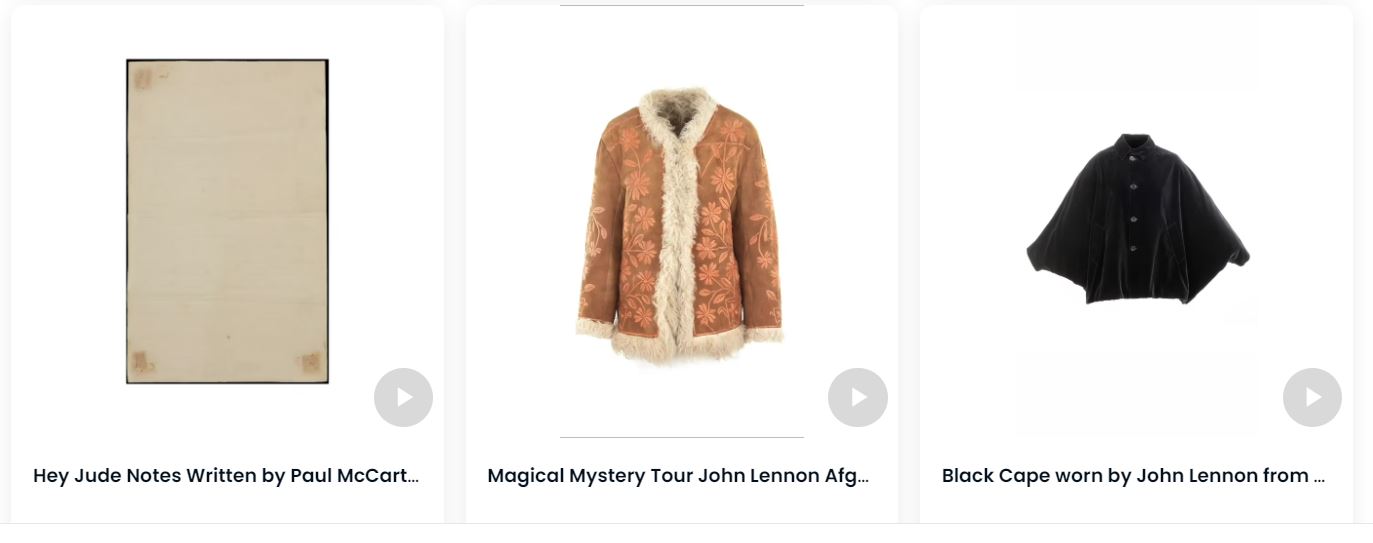
The music industry is talking about blockchain technology as one of the growth directions in the industry. Could it also offer opportunities for music creators to earn additional income? This blog will consider what the process of entering the NFT market is like from the perspective of a musician building their career. The background is a practical experiment reported in Aili Tervonen's (2022) thesis. Blockchain technology is seen as a solution to the mechanisms that have long plagued the music industry, where currently only about 12% of the industry's turnover is generated for music creators (Bazinet et al., 2018). The remaining part is processed by the so-called intermediary layer, which makes the content available to fans. The value chain includes, for example, those who provide publishing, recording, agency and management services. Some industry players see blockchain as a way to take control of creative work back to its creator. There has been talk, among other things, of “IP rights decentralization” (Jalonen, 2022), which refers to the decentralization of the management of intellectual property rights. Decentralized rights management could resolve the perceived imbalance between wide distribution and fair compensation. For others, blockchain appears as a challenger that forces a reassessment of the already established business models of the music industry, in which the management and exploitation of copyright have been key. Recently, there has been an active discussion about blockchain-based non-fungible tokens (NFTs), which are at the heart of new content ownership. NFTs have also been considered as a source of income generation for young musicians operating outside of multinational corporations (Langston, 2022). From recording sales to increasingly diverse content A music NFT is typically a song, album, lyrics, or music video stored on the blockchain. It can also be, for example, a composition created by a generative computer program that algorithmically visualizes the work using random patterns, colors, sounds, and/or shapes (Langston, 2022). A music NFT can also be a concert ticket or an album cover. NFTs also help to build a new kind of culture in the music industry. NFTs can be, for example, collector's cards aimed at fans, pictures of the artist, versions of different stages of the creation of a song, or almost anything related to the artist that has value to fans. According to Sitra's definition, an NFT is a digital file management certificate. The transfer history of the digital file management is recorded using blockchain technology. Some of these digital management certificates (NFTs) sold on NFT marketplaces do not contain any rights recognized in legislation. According to Sitra, this is because the legal status of NFTs is still unclear. (Sitra 2023.) A young music creator quickly encounters a number of seemingly challenging choices that have a strong to binding impact on the future and profitability of the product or service in question. A key choice is the type of content exported as an NFT: A 1/1 NFT is a single, unique product. It is completely exclusive. The analogy is often used with paintings in our physical environment, of which there is only one original. With an open edition, an NFT can be made in unlimited quantities, for example to commemorate participation in an event organized in the metaverse. However, that edition is usually only made for a certain period of time, after which it is no longer available. With a limited edition, a certain number of individual NFTs are made. Many collections consist of editions of 10,000 pieces, for example. There are advantages and disadvantages to different release models. A single 1/1 NFT is a unique collector's item. The Mona Lisa is often used as an example: there is only one genuine copy, which has a high price. Open editions can be used to celebrate a specific moment, for example, and are collector's items available only to participants. A limited edition serves, for example, as a pre-sale of tickets. Blockchain brings added value to music NFT trading In the music industry, the added value of blockchain lies in its various means of exchange and the uniqueness of the NFT token. Only one person can own a single NFT, and all purchase and sale transactions related to that token are recorded in a “ledger” maintained by the blockchain. For example, the path of each NFT is openly visible to everyone, and the NFT acts as a proof of authenticity. For example, a fan buying an NFT concert ticket can check the authenticity of the NFT on the blockchain before making a purchase decision. If they sell the ticket on, the new buyer can also see the chain of ticket owners and can check the authenticity against the ticket history recorded on the blockchain. The restrictions and rights related to the use of NFTs are managed by smart contracts that follow the individual NFT in question with every transaction. For example, during the creation phase, it is decided what share the creators will take as royalties if the NFT is resold. This way, the original creator will receive passive income and benefit from, for example, the increase in the value of the NFT. In the music industry, the increase can be really large, because for some artists the future can bring widespread global success. For this reason, Tervonen (2022) wonders whether in the future one of the motives for a budding artist to buy NFTs could be investment instead of fandom. Creatives often find pricing difficult. One solution to this challenge on the blockchain is to use auctions. This allows NFTs, such as a VIP add-on service built around a concert, to be sold in limited editions at the best price at the time. By utilizing the pre-sale mechanism, fans can invest in an artist of their choice, for example by financing the production of an album in advance. As a reward, they can receive their own NFT for a limited edition of the new album. In India, a FanTiger service aimed at the music industry has been launched, which gives independent artists a route to open their future projects to their fans for crowdfunding. Fans can support the launch of new music by pre-purchasing an NFT album from a selection that currently includes quite a few Indian music genres. At the same time, fans can be critically important marketing messengers when taking new content to the social platforms and communities of their networks (Nahar, 2022). NFTs and cryptocurrencies are also of interest to criminals The NFT market has rapidly become a new area of activity in the music industry. Regulation is still quite incomplete, and there are many question marks surrounding NFT trading. Issues that need to be resolved include the security of smart contracts, legally valid ownership, and the regulation and taxation of virtual currencies (Lindgren et al., 2023). Blockchain technology can also be misused. Last year, the NFT marketplace Cent suspended most of its trading due to abuse. The platform sold certificates of ownership for content that was not the property of the person who uploaded the NFT to the platform. Market manipulation also occurs. For example, creators of works have bought their own works to make the demand for them appear greater than it actually is (Närhi 2022). In the NFT environment, money moves through virtual currency wallets. The buyer sees the virtual wallet address on the blockchain, but the buyer remains anonymous. This makes it difficult, for example, to detect money launderers. Before diving in, look into these things Tervonen's (2022, see also Table 1) work carefully reports the steps that a musician needs to take to adopt the NFT world. It also describes the kind of expertise that each step requires. StepRequired skillsCreate a virtual currency account and acquire currencyVirtual currency advice: how to open a wallet, how to buy virtual currencies, how to connect a wallet to an NFT marketplace, how virtual currency value is created, what virtual currency alternatives exist and what risks are associated with the currency you are considering acquiring.Creating an NFT workSupport service for brainstorming NFT works to create an idea of what could be sold. Criteria for choosing a platform for selling an NFT work, technical requirements of the platform, the most important choices made on the platform regarding NFT usage rights, and the technical process of publishing.Selling an NFT workSupport services for marketplace practices, marketing planning utilizing existing channels to direct fans to the NFT platform, also support for fans to make NFT purchases (they need to learn how to use virtual currencies and understand how NFT marketplaces work). Table 1. Based on Tervonen, 2022, p.51 From a musician's perspective, NFTs may offer interesting new ways to interact economically with fans. The transition of physical fans to a virtual environment currently requires a considerable amount of expertise from fans. They must have sufficient understanding of virtual currencies, the functioning of DAOs, NFT products, and various marketplaces offering music NFTs. It is of paramount importance to identify whether each artist's fans can be reached through this. NFTs are currently still a series of development projects and directions. However, it already seems quite clear that at least some of them have found their place alongside Web2 environments. When the news talks about NFTs and music, it usually involves big money: 3LAU made $11.7 million in a 3-day auction for their new album (Brown. 2021) and Whitney Houston’s previously unreleased demo recording made when she was 17 sold for $1 million (Legaspi, 2021). In reality, audiences of millions are limited to global stars. It is likely that it will be at least as difficult for a new music creator and performer to find an audience through music NFTs as it is in a traditional physical environment. About the writer Musiikkipedagogi YAMK -tutkinnosta valmistunut Aili Tervonen on toiminut musiikkialalla aiemmin freelancer-pianistina ja opettajana, mutta päätynyt sittemmin työskentelemään opetus- ja kulttuuriministeriöön. Valtiolla työskentely on saanut Tervosen pohtimaan musiikkialan asemaa yhteiskunnassamme. Musiikkialan tulisi pystyä parantamaan muusikoiden työmarkkina-asemaa, kehittämään alaa eteenpäin sekä moninaistaa alan ansaintalogiikoita. Tämän vuoksi Tervonen päätyi tutkimaan YAMK-tutkinnossaan NFT-teoksia ja virtuaalivaluuttoja. Lue lisää: https://www.theseus.fi/bitstream/handle/10024/751689/tervonen_aili.pdf?sequence=2 Lähteet Bazinet, J.B., Singlehurst, T.A., May, M., Suva, J., Ezawa, K., Yap, A. (2018). Putting the Band Back Together. Remastering the World of Music. Citi GPS: Global Perspectives & Solutions. Brown, A. (2021). Largest NFT Sale Ever Came From A Business School Dropout Turned Star DJ. Forbes 3.3.2021. Jalonen, J. (2022). Musiikkialan kasvustrategia. Tilannekuva-raportti, 04/2022. Music Finland Ry. Johansson, P., Eerola, M., Innanen, A. & Viitala, J. (2019). Lohkoketju: Tiekartta päättäjille. Alma Talent. Langston, T. (2022). The Music NFT Bible: A Guide to the Future of Sound. NFT now guides 22.9.2022. Legaspi, A. (2021). Whitney Houston Unreleased Demo Sells for $1 Million at NFT Auction. Full-length track was recorded when singer was 17. Rollingstone 15.12.2021. Lindgren, J., Lindholm, O., Lehtonen, K., Mustikainen, H. & Niikkonen, P. (2023). 6+1 suositusta Suomelle. Miten sääntelyllä voidaan parantaa web 3.0 -liiketoiminnan edellytyksiä? Sitran selvityksiä 229. Muikku, J. (2021). Pelastaako NFT musiikkibisneksen? Musiikkikustantajat MPA Finland blogi 18.3.2021. Nahar, P. (2022). FanTiger crosses 50k transactions, enters list of top five NFT projects globally. ETMarkets.com 28.11.2022. Tervonen, A. (2022). Muuttuva musiikkimaailma: NFT-teknologiasta uusia ansaintamalleja muusikoille? Musiikkipedagogi YAMK opinnäytetyö. Metropolia Ammattikorkeakoulu.
Metaverse inspires new ways of meeting in Web 3.0
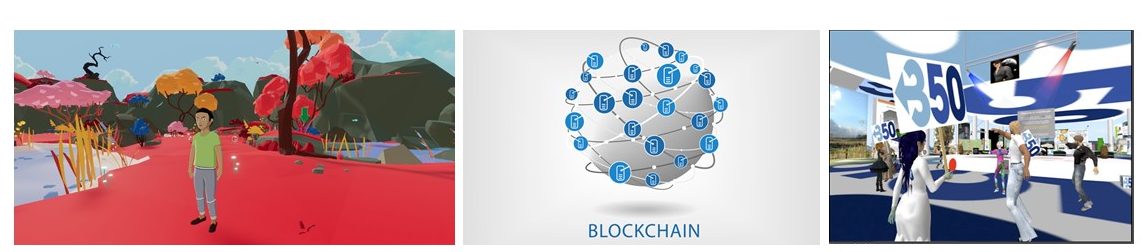
The creative industry is buzzing. In recent years, blockchains such as NFT, DAO, VR and XR have been increasingly mentioned in conversations. These are related to the web 3.0 development process, which is currently in its growth phase. This blog outlines what decentralized web 3.0 is. At the core of the blog, I am looking for an answer to what the metaverse is and how it relates to the future of creative industry players. Metaverse – a new operating environment for the creative industry The development of the Internet can be summarized in a simplified way, for example, as follows: Web 1.0 was an environment built into a network through hyperlinks, where we could see the content that was uploaded. Web 2.0 brought interactivity, which allowed users to also produce content for the internet, for example through social media. Web 3.0, which is still in development in many ways, brings with it a new kind of immersion, where the user works through an avatar in the artificial reality of the internet. There, physical and virtual reality blend more closely than before. Another dimension is created: the Metaverse, which is built from the words meta (including border-crossing) and universe. Diving into the metaverse is not only about the user experience, but also, to a large extent, about the ownership of one's own information and the underlying blockchain-based approach. In current technology, the mask used in diving is devices or sensors that are attached to people and have virtual reality programs installed on them. User interfaces are developing rapidly, and increasingly agile solutions are expected in the future. For the creative industry, the metaverse offers new global audiences and a platform to experience and offer new types of interactive and immersive experiences. The revenue logic is also different, as verification of ownership and trade of a work can be done without intermediaries, or at least with fewer intermediaries. At the core, communities instead of corporations Instead of platforms owned by large corporations or media companies, the new Web3.0 economy seems to be built, at least in part, on user activity and engagement. The user is an active part of the network, not a reader of advertisements. This bodes well for the creative industry. When the future of content production is decentralized, rather than controlled by large corporations, it is also shared and accessible to everyone. We no longer have to rely on large corporations or media companies to create content for us. Instead, we can create our own content and share it with everyone else in the world. Decentralized governance is implemented through the rapidly evolving blockchain technology. In a blockchain, non-participating actors can jointly produce and maintain databases in a decentralized manner. The artist, like anyone else who makes transactions on the blockchain, has access to view the contents of the blockchain. When each transaction is recorded provably and securely distributed across multiple machines in the community, the database is difficult to forge. A work sold on the blockchain also carries the original artist's information. If the work were to be resold, the original creator would have the opportunity to receive a portion of the purchase price. With success comes fame and glory, but the blockchain also enables continuous money production from resales of the work and, through it, potentially significant value development. New ways to engage with the audience One dimension of Web 3.0 is the metaverse, which forms a new digital meeting place – also between artist and audience. Avatars create a new digital meeting place that is not limited by national borders. The meeting can be about artistic content, but at its core it can also be, for example, a meeting with the artist and a moment of shared discussion. That is an opportunity that we in the Nordic region are not often given, at least not with top international artists. There is also a more ideological basis present in the public encounter. The art user can control their own data through smart contracts, receive additional digital services as part of their purchase, and follow the path of their purchase back to the original sale to ensure its authenticity. Platforms and new operating models offer an exciting new arena for creative expression. They offer, among other things, new ways to present artistic work and reach a wide audience around the world, new opportunities to monetize artistic products and services, and create immersive experiences. They also potentially bring new (younger) audiences to cultural content. Web 3.0 is evolving through various pilot projects: countless players are testing and agilely developing new platforms and services. An old Chinese proverb states that the best time to plant a tree was 20 years ago, the second best is now. Web 3.0 offers creative players a space of opportunity, the methods of which are currently being created. The best time to jump on board may well be now. Sources Frankenfield, J. (2022). What are smart contracts on the Blockchain and How They Work. Investopedia.com 24.3.2022 Kannan, S. (2022). Web3. Technopedia.com 18.5.2022. Malik, N., Wei, Y., Appel, G, & Luo, L. (2022). Blockchain technology for creative industries: Current state and research opportunities. International Journal of Research in Marketing 4.7.2022. Rennie, E., Holcombe-James, I., Kushnir, A., Webster, T. & Morgan B.A. (2022). Developments in Web3 for the Creative Industries. A Research Report for the Australia Council for the Arts. RMIT University Blockchain Innovation Hub. Whitaker, A. & Kräussl, R. (2020). Fractional Equity, Blockchain, and the Future of Creative Work. Management Science 23.7.2020.

Tämän blogin kirjoituksia ja toimitustyötä on tuettu vuoden 2023 loppuun asti Euroopan unionin sosiaalirahaston Luovat metaversumissa esiselvityksen osarahoituksen avulla ja vuoden 2024 alusta Euroopan unionin sosiaalirahaston osarahoittaman LUME – luovat web3-ajassa -hankkeen avulla.
Tässä blogissa käydään ammattilaiskeskustelua web3 kehittymisen myötä avautuvista uusista toiminta- ja ansaintamahdollisuuksista sekä ajankohtaisista ilmiöistä. Blogissa julkaistaan asiantuntijatekstejä, haastatteluja ja kantaa ottavia tekstejä, videoita, podcasteja tai niiden yhdistelmiä. Kirjoittajat ovat Metropolian ja sen yhteistyöorganisaatioiden asiantuntijoita. Haluatko julkaista Luovat web3 ajassa -blogissa? Ota yhteys päätoimittajaan sähköpostitse.
– Katri Halonen (päätoimittaja), yliopettaja, Metropolia Ammattikorkeakoulu, katri.halonen@metropolia.fi, p. 050 362 6407
– Leena Björkqvist, lehtori, Metropolia Ammattikorkeakoulu
– Jyrki Simovaara, lehtori, Humanistinen ammattikorkeakoulu
– Mayreth Wolff, lehtori Humanistinen ammattikorkeakoulu
Sähköpostiosoitteet: etunimi.sukunimi@metropolia.fi
Toimituskunta toimittaa Luovat web3 ajassa -blogin sisällöt ennen julkaisua.
Haluatko julkaista Luovat web3 ajassa -blogissa? Lue oheiset ohjeet (pdf) ja ota yhteys päätoimittajaan sähköpostitse.
Termipankki on tehty navigointiohjeeksi Metaversumiin.



AI ansaintalogiikka bitcoin Coldplay DAO Digital heritage digitalisaatio esineiden internet ESR osarahoitus fani fanit ikäpolvet inkluusio IoMusT IoT johtaja kesä2025 konsertti krypto kulttuurituotanto lippu lohkoketju luovat alat metaverse Metaversumi musiikki NFT satoshi sijoittaminen sustainability tasa-arvo tekoäly tokeni web3 Web3.0 yhteisöllisyys älysopimus