
Author: vierailija
LUME Does Not End with Results, but with a Transformation in Thinking

Projects are often evaluated through their outputs and outcomes: what results were pursued, what kinds of outcomes were achieved, what was published and communicated about the topic, and how different outputs are implemented after the project ends. But perhaps we should also pause to consider what does not appear in publications, reports, blogs, or handbooks, yet still remains as a lasting part of the thinking of those involved, such as us teachers and experts working in universities of applied sciences. Perhaps the most significant contribution of a project is not its individual outputs, but rather the hidden expertise it generates: the kind of knowledge, skills, and ways of thinking that are difficult to name, measure, or productize. This article argues that the LUME project has also played a major role in transforming ways of thinking and developing tacit knowledge. From Tacit Knowledge to Visible Expertise Hidden expertise can be understood through the concept of tacit knowledge. Polanyi (1966, p. 4), one of the first scholars to study the concept, described tacit knowledge with the statement: “we can know more than we can tell.” According to him, a significant part of human expertise is of a nature that cannot be fully verbalized or documented. Polanyi (pp. 9–13; 25–32) also emphasized that tacit knowledge is built through experience and action. Tacit knowledge has become an important concept especially in organizational studies. As Hadjimichael et al. (2024, p. 546) note, whether a task is practical or expert-oriented, simple or complex, routine or creative, its successful execution always depends partly on tacit knowledge. Tacit knowledge is particularly evident in context-sensitive, experience-based judgment, where individuals recognize essential situational factors, respond intuitively, and learn within uncertain and changing environments. From this perspective, the learning process within the LUME project, along with all the materials produced and experiments conducted, created a strong foundation for tacit expertise. This expertise enables us to approach new technological phenomena critically and identify new, essential needs, problems, and solutions—especially in situations where no ready-made answers yet exist. Hidden expertise can also be examined through the lens of situated learning. This perspective emphasizes that expertise does not emerge as isolated individual activity, but through participation in shared practices and communities. According to Lave and Wenger (1991, pp. 29–33; 67–69; see also Ackermann et al., 2024, pp. 596–597), situated learning develops gradually within communities as part of everyday practices. In this sense, expertise is not only visible in outputs and results, but also accumulates as collectively shared ways of thinking. Tacit knowledge becomes social, context-bound expertise. Many of my own views, assumptions, and attitudes related to Web3 technologies changed through regular project meetings. By discussing, exchanging ideas, and experimenting together, I learned far more collectively than I ever could have alone. My own, at times perhaps even childlike, enthusiasm and curiosity toward the new topic certainly supported this learning process. Learning manifested itself, for example, in the courage to admit to others that I did not understand something. The expertise produced together was not tied to any specific role or organization. Rather, it was based on shared ownership that continues to live on and spread as tacit knowledge among us participants even after the project has ended. Web3: An Object of Learning or a Catalyst? When reading a project report focused on Web3 themes, attention is easily drawn to technologies, tools, or applications. Naturally, one tends to ask what was learned about technological concepts such as blockchains, NFTs, DAOs, or smart contracts. However, as the LUME project progressed, it became increasingly clear to me that the most important learning was not related to any specific technical solution. Many of the learning transformations that emerged during the project were subtle in nature. The project fostered new enthusiasm for asking questions and experimenting, new ways of relating to technological change and constantly evolving operational environments, and new ways of understanding commercialization opportunities in the creative industries. At the beginning of the project, Web3 appeared to me primarily as a new phenomenon that I, as a teacher, should explain, clarify, and make understandable. Gradually, however, this perspective shifted. Web3 was no longer primarily something to be taught. Instead, it became a catalyst that forced us to rethink our perspectives in new ways. Web3 highlights many questions related to ownership, value creation, and revenue models (Perboli et al., 2026). These are not entirely new issues unique to the Web3 world, but the technology gives concrete form to otherwise rather abstract concepts. Instead of technology itself, the core of learning becomes user-centeredness, values, and choices. At the same time, Web3 loses some of the technical mystique surrounding it, which in turn makes it more approachable. One of the most important lessons concerns teaching itself. When dealing with emerging and rapidly evolving technologies, complete mastery of the subject is simply unrealistic—at least if you are not teaching in a technology field. Nevertheless, as a teacher, you inevitably found yourself outside your comfort zone: how can you teach something that is entirely new even to you? Yet this discomfort did not prove to be a problem. On the contrary, it may actually have created space for shared learning, critical discussion, and acceptance of incompleteness. This mindset certainly does not apply only to Web3 themes, but can also be transferred to future technological disruptions—ones that teachers and educators in the creative industries will inevitably continue to encounter. When the Hype Fades, the Expertise Remains – How Can It Be Sustained? The hype surrounding Web3 has been intense, but according to Gartner’s Hype Cycle model, the decline of hype is a typical and expected phase for emerging technologies (Stephan, 2025). From the project’s perspective, however, this is not necessarily a problem. The rise and fall of hype can actually function as a gateway to deeper learning. The hidden expertise developed within LUME represents precisely this more enduring form of capital. It appears as a readiness to approach new technologies critically yet openly, an ability to distinguish the essential from the irrelevant, and the courage to leave some solutions unused. Not everything must be adopted, and not everything requires participation—this too is part of expertise. Not all expertise can be productized or documented within systems, because a significant part of professional expertise is based on tacit knowledge that cannot be fully verbalized or formalized (Hadjimichael et al., 2024, pp. 546–547). This does not mean that such expertise lacks value. Hidden expertise can be nurtured by recognizing it, allowing time for it, and enabling it to develop as part of everyday practice. This transformation cannot easily be demonstrated or quickly measured; its effects are long-term. LUME does not end with the outputs produced during the project, but continues to live on as a transformation in ways of thinking. References Ackermann, F., Pyrko, I., & Hill, G. (2024). Mobilizing landscapes of practice to address grand challenges. Human Relations, 77(5), 593-621. Hadjimichael, D., Ribeiro, R., & Tsoukas, H. (2024). How Does Embodiment Enable the Acquisition of Tacit Knowledge in Organizations? From Polanyi to Merleau-Ponty. Organization Studies, 45(4), 545–570. https://doi.org/10.1177/01708406241228374 Lave, J., & Wenger, E. (1991). Situated learning: Legitimate peripheral participation. Cambridge University Press. Perboli, G., Merlo, F., & Vandoni, C. (2026). Decentralizing the future: Value creation in Web 3.0 and the Metaverse. Horizon Europe. https://open-research-europe.ec.europa.eu/articles/5-226 Polanyi, M. (1966). The tacit dimension. Doubleday & Company. Stephan, C. (8.9.2025). Get Grounded With the 2025 Gartner Hype Cycle™ for Emerging Technologies. https://www.gartner.com/en/articles/hype-cycle-for-emerging-technologies Author:Satu Lautamäki is a Principal Lecturer in Cultural Management at Seinäjoki University of Applied Sciences (SEAMK). She works as an expert in the LUME – Creative in the Web3 Era project, co-funded by the European Social Fund of the European Union.
Digital Presence, Identity and Avatars in Creative Production

How does digital presence reshape creative work and art? This text is a summary based on an interview with internet historian and artist John Reis. In the discussion, he explains how game worlds and avatars are evolving from mere entertainment elements into building blocks of professional identity. Digital identity and the use of avatars are no longer limited to entertainment. They have become part of creative work, art, and cultural production. At the same time, they are transforming how people present themselves and build their presence online. This is not only about technology, but also about new ways of understanding existence in digital environments. Avatars are no longer just profile pictures or game characters. They are tools for constructing social, temporal, and spatial experiences. Digital presence no longer adapts to the limitations of the physical world in the same way it once did. It can stretch, layer itself, and transform across different contexts. However, understanding digital identity in creative production requires a broad perspective. Internet historian, designer, and digital artist John Reis (known online as Chaize) offers his own viewpoint on the subject. His expertise lies at the intersection of product design, sociology, and internet art. For six years, Reis has explored what digital existence means for contemporary creators, and in recent years these theoretical reflections have merged into practical experimentation within his own artistic work. From Virtual Theme Parties to Art Concepts Reis’s journey into using sandbox games as tools for cultural production began from a social need during pandemic lockdowns. At first, it involved virtual themed parties organized with friends, where the walls of game spaces were decorated with inside jokes. These experiments quickly expanded into graphic design and immersive concepts, such as a virtual cat exhibition where guests presented imaginary pets that defied the laws of physics. Later, the platform became a meeting place for a long-distance relationship, where Reis recreated, together with his partner, a fake terrace inspired by a photograph taken in Italy. These intimate experiments led to an important realization: game environments attract audiences who are genuinely curious and eager to explore content presented within digital spaces. Years later, Reis’s early sandbox experiments evolved into prototypes for presenting art, eventually leading to the inclusion of his work as part of the Helsinki Festival. Virtual Space as Part of Identity IMAGE: Screenshot by John Reis, Tower Unite (PixelTail Games, 2016) In Reis’s work, the virtual gallery space is not merely a backdrop, but a direct extension of the avatar and digital identity. As a tool for cultural production, the game environment enables the multiplication of the creator’s presence. Visitors entering the exhibition are greeted by a digital guide character (NPC, Non-Player Character) modeled after the artist’s own avatar. Identity and self-portraits are therefore not simply hung on walls; they come alive through the interactive elements of the environment. Space also becomes a tool for shaping identity when physical and digital histories merge together. Reis has, for example, reconstructed his former apartment in Tampere within a game environment. This creates a disorienting illusion between two- and three-dimensionality, blurring the line between real-world history and the digital present. Game mechanics, such as teleporting through walls into hidden rooms, can become methods for choreographing how audiences experience the artist’s digital world. Professionalism and Freedom in a Surreal Environment One of the most fascinating questions surrounding digital presence is how to maintain professional integrity within surreal environments. How does an audience react to an artist who communicates with strong professionalism while operating through an avatar? According to Reis, the absurdity of the environment can actually become an advantage. In game worlds where everyone is already performing some kind of role, the traditional “gallery curator character” can appear surprisingly restrained. In virtual spaces, people often ask more direct and professional questions than they would face-to-face, even when conversing with a flying game character. The digital body also enables faster fine-tuning of one’s personality and communication style. Online, there is freedom to experiment and perform in ways that are much harder in the physical world, where social codes and physical cues are considerably more rigid. In this environment, trolls and disruptive individuals can simply be muted or excluded — the digital gallerist always retains control over their own space. John Reis’s Three Pieces of Advice for Building a Digital Identity Drawing from years of experience designing digital spaces and identities, Reis offers three practical building blocks for creative professionals who want to develop their online presence as a professional tool: The power of rebranding.When thinking about your online persona, remember that you can always rebrand yourself and change direction at any time. Do not worry about whether others notice the changes. It does not matter. Think outside the “human box.”Online, you can be anyone or anything. How would your understanding of yourself change if you began to think of yourself as something other than human? Does that feel good? Play!I believe you can present yourself as anything online and still remain professional. Personally, I draw inspiration from the furry community, which I see as one of the best examples of serious professionals fully expressing themselves through internet personas. Sources Reis, J. (2026). Haastattelu 13.05.2026. Haastattelija: Anna Puhakka. [Julkaisematon aineisto]. Steam. (i.a.). Tower Unite -pelin kauppasivu. Haettu 18.05.2026 osoitteesta https://store.steampowered.com/app/394690/Tower_Unite/
From Basements to Blockchains: How Roleplay Gamers Pioneered the Creator Economy

The cultural history of the internet is often told through silicon chips and fibre-optic cables. A more human story, however, began in the basements and wood-panelled dens where tabletop roleplaying games (RPG) first took shape in the 1970s. This article traces the evolution of the web through the experiences of tabletop roleplaying communities, with a particular focus on Dungeons & Dragons (D&D) players during periods of platform change. The key takeaway from RPG communities for cultural producers lies in understanding how creative work is increasingly shaped by digital infrastructures. The Analogue Roots of Participatory Culture When D&D was published in 1974, it was structurally unusual: a rule system designed not as a finished product but as a framework to be expanded, modified and shared by its players. Innovation scholar Eric von Hippel used the term "lead users" to describe groups encountering emerging social and technological needs, often years prior to wider marketplace recognition. RPG communities fit Hippel’s description well. These communities immediately began producing their own adventures, distributed through photocopied newsletters, hand-stapled zines and convention networks. In the language of contemporary media theory, this represented participatory culture in its earliest analogue form (Jenkins, 2006). As tabletop RPG communities moved online during the Web1 era, they carried with them a culture built around open standards, collaborative worldbuilding, and shared creative ownership. Early internet forums, fan sites, and digital archives became spaces where players openly modified rulesets, expanded fictional universes, and circulated community-created content. The idea that a creative framework could be shared for others to build upon, without giving up control of the core intellectual property, was already embedded in RPG culture long before Creative Commons licensing was formalised in 2001. These communities were, in effect, conducting an extended live experiment in what Yochai Benkler terms commons-based peer production: the collaborative creation of shared cultural resources outside both the market and the state (Benkler, 2006). Players were no longer passive consumers. They were active stewards of a shared creative space. From Forums to Platforms The transition into Web2 dramatically expanded the reach of tabletop gaming culture. Virtual tabletops (eg. Roll20 and Foundry VTT) made remote play accessible, while streaming platforms transformed collaborative storytelling into spectator entertainment. Critical Role, a live-streamed Dungeons & Dragons actual-play series featuring professional voice actors, demonstrated that tabletop roleplaying could attract a global audience. In 2019, Critical Role's crowdfunding campaign for its animated series The Legend of Vox Machina raised more than eleven million US dollars. This signalled the commercial maturity of the RPG creator economy. This commercial growth came with a structural cost that took years to become visible. As creators moved their work onto centralised platforms, their roles became that of tenants than owners. Characters, campaign worlds, fan wikis and streaming archives lived on servers controlled by corporations whose priorities were shaped by shareholders, not communities. Algorithm changes could bury years of content and platform closures could erase entire archives of lore. Writer Cory Doctorow has described this dynamic, originally developed in the context of social media, as 'enshittification', a process by which digital platforms initially attract and serve users before gradually prioritising extraction and monetisation over community wellbeing (Doctorow, 2023)." The Open Game Licence Moment The risks of platform dependency became clearly visible in 2023. That year, the corporate owners of the D&D game, Wizards of the Coast, proposed revisions to the Open Game License. The licence had governed third-party D&D content for more than two decades. The proposed changes would have significantly increased corporate control over community-created work. The backlash was swift. Publishers, developers and players began migrating toward alternative open systems almost immediately. Although the revisions were ultimately withdrawn, this incident exposed a structural vulnerability that had for a long time been concealed behind convenience. Creative work built on corporate permission remains subject to corporate decisions. For many creators, this was the moment that made the theoretical risks of platform dependency feel real. Web3 and the Question of Ownership This tension helps explain why some of the most influential Web3 experiments have emerged from RPG and creator communities. One example is the Loot project, released in 2021, which echoes the original design philosophy of D&D in a significant way. Like the 1974 D&D rulebooks, Loot began as a minimal framework rather than a finished system. It consisted of 8,000 text-based “bags of adventuring gear” (NFTs), released without artwork, formal mechanics, or a central development team (Loot Project, 2021). The project functioned as an open-ended prompt for community-driven worldbuilding and experimentation (Adventure Gold DAO, 2021). The ecosystem that formed around Loot also experimented with NFT-based forms of character representation. The ownership of a “bag” could act as a portable on-chain identifier through a crypto-wallet signature across community-built applications. While not a formal decentralised identity system, it anticipated later discussions around interoperable digital identity and composable user-owned assets. This experimentation emerged alongside growing interest in standards such as W3C Decentralized Identifiers (DIDs) and self-sovereign identity (SSI), which seek to formalise user-controlled digital identity. In parallel, decentralised autonomous organisations (DAOs) have explored governance models that distribute decision-making through token-based voting and smart contracts which could be compared to the distributed narrative authority found in tabletop role-playing games. However, empirical studies have shown that governance activity within DAOs is often disproportionately driven by a small subset of highly active members (World Economic Forum, 2022). This concentration of influence challenges the ideal of full decentralisation, even while these systems echo the shared authority of RPG cultures. Ultimately, these developments highlight a central tension in creative digital systems. Whilst ownership and governance are described as decentralised, they remain tethered to uneven participation and the realities of infrastructural control. Cultural Production as Infrastructure Management For cultural producers, this history suggests that the decisive question is not which technology they use, but how it structures power: Who retains the ownership of the work and does the technology support continuity within creative communities? The aim is not to reject platforms, but to understand their role more precisely from visibility, and collaboration to how they define what can be preserved, shared, or monetised over time. Web3 offers one avenue to make this logic explicit. It embeds ownership, identity, and governance into infrastructure itself. But its lesson is broader than any single technology. Cultural production in a digital era is always also about infrastructure management. The question I propose cultural producers ask themselves is not whether new systems are “better”. Rather ask whether these systems strengthen the capacity of creative communities to sustain themselves and ownership of their work across technological change. Sources Adventure Gold DAO (2021). Adventure Gold and the Loot Ecosystem. AGLD Whitepaper. Available at: https://adventuregold.org Benkler, Y. (2006). The Wealth of Networks: How Social Production Transforms Markets and Freedom. Yale University Press. https://www.benkler.org/Benkler_Wealth_Of_Networks.pdf Doctorow, C. (2023). "Social Quitting." Locus Magazine, January 2023. Available at: https://locusmag.com/feature/commentary-cory-doctorow-social-quitting/ Goel, A.; Rahulamathavan, Y. (2025). "A Comparative Survey of Centralised and Decentralised Identity Management Systems: Analysing Scalability, Security, and Feasibility." Future Internet. https://doi.org/10.3390/fi17010001 Jenkins, H. (2006). Convergence Culture: Where Old and New Media Collide. NYU Press. https://nyupress.org/9780814742952/convergence-culture/ Loot Project (2021). "Loot (for Adventurers) FAQ." lootproject.com. Available at: https://www.lootproject.com/faq von Hippel, E. (2005). Democratizing Innovation. MIT Press. Available at: https://web.mit.edu/evhippel/www/books/DI/DemocInn.pdf Wizards of the Coast (2023). "An Update on the Open Game License (OGL)." D&D Beyond, 13 January 2023. Available at: https://www.dndbeyond.com/posts/1423-an-update-on-the-open-game-license-ogl World Economic Forum (2022). Decentralized Autonomous Organizations: Beyond the Hype. White Paper, 23 June 2022. Available at: https://www.weforum.org/publications/decentralized-autonomous-organizations-beyond-the-hype
Web3 Summer is here: Technology meets culture from Lisbon to Berlin

Web3 technologies are gradually having an impact on the digital world. In the summer of 2025, there will be several events in Europe where you can delve into the world of web3 and the innovations it brings. In this blog post, I will briefly look at the future of web3 technologies and introduce some key events where you can learn more and network with experts in the field. Opportunities and challenges of the new internet The new internet offers companies, organizations and communities the opportunity to integrate blockchains more widely into their practical operations, such as supply chain monitoring and digital identity management. This kind of a technological leap will inevitably shape digital interactions with customers and enable the development of new business models. Of particular interest is the convergence of artificial intelligence and blockchain, which can improve the efficiency and security of web3 applications. For example, artificial intelligence can optimize blockchain processes by predicting network congestion. (Subin et al., 2025) Web3 technologies offer numerous opportunities, such as new revenue streams through tokenization, better customer engagement through decentralized identity and loyalty programs, and increased transparency and security through blockchain-based systems. Yet it is important to consider challenges such as high implementation costs, technical complexity, and scalability and interoperability issues. (Subin et al., 2025) Web3 is a sociocultural system? Cultural anthropologist Giles Grouch (2024) also offers an interesting analysis, stating that Web3 is not so much a technology as a socio-cultural system. It is based on ancient notions of human reciprocity, such as gifts, contracts, and social openness. He states that Web3 requires a cultural shift: So Web3 hasn’t been able to break through cultural barriers of understanding. It also doesn’t help that those deeply embedded in the world and opportunities of Web3 speak a different language than general society. Using terms like DAOs, blockchain, tokens and such, only serves to alienate people, not bring them in. Proponents of Web3 need to learn to communicate in less technical ways. Nerding out on non-nerds is not how to win friends and influence people. It does the exact opposite. (Grouch, 2024) So how do we make web3 culture accessible to everyone, bringing together “nerds and non-nerds” (Grouch, 2024)? Networking is certainly an important means of doing so, so below are some web3 events presented across Europe. Web3 Events in Europe If you are already in Lisbon, check out the Nonfungible Conference event from 4-6 June, which will feature several art-related presentations. They will discuss, among other things, how NFTs are evolving into “sophisticated licensing beyond art”, where intermediaries act as cultural influencers; how digital art and cultural artifacts are preserved immutably on the blockchain; how cultural memory and long-term community shape value and define future culture. And even if you don’t have time to attend, you can follow the event on social media channels, such as the discussion on Discord. It is also worth marking the event on your calendar for next summer, as the event has been organized annually since 2022. (NFC Summit, 2025) 618 / 5,000 Translation results Translation result The Proof of Talk event in Paris will take place on June 10-11. The event says it will redefine web3 events, by making networking the main thing and promoting groundbreaking forms of collaboration. The event does not have specific content related to the creative industries, but the themes are: decentralized artificial intelligence, finance and tokenization, web3 ethics, bitcoin, decentralized science. The event will have over 150 speakers, over 40 panel discussions and over 20 workshops, so you are sure to find an interesting opportunity and get to discuss and work with other participants.(Proof of Talk, 2025) Berlin Blockchain Week will be held from 7 to 22 June in Berlin. The event has been organized by a volunteer community since 2018. The activities are based on a common discussion and an educational perspective. There are several different events there, for example, the “Digital Autonomy for Club Culture Independence” event on 11 June. Its aim is to explore and exchange ideas about the future of digital autonomy in club culture. The event will discuss, among other things, how the communities that create club culture can gain new visibility, ownership and value. (Berlin Blockchain Week, 2025) You can return to Berlin from July 16-18, where the community-driven Web3 Summit brings together enthusiasts, developers, and researchers to think about the future of the decentralized web. You can listen to talks, participate in interactive workshops or unconferences, and a 24/7 hackathon. The event seems to be more technology-focused, but the event’s Nodespace will host brainstorming sessions and workshops that are suitable for all attendees, regardless of background. (Web3 Summit, 2025) Hopefully, these events will provide further inspiration for web3 technologies to create immersive experiences while also providing new avenues for artistic expression and commercialization. The future of the creative industries may lie in embracing technological change and fostering collaboration in a web3 world where creativity could truly flourish. Sources Berlin Blockhain Week (2025). Main landing page. https://blockchainweek.berlin/ Grouch, G. (2024). Does web3 have a future? Medium (requires logging in) NFC Summit (2025). Non-Fungible Conference agenda. https://www.nonfungibleconference.com/agenda-global Proof of Talk (2025). What is Proof of Talk? https://www.proofoftalk.io/ Subin, M. (2025). Web3. Future Today Strategy Group. Web3 Summit (2025). What is Web3 Summit? https://web3summit.com/about/ The author, Satu Lautamäki, is a senior lecturer in cultural production at SEAMK. She works as an expert in the LUME – Creatives in web3 time project, co-funded by the European Union Social Fund.
NFT challenges the concert ticket business
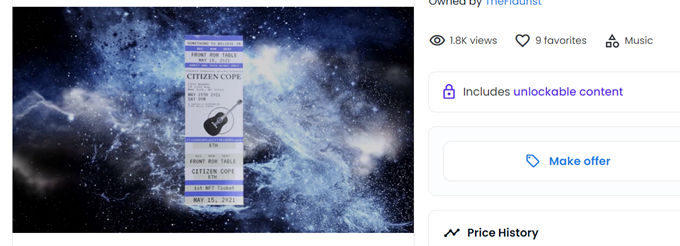
The ticket sales for pop rock band Coldplay's Helsinki gigs sparked a lot of discussion and even angry speeches in July 2023 (Partanen, 2023). The ticket sales used dynamic pricing, familiar from airplanes and hotels, in which the price changes according to demand. Dynamic pricing is one of the innovations in the field of performing arts ticket sales made possible by information technology and algorithms. The selling price of Coldplay tickets was not the only issue that sparked discussion. There were not enough concert tickets for everyone, so ticket resale began soon after the actual ticket sales ended. At the same time, concerns arose about the authenticity of the resold tickets, and those who had lost their tickets were warned about possible scammers (Linnake, 2023). Ticket sales seem to be changing, but dynamic pricing may just be the beginning of the next era. A much bigger change is just around the corner: NFT ticket sales. In the world of NFTs, a ticket to a Coldplay concert could have been a numbered NFT ticket purchased directly from an online store, with ownership transferred to the buyer upon purchase. Anyone could verify the authenticity of the ticket on the blockchain by looking at the ticket's history. An NFT ticket would have saved Coldplay fans many moments of excitement and frustration. In this blog, we explore how ticket sales can benefit from blockchain and NFTs. Anatomy of an NFT Ticket The special feature of an NFT ticket is related to the blockchain. The ticket is created by, for example, making a unique ticket identified by a number, which is recorded in a decentralized blockchain. The ticket can be sold, for example, on an online platform, and when making a purchase decision, the buyer can check the authenticity of the ticket by looking at the ticket's history on the blockchain. A ticket can be published as “nontransferable”, meaning it cannot be transferred to a new owner on the blockchain. It is also possible that the transfer is allowed under certain conditions. The original ticket holder can set additional conditions on the NFT ticket for resale. The conditions can include, for example, a royalty to be earned by the original holder on the resold ticket or a maximum allowed price. The information travels with the NFT on the blockchain and thus regulates the potential secondary market for the ticket. (Langston, 2023; Singh, 2023; Tan, 2023; Takyar.) In Metaverse, for example, in connection with concerts, “meet and greet” events are sometimes sold, where ticket holders get to meet the artist they admire in a virtual backroom. These limited VIP tickets are put on the market in a very limited number. The value of the ticket is often sought through an auction mechanism, where the ticket price is set according to supply and demand. If the ticket holder decides to sell the ticket, the original ticket holder also receives a share of the increased ticket sales price in their own virtual wallet. At the same time, the new buyer can always peek at the ticket history on the blockchain and thus ensure that it is not a pirated ticket. From paper ticket to QR code - what about collectibles? Paper concert tickets have their own loyal following. They also come with risks: getting lost, getting damaged in the rain or other misfortune can result in the entire ticket being lost. There is also a lot of counterfeiting of paper tickets. This has been addressed by QR code-based tickets sent to smartphones. The problem with QR codes is that it is difficult for the buyer to know for sure whether they have bought a genuine ticket, or whether they will be disappointed if the ticket turns out to be counterfeit (Takyar). An NFT-based ticket is more difficult to counterfeit. Each ticket is its own NFT managed on the blockchain (Langston, 2023; Singh, 2023; Tan, 2023). It is a unique product that directly contains information about which concert and which seat the ticket entitles its owner to. The ticket owner can show their NFT ticket upon entering the concert venue, and it can be scanned as a QR code or directly as a blockchain link to verify authenticity. Paper concert tickets can be valuable mementos and even collectibles. It is therefore reasonable to ask how the role of a ticket changes if its essence is a QR code that flashes on a smartphone. An NFT ticket can also be a valuable collectible, like a paper ticket, which can offer, in addition to admission, for example, music, an interview with the artist about an upcoming performance, or images of interest to fans. The content is only available in conjunction with the ticket, so exclusive content can increase the commemorative and collectible value of the ticket (Singh, 2023). An NFT ticket can also include products that are available for a limited time, such as a digital tour shirt to wear as an avatar during a concert and a physical version of the same shirt to be sent by mail. The ticket can therefore provide access to various additional services and products. Ticket services already exist There are already several commercial NFT ticket services available. They are distinguished from each other mainly by the different functionalities of the sales platforms, the blockchain used, the NFT standard used and the type of tickets. In addition to tickets, sales platforms can also have a significant number of other digital products related to the artist. For example, Dutch company GUTS tickets offers a blockchain-based ticket management service using the GET protocol it developed. During its existence, the company has sold over 4.2 million tickets for over 19,000 events (NFT ticket explorer 2.8.2023), and each ticket can be viewed on the blockchain. This creates a huge amount of data that can help concert organizers in data-driven potential assessment of ticket prices, sales times and concert occupancy rates. YellowHeart combines community participation with its tickets. Community members only get to see content targeted at them. They can also participate in, for example, ticket pre-sales and private events organized only for club members in the metaverse. The ticket therefore functions as a kind of web3 version of a fan club, uniting fans into a community, the activities of which are activated in YellowHeart's own metaverse, among other things. A somewhat similar club mentality has also been implemented in the field of music festivals, with the participation opportunity for Coachella integrated into the Fortnite game, which included lifetime access to ten auctioned NFT tickets (Disalvo, 2022; Langston, 2023). However, the ticket lost its value after the collapse of the FR cryptocurrency exchange operating in the Bahamas (Disalvo, 2022). The crypto world is still quite poorly regulated, and it has clear risks for users. Many things can go mainstream even with a single event. For example, the UEFA Champions League match between Real Madrid and Liverpool was delayed due to ticket counterfeiting. Police had to use tear gas to restore order (Polden, 2022). Michel Cadot, the French government’s Olympic ambassador, even proposed the introduction of blockchain tickets for the 2024 Paris Olympics. This could well be a step towards the normalization of NFT tickets for the event industry. Let's return to the Coldplay concert ticket dilemma mentioned at the beginning of this blog. The leap into the crypto world may seem complicated from a consumer's perspective. Ticket shops have indeed paid a lot of attention to user interfaces. One key step forward for consumers is, for example, the cryptocurrency eEuro, which is directly comparable to the euro. For the future, it is essential to ensure that shopping is also easy and risk-free for consumers in web3 environments. LÄHTEET Adele (2022). Paris 2024 Olympics May Introduce NFT Tickets. NFTevening news 14.6.2022. Disalvo, T. (2022). Coachella’s lifetime pass NFTs made unavailable due to FTX cryptocurrency crash. NME Music News 21.11.2022. Langston, T. (2023). NFT Tickets Are the Future of Live Events. Here’s Why. NFT now 30.3.2023. Linnake, T. (2023). Coldplayn loppuunmyydyt keikat synnyttivät ikävän ilmiön – näin Lippu.fi kommentoi. Iltasanomat 1.8.2023. Partanen, T. (2023). Coldplayn konserttien ennakkomyynnistä tuli uskomaton ryntäys – näin valtava ihmismassa yritti saada lippuja. Iltasanomat 25.7.2023. Polden, J. (2022). UEFA blame "fake tickets" for Champions League chaos as Liverpool demand investigation. Mirror sport news 29.5.2022. Singh, O. (2023). What is NFT ticketing and how does it work? Cointelegraph 14.2.2023. Tan, C. (2023). Seatlab NFT CEO Ryan Kenny Discusses How NFTs are Disrupting the Ticketing Industry. Metaverse post 23.3.2023. Takyar, A. (nn). Ticketing disrupt the ticketing industry? LeewayHertz blogit. KIRJOITTAJA Krista Jäntti on EventuallyXR-yrityksen perustaja ja toimitusjohtaja. Hänen erikoisosaamisalueenaan on metaversumiin ja tekoälyyn liittyvien uusien liiketoimintapalvelujen konseptoiminen sekä käyttäjäkokemusten suunnittelu ja tutkiminen. Krista on toiminut neuvonantajana lukuisissa suomalaisissa yrityksissä, kuten Varjo, Zoan, KONE, Sulava, LähiTapiola ja Nokia. Katri Halonen (Metropolian amk) toimii projektipäällikkönä Euroopan unionin osarahoittamasa LUME-hankkeessa, joka paikantaa web3:n mukana tulevia muutoksia luovien alojen ansaintaan.
Lohkoketjut avaavat uusia mahdollisuuksia musiikkialan sijoitustoimintaan

Musiikin kuluttajana voit tukea muusikoita esimerkiksi käymällä keikoilla tai ostamalla levyjä. Musiikkialalle sijoittaminen sen sijaan on ollut tähän asti melko hankalaa, sillä musiikin kuluttajille ei ole ollut sijoitusmekanismeja käytössä. Teknologian kehitys ja digitaalinen maailma voi kuitenkin tuoda tähän muutoksen. Tekijänoikeudet osana musiikkialan sijoitusmarkkinoita on mielenkiintoinen ajatus ja jo kokeiluihinkin johtanut ilmiö. Digitaalinen maailma luo meille uusia sijoituskohteita aineettomien hyödykkeiden ja niiden lohkoketjupohjaisen hallinnoinnin kautta. Tämä blogikirjoitus keskittyy pohtimaan, miten musiikkialalle voisi sijoittaa lohkoketjuympäristössä. Millaisia uusia sijoituskohteita tai sijoittajia lohkoketjut avaavat musiikkialle? Tekijöiden kustannusoikeudet nousevana sijoituskohteena Musiikkiteollisuuden asiakkaalle näkyvimpiä osia ovat usein esitys- ja levytystoiminta. Näiden takana on tekijän keskeisin pääoma: tekijänoikeuteen pohjautuva kustannussopimus. Sopimuksen puitteissa musiikin tekijät siirtävät oikeuksien hallintaa kustantajalle, joka saa osan tekijänoikeustuloista. Kustantajan tehtävänä on levittää, markkinoida ja hallinnoida biisejä. Kustannustoiminnassa pyörivät isot pääomat ja niistä käydään aktiivista kauppaa. Viime aikoina niistä on keskusteltu myös mahdollisina sijoituskohteina. Yksi musiikin sijoittamistoiminnan edelläkävijä on brittiläinen pörssiyhtiö Hipgnosis Songs Fund, joka on koonnut musiikkikappaleiden tekijänoikeuskatalogin ostamalla kymmenien tuhansien laulujen kustannusoikeudet. Katalogiartisteina on mukana huomattava määrä kansainvälisesti erittäin menestyneitä muusikoita. (Ylä-Anttila 2022; Sirén, 2021; Hipgnosis, 2022.) Joukosta löytyy esimerkiksi suuri osa pitkän linjan popyhtye Fleetwood Macin hittikappaleista ja yli puolet Neil Youngin kappaleista (Ylä-Anttila 2022; Määttänen 2021). Hittikappaleet saattavat säilyttää arvonsa hyvinkin pitkään, ja niitä on mahdollista jaella digitaalisena useita eri kanavia pitkin. Tämä nostaa niiden kiinnostavuutta sijoituksena. Rahoitusmarkkinoiden heilahtelut eivät juurikaan vaikuta musiikin kuunteluun, ja yksittäinen hittikappale voi pyöriä kymmeniä vuosia elokuvissa ja mainoksissa tuottaen sijoittajalle rojaltimaksuja (Hermansson, 2022), joiden kertyminen jatkuu vielä 70 vuotta musiikin tekijöiden kuoleman jälkeen. Tuloa kertyy miljoonista yksittäisistä mikrotapahtumista kuten suoratoiston kuuntelusta, albumin ostosta tai latauksesta, esitystoiminnasta, lisensoinnista ja synkronisoinnista esimerkiksi AV-tuotteiden osaksi. Artistin näkökulmasta Hipgnosisin kaltainen toimija voi olla kiinnostava kumppani, koska se on valmis maksamaan kappaleen tekijänoikeuksista tietyn könttäsumman kerralla. Perinteiset tekijänoikeusmaksut ilahduttavat varmasti artistin perikuntaa tämän kuoltua, mutta moni artisti arvostanee rahallista korvausta työstään jo ollessaan vielä itse elossa. Tokenien avulla sijoitustoimintaa ja investointeja piensijoittajien tarpeisiin Musiikkialan keskeisiä sijoittajia ovat olleet perinteisesti mm. levy-yhtiöt. Kiinnittäessään uuden musiikin tekijän tai esittäjän rosteriinsa yhtiö sitoutuu ja investoi heidän uransa edistämiseen. Monikansallisten levy-yhtiöiden rooli on kasvanut tässä keskeiseksi ja osin vaikeuttanut ulkopuolisten itsenäisten toimijoiden pääsyä markkinoille. Uusien tuotantojen tueksi on avattu joukkorahoitukseen keskittyviä palveluita, kuten esimerkiksi Intiassa lanseerattu musiikkialalle suunnattu FanTiger -palvelu. Se antaa riippumattomille artisteille reitin avata tulevia projektejaan faneilleen joukkorahoituksen saamiseksi. Fanit voivat tukea uuden musiikin lanseerausta ostamalla ennakkoon NFT-albumin – tosin palvelun valikoimissa on ainakin vielä lähinnä intialaisia musiikkigenrejä. (Halonen ja Tervonen, 2023). Sijoitusmahdollisuuksia voi kehittää eteenpäin tästä tokenisoinnin avulla. Termille ”token” ja siitä johdetulle ”tokenisoinnille” ei ole olemassa vakiintunutta suomenkielistä ilmaisua. Sitran tulevaisuussanastossa tokenin suomennokseksi esitetään digitaalista rahaketta, mutta se ei taivu sujuvasti verbiksi. Siksi tässä blogikirjoituksessa puhutaan tokeneista ja tokenisoinnista. Tokenisointi tarkoittaa omaisuuden, kuten musiikkisisällön, muuntamista digitaaliseksi lohkoketjuun tallennettavaksi tokeniksi. Tämä mahdollistaa digitaalisten varojen omistamisen, siirtämisen ja vaihtamisen ilman perinteisiä välikäsiä, kuten esimerkiksi pankkeja tai pörssivälittäjiä (Marinov, 2023; coinmotion, 2023). Tokenisointi on jonkin varallisuuserän tai vaikkapa jonkin oikeuden (kuten tekijänoikeus) muuttamista digitaaliseksi yksiköksi, jolla voidaan käydä kauppaa. Tokenisoinnin ytimessä on omaisuuden jakaminen pieniin kaupankäynnin osiin, tokeneihin. Kunkin tokenin hinta määräytyy omaisuuden kokonaisarvon ja siihen suhteutettuna tokenien määrän mukaan. Esimerkiksi uusi albumi voidaan tokenisoinnin avulla jakaa moniin pieniin kappaleisiin/osiin, joita voidaan myydä yksittäin digitaalisilla markkinoilla. Tällainen toiminta olisi uutta musiikkialalla, ja se mahdollistaisi uuden sijoituskohteen heille, jotka haluaisivat tarkastella alaa sijoitusnäkökulmasta. Musiikin tekijänoikeuksien kautta voitaisiin myydä osa rojaltituloista faneille tai muille sijoittajille. (Utopia Genesis Foundation 2021.) Token toimii omistusoikeuden todisteena, ja tätä tokenia voidaan lohkoketjun avulla kaupata tai siirtää tehokkaammin kuin tuntemiamme perinteisiä varoja (Coinmotion, 2023). Tokenisointi voi avata musiikkifaneille uuden ja mielenkiintoisen sijoitusalan. Esimerkiksi muusikko voi tokenisoida tuoreen albuminsa, jolloin se on kohtuuhintaan usean piensijoittajan saatavilla. Sijoittajat puolestaan voisivat helposti sijoittaa uusiin artisteihin, ja mahdollisesti saada myös sijoituksilleen tuottoa. Sweet Dreams (Are Made of This) Hipgnosis songs (2021) julkaisee sivustollaan tapauskertomuksia menestyksekkäistä sijoituksista. Esimerkiksi David A. Stewartin ja Annie Lennoxin muodostaman Eurythmics-duon yksi tunnetuimmista kappaleista on Sweet Dreams (Are Made of This). Se on ollut kaupallinen menetys sekä Euroopassa että Yhdysvalloissa niin suoratoistopalveluissa kuin radioissakin, minkä vuoksi siitä tulee jatkuvia tekijänoikeustuloja. Kappaleen käytöstä on tehty myös sopimuksia muun muassa Samsungin, Realtor.com ja yhdysvaltalaisen kiinteistönsivuston mainoksissa. Se löytyy myös Sonyn PlayStationin The King -pelin taustalta, ja suunnitteilla on yhteistyö Sony Picturesin Cinderella remake -version kanssa. (Hipgnosis songs, 2021.) Tämä kaikki tuo toteutuessaan sijoittajille osuuden tekijänoikeustuloista kappaleesta, joka on julkaistu jo 40 vuotta sitten. Tokenipohjaista piensijoittamista tehdään muun muassa Royal-alustalla. Tyypilliset albumiin tehtävät investoinnit vaihtelevat 50 ja 200 dollarin välillä, sijoittajia on noin 100–200 ja rojalti yhtä tokenia kohden on 0,05 ja 0,30 % välillä (Royal, 10.3.2023). Tokenit tarjoavat fanille uudenlaisen mahdollisuuden tukea artisteja: samalla kun tukee haluamaansa taiteilijaa, saa myös rojaltipohjaisen omistussuhteen joukkorahoitteiseen sisältöön. Tokenisointi ja tekijänoikeuksien myyminen voi olla tulevaisuuden musiikkialan kehitysaskeleita. Aiheeseen liittyy kuitenkin paljon vielä kysymyksiä, joihin eri alojen tulisi löytää vastaukset. Kuka olisi esimerkiksi se taho, joka toimisi tokenien liikkeeseenlaskijana? Jos se ei ole säännelty rahoituslaitos, miten varmistetaan, että ostettava token edustaa todellista omaisuutta? Oman riskinsä luo myös se, että suuri osa alustoista toimii kryptovaluutoilla, joita on olemassa jo yli 22 000 kappaletta ja uusia syntyy koko ajan (Osakesijoittaja, 2023). Sijoittajan riskien näkökulmasta aiheeseen liittyy osittain samoja ongelmia ja kysymyksiä kuin virtuaalivaluuttoihin muutoinkin. Osa virtuaalivaluutoista kulkee kuitenkin kohti rahan arvon sitomista viralliseen valuuttaan, kuten Yhdysvaltain dollariin tai euroon. Lohkoketju tuo tullessaan niin musiikin ystävälle kuin puhtaasti sijoitustoiminnastakin kiinnostuneelle mielenkiintoisen alueen. Mukana on paljon kauniita unelmia ja idealismiakin, mutta myös paljon mahdollisuuksia – jos niihin vain uskalletaan tarttua! Lähteet Coinmotion (2023).Suomalainen stablecoin – Membrane Finance julkaisi EUROe-stablecoinin. Haastattelussa Juha Viitala. Coinmotion 9.2.2023. Halonen, K. ja Tervonen, A. (2023). NFT musiikin tekijöiden tulovirtojen lisääjänä - Luovat metaversumissa Metropolia Ammattikorkeakoulu Luovat Metaverumissa blogi 1.3.2023. Hermansson, M. (2022). Musiikkikatalogit – taiteilijan elämäntyö ja sijoittajan unelma. Thomann blogit 23.1.2022. Hipgnosis Songs (2022). Interim report for the period ended 20 September 2022. Hipgnosis songs fund. Hipgnosis Songs (2021) The Anatomy of a Song. David A. Stewart’s Sweet Dreams (Are Made of This) (2021). Annual Report 2021. Hipgnosis Songs Fund Limited, p 18. Leppänen, M. (2018). Lohkoketjun "kolmas vallankumous" on käsillä – mullistavatko digitaaliset arvopaperit sijoittamisen, vai tuleeko niistä vain kryptohypen seuraava aalto? Yle 10.11.2018. Marinov, E. (2023). Varojen ja niiden käytön tokenisointi. Escrypto artikkeli (5). 5.2.2023 Määttänen, J. (2021). Neil Young myi puolet kaikkien kappaleidensa oikeuksista yli 120 miljoonalla eurolla sijoitusyhtiölle: “Tämä muuttaa yrityksemme ikiajoiksi”. Helsingin sanomat 6.1.2021. Osakesijoittaja (2023). Kryptovaluutta 2023. Osakesijoittaja.fi -sivusto 10.3.2023. Sirén, V. (2021). Mies, joka ostaa musiikin. Helsingin sanomat 19.3.2021. Royal (2022). Kotisivulla oleva artistien myyntiosasto. Royal Invest in Music 10.3.2023. Utopia Genesis Foundation (2021). Music tokenization - how it will change the music industry and why you should care? Utopia Genesis Foundation blogs. Medium 14.7.2021. Ylä-Anttila, A. (2022). Musiikkiin sijoittaminen on nouseva ilmiö, arvioi alan brittikonkari – ”Rahaa liikkuu paljon, vaikka siitä ei hirveästi puhuta”. Kauppalehti 7.2.2022. Kirjoittajasta Musiikkipedagogi YAMK -tutkinnosta valmistunut Aili Tervonen on toiminut musiikkialalla aiemmin freelancer-pianistina ja opettajana, mutta päätynyt sittemmin työskentelemään opetus- ja kulttuuriministeriöön. Valtiolla työskentely on saanut Tervosen pohtimaan musiikkialan asemaa yhteiskunnassamme. Musiikkialan tulisi pystyä parantamaan muusikoiden työmarkkina-asemaa, kehittämään alaa eteenpäin sekä moninaistaa alan ansaintalogiikoita. Tämän vuoksi Tervonen päätyi tutkimaan YAMK-tutkinnossaan NFT-teoksia ja virtuaalivaluuttoja. Lue lisää: https://www.theseus.fi/bitstream/handle/10024/751689/tervonen_aili.pdf?sequence=2

Tämän blogin kirjoituksia ja toimitustyötä on tuettu vuoden 2023 loppuun asti Euroopan unionin sosiaalirahaston Luovat metaversumissa esiselvityksen osarahoituksen avulla ja vuoden 2024 alusta Euroopan unionin sosiaalirahaston osarahoittaman LUME – luovat web3-ajassa -hankkeen avulla.
Tässä blogissa käydään ammattilaiskeskustelua web3 kehittymisen myötä avautuvista uusista toiminta- ja ansaintamahdollisuuksista sekä ajankohtaisista ilmiöistä. Blogissa julkaistaan asiantuntijatekstejä, haastatteluja ja kantaa ottavia tekstejä, videoita, podcasteja tai niiden yhdistelmiä. Kirjoittajat ovat Metropolian ja sen yhteistyöorganisaatioiden asiantuntijoita. Haluatko julkaista Luovat web3 ajassa -blogissa? Ota yhteys päätoimittajaan sähköpostitse.
– Katri Halonen (päätoimittaja), yliopettaja, Metropolia Ammattikorkeakoulu, katri.halonen@metropolia.fi, p. 050 362 6407
– Leena Björkqvist, lehtori, Metropolia Ammattikorkeakoulu
– Jyrki Simovaara, lehtori, Humanistinen ammattikorkeakoulu
– Mayreth Wolff, lehtori Humanistinen ammattikorkeakoulu
Sähköpostiosoitteet: etunimi.sukunimi@metropolia.fi
Toimituskunta toimittaa Luovat web3 ajassa -blogin sisällöt ennen julkaisua.
Haluatko julkaista Luovat web3 ajassa -blogissa? Lue oheiset ohjeet (pdf) ja ota yhteys päätoimittajaan sähköpostitse.
Termipankki on tehty navigointiohjeeksi Metaversumiin.



AI ansaintalogiikka bitcoin Coldplay DAO Digital heritage digitalisaatio esineiden internet ESR osarahoitus fani fanit ikäpolvet inkluusio IoMusT IoT johtaja kesä2025 konsertti krypto kulttuurituotanto lippu lohkoketju luovat alat metaverse Metaversumi musiikki NFT satoshi sijoittaminen sustainability tasa-arvo tekoäly tokeni web3 Web3.0 yhteisöllisyys älysopimus