

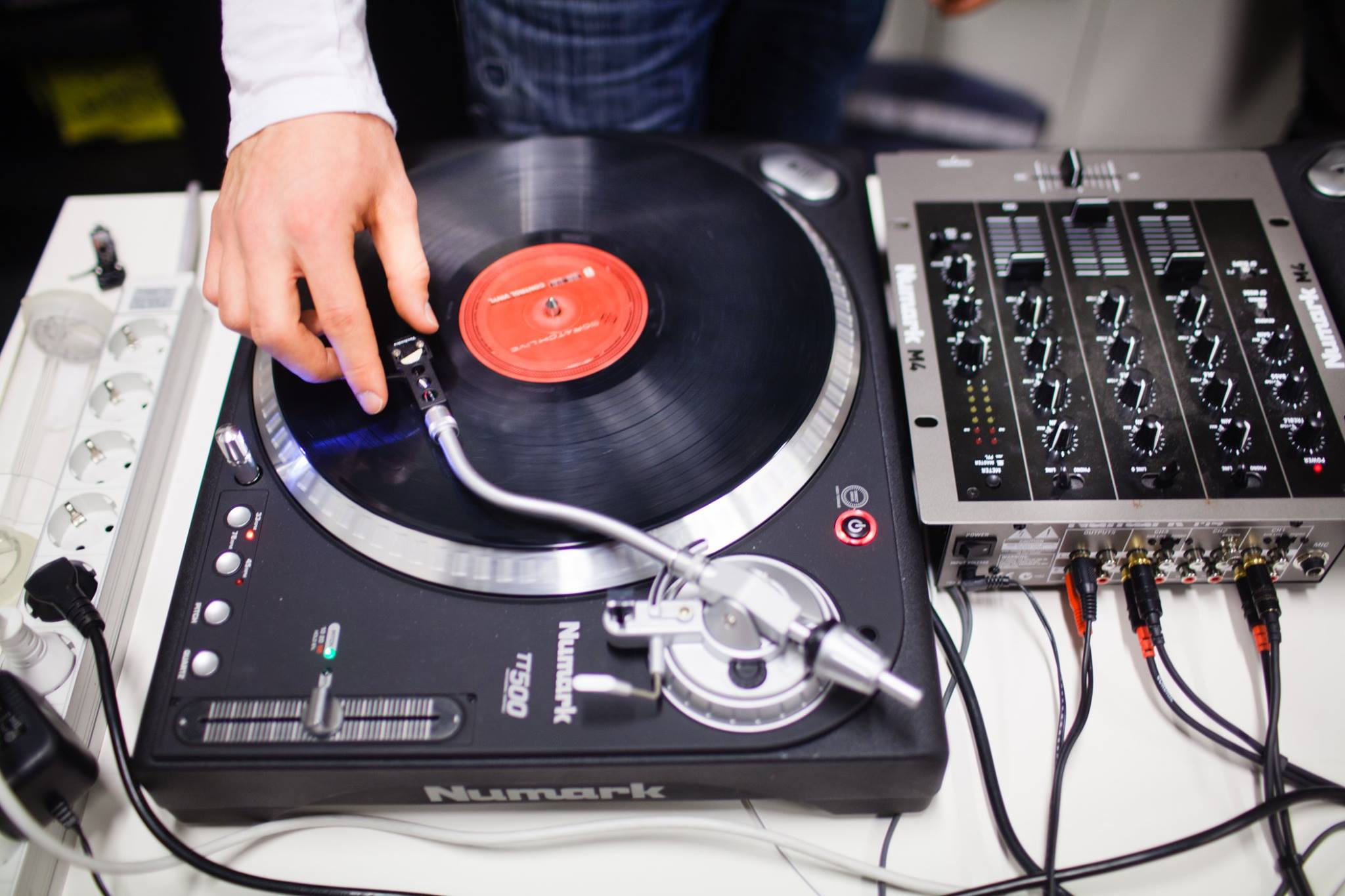
Traditional fan merchandise, such as shirts, posters and vinyl records, have been an important source of income for artists for decades. My teenage years were marked by experiences at gigs where I walked out as the proud new owner of a genuine band shirt, which my parents thought was a bit overpriced. Wearing it, I declared my fandom and that I was “there” at an important concert. When we jump to 2025, I may no longer have shirts in my closet. However, I want to support the band. Perhaps more and more people will buy fan merchandise as NFTs instead of shirts. In this blog, I will consider what NFT-based fan merchandise is like.
What are NFT fan merchandise?
NFT (Non-Fungible Token) is a unique digital product whose data is stored on a blockchain that serves as proof of ownership of the product. For example, a typical fan product, a poster, can be illustrated as follows: A poster is an image printed on paper. An NFT is like a digital original of that poster, but its authenticity and ownership are recorded on the blockchain. The blockchain is an open, decentralized ledger maintained by networks. The information stored on the blockchain tells you that the digital poster in question is an official edition from the collection of the band I admire and that my payment is going to the right party.
NFTs can be digital art, music, or video footage, and can be bought, sold, and traded like physical collectibles. Sales often occur directly from artist to fan, without long chains of intermediaries.
For example, American rap musician Snoop Dogg has made extensive use of NFT technology as part of his fan merchandise. He has released exclusive songs, digital artwork, and fan-owned products such as virtual merchandise in NFT format. He has also designed over 10,000 digital characters that make up The Doggies avatar collection (CNBCTV18, 2023). This creates a new, decentralized revenue stream for the artist without traditional intermediaries.
When digital art meets ownership
NFT technology has also transformed the digital art scene. For example, Australian 3D artist Andrew Price, founder of the popular YouTube channel Blender Guru, has used NFTs to sell his digital works directly to his fans. He became particularly famous for his NFT mosaic of 3D-modeled doughnuts (Lampel, 2024). The doughnuts were sold at auction without traditional intermediaries, and the sale brought the artist $18,000.
Price’s case demonstrates how NFTs can serve as a means for artists to monetize their digital work and offer fans the opportunity to support their favorite artist by owning a unique digital piece. Compared to traditional commerce, the chain between artist and fan is typically much shorter – sometimes without intermediaries at all.
Digital art is easily copied and shared, which has made its commercialization challenging. Crypto art utilizes NFT technology, which allows the origin and ownership of works to be verified. However, there are challenges in this field as well. For example, a person may sell an NFT to which they do not have the rights, or it may be a fake. Furthermore, ownership of an NFT is often only a link to the actual work, making ownership of the product dependent on the maintenance of the blockchain and the external storage service containing the work. (Rivero Moreno, 2024)
Exclusivity and limited editions of NFT products
NFT technology enables limited editions, which increases the value of products. For example, the number of NFT products aimed at fans has been limited to 500 pieces, allowing fans to compete to obtain them. This limited availability model has traditionally been used in vinyl releases and special editions, for example, but in the NFT world it is possible without physical production.
Finnish fashion and virtual fashion designer Wilma Kurumaa, aka Kalista, is an interesting example of NFT fan products. Kalista has created NFT-based clothing. Fans can wear these clothes, for example, in the metaverse with their own avatars (Hero, 2025). This shows how NFT products can expand from mere images and audio recordings to interactive and usable digital products. Many NFT products contain both a physical and a digital component, i.e. are phygital. In this case, the NFT proves authenticity, ownership and ownership history – all of which are available for anyone to view on an open blockchain.
The new market for phygital fan products
T-shirts, pins and posters have been replaced by digital fan products with content that differs from what is customary. Artists can create fan products that are interactive and immersive experiences. NFT fan products can offer fans, for example, a personal digital artwork that includes the artist’s signature, a unique animation or handwritten lyrics to a song. This adds value and uniqueness to NFT fan products, making them desirable collectibles.
The content of phygital fan products has diversified with the development of digital technology. For example, Julien’s Auctions has sold phygital NFT products (i.e., NFTs that include a physical object and an NFT that proves ownership and origin) including Victoria Beckham’s evening gowns, Barack Obama’s golf shoes, and Leonard Cohen’s old front door key to his home on the Greek island of Hydra (Julien’s Auctions, 2025). Band shirts have moved on to a diverse, often unique world of fan products, where the NFT acts as a proof of authenticity and is a key part of the value of the fan product.

Fan shirt: a piece of the past or a future of fandom?
NFT technology is still evolving, and there are many opportunities and risks surrounding it. Scams, challenges in understanding the technology, and market volatility can make it difficult for artists to transition to NFT fan products. However, when implemented well, NFTs can provide a more sustainable and fairer revenue model for artists who want to take advantage of the new opportunities offered by the technology (see Wolff, 2025).
I’m still proud of my old band shirts. The stains on the prints are especially important. At the same time, the NFT world offers something I couldn’t imagine before. It could mean access behind the scenes, exclusive experiences, or digital memories that can’t be copied. Fandom isn’t going away – it’s just changing with the digital age. Or maybe my shirts are finding a new market where I could sell my old worn t-shirt as a phygital product to the highest bidder?
SOURCES
CNBCTV18.com (2023). 5 crypto and NFT projects that Snoop Dogg has been involved with. CNBTTV18 uutiset, 2.3.2023. https://www.cnbctv18.com/cryptocurrency/5-crypto-and-nft-projects-that-snoop-dogg-has-been-involved-with-16079141.htm
Chalmers, D., Fisch, C. & Matthews, R. , Quinn, William & Recker, J. (2022). “Beyond the bubble: Will NFTs and digital proof of ownership empower creative industry entrepreneurs?,” Journal of Business Venturing Insights, Elsevier, vol. 17(C).
Hero, Laura-Maija (2025). Kalista ja muotiliiketoiminta web3 ajassa. Metropolia ammattikorkeakoulu, LUME-hankkeen blogi 15.1.2025. https://blogit.metropolia.fi/lume/2025/01/15/kalista-ja-muotiliiketoiminta-web3-ajassa/
Julien’s Auctions (2025).
Lampel, J. (2024). What’s New with Blender Guru ft. Andrew Price. CGcookie.com podcast 31.10.2024.
Rivero Moreno, L. (2024). Art on the chain? On the possibilities of new media art preservation on the Web3. Digital Creativity, 35(3), 221-233.
Wolff, M (2024). Web3: Huoli digitalisoitumisesta on ymmärrettävää. Metropolia ammattikorkeakoulu, LUME-hankkeen blogi 17.12.2024. https://blogit.metropolia.fi/lume/2024/12/17/web3-huoli-digitalisoitumisesta-on-ymmarrettavaa/
Katri Halonen (Metropolia AMK) toimii projektipäällikkönä Euroopan unionin osarahoittamassa LUME – Luovat web3-ajassa hankkeessa, jossa keskitytään luovan alan uusiin ansaintamalleihin.








Comments
No comments