Vuosi: 2022
Designing for Sustainability in Berlin. A master´s study trip to “International Week on Sustainability 2022”
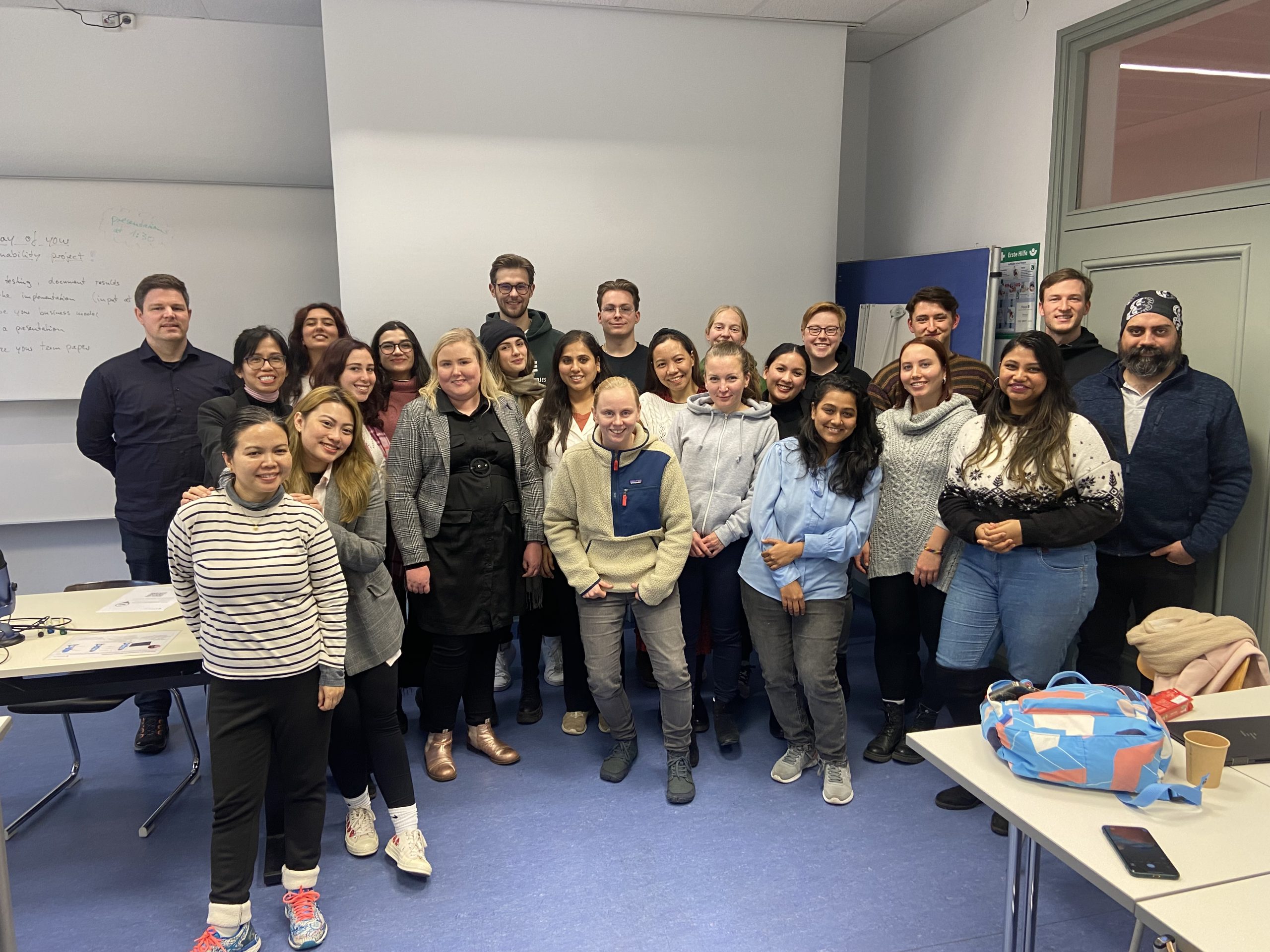
The Berlin School of Economics and Law (1) organizes the annual International Week on Sustainability (IWS) since 2019 with the goal is to integrate sustainability into the higher education curriculum. This year 2022, HWR invited master’s students from Metropolia for the second time to participate in the design and development of sustainable solutions together with companies and students from other countries in a series of workshops that lasted for 4 days, 18-21 November 2022. Our group of 10 master´s students was excited to get an approval from Meropolia´s International office. Additionally, the IWS study trip offered a chance to earn 3ECTS while solving real-world sustainability concerns, so we longed to go and try. The final argument in favor of the trip was its destination, as Berlin represents significant historical legacy, making it a unique opportunity to visit and experience it, difficult to pass by. Fast forward to November, it felt surreal to land at Berlin airport, and we were too excited to feel exhausted. Even the rain, slushy streets, and chilly air could not dim our spirits. In Berlin, we were all determined to expand our knowledge and make new connections. Day 1. Opening Day and Kick-off The program kick-off took place in HWR Startup Incubator Space located in the Siemens industrial park. It started with a briefing with project partners from Startup Incubator Berlin, which featured the startups in the sustainability field. The introduction also included a brief review of Service Design methods and tools covered by Prof. Christian Klang of HWR. There were about 30 participants coming from different academic and business fields who were assigned to five working teams. Each team selected one of the following challenges: 1) incentivizing nature-based solutions to climate change; 2) making travel sustainable and meaningful; 3) incentivizing CO2 reduction during commute; and 4) communicating vegan food delivery effectively. Teams put their hands to work on the challenge they had selected. The startups sat down with the teams to explain their projects and share their motivations and visions. Ideas poured in as each team concentrated on solving the issues and gathering data. Day 1 came to a close with more questions than answers. Day 2 and 3. Ideation and Prototyping Day 2 sessions were held on the HWR campus (2). As we had grown accustomed to the modern design of Metropolia´s campuses, the large corridors, arched hallways, and marble floors in the HWR campus were a little surprising. Teams worked seriously to build and test their prototypes. It became obvious that cooperation is essential to the success of the projects and this is where online tools for team collaboration became critically useful. Ideas and information were together put in an online board to make sure that good ideas and critical pieces of information are not missed out. The challenge was to make business sense out of all the ideas and information that we had, as we quickly realized that bright ideas and passion were necessary but not enough. We kept reminding ourselves that we needed to find solutions that would be viable, feasible, doable, and would make business sense for our partner startup. The second day ended with coffee and laughter, as we watched the first snowfall of the year covering HWR. On Day 3, we went to The Morp Company, a consulting firm that offers sustainability advice. A brief workshop on the use of the business model canvas as a tool to address corporate sustainability concerns was held and received very well as a hands-on new tool. Day 4. Pitch for Impact Day 4 was a pitching day. As teams presented their ideas and answered questions from partner startups and other participants, it was inspiring to see the variety of proposed solutions. There were no earthshaking proposals, but the teams focused on concepts that made real business sense and would advance true sustainability. Although the solution reports still need to be finalized, we felt a sense of accomplishment for having done something worthwhile as the last session ended. Discovering Berlin In all honesty, finding our way to the session locations in the morning was a bit challenging. Because of this, coffee and Google Maps have become our close allies. When in Berlin, we didn’t just snap pictures. We needed to get out there, interact, and connect. Berlin is blissful for shoppers and vibrant for foodies and art lovers. A frequent conversation starter during this trip was “Is this your first time in Berlin?” It was easy to say “Yes” in response to this question. “How do you find Berlin?” and “Which sites have you visited?” were the typical follow-up queries. With each passing day, we would find ourselves giving different answers because Berlin is too diverse to describe in a few words. Despite our time constraints due to working 4 full days on projects, we were nevertheless able to visit some famous sites. We were lucky to witness the start of Berlin's Christmas market and were able to sample local food including currywurst, kebab, stollen cake, and local wine. We had our taste of misadventure too during the first attempt to visit the Brandenburg gate, as we ended up at a factory site due to our over-reliance on Google Maps. On the last day of the trip, it was difficult to bid Berlin goodbye. Armed with new knowledge and filled with the brilliant sparks of Berlin, we boarded our plane to return to Finland. References The Berlin School of Economics and Law (Hochschule für Wirtschaft und Recht, HWR, Berlin) is one of the largest universities of applied sciences in Berlin. It was founded in 2009 as a result of merged of two other big higher education institutions, and it now enjoys more than 150 partners around the globe, including Metropolia UAS, its long-time partner. Read more about HWR from its web-pages: https://www.hwr-berlin.de/en/ Berlin School of Economics and Law, Badensche Str. 52, 10825 Berlin. The picture below shows the marble floors and grand interiors of this campus. About the author Karen Espiritu is a 1st year MBA student in Business Informatics at Metropolia Business School. Karen is a certified project manager and a result-driven professional who is passionate about fostering organizational sustainability on all three fronts: economic, social, and environmental. She enjoys blogging in her spare time and is an active student ambassador of Metropolia. Her video about IWS-2022 in Berlin can be found here: https://www.youtube.com/watch?v=DPiUds0fVvo
Creating a Roadmap to Digital Transformation: A strategic plan to overcome the barriers to digital acceleration

Today, the digital opportunities are evolving faster than the pace of transformation in the organizations. To better understand the path our business is on, where to focus the efforts, and how to overcome the disruption and resistance to change, I decided to use this challenge as a topic for my Master´s thesis and created a roadmap for accelerating the digital transformation towards achieving my company’s future state (1). In the course of this research and development project, I realized several important things which I want to share with the readers. What is Digital Transformation? Many companies often end up with misunderstanding the concept of digital transformation. They often do not differentiate between beliefs and realities about digital transformation. Instead, before embarking on a digital transformation journey, companies need to become aware of a wide professional discussion going on in the professional world and be aware of key findings that business practitioners have came up with based on the experience of industry leaders. I summarize these key points below: First, digital transformation is not just about implementing new technology. It is about the adoption of digital technology to improve business processes, value for customers and innovation. (2) Second, digital transformation is not just a buzzword for business but a way to grow. Therefore, it requires clear targets for each source of value creation and ensuring that the entire company shares one digital vision. Third, digital transformation is not optional, it is mandatory for business success. It helps company businesses gain a competitive advantage. (3) Last, digital transformation is often mistaken for digitization or digitalization, but there are some significant differences. Digitization is, according to Wikipedia (4), the process of converting information into digital. Digitalization is, as Gartner (5) defines it, the use of digital technologies to change a business model and provide revenue and new value opportunities. While digital transformation is about transforming the customer experience and changing how to operate and deliver value to customers. What does acceleration of digital transformation mean? For most of digital services companies, the COVID-19 crisis has had an “all-or-nothing effect” on their digital strategy agenda. As reported by Deloitte (6), 77% of CEOs considered that the pandemic had sped up their company’s digital transformation plans. The crisis has significantly accelerated the digitization in terms of way of working and do business. Many businesses have already embraced transformational change. However, this large scale change should be fast. To leverage the opportunities quicker and overcome the possible challenges faster than the competitors, you don’t have to rush to the corner shop to buy the smartest gadgets. Instead, your company will need to start enhancing systematically your organization culture, operations, and capabilities for the workforce of the future. This phenomenon is called acceleration of digital transformation. McKinsey (7) suggests that the “digital first movers and fast followers capture more value within their industries than slower-moving companies”, taking the lead on digital transformation. It is just what Klaus Schwab, Executive Chairman of the World Economic Forum, said about the impact of speed on the business level: “In the new world, it is not anymore so much about the big fish which eats the small fish, it’s the fast fish which eats the slow fish.” What are the key enablers of digital transformation? The digital transformation is a journey where the desired destination and the path are different for every company. Like on any journey, a careful planning and a well-organized process would help the company to reach the destination safely and avoid back-roads and unnecessary costs. An analysis of the digital maturity of a digital services company, using BCG’s Digital Acceleration Index (8), reviled three relevant domains impacting its journey to successful digital transformation. First, the operations optimization needs a systematic digital approach in decision making to improve the quality of work and ensure customer satisfaction. Second, the digital talent is needed to enhance the changes to digital transformation to succeed points to building capabilities for the workforce of the future. Third, the dynamic organization that lies in creating an agile culture and new ways of working. As the figure below shows, the enablers for accelerating the digital transformation include precisely these three elements: the optimized operations, engaged digital talent & leaders, and dynamic organization. In other words, the chances for a successful digital transformation will be greatly increased in case your organization is able of doing: quick decision making, building the digital capabilities for the workforce of the future, rolling out an agile culture, and establishing new ways of working. What is a digital transformation roadmap and why do we need it? Most importantly, making your organization succeed in the digital transformation needs a plan with clear steps and effective actions to achieve the goals as part of your growth strategy. Mapping out these steps on a timeline with clear milestones builds a digital transformation roadmap. The roadmap that I proposed in my thesis for accelerating the digital transformation of my company that provides digital services defines three major elements to reach the digital transformation acceleration: 1) implementing a systematic approach in decision making, 2) building digital capabilities for the workforce of the future, and 3) creating an agile culture and a new way of working. By doing all of these, the company can better deliver relevant business outcomes to customers with fast payback and also enhance employee performance. On an EndNote Industry leaders often want to understand how far they are on the road of digital transformation. This was also the case with my organization that is concerned with the same question. After completing my investigation, my conclusion is this. Your organization is a digital transformation “performer” if (a) it has started to adopt the new ways of working, (b) has taken the efforts to build a more agile culture, (c) it has developed new digital capabilities, (d) it has a leadership mindset, and (e) it has streamlined the operations across its teams and organization. About the author Violeta Tudose is a seasoned professional with a MSc in Computer Science and many years of industry experience. Currently, Violeta is a Huld Leader at Huld ltd. Recently, Violeta decided to take up yet another challenge and graduated as Master of Business Administration from the Master’s programme in Business Informatics. Welcome to contact Violeta via violeta.tudose@huld.io and her LinkedIn. References: (1) Tudose, V. (2022). Roadmap to Digital Transformation. Master´s Thesis. Metropolia University of Applied Sciences. Available from: https://www.theseus.fi/handle/10024/783038 (2) Shaban, H. (2022). Digital Transformation Process: 5 Factors That Can Empower Your Transformation Strategy: Blog. Apti.io (18 February 2022). Available from: https://www.apty.io/blog/digital-transformation-process (3) Chakravarty, V., Wang, J, and Ahuja, S. (2021). Why digital transformation doesn’t have to be hard. (Online publication). Available from: https://www.ey.com/en_ph/board-matters/why-digital-transformation-doesnt-have-to-be-hard (4) Digitalization. Wikipedia (Definition). Available from: https://en.wikipedia.org/wiki/Digitization (Assessed 24 November 2022). (5) Digitalization. Gartner Glossary (definition). Available from: https://www.gartner.com/en/information-technology/glossary/digitalization (6) Kane, G.C., Phillips, A. N., Copulsky, J., and Nanda, R. (2020). Digital Transformation through the lens of COVID-2019: A case of acute disruption. Deloitte Insights. Availabe from: https://www2.deloitte.com/us/en/insights/topics/digital-transformation/digital-transformation-COVID-19.html (7) Booth, A., De Jong, E., Peters, P. (2018). Accelerating digital transformations: A playbook for utilities. McKinsey. Available from: https://www.mckinsey.com/~/media/mckinsey/business%20functions/mckinsey%20digital/our%20insights/accelerating%20digital%20transformations%20a%20playbook%20for%20utilities/accelerating-digital-transformation_a-playbook-for-utilities-vf.pdf?shouldIndex=false (8) Boston Consulting Group, BCG (2020). Accelerating digital to build the ´bionic company´: BCG´s Digital Acceleation Index (DAI) to more digital maturity. Digital BCG. Available from: https://cdn.auckland.ac.nz/assets/auckland/business/our-research/docs/CODE/Accelerating%20digital%20to%20build%20the%20'bionic%20company'%20Framework%20and%20case%20study.pdf
My Remote Studies in Procurement MBA

Only a few of us envisage a career path that we eventually end up following or foresee the choices that we will make along the way. But each professional and academic choice shapes us and broadens our perspectives, growing our network and leading to new opportunities. The Master´s degree programme in Procurement at Metropolia University of Applied Sciences was a choice that I was often asked about. Why study in Finland at Metropolia when I live and work in the United Kingdom? In times of turbulence, uncertainty, and change, it proved to be a choice that benefited me personally and professionally as a procurement leader. I was able to learn from senior people in the industry and apply examples of digital procurement technology and sustainability where Finland leads the way. However, studying whilst working full time can be a daunting experience, especially remotely or as a foreign student. So, I want to share my tips for getting the most out of your master´s studies and review my Finnish student experience. Start by choosing what you want to study I found the Procurement MBA programme through StudyPortals.com. I’ve studied in Sweden and England previously, so I was not intimidated by the prospect of studying in Finland. The degree was in English and fully remote, and covered those aspects of procurement that I was particularly interested in, including digital procurement technology, strategy, innovation management and circular economy. So, my advice is to choose a subject that you find interesting and valuable to your career and use the studies to develop yourself further in that field. Commit to your studies and organise yourself ahead by sharing your commitment with your line manager, with your family and friends. They are likely to be very supportive of your drive towards improving your knowledge and building upon your skills, and they may help by giving you the time and space needed for you to complete studies. Stay in control Studying for a master’s degree means that you are responsible for managing your time, allocating resource, and sticking to deadlines. My Metropolia study coordinator helped me with planning, so that I was able to build my own academic calendar and use the spectrum of online tools available such as OMA, Moodle, Tuudo, and other apps to ensure I was always up to date. My advice would be to start with listing all the deadlines for your assignments and other obligations, subscribing to learning resources that are available, being proactive in contacting lecturers and fellow students, and asking questions. If you miss something, think before putting the blame to others. Apply yourself We often hear the phrase ‘apply yourself’, but what does it mean for students? It means committing to the task and managing it like you would manage a project at work. In other words, prepare in advance, gather books, articles, and notes, and organize yourself into group roles with your fellow students. Pick a leader and make sure they do a good job at allocating resources and splitting tasks along a critical path. Maintain a healthy work-study-life balance My most important advice is to maintain a healthy body and a healthy mind. Don’t stretch yourself too thin so that you are not your best self. Ensure that you get plenty of sleep, eat well and take a day off so you can rest from your studies and work. Then you will get the desired results. Also, take part in extracurricular activities such as trips and evenings out that allow you to build your long term professional and social networks. Ask for support You will find that studying abroad or remotely can be difficult. You will have a whole new culture to adapt to, a different setting and a new academic system that you may be unfamiliar with. However, help is always available to those that ask for it. Reach out to Metropolia´s Student services and your Study coordinator for support. If you find yourself falling behind during your studies, be proactive in voicing your concerns to your lecturers. For me, studying procurement at the master’s level at Metropolia was an energising experience. I was able to relate to my previous work experiences and apply my corporate procurement knowledge in the academic setting, and thus got the most out of my studies. About the author Mindaugas Jočbalis is an MBA graduate from the Master´s degree programme in procurement at Metropolia UAS and a Category Leader for Packaging Procurement at Associated British Foods plc., looking after Europe, Middle East and Africa since 2018. In his career, Mindaugas has often worked in procurement, but never studied it. He started his career as a retail store manager, and later managed social corporate projects at Marks and Spencer. Following this, he then moved into a graduate procurement role at AkzoNobel in the decorative paints industry in 2013. As part of his professional development, Mindaugas has completed a single year master’s degree remotely at Malmo University, Sweden, studying Communication for Development in 2016. Having completed this graduate programme, he was offered a role at GlaxoSmithKline and looked after consumer healthcare packaging for two and a half years.
Corporate Ride-Sharing: Yet another promising option in sharing economy

Technology creates possibilities for organisations, and one of the well-known existing problems of commuting can be solved by integrating and promoting a ridesharing application within corporations. A ridesharing service refers to any method of transportation in which commuters use a single vehicle, either a private or company vehicle, to reach a similar destination. So far, ridesharing is known through initiatives such as Uber, Lyft, Taxify, Gett, Juno, and smaller providers around the world. It has its advantages and limitations, as with any initiative in the sharing economy. In this blog, a corporate ride-share service is described that was proposed as a student´s thesis project for the Aviapolis area, Vantaa, an area popular with companies and corporations. History of Ride Sharing The earliest reports of ridesharing arise in early 20th century America. The consent found between 1914 -1918, known as the Jitney craze (1), allowed individuals to think of an innovative and effective way to use their vehicles. With mass-produced cars flooding the market and the early stages of a recession coming into play, enterprising car owners in 1914 began offering rides in their vehicles for a “jitney” – five-cent streetcar fare. The idea grew from Los Angeles across America in less than 12 months, with an estimated 1,400 jitneys operating in San Francisco alone. Ride Sharing As economic growth increased, mobility became more important to support human activities and needs. One of the most prevalent needs is transportation to and from work. Long commutes cost employees and their companies considerable time, wasted resources, productivity, and additional expenses (emotional, physical, financial). New, fast-growing business regions located away from city centers are especially affected by this. In Helsinki, one such example is the Aviapolis business district (2), which is currently transforming into a business hub. More than 37,000 people are employed by more than 1,000 companies in the area. The area, however, faces its challenges with complicated commuter traffic and a congested parking lot, and main roads are highly congested during business hours. Corporate Ride Sharing The goal of this Master's thesis was to present an application for corporate ridesharing as a possible solution to this problem. In this thesis, we describe a solution to a common need: traveling between two locations. Some areas lack frequent public transportation, which means that the time interval between transport is very high or varies — resulting in long waiting hours, long traveling time, and higher costs. Corporate Ridesharing is one of the most valuable solutions when there are no other means of transportation to a specific location. The new service was outlined based on extensive analysis of the customer needs of the employees at several companies in the Aviapolis area. It was followed by the development of the actual application based on the PiggyBaggy platform. PiggyBaggy is another excellent example of how innovations help the world run better (3). The thesis combined web technology into a ridesharing solution to help provide immediate economic, environmental, and social benefits to the companies and their employees in the Aviapolis region. The application developed in the Master´s thesis was launched successfully(4), providing an easy platform to the employees of participating companies. There were also two pilots done in 2020-2021. Turku Pilot We have commenced a pilot where the objective is to create an incentive for drivers to offer rides in their car by giving in return access to parking places in prime locations in the city center . Additionally, we are testing in a particular area whether a combination of community services in addition to ride-sharing would increase participation. Tampere Pilot In this case, it was a public hospital, and the parking place management was again taken care of by a local operator. The participant numbers were encouraging, and the employer (hospital) issuing the parking place incentive is keen on considering scaling up the trial in the Fall. Results: Users in PSHP-group: 56 Rides executed: 232 Rides per month: 123 Because the trials were limited in duration, we did not reach the targets for shared-ride numbers as planned. However, I strongly believe that we planted the seed for Ridesharing and its benefits among many employees, which I believe will grow over time. The service is being improved by integrating AI-based trip and transport mode detection to automatically create routes for offering or requesting rides, as well as integrating with MaaS services (make transport capacity visible, e.g., in Matkahuolto Reitit ja Liput). About the Author Usman Khanzada earned his Master's degree in Business Informatics from Metropolia UAS. Professionally working as a Client Integration Manager for In4mo Solera. His career trajectory is based on Client management, process improvement, and project management in the information technology and services industry. He is passionate about finding ways to reduce CO2 in the corporate sector by taking the right steps and addressing the issues essential to the future health and well-being of employees, the community, and the planet. References Ride Share Research. (2009, 24 January). Massachusetts Institute of technology, Rideshare History & Statistics. MIT “Real-Time” Rideshare Research. [Online] Available at: http://ridesharechoices.scripts.mit.edu/home/histstats/ [Accessed June 2021] City Vantaa (2022). Aviapolis Major Region. Available at: https://www.vantaa.fi/en/regions-and-districts/aviapolis-major-region [Accessed November 2022] Piggy Baggy. (2021). KCity Market. K-citymarket Lahti Paavola hypermarket. [Online] Available at: https://pages.piggybaggy.com/en/partners/ [Accessed June 2021]. Usman, K. (2021). Corporate Ridesharing Application for Aviapolis Business Region. Metropolia University of Applied Sciences: Master´s Thesis [Online] Available at: https://www.theseus.fi/handle/10024/501460
Electric car batteries are considered “dead” when they still have 70% capacity. How to make electric car batteries live a second life.
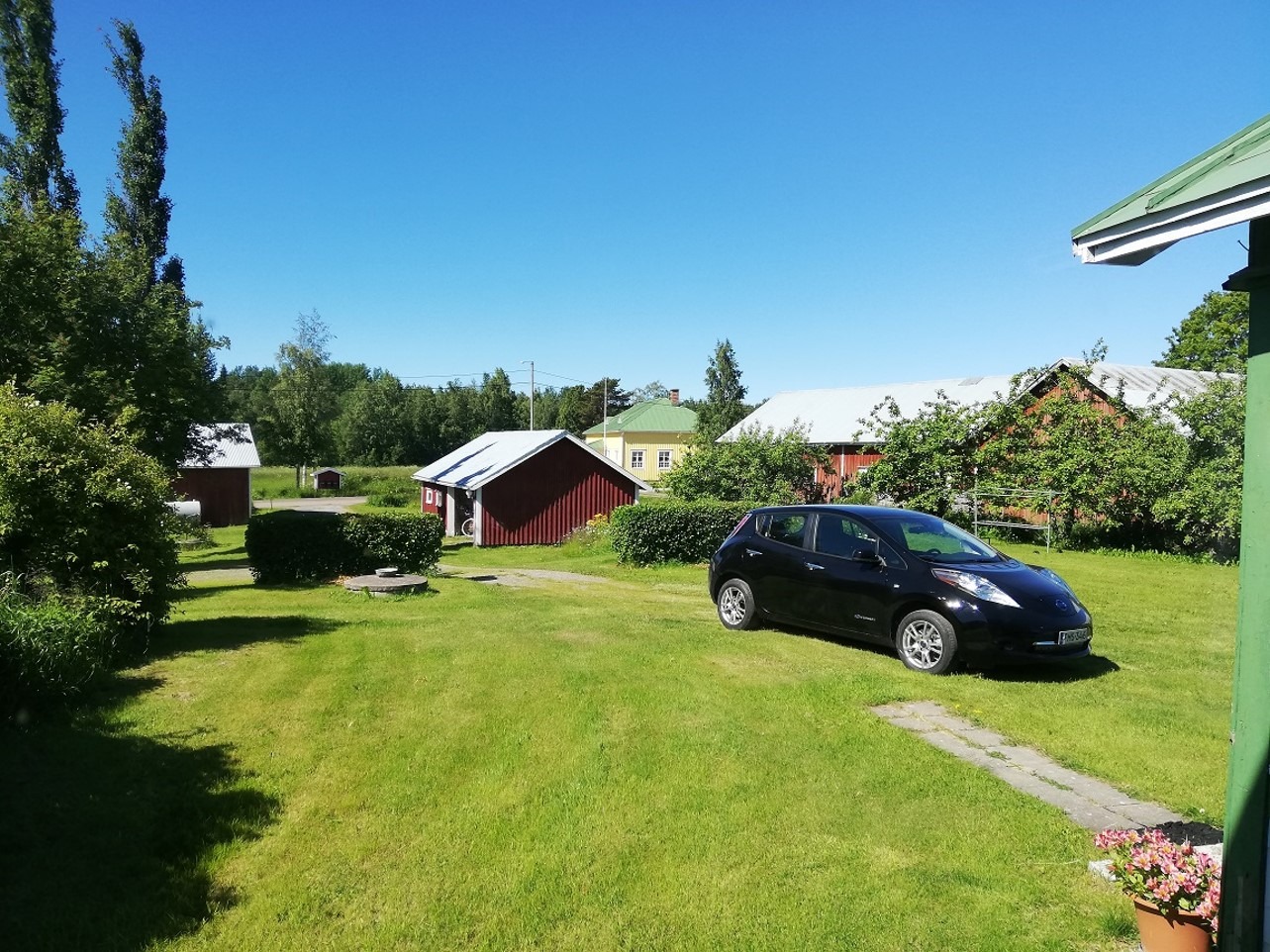
“Circular economy” Master´s course at Metropolia had an amazing guest from Vaasa. Daniel Öster, an electric car enthusiast and a start-up entrepreneur told the students about his passion for EVs (electric vehicles) and his innovation that allows electric car batteries to live up to 22 years, instead of 10 years guaranteed by manufactures. Daniel´s story tells about curiosity, passion, persistence, and a long journey of exploration on the way to realizing his own innovative idea. “I am a car guy, - told Daniel to the students at his presentation at Metropolia, - and I was excited by Tesla. What an excellent car, no emission! But there was one problem, I could not afford it. So, I decided to make my on EV, electric vehicle, from scratch. For this end, I started collecting old laptop batteries that were thrown away in trash. I opened them and looked at their cells, to see which were good or dead. I continued till I collected 2000 cells, it was enough to assemble my own car. I thought, excellent! I will soon start a zero-emission life!” “Out of the collected laptop batteries, I assembled my first power-bank as a proof of concept. It worked”, - continued Daniel, showing his pictures from the past. “It was 2018. As soon as I collected enough second-hand laptop batteries, I went to netti.auto and bought a very cheap e-car. It was a fully electric Nissan “Leaf” manufactured in 2015. The seller was very optimistic (he owned it for 1 year), while I myself did not know much about e-cars yet. I thought, the battery would most likely need a bit of a face-lift… But it was a much bigger disappointment. My new car could only ride for 25 km! (instead of 125 km shown on the tool bar). What could I do? I was truly devastated. You can imagine how it felt. I just spent over 10 000 euros on something that I could not use. After contacting the local dealer, it felt like I did a horrible mistake. Nissan suggested to replace my old battery for another one for 10 000 euro. Oh, gosh!..” - remembered Daniel about his first steps of having an electric vehicle. “I was used to having internal combustion engines, and did not expect this kind of difficulties. But I was determined to have my electric car!” - told Daniel about his brave decision. “Being an engineer by education, I downloaded the app and checked the state of my battery. It was evident that only 2 elements of the battery were low. That was good news. I decided, if I could fix them, I am saved! I deconstructed the battery – and voila! – I fixed my battery! And it worked! And my car could ride for 125 km just by fixing these 2 elements! – and everyone whom I spoke about it could not believe it. How could it really be so easy? People started saying, Daniel you should start a business about it. And I did!” “But let´s say first about the combustion car engine (traditional). The normal engine has many rotating powers and only convert about 30% of liquid energy to movement. To be able to convert it, the traditional engine has more than 2 000 components! As a result, it needs a lot of maintenance, or it will die prematurely,” - explained Daniel the difference between the combustion and e-car engines. “In the e-car engine, however, there is only 1 rotating part! It means, there is no need for a periodic service, and it turns 90% of energy into movement! So it is a truly unique solution! (Yes, the initial price is high, but in the total cost of ownership it is much cheaper)”. “Although the solution itself seems to be perfect, there was a practical problem related to my old e-car. For example, in Vaasa, where I live, there is little e-infrastructure (in other words, e-charging stations where I can recharge my e-car). It means I needed to stop quite frequently to charge it. So, very soon after fixing my 2 elements, I started wondering if it could be possible to put a bigger battery into my car? I investigated this problem and purchased a bigger battery from the car scrap, from Norway. It was actually the biggest old e-car battery available. Nissan and all literature would say it is NOT possible (companies do not want people to put bigger batteries). Luckily, since I was Wärtsilä employee at that time, I had wide networks of excellent specialists to consult. It took me many nights to do trouble-shooting – and compare new batteries and old batteries – and making tables comparing them, with graphs and calculations. The software was the most challenging part. Finally, I had found how to communicate to the battery via a CAN-bridge and it was a success! I managed, first, to upgrade my own EV, so that it could go 300 km. It felt so great! No more anxiety that I would get stuck in the night somewhere! And later, I turned it into a service offered by my own start-up,” - told Daniel about the development of his business. Daniel feels very proud. “By now, I have done 8 successful upgrades myself and also sold hardware, so that my customers can do their own upgrades. I have 45 customers by now who upgraded their batteries themselves using my hardware! These are not many people, as reverse engineering battery upgrade requires considerable efforts. But I promoted this knowledge. Also, those who cannot do it themselves, can ask for my services,” - tells Daniel about his current situation. “These e-cars that I am serving with my skills and hardware are already over 10 years old. It means my services relate only to these early adopters. At the time of their production, the batteries were not that advanced, and these cars would otherwise be discarded into waste. So, I am happy that I am doing a good thing! Manufactures want to you to drop such cars instead, but why?” - argues Daniel explaining how he can considerably prolong the life cycle of both, the early e-cars and their batteries. Based on his experience, Daniel calculated that the batteries that are considered as “end-of-life” by manufacturers (with still having 70% of original capacity!) with the help of his services can be used for much longer, up to 22 years as Daniel projects. Moreover, when they become worn out even further, Daniel figures out how to continue their second life in various stationary installations, such as power-banks in individual houses. The story about installing “old” e-car batterers in private houses continues after the picture. Figure 5. The extended electric car battery life cycle and the business idea that emerged from Daniel´s experiments with electric car batteries (from own presentation). Daniel continues: “I was very excited about my findings. Just think about it! Batteries that are considered “dead” still have about 70% capacity. EV manufacturers give 8-10 years guaranty before reaching “end-of-life”. But I have proven that early technologies are still good even after 10 years after the upgrade! That was my initial insight. After that, I was faced with another practical challenge. As a result of my experiments, I ended up with a lot of batteries. I faced a question, what to do with them?” “I decided to try and use these second-life batteries with private individuals and install them into own houses as power-banks. Nowadays, individual households can produce own energy via solar panels, for example, of other small-scale energy technologies. But it turns out to be not cost-effective to sell the excessive power generated by own solar panels back to the grid. It is more efficient to store own energy and then use it later. In other words, private household can basically earn more money by using own energy, in case they have a battery for accumulating it. This is how another idea for using old batteries emerged,” - explained Daniel his innovative idea that sprang from his initial service. The picture below shows a typical customer case for a power-bank. “This is still a very recent idea. One year ago I sold the first set of batteries, and now – 1 year ago – the customer came back to me and bough another set, and now he is fully off the grid! He uses his own energy. (Importantly, in this second life, the old batteries are expected to still stay active for another 10 years),” adds Daniel and demonstrates how the power-bank looks like. “For this purpose, you do not need to have fancy batteries, just old batteries will do”. Daniel says that there could be many more ideas for the second life solutions for old electric car batteries. He shows pictures of the other use cases for Nissan´s “Leaf” and Tesla´s old batteries: This inspirational example of Daniel´s innovations opens a truly new avenue for re-use of car batteries. Daniel´s proposals allow to keep car batteries out of the waste landfills for tens of years. Moreover, they manage to create new value by facilitating effective energy use. Such proposal directly contribute to improving sustainability and heading for circular economy. Daniel adds that, when he hears concerns about the challenges related to the manufacturing and recycling of old car batteries, he always wants to remind about the great advantages and a truly huge potential provided by electric cars - from reducing the fossil fuel consumption, cutting emissions and reducing noise, to many other striking features of electric cars. His message to the world is that the electric batteries can live surprisingly long! And Daniel wants the humankind not to throw away the electric old cars and batteries, but to re-use them wisely and find other benefits in this great opportunity. The story is presented by Daniel Öster and written down by Zinaida Grabovskaia, Master Degree Programme in Business informatics. Daniel Öster - an electric car enthusiast, a former Wärtsilä engineer and now Kempower expert, and a start-up entrepreneur and founder of “Dala´s EV Repair” who participated in the “Circular Economy” course at Metropolia. Daniel develops his innovative ideas around electric car batteries. Daniel has developed a technology to upgrade the early generation electric car batteries that allows to radically extend their life. He is also active in disseminating his knowledge about re-use of batteries: https://www.youtube.com/channel/UCc3g-KhOBoicgOrB4KkMeew His most recent idea relates to re-using the old batteries as power-banks for energy storage in private households. Daniel lives and works in Vaasa, and continues to generate innovations inspired by versatile use of electric car batteries for various businesses.
Mistä pitovoimaa kulttuurialan pätkittäin rakentuviin töihin?

Covid-19 pandemian ja sitä seuranneiden kulttuurialaan laajojen sulkutoimenpiteiden vuoksi tapahtumasektorin teknisen alan osaajakato on syventynyt (Parviainen, 2022a). Osaavista tekijöistä on kova kysyntä ja sopivan löytyessä työnantajilla on tarpeeseen sitouttaa erityisosaaja nopeasti osaksi produktioitaan. Erityisen haastavaa tämä on ns. keikkatötöissä, joissa pitäisi sitouttaa tapahtumatekniikan ammattilaisia määräaikaisiin pätkätöihin. Kulttuurituottaja (ylempi AMK) tutkinnossa on valmistunut kaksi kiinnostavaa opinnäytetyötä tapahtumateknisen henkilöstön sitouttamisen haasteista. Jenni Juutilainen (2021a) etsi Sun Effects Oy:n tilaamana keinoja ja uusia toimintamalleja, joilla organisaatio saa kerta toisensa jälkeen palkkalistoilleen halutut ammattilaisfreelancerit sitoutumaan organisaation tuotantoihin. Crista Parviainen (2022b) puolestaan etsi keinoja sitouttaa projekteittain tai vakituisesti rekrytoitavaa tapahtumateknistä henkilökuntaa osana perehdyttämisprosessia Oy Aku´s Factory Ltd:n tilaamana. Ei roudari-Reiskoja vaan kovan tason ammattilaisia Ministeri Mika Lintilän lausahdus juhannuksen alla Pyhtäältä pöydältä -tapahtuman paneelikeskustelussa roudari-Reiskoista, ”jotka pyytävät puolet palkasta handuun ja puolet pimeänä, saa nyt vastauksen pitkän linjan roudarilta” jätti syvän jäljen tapahtuma-alaan. Vaikka elinkeinoministeri täsmensikin Helsingin Sanomille, että hänen mainitsemansa esimerkki ”ei kuvannut yleistä mielipidettäni freelancer-kentästä”, lausunto jäi vahvasti mieliin. (Sirén, 2022.) Samalla tuo täsmennys, ettei mielipide koske koko freelancer-kenttää, jätti jäljelle epäilyn, että ministeri Lintilä kokee juuri tapahtumateknisen alan roudari-Reiskoina. Tapahtuma-ala kokonaisuudessaan ja etenkin tekninen henkilöstö järkyttyi syytöksestä, joka leimasi toimialan ammattilaiset pimeän työn tekijöiksi. Tapahtuma-ala on Suomessa 2,35 miljardin euron arvoinen pitkälle kehittynyt liiketoiminnan alue, joka työllistää lähes 200 000 ihmistä ja tuottaa 1,2 % Suomen BKT:sta (Kuusisto & Sahlstedt, 2021). Opinnäytetöiden näkökulmasta tapahtumatekninen osaajakunta on kaukana roudari-Reiskoista. He ovat korkeatasoisia erityisosaajia ja etevimmistä käydään alan yritysten keskuudessa kilpailua. Haasteena on palkkatyöhön tulevien perehdyttämisen rinnalla - etenkin freelancereiden kohdalla - sitouttaminen produktioihin. Vetovoimasta puhumisen sijasta olennaiseksi nousee myös pitovoima, joka on erityisen haastavaa keikkapohjaisessa taloudessa. Miten saada haluttu ammattilainen sitoutumaan myös tilapäisiin tehtäviin organisaatiossa? Keikkatyöläisenä osana yhteisöä Määräaikaiset ja osa-aikaiset epätyypilliset työsuhteet ovat määrällisesti kasvaneet viime vuosien aikana (Leskinen, 2019). Varsinkin kulttuurialalla nämä epätyypilliset työsuhteet ovat normaaleja ja vakiintuneita työn tekemisen muotoja. Tulevaisuudessa keikkatalouden työmahdollisuuksien monipuolistumisen nähdään voimistuvan edelleen esimerkiksi vuokratyön ja alustatalouden myötä (Gaily, 2022). Tapahtuma-alalla vakituista henkilökuntaa on organisaatioissa usein vähän ja freelancereiden tarve on hetkittäin suuri, jotta varsinkin isompia tapahtumia voidaan toteuttaa. Alan ajallisesti epätasainen työvoimatarve johtaakin siihen, että hyvistä ammattilaisfreelancereista kilpaillaan tapahtuma-alan sesonkikausilla kovasti. Tapahtumatekniselle erityisosaajien joukolle on Covid-19 -pandemian aikana avautunut laaja webinaarien ja etätapahtumien ammattikenttä, jonne osan ammattilaisista epäillään myös jäävän. Tapahtuma-alan kyky pitää kiinni kokeneista osaajistaan organisaatioissaan romahti työn muututtua aiempaa epävarmemmaksi pandemian ehkäisemiseksi tehtyjen sulkutoimenpiteiden vuoksi. Kamppailua käydään tapahtuma-alalla sekä uusien ammattilaisten vetovoimasta että luottamuksen palauttamiseen alan pitovoiman vahvistamiseksi. Yksi pitovoiman keino on keikkatyöläisen tarpeisin räätälöity sitouttamisprosessi, jonka kehittämiseksi Parviaisen (2022b) ja Juutilaisen (2021a) opinnäytetyöt antavat paljon kehittämisehdotuksia. Keskeinen vaihe on uuden henkilön perehdytys (ks. Viitala 2021, Huuhka 2010). Perehdytys palvelee sekä tarvittavan tiedon jakamista että me-hengen luomista. Hyvän perehdytyksen tuloksena uusi henkilö kokee olevansa keikkalaisen sijasta arvostettu porukan jäsen. Parviaisen (2022a) aineistossa ikävimmät puutteelliseen perehdytykseen liitetyt tunteet kertovat ulkopuolisuuden ja helposti korvattavissa olemisen tunteista. Joidenkin kohdalla puutteellinen perehdytys on saanut vastaajia harkitsemaan alan vaihtoa tai jopa myötävaikuttanut alalta lähtemiseen. Toisaalta onnistuneella perehdytyksellä on kauaskantoisia positiivisia vaikutuksia. Perehdytys oman alan ammattilaisen kanssa voi vahvistaa perehdytettävän ammatillista itseluottamusta ja sen myötä rohkeutta kysyä matalalla kysymyksellä apua ja kehittyä osaajana. Perehdyttämisen ketunhäntänä psykologisen sitoutumisen vahvistaminen Vakituisen kokoaikaisen palkan puuttuessa työntekijöiden sitoutuminen tapahtuu projektikohtaisin sopimuksin. Virallisen sopimuksen rinnalla tehdään psykologinen sopimus, jolla pyritään kiinnittämään osaaja tilapäisorganisaatioon. Psykologinen sopimus jää usein ääneen lausumatta ja sisältää ajatuksen vastavuoroisuudesta ja jollakin tasolla sekä työnantajan että keikkatyöläisen tarpeiden huomioinnin ja motivaation yhteiseen työskentelyyn. (Halonen, 2009.) Juutilainen (2021b) kysyy: ”Miten freelanceria, jolla voi olla lukuisia eri työantajia vuodessa, voidaan sitouttaa organisaatioon, kun sitouttaminen on tässä ajassa haastavaa jo vakituisen henkilökunnankin kohdalla?” Freelancerit ovat työn tekijöinä sitouttamisen näkökulmasta erityisen haastava kohderyhmä. Heille sitoutuminen ei tarkoita organisaatioon yksinoikeudella sitoutumista, vaan pikemminkin psykolgoista sitoutumista johonkin laajempaan eri työyhteisöjen kautta muodostuvaan verkostoon, jonka kautta rakennetaan kokonaistyöllisyyttä erilaisten työsuhteiden avulla. Vastausta sitoutumiseen haetaan molemmissa taustalla olevissa opinnäytetöissä psykologisen sopimuksen avulla. Tiedon antamisen ohella on tärkeää muodostaa sosiaalistavan ja dialogisen perehdytystyylin avulla psykologista sitoutumista tukeva prosessi. Soveltaessaan psykologisen sitoutumisen mallia Parviainen (2022b) ja Juutilainen (2021a) näkevät kumpikin perehdyttämisen haasteena yhteisöön kuulumisen tunteen rakentamisen. Kun perehdytettävä tuntee kuuluvansa työyhteisöön, hän kokee työnsä merkitykselliseksi ja saa sen tuloksena myös arvostusta ja iloa työstään. Tämä haastaa myös työyhteisön. Jotta niin vakituinen kuin freelancer-pohjainenkin uusi työyhteisön jäsen tuntisi itsensä osaksi työyhteisöä, on työyhteisön oltava vastaanottavainen ja avoin. On pohdittava työyhteisön tarpeiden ohella freelancerin monesti perättäisten, päällekkäisten ja limittäisten työkuvien sovittamista järkeväksi kokonaisuudeksi. On tärkeää antaa mahdollisimman aikaisin mahdollisimman paljon tietoa tulevista produktioista, joihin freelanceria toivotaan, jotta myös freelancer pystyy suunnittelemaan omaa työkalenteriaan ja tulevaisuuttaan mahdollisimman aikaisessa vaiheessa. Juutilainen (2021a) korostaa, että sitouttamisen keskeinen osa on avoin ja läpinäkyvä viestintä. Avoin viestintä luo myös freelancereille tunnetta siitä, että he ovat tärkeä osa työyhteisöä. Jos freelancereille muistetaan viestiä vain silloin, kun organisaatiolla on tarvetta hänelle, jää yhteyden luominen työntekijän ja organisaation välillä heikoksi. Optimaalisessa tilanteessa organisaatio myös käy keskustelua siitä, millaisia tulevaisuuden haasteita tekninen ammattilainen itselleen ehkä toivoo. Ammatilliseen kasvuun —pätkittäinkin— sitoutuminen voi olla tärkeä viesti. Sitouttaminen on tapahtuma-alalla nyt ja lähitulevaisuudessa kriittisessä asemassa Viime kädessä Juutilaisen (2021a) analysoimien freelancereiden sitouttamiseen pätevät hyvin samanlaiset keinot, kuin Parviaisen (2022a) tutkimuksessa olleisiin vakituiseenkin tapahtumatekniikan osaajajoukkoon. Työn tulee olla motivoivaa, mielenkiintoista, haastavaa ja itsenäistä. On tärkeää, että organisaation arvomaailman on samassa linjassa työntekijän henkilökohtaisten arvojen kanssa. Muuten sitoutuminen jää kevyeksi. Samalla työnantajan on tärkeää muistaa, että hänelle työskentelevä freelancer on sitoutunut toimeksiantajan sijasta laajempaan verkostoon, joka edellyttää monipaikkaista lojaaliutta, jatkuvaa aikataulujen ja produktioiden priorisointia ja myös joskus joutumista kilpailevien työtarjousten väliin. Covid-19 pandemia on ajanut suuren osan kulttuurialasta ennennäkemättömään kriisiin. Lukuisat alan freelancerit jäivät tilanteessa yksin. Osa vaihtoi alaa vakaampien tulojen piiriin. Pandemian myötä vahvan epävarmuuden leiman itseensä saanut tapahtuma-ala kamppaileekin sekä veto- että pitovoiman alueilla. On käynyt, kuten Juutilainen toisen koronakesän kynnyksellä ennusti: ”Kun pandemia on kriisinä ohitettu, on kulttuurialalla tämä toinen kriisi edessä, mistä löydetään tarpeeksi ammattilaisfreelancereita tulevaisuuden projekteihin mukaan?”. Elämme aikaa, jossa hyvin toimintaansa teknistä henkilöstä sitouttaneet organisaatiot näyttäisivät selviävän voittajina. Kirjoittaja Katri Halonen (YTT, FL) toimii Metropolian kulttuurituotannon (YAMK) tutkintovastaavana, tukee opiskelijoita kehittymään etenkin ketterän kehittämisen ja osallistavan johtamisen alueella sekä toimii ohjattaviensa kanssakulkijana opinnäytetöiden eri vaiheissa. Lue lisää: Jenni Juutilaisen kulttuurituottaja (YAMK) opinnäytetyö: Illusio vapaudesta?: Ammattilaisfreelancerin sitouttaminen luovan alan organisaatioon Jenni Juutilainen on pitkän linjan freelance-tapahtumatuottaja. Hän on erikoistunut artistituotantoihin, mutta viime vuosien aikana kiinnostus erilaisten tuotantojen tekemiseen on ajanut hänet kokeilemaan tuottajan työtä hyvin erilaisissa projekteissa. Varsinkin kumppanituotannot ja niiden uudistaminen ovat juuri nyt Juutilaisen mielenkiinnon kohteena. Crista Parviaisen kulttuurituottaja (YAMK) opinnäytetyö: Perehdytys psykologista valtuutusta luovana prosessina : asiantuntijan sitouttaminen tapahtumateknisellä alalla Crista Parviainen työskenteli pitkään freelancerinä ennen Tampere-talon ja sittemmin Oy Aku´s Factory Ltdn palvelukseen siirtymistä. Esihenkilöaseman myötä Parviaisen kiinnostus on laajentunut valotekniikasta tapahtumateknisen alan työntekijälähtöiseen kehittämiseen ja alan yhteiskunnallisiin vaikutusmahdollisuuksiin. Lähteet Gaily, A. (2022). Työn elämä – Tulevaisuuden epätyypilliset työsuhteet. Alma Talent. Halonen, K. (2009) Kulttuurituottajat työn ja identiteettien markkinoilla. Työelämäntutkimus Vol 7 Nro 3 (2009), ss. 182 — 192. Huuhka, M. (2010). Luovan asiantuntijaorganisaation johtaminen. Talentum Media Oy. Juutilainen, J. (2021a). Illusio vapaudesta?: Ammattilaisfreelancerin sitouttaminen luovan alan organisaatioon. Kulttuurituottaja (ylempi AMK) opinnäytetyö. Metropolia Ammattikorkeakoulu. Juutilainen, J. (2021b). Sitouttaminen haastaa luovan alan organisaatioita. Tulevaisuuden tuottajat -blogi 26.5.2021. Metropolia Ammattikorkeakoulu. Kuusisto, K. & Sahlstedt, M. (2021) Tapahtumateollisuus vuonna 2021. Selvitys suomalaista tapahtumateollisuudesta, se erityispiireistä, nykytilanteesta ja tulevaisuuden mahdollisuuksista. Toimialaselvitys 5/2021. Business Finland. Leskinen, T. (2019). Osa-aikatyö on yleistynyt, tyytymättömyys siihen ei – pitäisikö muuttaa puhetta? Tieto & Trendit -blogi 9.8.2019. Tilastokeskus. Parviainen, C. (2022a). Onnistunut perehdytys kiinnittää tapahtumateknisen osaajan organisaatioon. Tulevaisuuden tuottajat -blogi 30.9.2022. Metropolia Ammattikorkeakoulu. Parviainen, C. (2022b). Perehdytys psykologista valtuutusta luovana prosessina : asiantuntijan sitouttaminen tapahtumateknisellä alalla. Kulttuurituottaja (ylempi AMK) opinnäytetyö. Metropolia Ammattikorkeakoulu. Sirén, J. (2022) Ministeri Lintilä puhui pimeää rahaa ottavista roudari-Reiskoista – ”aika törkeää”, sanoo Tapahtumateollisuuden hallituksessa istuva Janne Auvinen. Helsingin sanomat 20.6.2022. Viitala, R. (2021). Henkilöstöjohtaminen. Keskeiset käsitteet, teoriat ja trendit. Edita Publishing Oy.
Mitä on luova johtaminen? Oivalluksia Mahdollisuuksien maisemia -tapahtumasta, osa 1.
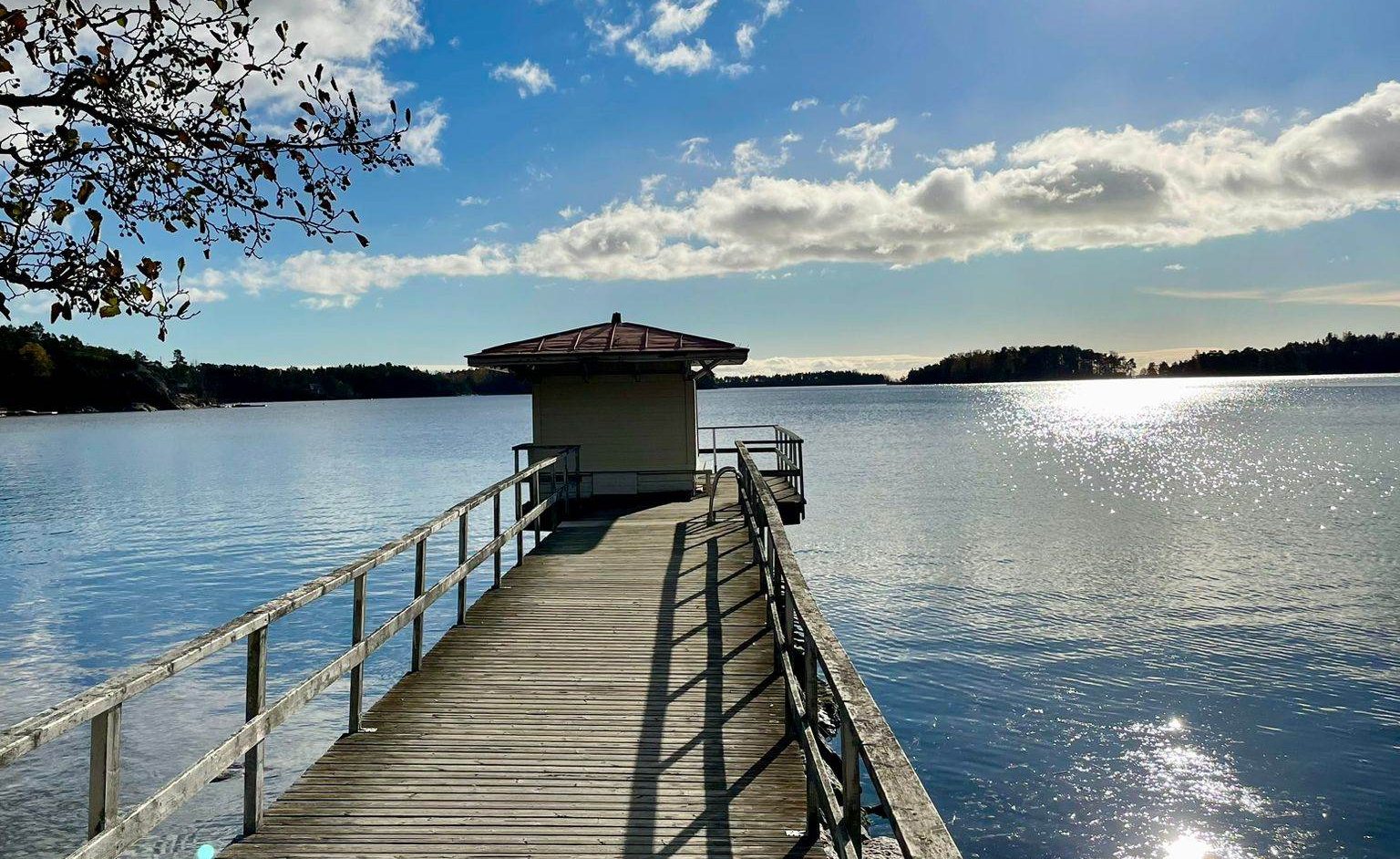
Koronapandemia, ilmastonmuutos, Ukrainan sota, työvoimapula, väestön huoltosuhde, inflaation kiihtyminen - nämä muutamina esimerkkeinä tilanteista ja olosuhteista, jotka konkreettisesti haastavat meitä päivittäin rikkomaan rutiineja ja löytämään tekemiseen luovuutta niin yksilöinä kuin organisaatioina. Keskustelua organisaatioiden luovuudesta on käyty jo pitkään ja yhteiskunnassamme onkin jo hyväksytty ajatus, että menestymiseen tarvitaan myös muita kuin tehostamisen taitoja (Rahkamo 2022). Luovalla johtamisella mahdollistetaan uusien ratkaisujen löytäminen yhä kompleksisempiin arjen haasteisiin- mistä luovassa johtamisessa oikein on kyse? Metropolia Ammattikorkeakoulun järjestämässä Mahdollisuuksien maisemia -tapahtumassa Myllypuron kampuksella kuulimme tutkijoiden puheenvuoroja työelämän luovuudesta kuten esimerkiksi luovuuden roolista ihmisten hyvinvoinnissa ja vaikkapa musiikin vaikutuksesta ihmisen ajatteluun. Innostavien puheenvuorojen jälkeen kokoonnuimme pohtimaan työpajaan yhdessä monialaisen opiskelijajoukon sekä työelämän edustajien kanssa kahta kysymystä: mitä on luova johtaminen ja miten johtaa luovasti? Kysymykseen siitä, mitä on luova johtaminen, nousi työpajoissa kolme keskeistä kriteeriä: asenne, osaaminen ja tekeminen. Kysymykseen miten johtaa luovasti vastaamme blogimme osassa 2. Luova johtaminen on asennetta ja myös asenteettomuutta Pienryhmäkeskusteluissa luovaa johtamista kuvattiin muun muassa leikkimielisyytenä, ennakkoluulottomuutena, avarakatseisuutena, ”hallittuna hulluutena”, rohkeutena tehdä päätöksiä ja toisaalta myös rohkeutena kokeilla uusia asioita. Luovaan johtamiseen kytkettiin myös joustavuus ja muiden arvostaminen. Mielenkiintoista oli se, että luovuus nähtiin myös eräänlaisena asenteettomuutena tai ennakkoasenteiden puuttumisena. Luovuudella ja uuden kehittämisellä on vahva kytkös. Innovaatiot edellyttävät usein paljon kokeiluja ja näihin tarvitaan niin rohkeutta, sitkeyttä kuin periksi antamattomuuttakin. Vahva sisäinen motivaatio, epävarmuuden ja epäonnistumisten sietäminen niin yksilötasolla kuin kaikilla organisaatioiden tasoillakin on tärkeää (Rahkamo 2022). Rahkamon mainitsemat luovuuteen kytketyt ominaisuudet voidaan hyvin linkittää myös työntekijän asenteeseen - kokeiluilla ja uutta kehittämällä, työntekijä haluaa oppia ja tehdä työnsä hyvin. Keskusteluissa nostettiinkin esiin, että luova johtaminen mahdollistaa myös ”hiertoa”. Psykologisesti turvalliseksi koetussa ympäristössä uskalletaan olla myös eri mieltä ja tuoda esiin mitä luovempia ja ”hullumpia” ratkaisuja ja kokeiluehdotuksia. Luova johtaminen on osaamista Luovuus on läsnä organisaatioissa monella tasolla. Luovasta johtamisesta puhuttaessa oleellinen kysymys onkin, miten saada organisaatiossa eri yksiköissä, tiimeissä ja henkilöissä oleva luovuus kukkimaan? Pienryhmäkeskusteluissa luovaa johtamista kuvattiin erilaisten osaamisten kautta, joissa näkyi myös vahva kytkös edellä kuvattuun näkökulmaan asenteista. Ongelmanratkaisu- ja improvisointikyky, systeeminen ajattelu, kyky kytkeä asioita yhteen, kokonaisuuksien hahmottaminen, muiden kuuntelemisen taito ja erilaisten osaamisten tunnistaminen nostettiin luovaan johtamiseen kytkeytyviksi kyvykkyyksiksi ja osaamisiksi. Sosiaaliset ja viestinnälliset taidot ovat tutkimusten mukaan myös luovuuden johtamisessa keskeisiä. Työelämässä luovuuden johtamisesta puhuttaessa ei voida myöskään unohtaa osaamista, rajallisia resursseja ja tuloksellisia vaatimuksia. Ajanhallinnan taidot ovat läsnä siis myös luovassa johtamisessa. Tutkimustiedon mukaan aikarajoitteilla on myös myönteistä vaikutusta tiimien luovuuteen ja päätöksentekokykyyn. (Liikanen, 2022) Luova johtaminen on tuloksellista toimintaa ja kollektiivista tekemistä Organisaatioiden luovuutta tutkineet painottavat luovuudessa olevan kyse toiminnasta ja työstä, jonka lopputuloksena syntyy uusia, hyödyllisiä ja tiettyyn tarkoitukseen soveltuvia tuotoksia. (Liikanen, 2022) Onnistuakseen pitkällä tähtäimellä organisaatioiden pitää osata löytää vahva tasapaino uutta luovan toiminnan ja tehokkuuden välille. Tärkeää on ymmärtää myös, että asiantuntijaluovuudessa on vain harvoin kyse yksilötekemisestä, vaan usean ihmisen ajattelun yhdistämisestä. Luova ajattelu on kollektiivista tekemistä. (Rahkamo, 2022) Pienryhmäkeskusteluissa nousikin vahvasti esille yhteisöllisyyden merkitys luovuuden syttymisessä. Johtaja nähtiin luovuuden mahdollistajana ja luovuudelle tilan antajana. Luovuutta ei myöskään haluttu alistaa kehittämiselle vaan luovuus nähtiin merkityksellisenä jo itsessään. Luovuutta kuvattiinkin työpajassa myös olemisen tapana. Se tapahtuu samanaikaisesti monilla tasoilla, yksilöissä ja yhteisöissä. Mitä yhteisessä keskustelussa opimmekaan? Keskustelun polveileminen siivitti meitä ymmärtämään, että luovaa johtamista tulee tarkastella sekä luovuuteen, että johtamiseen kytkettävien ilmiöiden ja tekijöiden kautta. Luova johtaja tutustuu ja tuntee yhteisönsä, innostuu ja innostaa, oppii ja osaa. Luovasti johdetussa organisaatiossa luovuus on olemisen ja tekemisen tapa. Miten sitten voisimme johtaa luovasti? Siitä lisää seuraavassa blogi-postauksessa. Kirjoittajat Heidi Stenberg (KM, Tuotekehittäjä EAT, Th) on Metropolian projektipäällikkönä ja lehtorina toimiva johtamisen kehittäjä, koulutusalan moniottelija ja terveyden edistäjä. Raisa Varsta (KTM, työnohjaaja, opinto-ohjaaja) toimii Metropolian tutkinto- ja tiimivastaavana sekä kouluttaa ja kirjoittaa oppimisen ja työelämän moninaisista teemoista. Lähteet Liikanen Minna, 2022. Miten organisaatioissa voidaan edistää luovuutta? Boardman. Blogi Viitattu 25.10.2022. Rahkamo Susanna, 2022. Luovuuden johtaminen ja johtamisen luovuus – mitä työelämäluovuudesta pitäisi ymmärtää? Johdon agendalla 2022. Blogi Viitattu 25.10.2022.
Miten johtaa luovasti? Oivalluksia Mahdollisuuksien maisemia -tapahtumasta, osa 2.
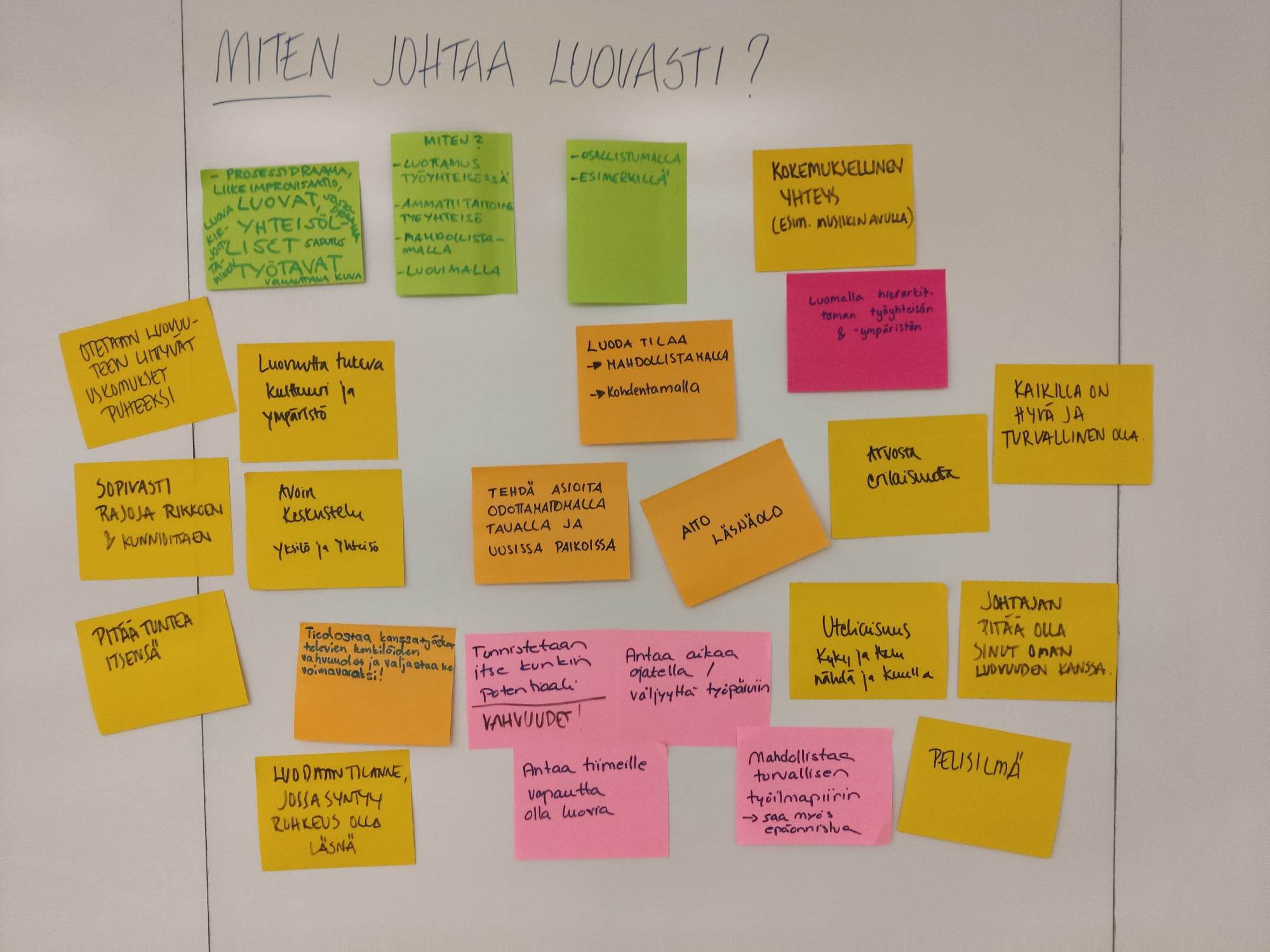
Tulevaisuus tuo eteemme tilanteita, joissa emme ole aiemmin olleet. Näiden meille täysin uusien ongelmien ratkaisuun tarvitsemme ihmisiä, jotka osaavat ajatella eri tavalla, luovasti. Kun emme pysty työhön ryhtyessämme kuvittelemaan lopputulosta kovin tarkasti, olemme luovan työn äärellä. (Pölönen 2019) Miten voimme johtamistyössä toimia luovasti niin, että haasteisiin löydettäisiin uusia, toimivia ratkaisuja? Metropolia Ammattikorkeakoulun järjestämässä Mahdollisuuksien maisemia -tapahtumassa kokoonnuimme pohtimaan yhdessä monialaisen opiskelijajoukon sekä työelämän edustajien kanssa kahta kysymystä: mitä on luova johtaminen ja miten johtaa luovasti? Tässä kirjoituksessa koostamme ajatuksia työpajan jälkimmäiseen kysymykseen siitä, miten johtaa luovasti. Voit lukea siitä, mitä on luova johtaminen blogikirjoituksen osasta yksi. Työpajaan osallistuneiden mukaan luova johtaminen edellyttää johtajan omaa itsereflektiota ja itsetuntemusta, organisaation luovuuden esteiden ja mahdollisuuksien tunnistamista ja muokkaamista sekä luovuutta tukevien rutiinien ja resurssien viljelyä organisaation arjessa. Luovuus vahvistuu johtajan itsereflektiosta Kouluissa oppimamme oikean ja väärän vastauksen ajatusmalli tukahduttaa ajattelua, ja siten myös luovuutta. Kun palkitaan oikeasta vastauksesta, siirtyy tavoite oikean vastauksen löytämiseen ratkaisun löytämisprosessin sijaan. Kuitenkin tulevaisuuden haasteiden ratkomisessa tarvitaan improvisointia ja nimenomaan keskittymistä luomisprosessiin, sillä ratkaisuja ei vielä tiedä kukaan. (Pölönen 2019) Luova organisaation johtaminen edellyttää siis kriittistä ajattelua. Myös työpajan osallistujat toivat esiin tarvetta ravistella erilaisia uskomuksia luovuuden rattaista. Erityisesti nostettiin esiin johtajan omaa itsereflektiota luovuuteen liittyvistä ajatusmalleista. On tärkeää, että johtaja itse on sinut oman luovuutensa kanssa ja toisaalta malttaa myös kuunnella muiden ajatuksia, olla niille utelias. Se, että johtaja tuntee itsensä ja aidosti arvostaa ja hyödyntää organisaatiosta löytyvää erilaisuutta, on luovuuden reunaehto. Osallistujat toivat esiin myös johtajan kykyä nähdä luovuutta ympärillään, sillä se, mihin kiinnitetään huomiota, vahvistuu. Johtajan omat vuorovaikutustaidot ja “pelisilmä” ovat luovan organisaation ytimessä, sillä luovuuttakin tulisi johtaa esimerkillä. Luovasti johtavan tulee sietää epämukavuutta, siksi keskustelua itsensä kanssa on hyvä käydä myös esimerkiksi omasta epävarmuuden sietokyvystä, taidosta “luovia ja kulkea reunalla”. Luovasti johtava on läsnä, samaan aikaan rento ja skarppi. Hän on valmentava johtaja, joka ei pelkää tehdä virheitä myös itse. Luovasti johtavan oma mieli on joustava ja hänen kontrollin tarpeensa ei tukahduta organisaation luovuutta. Johtaja voi edistää tai estää luovuutta Tulevaisuudessa niin työpaikkojen kuin koulujenkin tulisi olla luovuuden katalysaattoreita. Yksilön luovuuden tulisi olla vahvempaa työ- tai kouluputken lopussa kuin mitä se oli sen alkaessa. (Pölönen 2019) Lisäksi organisaatiot, jotka keskittyvät olemassa olevien tuotteiden muokkaamiseen uuden luomisen sijaan näyttäisivät pitkällä tähtäimellä häviävän niille organisaatioille, jotka pystyvät tuottamaan kokonaan uutta ja ennen näkemättömiä ratkaisuja (Fernandez-Pol ja Harvie, 2020) Siksi ei ole yhdentekevää, miten luovuutta tuetaan ja johdetaan organisaatiossa esimerkiksi rakenteilla ja resurssien kohdentamisella. Luovuus edellyttää vapautta ja autonomiaa, mutta myös tukea (Liikanen, 2022). Työpajoissa organisaation luovuutta tukeva, tai tuhoava, kulttuuri nousi esiin monissa kommenteissa. Johtajan tehtävänä on suojella luovuutta ja edistää sen asemaa sekä organisaation kirjoitetuissa että kirjoittamattomissa säännöissä. Luovasti johtava kykenee ottamaan puheeksi luovuutta estäviä uskomuksia sekä muita “jäävuoren pinnan alla” olevia luovuuden esteitä. Luovuus vaatii myös oikeanlaista ilmapiiriä: avoimuutta, luottamusta ja turvallisuutta. Luovan johtajan keinovalikoimaan kuuluu siis myös turvallisuutta luovat, riittävän matalat organisaation rakenteet ja vaikkapa kyky fasilitoida turvallisia kohtaamisia yhteisten ongelmien äärellä. Luovuus syttyy kunnioituksesta ja arvostuksesta. Luovasti johtava valtuuttaa tiimit ponnistelemaan, mutta ei jätä heitä yksin. Organisaation rakenteiden tulee tukea riittävää autonomiaa ja vapautta. Mikromanagerointi, tiukka kontrolli ja etäiseksi jäävä johtaminen tukahduttavat luovuuden. Organisaatiossa tulee olla ymmärrys siitä, että ilman virheitä ei synny uutta. Siksi sinnikkäistä ratkaisuyrityksistä tulisi saada kiitosta, vaikka tulos olisi vielä epävarma. Osallistujat kannustivat organisaatioita yhdessä määrittelemään, mitä luovuus tarkoittaa juuri meidän organisaatiossamme. Mitä sillä tavoitellaan ja miten sitä edistetään? Luovuutta tukevat ratkaisut ja resurssit tulee tuoda jokaisen yksilön arkeen saakka. Jos vaikkapa työaika on täynnä kiireellisiä tehtäviä, ei luovalle ajattelulle jää aikaa tai energiaa. Luova johtaja rakentaa myös rutiineja ja tarjoaa välineitä Jokainen meistä on luova, mutta toiset kokevat itsensä vähemmän luoviksi. Luovuus on loppujen lopuksi kykyä tehdä valintoja, taitoa valita tuhansien ratkaisuvaihtoehtojen joukosta ne parhaat. Tähän tarvitaan intuitiota. (Pölönen 2019) Kääntäen voisikin ajatella, että luovasti johdetussa organisaatiossa ongelmanratkaisuprosessi tuottaa Pölösen mainitsemat ratkaisuvaihtoehdot ja varmistaa, että niistä seulotaan parhaat. Silloin keskiöön voisivat nousta rutiinit, joilla ratkaisuvaihtoehtoja tuotetaan rikastavasti ja ennakkoluulottomasti. Ja toisaalta ne työkalut, joilla päätöksiä tehdään intuitiota sekä ongelmanratkaisun reunaehtoja kuunnellen. Luovuus nimittäin aktivoituu silloin, kun välineet, resurssit ja aika ovat rajalliset (Pölönen 2019). Tiukoissa aikaraameissakin voi olla luova (Liikanen, 2022). Työpajan osallistujat toivat esiin runsaasti erilaisia luovuutta tukevia resursseja, menetelmiä, välineitä ja rutiineja. Todettiin, että luovuus vaatii aikaa ajatella ja väljyyttä myös johtajan työpäivissä. Luovuutta tukee, kun asioita päästään pohtimaan yhteisöllisesti, vaikkapa erilaisten osallistavien menetelmien kautta. Ripaus taidelähtöisyyttä tuotiin myös johtamistyön avuksi luovuutta ruokkiviin kohtaamisiin: sosiodraamaa, musiikkia, voimavaraistavia kuvia, luovaa kirjoittamista. Osallistujat muistuttivat myös, että välillä myös ympäristön vaihtaminen voi toimia luovuuspurskeena ja, että toisinaan kannattaa johonkin tilanteeseen tai prosessiin soveltaa odottamattomia tapoja. Luovuus syttyy innostavista yllätyksistä. Luovasti johtava tekee tietoisia valintoja Työpajojen pohjalta nousee mieleen erityisesti yksi kiteytys: Luova johtaja tekee tietoisia valintoja niin, että luovuus mahdollistuu ja vahvistuu organisaatiossa sekä sen yksilöissä. Tämä on tärkeää paitsi yksilöiden hyvinvoinnin kannalta, myös organisaation menestymisen näkökulmasta. Reaktiivinen haastavien ongelmien ratkaisu vaatii luovuutta, mutta todellinen happotesti organisaation luovuudelle on vaikeasti ennakoitavien tulevaisuuden tilanteiden hallinta – ja toisaalta hyödyntäminen. Luovasti johtavalla näyttäisi olevan eväitä tarttua näihin kaikkiin. Mitä yhteisessä keskustelussa opimmekaan? Työpajojen pohjalta syntyi vahva ymmärrys siitä, että luovuutta johdetaan esimerkin kautta. Luovuuden esteitä poistetaan tarkastelemalla sekä omaa että organisaation ajattelua, asenteita ja toimintaa kriittisesti. Rakenteet, rutiinit ja työkalut tukevat luovaa johtamista silloin, kun ne on valittu tietoisesti juuri luomisprosessia silmällä pitäen. Luovasti johtava osaa myös ajoittain yllättää ja haastaa organisaatiota. Kirjoittajat Raisa Varsta (KTM, työnohjaaja, opinto-ohjaaja) toimii Metropolian tutkinto- ja tiimivastaavana sekä kouluttaa ja kirjoittaa oppimisen ja työelämän moninaisista teemoista. Heidi Stenberg (KM, Tuotekehittäjä EAT, Th) on Metropolian projektipäällikkönä ja lehtorina toimiva johtamisen kehittäjä, koulutusalan moniottelija ja terveyden edistäjä. Lähteitä ja luettavaa Fernandez-Pol Jorge Eduardo ja Harvie Charles, 2020. Understanding the Creative Economy and the Future of Employment. Springer Singapore. Liikanen Minna, 2022. Miten organisaatioissa voidaan edistää luovuutta? Boardman. Blogi Viitattu 11.11.2022. Pölönen Perttu, 2019. Tulevaisuuden lukujärjestys. Otava.
“Looking people in the eye & recognizing myself in them”

In healthcare, professional interaction skills are needed not only in patient contacts but also when working in interprofessional teams. Team members have different backgrounds, and they might have different understanding of how to work together. This underlines the importance of clear communication and teamwork. (Schmutz, Meier & Manser 2019.) Communication plays an important part in developing collaboration in teams and in the development of interprofessional empathetic relationships (Adamson et al. 2018). Already from the beginning of the studies, Metropolia UAS`s Degree Programme in Nursing Curricula (Metropolia UAS 2022) requires the student to grow their understanding about the significance of ethics and professional interaction, and consider patient’s needs for psychosocial support. The students also need to practice working methods considering patient safety and the significance of professional interaction. As a Metropolia master`s student in the Creativity and Arts in Social and Health Fields degree programme, I had an opportunity to instruct a teamwork and communication workshop using drama-based exercises. Drama-based exercises and games may be used to warm up, introduce and practice new skills, improve concentration and have fun. A recent literature review by Jeffries et al. (2021) brings out the ways how drama can support student learning and professional development. Drama-based working methods can enhance empathy, emotional engagement, and empowerment, also increase understanding of one’s own professional identity, self-awareness, self-reflection and improve communication skills. In addition, using drama can develop reflective skills. There is strong evidence of the positive role of the arts in improving health and wellbeing. A review conducted by the World Health Organization summarizes evidence from more than 900 such studies (Fancourt & Finn 2019). Drama-based workshop The three-hour drama-based workshop was conducted with international students in the advanced phase of the Degree program in Nursing, with two Metropolia nursing lecturers observing. The workshop consisted of exercises and reflective discussions. The discussion topics included teamwork interaction, communication skills and presence as key factors related to patient safety behaviour and empathy in healthcare. Students experienced the workshop as very important and useful, fun, stress relieving and they got their minds rested. They felt the atmosphere was safe and it was meaningful to hear others` thoughts, have good discussions and to connect with fellow classmates. As they expressed it, the workshop gave them: “Awareness of yourself and others”, “What wasn`t said with words was felt”, “Thank you for making me feel better”, “I feel relieved and fresh”, “The workshop was really great and it is one way to connect with our fellow classmate and hopefully it will be the same in the future”, “It helped me get comfortable with my classmates”, “Engagement between teacher and other classmates”. As take-home messages, elements taken into studies and work, the students mentioned the need for practicing good listening and acknowledgement skills in conversations with colleagues and patients: “Closed-loop-conversations with colleagues & patients”, “Communication is a key to have on successful outcome of the situation”, “It`s about how I focus”, “Repeating messages & hearing to confirm”, “Importance of communication (effective), importance of listening to self and others, trust”. The importance of eye contact and touch in human connection were mentioned several times as very meaningful techniques in communication: “The importance of human connection and touch”, “Eye to eye contact seems so simple but gives connection to someone”, “That human contact holds more importance than I thought originally”. In addition, the students found tips for releasing stress and better concentration. As they expressed it: “There is a touch that makes us feel that today is gonna be okay so just breathe and relax”, “Staying calm and staying focused”. Based on feedback this workshop was well accepted and beneficial. The exercises seemed to foster teamwork and communication skills and evoked thoughts about empathy. The students wished the workshop to be regular. However, it is important to keep in mind, that this kind of activity may not be comfortable for everyone. Interaction and teamwork exercises are beneficial Two Metropolia nursing lecturers were observing the workshop. “During the workshop, the students threw themselves into the exercises and learning seemed to be both fun and relaxing, but at the same time thought-provoking and insightful. We see the importance of interaction and teamwork exercises when studying to become a nurse. Our students are in the graduation phase, so the timing was suitable for this kind of exercise. The workshop sparked a lot of discussion among the students and based on the feedback given to us, they found the exercises very useful. Minna-Maria had a calm but at the same time inspiring and encouraging way of guiding the workshop, and the students clearly liked the experiential learning method.” The workshop also became a significant learning experience for the organizers, and they were glad that their activity was well received and appreciated. It made a milestone also for them as future professionals. References & interesting readings Adamson, K., Loomis, C., Cadell, S., & Verweel, L.C. 2018. Interprofessional empathy: A four-stage model for a new understanding of teamwork. Journal of Interprofessional Care. 2018 Nov; 32(6), 752-761 Metropolia UAS 2022. Degree Programme in Nursing, Curricula 2022-2013. Study guide. https://opinto-opas.metropolia.fi/88094/en/108/70308?lang=en Dehnavi, M., Estebsari, F., Kandi, Z.R.K., Milani, A.S., Hemmati, M., Nasab, A.F., & Mostafaie, D. 2022. The correlation between emotional intelligence and clinical competence in nurses working in special care units: A cross-sectional study. Nurse education today 2022, Vol.116, p.105453-105453 Fancourt, D. & Finn, S. 2019. What is the evidence on the role of the arts in improving health and well-being? A scoping review. Health Evidence Network synthesis report 67, WHO. https://www.euro.who.int/en/publications/abstracts/what-is-the-evidence-on-the-role-of-the-arts-in-improving-health-and-well-being-a-scoping-review-2019 Jefferies, D., Glew, P. Karhani, Z., McNally, S. & Ramjan, L.M. 2021. The educational benefits of drama in nursing education: A critical literature review. Nurse Education Today Volume 98, March 2021, 104669 Raatikainen, E., Rauhala, L. A., & Mäenpää, S. 2017. Qualified Empathy. A key element for an empowerment professional. Sosiaalipedagoginen aikakauskirja, 18, 113–21 Schmutz, J.B., Meier, L.L. & Manser, T. 2019. How effective is teamwork really? The relationship between teamwork and performance in healthcare teams: a systematic review and meta-analysis. BMJ Open. https://bmjopen.bmj.com/content/9/9/e028280 Writer Minna-Maria Mattila, Metropolia master`s degree student I work at medical students` skill lab at University of Helsinki Faculty of Medicine. I also work as part-time entrepreneur in arts-based workshops. I have a degree in nursing (RN, BN) and I have studied drama education to support arts-based activities. I have a long experience and studies in the field of performing arts. Students and lecturers have given permission to use comments and quotes. The Master's degree in Creativity and Arts in Social and Health Fields (CRASH) provides strong competences to act as a developer, innovator, expert, and leader in using creativity and arts in various operating environments in social and health fields. It also gives competences to work in expert positions in the social and health sector. Creativity and different ways to express it, as well as cultural activities and arts related experiences, belong to all people as part of a good and meaningful life. The aim of CRASH is to strengthen the professional competences needed when promoting health, well-being, inclusion, and a sense of community in society through creativity and arts. You can read more about the programme here
Going for a semester abroad to Finland

My name is Lorena, and I am a 2nd year Master´s student at Stuttgart Technology University of Applied Sciences, Germany (HFT Stuttgart, 2022), studying Business Psychology on the Master´s level. I will share my experience from last winter when doing my exchange semester at Metropolia University of Applied Sciences in Helsinki, Finland. In this blog, I will tell about my semester abroad and give my insights about the preparations. How I decided When starting my Master´s studies in 2020, I already decided I wanted to go abroad for one semester and study in a foreign country. Luckily, my university has many partners all over the world, - with Metropolia University of Applied Sciences being one of them, - and it made the whole process of going for an exchange semester here quite easy. The main reasons for choosing Finland and Helsinki as my destination were three: 1) I wanted to study in English and in a relatively big city 2) I wanted to study at one of the partner universities to avoid study costs via the European Erasmus+ program (The European Erasmus+ program, 2022) 3) I wanted to move to a country and get to know a culture where I have never visited before, and that was Finland! So, I started the preparations. First, I applied for an exchange at my home university. When the acceptance e-mail arrived, I was the happiest person and felt like I could start my semester abroad right away. But as with every big change in one´s life, a move to another country takes time and good preparation, so I started to organize myself. Preparations before departure The most important aspects were probably the accommodation and the correct course enrollments at the Finish university, as well as the procedure with everything you leave behind when leaving for six months. The first decision for me was the one about the housing: Do I want to have my own apartment, or would it be fun to share a flat with other students? Is it important for me to live in the city center or do I want to find a cheap accommodation in the outskirts? Those were the main questions to think about before applying for any kind of housing. In the end, I decided to use the easy and affordable option of applying for a room in a shared flat from HOAS, and I was surprised and happy how easy this process was. Now, after more than three months here in Finland, I am sure that choosing to live in a HOAS apartment was the right choice for me. I really enjoy living with other students and get in touch with internationals from all over the world. Additionally, I appreciate the short distance to the campus and the opportunity to book the sauna for free! The second issue I had to think about was the handling of my room at home. I had to decide whether I want to sub-rent my room in Stuttgart or cancel the rental agreement completely. In any case, I needed to make sure that all my belongings were stored safely during the six months I would not be home. Luckily, I could sub-rent my room with all the furniture and store my other belongings in my mom´s place, so that I didn´t have to rent a storage. Another matter I had to keep in mind was my status at my home university. At my home university, I needed to pay the semester fee, and everything went on as usual. But in any way, I recommend checking the regulations carefully to always make the correct enrollment at home uni. As I am doing my semester abroad within EU, I can benefit from a lot of privileges I have as an EU citizen. For example, I do not need to worry about my visa, my health insurance, or my phone contract, as I can just use all my German contracts and they work in Finland without any additional costs. Meeting other students from all over the world showed me how much extra work many students from non-EU member states had in comparison to EU citizens. So, if you plan to leave Europe (or come to Europe from another continent), you should start very early with various preparations. Another important topic was the selection of the courses I wanted to attend in Finland. I was able to choose from a selection on the exchange website (I needed to attend at least 5 courses). This is not a trifle matter in a country where the language of tuition can be something else than English (in my case Finnish), and I had to take special care to not mess up the course lists. Ending up in a class taught in Finnish would have been a big surprise for me! My approach for choosing courses was then reading closely the course descriptions and making a list of minimum 8 courses and topics I liked the most. Having 2-3 courses more than I actually needed on my list, made my life significantly easier when it came to changes in the schedule and overlapping of timetables. But even if your home university or your study coordinators give you strict guidelines which courses you are allowed to attend and which not, the best tip I can share with you is to stay calm and try to arrange everything with both study coordinators, from both universities. They will help! My experience showed that in the end almost everything worked out somehow and even with a lot of regulations regarding possible courses, we were all able to find a suitable solution for everybody. My arrival in Finland After telling about all the preparations and organizational matters, I also want to give some insights to my student life here in Finland and differences I experienced in comparison to my home university. In the first weeks, all the lecturers explained their schedule and the rules of the class. In general, I found my way into the courses easily, and I really liked the atmosphere. The courses I attended were mostly based on a lot of group works and project-based assignments. In the end, I did not have a single class where I have to write an exam, all my assignments are either group projects, presentations or individual written assignments. This approach of teaching made it very easy to get in touch with other students and to stay on the ball with the tasks. But it might be a different experience for students who are used to teacher-centered classes. A difference with my home university, that I was a bit afraid of, were the long lecture hours. For example, I have one course that officially lasts from 12am to 4pm in the afternoon, which first sounded quite long and exhausting for me. It turned out that all lecturers are very caring and think about enough breaks, from little coffee breaks to longer lunch breaks, just as what we felt necessary. Before my stay I was a bit afraid that the courses would be very difficult and challenging, especially with the fully English teaching. But this worry luckily turned out to be unnecessary and the workload is really feasible. One more positive insight I want to share is the cafeteria. Lunch at campus is really delicious, varied and healthy and with only about 3-5€ for students, extremely cheap. In this aspect, the Finnish university surpasses my home university by far. This might be related to the Finnish food culture, where lunch seems to be the most important meal of the day. Tips and insights I want to finish this blog with some tips that are close to my heart and might help some students that are planning their own exchange semester. My first and most important suggestion is simple: Keep calm and take it easy! Moving to a different country with a different language and a different culture is not easy for anybody. Arriving in Finland in the beginning of January meant arriving to a very cold and dark place. When I left the airplane, it was 3:30 in the afternoon, almost completely dark and around -18°C. Falling into stress and already thinking about all the differences to home would have been counterproductive. In my experience, it was the best to do everything step by step and avoid worrying about everything at once. For me it turned out to be a very good decision to arrive in Finland a couple of days before the orientation days started. By choosing this approach, I had enough time to settle, arrange my apartment, have some orientation, and get over the first excitement. Another recommendation is very basic and easy as well: take your time! Studying abroad, especially at a university which welcomes a lot of foreign students for an exchange semester, means meeting a lot of new people and making hundreds of new connections and friends. At Metropolia, we even had some WhatsApp groups with all the incoming exchange students already before the semester started. It helped to connect and meet other exchange students, although our semester and all the lectures started completely online (due to the pandemic in winter 2021). Having the need for making new friends in the first days and weeks can be extremely stressful. After going to that whole process, I can ensure that there is no need for feeling pressure at all. If you want to meet people and make new friends, your semester abroad is one of the best opportunities you will ever have! At the same time, be ready to feel a bit overwhelmed and strained by so many social contacts, that is completely fine as well! You really don´t need to meet everybody in the first few days. In my experience, exchange students are extremely outgoing and open minded and always look for new people, no matter when you meet them. Take as much time as you need to settle and get along with the new life and start meeting people and making friends as soon as you feel ready. There are plenty of opportunities – from strolling through a park to shopping in the city center, or partying in a club – I was always able to find some people who were up to join some activities. Just be yourself and do whatever you like to do. You will find many new friends! Al in all, I can just encourage everybody to use this great opportunity of moving to a foreign country and gaining thousands of new experiences. I went back home with countless amazing memories, new impressions of Finland and its neighboring countries, great travel experiences, and improved English. Most importantly, I got many really good new friends from all over the world! Writer Lorena, 2nd year Master´s student at Stuttgart Technology University of Applied Sciences, Germany (HFT Stuttgart, 2022), studying Business Psychology on the Master´s level. References: HFT Stuttgart, Stuttgart Technology University of Applied Sciences. https://www.hft-stuttgart.com/ HOAS (2022). Homes for Students. https://hoas.fi/en/ The European Erasmus+ program (2022). Studying Abroad: https://erasmus-plus.ec.europa.eu/opportunities/opportunities-for-individuals/students/studying-abroad *********************************************************************************************** Greetings from the Metropolia International Relations Officer: How to get started with your exchange studies abroad? If you would be interested in Metropolia as your exchange destination, please check if your home university has a partnership agreement with Metropolia. If yes, please check the academic offering and further information concerning the exchange possibilities at Metropolia at https://www.metropolia.fi/en/international-relations/exchange If you are Metropolia student and would like to go abroad as exchange student, please refer the possibilities and application in OMA: https://opiskelija.oma.metropolia.fi/group/pakki/opiskelijan-opas/palvelut/kansainvalisyys/opiskelijavaihto If you have further questions, do not hesitate contact the International Relations Adviser: mbs_exchange@metropolia.fi (lisää…)

The editorial team will provide the content of the Masterminds blog before publication.
The editorial team started its work at the beginning of 2022.
Pia Koirikivi, chief editor in Masterminds blog, Pedagogical Specialist
Minna Kaihovirta, Manager of Dialog
Iira Lankinen, Principal Lecturer
Riikka Wallin, Publications Specialist
Zinaida Grabovskaia, Senior Lecturer
Salla Kivelä, Principal Lecturer
asiantuntija yamk business informatics Business Informatics Master’s Program CERN Bootcamp Construction Business hankinnat hankintastrategia hankintatoimi ilmastonmuutos Industrial Management Industrial Management Master’s program johtaminen koulutus kulttuurituotanto Marjatta Kelo master Master's Thesis masterminds Masterminds blog Master of Engineering Master’s degree Metropolia Metropolia AMK Metropolia Master's Metropolia UAS metropolia YAMK opinnäytetyö osaaminen service design Sharing economy sosiaali-ja terveysala sosiaaliala study trip Sustainability talotekniikka terveyden edistäminen terveydenhuolto työhyvinvointi ura yamk YAMK-tutkinto YAMK opinnäytetyö ylempi AMK ylempi ammattikorkeakoulututkinto Zinaida Grabovskaia
