I’m studying Master’s degree in Design at Metropolia University of Applied Sciences. I am in the last stretch of my studies and in the spring I was missing just one last course when I saw an early introduction to the CERN Bootcamp -study concept. I stopped looking for other courses, since I knew this was the one for me. I put the date in my calendar and waited for the application period to start.
CERN Bootcamp offered a perfect crash course for service design process, methods and tools. As a designer and design student concentrating in service design and design management, jumping in to the deep end felt easy. I would emphasize the easiness of the jumping with no fear. Swimming in the design current was as stormy and joyful ride as most design projects I have ever been involved in.
Solving Huge Challenges
The kick-off weekend in May showed us just how crazy this study period was to be. A crazy amount of work and a huge challenge. At the kick-off we the course students formed teams and chose the challenges to be solved during the Bootcamp.
My team’s challenge was to find a solution for how to make climate change effects visual to consumers in purchase decision situations. No more or less than to have positive influence on climate change. No more or less than to influence people’s behaviors. It seemed overwhelming at first, but fortunately my whole team had their brains set to design thinking mode and we were ready and happy to jump in with full of curiosity. We could not wait to start the work.
Different Expertise Was Our Strength
The big push for me to apply to the CERN Bootcamp was to test my understanding and implementing skills of service design and mostly to work with new people. How would I work with totally new people?
As I look back, throughout the whole experience, the greatest lessons I got out with was from the teamwork with my wonderful multidisciplinary team at CERN. My team worked really well together. We were students who all came from different fields and had different backgrounds and work experiences.
Everyone was one hundred percent committed to the task and everyone brought in all their different expertise to the table. We worked really hard within an incredible workflow spiced with humor and good spirit.
In addition to becoming acquainted with all these wonderful people in my team, I also had an opportunity to meet with other great people that I would have never met otherwise. Such as a physicist at Cern, experts on climate issues, consumer behavior and activism, as well as all the customers at Cern-cafeteria. All random people who were interested in our project and would stay with us and stir our views.
And not the least the teachers and mentors without whom we would not have found the right tools and methods during the project and come up with a solution to the problem at the end. Having the chance to meet so many interesting people with fresh viewpoints and the opportunity to visit and stay at the incredible and almost surreal CERN made my CERN Bootcamp the most rewarding learning experience in my studies.
Metropolia Master's bloggers
Bloggaajat ovat Metropolian YAMK-tutkintojen opiskelijoita, opettajia ja yhteistyökumppaneita. Aihepiirit käsittelevät laajasti ylemmän AMK-koulutuksen ajankohtaisia teemoja, työelämäyhteistyötä ja opiskelijoiden kokemuksia.
We also blog in English! Ota yhteyttä
The editorial team will provide the content of the Masterminds blog before publication. The editorial team started its work at the beginning of 2022. Pia Koirikivi, chief editor in Masterminds blog, Pedagogical Specialist Minna Kaihovirta, Manager of Dialog Iira Lankinen, Principal Lecturer Riikka Wallin, Publications Specialist Zinaida Grabovskaia, Senior Lecturer Salla Kivelä, Principal Lecturer
Bridging Worlds & A Journey of Growth
Only imagine being uprooted from one's life, leaving behind everything that was familiar, and stepping into an entirely new culture for higher education. It was not only the academic ambition per se, but also a leap of faith. This was where I stood at the crossroads of being an accomplished banking professional and yet a fresh student from Sri Lanka, when entering Finland with a resolution to grow, evolve, and thrive.
This was the reason, when choosing to study at Metropolia University of Applied Sciences, why it was so critical for me that this university would have a different approach to learning. I wanted a blend of theory and practical application to prepare my for the real world. It was a promise of not only academic insights but also of a holistic face-lift to my professional trajectory and personal journey.
Why Finland? Why Metropolia?
These were some of my many questions. I did my choice for reasons including Finland being ranked high in education and Metropolia for connecting the gap between theoretical and practical learning. I chose to risk and go ahead with the application.
With more than 18 years of work experience in the banking arena, I grew deeply interested in data analytics and operations efficiency. The Master's programme in Business Informatics at Metropolia was appealing not just for its industry relevance, but also for its practical application and problem-solving approach.
Challenges and Triumphs: The First Steps
Moving to Finland with my family was not an easy decision, as it would mean leaving behind a well-settled life and starting afresh. But this challenge was simultaneously an opportunity: the possibility of exposing ourselves to a new culture, new ideas, and new opportunities.
It all started with a journey of unexpected hurdles. Due to visa delays, I had to begin my studies remotely from Sri Lanka. What could have been an intimidating experience was relatively easy, thanks to the support from Metropolia. Online classes were well structured, keeping everyone engaged and moving forward in a fruitful direction, which the university itself clearly showing the ways how to stay connected and take part in the activities online.
Meanwhile, during this period, I also tried on my own initiative to complement my learning with additional activities and completed some optional courses in AI. Such a proactive approach allowed me not only to be on schedule but also enhanced my knowledge of emerging technologies, which proved so valuable later on when I was working on the thesis.
Settling in Finland
When my family and I finally arrived in Finland, the culture was warm in Reception and welcoming. Finland's emphasis on education and community integration were visible into every aspect of our new life, be it the language classes designed for migrants or the academic environment which felt very welcoming.
What really caught my attention when it came to Metropolia was how much they focused on collaborative and work-related learning. The classes are set up to ensure interaction, critical thinking, and practical application to concepts. This is not just education; it is preparation for the future.
The Metropolia Advantage: Theory Meets Practice
The education at Metropolia is different because it is not just about attending lectures and then doing an exam; it is about understanding how to use your knowledge in a real-life scenario. It was a nice discovery for me that Metropolia also provided learning opportunities beyond just the classroom. It offered opportunities for professional certifications (in Project Management and in Power BI), study tours, and company visits, which made it into a more diverse learning experience and enhanced both my knowledge and skills. This unique blend of academic theory and hands-on application, hallmarks of UAS studies, prepared me for real-world challenges, bridging the gap between classroom learning and workplace demands.
The Thesis Experience
The culmination of my studies was the completion of my thesis and the project was a real test of everything I had learned at Metropolia. The autumn semester was particularly demanding, as personal challenges tested my resolve. Although I began my thesis work early, the last two months became a race against time. With all credits except my thesis completed, I faced a pivotal decision: to graduate in December or postpone it for one more semester, until next June.
The unwavering support of my thesis supervisor and the staff of the Master’s degree programme in Business Informatics, was the turning point. Their professional guidance, empathetic approach, and steadfast encouragement were instrumental in helping me overcome the odds. They exemplified how Metropolia’s faculty truly invests in the success of their students, ensuring no one is left behind. Their belief in my potential and their determination to see me succeed pushed me toward the finish line. It is their guidance, combined with the practical learning approach of Metropolia, that allowed me to complete not only my thesis but also to deliver meaningful results.
Reflections & Lessons Learned
Looking back, my time at Metropolia has been a journey of growth, resilience, and discovery. Here are some of the key lessons I have taken away:
Adaptability is Key: Whether it is starting your studies remotely or integrating into a new culture, flexibility and willingness to adapt are essential.
Proactive Engagement Leads to Success: Taking initiative whether it is exploring additional learning opportunities or seeking help when needed can make all the difference.
Support Systems Matter: From family and friends to university faculty and peers, having a strong support network is invaluable.
Practical Learning is Empowering: Metropolia’s focus on applying knowledge to real-world problems prepares students not just to understand concepts but to use them effectively.
Advice for Future International Students
To those considering studies at Metropolia, my advice is simple: embrace the journey.
Plan Ahead: Whether it is organizing your study schedule or preparing for life in a new country, planning can ease the transition.
Stay Open to New Experiences: Finland has a lot to offer, from its education system to its culture. Be open to learning and growing both inside and outside the classroom.
Leverage Available Resources: Metropolia offers a wealth of resources, from language classes to career services. Make the most of them!
Stay Resilient: Challenges are inevitable, but they are also opportunities to grow. Stay focused on your goals and don’t hesitate to seek help when needed.
A Final Word
Metropolia is more than just a university, it is a community. It is a place where students from diverse backgrounds come together to learn, grow, and make a difference. My journey here has been one of the most rewarding experiences in my life, and I am so grateful for all the opportunities provided by it.
I carry with me, as I move on, not just the knowledge and skills I have learned but also the memories and lessons that have shaped me into what I am today. For everyone considering Metropolia, I´d say: take a leap. It is one decision that will challenge you, inspire you, and prepare you for a better future.
About the author
Jayampathini Kumarasinghe is a Master of Business Administration in Business Informatics (2024), a Metropolia´s alumnus, and an experienced banking professional from Sri Lanka who refreshed her professional skills in her Master´s studies at Metropolia and continues her professional career in Finland.
Both researchers and industry experts concur that workplaces with diverse and inclusive environments make positive impacts on organizations. They point out that having diversity, equity, and inclusion (hence DEI) initiatives at work improves corporate culture, client relations, enables the organization to move into new markets and even positively affects profitability. The three essential components – diversity, equity, and inclusion are interlinked and, when combined with business strategies, can help organizations thrive amid societal changes. (Ely and Thomas 2020.)
These topics inspired me during my MBA studies and I chose them as a topic for my Master’s thesis. In my thesis, I collaborated with a company in Finland that has a nascent DEI strategy and was interested to develop a roadmap to amplify the benefits of having DEI in the workplace to the company’s leadership.
Why the need to place a focus on DEI?
Diversity, Equity, and Inclusion (DEI), as a social pillar of sustainability policies, is part of the global goals in order to make a positive difference in own industry, as well as generate impact on society. DEI topics, as non-financial indicators, may be difficult to measure, unless they are conceptualized and well aligned to the strategy. This may pose a challenge to smaller companies, new to this area, and therefore the experience and developments in big companies deserve attention and dissemination.
Especially the appropriate selection of DEI indicators is the necessary step for any organization in the new era of CSRD. For organizations, key performance indicators (KPIs) are the essential managerial tools to determine whether the company is headed into the right direction. Metrics are vitally important, as evidenced by the proverbs "if you can't measure it, you can't manage it" and "what gets measured gets done" (Marr 2022). The DEI KPIs are important not only for reporting, but for implementing and truly “living” the strategy of the organization. They are indicative tools that will shed light on performance and point out the areas that require special care.
A look at EU’s Corporate Sustainability Reporting Directive (CSRD)
For the last two decades, the EU has been a champion in promoting DEI. The latest CSRD regulation (adopted since 5th January 2023) and its newly adopted EU standards (ESRS) include not only sustainability, but also - profoundly - social issues reporting, including DEI (see ESRS S1). As communicated in the EU Commission’s website on Corporate sustainability reporting:
“Companies subject to the CSRD will have to report according to European Sustainability Reporting Standards (ESRS). The standards were developed by the EFRAG, previously known as the European Financial Reporting Advisory Group, an independent body bringing together various different stakeholders. The standards will be tailored to EU policies, while building on and contributing to international standardisation initiatives.”
This latest EU CSRD legislation requires that all large companies disclose the information on the opportunities and risks they perceive as emerging from social and environmental issues, as well as their effects of their actions on the environment and human population (EU Commission, Press Corner, Q&A, 2023). At the European Commission's request, EFRAG (European Financial Reporting Advisory Group) drafted the standards to enforce the proposed CSRD, that focus on appropriate due process, transparency, and the knowledge of pertinent stakeholders. The 12 new standards (ESRS) cover the full range of sustainability issues and include the four significant “must-do” reports under the social facet, namely:
ESRS S1: Own workforce
ESRS S2: Workers in the value chain
ESRS S3: Affected communities, and
ESRS S4: Consumers and end-users.
The ESRS standards point to a range of recommended metrics for disclosures under the social pillar, namely in “ESRS S1: Own workforce” (such as the characteristics of the undertaking’s employees to collective bargaining and social dialogue). Figure 1 shows the range of KPIs in the newly adopted CSRD and ERSRS recommended for corporate reporting.
Figure 1. Metrics recommended by EFRAG for ESRS S1: Own workforce” (EFRAG 2022. Educational session on the first set of draft ESRS).
In addition, the newly adopted CSRD and ESRS give room for flexibility to organizations which specific aspects of DEI they can select for reporting on their DEI related topics. Especially the gender diversity policies are seen as the most common focus in workplaces and reporting practices. By having a gender-balanced workforce, companies can demonstrate their commitment to having an inclusive and equitable work environment.
This condition gives a unique chance to the front-running companies to excel and stand out among competitors by demonstrating their leadership via adopting not just mandatory, but wider reporting practices, beyond the required minimum.
Nordic companies are at the forefront in DEI reporting
Companies, especially the larger ones, have undergone digital and other transformations in the past decades. These changes were also closely related to sustainability and diversity issues. The organizations that successfully embraced these efforts as part of their business strategy were immediately spotted by other industry players, to a big extent, due to their excellence in reporting. These companies have managed to set examples of reporting that other organizations - as well as students in DEI topics - can learn from. The widely acknowledge examples of DEI leadership from Nordics include, for example, the following front-running companies. AFRY can be considered as an inspiring example of a leading international engineering, design, and advisory company when it comes to sustainability reporting. AFRY´s Annual and Sustainability Report 2023 (published in March 2024) measures and follows us on sustainability commitments through targets that encompasses its solutions, operations, and people. It also monitors its progress on a wide range of KPIs in DEI area (which is especially obvious when comparing to reports on DEI topics published in 2020 or earlier). Also, CGI make an interesting example among the largest IT companies in Finland that emphasizes in its DE&I governance. DEI is endorsed by the CEO and the executive committee, and that accountability for DE&I is a shared responsibility. DEI topics are embedded in the annual business plans for each Strategic Business Unit (for example, in CGI 2022 ESG report, p.45). The company clearly indicates its DEI targets and KPI also in its 2023 Sustainability report (published in 2024) and sets the targets, for example, to achieve the same level of gender diversity representation in leadership positions as is present across the entire company by 2025. (CGI 2023 ESG report, p.21).
These Nordic examples demonstrate that, by understanding and selecting measurable DEI targets and KPIs, the companies can create and follow more professional development plans, identify the multitude of domains where DEI can bring benefits to an organization, and thus point to a measurable impact of DEI on the overall performance. It makes this topic worth studying, also by the students at universities of applied sciences.
About the author:
Joan Mhyles Cruz is an MBA graduate in Business Informatics. In her student times, Joan was a student ambassador of Metropolia UAS and an advocate of DEI. She made this topic into her Master´s thesis done for one of the front-runners of DEI in Finland.
References:
AFRY (2022). Annual and Sustainability Report 2022. Retrieved on 30.10.2023. https://afry.com/sites/default/files/2023-04/annual-and-sustainability-report-2022.pdf
CGI (2022). Environmental, Social and Governance Report. Retrieved on 20.11.2023. https://www.cgi.com/sites/default/files/2023-03/cgi-2022-esg-report.pdf
CGI (2023). Environmental, Social and Governance Report. Retrieved on 20.04.2023.
https://www.cgi.com/sites/default/files/2024-05/cgi-2023-esg-report-en.pdf
Cruz, Joan Mhyles (2024). A DEI Roadmap for an Organization and Its Sustainability Reporting:Master´s Thesis. Metropolia UAS. https://urn.fi/URN:NBN:fi:amk-2024053018232
EFRAG (2022). Educational Session on Draft ESRS S1 Own workforce. Educational videos on the first set of draft ESRS (downloaded). Retrieved 30.11.2023. https://efrag.org/Assets/Download?assetUrl=%2Fsites%2Fwebpublishing%2FSiteAssets%2FFINAL_26.01_Long_S1_SR%2520PPT%25201%2520vers230126%2520%281%29.pdf
EFRAG (2022). European Sustainability Reporting Standards (Draft). ESRS S1 Own workforce. EFRAG November 2022. Retrieved on 20.11.2023. https://www.efrag.org/Assets/Download?assetUrl=%2Fsites%2Fwebpublishing%2FSiteAssets%2F13%2520Draft%2520ESRS%2520S1%2520Own%2520workforce%2520November%25202022.pdf
Ely, Robin J. and Thomas, David A. (2020). Getting Serious About Diversity: Enough Already with the Business Case. Harvard Business Review, Nov-Dec 2020. https://hbr.org/2020/11/getting-serious-about-diversity-enough-already-with-the-business-case
EU Commission. Corporate Sustainability Reporting. EU rules require large companies and listed companies to publish regular reports on the social and environmental risks they face, and on how their activities impact people and the environment. (online).
Retrieved on 01.02.2024.
https://finance.ec.europa.eu/capital-markets-union-and-financial-markets/company-reporting-and-auditing/company-reporting/corporate-sustainability-reporting_en
EU Commission (2023). People first – Diversity and inclusion. Fostering a diverse and inclusive workplace. Retrieved on 5.12.2023. https://commission.europa.eu/about-european-commission/organisational-structure/people-first-modernising-european-commission/people-first-diversity-and-inclusion_en#fostering-a-diverse-and-inclusive-workplace
EU Press Corner (2023). Questions and Answers on the Adoption of European Sustainability Reporting Standards. 31.07.2023 (Brussels). (online). Retrieved 20.11.2023. https://ec.europa.eu/commission/presscorner/detail/en/qanda_23_4043
EUROPA. EUR-Lex. Directive - 2022/2464. Official Journal of the European Union. Directive (EU) 2022/2464 of the European Parliament and of the Council of 14 December 2022 amending Regulation (EU) No 537/2014, Directive 2004/109/EC, Directive 2006/43/EC and Directive 2013/34/EU, as regards corporate sustainability reporting (Text with EEA relevance). 16.12.2022 (online). Retrieved on 10.12.2023. https://eur-lex.europa.eu/legal-content/EN/TXT/?uri=uriserv%3AOJ.L_.2022.322.01.0015.01.ENG&toc=OJ%3AL%3A2022%3A322%3ATOC
Marr, Bernard (2012). Key Performance Indicators: The 75 measures every manager needs to know. Introduction. KPIs are vital management tools (xxv). Pearson Education Limited.
Studying in a Master's program is more than just an academic endeavor; it's a gateway to a world of inspiring opportunities and experiences. This past May, a dynamic group of Metropolia's students studying in the Master in Business Administration programme, guided by their teacher Jimmy Ruokolainen, embarked on an Erasmus+ Student exchange to the Business Psychology Department at Hochschule für Technik Stuttgart in Germany. The students documented their experiences gained from the visit through blog posts, which were evaluated in a friendly competition.
Metropolia Mastermind blog is happy to post the winner of the competition that was created by MBA students Sofia Konttinen and Kasey Snider. Their captivating blog is entitled as "Seeking inspiration? Business Psychology at HFT Stuttgart will put a spin on your perspective!"
Take a look and enjoy the blog yourself!
Vielä reilu kuukausi sitten työpaikan ikkunan takana virtasi Kyrönjoki, mutta nyt siellä hyrisee Kehä ykkösen autojonot. Päivittäinen työmatka on muuttunut kahdeksan minuutin pyöräilystä 30 minuutin metromatkaan.
Työpaikka vaihtui ja samalla kotikunta
Liki 20 vuotta yhdessä ja samassa amk-kirjastossa sai miettimään, olisiko vielä mahdollista työskennellä jossain muuallakin, ja tässä sitä nyt sitten ollaan. Kun mielenkiintoinen työpaikkailmoitus plinahti sähköpostiin viime syksynä, johti yksi asia toiseen, ja nyt on ensimmäinen työkuukausi takana Metropolian kirjastossa. Työpaikan lisäksi vaihtui kotikunta, joten alkuvuosi on ollut uuteen opettelun aikaa.
[caption id="attachment_3678" align="alignleft" width="7296"] Kuva: Matti Elomaa[/caption]
Oudot nimet ja uudet salasanat
Soffari, Tukho ja Bule. Juvis, Häyris, Pykki ja Karhis… uusi työntekijä pysyy hereillä, kun paikoista ja ihmisistä puhutaan lempinimillä. Vanhat käyttäjätunnukset napsuvat näppäimistölle ja hetken virheilmoitusta näytöllä tuijotettuani tajuan, ettei vanhan työpaikan tunnuksilla pääsekään uuden työpaikan järjestelmiin. Outoa. Samoin kirjastonkäytön opastuksissa vanhat sanat tulevat selkärangasta, ja kehotan opiskelijaa kirjautumaan Seamkin tunnuksilla MetCatiin jne. Autopilotilta käsiohjaukseen siirtyminen vaatii keskittymistä, mutta huomaan näidenkin asioiden alkavan sujua. Pikkuhiljaa “me” tai “meillä” ei enää aina tarkoitakaan entistä työpaikkaa, vaan yhä useammin nykyistä työyhteisöä.
AMK-kirjasto on tuttu ympäristö
Asettuminen uuteen työpaikkaan on ollut yllättävän helppoa ja sujuvaa. AMK-kirjastosta toiseen siirtymisessä vahvuutena on se, että iso osa työkaluista ja -menetelmistä on samankaltaisia, tai jopa ihan samoja. Tuttuus antaa heti alkuun onnistumisen kokemuksia, vaikka esim. organisaatio, sen sisäiset käytännöt ja työkaverit ovatkin uusia.
Yhteinen huumori - ihan parasta!
Yksi tärkeimpiä asioita uuteen työyhteisöön asettumisessa on kyllä ollut se, että yhteinen huumori on löytynyt! Rentous ja samankaltainen ajatuksenjuoksu, joskus vähän hassukin, lämmittää mieltä, luo yhteenkuuluvuuden tunnetta ja tekee työnteosta mukavaa. Ihmiset tulevat paremmin tutuiksi kuin vain työrooliensa kautta. Tämän lisäksi meillä Metropolian kirjastossa on läsnä AMK-kirjaston henki, pirteä ja ketterä asiakaslähtöinen asenne ja minulla on senkin takia ollut kotoinen olo heti ensimmäisestä päivästä alkaen. Ai niin, ja Sodexon ruoka! Se on samanmakuista, söit sitä sitten Kyrönjoki tai Kehä Ykkönen -näköalalla.
Paula Isoaho
1. Säästä rahaa
Ole liikkeellä ajoissa, niin saat tarvitsemasi kirjat kirjastosta. Ilmaiseksi.
Hae kirjat MetCat-palvelusta, poimi hyllystä ja lainaa automaateilla.
2. Digitalisoidu
Kirjastosta löytyy tuhansia e-kirjoja, e-lehtiä ja tietokantoja.
LibGuides-palvelu sisältää oppaita, joista saat tietoa oman alasi
aineistoista, vinkkejä tiedonhakuun ja infoa kirjaston tarjoamista palveluista.
3. Unohda kiire
Lue kirjaston e-kirjoja ja muuta e-aineistoa vaikka kotona tai kuppilassa!
LibGuides-oppaiden linkkien kautta pääset e-aineistoihin myös Metropolian
verkon ulkopuolelta.
4.Kysy chatissa tai sähköpostilla
Chat on avoinna arkisin kaikissa kirjaston verkkopalveluissa. Sähköpostiin (kirjasto (at) metropolia.fi) vastaamme viimeistään seuraavana arkipäivänä.
5. Kirjasto on sinun
Jos olet Metropolian opiskelija tai henkilökuntaa, pääset kaikkiin Metropolian kirjastoihin arkisin myös palveluaikojen ulkopuolella. Katso omatoimiajat Aukioloajat ja yhteystiedot -sivulta.
Tervetuloa, uudet ja myös jatkavat opiskelijat!
Kevätlukukausi
Vuosi alkoi käytännön ongelmien ratkomisella, jotka Voyager-tietojärjestelmän päivitys sai aikaan. Aloitimme myös työrooli-projektin, jossa valmistaudumme organisoitumaan tulevalle neljälle kampukselle. Muutoksia on tulossa paljon aina kirjastotiloista työkavereihin saakka.
Suomen AMK-kirjastot kysyivät keväällä asiakkailta palautetta. Saimme eniten vastauksia, peräti 2512 kpl!
3AMK-kirjastojen yhteistyö jatkui entistä tiiviimmin. Neljä ryhmää aloitti toimintansa: yhteiset käytännöt, verkkokirjasto (yhteislisenssit), tiedonhaun opetus sekä avoin TKI ja opetus.
Järjestimme keväällä useita tapahtumia. Maaliskuussa olimme mukana Korkeakoulupalveluiden tapahtumassa Leppävaaran kampuksella. Toukokuussa taas kävimme Myllypuron ostarilla esittelemässä Metropoliaa ja tulevaa Myllypuron kampusta alueen asukkaille.
[caption id="attachment_3217" align="aligncenter" width="558"] Harald Herlin -oppimiskeskuksessa riitti ihmeteltävää.[/caption]
Kesäkuhinaa
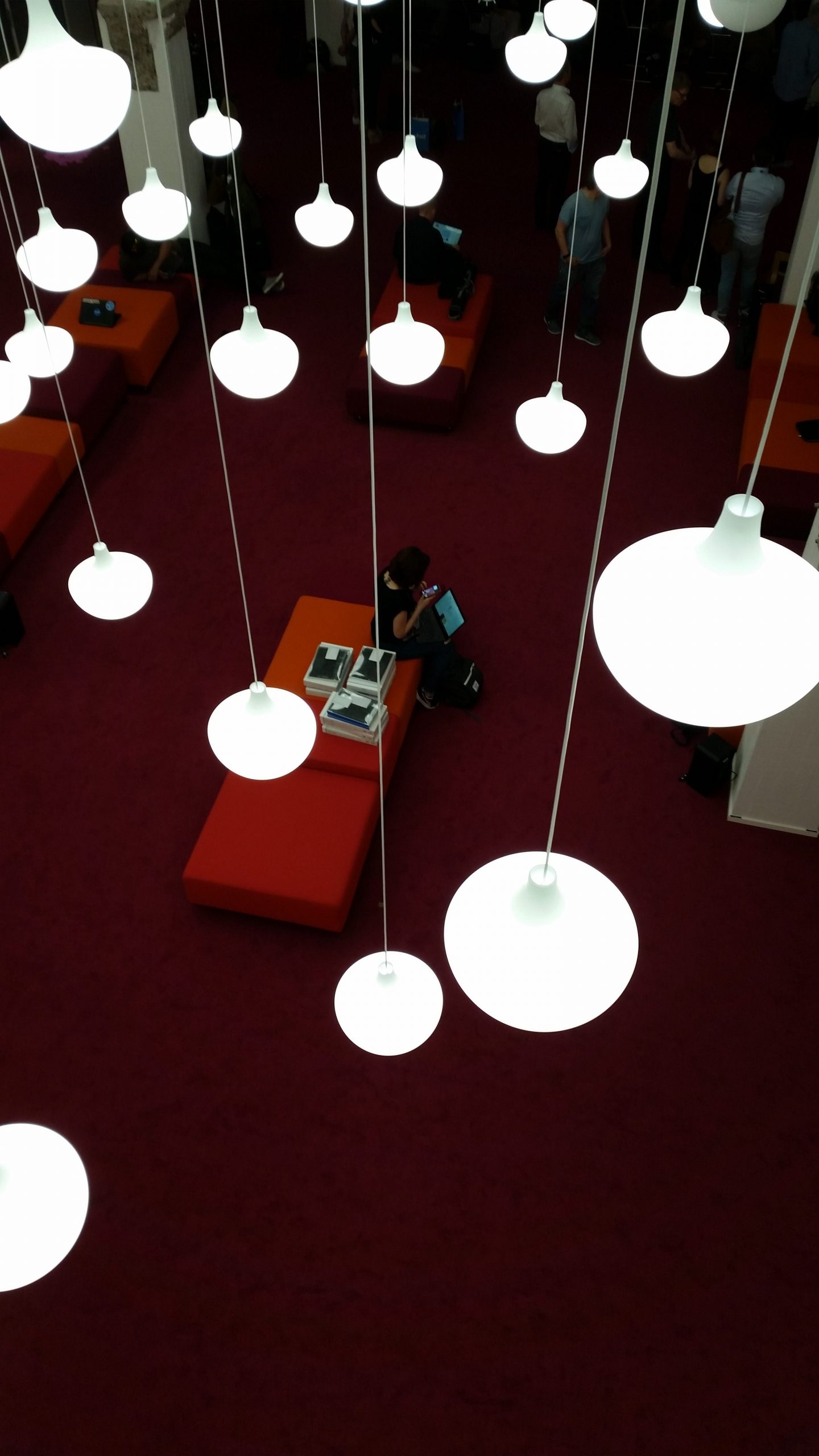
Pallotuoleja, kauniita lamppuja ja tilaa. Vietimme kesäkuussa aurinkoisen päivän Aalto-yliopiston Otaniemen kampuksella Harald Herlin -oppimiskeskuksessa. Alvar Aallon suunnittelema rakennus avattiin peruskorjattuna v. 2016. Vanhaa on kunnioitettu, mutta tiloihin on saatu mahtumaan uusia toimintoja. Rakennus voitti 2017 arkkitehtuurin Finlandia-palkinnon.
Kulttuurialan kirjastoa valmisteltiin vauhdilla Arabian uudelle kampukselle. Arabiassa, Ruoholahdessa ja Tikkurilassa pakattiin kirjoja. Muutoksia tehtiin myös kirjastojärjestelmissä.
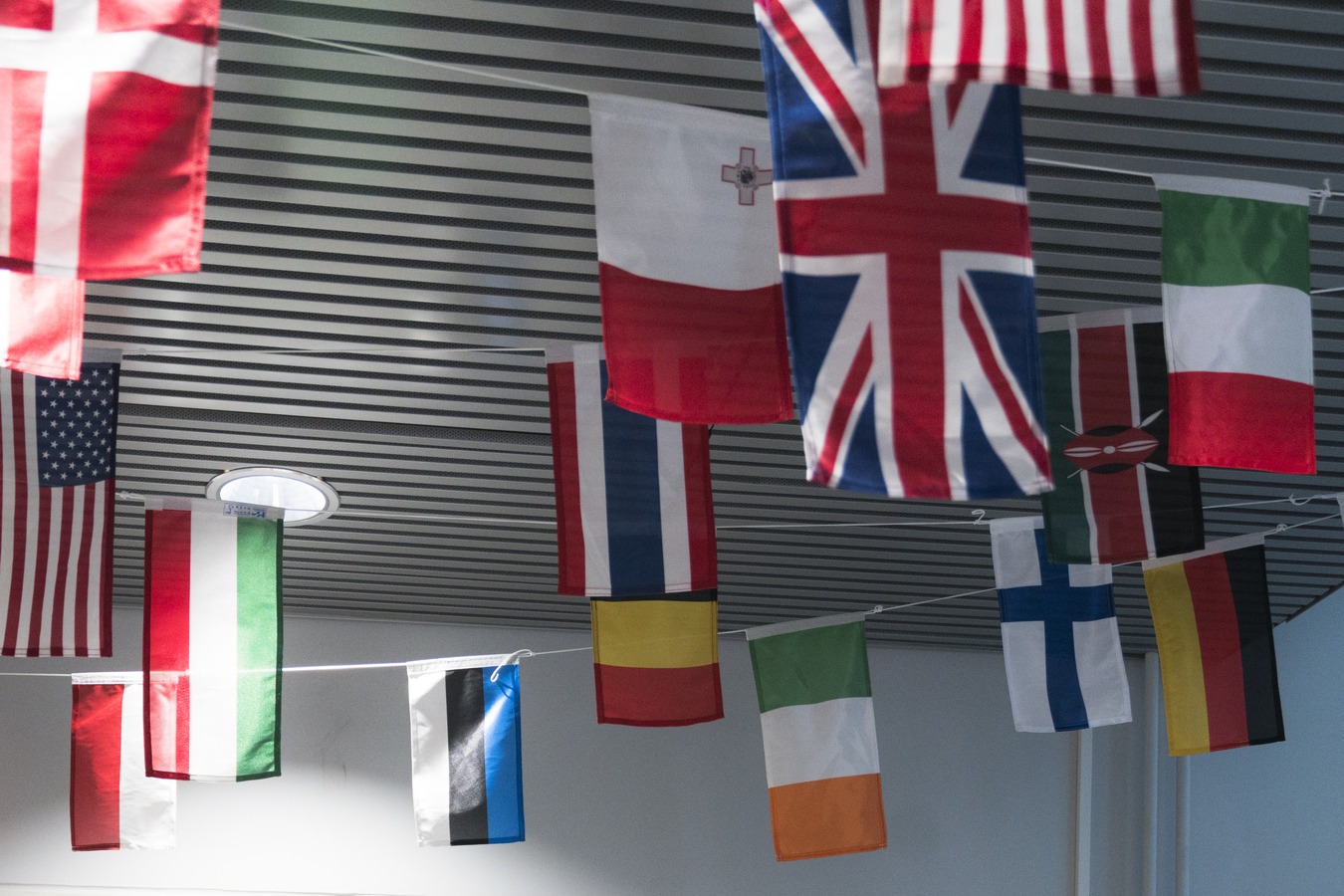
Kesäkuun alussa oli perinteinen Metropolian International Staff Week, joka on tarkoitettu ei-opettavalle henkilökunnalle. Saimme kirjastoon vieraaksi neljä iloista kirjastonhoitajaa. Keskustelujen teemoina olivat digitaalisuuden haasteet, e-kirjojen hankinta ja markkinointi sekä tietysti kirjastojen arki Itävallassa, Saksassa, Tanskassa ja Suomessa.
Kirjastoissa siis kuhisi myös kesällä, vaikka ovet suljettiinkin juhannusviikolla.
Syyslukukausi
[caption id="attachment_3227" align="aligncenter" width="560"] Monenlaista punnerrusta on sisältynyt tähänkin syksyyn :)[/caption]
Kirjastot avasivat ovensa asiakkaille elokuun puolessa välissä. Myyrmäen kirjasto toimii toistaiseksi väliaikaisissa tiloissa rakennustyömaan vieressä. Kulttuurialan kirjasto Arabian kampuksella avattiin syyskuun alussa.
Päivitimme laina-ajat ja lainojen nimitykset. Nykyisin meitä saa neljän viikon ja viikon lainoja. Lisäksi jotain aineistoja voi käyttää vain kirjaston tiloissa. Toivottavasti tämä helpottaa asiakkaiden omatoimista kirjaston käyttöä entisestään.
Palvelumme verkossa uudistuivat. Kirjaston www-sivut uudistettiin ja samalla Tiedon janoa-blogi toimii myös entistä enemmän ajankohtaisten uutisten tiedotuskanavana. Aloitimme myös valmistautumisen EU:n uuteen tietosuoja-asetukseen. Teimme riskikartoituksen kirjaston verkkopalvelusta Voyagerista.
Kirjastolaiset myös kouluttautuivat pitkin vuotta. Yhteisen pilvipalvelut-koulutuksen lisäksi monet seurasivat digipedagogiikka-webinaareja. Turvallisuuspassin kaksi osiota suoritimme yhdessä: Haastavat vuorovaikutus- ja asiakaspalvelutilanteet sekä paloturvallisuuskoulutus.
Keväällä aloitettu 3AMK-kirjastojen peliteema jatkui. Tutustuimme Aalto-yliopiston Oppimiskeskuksessa pelin tekemisen prosessiin. Kokeilimme peliä, joka esittelee kirjaston tilat ja palvelut.
[caption id="attachment_3223" align="aligncenter" width="620"] Viihtyisiä työskentelytiloja Karoliinisen instituutin kirjastossa.[/caption]
Työntekijämme liikkuivat maailmalla ahkerammin kuin koskaan. Keväällä kaksi työntekijäämme vieraili Pietarin kirjastoissa. Syksyllä meiltä osallistuttiin kahteen konferenssiin. Informaatiolukutaidon konferenssi ECIL järjestettiin tänä vuonna Ranskassa Saint-Malossa. U!REKA-liittouman konferenssi oli Edinburghissa. Samalla matkalla myös Northumbria Universityn kirjasto Newcastlessa tuli tutuksi. Osallistuimme myös BMF:n matkalle Karoliinisen instituutin kirjastoon Tukholmassa.
Kaisu, Liisa ja Sinikka






Kommentit
Ei kommentteja