A Revolution in the Music World Is Waiting Around the Corner: The Internet of Musical Things

A smart guitar, a vibrating wearable metronome, and an LED wristband reacting to your concert experience are all part of a growing phenomenon known as the Internet of Musical Things. In this blog, I explore what this development may bring for music creators, performers, intermediaries, and audiences alike. The Internet of Musical Things (IoMusT) connects devices such as internet-enabled smart instruments, smartphones, music streaming services, augmented reality devices, and sensor-equipped technologies that collect and transmit data. Communication between these devices forms its own ecosystem — the Internet of Musical Things (see Turchet et al., 2020; 2022).As this network combining music and technology evolves, a radically new reality is beginning to emerge on the horizon. For example, when you jam with friends using Samsung’s ZamStar smart guitar platform, you are already utilizing the IoMusT ecosystem (Roche, 2022). IoMusT connects music creators and performers not only with one another, but also with intermediaries and audiences. At the same time, communication between devices creates new ways to create, develop, and experience music. Smart Devices and Collaborative Creativity Among Musicians The development of intelligent musical devices and systems is advancing rapidly. The music industry already has a long history of digital communication between devices, especially through the MIDI (Musical Instrument Digital Interface) protocol that became widespread during the 1990s (Bateman, 2012). However, from the perspective of IoMusT, MIDI is relatively slow. The future points toward semantic web technologies, which aim to make internet data smarter and more useful for both humans and machines through faster communication systems. One area of development involves smart guitars. Samsung’s ZamStar, for example, uses LED guidance lights to help players locate correct chords on the guitar neck. Meanwhile, the Sensus Smart Guitar utilizes sensors to register playing techniques and movements such as finger touch, fretboard pressure, and guitar tilt (Turchet et al., 2017). Through the guitar’s signal processor, sound effects can also be added in real time.Alongside smart instruments, another major development area involves intelligent devices and applications that enable real-time remote collaboration between musicians. Smartphone applications connected to instruments allow musicians to record performances, edit segments, and combine them with the creations of others. This opens new opportunities for international collaboration and creativity among composers, performers, producers, live sound engineers, and even audiences themselves (Turchet, 2019). Collaborative platforms may also offer opportunities to share and develop music together with other musicians and listeners (Turchet et al., 2022). Perhaps these technologies will even become future tools supporting remote pedagogy for teachers as well. Sensors have also been used to explore entirely new ways of experiencing music. Wearable haptic devices — technologies based on the sense of touch — can track gestures and enable the control of sound and other parameters through body movements and gestures (Turchet et al., 2020). While these devices can enhance performances, they may also play an important role in musicians’ self-monitoring and wellbeing. Through sensors, musicians can track factors such as stress levels and posture, whose optimization can have important long-term health benefits. Blockchain and Smart Contracts Supporting Rights Management In addition to enabling new ways of making music, the Internet of Musical Things also introduces new methods for managing copyrights and royalty payments (Turchet et al., 2022). One key driver of this change is the growing adoption of blockchain technologies. Within blockchain-based IoMusT systems, copyrights and royalties can be managed through decentralized smart contracts, making data tampering significantly more difficult (Turchet et al., 2022). Information recorded in smart contracts is transparent, and the rules concerning usage rights travel together with the digital content wherever it goes.Through blockchain systems, compensation for music usage can be transferred as real-time micropayments directly to rights holders according to the terms specified in the smart contract — without intermediaries and without delays or human errors caused by third parties. As online collaboration becomes increasingly common — often enhanced by artificial intelligence — ensuring clarity and fairness around copyright ownership becomes even more important. While royalties and rights management may become highly efficient through blockchain systems, the very concept of ownership may simultaneously acquire entirely new dimensions (see Turchet et al., 2022). For example, listener data can be used extensively in music development, yet it remains unclear how listeners’ roles and rights should be regulated within IoMusT systems. This creates a need for new regulatory frameworks and technologies capable of protecting the rights of both musicians and audiences participating in music creation. New Levels of Audience Understanding A preview of technologically mediated audience participation emerged nearly a decade ago when Taylor Swift organized her 2015 “1989” tour. Fans attending the concerts received LED wristbands upon entering the venue. The wristbands contained infrared transmitters and RFID chips (Marellabudi, 2020), allowing them to light up in sync with both the music and audience movement.As a result, the audience itself became part of the performance, and the sea of synchronized lights created an increasingly communal concert experience for fans.Since then, technological development has led to even more immersive music experiences through devices such as VR headsets and haptic technologies. These devices can create new forms of communication between musicians and audiences in both virtual and shared environments. Using biometric data, musicians may gain remarkably deep insights into audience experiences through measurements such as electroencephalographic (EEG) fluctuations associated with arousal and emotions, heart rate, galvanic skin response, muscle activity, eye movements, and breathing patterns (Turchet et al., 2022, 4). Such insights could help artists select songs and design setlists according to audience emotional responses. At its best, deep knowledge about audience experiences may provide musicians with entirely new tools for designing richer and more engaging concert experiences. Music may also become integrated into everyday life in new ways. Smart speaker systems, for example, can learn users’ musical preferences in different situations and automatically create adaptive playlists based on these patterns. Speakers may synchronize with other smart home devices, allowing music to follow users seamlessly from room to room. Intelligent music systems may also offer dynamic sound quality that adapts to room acoustics and even to the listener’s mood through biometric data, creating highly personalized listening experiences.The therapeutic benefits of music are already widely recognized. In the future, IoMusT may introduce entirely new tools for integrating these benefits into everyday life. Smart devices could provide personalized music therapy programs that adapt to users’ moods and physiological needs. Such applications could support stress reduction, treatment of sleep disorders, and rehabilitation processes. Challenges of IoMusT Development IoMusT creates a world in which countless musical devices are connected and interacting with users and environments while collecting data and automating certain tasks. Music-industry-specific functions such as efficient copyright management and rapid royalty payments may also benefit from blockchain technologies and IoMusT systems. However, this development also contains unresolved questions and risks. At present, internet latency may become a bottleneck for many applications. IoMusT devices require fast consensus protocols to communicate effectively with one another. If issues related to bandwidth limitations and network congestion remain unresolved, applications such as real-time collaborative music-making across multiple locations will continue to suffer from latency and delays.The future development of the field requires platform-independent solutions capable of managing interaction between musical devices, blockchain infrastructures, and IoMusT actors. In addition, from a sustainability perspective, energy efficiency in handling massive data flows and peer-to-peer communication is critically important. In the future, IoMusT may significantly reduce barriers to creating and performing high-quality interactive music across distances and together with audiences. IoMusT is not merely transforming our technical environment — it is reshaping the future of musical creativity and expression itself. References Bateman, T. (2012). How MIDI changed the world of music. BBC News 28.11.2012. https://www.bbc.com/news/technology-20425376 Marellabudi, T. (2022). What Is the Internet of Musical Things (IoMusT)? All about Circute News 24.4.2020. https://www.allaboutcircuits.com/news/what-is-the-internet-of-musical-things-iomust Roche, S. (2022). Samsung is releasing a guitar with LED guide lights on its fretboard. Guitar World news 4.1. 2022. https://www.guitarworld.com/news/samsung-zamstar Turchet, L., Benincaso, M. & Fischione, C. (2017). Examples of use cases with Smart Instruments. AM ’17: Proceedings of the 12th International Audio Mostly Conference on Augmented and Participatory Sound and Music Experiences, Article No.: 47, Pages 1–5. https://doi.org/10.1145/3123514.3123553 Turchet, L. (2019). Smart musical instruments: vision, design principles, and future directions. IEEE Access 7 (2019) 8944–8963, http://dx.doi.org/10.1109/ Turchet, L., Antoniazzi, F., Fabio, V. & Fazekas, G. (2020). The Internet of Musical Things Ontology. Web Semantics: Science, Services and Agents on the World Wide Web 60 (2020) 100548. https://doi.org/10.1016/j.websem.2020.100548 Turchet, L. & Ngo, C.N. (2022). Blockchain-based Internet of Musical Things. Blockchain: Research and Applications 3 (2022) 100083. https://doi.org/10.1016/j.bcra.2022.100083
NFT as an additional source of income for music creators
The music industry is talking about blockchain technology as one of the growth directions in the industry. Could it also offer opportunities for music creators to earn additional income? This blog will consider what the process of entering the NFT market is like from the perspective of a musician building their career. The background is a practical experiment reported in Aili Tervonen's (2022) thesis. Blockchain technology is seen as a solution to the mechanisms that have long plagued the music industry, where currently only about 12% of the industry's turnover is generated for music creators (Bazinet et al., 2018). The remaining part is processed by the so-called intermediary layer, which makes the content available to fans. The value chain includes, for example, those who provide publishing, recording, agency and management services. Some industry players see blockchain as a way to take control of creative work back to its creator. There has been talk, among other things, of “IP rights decentralization” (Jalonen, 2022), which refers to the decentralization of the management of intellectual property rights. Decentralized rights management could resolve the perceived imbalance between wide distribution and fair compensation. For others, blockchain appears as a challenger that forces a reassessment of the already established business models of the music industry, in which the management and exploitation of copyright have been key. Recently, there has been an active discussion about blockchain-based non-fungible tokens (NFTs), which are at the heart of new content ownership. NFTs have also been considered as a source of income generation for young musicians operating outside of multinational corporations (Langston, 2022). From recording sales to increasingly diverse content A music NFT is typically a song, album, lyrics, or music video stored on the blockchain. It can also be, for example, a composition created by a generative computer program that algorithmically visualizes the work using random patterns, colors, sounds, and/or shapes (Langston, 2022). A music NFT can also be a concert ticket or an album cover. NFTs also help to build a new kind of culture in the music industry. NFTs can be, for example, collector's cards aimed at fans, pictures of the artist, versions of different stages of the creation of a song, or almost anything related to the artist that has value to fans. According to Sitra's definition, an NFT is a digital file management certificate. The transfer history of the digital file management is recorded using blockchain technology. Some of these digital management certificates (NFTs) sold on NFT marketplaces do not contain any rights recognized in legislation. According to Sitra, this is because the legal status of NFTs is still unclear. (Sitra 2023.) A young music creator quickly encounters a number of seemingly challenging choices that have a strong to binding impact on the future and profitability of the product or service in question. A key choice is the type of content exported as an NFT: A 1/1 NFT is a single, unique product. It is completely exclusive. The analogy is often used with paintings in our physical environment, of which there is only one original. With an open edition, an NFT can be made in unlimited quantities, for example to commemorate participation in an event organized in the metaverse. However, that edition is usually only made for a certain period of time, after which it is no longer available. With a limited edition, a certain number of individual NFTs are made. Many collections consist of editions of 10,000 pieces, for example. There are advantages and disadvantages to different release models. A single 1/1 NFT is a unique collector's item. The Mona Lisa is often used as an example: there is only one genuine copy, which has a high price. Open editions can be used to celebrate a specific moment, for example, and are collector's items available only to participants. A limited edition serves, for example, as a pre-sale of tickets. Blockchain brings added value to music NFT trading In the music industry, the added value of blockchain lies in its various means of exchange and the uniqueness of the NFT token. Only one person can own a single NFT, and all purchase and sale transactions related to that token are recorded in a “ledger” maintained by the blockchain. For example, the path of each NFT is openly visible to everyone, and the NFT acts as a proof of authenticity. For example, a fan buying an NFT concert ticket can check the authenticity of the NFT on the blockchain before making a purchase decision. If they sell the ticket on, the new buyer can also see the chain of ticket owners and can check the authenticity against the ticket history recorded on the blockchain. The restrictions and rights related to the use of NFTs are managed by smart contracts that follow the individual NFT in question with every transaction. For example, during the creation phase, it is decided what share the creators will take as royalties if the NFT is resold. This way, the original creator will receive passive income and benefit from, for example, the increase in the value of the NFT. In the music industry, the increase can be really large, because for some artists the future can bring widespread global success. For this reason, Tervonen (2022) wonders whether in the future one of the motives for a budding artist to buy NFTs could be investment instead of fandom. Creatives often find pricing difficult. One solution to this challenge on the blockchain is to use auctions. This allows NFTs, such as a VIP add-on service built around a concert, to be sold in limited editions at the best price at the time. By utilizing the pre-sale mechanism, fans can invest in an artist of their choice, for example by financing the production of an album in advance. As a reward, they can receive their own NFT for a limited edition of the new album. In India, a FanTiger service aimed at the music industry has been launched, which gives independent artists a route to open their future projects to their fans for crowdfunding. Fans can support the launch of new music by pre-purchasing an NFT album from a selection that currently includes quite a few Indian music genres. At the same time, fans can be critically important marketing messengers when taking new content to the social platforms and communities of their networks (Nahar, 2022). NFTs and cryptocurrencies are also of interest to criminals The NFT market has rapidly become a new area of activity in the music industry. Regulation is still quite incomplete, and there are many question marks surrounding NFT trading. Issues that need to be resolved include the security of smart contracts, legally valid ownership, and the regulation and taxation of virtual currencies (Lindgren et al., 2023). Blockchain technology can also be misused. Last year, the NFT marketplace Cent suspended most of its trading due to abuse. The platform sold certificates of ownership for content that was not the property of the person who uploaded the NFT to the platform. Market manipulation also occurs. For example, creators of works have bought their own works to make the demand for them appear greater than it actually is (Närhi 2022). In the NFT environment, money moves through virtual currency wallets. The buyer sees the virtual wallet address on the blockchain, but the buyer remains anonymous. This makes it difficult, for example, to detect money launderers. Before diving in, look into these things Tervonen's (2022, see also Table 1) work carefully reports the steps that a musician needs to take to adopt the NFT world. It also describes the kind of expertise that each step requires. StepRequired skillsCreate a virtual currency account and acquire currencyVirtual currency advice: how to open a wallet, how to buy virtual currencies, how to connect a wallet to an NFT marketplace, how virtual currency value is created, what virtual currency alternatives exist and what risks are associated with the currency you are considering acquiring.Creating an NFT workSupport service for brainstorming NFT works to create an idea of what could be sold. Criteria for choosing a platform for selling an NFT work, technical requirements of the platform, the most important choices made on the platform regarding NFT usage rights, and the technical process of publishing.Selling an NFT workSupport services for marketplace practices, marketing planning utilizing existing channels to direct fans to the NFT platform, also support for fans to make NFT purchases (they need to learn how to use virtual currencies and understand how NFT marketplaces work). Table 1. Based on Tervonen, 2022, p.51 From a musician's perspective, NFTs may offer interesting new ways to interact economically with fans. The transition of physical fans to a virtual environment currently requires a considerable amount of expertise from fans. They must have sufficient understanding of virtual currencies, the functioning of DAOs, NFT products, and various marketplaces offering music NFTs. It is of paramount importance to identify whether each artist's fans can be reached through this. NFTs are currently still a series of development projects and directions. However, it already seems quite clear that at least some of them have found their place alongside Web2 environments. When the news talks about NFTs and music, it usually involves big money: 3LAU made $11.7 million in a 3-day auction for their new album (Brown. 2021) and Whitney Houston’s previously unreleased demo recording made when she was 17 sold for $1 million (Legaspi, 2021). In reality, audiences of millions are limited to global stars. It is likely that it will be at least as difficult for a new music creator and performer to find an audience through music NFTs as it is in a traditional physical environment. About the writer Musiikkipedagogi YAMK -tutkinnosta valmistunut Aili Tervonen on toiminut musiikkialalla aiemmin freelancer-pianistina ja opettajana, mutta päätynyt sittemmin työskentelemään opetus- ja kulttuuriministeriöön. Valtiolla työskentely on saanut Tervosen pohtimaan musiikkialan asemaa yhteiskunnassamme. Musiikkialan tulisi pystyä parantamaan muusikoiden työmarkkina-asemaa, kehittämään alaa eteenpäin sekä moninaistaa alan ansaintalogiikoita. Tämän vuoksi Tervonen päätyi tutkimaan YAMK-tutkinnossaan NFT-teoksia ja virtuaalivaluuttoja. Lue lisää: https://www.theseus.fi/bitstream/handle/10024/751689/tervonen_aili.pdf?sequence=2 Lähteet Bazinet, J.B., Singlehurst, T.A., May, M., Suva, J., Ezawa, K., Yap, A. (2018). Putting the Band Back Together. Remastering the World of Music. Citi GPS: Global Perspectives & Solutions. Brown, A. (2021). Largest NFT Sale Ever Came From A Business School Dropout Turned Star DJ. Forbes 3.3.2021. Jalonen, J. (2022). Musiikkialan kasvustrategia. Tilannekuva-raportti, 04/2022. Music Finland Ry. Johansson, P., Eerola, M., Innanen, A. & Viitala, J. (2019). Lohkoketju: Tiekartta päättäjille. Alma Talent. Langston, T. (2022). The Music NFT Bible: A Guide to the Future of Sound. NFT now guides 22.9.2022. Legaspi, A. (2021). Whitney Houston Unreleased Demo Sells for $1 Million at NFT Auction. Full-length track was recorded when singer was 17. Rollingstone 15.12.2021. Lindgren, J., Lindholm, O., Lehtonen, K., Mustikainen, H. & Niikkonen, P. (2023). 6+1 suositusta Suomelle. Miten sääntelyllä voidaan parantaa web 3.0 -liiketoiminnan edellytyksiä? Sitran selvityksiä 229. Muikku, J. (2021). Pelastaako NFT musiikkibisneksen? Musiikkikustantajat MPA Finland blogi 18.3.2021. Nahar, P. (2022). FanTiger crosses 50k transactions, enters list of top five NFT projects globally. ETMarkets.com 28.11.2022. Tervonen, A. (2022). Muuttuva musiikkimaailma: NFT-teknologiasta uusia ansaintamalleja muusikoille? Musiikkipedagogi YAMK opinnäytetyö. Metropolia Ammattikorkeakoulu.
Metaverse inspires new ways of meeting in Web 3.0
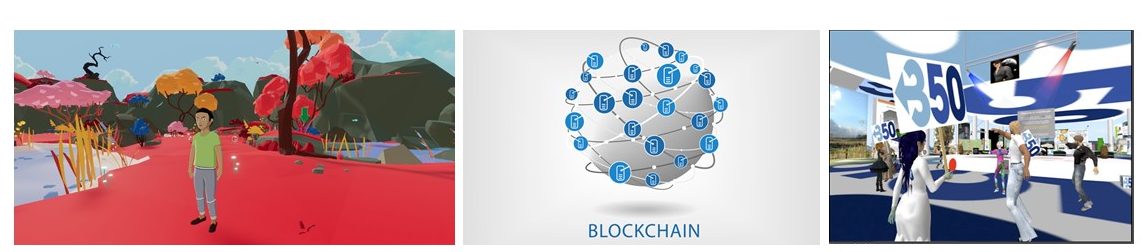
The creative industry is buzzing. In recent years, blockchains such as NFT, DAO, VR and XR have been increasingly mentioned in conversations. These are related to the web 3.0 development process, which is currently in its growth phase. This blog outlines what decentralized web 3.0 is. At the core of the blog, I am looking for an answer to what the metaverse is and how it relates to the future of creative industry players. Metaverse – a new operating environment for the creative industry The development of the Internet can be summarized in a simplified way, for example, as follows: Web 1.0 was an environment built into a network through hyperlinks, where we could see the content that was uploaded. Web 2.0 brought interactivity, which allowed users to also produce content for the internet, for example through social media. Web 3.0, which is still in development in many ways, brings with it a new kind of immersion, where the user works through an avatar in the artificial reality of the internet. There, physical and virtual reality blend more closely than before. Another dimension is created: the Metaverse, which is built from the words meta (including border-crossing) and universe. Diving into the metaverse is not only about the user experience, but also, to a large extent, about the ownership of one's own information and the underlying blockchain-based approach. In current technology, the mask used in diving is devices or sensors that are attached to people and have virtual reality programs installed on them. User interfaces are developing rapidly, and increasingly agile solutions are expected in the future. For the creative industry, the metaverse offers new global audiences and a platform to experience and offer new types of interactive and immersive experiences. The revenue logic is also different, as verification of ownership and trade of a work can be done without intermediaries, or at least with fewer intermediaries. At the core, communities instead of corporations Instead of platforms owned by large corporations or media companies, the new Web3.0 economy seems to be built, at least in part, on user activity and engagement. The user is an active part of the network, not a reader of advertisements. This bodes well for the creative industry. When the future of content production is decentralized, rather than controlled by large corporations, it is also shared and accessible to everyone. We no longer have to rely on large corporations or media companies to create content for us. Instead, we can create our own content and share it with everyone else in the world. Decentralized governance is implemented through the rapidly evolving blockchain technology. In a blockchain, non-participating actors can jointly produce and maintain databases in a decentralized manner. The artist, like anyone else who makes transactions on the blockchain, has access to view the contents of the blockchain. When each transaction is recorded provably and securely distributed across multiple machines in the community, the database is difficult to forge. A work sold on the blockchain also carries the original artist's information. If the work were to be resold, the original creator would have the opportunity to receive a portion of the purchase price. With success comes fame and glory, but the blockchain also enables continuous money production from resales of the work and, through it, potentially significant value development. New ways to engage with the audience One dimension of Web 3.0 is the metaverse, which forms a new digital meeting place – also between artist and audience. Avatars create a new digital meeting place that is not limited by national borders. The meeting can be about artistic content, but at its core it can also be, for example, a meeting with the artist and a moment of shared discussion. That is an opportunity that we in the Nordic region are not often given, at least not with top international artists. There is also a more ideological basis present in the public encounter. The art user can control their own data through smart contracts, receive additional digital services as part of their purchase, and follow the path of their purchase back to the original sale to ensure its authenticity. Platforms and new operating models offer an exciting new arena for creative expression. They offer, among other things, new ways to present artistic work and reach a wide audience around the world, new opportunities to monetize artistic products and services, and create immersive experiences. They also potentially bring new (younger) audiences to cultural content. Web 3.0 is evolving through various pilot projects: countless players are testing and agilely developing new platforms and services. An old Chinese proverb states that the best time to plant a tree was 20 years ago, the second best is now. Web 3.0 offers creative players a space of opportunity, the methods of which are currently being created. The best time to jump on board may well be now. Sources Frankenfield, J. (2022). What are smart contracts on the Blockchain and How They Work. Investopedia.com 24.3.2022 Kannan, S. (2022). Web3. Technopedia.com 18.5.2022. Malik, N., Wei, Y., Appel, G, & Luo, L. (2022). Blockchain technology for creative industries: Current state and research opportunities. International Journal of Research in Marketing 4.7.2022. Rennie, E., Holcombe-James, I., Kushnir, A., Webster, T. & Morgan B.A. (2022). Developments in Web3 for the Creative Industries. A Research Report for the Australia Council for the Arts. RMIT University Blockchain Innovation Hub. Whitaker, A. & Kräussl, R. (2020). Fractional Equity, Blockchain, and the Future of Creative Work. Management Science 23.7.2020.

Tämän blogin kirjoituksia ja toimitustyötä on tuettu vuoden 2023 loppuun asti Euroopan unionin sosiaalirahaston Luovat metaversumissa esiselvityksen osarahoituksen avulla ja vuoden 2024 alusta Euroopan unionin sosiaalirahaston osarahoittaman LUME – luovat web3-ajassa -hankkeen avulla.
Tässä blogissa käydään ammattilaiskeskustelua web3 kehittymisen myötä avautuvista uusista toiminta- ja ansaintamahdollisuuksista sekä ajankohtaisista ilmiöistä. Blogissa julkaistaan asiantuntijatekstejä, haastatteluja ja kantaa ottavia tekstejä, videoita, podcasteja tai niiden yhdistelmiä. Kirjoittajat ovat Metropolian ja sen yhteistyöorganisaatioiden asiantuntijoita. Haluatko julkaista Luovat web3 ajassa -blogissa? Ota yhteys päätoimittajaan sähköpostitse.
– Katri Halonen (päätoimittaja), yliopettaja, Metropolia Ammattikorkeakoulu, katri.halonen@metropolia.fi, p. 050 362 6407
– Leena Björkqvist, lehtori, Metropolia Ammattikorkeakoulu
– Jyrki Simovaara, lehtori, Humanistinen ammattikorkeakoulu
– Mayreth Wolff, lehtori Humanistinen ammattikorkeakoulu
Sähköpostiosoitteet: etunimi.sukunimi@metropolia.fi
Toimituskunta toimittaa Luovat web3 ajassa -blogin sisällöt ennen julkaisua.
Haluatko julkaista Luovat web3 ajassa -blogissa? Lue oheiset ohjeet (pdf) ja ota yhteys päätoimittajaan sähköpostitse.
Termipankki on tehty navigointiohjeeksi Metaversumiin.



AI ansaintalogiikka bitcoin Coldplay DAO Digital heritage digitalisaatio esineiden internet ESR osarahoitus fani fanit ikäpolvet inkluusio IoMusT IoT johtaja kesä2025 konsertti krypto kulttuurituotanto lippu lohkoketju luovat alat metaverse Metaversumi musiikki NFT satoshi sijoittaminen sustainability tasa-arvo tekoäly tokeni web3 Web3.0 yhteisöllisyys älysopimus