
Avainsana: Industrial Management
Innovation is my focus
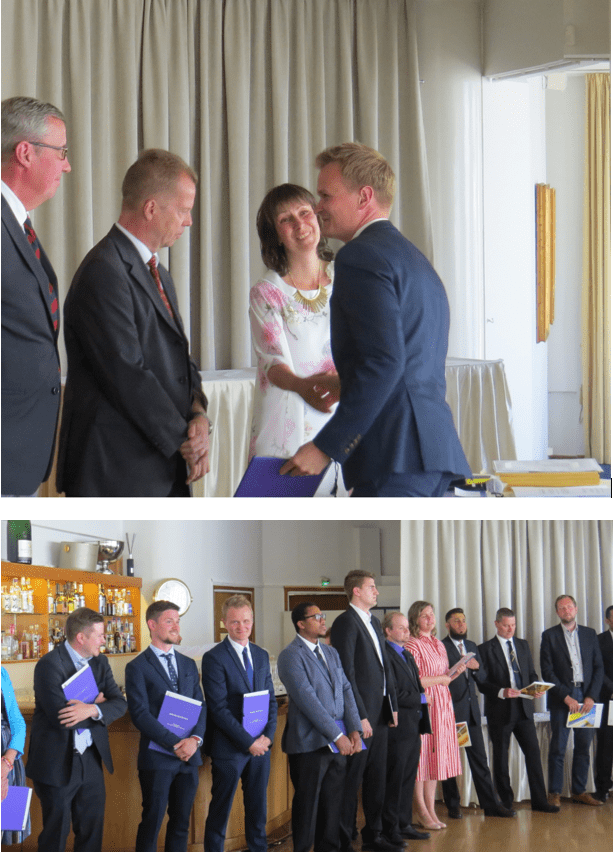
Positively busy at the moment at work and in winter sports, I am happy about rich snow this winter. I come from Lapland, close to the see, from Keminmaa. In professional life, my biggest interest is innovation, and Metropolia University of Applied Sciences helped on sharpen my focus. Here, in response to my alma mater’s request, I tell a story of my search and discovery. The Start of the Career After graduation as a Bachelor in IT from Turku University of Applied Sciences, I worked some time for Teleste Oyj in Turku. My history in Teleste started with a Bachelor’s thesis, which I successfully completed and continued my work for the company. After the company cost cutting and organizational change, I started looking for work in Telecom and very specifically in Ericsson. At that time, my friend who studied with me in Turku was working for Ericsson. He told such exciting stories about his assignments at Ericsson that I started to be envious. In 2009, I got a position in Ericsson. That was not an easy time to get an IT job. Wide networking with professionals, previous experience, and practical engineering knowledge helped to land my dream job. In Ericsson, we were building a 3G network. Our team delivered a very successful project that offered our customers early access to technology which for that time achieved massive data rates. At that time, our team within Ericsson was one of the first to work with this technology, and I was a Service Engineer. I traveled the world and worked for 9 years in this position, continuing as a Solution Architect. After 9 years, I decided to educate myself. I heard many of my colleagues talking of a Master’s degree in Metropolia, saying nice things, so I decided to look more precisely at this option. Studying Master’s Degree Program In daily work, I am closely working with innovation and innovation framework in Ericsson, as it is my ticket to something really interesting. Before I could make a decision if it would be best to work fully with innovation, or I can use a few hours every week, I decided to look for education. After googling all types of programs, my search always brought me the Master’s program in Industrial Management at Metropolia for studies in innovation. After reading a detailed description of the program, it was easy to decide. It explained well what this degree is about, where, who for, and what to do; even what the school day will be. When I looked at the content of the studies, I was very excited and decided to take this very program. It was precisely the thing! Before the Industrial Management curriculum, I was not sure if I should pursue a management role. But after my Metropolia classes, I realized that it is very interesting and something for me. Using my Networks to Test my Interest in Management Role The studies were tougher that I expected, in a demanding way; but I love challenge, it is very good for me as a person. After my Master’s graduation, I started to apply to the management roles inside Ericsson. At the time, I was the sports club chairman at Ericsson Finland as well as a company management employee representative in our local organization. So, I used my network to discuss this role. My activities help me to look at different angles at the business that I am working in: employee management, health and safety, sports clubs management, the company hobby clubs with social activities, etc. I went to my network and discussed with them that I am now interested and feel ready for a management role, and I am very serious about it. Soon after, we had a mentoring session with the top management in Finland, and after a while, they announced a position in Service Management. I got it. In this role, I have a wide responsibility in services delivery including budget, first hand customer negotiations, and developing customer experience and customer satisfaction. I can master all these areas (taught to us in Metropolia). This is a great leverage of many different types of positions. For Innovation You Need to Know the Substance As my next step, I need to maintain and develop the innovation understands and skills, and work on the substance. For innovation, if you discuss it with our instructor Thomas Rohweder, you need to know the substance. No matter how creative you are, a firm professional ground and understanding of real life is needed. In other words, you need to bring your own professional skills into innovation - it could be IT, machine learning, anything related to industrial mega-trends. Importantly, you also need to understand business and finance. So, before my next step upon the managerial ladder, I decided to develop operations excellence, take responsibility over the finances, and master the substance – all these efforts will bring results. When I started in Service Management, I remember how I was surprised with my service contracts. What is this service? How many customers do we have for it? It was a surprise to hear that this service exists for only one customer, and it was especially developed for this one customer, co-designed, co-created – through innovation, value creation, customer experience – all the topics from my studies! (Some departments, e.g. Sales, at that time did not even realize these concepts, but just made it happen). Now it is one of the foundations for successful service. That area is critically important to make customer dreams and wishes happen. On the personal side, since I came from Lapland, it is common there to go camping and hiking. This is simply my passion to go hiking, being in the nature. My other hobbies are sports and music. Before the engineering career, I was very excited about music. So, when I first heard about innovations, it sparked my interest. I realized this is the field where I can be creative to combine applied sciences, practice, engineering – and creation. In the past, it was common to combine science and creativity; the people of Renaissance all loved music, science and arts. Combining Innovation and Development I am interested in a role that allows a big degree of creativity and freedom to innovate. However, if it is purely innovation, such as full-time innovation coach, it creates a lot of costs. In any traditional company it is ‘no-no’, and it is tricky to have such position. So, I want to focus on combining innovation and development. Here, freedom to innovate is super important. It allows to think and create clever efficiency gains such as with automation or create value with targeted investments by validated innovation ideas. I believe that one can cut costs only within limits but with systematic innovation create value where only sky is your limit. In service delivery organization, we need to innovate on everything, even in Sales, as we need to sell good things. If there is an innovative idea, we make it happen. My dream job is to innovate and coach young professionals, as I was coaching PhD students from Aalto, it was wonderful, and PhD students from Stockholm in Ericsson Innovation Awards competition. I would also like to have a role in innovation management, and link innovation routinely to real life operational challenges, and make it work, and make good business out of it. There is a lot of creativity in this - very exciting! The Next Step? One more thing. All my instructors - Zinaida, Thomas, James - all suggested that I should go for a PhD. This is something that I am still thinking about. However, as I am very clear about what I want, innovation is my passion and an innovation management role is my focus. This is what truly makes me tick. Photos by Zinaida Grabovskaia Juho Vieruaho is currently a Service Delivery Manager at Ericsson who graduated as a Master’s of Engineering in Industrial Management from Metropolia University of Applied Sciences in 2018.
Helping Sustainability: Consumer’s Influence Can Reach till the End of Supply Chain
By Sabari R. Prasanna and Zinaida Grabovskaia Metropolia’s part-time lecturer Sabari R. Prasanna, who teaches Business students on supply chains, visited Master’s program in Industrial Management and raised awareness of social and environmental issues in supply chains. It was an important visit that created discussion on sustainability issues across the whole supply chain with supply chain managers and professional purchasers. Master’s students of Industrial Management program are full-time professionals who are involved in decision-making and selecting suppliers on a daily basis. As sustainability becomes an ever more important issue for businesses, students were interested to discuss the ways how sustainability can be increased thought the efforts of both, responsible business and responsible consumers (Prasanna, 2015). What is sustainability and what it means for companies? A change to sustainable ways of doing business is a welcoming change, actively supported by legislation in many types of business sectors. Companies themselves also use sustainability as a competitive advantage. Energy companies, for example, use environmental benefits of alternative energy as an argument for being more attractive than, for example, fuel-based energy. Railways argue that they are more sustainable than road transportation since they create much less environmental pressures, and so on. Yet, companies still have to ‘sell’ this expensive change of becoming more sustainable to their shareholders. The old logic of ‘increase revenues – decrease costs’ is still very much prevalent in many businesses. Such businesses often argue for ‘reducing pollution by 10%’ rather than asking themselves How can we stop polluting? This logic of small steps is very much ingrained in public opinions as well, promoted by lobbyist and some politicians. In practice, to become more sustainable, companies need first to convince their shareholders that such a change is needed. Further on this road, the idea of running sustainable business practices should also win over priorities of financial profits (Epstein & Roy, 2001). As a result, the companies that wish to become more socially responsible, environmentally friendly and overall more sustainable, still need to make a lot of efforts to promote sustainability to their own shareholders. However, the stakeholders in doing business sustainably create a much wider community than the shareholders of any company. In case of an environmental disaster, or a human right violation, it is a much wider community that is affected, not just the immediate shareholders of a business. Thus, to influence shareholders, it is necessity to make first of all the stakeholders (i.e. a wider community) more interested in sustainability. This is a very powerful group that votes with their money, and can simply boycott an ugly business by refusing to buy from them. Nowadays, there are many examples of such consumer voice. As consumers, we have a huge power. However, what we know as consumers is yet very little, and – regrettably - there is often little interest in sustainability. As a result, consumers may not know that there are sometimes ugly things happening at the front end of the supply chain. There is a shocking example of cocoa firms kidnapping children to work as forced child labor in Ivory Cost. There is a film in Youtube about it. We all consume chocolate, but few know how cocoa suppliers commit horrible crimes in pursuit of reducing costs. Another example is production of palm oil that has led to massive deforestation in Malaysia and Indonesia, leading to rapid reduction in the Orangutans population due to disappearing rain forests. These are examples of violations done in pursuit of increasing shareholders value by lowering costs, and show what may happen, if no constrains are put to such practices. Here, legislators can lead the change by demanding the companies to become accountable for sustainability (as done, for example, in Sweden). With support from legislators, the new way for a business to look at sustainability is from the perspective of the triple bottom line (TBL) – stressing social, economic, and environmental elements. It means that not just profits, sales and products should be important, but also wider values beyond that - social and environmental perspectives, as well as wider economic and human rights issues. Still, there are many questions around sustainability, and managers are often confused - is there a moral mandate to practice sustainable ways of doing business? Who will pay for it? Is there any business opportunity in sustainability? Sabari believes that this last question is the most important one. If a business can create value from sustainability, then it raises sustainability to a totally different level of interest from business and stimulates innovating sustainable practices. To support responsible business on this way, there exist many encouraging examples from forerunning companies (such as Fazer Group). There are also examples of change in conceptual understanding of running business sustainably by big names in business science (such as Prof. Philip Kotler). Kotler was the father of the famous ‘4Ps’ – a marketing mix that drives profitability: Product, Price, Place, and Promotion. In one of his recent editorials in ‘Journal of Marketing’, Kotler indicates sustainability as a fifth critical element in addition to his well-known 4Ps, and argues for sustainability as a vital issue for any business (Kotler, 2011). Universities are also very active in promoting responsible buying and even coined a new term, pro-sumerism. One example is a podcast about research by Georgetown University, USA (Deloitte Insights, 2018). A lot of positive things are currently happening across many sectors. Holland abolishes the use of gas cars (only hybrids and electric cars will stay), companies in Norway start cleaning the ocean, etc. Policy makers together with general public come up with better practices to save the future. The only possible answer is to re-think the old paradigm of ‘increase revenue - reduce costs’. To make it happen, the pressure should come out from the public, so that it will make business to change the old harmful practices. As managers, in everyday decision making as well as in personal life, we all need to exercise our influence toward more sustainable ways of doing business, and through becoming more sustainable in our decisions as consumers. Sabari R. Prasanna is a Doctoral candidate at Hanken School of Economics specializing in humanitarian supply chain management, who is finalizing his PhD studies and is a part-time teacher in Metropolia’s Business school, Myyrmäki campus. He used to be an Assistant Professor in BIM, India. Sabari is currently interested in supply chain sustainability and making it attractive for business. Zinaida Grabovskaia (PhL) is senior lecturer and head of master’s program in Industrial Management at Metropolia UAS. The program specializes in service business especially for big industrial players. References Epstein, M. J., & Roy, M. J. (2001). Sustainability in Action: Identifying and Measuring the Key Performance Drivers. Long range planning, 34(5), 585-604. Deloitte Insights (2018). Turning Consumers into Prosumers for Ethical Shopping: Interview with Neeru Paharia: [Podcast]. Available from: https://www2.deloitte.com/insights/us/en/multimedia/podcasts/nudgeapalooza-2-behavioral-economics-insights.html Kotler, P. (2011). Reinventing Marketing to Manage the Environmental Imperative. Journal of Marketing, 75(4), 132-135. Prasanna, R. S. (2015). Management Ingredients to Embrace the New Paradigm: Green. European Business Review, 27(3), 318-333.
A Master´s Thesis Study Found How Construction Business Sales Will Improve Significantly
My Master’s thesis was done for my home company, Pylon Rakennus Oy, a private repair construction company operating in Helsinki area. Construction industry is one of the last frontiers for sales and new customer acquisition development. Construction business, including repair construction, has traditionally based on competitive bidding. Therefore, pro-active sales has not played a significant role. Recently, increased competition and price erosion has driven repair construction companies to search for business potential in developing pro-active sales and by acquiring new customers, for example, among private property owners. Starting from this perspective, the study focused on exploring how sales actions prior the bidding stage and a new customer acquisition process can help to get beyond the painful competitive bidding. The study suggested that through improved visibility and relationship management, as well as through a better service offering, the company could get better access to new customers and a better gateway to joint property development projects. The study suggested considering sales as a strategic function, which originates from sales strategy. In order to convert strategy into sales performance, the study recommends allocating the sales resources based on customer prioritization. In addition, customer segmentation and offerings should be also considered as strategic decisions. In regard to the sales process, the study recommended the company to broaden its relationship network outside its buying network. The study found that relationships should be independent of any projects to increase visibility on the market. A customer reference marketing was found to be as the main tool to build company's image. Additionally, a good service offering is needed to ensure high quality and cost effective services. These actions will increase the touchpoints, thus enabling better access to customers, and providing better possibilities for alliance and negotiation contracts. In addition, the proposal presented a model for a three-step risk assessment to support the company’s project risk management during sales strategy, customer acquisition and bidding stage. This proposal was successfully accepted by the home company and now it works as a backbone for the case company’s sales development. The improved sales process will allow the company to become more customer-oriented and forward-looking. Better anticipation will improve the risk management, resource efficiency and, in the long run, will have a positive impact on both sales performance and profitability. Researcher Päivi Stordell, Master of Engineering in Industrial Management This Master’s thesis has gained a high praise from both the school and the home company, and is available in the AMK common database (https://www.theseus.fi/handle/10024/145863). Topic: ‘Developing the Sales Process in a Repair Construction Company’
Master’s projects are implemented and contribute to open innovation
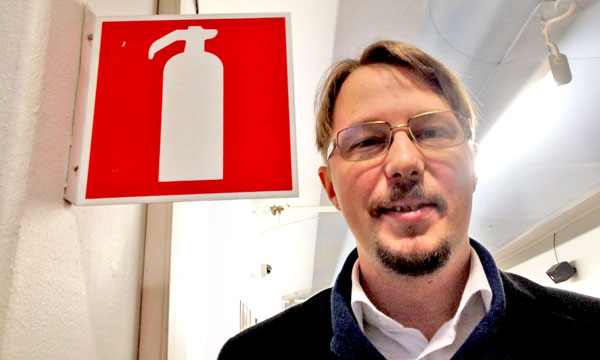
Master's Thesis as Part of Master's Programme In order to graduate from a Master’s Degree programme a final thesis project has to be completed. In University of Applied Sciences, a Master’s Thesis should be research-based practical development project that offers applicable solutions to the industry´s needs. Hence, the Master’s thesis projects are ordinarily completed in the context of companies and organizations. With 10 years of running Master’s level programs, Metropolia students have benefited a multitude of organizations and companies. Still, it is always a joy to see a successful Master’s thesis getting its implementation at the home company of the student. One such example is the project by Joska Taipale, whose Master’s thesis in fire protection training took 1,5 years to find its way to the customers. Joska Taipale's Thesis: An example of Real-Life Project I graduated in May 2016 and did my Master’s project on a real-life business issue at work. My project focused on developing training as a service for my company, Marioff. The company manufactures and delivers excellent firefighting equipment to ships, especially cruise ships, where safety is an ultimate priority. I used my opportunity as a Master’s student and developed a full service concept as my Master’s thesis. It took 1,5 years to turn my thesis into the actual service ‘productized’ for training the ship crews in the use of the firefighting equipment. I was in charge of the first pilot delivery in 2017 based on my Master’s thesis. My company supported me and allowed to publish the results. Seafarers have always recognized the value of such training services, but its urgency and need for implementation was fully recognized after an accidental fire on one of the ships, which incurred multi-million dollar losses and could have been prevented easily. At the time of the fire, if only the crew had known how to act, the damages would have been much smaller, or that fire would not have happened at all. After that, the safety authorities, as well as the ship operators, recognized the benefits of the new practical, well-organized, hands-on training service. At that time, my Master’s thesis was completed and the new service was ready for use. The core idea was to focus only on relevant trainings for each target group. The training module was super short, approximately 2-hour sessions for the bridge officers conducted right on the bridge, and for the engine officers inside the engine control room, etc. And, yes, the Galley (kitchen people) made the biggest group. In that environment, it is not a question if the deep fat fryers will catch fire, but rather when it will happen. The training was supported by easy visual materials similar to airplane safety cards – you get the idea immediately when you see it. We launched the new service in Miami, in December 2017, and trained 300 people in 5 days during a cruise in the Caribbean. We received extremely positive feedback. Everything worked well – the schedule, the content and the outcomes. In addition, the high level of engagement of the ship crews marked the new service as special success. Now, this training is steadily becoming a certified requirement for every ship. In this sense, I am happy with the results and due to the fact that my thesis project found implementation. Master's Thesis - An Open Access Material Thesis projects in Universities of Applied Sciences make a good example of contribution to both the industry and the well-being of society. Importantly, all UAS final thesis - both Master’s and Bachelor’s - are open to the public in a common online database. High quality thesis projects, such as Joska’s, also benefit the next generations of students who can learn and build on the existing foundation, and create even more excellent projects. Being in open access and offering practical solutions to industry needs, developed by industry professionals with experience and passion, such projects contribute to open innovation and create knowledge for the future. Joska Taipale, Master of Engineering (2016) in Industrial Management, Metropolia, Zinaida Grabovskaia, Master’s process instructor

The editorial team will provide the content of the Masterminds blog before publication.
The editorial team started its work at the beginning of 2022.
Pia Koirikivi, chief editor in Masterminds blog, Pedagogical Specialist
Minna Kaihovirta, Manager of Dialog
Iira Lankinen, Principal Lecturer
Riikka Wallin, Publications Specialist
Zinaida Grabovskaia, Senior Lecturer
Salla Kivelä, Principal Lecturer
asiantuntija yamk business informatics Business Informatics Master’s Program CERN Bootcamp Construction Business hankinnat hankintastrategia hankintatoimi ilmastonmuutos Industrial Management Industrial Management Master’s program johtaminen koulutus kulttuurituotanto Marjatta Kelo master Master's Thesis masterminds Masterminds blog Master of Engineering Master’s degree Metropolia Metropolia AMK Metropolia Master's Metropolia UAS metropolia YAMK opinnäytetyö osaaminen service design Sharing economy sosiaali-ja terveysala sosiaaliala study trip Sustainability talotekniikka terveyden edistäminen terveydenhuolto työhyvinvointi ura yamk YAMK-tutkinto YAMK opinnäytetyö ylempi AMK ylempi ammattikorkeakoulututkinto Zinaida Grabovskaia
