Metropolia UAS and Erasmus+ student exchange to Stuttgart, Germany – May 2024
24.6.2024
Sofia Konttinen and Kasey Snider
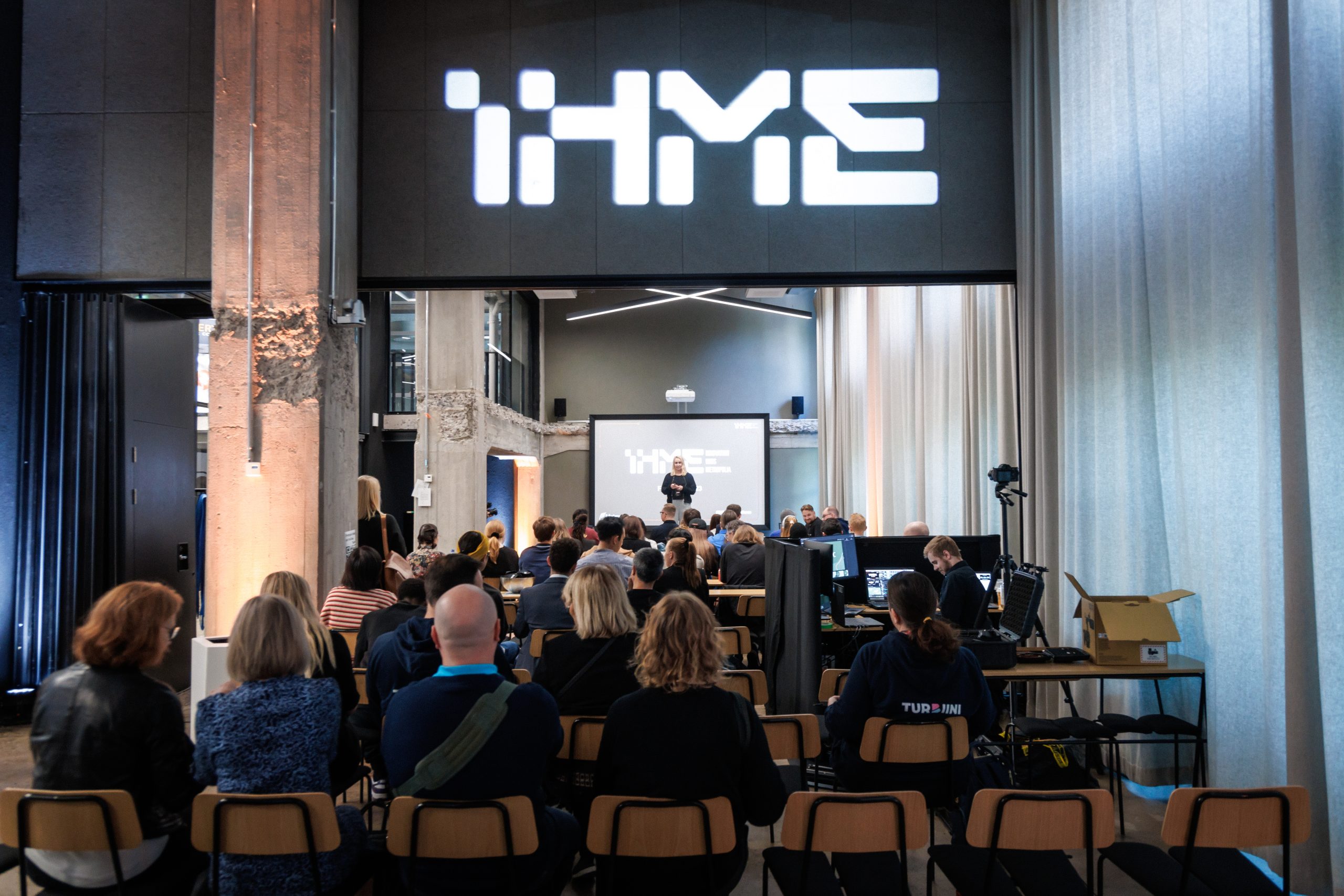
Studying in a Master’s program is more than just an academic endeavor; it’s a gateway to a world of inspiring opportunities and experiences. This past May, a dynamic group of Metropolia’s students studying in the Master in Business Administration programme, guided by their teacher Jimmy Ruokolainen, embarked on an Erasmus+ Student exchange to the Business Psychology Department at Hochschule für Technik Stuttgart in Germany. The students documented their experiences gained from the visit through blog posts, which were evaluated in a friendly competition.
Metropolia Mastermind blog is happy to post the winner of the competition that was created by MBA students Sofia Konttinen and Kasey Snider. Their captivating blog is entitled as ”Seeking inspiration? Business Psychology at HFT Stuttgart will put a spin on your perspective!”
Metropolia Master's bloggers
Bloggaajat ovat Metropolian YAMK-tutkintojen opiskelijoita, opettajia ja yhteistyökumppaneita. Aihepiirit käsittelevät laajasti ylemmän AMK-koulutuksen ajankohtaisia teemoja, työelämäyhteistyötä ja opiskelijoiden kokemuksia.
We also blog in English! Ota yhteyttä
The editorial team will provide the content of the Masterminds blog before publication. The editorial team started its work at the beginning of 2022. Pia Koirikivi, chief editor in Masterminds blog, Pedagogical Specialist Minna Kaihovirta, Manager of Dialog Iira Lankinen, Principal Lecturer Riikka Wallin, Publications Specialist Zinaida Grabovskaia, Senior Lecturer Salla Kivelä, Principal Lecturer
Bridging Worlds & A Journey of Growth
Only imagine being uprooted from one's life, leaving behind everything that was familiar, and stepping into an entirely new culture for higher education. It was not only the academic ambition per se, but also a leap of faith. This was where I stood at the crossroads of being an accomplished banking professional and yet a fresh student from Sri Lanka, when entering Finland with a resolution to grow, evolve, and thrive.
This was the reason, when choosing to study at Metropolia University of Applied Sciences, why it was so critical for me that this university would have a different approach to learning. I wanted a blend of theory and practical application to prepare my for the real world. It was a promise of not only academic insights but also of a holistic face-lift to my professional trajectory and personal journey.
Why Finland? Why Metropolia?
These were some of my many questions. I did my choice for reasons including Finland being ranked high in education and Metropolia for connecting the gap between theoretical and practical learning. I chose to risk and go ahead with the application.
With more than 18 years of work experience in the banking arena, I grew deeply interested in data analytics and operations efficiency. The Master's programme in Business Informatics at Metropolia was appealing not just for its industry relevance, but also for its practical application and problem-solving approach.
Challenges and Triumphs: The First Steps
Moving to Finland with my family was not an easy decision, as it would mean leaving behind a well-settled life and starting afresh. But this challenge was simultaneously an opportunity: the possibility of exposing ourselves to a new culture, new ideas, and new opportunities.
It all started with a journey of unexpected hurdles. Due to visa delays, I had to begin my studies remotely from Sri Lanka. What could have been an intimidating experience was relatively easy, thanks to the support from Metropolia. Online classes were well structured, keeping everyone engaged and moving forward in a fruitful direction, which the university itself clearly showing the ways how to stay connected and take part in the activities online.
Meanwhile, during this period, I also tried on my own initiative to complement my learning with additional activities and completed some optional courses in AI. Such a proactive approach allowed me not only to be on schedule but also enhanced my knowledge of emerging technologies, which proved so valuable later on when I was working on the thesis.
Settling in Finland
When my family and I finally arrived in Finland, the culture was warm in Reception and welcoming. Finland's emphasis on education and community integration were visible into every aspect of our new life, be it the language classes designed for migrants or the academic environment which felt very welcoming.
What really caught my attention when it came to Metropolia was how much they focused on collaborative and work-related learning. The classes are set up to ensure interaction, critical thinking, and practical application to concepts. This is not just education; it is preparation for the future.
The Metropolia Advantage: Theory Meets Practice
The education at Metropolia is different because it is not just about attending lectures and then doing an exam; it is about understanding how to use your knowledge in a real-life scenario. It was a nice discovery for me that Metropolia also provided learning opportunities beyond just the classroom. It offered opportunities for professional certifications (in Project Management and in Power BI), study tours, and company visits, which made it into a more diverse learning experience and enhanced both my knowledge and skills. This unique blend of academic theory and hands-on application, hallmarks of UAS studies, prepared me for real-world challenges, bridging the gap between classroom learning and workplace demands.
The Thesis Experience
The culmination of my studies was the completion of my thesis and the project was a real test of everything I had learned at Metropolia. The autumn semester was particularly demanding, as personal challenges tested my resolve. Although I began my thesis work early, the last two months became a race against time. With all credits except my thesis completed, I faced a pivotal decision: to graduate in December or postpone it for one more semester, until next June.
The unwavering support of my thesis supervisor and the staff of the Master’s degree programme in Business Informatics, was the turning point. Their professional guidance, empathetic approach, and steadfast encouragement were instrumental in helping me overcome the odds. They exemplified how Metropolia’s faculty truly invests in the success of their students, ensuring no one is left behind. Their belief in my potential and their determination to see me succeed pushed me toward the finish line. It is their guidance, combined with the practical learning approach of Metropolia, that allowed me to complete not only my thesis but also to deliver meaningful results.
Reflections & Lessons Learned
Looking back, my time at Metropolia has been a journey of growth, resilience, and discovery. Here are some of the key lessons I have taken away:
Adaptability is Key: Whether it is starting your studies remotely or integrating into a new culture, flexibility and willingness to adapt are essential.
Proactive Engagement Leads to Success: Taking initiative whether it is exploring additional learning opportunities or seeking help when needed can make all the difference.
Support Systems Matter: From family and friends to university faculty and peers, having a strong support network is invaluable.
Practical Learning is Empowering: Metropolia’s focus on applying knowledge to real-world problems prepares students not just to understand concepts but to use them effectively.
Advice for Future International Students
To those considering studies at Metropolia, my advice is simple: embrace the journey.
Plan Ahead: Whether it is organizing your study schedule or preparing for life in a new country, planning can ease the transition.
Stay Open to New Experiences: Finland has a lot to offer, from its education system to its culture. Be open to learning and growing both inside and outside the classroom.
Leverage Available Resources: Metropolia offers a wealth of resources, from language classes to career services. Make the most of them!
Stay Resilient: Challenges are inevitable, but they are also opportunities to grow. Stay focused on your goals and don’t hesitate to seek help when needed.
A Final Word
Metropolia is more than just a university, it is a community. It is a place where students from diverse backgrounds come together to learn, grow, and make a difference. My journey here has been one of the most rewarding experiences in my life, and I am so grateful for all the opportunities provided by it.
I carry with me, as I move on, not just the knowledge and skills I have learned but also the memories and lessons that have shaped me into what I am today. For everyone considering Metropolia, I´d say: take a leap. It is one decision that will challenge you, inspire you, and prepare you for a better future.
About the author
Jayampathini Kumarasinghe is a Master of Business Administration in Business Informatics (2024), a Metropolia´s alumnus, and an experienced banking professional from Sri Lanka who refreshed her professional skills in her Master´s studies at Metropolia and continues her professional career in Finland.
Both researchers and industry experts concur that workplaces with diverse and inclusive environments make positive impacts on organizations. They point out that having diversity, equity, and inclusion (hence DEI) initiatives at work improves corporate culture, client relations, enables the organization to move into new markets and even positively affects profitability. The three essential components – diversity, equity, and inclusion are interlinked and, when combined with business strategies, can help organizations thrive amid societal changes. (Ely and Thomas 2020.)
These topics inspired me during my MBA studies and I chose them as a topic for my Master’s thesis. In my thesis, I collaborated with a company in Finland that has a nascent DEI strategy and was interested to develop a roadmap to amplify the benefits of having DEI in the workplace to the company’s leadership.
Why the need to place a focus on DEI?
Diversity, Equity, and Inclusion (DEI), as a social pillar of sustainability policies, is part of the global goals in order to make a positive difference in own industry, as well as generate impact on society. DEI topics, as non-financial indicators, may be difficult to measure, unless they are conceptualized and well aligned to the strategy. This may pose a challenge to smaller companies, new to this area, and therefore the experience and developments in big companies deserve attention and dissemination.
Especially the appropriate selection of DEI indicators is the necessary step for any organization in the new era of CSRD. For organizations, key performance indicators (KPIs) are the essential managerial tools to determine whether the company is headed into the right direction. Metrics are vitally important, as evidenced by the proverbs "if you can't measure it, you can't manage it" and "what gets measured gets done" (Marr 2022). The DEI KPIs are important not only for reporting, but for implementing and truly “living” the strategy of the organization. They are indicative tools that will shed light on performance and point out the areas that require special care.
A look at EU’s Corporate Sustainability Reporting Directive (CSRD)
For the last two decades, the EU has been a champion in promoting DEI. The latest CSRD regulation (adopted since 5th January 2023) and its newly adopted EU standards (ESRS) include not only sustainability, but also - profoundly - social issues reporting, including DEI (see ESRS S1). As communicated in the EU Commission’s website on Corporate sustainability reporting:
“Companies subject to the CSRD will have to report according to European Sustainability Reporting Standards (ESRS). The standards were developed by the EFRAG, previously known as the European Financial Reporting Advisory Group, an independent body bringing together various different stakeholders. The standards will be tailored to EU policies, while building on and contributing to international standardisation initiatives.”
This latest EU CSRD legislation requires that all large companies disclose the information on the opportunities and risks they perceive as emerging from social and environmental issues, as well as their effects of their actions on the environment and human population (EU Commission, Press Corner, Q&A, 2023). At the European Commission's request, EFRAG (European Financial Reporting Advisory Group) drafted the standards to enforce the proposed CSRD, that focus on appropriate due process, transparency, and the knowledge of pertinent stakeholders. The 12 new standards (ESRS) cover the full range of sustainability issues and include the four significant “must-do” reports under the social facet, namely:
ESRS S1: Own workforce
ESRS S2: Workers in the value chain
ESRS S3: Affected communities, and
ESRS S4: Consumers and end-users.
The ESRS standards point to a range of recommended metrics for disclosures under the social pillar, namely in “ESRS S1: Own workforce” (such as the characteristics of the undertaking’s employees to collective bargaining and social dialogue). Figure 1 shows the range of KPIs in the newly adopted CSRD and ERSRS recommended for corporate reporting.
Figure 1. Metrics recommended by EFRAG for ESRS S1: Own workforce” (EFRAG 2022. Educational session on the first set of draft ESRS).
In addition, the newly adopted CSRD and ESRS give room for flexibility to organizations which specific aspects of DEI they can select for reporting on their DEI related topics. Especially the gender diversity policies are seen as the most common focus in workplaces and reporting practices. By having a gender-balanced workforce, companies can demonstrate their commitment to having an inclusive and equitable work environment.
This condition gives a unique chance to the front-running companies to excel and stand out among competitors by demonstrating their leadership via adopting not just mandatory, but wider reporting practices, beyond the required minimum.
Nordic companies are at the forefront in DEI reporting
Companies, especially the larger ones, have undergone digital and other transformations in the past decades. These changes were also closely related to sustainability and diversity issues. The organizations that successfully embraced these efforts as part of their business strategy were immediately spotted by other industry players, to a big extent, due to their excellence in reporting. These companies have managed to set examples of reporting that other organizations - as well as students in DEI topics - can learn from. The widely acknowledge examples of DEI leadership from Nordics include, for example, the following front-running companies. AFRY can be considered as an inspiring example of a leading international engineering, design, and advisory company when it comes to sustainability reporting. AFRY´s Annual and Sustainability Report 2023 (published in March 2024) measures and follows us on sustainability commitments through targets that encompasses its solutions, operations, and people. It also monitors its progress on a wide range of KPIs in DEI area (which is especially obvious when comparing to reports on DEI topics published in 2020 or earlier). Also, CGI make an interesting example among the largest IT companies in Finland that emphasizes in its DE&I governance. DEI is endorsed by the CEO and the executive committee, and that accountability for DE&I is a shared responsibility. DEI topics are embedded in the annual business plans for each Strategic Business Unit (for example, in CGI 2022 ESG report, p.45). The company clearly indicates its DEI targets and KPI also in its 2023 Sustainability report (published in 2024) and sets the targets, for example, to achieve the same level of gender diversity representation in leadership positions as is present across the entire company by 2025. (CGI 2023 ESG report, p.21).
These Nordic examples demonstrate that, by understanding and selecting measurable DEI targets and KPIs, the companies can create and follow more professional development plans, identify the multitude of domains where DEI can bring benefits to an organization, and thus point to a measurable impact of DEI on the overall performance. It makes this topic worth studying, also by the students at universities of applied sciences.
About the author:
Joan Mhyles Cruz is an MBA graduate in Business Informatics. In her student times, Joan was a student ambassador of Metropolia UAS and an advocate of DEI. She made this topic into her Master´s thesis done for one of the front-runners of DEI in Finland.
References:
AFRY (2022). Annual and Sustainability Report 2022. Retrieved on 30.10.2023. https://afry.com/sites/default/files/2023-04/annual-and-sustainability-report-2022.pdf
CGI (2022). Environmental, Social and Governance Report. Retrieved on 20.11.2023. https://www.cgi.com/sites/default/files/2023-03/cgi-2022-esg-report.pdf
CGI (2023). Environmental, Social and Governance Report. Retrieved on 20.04.2023.
https://www.cgi.com/sites/default/files/2024-05/cgi-2023-esg-report-en.pdf
Cruz, Joan Mhyles (2024). A DEI Roadmap for an Organization and Its Sustainability Reporting:Master´s Thesis. Metropolia UAS. https://urn.fi/URN:NBN:fi:amk-2024053018232
EFRAG (2022). Educational Session on Draft ESRS S1 Own workforce. Educational videos on the first set of draft ESRS (downloaded). Retrieved 30.11.2023. https://efrag.org/Assets/Download?assetUrl=%2Fsites%2Fwebpublishing%2FSiteAssets%2FFINAL_26.01_Long_S1_SR%2520PPT%25201%2520vers230126%2520%281%29.pdf
EFRAG (2022). European Sustainability Reporting Standards (Draft). ESRS S1 Own workforce. EFRAG November 2022. Retrieved on 20.11.2023. https://www.efrag.org/Assets/Download?assetUrl=%2Fsites%2Fwebpublishing%2FSiteAssets%2F13%2520Draft%2520ESRS%2520S1%2520Own%2520workforce%2520November%25202022.pdf
Ely, Robin J. and Thomas, David A. (2020). Getting Serious About Diversity: Enough Already with the Business Case. Harvard Business Review, Nov-Dec 2020. https://hbr.org/2020/11/getting-serious-about-diversity-enough-already-with-the-business-case
EU Commission. Corporate Sustainability Reporting. EU rules require large companies and listed companies to publish regular reports on the social and environmental risks they face, and on how their activities impact people and the environment. (online).
Retrieved on 01.02.2024.
https://finance.ec.europa.eu/capital-markets-union-and-financial-markets/company-reporting-and-auditing/company-reporting/corporate-sustainability-reporting_en
EU Commission (2023). People first – Diversity and inclusion. Fostering a diverse and inclusive workplace. Retrieved on 5.12.2023. https://commission.europa.eu/about-european-commission/organisational-structure/people-first-modernising-european-commission/people-first-diversity-and-inclusion_en#fostering-a-diverse-and-inclusive-workplace
EU Press Corner (2023). Questions and Answers on the Adoption of European Sustainability Reporting Standards. 31.07.2023 (Brussels). (online). Retrieved 20.11.2023. https://ec.europa.eu/commission/presscorner/detail/en/qanda_23_4043
EUROPA. EUR-Lex. Directive - 2022/2464. Official Journal of the European Union. Directive (EU) 2022/2464 of the European Parliament and of the Council of 14 December 2022 amending Regulation (EU) No 537/2014, Directive 2004/109/EC, Directive 2006/43/EC and Directive 2013/34/EU, as regards corporate sustainability reporting (Text with EEA relevance). 16.12.2022 (online). Retrieved on 10.12.2023. https://eur-lex.europa.eu/legal-content/EN/TXT/?uri=uriserv%3AOJ.L_.2022.322.01.0015.01.ENG&toc=OJ%3AL%3A2022%3A322%3ATOC
Marr, Bernard (2012). Key Performance Indicators: The 75 measures every manager needs to know. Introduction. KPIs are vital management tools (xxv). Pearson Education Limited.
The early 2020s were marked by turbulence, and the resulting economic sanctions have profoundly impacted exporting companies around the world. At the same time, groundbreaking advancements in digital infrastructure, such as generative AI and intelligent automation, have sparked debates about regulations governing software and technology export controls in leading nations. These discussions aim to protect competitive advantages and shield nations from emerging threats such as advanced cybercrime and electronic surveillance by foreign entities. As a result, export control restrictions are becoming increasingly complex. I have taken up this topic to help the company that I work for to make sense of these complex regulatory issues.
Challenge: Understanding the Regulatory Framework
Given the lack of maturity in multilateral processes and national regulations, companies in the software and technology sectors must proactively prepare for new restrictions and controls. Non-compliance with foreign trade laws can lead to legal, financial, and reputational risks. Moreover, macroeconomic trends, including the global economic shift and rising protectionism, will continue to impact organizations involved in export activities. Ignoring exports, that are intangible in nature, is no longer an option. What the technology industry should have learned from the unprecedented economic sanctions of 2022 and the uncertainties surrounding global treaties is that proactive trade compliance is essential.
Master´s Thesis Offers an Approach
My Master’s thesis offers a thorough review of existing knowledge on software technology export controls, regulatory frameworks, and best practices in both the United States (US) and the European Union (EU). This information has been synthesized into a conceptual framework to help co-create an export compliance framework tailored to software offerings. The goal is to mitigate the risk of non-compliance within the sponsor organization and to clarify the roles and responsibilities of stakeholders in the export compliance process. This process involves business conduct due diligence and adherence to export control regulations, which typically cover four main categories: product controls, end-user controls, export destination controls and controls on the actual end-use.
The Wassenaar Arrangement serves as the umbrella for export control regulations. It is a multilateral, non-binding international forum that facilitates the exchange of views and information on international trade in conventional arms and dual-use goods and technologies. The EU and the US have integrated the Wassenaar Arrangement control lists into their legislative frameworks and operational practices. The US has more comprehensive legislation regarding software product-related controls, while the EU has delegated most software-specific regulations to its member states.
Key Considerations in Software Technology
When it comes to software technology classification, important aspects include encryption features and the functionality of software embedded in dual-use classified end products. The US also monitors the re-export of US-made technology in exports outside its borders. Therefore, all software product development should consider both US and EU legislation when working in international markets. A common element across the Wassenaar Arrangement, the US, and the EU concerning software and technology is the inclusion of information security within their respective national regulations.
Solution: A Tool for Export Compliance
Drawing from the information security domain, a tool for further content analysis was selected; the People, Process, and Technology framework introduced by Information Security and Privacy expert Bruce Schneier in 1999. This framework became a foundational concept in cybersecurity, emphasizing that when one element changes, the other two must also adapt to maintain a balanced and effective response to change. Schneier (2013) stressed that security should not solely rely on technology but should also incorporate people and processes into a comprehensive security system. The same principle applies to the export compliance landscape.
To prevent confusion regarding Technology terminology in export control regulations, the Technology element was modified in the thesis to represent the actual end product, transforming the framework into the People, Process, and Product (PPP) matrix. During the co-creation process with stakeholders, the PPP elements were evaluated through the four categories of export control. Identified findings and related regulatory aspects were consolidated into a matrix, with each cell color-coded to identify the responsible entity. This matrix was designed as a tool to assist in risk mitigation within the export compliance process for software offerings at the sponsor organization. It aims to verify and monitor software exports and clarify the roles and responsibilities of different stakeholders.
Preparing for the Future
To thrive, businesses must accelerate innovation, enhance risk management, and meet increasingly demanding expectations. Effectively designing and managing their people, processes, and product controls during times of change can provide the necessary insight and understanding to achieve these goals. Consequently, companies engaged in the software and technology business should proactively prepare to adopt new restrictions and controls as they are introduced. By doing so, they can navigate the complex landscape of export controls and ensure compliance in an ever-evolving global market.
About the author
Aino Herranen is a graduate of Master´s degree program in Business Informatics. Aino has a keen interest in technologies and export compliance, and has selected this area for doing her Master´s thesis.
References:
Herranen, Aino. 2024. Building an Export Compliance Framework: Intangible Technology Transfer – Software offerings. Metropolia University of Applied Sciences. Master’s Thesis.
https://www.theseus.fi/handle/10024/856483
Schneier, Bruce. 2013. "People, Process, and Technology". Blog. Pulished 30/01/2013.
https://www.schneier.com/blog/archives/2013/01/people_process.html
This document benefited from the use of OpenAI's ChatGPT for grammar and style checks.
The main aim of this blog series was to share my observations and learnings with instructors interested in adopting scientifically sound, systematic and holistic research and business principles – that produce quality results – into their pedagogical toolbox.
The last text in this 3-part series of texts focuses on the benefits of one of the key components for producing the thesis in Metropolia Industrial Management (IM) Master's Program, namely the Writing Clinics. This text explains in detail the concept of the Writing Clinics centered on one-on-one guidance and on the use of the IM Thesis template.
The first text dealt with the benefits of the overall IM Master’s degree program design. The second text covered the specific benefits of the GATE model utilized for producing the thesis.
The whole program has been built and developed over the years according to Metropolia curriculum and using action research principles (see e.g. Kananen 2013, Saunders et al. 2016) to include the most effective elements from the perspectives of all stakeholders. One such element is the Writing Clinics using the IM Thesis template as a tool. Both are explained below, Writing Clinics first.
Why writing clinics?
The concept of Writing Clinics is very simple, but efficient. The main idea is for the students to produce text and remain productive during the entire writing process. The clinics consist of:
Place: Computer lab (currently Zoom)
Time: 12 days once/week in the spring term (Image 1 below)
Instruction: Instructor briefings
Activity: Students producing text for thesis GATE by GATE
Reporting tool: IM Thesis template
Instructor support: one-on-one language and thesis process guidance
Instructor feedback
As far as we know, the concept of Writing Clinics is rather unique to the Metropolia IM Master’s program. Including Writing Clinics in the overall program design is based on recognizing the needs of students, who are typically working full-time during their Master’s studies, for a scheduled time slot in their busy calendars and also the possibility for personal guidance (on needs analysis, see Huhta 2008).
[caption id="attachment_4975" align="alignnone" width="620"] Image 1. Schedule for January in 2021 (Weeks 2 and 3)[/caption]
Image 1 depicts the schedule for the first two study weeks of January. The Writing Clinics continue until the end of April in the same way, amounting to a total of 12 full days. Naturally, the students write their theses in their own time, as well. It is not obligatory to attend the clinics, but most students opt to do so. The biggest benefit of the Writing Clinics is that the students are likely to be more productive each week than if left completely to their own devices. Based on the feedback we collect from the students each year, there is a real need for the clinics and they appreciate this opportunity.
The text submissions take place through the course workspace after each GATE and the students receive feedback on the structure, logic and language of their texts. The level of feedback is more detailed in the beginning in order to benefit the students later with the rest of the text.
All online enthusiasts will be happy to know that Zoom is performing surprisingly well for organizing the clinics and in some ways even better than classroom settings. For instance, the breakout room feature is perfect for discussing with individual students without disturbing anyone else.
In the Writing Clinics, the IM Thesis template is a central tool.
Why thesis template?
In higher education, universities typically provide a school specific thesis template for their students. Metropolia UAS is no exception. In general, the idea of the thesis template is to ensure students produce well-structured, uniform reports that follow the academic requirements and specifications of the university and degree program in question. Often, the templates specify the required layout and formatting, but not much else.
The IM Master’s program has developed the idea of the thesis template further and made it quite detailed with section-by-section instructions as to general content, structure, logic and even academic reporting English practices.
This is done for two main reasons:
The GATE model teaching on how to approach the practical business development projects the students carry out in their thesis follows a certain structure and logic described in text 2 and that very same logic should be visible in the report, as well.
By following the detailed and quite informative template, the students will not have to waste time on reinventing the wheel again and again, but may concentrate on producing insightful text that is relevant and purposeful in terms of the business challenge they have set out to tackle.
Accordingly, the IM Thesis template matches the teaching by the IM team and provides the students with a framework that allows plenty of room for the students’ personal and professional insights. An example of one part of the template is the quite detailed - but still suggestive only - Table of Contents, which is available here as a PDF. It is not meant to be followed slavishly, but to be applied and personalized according to each specific topic and type of project.
The benefit of using the rather detailed thesis template is that it reinforces the GATE model teaching on how to carry out a business development project in a well-structured, logical way. By using the template, the IM Master’s students learn the following logic and the importance of triangulated data collection:
Scoping the project for business context and objective
Making a project plan for research stages and data collection
Carrying out a Current State Analysis (CSA) to find out what the problem/s is/are
(Data 1, often interviews with people closely involved in in the day-to-day operations regarding the challenge specified in the thesis)
Researching best practice to find ideas on how to tackle the problems revealed by the CSA
Building an initial solution based on the specific problems identified through the CSA and the ideas revealed by the literature research on how to tackle them
(Data 2, often workshops with team leaders involving co-creation of the initial solution for the challenge)
Validating the initial solution
(Data 3, often by presenting the initial solution to decision makers in the case company and getting feedback for making any final modifications) and then presenting the final solution
Presenting managerial implications through recommendations or, for instance, next steps
For two recent IM Master’s theses following this logic, see Recommendations to Improve the Product Management Process of the Case Company by Palenius (2020) and Recommendations for Improving the Complaint Management Process of a Biotech Case Company by Teye (2020).
It’s clear that we evaluate the students mainly on what we have taught them. Therefore the evaluation criteria (enclosed as a PDF) matches the above and includes for instance:
Clarity
Logic
Research skills
Grounding
Fit between the different thesis sections +
Practical relevance and value added = student insight
The benefits from the Writing Clinics and the thesis template, particularly for the students, if followed as intended, are thus:
Time specifically reserved for writing = Productivity
One-on-one immediate support = No time spent on being stuck = Efficiency
Detailed instructions = Thesis according to requirements = Excellent thesis
Practicing what we preach
To use IM language, the ambitious objective of the integrated IM instructor team has been, from the very beginning, to provide the students with a program that uses the most suitable research and business methods and tools to ensure the very best final pedagogical outcome. For the IM team, the expected final outcome is a group of IM Master’s of Engineering graduates who have gained systematic problem solving skills for life and who have produced an IM Master’s thesis they can be proud of and which is intended to further their careers. The UAS Master’s degree meets the European EQF-7 criteria and equals science university Master’s degrees (Opetushallitus/Finnish National Agency for Education 2020).
To ensure this kind of program, all of its parts have been carefully designed to feed on each other, and therefore the GATE model teaching is complemented by one-on-one Research Clinics and implemented in practice in the Writing Clinics by utilizing the IM Thesis template to help produce the thesis. This model is highly applicable to other disciplines, as well.
I have not discussed Research Clinics in any of my blog texts as I am not personally involved in them. They are, however, an integral part of the program. This is where the students meet one-on-one with their designated thesis instructor, practically speaking as many times as they wish, to discuss the ins and outs of their thesis for content, structure, logic and business insights. According to student feedback, these meetings with the thesis instructors are the salt of the thesis process.
To finish off this blog series, I would like to leave you with the following thought from one member of the IM team, Dr James Collins, on the role of the IM team:
Even though the students’ business projects are highly practical, our job is to underline the importance of engaging our students in evidence-based research as opposed to “shooting from the hip”.
Evidence-based research is achieved by guiding the students through the process by providing them with the structure, methods and tools they need to perform in the intended way. If this kind of degree program design described in the three texts sounds like something that could be used in your context, can you perhaps see yourself improving on it?
References
Finnish National Agency for Education.( 2020). Qualifications frameworks | Finnish National Agency for Education.
Huhta, M. (2010). Language and Communication for Professional Purposes: Needs Analysis Methods in Industry and Business and their Yield to Stakeholders. Department of Industrial Engineering and Management. Helsinki University of Technology.
Kananen, J. (2013). Design research (applied action research) as thesis research: A practical guide for thesis research. Jyväskylä: Jyväskylän ammattikorkeakoulu.
Metropolia. (2018). Master's Degree Programme in Industrial Management - Curricula.
Opetushallitus. (2020). Tutkintojen viitekehykset.
Palenius, J. (2020). Master’s Thesis. Recommendations to Improve the Product Management Process of the Case Company. (Theseus)
Saunders, M., Lewis, P. & Thornhill, A. (2016). Research methods for business students. 7th ed. Harlow: Pearson Education.
Teye, M. (2020). Master’s Thesis. Recommendations for Improving the Complaint Management Process of a Biotech Case Company. (Theseus)
Text 2 in this 3-part series of texts focuses on the benefits of the GATE model utilized in Metropolia Industrial Management (IM) Master's Program for producing the thesis. The model is also used in the IM Bachelor level thesis process. The model centers on a structured thesis process for teaching the methodology and research skills needed for carrying out a business project for a case company and producing the thesis.
The first text dealt with the benefits of the overall degree program, which is designed to make each component work in favor of the students and the projects they have undertaken to complete in one academic year. Text 3 will take a closer look at the specific benefits of one key component of the GATE model, i.e. the Writing Clinics providing one-on-one guidance and using the IM Thesis template as a key tool.
The main aim of this blog series is to share my observations and learnings with instructors interested in adopting scientifically sound, systematic and holistic research and business principles – that produce quality results – into their pedagogical toolbox. Moreover, to quote Dr. Juha Haimala, the Head of IM Degree Program, “the principles are highly applicable to any real business case, not merely higher education Master’s studies.”
Components of GATE Model
The Metropolia IM Master’s thesis is typically a real-life, practical development project carried out for the Master’s student’s employer organization. To tackle the development project, the Master’s Thesis GATE model is based on the idea of dividing the thesis process into 7 well-defined and logical stages called GATES that help the students put together the thesis chapters one by one. The 7 GATEs and their corresponding thesis chapters are shown in Table 1:
Table 1. The seven gates and corresponding thesis chapters.
Number of Gate
Content of Gate
Corresponding thesis chapter
1
Scoping
Introduction
2
Project planning
Methods and Materials
3
Current State Analysis
Current State Analysis on Case Company Problem x
4
Literature
Conceptual Framework on Thesis topic x
5
Solution development
Initial Proposal for Problem x
6
Validating solution
Validation of Initial Proposal
7
Putting it together
Conclusions
The names of the thesis chapters naturally vary somewhat between students but the above provides a middle-of-the-road idea of what the headings of the main chapters could look like. Image 1 further down in the text depicts the entire GATE model in detail, but first a quick reminder is perhaps needed of what an individual Gate is.
GATE = Instructor Input and Student Output
As described briefly in Text 1 of this series, a GATE is a preparation to allow the student to create one key component of the Master’s Thesis at a time, ensuring timely completion. Each of the 7 GATES includes both instructor input and student output and consists of five elements A-E, as illustrated in Table 2:
Table 2. What is a GATE?
GATE Instructor input A-C
GATE Student output D-E
A. Focused methodology class (Applied Research and Development Skills)
B. Research clinic: one-on-one meeting with thesis supervisor
C. Writing Clinic: one-on-one guidance with language supervisor
D. GATE presentation in class
E. GATE text delivery
The 7-gate model has its foundation in the Gate model developed originally by Robert Cooper (2008), Professor of marketing, for new product innovation and development. In Cooper’s model new products go through various stages and steps from idea to launch and the ultimate objective is to achieve improved cycle times and commercially successful final products.
For the Master’s Thesis GATE model, the ultimate objective is to help the Master’s students carry out a real-life, highly practical development project for their employer organization that provides evidence-based solutions to enable management level decision making. This is done by following a scientifically sound (see e.g. Reimann, Järvinen 2007) thesis process the outcome of which is the triangulated thesis report that meets Metropolia criteria. Image 1 illustrates in detail the 7 Master’s thesis GATEs, which are explained in detail below the Image.
[caption id="attachment_4928" align="alignnone" width="541"] Image 1. Master’s Thesis 7-Gate Model showing detailed content and outcomes (modified from Rohweder, 2020)[/caption]
The top row of boxes in Image 1 indicates the Instructor input for each GATE, namely GATE teaching and clinics with one-on-one supervision. The second row of boxes illustrates the GATE names. The white boxes in the middle describe the focus of each GATE and below the white boxes are the outcomes for each GATE. The boxes at the bottom indicate Student output for each GATE, namely GATE presentation and GATE text delivery. The text in red in Image 1 indicates the triangulated data collection points, i.e. data collected at three different stages of the thesis process and (often) from three different sets of stakeholders.
Since the Metropolia IM Master’s thesis is a real-life, practical development project, the idea in GATE 1 is to first introduce the business context and the problem in the employer organization and then formulate the objective for the thesis. This becomes the first chapter of the thesis report: Introduction.
GATE 2 defines the steps needed to reach the objective and describes the data collection and analysis plan, with Research Design as outcome. This becomes chapter 2 of the thesis report: Methods and Material.
As shown by the black arrows in Image 1, the order of GATEs 3 and 4 is interchangeable, depending on what the best approach for solving the thesis problem is. For clarity’s sake, let’s follow the order shown in Image 1. GATE 3 is then the current state analysis where data is collected for the first time, typically through interviews (DATA 1), followed by an in-depth analysis of the situation and problem at hand. As an outcome, the analysis typically reveals both strengths and weaknesses related to the situation. From the weaknesses thus identified, the student typically selects one or several crucial weaknesses for tackling in order to develop a solution. This becomes chapter 3 of the report: Current State Analysis on case company problem x.
GATE 4 is about problem-focused search in relevant literature for ideas, tools and practices to tackle the weaknesses and help reach the objective. The outcome is the conceptual framework, and the thesis chapter is often also called Conceptual Framework on thesis topic x.
GATE 5 is for collecting data for the second time (DATA 2) and for building a co-created initial proposal to tackle the problem, often through workshops in the employer organization. The initial proposal is based on the objective, the strengths and weaknesses revealed by the current state analysis and best practice suggested by relevant literature. The thesis chapter is called Initial Proposal for problem x.
GATE 6 is the third data collection point (DATA 3). Here, the initial proposal is validated, i.e. piloted, tested or feedback is given by for example management-level stakeholders. The outcome is the validated solution, typically with slight fine-tunings to the initial proposal. The corresponding thesis chapter is Validation of Initial Proposal.
GATE 7 is where all the different parts of the report are put together, including abstract, appendices, reference list and such. The last thesis chapter is called Conclusions and it provides an executive summary of the thesis and an evaluation of the trustworthiness of the thesis project.
Once the thesis project and the report is complete, the students give their final GATE presentations, which have been built up ever since the first GATE.
Benefits of GATE model
Text 1 listed many benefits (such as on-time graduation) of the overall degree programme design for all three stakeholders, i.e. Master’s students, Industry and Metropolia. In addition to the benefits mentioned in text 1, we can see the following benefits from utilizing the GATE model:
Students
well-defined and logical process that is “easy” to understand and adopt
clarity of process allows efficient use of time and effort on the actual thesis topic
clear and consistent tasks that keep building up to the final presentation and the thesis report gate-by-gate
gate-by-gate supervisor feedback helping to stay on track and sharpen message
Employer organizations
evidence-based solutions to enable management level decision making
Faculty
clear roles and responsibilities
well-defined and logical process that is “easy” to explain
scientifically sound process that produces positive results
I believe that adding value to each and every class/meeting with the students is the intent of any instructor who is committed to excellence. If this is you, implementing the principles of the GATE model to your professional context is certainly a valuable option as it is easily applicable to other disciplines. Alternatively, can you see this model working in your context slightly modified?
This text provided an in-depth look into the IM Master’s thesis Gate model and its benefits. The last text in this series, Text 3, will follow shortly focusing on the specific benefits of the Writing Clinics providing one-on-one guidance and using the IM Thesis template as a key tool.
References
Cooper, R. (2008). “The Stage-Gate Idea-to-Launch Process–Update, What’s New and NexGen Systems,” in Journal of Product Innovation Management, Volume 25, Number 3, May 2008, pp 213-232
Järvinen, P. (2007). Action research is similar to design science. Quality & Quantity, 41, 37-54.
Reimann, P. (2011). Design-Based Research. Methodological Choice and Design, 37-50.
Rohweder, T. (2020). Applied Research and Development Skills. Gate 1 Teaching slides. Metropolia University of Applied Sciences. Delivered 18 September, 2020.
This is Text 1 in a 3-part series of texts focusing on the benefits of the Metropolia Industrial Management (IM) Master's Program’s overall design aimed at catering to professionals, often engineers or team leaders, looking to make a career leap from engineering toward management positions. The other two texts will take a closer look at two key components in the program. Text 2 will focus on the benefits of the Gate model utilized in the IM Thesis process and Text 3 on the specific benefits of the Writing Clinics providing one-on-one guidance and using IM Thesis template as a key tool.
I have been part of this program for almost 10 years and for the past few years I have been mainly providing language and communication instruction and language guidance during the thesis process. The main aim of this blog series is to share my observations and learnings with instructors interested in adopting scientifically sound, systematic and holistic research and business principles – that produce quality results – into their pedagogical toolbox.
Industrial Management Master’s Program
The 1-year IM Master’s program is worth 60 cu altogether with one half of the credits earned from the common, specialization and optional courses (blue boxes) and the other half from the Thesis (orange boxes), as shown in Image 1 below. The substance teaching taking place in the fall term includes literature readings on several current management topics such as strategy and leadership, process development, supply chain management and performance management plus students’ specialization related topics. All of these are feeding particularly the theoretical section of the thesis, written and completed in the spring.
[caption id="attachment_4867" align="alignnone" width="620"] Image 1. IM Master’s Degree Program structure (modified from Haimala, 2020)[/caption]
Importantly, the program has been developed further every year ever since its inception in 2006. The development has been done using action research principles thus ensuring pedagogically and methodologically sound teaching and learning experiences for professional adult learners, for instance through learner empowerment and authenticity of material and activities (see Huhta 2010).
Gate Model in Brief
In practice, the students complete their studies in 9 months only, from September to May. This is why a systematic 7-Gate model has been designed to ensure timely graduation and a quality final product, i.e. a practical, logical and well-grounded Master’s thesis in Industrial Management.
To guarantee a systematic approach to the thesis studies, the program applies key concepts and methods from design research/applied action research (see e.g. Saunders et al. 2016; Kananen 2013) as well as from product innovation and development through the application of a system called the Gate model (see Cooper 2008). Cooper, a Professor of marketing, originally created the gate system for moving new product development projects through the various stages and steps from idea to launch to achieve improved cycle times and commercially successful final products. Cooper’s system consists of gates, each with its own set of metrics and criteria for passing the gates, similar to quality-control checks in production. In the context of the IM Master’s thesis studies, the idea of gates has been harnessed to serve both the thesis instruction and writing process
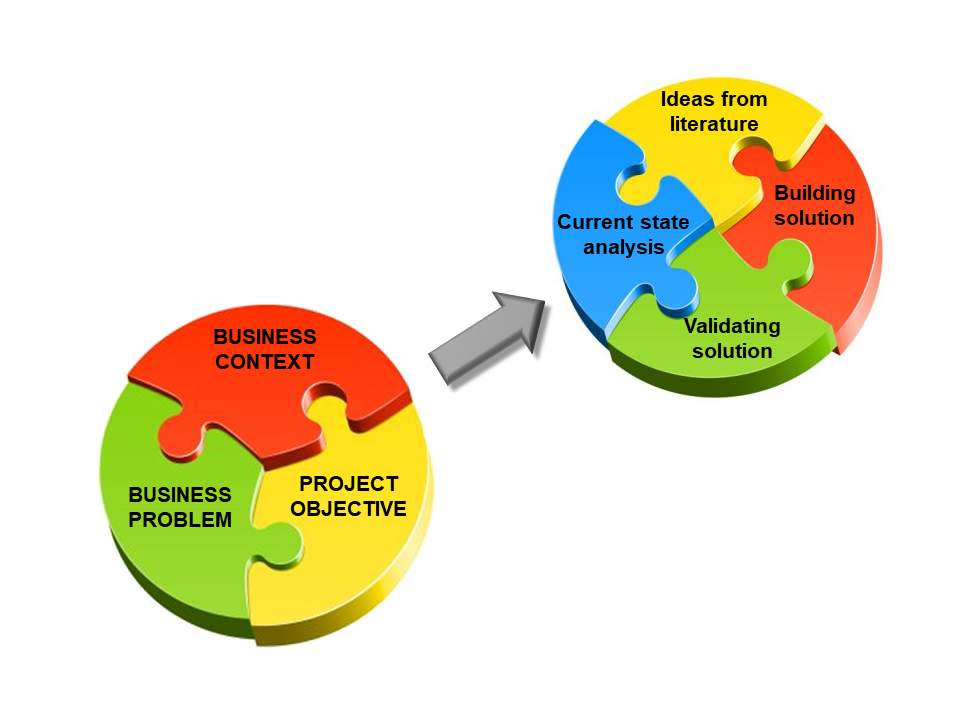
WHAT IS A GATE? As shown in Image 2, it is a preparation to allow the student to create one key component of the Master’s Thesis at a time, from Introduction to Conclusions. Each gate must be completed before moving on to the next Gate.
[caption id="attachment_4866" align="alignnone" width="620"] Image 2. Gate model (modified from Rohweder, 2020)[/caption]
As Image 2 depicts, each Gate consists of Faculty input and student output and needs to be passed before moving to the next Gate. Let’s take Gate 1 as an example:
Gate 1 faculty input is about Scoping the thesis project and thus the methodology class focuses on three key points: introducing the business context, identifying practical business problem and setting project objective.
The first Gate 1 student output is a simple presentation slide explaining the business context, thesis objective and expected outcome of their thesis project and presenting it in class with immediate feedback from both peers and IM team in order to finetune the logic.
The second Gate 1 student output is the Thesis Chapter 1 Introduction. It introduces the thesis topic to the reader from the perspective of the points mentioned above.
The Gate model proceeds in this fashion Gate by Gate until Gate 7, which completes the Thesis project. The 7 gates provide a blueprint for successfully producing and completing the different steps in the thesis process resulting in a quality outcome for all stakeholders, i.e. the student, the university and employer organization. The complete Gate model and how design research principles have been implemented to the Gate model will be explained in detail in text 2 of this series.
Students
At the very center of the IM degree program are the students representing a number of leading industrial companies such as Kone, Outotec, Vaisala, Fortum and ABB, to mention only a few. The students have on average 5-6 years of work experience and so they bring with them their professional expertise for the benefit of all program participants.
The students tend to quickly form quite a strong and active peer community of learners thanks to their varied competences and skills. Since the studies have been integrated into real-life, practical business projects from their employer organizations, the students are able to continue working while studying. In this sense, the nature of the IM Master’s program is quite exceptional, if compared for instance with Master’s programs in science universities where the IM Master’s students typically are 20 something students with no or very little industry expertise.
Faculty
On the faculty side, the three main instructors all have doctorate degrees and decades of work experience in expert and managerial positions in industrial organizations. The common, specialization and optional courses are taught individually by these instructors, whereas the Gate model Thesis instruction is organized around the concept of genuine integration of having all instructors in the IM team present in the classroom, including me as the language expert, with each instructor bringing their own expertise on the table.
Teaching and guidance
Tuition in the IM Master’s program is in English. In normal circumstances, the courses are heavily centered around contact teaching in the form of interactive lectures and class discussions, but due to the Covid-19 pandemic teaching has recently gone online. However, contact teaching will make a comeback the minute the recommendations for distance studies are removed as face-to-face contact teaching is the heart of the program. Other methods of studying include teamwork, class discussions, business simulations, self-study, workshops and seminars.
The soul of the program is the amount of face-to-face consultancy and guidance from faculty members which provides the students with numerous opportunities for receiving individual advice, development and help in their learning process. Instead of exams, the students are given practical assignments that are graded individually. For grading the thesis, the grading committee consisting of the IM team members utilizes a comprehensive set of evaluation criteria as shown in the PDF document behind this link.
Benefits in Nutshell
The objective of the program design that is continuously developed based on best practise has been all along to produce a truly integrated, inspiring entity that brings value to all stakeholders. The benefits (Rohweder, 2020) of this systematic program design for all stakeholders are significant including:
STUDENT
On-time graduation
Thesis quality
Business development concept ”for life”
INDUSTRY
Professionals with systematic evidence-based problem solving skills
METROPOLIA
On-time graduating students
Thesis quality
Positive student feedback
This here is obviously a win-win-win situation and the fruit of consistent and systematic development work.
This first text provided an overall view of the benefits of systematic program design in Metropolia Industrial Management Master’s Program. Text 2 of this 3-part series will continue from here in October by providing an in-depth look into the Gate model, the brains of the program. Text 3 will follow shortly after focusing on the specific benefits of the Writing Clinics providing one-on-one guidance and using IM Thesis template as a key tool.
References
Cooper, R. (2008) “The Stage-Gate Idea-to-Launch Process–Update, What’s New and NexGen Systems,” in Journal of Product Innovation Management, Volume 25, Number 3, May 2008, pp 213-232
Haimala, J. (2020). Industrial Management Studies 2020-21. Orientation Day slides. Metropolia University of Applied Sciences. Delivered 10 September, 2020.
Huhta, M. (2010). Language and Communication for Professional Purposes: Needs Analysis Methods in Industry and Business and their Yield to Stakeholders. Department of Industrial Engineering and Management. Helsinki University of Technology.
Kananen, J. (2013). Design research (applied action research) as thesis research: A practical guide for thesis research. Jyväskylä: Jyväskylän ammattikorkeakoulu
Rohweder, T. (2020) Gate 1 Teaching slides. Metropolia University of Applied Sciences. Delivered 18 September, 2020.
Saunders, M., Lewis, P. & Thornhill, A. (2016). Research methods for business students. 7th ed. Harlow: Pearson Education.








Kommentit
Ei kommentteja