
Tag: NFT
Forget the band shirt – new products for digital fandom

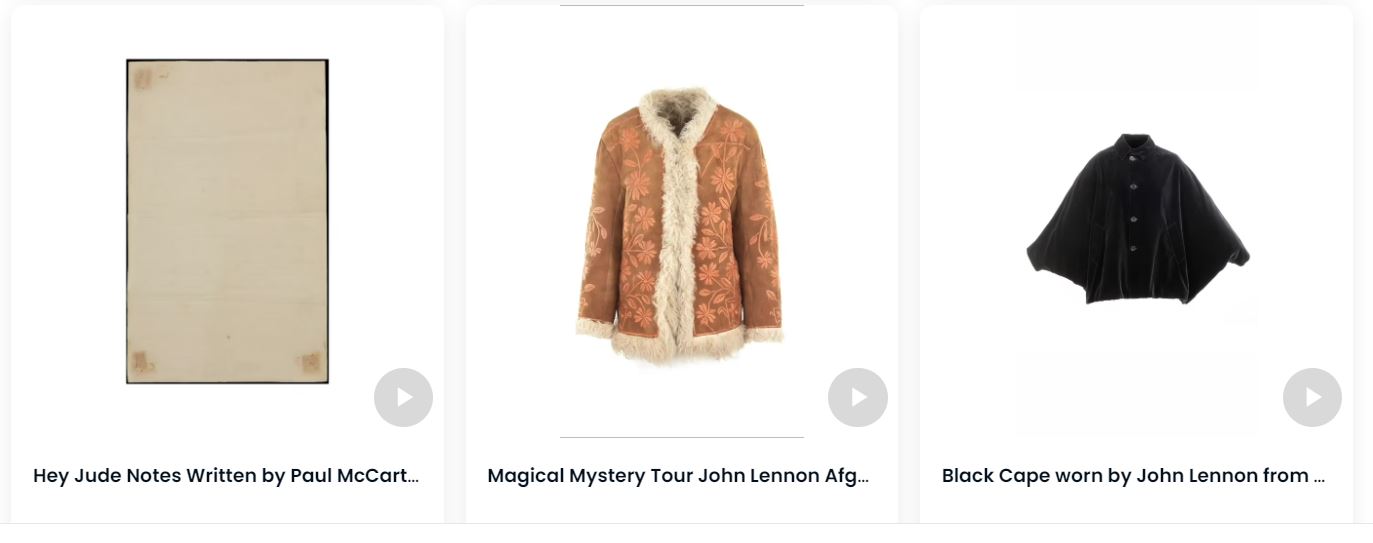
Traditional fan merchandise, such as shirts, posters and vinyl records, have been an important source of income for artists for decades. My teenage years were marked by experiences at gigs where I walked out as the proud new owner of a genuine band shirt, which my parents thought was a bit overpriced. Wearing it, I declared my fandom and that I was “there” at an important concert. When we jump to 2025, I may no longer have shirts in my closet. However, I want to support the band. Perhaps more and more people will buy fan merchandise as NFTs instead of shirts. In this blog, I will consider what NFT-based fan merchandise is like. What are NFT fan merchandise? NFT (Non-Fungible Token) is a unique digital product whose data is stored on a blockchain that serves as proof of ownership of the product. For example, a typical fan product, a poster, can be illustrated as follows: A poster is an image printed on paper. An NFT is like a digital original of that poster, but its authenticity and ownership are recorded on the blockchain. The blockchain is an open, decentralized ledger maintained by networks. The information stored on the blockchain tells you that the digital poster in question is an official edition from the collection of the band I admire and that my payment is going to the right party. NFTs can be digital art, music, or video footage, and can be bought, sold, and traded like physical collectibles. Sales often occur directly from artist to fan, without long chains of intermediaries. For example, American rap musician Snoop Dogg has made extensive use of NFT technology as part of his fan merchandise. He has released exclusive songs, digital artwork, and fan-owned products such as virtual merchandise in NFT format. He has also designed over 10,000 digital characters that make up The Doggies avatar collection (CNBCTV18, 2023). This creates a new, decentralized revenue stream for the artist without traditional intermediaries. When digital art meets ownership NFT technology has also transformed the digital art scene. For example, Australian 3D artist Andrew Price, founder of the popular YouTube channel Blender Guru, has used NFTs to sell his digital works directly to his fans. He became particularly famous for his NFT mosaic of 3D-modeled doughnuts (Lampel, 2024). The doughnuts were sold at auction without traditional intermediaries, and the sale brought the artist $18,000. Price’s case demonstrates how NFTs can serve as a means for artists to monetize their digital work and offer fans the opportunity to support their favorite artist by owning a unique digital piece. Compared to traditional commerce, the chain between artist and fan is typically much shorter – sometimes without intermediaries at all. Digital art is easily copied and shared, which has made its commercialization challenging. Crypto art utilizes NFT technology, which allows the origin and ownership of works to be verified. However, there are challenges in this field as well. For example, a person may sell an NFT to which they do not have the rights, or it may be a fake. Furthermore, ownership of an NFT is often only a link to the actual work, making ownership of the product dependent on the maintenance of the blockchain and the external storage service containing the work. (Rivero Moreno, 2024) Exclusivity and limited editions of NFT products NFT technology enables limited editions, which increases the value of products. For example, the number of NFT products aimed at fans has been limited to 500 pieces, allowing fans to compete to obtain them. This limited availability model has traditionally been used in vinyl releases and special editions, for example, but in the NFT world it is possible without physical production. Finnish fashion and virtual fashion designer Wilma Kurumaa, aka Kalista, is an interesting example of NFT fan products. Kalista has created NFT-based clothing. Fans can wear these clothes, for example, in the metaverse with their own avatars (Hero, 2025). This shows how NFT products can expand from mere images and audio recordings to interactive and usable digital products. Many NFT products contain both a physical and a digital component, i.e. are phygital. In this case, the NFT proves authenticity, ownership and ownership history - all of which are available for anyone to view on an open blockchain. The new market for phygital fan products T-shirts, pins and posters have been replaced by digital fan products with content that differs from what is customary. Artists can create fan products that are interactive and immersive experiences. NFT fan products can offer fans, for example, a personal digital artwork that includes the artist's signature, a unique animation or handwritten lyrics to a song. This adds value and uniqueness to NFT fan products, making them desirable collectibles. The content of phygital fan products has diversified with the development of digital technology. For example, Julien’s Auctions has sold phygital NFT products (i.e., NFTs that include a physical object and an NFT that proves ownership and origin) including Victoria Beckham’s evening gowns, Barack Obama’s golf shoes, and Leonard Cohen’s old front door key to his home on the Greek island of Hydra (Julien’s Auctions, 2025). Band shirts have moved on to a diverse, often unique world of fan products, where the NFT acts as a proof of authenticity and is a key part of the value of the fan product. Screenshots of the phygital products being sold at Julien's Auction NFT auction Fan shirt: a piece of the past or a future of fandom? NFT technology is still evolving, and there are many opportunities and risks surrounding it. Scams, challenges in understanding the technology, and market volatility can make it difficult for artists to transition to NFT fan products. However, when implemented well, NFTs can provide a more sustainable and fairer revenue model for artists who want to take advantage of the new opportunities offered by the technology (see Wolff, 2025). I'm still proud of my old band shirts. The stains on the prints are especially important. At the same time, the NFT world offers something I couldn't imagine before. It could mean access behind the scenes, exclusive experiences, or digital memories that can't be copied. Fandom isn't going away - it's just changing with the digital age. Or maybe my shirts are finding a new market where I could sell my old worn t-shirt as a phygital product to the highest bidder? SOURCES CNBCTV18.com (2023). 5 crypto and NFT projects that Snoop Dogg has been involved with. CNBTTV18 uutiset, 2.3.2023. https://www.cnbctv18.com/cryptocurrency/5-crypto-and-nft-projects-that-snoop-dogg-has-been-involved-with-16079141.htm Chalmers, D., Fisch, C. & Matthews, R. , Quinn, William & Recker, J. (2022). "Beyond the bubble: Will NFTs and digital proof of ownership empower creative industry entrepreneurs?," Journal of Business Venturing Insights, Elsevier, vol. 17(C). Hero, Laura-Maija (2025). Kalista ja muotiliiketoiminta web3 ajassa. Metropolia ammattikorkeakoulu, LUME-hankkeen blogi 15.1.2025. https://blogit.metropolia.fi/lume/2025/01/15/kalista-ja-muotiliiketoiminta-web3-ajassa/ Julien’s Auctions (2025). Lampel, J. (2024). What's New with Blender Guru ft. Andrew Price. CGcookie.com podcast 31.10.2024. Rivero Moreno, L. (2024). Art on the chain? On the possibilities of new media art preservation on the Web3. Digital Creativity, 35(3), 221-233. Wolff, M (2024). Web3: Huoli digitalisoitumisesta on ymmärrettävää. Metropolia ammattikorkeakoulu, LUME-hankkeen blogi 17.12.2024. https://blogit.metropolia.fi/lume/2024/12/17/web3-huoli-digitalisoitumisesta-on-ymmarrettavaa/ Katri Halonen (Metropolia AMK) toimii projektipäällikkönä Euroopan unionin osarahoittamassa LUME – Luovat web3-ajassa hankkeessa, jossa keskitytään luovan alan uusiin ansaintamalleihin.
Combine24: experiencing and making art
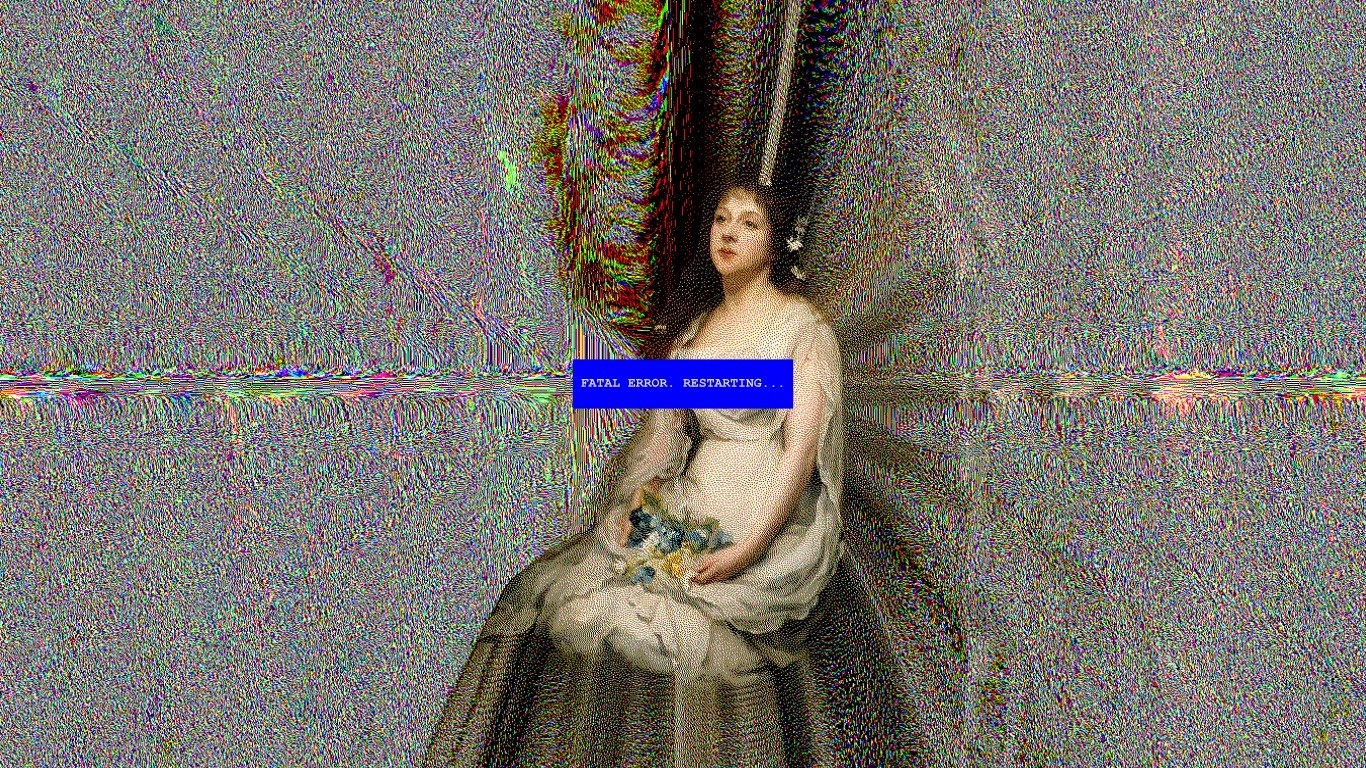
Traditionally, art has been based on physical materials and the skill with which they are handled. The role of the artist has been to create, illustrate and tell stories using paint, clay, stone or other concrete media. With digitalization, the form of art making has expanded, and the inclusion of artificial intelligence in the creative process raises the question (Salonen 2023): is a human an artistic actor, even though artificial intelligence is part of creative work? Art can even be produced by algorithms and technology, changing not only the way art is created but also the way it is experienced. The Combine24 competition organized by the National Gallery embodies this shift, where traditional and digital art meet in a new kind of creative process, an interaction between man and machine. The process of generative art English art critic and teacher Harold Osborne (1988) defines generative art as geometric abstraction in which a basic element, such as an artificial intelligence-based algorithm, creates new variations by changing the original initial parameter based on set rules. Unlike traditional art, where the work is static, generative art is constantly changing and real-time. Theorist Matt Pearson (2011) describes generative art as a process that combines logical and cold programming with creative, emotional expression. In this form of art, collaboration between humans and machines, or co-creation (Lundman, Nordström, 2023), opens up new possibilities for creation. At the heart of co-creation is the idea that creativity is not exclusively human-centered, but that machines can be part of the creative process, and this collaboration can expand the boundaries of human imagination. The National Gallery of Finland’s Combine24 competition exploits this concept of co-creation, where algorithms created by artists and artists together create new works, offering viewers the opportunity to participate in the creation, modification and ownership of the work. The competition focuses on generative art, which is more than a single work. The competition instructed artists to use the National Gallery’s historical art collections as raw material and create new art from them based on an algorithm, whereby the final result is generated randomly within the framework of programmed rules. Each result is a unique variant – just like each viewer experience. You may touch! One of the most interesting features of the Combine24 competition is the active role of the viewer. This involvement transforms the traditional passive art experience into an interactive and creative process in which the viewer is a participant. THL also sees the idea of participation expanding from mere presence, participation, to a way of active influence, participation, where people influence and are involved in decision-making (2024). This participatory model represents a broader trend in the cultural sector, where the audience is encouraged to be active actors, whereby creativity is no longer limited to art actors and professionals (Halonen, 2019). The Remix the Archive exhibition, which features the works of Combine24 finalists, is a physical space in Helsinki where visitors can modify the works displayed on screens with their own touch by pressing the Remix button. Viewers are no longer just passive observers, but co-creators of the work. This interactivity makes experiencing art a personal and participatory process, where the viewer can feel part of the creative process. The public also has the opportunity to influence and vote for one of the three winners, which adds more meaning and personality to the participation. Dialogue between art and technology Combine24 combines the National Gallery's historical collections with modern technology in a way that raises questions about authorship. The works are not simply based on the creations of past masters, but generative artworks create a whole new reality, where historical elements serve as the basis for modern algorithms. Here, traditional craftsmanship and technological innovation meet. The use of technology also changes the authorship of a work of art. Previously, the artist was solely responsible for the final work, but now the creative process is shared and interactive. The question that arises is: who is the true creator of the work? The programmer of the algorithm, the creator of the original work of art, or the viewer, who actively influences the final result, and without whom a certain variation would not even exist? By combining elements of past art and modern technology, Combine24 provokes reflection on how art is interpreted and who is responsible for the final result. NFTs and new revenue models for art The encounter between art and technology continues even after the art is created. The Combine24 works were built and published on the Highlight.xyz platform, which serves as the technological backbone of the competition in the creation, presentation and commercialization of art. With the platform's tools, artists can combine different data feeds, materials and libraries, such as the National Gallery's CC0-licensed collection data, and create unique works from them. Art lovers can create variations of works in real time and also purchase them as NFTs (Non-Fungible Tokens), offering a new way to own and monetize digital artworks. Traditionally, owning a work of art is associated with a physical object, but NFTs enable ownership of digital works using blockchain technology. The artist can decide their own revenue logic, for example by pricing each work separately, publishing a limited edition of works, or giving the works away for free to collect, in which case the artist can take advantage of Highlight’s protocol fees. NFT technology also enables artists to earn royalties from subsequent resales. This gives artists a continuous connection to their works and their commercial value, even after the work has already been sold. As part of the future of art Combine24 is a great way to start a conversation about how art from the past and technology from today can meet, create something new, and challenge old ways of thinking about human-machine collaboration. Algorithmic art and NFT technology open up new possibilities for both the creation and ownership of art, while giving the viewer an active role in the life cycle of an artwork. The entries in the competition demonstrate that art is not a passive experience, but an interactive and constantly changing process in which the viewer, artist and technology work together. Combine24 is a window into the art of the future – a world where algorithms and archives of the past merge to create a new kind of interactive, participatory art. More info on COMBINE24 https://combine24.alusta.art Combine24-kilpailun työt Highlight-alustalla Remix the Archive -näyttely The Remix the Archive exhibition will be held in Helsinki from 20 September to 26 October 2024 at Teollisuuskatu 9D in Vallila, opening hours Tuesday-Saturday 12-18. This exhibition offers the opportunity to experience and edit the works from the Combine24 competition and see how the past and the future can meet through art. https://www.hs.fi/menokone/events/140218 Sources Halonen, K. (2019). Nuorten osallistaminen on tunnetta ja toimintaa. Osuma-hanke blogi 9.1.2019. Metropolia Ammattikorkeakoulu. Lundman, R. & Nordström, P. (2023). Creative geographies in the age of AI. Transactions of the Institute of British Geographers: Volume 48, Issue 3. Osborne, H. (1988). The Oxford Companion to Twentieth-Century Art. Oxford University Press. Pearson, M. (2011). Generative Art: A Practical Guide Using Processing. Manning Publications Co. Salonen, P. (2023). Tekoäly rynnii taiteeseen. Taidelehti 3/23 THL. (2023). Osallisuus yhteisöissä ja vaikuttamisen prosesseissa. Terveyden ja hyvinvoinnin laitos. Marja Konttinen works as an expert in the LUME project, co-funded by the European Union, which focuses on the latest earning models in the creative industry.
NFT challenges the concert ticket business
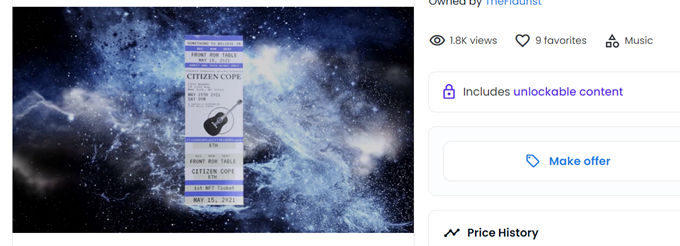
The ticket sales for pop rock band Coldplay's Helsinki gigs sparked a lot of discussion and even angry speeches in July 2023 (Partanen, 2023). The ticket sales used dynamic pricing, familiar from airplanes and hotels, in which the price changes according to demand. Dynamic pricing is one of the innovations in the field of performing arts ticket sales made possible by information technology and algorithms. The selling price of Coldplay tickets was not the only issue that sparked discussion. There were not enough concert tickets for everyone, so ticket resale began soon after the actual ticket sales ended. At the same time, concerns arose about the authenticity of the resold tickets, and those who had lost their tickets were warned about possible scammers (Linnake, 2023). Ticket sales seem to be changing, but dynamic pricing may just be the beginning of the next era. A much bigger change is just around the corner: NFT ticket sales. In the world of NFTs, a ticket to a Coldplay concert could have been a numbered NFT ticket purchased directly from an online store, with ownership transferred to the buyer upon purchase. Anyone could verify the authenticity of the ticket on the blockchain by looking at the ticket's history. An NFT ticket would have saved Coldplay fans many moments of excitement and frustration. In this blog, we explore how ticket sales can benefit from blockchain and NFTs. Anatomy of an NFT Ticket The special feature of an NFT ticket is related to the blockchain. The ticket is created by, for example, making a unique ticket identified by a number, which is recorded in a decentralized blockchain. The ticket can be sold, for example, on an online platform, and when making a purchase decision, the buyer can check the authenticity of the ticket by looking at the ticket's history on the blockchain. A ticket can be published as “nontransferable”, meaning it cannot be transferred to a new owner on the blockchain. It is also possible that the transfer is allowed under certain conditions. The original ticket holder can set additional conditions on the NFT ticket for resale. The conditions can include, for example, a royalty to be earned by the original holder on the resold ticket or a maximum allowed price. The information travels with the NFT on the blockchain and thus regulates the potential secondary market for the ticket. (Langston, 2023; Singh, 2023; Tan, 2023; Takyar.) In Metaverse, for example, in connection with concerts, “meet and greet” events are sometimes sold, where ticket holders get to meet the artist they admire in a virtual backroom. These limited VIP tickets are put on the market in a very limited number. The value of the ticket is often sought through an auction mechanism, where the ticket price is set according to supply and demand. If the ticket holder decides to sell the ticket, the original ticket holder also receives a share of the increased ticket sales price in their own virtual wallet. At the same time, the new buyer can always peek at the ticket history on the blockchain and thus ensure that it is not a pirated ticket. From paper ticket to QR code - what about collectibles? Paper concert tickets have their own loyal following. They also come with risks: getting lost, getting damaged in the rain or other misfortune can result in the entire ticket being lost. There is also a lot of counterfeiting of paper tickets. This has been addressed by QR code-based tickets sent to smartphones. The problem with QR codes is that it is difficult for the buyer to know for sure whether they have bought a genuine ticket, or whether they will be disappointed if the ticket turns out to be counterfeit (Takyar). An NFT-based ticket is more difficult to counterfeit. Each ticket is its own NFT managed on the blockchain (Langston, 2023; Singh, 2023; Tan, 2023). It is a unique product that directly contains information about which concert and which seat the ticket entitles its owner to. The ticket owner can show their NFT ticket upon entering the concert venue, and it can be scanned as a QR code or directly as a blockchain link to verify authenticity. Paper concert tickets can be valuable mementos and even collectibles. It is therefore reasonable to ask how the role of a ticket changes if its essence is a QR code that flashes on a smartphone. An NFT ticket can also be a valuable collectible, like a paper ticket, which can offer, in addition to admission, for example, music, an interview with the artist about an upcoming performance, or images of interest to fans. The content is only available in conjunction with the ticket, so exclusive content can increase the commemorative and collectible value of the ticket (Singh, 2023). An NFT ticket can also include products that are available for a limited time, such as a digital tour shirt to wear as an avatar during a concert and a physical version of the same shirt to be sent by mail. The ticket can therefore provide access to various additional services and products. Ticket services already exist There are already several commercial NFT ticket services available. They are distinguished from each other mainly by the different functionalities of the sales platforms, the blockchain used, the NFT standard used and the type of tickets. In addition to tickets, sales platforms can also have a significant number of other digital products related to the artist. For example, Dutch company GUTS tickets offers a blockchain-based ticket management service using the GET protocol it developed. During its existence, the company has sold over 4.2 million tickets for over 19,000 events (NFT ticket explorer 2.8.2023), and each ticket can be viewed on the blockchain. This creates a huge amount of data that can help concert organizers in data-driven potential assessment of ticket prices, sales times and concert occupancy rates. YellowHeart combines community participation with its tickets. Community members only get to see content targeted at them. They can also participate in, for example, ticket pre-sales and private events organized only for club members in the metaverse. The ticket therefore functions as a kind of web3 version of a fan club, uniting fans into a community, the activities of which are activated in YellowHeart's own metaverse, among other things. A somewhat similar club mentality has also been implemented in the field of music festivals, with the participation opportunity for Coachella integrated into the Fortnite game, which included lifetime access to ten auctioned NFT tickets (Disalvo, 2022; Langston, 2023). However, the ticket lost its value after the collapse of the FR cryptocurrency exchange operating in the Bahamas (Disalvo, 2022). The crypto world is still quite poorly regulated, and it has clear risks for users. Many things can go mainstream even with a single event. For example, the UEFA Champions League match between Real Madrid and Liverpool was delayed due to ticket counterfeiting. Police had to use tear gas to restore order (Polden, 2022). Michel Cadot, the French government’s Olympic ambassador, even proposed the introduction of blockchain tickets for the 2024 Paris Olympics. This could well be a step towards the normalization of NFT tickets for the event industry. Let's return to the Coldplay concert ticket dilemma mentioned at the beginning of this blog. The leap into the crypto world may seem complicated from a consumer's perspective. Ticket shops have indeed paid a lot of attention to user interfaces. One key step forward for consumers is, for example, the cryptocurrency eEuro, which is directly comparable to the euro. For the future, it is essential to ensure that shopping is also easy and risk-free for consumers in web3 environments. LÄHTEET Adele (2022). Paris 2024 Olympics May Introduce NFT Tickets. NFTevening news 14.6.2022. Disalvo, T. (2022). Coachella’s lifetime pass NFTs made unavailable due to FTX cryptocurrency crash. NME Music News 21.11.2022. Langston, T. (2023). NFT Tickets Are the Future of Live Events. Here’s Why. NFT now 30.3.2023. Linnake, T. (2023). Coldplayn loppuunmyydyt keikat synnyttivät ikävän ilmiön – näin Lippu.fi kommentoi. Iltasanomat 1.8.2023. Partanen, T. (2023). Coldplayn konserttien ennakkomyynnistä tuli uskomaton ryntäys – näin valtava ihmismassa yritti saada lippuja. Iltasanomat 25.7.2023. Polden, J. (2022). UEFA blame "fake tickets" for Champions League chaos as Liverpool demand investigation. Mirror sport news 29.5.2022. Singh, O. (2023). What is NFT ticketing and how does it work? Cointelegraph 14.2.2023. Tan, C. (2023). Seatlab NFT CEO Ryan Kenny Discusses How NFTs are Disrupting the Ticketing Industry. Metaverse post 23.3.2023. Takyar, A. (nn). Ticketing disrupt the ticketing industry? LeewayHertz blogit. KIRJOITTAJA Krista Jäntti on EventuallyXR-yrityksen perustaja ja toimitusjohtaja. Hänen erikoisosaamisalueenaan on metaversumiin ja tekoälyyn liittyvien uusien liiketoimintapalvelujen konseptoiminen sekä käyttäjäkokemusten suunnittelu ja tutkiminen. Krista on toiminut neuvonantajana lukuisissa suomalaisissa yrityksissä, kuten Varjo, Zoan, KONE, Sulava, LähiTapiola ja Nokia. Katri Halonen (Metropolian amk) toimii projektipäällikkönä Euroopan unionin osarahoittamasa LUME-hankkeessa, joka paikantaa web3:n mukana tulevia muutoksia luovien alojen ansaintaan.
NFT as an additional source of income for music creators
The music industry is talking about blockchain technology as one of the growth directions in the industry. Could it also offer opportunities for music creators to earn additional income? This blog will consider what the process of entering the NFT market is like from the perspective of a musician building their career. The background is a practical experiment reported in Aili Tervonen's (2022) thesis. Blockchain technology is seen as a solution to the mechanisms that have long plagued the music industry, where currently only about 12% of the industry's turnover is generated for music creators (Bazinet et al., 2018). The remaining part is processed by the so-called intermediary layer, which makes the content available to fans. The value chain includes, for example, those who provide publishing, recording, agency and management services. Some industry players see blockchain as a way to take control of creative work back to its creator. There has been talk, among other things, of “IP rights decentralization” (Jalonen, 2022), which refers to the decentralization of the management of intellectual property rights. Decentralized rights management could resolve the perceived imbalance between wide distribution and fair compensation. For others, blockchain appears as a challenger that forces a reassessment of the already established business models of the music industry, in which the management and exploitation of copyright have been key. Recently, there has been an active discussion about blockchain-based non-fungible tokens (NFTs), which are at the heart of new content ownership. NFTs have also been considered as a source of income generation for young musicians operating outside of multinational corporations (Langston, 2022). From recording sales to increasingly diverse content A music NFT is typically a song, album, lyrics, or music video stored on the blockchain. It can also be, for example, a composition created by a generative computer program that algorithmically visualizes the work using random patterns, colors, sounds, and/or shapes (Langston, 2022). A music NFT can also be a concert ticket or an album cover. NFTs also help to build a new kind of culture in the music industry. NFTs can be, for example, collector's cards aimed at fans, pictures of the artist, versions of different stages of the creation of a song, or almost anything related to the artist that has value to fans. According to Sitra's definition, an NFT is a digital file management certificate. The transfer history of the digital file management is recorded using blockchain technology. Some of these digital management certificates (NFTs) sold on NFT marketplaces do not contain any rights recognized in legislation. According to Sitra, this is because the legal status of NFTs is still unclear. (Sitra 2023.) A young music creator quickly encounters a number of seemingly challenging choices that have a strong to binding impact on the future and profitability of the product or service in question. A key choice is the type of content exported as an NFT: A 1/1 NFT is a single, unique product. It is completely exclusive. The analogy is often used with paintings in our physical environment, of which there is only one original. With an open edition, an NFT can be made in unlimited quantities, for example to commemorate participation in an event organized in the metaverse. However, that edition is usually only made for a certain period of time, after which it is no longer available. With a limited edition, a certain number of individual NFTs are made. Many collections consist of editions of 10,000 pieces, for example. There are advantages and disadvantages to different release models. A single 1/1 NFT is a unique collector's item. The Mona Lisa is often used as an example: there is only one genuine copy, which has a high price. Open editions can be used to celebrate a specific moment, for example, and are collector's items available only to participants. A limited edition serves, for example, as a pre-sale of tickets. Blockchain brings added value to music NFT trading In the music industry, the added value of blockchain lies in its various means of exchange and the uniqueness of the NFT token. Only one person can own a single NFT, and all purchase and sale transactions related to that token are recorded in a “ledger” maintained by the blockchain. For example, the path of each NFT is openly visible to everyone, and the NFT acts as a proof of authenticity. For example, a fan buying an NFT concert ticket can check the authenticity of the NFT on the blockchain before making a purchase decision. If they sell the ticket on, the new buyer can also see the chain of ticket owners and can check the authenticity against the ticket history recorded on the blockchain. The restrictions and rights related to the use of NFTs are managed by smart contracts that follow the individual NFT in question with every transaction. For example, during the creation phase, it is decided what share the creators will take as royalties if the NFT is resold. This way, the original creator will receive passive income and benefit from, for example, the increase in the value of the NFT. In the music industry, the increase can be really large, because for some artists the future can bring widespread global success. For this reason, Tervonen (2022) wonders whether in the future one of the motives for a budding artist to buy NFTs could be investment instead of fandom. Creatives often find pricing difficult. One solution to this challenge on the blockchain is to use auctions. This allows NFTs, such as a VIP add-on service built around a concert, to be sold in limited editions at the best price at the time. By utilizing the pre-sale mechanism, fans can invest in an artist of their choice, for example by financing the production of an album in advance. As a reward, they can receive their own NFT for a limited edition of the new album. In India, a FanTiger service aimed at the music industry has been launched, which gives independent artists a route to open their future projects to their fans for crowdfunding. Fans can support the launch of new music by pre-purchasing an NFT album from a selection that currently includes quite a few Indian music genres. At the same time, fans can be critically important marketing messengers when taking new content to the social platforms and communities of their networks (Nahar, 2022). NFTs and cryptocurrencies are also of interest to criminals The NFT market has rapidly become a new area of activity in the music industry. Regulation is still quite incomplete, and there are many question marks surrounding NFT trading. Issues that need to be resolved include the security of smart contracts, legally valid ownership, and the regulation and taxation of virtual currencies (Lindgren et al., 2023). Blockchain technology can also be misused. Last year, the NFT marketplace Cent suspended most of its trading due to abuse. The platform sold certificates of ownership for content that was not the property of the person who uploaded the NFT to the platform. Market manipulation also occurs. For example, creators of works have bought their own works to make the demand for them appear greater than it actually is (Närhi 2022). In the NFT environment, money moves through virtual currency wallets. The buyer sees the virtual wallet address on the blockchain, but the buyer remains anonymous. This makes it difficult, for example, to detect money launderers. Before diving in, look into these things Tervonen's (2022, see also Table 1) work carefully reports the steps that a musician needs to take to adopt the NFT world. It also describes the kind of expertise that each step requires. StepRequired skillsCreate a virtual currency account and acquire currencyVirtual currency advice: how to open a wallet, how to buy virtual currencies, how to connect a wallet to an NFT marketplace, how virtual currency value is created, what virtual currency alternatives exist and what risks are associated with the currency you are considering acquiring.Creating an NFT workSupport service for brainstorming NFT works to create an idea of what could be sold. Criteria for choosing a platform for selling an NFT work, technical requirements of the platform, the most important choices made on the platform regarding NFT usage rights, and the technical process of publishing.Selling an NFT workSupport services for marketplace practices, marketing planning utilizing existing channels to direct fans to the NFT platform, also support for fans to make NFT purchases (they need to learn how to use virtual currencies and understand how NFT marketplaces work). Table 1. Based on Tervonen, 2022, p.51 From a musician's perspective, NFTs may offer interesting new ways to interact economically with fans. The transition of physical fans to a virtual environment currently requires a considerable amount of expertise from fans. They must have sufficient understanding of virtual currencies, the functioning of DAOs, NFT products, and various marketplaces offering music NFTs. It is of paramount importance to identify whether each artist's fans can be reached through this. NFTs are currently still a series of development projects and directions. However, it already seems quite clear that at least some of them have found their place alongside Web2 environments. When the news talks about NFTs and music, it usually involves big money: 3LAU made $11.7 million in a 3-day auction for their new album (Brown. 2021) and Whitney Houston’s previously unreleased demo recording made when she was 17 sold for $1 million (Legaspi, 2021). In reality, audiences of millions are limited to global stars. It is likely that it will be at least as difficult for a new music creator and performer to find an audience through music NFTs as it is in a traditional physical environment. About the writer Musiikkipedagogi YAMK -tutkinnosta valmistunut Aili Tervonen on toiminut musiikkialalla aiemmin freelancer-pianistina ja opettajana, mutta päätynyt sittemmin työskentelemään opetus- ja kulttuuriministeriöön. Valtiolla työskentely on saanut Tervosen pohtimaan musiikkialan asemaa yhteiskunnassamme. Musiikkialan tulisi pystyä parantamaan muusikoiden työmarkkina-asemaa, kehittämään alaa eteenpäin sekä moninaistaa alan ansaintalogiikoita. Tämän vuoksi Tervonen päätyi tutkimaan YAMK-tutkinnossaan NFT-teoksia ja virtuaalivaluuttoja. Lue lisää: https://www.theseus.fi/bitstream/handle/10024/751689/tervonen_aili.pdf?sequence=2 Lähteet Bazinet, J.B., Singlehurst, T.A., May, M., Suva, J., Ezawa, K., Yap, A. (2018). Putting the Band Back Together. Remastering the World of Music. Citi GPS: Global Perspectives & Solutions. Brown, A. (2021). Largest NFT Sale Ever Came From A Business School Dropout Turned Star DJ. Forbes 3.3.2021. Jalonen, J. (2022). Musiikkialan kasvustrategia. Tilannekuva-raportti, 04/2022. Music Finland Ry. Johansson, P., Eerola, M., Innanen, A. & Viitala, J. (2019). Lohkoketju: Tiekartta päättäjille. Alma Talent. Langston, T. (2022). The Music NFT Bible: A Guide to the Future of Sound. NFT now guides 22.9.2022. Legaspi, A. (2021). Whitney Houston Unreleased Demo Sells for $1 Million at NFT Auction. Full-length track was recorded when singer was 17. Rollingstone 15.12.2021. Lindgren, J., Lindholm, O., Lehtonen, K., Mustikainen, H. & Niikkonen, P. (2023). 6+1 suositusta Suomelle. Miten sääntelyllä voidaan parantaa web 3.0 -liiketoiminnan edellytyksiä? Sitran selvityksiä 229. Muikku, J. (2021). Pelastaako NFT musiikkibisneksen? Musiikkikustantajat MPA Finland blogi 18.3.2021. Nahar, P. (2022). FanTiger crosses 50k transactions, enters list of top five NFT projects globally. ETMarkets.com 28.11.2022. Tervonen, A. (2022). Muuttuva musiikkimaailma: NFT-teknologiasta uusia ansaintamalleja muusikoille? Musiikkipedagogi YAMK opinnäytetyö. Metropolia Ammattikorkeakoulu.

Tämän blogin kirjoituksia ja toimitustyötä on tuettu vuoden 2023 loppuun asti Euroopan unionin sosiaalirahaston Luovat metaversumissa esiselvityksen osarahoituksen avulla ja vuoden 2024 alusta Euroopan unionin sosiaalirahaston osarahoittaman LUME – luovat web3-ajassa -hankkeen avulla.
Tässä blogissa käydään ammattilaiskeskustelua web3 kehittymisen myötä avautuvista uusista toiminta- ja ansaintamahdollisuuksista sekä ajankohtaisista ilmiöistä. Blogissa julkaistaan asiantuntijatekstejä, haastatteluja ja kantaa ottavia tekstejä, videoita, podcasteja tai niiden yhdistelmiä. Kirjoittajat ovat Metropolian ja sen yhteistyöorganisaatioiden asiantuntijoita. Haluatko julkaista Luovat web3 ajassa -blogissa? Ota yhteys päätoimittajaan sähköpostitse.
– Katri Halonen (päätoimittaja), yliopettaja, Metropolia Ammattikorkeakoulu, katri.halonen@metropolia.fi, p. 050 362 6407
– Leena Björkqvist, lehtori, Metropolia Ammattikorkeakoulu
– Jyrki Simovaara, lehtori, Humanistinen ammattikorkeakoulu
– Mayreth Wolff, lehtori Humanistinen ammattikorkeakoulu
Sähköpostiosoitteet: etunimi.sukunimi@metropolia.fi
Toimituskunta toimittaa Luovat web3 ajassa -blogin sisällöt ennen julkaisua.
Haluatko julkaista Luovat web3 ajassa -blogissa? Lue oheiset ohjeet (pdf) ja ota yhteys päätoimittajaan sähköpostitse.
Termipankki on tehty navigointiohjeeksi Metaversumiin.



AI ansaintalogiikka bitcoin Coldplay DAO Digital heritage digitalisaatio esineiden internet ESR osarahoitus fani fanit ikäpolvet inkluusio IoMusT IoT johtaja kesä2025 konsertti krypto kulttuurituotanto lippu lohkoketju luovat alat metaverse Metaversumi musiikki NFT satoshi sijoittaminen sustainability tasa-arvo tekoäly tokeni web3 Web3.0 yhteisöllisyys älysopimus