Avainsana: Metropolia UAS
Turning Public Services to Digital
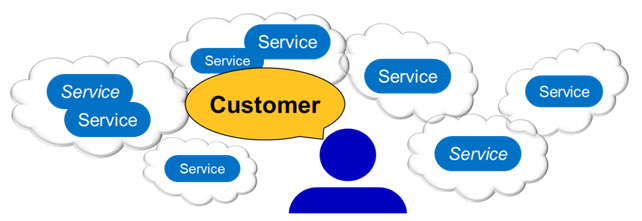
Master´s thesis “Total Portfolio for Public Services” (1) introduces the way to prepare existing public services for the digital era. Citizens and their life events can trigger new demand for digital public services, but introducing or improving digital services will require tectonic changes in the current service base. How does the current service base look like in public organizations? Most public organizations struggle with a myriad of independent services. Services and customer insights are scattered in disparate offices or entities; and so are the corresponding digital assets. This disparity makes the change towards a smooth digital experience hard and financially challenging to execute. As a result, customers often have to find and select their public services from bits and pieces of a fragmented, incoherent mass of services. Yet, citizens of today expect the same smooth experience from all services they consume – either digital of physical, public or private, automated or manual. What primarily matters for them is that the service gets its job done as expected, and when expected. It also matters that the customers can find the service easily. The cool “wow!” effect happens when the citizen gets the service available even before he or she realizes the need for it. And it is only after such a happy discovery that he or she starts inquiring how much the service can cost, and how the cost is charged i.e. through taxes, through insurance, or out of the pocket. If the cost is right, the citizen chooses the best option and enjoys the experience. Definitely, it is much nicer to pay a few dozens of euro for a childbirth, instead of 10 000 Euro or more, depending on potential complications. This angle is one of the strongpoints for consuming public services. They tend to be affordable and predictable without unexpected extra bills. Public service quality also tends to be high, as there is a lot of public attention, monitoring, and quality checks. In addition, public services are found in public offices, which makes them easy to spot. Private services must struggle much more for being noticed. In addition, many public services have traditionally been incumbent without much of a competition. All these factors make the current service base look very attractive and promising. But is it for long? Not only “what” but also “when” and “how easy” Digitalization changes this natural attractiveness of public services. A much wider, “heavier” public service base faces unprecedented direct rivalry and a threat of substitution from the private side in the ways that were not possible in pre-digital era (2, 3). Hence, today it is not enough to concentrate on the traditional strongpoints of public services (affordability, quality, wide coverage). These services must meet the customer needs better. Let´s start with “when”. In essence, public services consumption happens in certain life situations. When a child is born, certain childcare services are triggered. As the child grows, new service needs come to the picture, and they form a web of service needs. Imagine if those life situations could be identified and analyzed so well that the citizens could be offered the right services proactively. This is why Stiglitz-Fitoussi-Sen commission modeled the typical citizen´s core needs for the European Union in 2009 (4). Since then, for example, Finland and Estonia have established their Artificial Intelligence programs pursuing this capability to identify citizens’ life-events for focusing public services better (5, 6, 7). In other words, the providers of public services look ahead and have a clear vision how to be more proactive. So, after building such visions, why there is still a problem with “how easy” the public services can be? Unfortunately, this problem exists, and it is both managerial and technical. It originates from the fact that few public services are islands of their own, and they are not really restricted to certain service areas or tools either. Yet, the operational models of local governments have divisional silos which separate public services into the urban environment, cultural, education, social and health services. This dilemma makes an obstacle for triggering a change in public services into easy and proactive digital services, as envisaged above. What to do? My Master´s thesis (1) addresses these issues and proposes an approach to handling them through constructing a business operational concept named the ´Business Wheel´. The ´wheel´ first describes the related business dynamics and then suggests a Portfolio Management setup and the necessary organization around those portfolios. The key pivotal portfolio for a municipality is a Service Portfolio because local governments run hundreds of services. If they are run disparately, without clear service structures, it becomes almost impossible to match those hundreds of existing services with the citizen’s life situations in the way envisaged above. This is why the thesis recommends that local governments should consider the Service Portfolio and the customer life events first. Addressing both areas will directly lead to a need for fundamental transformation towards digital services, but there is also agility required in adapting strategic targeting. The success will depend on the ability to continuously assess the environment and effectively steer the execution. However, to capture the value, just steering and targeting is not enough. New and improved public services will be needed, which requires a substantial amount of innovation. All these parts of the ´Business Wheel´ and Service Portfolio practices should contribute to constructing a managerial ecosystem and prepare public services for a turnaround based on life-events triggered services. About the author Ilkka Kautto works as a directing chief specialist, ICT development in the City of Helsinki. He has over twenty years of experience in innovating and developing new digital solutions and related organizational capabilities in international technology cluster and public organizations. References Kautto, I. (2020). Total Portfolio for Public Services: How to Prepare Existing Public Services for a Turnaround to a Life-events Triggered Proactive Ecosystem. [Master´s Thesis]. Helsinki, Metropolia university of Applied Sciences. Christensen, C. et al. (2016). Competing Against Luck: The Story of Innovation and Customer Choice. 1st edition. New York, NY: HarperBusiness. Ulwick, A. (2017). Jobs-to-be-done for Government. April 19 2017. [online] [Accessed 2 March 2020]. Stiglitz, J. E. and Sen, A. and Fitoussi, J-P. (2009). Report by the commission on the measurement of economic performance and social progress. [PDF] [Accessed: 10 June 2020]. Sikkut, S. and Velsberg, O. and Vaher, C. (2020). #Kratt AI: The next stage of digital public services in #eEstonia. Republic of Estonia, GCIO Office. [PDF] [Accessed 25 February 2020]. Maunula, A. (2019). Julkisen sektorin digimenestyjät 2020, Suomi. [online] BearingPoint. [Accessed 19.1.2020]. Ministry of Finance (2020). The AuroraAI national artificial intelligence program begins – with the aim of using artificial intelligence to bring people and services together in a better way. [online] [Accessed: 10 February 2020].
Establishing Global Transportation and Logistics for a Leading Finnish Company

I remember myself some 3-4 years ago. I had a struggle in deciding if I could go and study in Helsinki for a Master’s degree, or is it totally out of question for me, as I lived in Rauma at that time. I decided to take this crazy step and travelled twice a week to Helsinki along with a full-time job. I became a student in Master’s program in Logistics Management. My studies were very interesting and fulfilling, but I could not get rid of my worries at work. My job challenge was to gain real benefit for the company by introducing common transportation and logistics services (by air and ocean) throughout a big corporation operating globally. This was a big and real challenge. Fortunately, I was able to concentrate on this problem in my Master’s thesis project. I researched the current state of logistics in business units, and revised the existing approach with the help of my colleagues and thesis instructors. These efforts helped to take a new perspective and look at the old and familiar problem with new eyes. The key suggestion for the company was to strengthen the global logistics by managing it through an effective steering global logistics group. This group should be connected by well-working communication between the responsible persons in business units. The next step was to investigate, collect and prioritize the needs and wishes of the business units, as well as to investigate their experiences with current logistics. Based on this information, and with the help of the members of the steering group, to establish a list if KPIs for the corporate logistics provider, that would address their needs, and conscientiously select the best out of the desirable providers. Only after it could be possible to introduce corporate contacts for transportation and logistics. The key finding was, that launching contracts with a global transportation and logistics providers alone is absolutely not enough. The critical issues are: (a) to involve the business units in constructive cooperation by identifying and following mutual interests and gains, and (b) to closely follow the implementation by monitoring a carefully selected list of KPIs that would reflect the real needs of business units. In short, to establish the needs, to identify mutual interests, and to closely follow the performance. This was an interesting and challenging job. I learned a lot while working for Metso and Valmet where all types of logistics were well-organized and extensively used, and my experience there was diverse. Half a year ago I got the position in Cargotec where I have been leading Logistics for the Cargotec group. The company has over 10 factories where equipment is produced in such countries as US, Poland, Malaysia, and China. On the other hand, spare parts warehouses are located, for example in France, and multiple other countries. All of these places need to be connected with well-working logistics. This is a challenge and a big gain for the company. Interestingly, this is also a continuation of my thesis topic, but growing in size and scale. After the first implementation, it will make another round of testing myself, the selected approach, and the new steering logistics group that will play a key role in these developments. I am looking forward to the future, to effective cooperation and enthusiastic and experienced colleagues, and to find good solutions together. The next immediate steps include defining the global logistics strategy for the next three years, hearing everyone, exploring the current ways, finding mutual gains, prioritizing and deciding together, and following implementations effectively. In addition, I want to thank my work colleagues, my fellow students, and Metropolia instructors from my previous studies. I use all my lecture notes and my thesis results from Metropolia still today. They have been absolutely helpful. Even though I graduated two years ago, I still remember your contribution to get us to graduate in time. It was really worth of travelling 67 times between Rauma and Helsinki, nearly 35 000 kilometers in total, between September and May 2016 by Onnibus. I am now living in Turku, where we moved from Rauma, and almost every week I am in Helsinki, Ruoholahti, passing by Metropolia. My many thanks to you all, from Pasi Kurkinen, the "long distance man". Pasi Kurkinen Pasi Kurkinen, Master of Engineering in Logistics Management (2016) lives in Turku and works for Cargotec Corporation as a Global category manager for logistics. He moved to this position half a year ago, after working with global logistics in Metso and Valmet. Two years ago Kurkinen also completed his Master’s thesis project in Metropolia UAS on his key challenge at work – how to implement unified logistics contacts in a global company, and how to commit business units to change from individual to corporate transportation and logistics. Kuvalähde: paulbr75, Pixabay.com, CC0.
Helping Sustainability: Consumer’s Influence Can Reach till the End of Supply Chain
By Sabari R. Prasanna and Zinaida Grabovskaia Metropolia’s part-time lecturer Sabari R. Prasanna, who teaches Business students on supply chains, visited Master’s program in Industrial Management and raised awareness of social and environmental issues in supply chains. It was an important visit that created discussion on sustainability issues across the whole supply chain with supply chain managers and professional purchasers. Master’s students of Industrial Management program are full-time professionals who are involved in decision-making and selecting suppliers on a daily basis. As sustainability becomes an ever more important issue for businesses, students were interested to discuss the ways how sustainability can be increased thought the efforts of both, responsible business and responsible consumers (Prasanna, 2015). What is sustainability and what it means for companies? A change to sustainable ways of doing business is a welcoming change, actively supported by legislation in many types of business sectors. Companies themselves also use sustainability as a competitive advantage. Energy companies, for example, use environmental benefits of alternative energy as an argument for being more attractive than, for example, fuel-based energy. Railways argue that they are more sustainable than road transportation since they create much less environmental pressures, and so on. Yet, companies still have to ‘sell’ this expensive change of becoming more sustainable to their shareholders. The old logic of ‘increase revenues – decrease costs’ is still very much prevalent in many businesses. Such businesses often argue for ‘reducing pollution by 10%’ rather than asking themselves How can we stop polluting? This logic of small steps is very much ingrained in public opinions as well, promoted by lobbyist and some politicians. In practice, to become more sustainable, companies need first to convince their shareholders that such a change is needed. Further on this road, the idea of running sustainable business practices should also win over priorities of financial profits (Epstein & Roy, 2001). As a result, the companies that wish to become more socially responsible, environmentally friendly and overall more sustainable, still need to make a lot of efforts to promote sustainability to their own shareholders. However, the stakeholders in doing business sustainably create a much wider community than the shareholders of any company. In case of an environmental disaster, or a human right violation, it is a much wider community that is affected, not just the immediate shareholders of a business. Thus, to influence shareholders, it is necessity to make first of all the stakeholders (i.e. a wider community) more interested in sustainability. This is a very powerful group that votes with their money, and can simply boycott an ugly business by refusing to buy from them. Nowadays, there are many examples of such consumer voice. As consumers, we have a huge power. However, what we know as consumers is yet very little, and – regrettably - there is often little interest in sustainability. As a result, consumers may not know that there are sometimes ugly things happening at the front end of the supply chain. There is a shocking example of cocoa firms kidnapping children to work as forced child labor in Ivory Cost. There is a film in Youtube about it. We all consume chocolate, but few know how cocoa suppliers commit horrible crimes in pursuit of reducing costs. Another example is production of palm oil that has led to massive deforestation in Malaysia and Indonesia, leading to rapid reduction in the Orangutans population due to disappearing rain forests. These are examples of violations done in pursuit of increasing shareholders value by lowering costs, and show what may happen, if no constrains are put to such practices. Here, legislators can lead the change by demanding the companies to become accountable for sustainability (as done, for example, in Sweden). With support from legislators, the new way for a business to look at sustainability is from the perspective of the triple bottom line (TBL) – stressing social, economic, and environmental elements. It means that not just profits, sales and products should be important, but also wider values beyond that - social and environmental perspectives, as well as wider economic and human rights issues. Still, there are many questions around sustainability, and managers are often confused - is there a moral mandate to practice sustainable ways of doing business? Who will pay for it? Is there any business opportunity in sustainability? Sabari believes that this last question is the most important one. If a business can create value from sustainability, then it raises sustainability to a totally different level of interest from business and stimulates innovating sustainable practices. To support responsible business on this way, there exist many encouraging examples from forerunning companies (such as Fazer Group). There are also examples of change in conceptual understanding of running business sustainably by big names in business science (such as Prof. Philip Kotler). Kotler was the father of the famous ‘4Ps’ – a marketing mix that drives profitability: Product, Price, Place, and Promotion. In one of his recent editorials in ‘Journal of Marketing’, Kotler indicates sustainability as a fifth critical element in addition to his well-known 4Ps, and argues for sustainability as a vital issue for any business (Kotler, 2011). Universities are also very active in promoting responsible buying and even coined a new term, pro-sumerism. One example is a podcast about research by Georgetown University, USA (Deloitte Insights, 2018). A lot of positive things are currently happening across many sectors. Holland abolishes the use of gas cars (only hybrids and electric cars will stay), companies in Norway start cleaning the ocean, etc. Policy makers together with general public come up with better practices to save the future. The only possible answer is to re-think the old paradigm of ‘increase revenue - reduce costs’. To make it happen, the pressure should come out from the public, so that it will make business to change the old harmful practices. As managers, in everyday decision making as well as in personal life, we all need to exercise our influence toward more sustainable ways of doing business, and through becoming more sustainable in our decisions as consumers. Sabari R. Prasanna is a Doctoral candidate at Hanken School of Economics specializing in humanitarian supply chain management, who is finalizing his PhD studies and is a part-time teacher in Metropolia’s Business school, Myyrmäki campus. He used to be an Assistant Professor in BIM, India. Sabari is currently interested in supply chain sustainability and making it attractive for business. Zinaida Grabovskaia (PhL) is senior lecturer and head of master’s program in Industrial Management at Metropolia UAS. The program specializes in service business especially for big industrial players. References Epstein, M. J., & Roy, M. J. (2001). Sustainability in Action: Identifying and Measuring the Key Performance Drivers. Long range planning, 34(5), 585-604. Deloitte Insights (2018). Turning Consumers into Prosumers for Ethical Shopping: Interview with Neeru Paharia: [Podcast]. Available from: https://www2.deloitte.com/insights/us/en/multimedia/podcasts/nudgeapalooza-2-behavioral-economics-insights.html Kotler, P. (2011). Reinventing Marketing to Manage the Environmental Imperative. Journal of Marketing, 75(4), 132-135. Prasanna, R. S. (2015). Management Ingredients to Embrace the New Paradigm: Green. European Business Review, 27(3), 318-333.
Ryhmäohjauksella vertaistukea terveydenhuoltoon?

Terveydenhuollossa ohjaus on osa potilaan tai asiakkaan asianmukaista ja hyvää hoitoa. Ryhmäohjaus on toimiva ja taloudellinen tapa toteuttaa ohjausta. Se antaa myös mahdollisuuden vertaistuen antamiseen ja saamiseen. Selvitimme Metropolia Ammattikorkeakoulussa ryhmäohjauksen merkitystä ja mahdollisuuksia. Tulokset osoittivat, että potilaat pitivät erittäin merkityksellisenä tiedon saantia ja ohjaajien asiantuntijuutta. Ohjaus lievitti jännitystä, pelkoa ja ahdistusta ennen toimenpidettä. Kuitenkin vain noin neljäsosa potilaista koki saaneensa vertaistukea ryhmäohjauksessa. Tulevaisuudessa vertaistuen mahdollisuutta tulisikin kehittää esimerkiksi hyödyntämällä kokemuasiantuntijuutta osana ohjausta. Tässä postauksessa avaamme tarkemmin sitä, mitä selvitys meille kertoi. Ryhmäohjauksen hyödyt potilasohjauksessa Potilaan oikeuksiin kuuluu tiedonsaanti- ja itsemääräämisoikeus. Potilasohjaus antaa potilaalle mahdollisuuden tiedonsaantiin. Samalla se lisää potilaan mahdollisuuksia osallistua hoitoaan koskevaan päätöksentekoon. Laadukas potilasohjaus lähtee potilaan tarpeista. Vuorovaikutteisessa ohjaussuhteessa on tärkeää tukea potilasta aktiivisuuteen ja tavoitteellisuuteen sekä ottamaan vastuuta omasta hoidostaan (Lipponen 2014). Ryhmäohjaus on toimiva ja taloudellinen tapa toteuttaa ohjaustehtävää. Ryhmässä jaetaan tietoa ja tukea usealle henkilölle yhtä aikaa. Ryhmässä yksi ohjaaja voi samanaikaisesti ohjata itsehoitoon liittyviä taitoja koko ryhmälle ja ryhmän jäsenet voivat rohkaista ja kannustaa toisiaan näiden taitojen oppimisessa. Toimivassa ryhmässä vuorovaikutus on avointa (Kataja ym. 2011). Ryhmäohjauksen hyötyjä ovatkin ryhmän jäsenten keskinäisen vertaistuen saaminen, kokemusten jakaminen ja yhteenkuuluvaisuuden tunne (Vänskä ym. 2011). Potilaiden kokemuksia ryhmäohjauksesta Terveydenhuollon toimintatapojen kehittäminen ja uudistaminen edellyttävät potilaiden aktiivista osallistamista. Potilaiden näkemysten huomioon ottaminen edistää asiakaslähtöisiä palveluja. Selvitimme ryhmäohjaukseen osallistuneiden kokemuksia heidän saamastaan ohjauksesta ennen sydämen rytmihäiriön hoitotoimenpidettä. Selvitys liittyy ylemmän ammattikorkeakoulututkinnon opintoihin ‘Kliininen asiantuntija sosiaali- ja terveysalalla’. Ohjaus sisälsi tietoa toimenpiteestä, siihen liittyvistä riskeistä sekä jälkihoidosta. Ohjaajina olivat rytmihäiriöiden hoitoon perehtynyt lääkäri ja sairaanhoitaja. Ohjauksessa oli tilaa myös potilaiden kysymyksille ja keskustelulle. Ryhmäohjaukseen osallistuneet kokivat, että he olivat saaneet riittävästi tietoa toimenpiteeseen valmistautumisesta. Noin puolet osallistujista oli saanut riittävät tiedot toimenpiteen jälkihoidosta ja kotiutumisesta. Tiedon saaminen oli ohjauksessa keskeistä, mikä korosti myös ohjaajien asiantuntijuuden arvostusta. Potilaat kokivat, että ohjaus lievitti toimenpiteeseen liittyvää jännitystä, pelkoa ja ahdistusta. Ohjauksen merkitys toimenpiteeseen liittyvään kipuun ei kuitenkaan ollut selkeä: Kolmannes potilaista koki ryhmäohjauksen lievittäneen kipua, mutta vajaa kolmannes oli asiasta eri mieltä. Reilu kolmannes potilaista ei osannut sanoa, lievittikö ohjaus toimenpiteeseen liittyvää kipua. Virtuaalista ohjausta parempana vaihtoehtona osallistujat pitivät kasvokkain tapahtuvaa ryhmäohjausta, jossa oli mahdollisuus esittää kysymyksiä. Tosin potilaat toivoivat saavansa tietoa monin eri tavoin: henkilökohtaisesti, kirjallisesti, videoin ja Internetin kautta. Toteutuuko vertaistuki ryhmäohjauksessa? Ryhmäohjauksen keskeisenä hyötynä on pidetty vertaistukea. Se toteutui kuitenkin tässä selvityksessä heikosti. Potilaista alle neljännes koki saaneensa vertaistukea muilta ryhmäläisiltä. Ryhmäohjausta kehitettäessä toteuttajien onkin tärkeää huomioida vertaistuen merkitys. Aiemmin toimenpiteen läpikäynyt henkilö voisi jakaa ohjauksessa kokemustietoa. Asiantuntijavetoisen esityksen sijaan osallistujien aktivointi lisäisi yhdessä jakamista ja osallisuutta. Kannustammekin alan ammattilaisia ja potilaita yhdessä pohtimaan, miten vertaistuki potilaiden ryhmäohjauksessa voisi toteutua paremmin. Selvitys ryhmänohjauksen merkityksestä on tehty osana ylempää ammattikorkeakoulututkintoa ‘Kliininen asiantuntija sosiaali- ja terveysalalla’ ja se on kokonaisuudessaan luettavissa täältä. Kirjoittajat: Katja Känkänen, sairaanhoitaja (YAMK), HUS, Meilahden sydänasema Marjatta Kelo, THM, FT, kehityspäällikkö, YAMK-tutkinnot, Metropolia Lähteet: Kataja Jukka, Jaakkola Timo & Liukkonen Jarmo (2011). Ryhmä liikkeelle. Toiminnallisia harjoituksia ryhmän kehittämiseksi. Bookwell Oy. Juva. Känkänen Katja (2017). Katetriablaatioon tulevien potilaiden kokemukset ryhmäohjauksesta. Opinnäytetyö. Metropolia Ammattikorkeakoulu. Lipponen Kaija (2014). Potilasohjauksen toimintaedellytykset. Väitöskirja. Oulun Yliopisto. Vänskä Kirsti, Laitinen-Väänänen Sirpa, Kettunen Tarja & Mäkelä Juha (2011). Onnistuuko ohjaus? Sosiaali- ja terveysalan ohjaustyössä kehittyminen. Edita. Helsinki.
A Master’s degree by any other name is still a Master’s degree
My academic path has been a quite logical one, but also a non-standard one. I did my first level education in the US, then moved to Finland. After an over twenty year pause, the time was right to start studying again. Many factors came together. In 2013, I was accepted to Metropolia UAS. In a little over a year, I had a Master’s degree in Healthcare Business Management. This degree complimented my past education and also my work, and I was able to write my thesis about clinical decision support systems. I have benefitted in my work as a researcher in R&D at a large medical device manufacturer with the strong and interconnected foundations from Metropolia. I have been continually surprised by the discussions in Finland about the “value” of one Master’s degree type of the other. I came to Finland in the very early 1990’s from the US, and was already then surprised by the amount of bureaucracy and “it cannot be done this way” mentality that was present in many places. Many things have become easier over time, or else I have gotten used to them, but the changing of attitudes is one thing which appears to always take time. Throughout the time at Metropolia, I had nothing but good experiences both academically as well as collegially. I was greatly assured when I found out that the ECTS accreditation system is universal in Europe, and the points awarded are standardized for meaning. Due to this accreditation system, no one should be able to say that their ECTS are better than someone else’s. How you accumulate the points in terms of course choice and overall grade is another story, but that is a personal issue. If two Master’s students have 100 ECTS, the GPA should be the determining factor, not the institution they are in. (For more information) During the last half of my studies, I discussed with my thesis supervisor Kaija Matinheikki-Kokko, a PhD herself, that I was interested to continue my studies; I wanted to go onwards and continue. I had overachieved grade-wise, so it was clear that the work was doable. The learning bug had bitten me and I did not want it to end when I received my papers in December. I understood that it was not a common path to study for a PhD, it was more common to accumulate Master’s Degrees. I did not want another Master’s Degree. I wanted to work towards a PhD and this became my goal. Since the system has been (artificially) built in Finland so that a PhD at UAS level is not possible, I had to look at other options. The path from UAS Master to PhD student was not easy, but it was possible. It demanded persistence, hard work and boldness from me. To find out the rest of the story, follow this link to my new blog: https://kristinawordstoread.wordpress.com/2017/06/09/roses-are-red/ Kristina Leppälä, UEF PhD student and Metropolia UAS graduate

The editorial team will provide the content of the Masterminds blog before publication.
The editorial team started its work at the beginning of 2022.
Pia Koirikivi, chief editor in Masterminds blog, Pedagogical Specialist
Minna Kaihovirta, Manager of Dialog
Iira Lankinen, Principal Lecturer
Riikka Wallin, Publications Specialist
Zinaida Grabovskaia, Senior Lecturer
Salla Kivelä, Principal Lecturer
asiantuntija yamk business informatics Business Informatics Master’s Program CERN Bootcamp Construction Business hankinnat hankintastrategia hankintatoimi ilmastonmuutos Industrial Management Industrial Management Master’s program johtaminen koulutus kulttuurituotanto Marjatta Kelo master Master's Thesis masterminds Masterminds blog Master of Engineering Master’s degree Metropolia Metropolia AMK Metropolia Master's Metropolia UAS metropolia YAMK opinnäytetyö osaaminen service design Sharing economy sosiaali-ja terveysala sosiaaliala study trip Sustainability talotekniikka terveyden edistäminen terveydenhuolto työhyvinvointi ura yamk YAMK-tutkinto YAMK opinnäytetyö ylempi AMK ylempi ammattikorkeakoulututkinto Zinaida Grabovskaia
