
Avainsana: Master’s Thesis
Theory and Practice Go Hand in Hand in UAS Studies

Bridging Worlds & A Journey of Growth Only imagine being uprooted from one's life, leaving behind everything that was familiar, and stepping into an entirely new culture for higher education. It was not only the academic ambition per se, but also a leap of faith. This was where I stood at the crossroads of being an accomplished banking professional and yet a fresh student from Sri Lanka, when entering Finland with a resolution to grow, evolve, and thrive. This was the reason, when choosing to study at Metropolia University of Applied Sciences, why it was so critical for me that this university would have a different approach to learning. I wanted a blend of theory and practical application to prepare my for the real world. It was a promise of not only academic insights but also of a holistic face-lift to my professional trajectory and personal journey. Why Finland? Why Metropolia? These were some of my many questions. I did my choice for reasons including Finland being ranked high in education and Metropolia for connecting the gap between theoretical and practical learning. I chose to risk and go ahead with the application. With more than 18 years of work experience in the banking arena, I grew deeply interested in data analytics and operations efficiency. The Master's programme in Business Informatics at Metropolia was appealing not just for its industry relevance, but also for its practical application and problem-solving approach. Challenges and Triumphs: The First Steps Moving to Finland with my family was not an easy decision, as it would mean leaving behind a well-settled life and starting afresh. But this challenge was simultaneously an opportunity: the possibility of exposing ourselves to a new culture, new ideas, and new opportunities. It all started with a journey of unexpected hurdles. Due to visa delays, I had to begin my studies remotely from Sri Lanka. What could have been an intimidating experience was relatively easy, thanks to the support from Metropolia. Online classes were well structured, keeping everyone engaged and moving forward in a fruitful direction, which the university itself clearly showing the ways how to stay connected and take part in the activities online. Meanwhile, during this period, I also tried on my own initiative to complement my learning with additional activities and completed some optional courses in AI. Such a proactive approach allowed me not only to be on schedule but also enhanced my knowledge of emerging technologies, which proved so valuable later on when I was working on the thesis. Settling in Finland When my family and I finally arrived in Finland, the culture was warm in Reception and welcoming. Finland's emphasis on education and community integration were visible into every aspect of our new life, be it the language classes designed for migrants or the academic environment which felt very welcoming. What really caught my attention when it came to Metropolia was how much they focused on collaborative and work-related learning. The classes are set up to ensure interaction, critical thinking, and practical application to concepts. This is not just education; it is preparation for the future. The Metropolia Advantage: Theory Meets Practice The education at Metropolia is different because it is not just about attending lectures and then doing an exam; it is about understanding how to use your knowledge in a real-life scenario. It was a nice discovery for me that Metropolia also provided learning opportunities beyond just the classroom. It offered opportunities for professional certifications (in Project Management and in Power BI), study tours, and company visits, which made it into a more diverse learning experience and enhanced both my knowledge and skills. This unique blend of academic theory and hands-on application, hallmarks of UAS studies, prepared me for real-world challenges, bridging the gap between classroom learning and workplace demands. The Thesis Experience The culmination of my studies was the completion of my thesis and the project was a real test of everything I had learned at Metropolia. The autumn semester was particularly demanding, as personal challenges tested my resolve. Although I began my thesis work early, the last two months became a race against time. With all credits except my thesis completed, I faced a pivotal decision: to graduate in December or postpone it for one more semester, until next June. The unwavering support of my thesis supervisor and the staff of the Master’s degree programme in Business Informatics, was the turning point. Their professional guidance, empathetic approach, and steadfast encouragement were instrumental in helping me overcome the odds. They exemplified how Metropolia’s faculty truly invests in the success of their students, ensuring no one is left behind. Their belief in my potential and their determination to see me succeed pushed me toward the finish line. It is their guidance, combined with the practical learning approach of Metropolia, that allowed me to complete not only my thesis but also to deliver meaningful results. Reflections & Lessons Learned Looking back, my time at Metropolia has been a journey of growth, resilience, and discovery. Here are some of the key lessons I have taken away: Adaptability is Key: Whether it is starting your studies remotely or integrating into a new culture, flexibility and willingness to adapt are essential. Proactive Engagement Leads to Success: Taking initiative whether it is exploring additional learning opportunities or seeking help when needed can make all the difference. Support Systems Matter: From family and friends to university faculty and peers, having a strong support network is invaluable. Practical Learning is Empowering: Metropolia’s focus on applying knowledge to real-world problems prepares students not just to understand concepts but to use them effectively. Advice for Future International Students To those considering studies at Metropolia, my advice is simple: embrace the journey. Plan Ahead: Whether it is organizing your study schedule or preparing for life in a new country, planning can ease the transition. Stay Open to New Experiences: Finland has a lot to offer, from its education system to its culture. Be open to learning and growing both inside and outside the classroom. Leverage Available Resources: Metropolia offers a wealth of resources, from language classes to career services. Make the most of them! Stay Resilient: Challenges are inevitable, but they are also opportunities to grow. Stay focused on your goals and don’t hesitate to seek help when needed. A Final Word Metropolia is more than just a university, it is a community. It is a place where students from diverse backgrounds come together to learn, grow, and make a difference. My journey here has been one of the most rewarding experiences in my life, and I am so grateful for all the opportunities provided by it. I carry with me, as I move on, not just the knowledge and skills I have learned but also the memories and lessons that have shaped me into what I am today. For everyone considering Metropolia, I´d say: take a leap. It is one decision that will challenge you, inspire you, and prepare you for a better future. About the author Jayampathini Kumarasinghe is a Master of Business Administration in Business Informatics (2024), a Metropolia´s alumnus, and an experienced banking professional from Sri Lanka who refreshed her professional skills in her Master´s studies at Metropolia and continues her professional career in Finland.
Mielenterveyshoitotyön osaamistarpeet ensihoidossa

Mielenterveysongelmat lisääntyvät maailmanlaajuisesti. Ensihoidossa kohdataan yhä useammin mielenterveysongelmia (1). Mielenterveysongelmien lisääntyminen ensihoidossa näkyy tehtävämäärän kasvuna (2). Ensihoitajat ovat usein psyykkisesti sairastuneen ensimmäinen kontakti. Ensihoitajilla ei kuitenkaan välttämättä ole riittävästi tietoa eikä taitoja hoitaa psyykkisesti sairaita potilaita (3). Tarvittua tietoa aiheesta tuo esille Metropoliassa laadittu YAMK-opinnäytetyö, jossa kartoitettiin kirjallisuuskatsauksen avulla mielenterveyshoitotyön osaamistarpeita ensihoidossa. Psykiatrisen ensihoitoyksikön pilotti Pirkanmaalla Psykiatrisen ensihoitoyksikön pilotti alkoi Pirkanmaalla ympärivuorokautisena 1.10.2023. Ympärivuorokautinen pilotti kesti puoli vuotta (4). Puolen vuoden pilotin aikana yksikkö ajoi 1300 tehtävää, näistä oli 1020 mielenterveystehtävää. Yksikköä hälytettiin myös kiireellisille tehtäville lähimpänä yksikkönä (5). Ensimmäisen kerran psykiatrista ensihoitoyksikköä pilotoitiin keväällä 2022. Silloin pilotti toimi 12 tuntia vuorokaudessa kuukauden ajan. Pirkanmaalla on vuosittain n. 4500 mielenterveystehtävää, joista noin puolet jätetään kuljettamatta (4). Pilotin aikana potilasryhminä olivat ahdistuneisuus, itsetuhoisuus, lapset ja nuoret, muistisairauksien aiheuttamat ongelmat, sosiaaliset hätätilanteet, päihteiden aiheuttamat ongelmat ja kärjistyneet mielenterveyden haasteet (6). Potilaiden kanssa voitiin viettää enemmän aikaa psykiatrisessa ensihoitoyksikössä, kun normaalissa ensihoitoyksikössä (4). Kuljettamatta jätetyt potilaat saivat hoitoon ohjausta tai ohjausta omien hoitokontaktiensa piiriin (5). Pirkanmaalla toimineen psykiatrisen ensihoitoyksikön pilottia varten tarvittiin tietoa ensihoitajan mielenterveyshoitotyön osaamistarpeista. Pirkanmaan hyvinvointialueen ensihoitopalvelut tilasi YAMK-opinnäytetyön aiheesta. Opinnäytetyön työn toteutti Mika Käpynen ja työn ohjaajana toimi Jukka Kesänen. Ensihoitajien mielenterveyshoitotyön osaamistarpeet ensihoidossa Lisätäkseen ymmärrystä mielenterveyshoitotyön osaamistarpeista Käpynen toteutti opinnäytetyössään (2024) kirjallisuuskatsauksen. Käpynen löysi scoping-katsauksena toteutettussa kirjallisuuskatsauksessa tietokantahaulla ja manuaalisella haulla 20 englanninkielistä tutkimusartikkelia, jotka hän analysoi sisällönanalyysilla. Suomalaisia tutkimuksia aiheesta ei löytynyt. Kansainväliset tutkimukset käsittelivät ensihoitajien asenteita ja kokemuksia mielenterveyspotilaan hoidosta ensihoidossa. Lisäksi tutkimusartikkeleissa kuvattiin potilaiden kokemuksia saamastaan hoidosta ensihoidossa. Mielenterveyshoitotyön osaamistarpeet muodostettiin tutkimusartikkeleissa tiedonantajina toimineiden ensihoitajien, psykiatrisessa ensihoitoyksikössä työskentelevien psykiatristen sairaanhoitajien ja kolmen psykiatrisessa päivystyksessä työskentelevän sairaanhoitajan työssään kohtaamien haasteiden ja kokemuksien perusteelta. Lisäksi osaamistarpeita muodostettiin myös tutkimusartikkeleissa ilmi tulleiden potilaiden, sekä yhden läheisen kokemuksista saamastaan hoidosta ensihoidossa. Tiedot, taidot ja asenteet Käpysen opinnäytetyön (2024) perusteella ensihoitajien osaamistarpeet kohdistuivat tietoihin, taitoihin ja asenteisin. Ensihoitaja tarvitsee tietoa psyykkisistä sairauksista ja mielenterveysongelmista, sekä psykiatrisen potilaan hoitamisesta. Psykiatrisen potilaan hoitamisesta tulisi tietää mm. hoitovaihtoehdoista ja hoitopaikoista sekä ikäihmisten psykiatrisesta ja psykososiaalisesta hoitamisesta. Lisäksi tarvitaan tietoa psykiatrisen potilaan arvioinnista ja mielenterveyslainsäädännöstä. Arvioinnissa tulee huomioida psykiatrisen potilaan hoidon protokolla. Ensihoidossa tarvittavat ensihoitajien taidot olivat erittäin moninaiset, sillä kirjallisuudesta tunnistettiin lähes viisikymmentä yksittäistä taitoa. Taidoista tarpeellisia ovat vuorovaikutustaidot, hoidon tarpeen arviointitaidot, turvallisuustaidot, yhteistyötaidot, ohjaustaidot, tunteidenhallintataidot, ensihoidon interventiot, kirjaamis- ja raportointitaidot, päätöksentekotaidot sekä osaamisen kehittämisen ja työkyvystä huolehtimisentaidot. Vuorovaikutustaitoihin kuuluu mm. luottamuksen luominen, kommunikointi ja vahvat ihmissuhdetaidot. Kommunikointiin liittyy esimerkiksi ajan käyttäminen potilaan kohtaamiseen, empaattinen suhtautuminen, kuunteleminen sekä keskustelutaidot. Yleiskuvan muodostaminen potilaan tilanteesta ja arviointityökalun käyttäminen potilaan tilan arvioinnissa ovat esimerkkejä hoidon tarpeen arviointitaidoista. Mielenterveyspotilaan ensihoidossa tulee varautua esimerkiksi potilaan odottamattomiin reaktioihin ja estää tilanteiden kärjistyminen sekä huomioida henkilökohtainen turvallisuus. Ensihoidossa tehdään yhteistyötä muiden viranomaisten kanssa, potilaan ja hänen läheistensä sekä työparin kanssa. Mielenterveystehtävillä potilaalle annetaan kuljettamatta jättämisen yhteydessä hoito-ohjeita ja hoitoon ohjausta. Ensihoitajien tunteidenhallintataitoihin liittyy muutoksiin sopeutuminen stressaavissa tilanteissa ja turhautumisen välttäminen mielenterveyspotilaita kohtaan sekä tunteiden hallinta selviytymismekanismien avulla, joita ovat esimerkiksi huumori. Ensihoidon interventioita ovat mm. selkeiden rajojen asettaminen ja omaisten osallistaminen sekä mielenterveyspotilaan oloa helpottavien asioiden ehdottaminen. Mielenterveyspotilaan kohdalla kirjaamis- ja raportointitaitoja ovat esimerkiksi selkeä viestintä päivystyksen henkilökunnalle potilasta hoitoon luovutettaessa ja itsemurha-ajatusten dokumentointi. Potilaan päätöksentekoon osallistumisen mahdollistaminen ja itsetuhoisten potilaiden hoitoa koskeva päätöksenteko sekä lääkärin arvion käyttäminen itsetuhoisen potilaan kuljetuspäätöksen teossa kuuluvat päätöksentekotaitoihin. Osaamista tulee kehittää kouluttautumalla ja työkyvystä huolehtia pyytämällä jälkipuintia tarvittaessa. Asennetasolla ensihoidossa olennaisia ovat ensihoitajien ennakkokäsitykset, mielenterveysongelmiin ja psyykkisiin sairauksiin suhtautuminen, sekä mielenterveys- ja päihdepotilaisiin suhtautuminen. Ensihoitajien ennakkokäsitykset saattavat vaikuttaa negatiivisesti potilaskohtaamisiin, joten ne on tärkeää tiedostaa ja varmistaa, että ne eivät vaikuta hoitotyössä. Mielenterveystehtävät ovat osa ensihoitoa ja mielenterveyspotilaita kuuluu pitää tasavertaisina muihin potilaisiin nähden. Kunnioittava suhtautuminen psyykkisesti sairaita potilaita kohtaan on ensiarvoisen tärkeää. Mielenterveyshoitotyön lisäkoulutus ja jatkotutkimus on tarpeen ensihoidossa Mielenterveyshoitotyön osaamistarpeet ensihoidossa sisältävät useita laaja-alaisia tietoihin, taitoihin sekä asenteisiin liittyviä tarpeita. Ensihoidon johtamisessa on tarpeen kiinnittää huomiota mielenterveyshoitotyön koulutuksen lisäämiseen. Tämä edellyttää myös, että ensihoitoon kohdennetaan riittävästi resursseja. Ensihoidossa mielenterveyshoitotyön lisäkoulutus on tärkeää, jolloin potilaiden hoitokin on laadukkaampaa. Näin mielenterveysongelmaisia voidaan ohjata tarkoituksen mukaisiin hoitopaikkoihin ja myös päivystyksen työkuorma vähenee (7). Psykiatrisen ensihoitoyksikön toiminnan avulla olisi mahdollista kehittää osaamista ja varmistaa potilaan laadukas hoito. Tärkeitä jatkotutkimusaiheita olisi selvittää, kyselytutkimuksella ja haastattelemalla millaista mielenterveyshoitotyön osaamista Suomessa toimivilla ensihoitajilla on tietojen, taitojen ja asenteiden osalta. Kannattaisi myös tutkia, miten mielenterveyshoitotyön tietoja, taitoja ja asenteita voidaan parantaa ensihoidossa. Kirjoittajat Mika Käpynen ensihoitaja ylempi AMK työskentelee Pirkanmaan hyvinvointialueen ensihoitopalveluissa hoitotason ensihoitajana. Kiinnostuksen kohteena hänellä on mielenterveyshoitotyö ensihoidossa, joten opinnäytetyön aihe on hänelle merkityksellinen. Hän toimi ensihoitajana psykiatrisen ensihoitoyksikön pilotissa ja tunnisti siinä toimiessaan mielenterveyshoitotyön osaamistarpeiden laajuuden, toteaa opinnäytetyössään mielenterveyshoitotyön osaamistarpeita ensihoidossa tutkinut Käpynen. Opinnäytetyö Ensihoitajan mielenterveyshoitotyön osaamistarpeet ensihoidossa on luettavissa Theseus tietokannassa osoitteessa https://www.theseus.fi/handle/10024/865800 Jukka Kesänen toimii lehtorina Terveyden osaamisalueella ja ohjaa YAMK-opinnäytetöitä. Hän on toiminut Mikan opinnäytetyön ohjaajana. Lähteet Rolfe, Ursula & Pope, Catherine & Crouch, Robert 2020. Paramedic performance when managing patients experiencing mental health issues – Exploring paramedics’ Presentation of Self. International Emergency Nursing 49 (3). Hankaniemi, Anu Leena 2022. Mielenterveysongelmaa hoitamaan voidaan nyt lähettää erikoisambulanssi. Saatavana osoitteessa: https://yle.fi/a/74-20001058. Viitattu 12.6.2024. Berry, Martin 2014. College of Paramedics evidence into mental health care and policing. Journal of Paramedic Practice 6 (10). 539–540. Partanen, Marko 2023. Oma yksikkö 785-tehtäville Pirkanmaalla. Saatavana osoitteessa: https://pelastustieto.fi/systole/kenttatyo/oma-yksikko-785-tehtaville-pirkanmaalla/#ad3550e0. Viitattu 27.8.2023. Partanen, Marko 2023. Pirkanmaan psykiatrisen ensihoitoyksikön vaikuttavuutta selvitetään. Saatavana osoitteessa: https://pelastustieto.fi/pelastustoiminta/ensihoito/pirkanmaan-psykiatrisen-ensihoitoyksikon-vaikuttavuutta-selvitetaan/#ad3550e0. Viitattu 27.8.2024. Backman, Henri 2023. Psykiatriset potilaat ensihoidossa. Saatavana osoitteessa: https://www.google.com/url?sa=t&source=web&rct=j&opi=89978449&url=https://rednet.punainenristi.fi/system/files/page/Psykiatrinen%2520ensihoitoyksikko%25CC%2588%252027.2.pdf&ved=2ahUKEwihi7DQ-JSIAxXRPhAIHRSPDnsQFnoECCIQAQ&usg=AOvVaw0XZ4FVn0zv9UEo9zZmW8yz. Viitattu 27.8.2024. Sarka, Eemeli 2023. Mielenterveysambulanssi vähentää päivystysten kuormitusta ja tuo potilaille kohdennettua apua. Saatavana osoitteessa: https://pelastusalan.ammattilainen.fi/pirkanmaan-mielenterveysambulanssi/. Viitattu 20.7.2024.
Accelerating DEI agenda for companies, their reporting and KPIs
Both researchers and industry experts concur that workplaces with diverse and inclusive environments make positive impacts on organizations. They point out that having diversity, equity, and inclusion (hence DEI) initiatives at work improves corporate culture, client relations, enables the organization to move into new markets and even positively affects profitability. The three essential components – diversity, equity, and inclusion are interlinked and, when combined with business strategies, can help organizations thrive amid societal changes. (Ely and Thomas 2020.) These topics inspired me during my MBA studies and I chose them as a topic for my Master’s thesis. In my thesis, I collaborated with a company in Finland that has a nascent DEI strategy and was interested to develop a roadmap to amplify the benefits of having DEI in the workplace to the company’s leadership. Why the need to place a focus on DEI? Diversity, Equity, and Inclusion (DEI), as a social pillar of sustainability policies, is part of the global goals in order to make a positive difference in own industry, as well as generate impact on society. DEI topics, as non-financial indicators, may be difficult to measure, unless they are conceptualized and well aligned to the strategy. This may pose a challenge to smaller companies, new to this area, and therefore the experience and developments in big companies deserve attention and dissemination. Especially the appropriate selection of DEI indicators is the necessary step for any organization in the new era of CSRD. For organizations, key performance indicators (KPIs) are the essential managerial tools to determine whether the company is headed into the right direction. Metrics are vitally important, as evidenced by the proverbs "if you can't measure it, you can't manage it" and "what gets measured gets done" (Marr 2022). The DEI KPIs are important not only for reporting, but for implementing and truly “living” the strategy of the organization. They are indicative tools that will shed light on performance and point out the areas that require special care. A look at EU’s Corporate Sustainability Reporting Directive (CSRD) For the last two decades, the EU has been a champion in promoting DEI. The latest CSRD regulation (adopted since 5th January 2023) and its newly adopted EU standards (ESRS) include not only sustainability, but also - profoundly - social issues reporting, including DEI (see ESRS S1). As communicated in the EU Commission’s website on Corporate sustainability reporting: “Companies subject to the CSRD will have to report according to European Sustainability Reporting Standards (ESRS). The standards were developed by the EFRAG, previously known as the European Financial Reporting Advisory Group, an independent body bringing together various different stakeholders. The standards will be tailored to EU policies, while building on and contributing to international standardisation initiatives.” This latest EU CSRD legislation requires that all large companies disclose the information on the opportunities and risks they perceive as emerging from social and environmental issues, as well as their effects of their actions on the environment and human population (EU Commission, Press Corner, Q&A, 2023). At the European Commission's request, EFRAG (European Financial Reporting Advisory Group) drafted the standards to enforce the proposed CSRD, that focus on appropriate due process, transparency, and the knowledge of pertinent stakeholders. The 12 new standards (ESRS) cover the full range of sustainability issues and include the four significant “must-do” reports under the social facet, namely: ESRS S1: Own workforce ESRS S2: Workers in the value chain ESRS S3: Affected communities, and ESRS S4: Consumers and end-users. The ESRS standards point to a range of recommended metrics for disclosures under the social pillar, namely in “ESRS S1: Own workforce” (such as the characteristics of the undertaking’s employees to collective bargaining and social dialogue). Figure 1 shows the range of KPIs in the newly adopted CSRD and ERSRS recommended for corporate reporting. Figure 1. Metrics recommended by EFRAG for ESRS S1: Own workforce” (EFRAG 2022. Educational session on the first set of draft ESRS). In addition, the newly adopted CSRD and ESRS give room for flexibility to organizations which specific aspects of DEI they can select for reporting on their DEI related topics. Especially the gender diversity policies are seen as the most common focus in workplaces and reporting practices. By having a gender-balanced workforce, companies can demonstrate their commitment to having an inclusive and equitable work environment. This condition gives a unique chance to the front-running companies to excel and stand out among competitors by demonstrating their leadership via adopting not just mandatory, but wider reporting practices, beyond the required minimum. Nordic companies are at the forefront in DEI reporting Companies, especially the larger ones, have undergone digital and other transformations in the past decades. These changes were also closely related to sustainability and diversity issues. The organizations that successfully embraced these efforts as part of their business strategy were immediately spotted by other industry players, to a big extent, due to their excellence in reporting. These companies have managed to set examples of reporting that other organizations - as well as students in DEI topics - can learn from. The widely acknowledge examples of DEI leadership from Nordics include, for example, the following front-running companies. AFRY can be considered as an inspiring example of a leading international engineering, design, and advisory company when it comes to sustainability reporting. AFRY´s Annual and Sustainability Report 2023 (published in March 2024) measures and follows us on sustainability commitments through targets that encompasses its solutions, operations, and people. It also monitors its progress on a wide range of KPIs in DEI area (which is especially obvious when comparing to reports on DEI topics published in 2020 or earlier). Also, CGI make an interesting example among the largest IT companies in Finland that emphasizes in its DE&I governance. DEI is endorsed by the CEO and the executive committee, and that accountability for DE&I is a shared responsibility. DEI topics are embedded in the annual business plans for each Strategic Business Unit (for example, in CGI 2022 ESG report, p.45). The company clearly indicates its DEI targets and KPI also in its 2023 Sustainability report (published in 2024) and sets the targets, for example, to achieve the same level of gender diversity representation in leadership positions as is present across the entire company by 2025. (CGI 2023 ESG report, p.21). These Nordic examples demonstrate that, by understanding and selecting measurable DEI targets and KPIs, the companies can create and follow more professional development plans, identify the multitude of domains where DEI can bring benefits to an organization, and thus point to a measurable impact of DEI on the overall performance. It makes this topic worth studying, also by the students at universities of applied sciences. About the author: Joan Mhyles Cruz is an MBA graduate in Business Informatics. In her student times, Joan was a student ambassador of Metropolia UAS and an advocate of DEI. She made this topic into her Master´s thesis done for one of the front-runners of DEI in Finland. References: AFRY (2022). Annual and Sustainability Report 2022. Retrieved on 30.10.2023. https://afry.com/sites/default/files/2023-04/annual-and-sustainability-report-2022.pdf CGI (2022). Environmental, Social and Governance Report. Retrieved on 20.11.2023. https://www.cgi.com/sites/default/files/2023-03/cgi-2022-esg-report.pdf CGI (2023). Environmental, Social and Governance Report. Retrieved on 20.04.2023. https://www.cgi.com/sites/default/files/2024-05/cgi-2023-esg-report-en.pdf Cruz, Joan Mhyles (2024). A DEI Roadmap for an Organization and Its Sustainability Reporting:Master´s Thesis. Metropolia UAS. https://urn.fi/URN:NBN:fi:amk-2024053018232 EFRAG (2022). Educational Session on Draft ESRS S1 Own workforce. Educational videos on the first set of draft ESRS (downloaded). Retrieved 30.11.2023. https://efrag.org/Assets/Download?assetUrl=%2Fsites%2Fwebpublishing%2FSiteAssets%2FFINAL_26.01_Long_S1_SR%2520PPT%25201%2520vers230126%2520%281%29.pdf EFRAG (2022). European Sustainability Reporting Standards (Draft). ESRS S1 Own workforce. EFRAG November 2022. Retrieved on 20.11.2023. https://www.efrag.org/Assets/Download?assetUrl=%2Fsites%2Fwebpublishing%2FSiteAssets%2F13%2520Draft%2520ESRS%2520S1%2520Own%2520workforce%2520November%25202022.pdf Ely, Robin J. and Thomas, David A. (2020). Getting Serious About Diversity: Enough Already with the Business Case. Harvard Business Review, Nov-Dec 2020. https://hbr.org/2020/11/getting-serious-about-diversity-enough-already-with-the-business-case EU Commission. Corporate Sustainability Reporting. EU rules require large companies and listed companies to publish regular reports on the social and environmental risks they face, and on how their activities impact people and the environment. (online). Retrieved on 01.02.2024. https://finance.ec.europa.eu/capital-markets-union-and-financial-markets/company-reporting-and-auditing/company-reporting/corporate-sustainability-reporting_en EU Commission (2023). People first – Diversity and inclusion. Fostering a diverse and inclusive workplace. Retrieved on 5.12.2023. https://commission.europa.eu/about-european-commission/organisational-structure/people-first-modernising-european-commission/people-first-diversity-and-inclusion_en#fostering-a-diverse-and-inclusive-workplace EU Press Corner (2023). Questions and Answers on the Adoption of European Sustainability Reporting Standards. 31.07.2023 (Brussels). (online). Retrieved 20.11.2023. https://ec.europa.eu/commission/presscorner/detail/en/qanda_23_4043 EUROPA. EUR-Lex. Directive - 2022/2464. Official Journal of the European Union. Directive (EU) 2022/2464 of the European Parliament and of the Council of 14 December 2022 amending Regulation (EU) No 537/2014, Directive 2004/109/EC, Directive 2006/43/EC and Directive 2013/34/EU, as regards corporate sustainability reporting (Text with EEA relevance). 16.12.2022 (online). Retrieved on 10.12.2023. https://eur-lex.europa.eu/legal-content/EN/TXT/?uri=uriserv%3AOJ.L_.2022.322.01.0015.01.ENG&toc=OJ%3AL%3A2022%3A322%3ATOC Marr, Bernard (2012). Key Performance Indicators: The 75 measures every manager needs to know. Introduction. KPIs are vital management tools (xxv). Pearson Education Limited.
How to Navigate the Complex Landscape of Software and Technology Export Controls

The early 2020s were marked by turbulence, and the resulting economic sanctions have profoundly impacted exporting companies around the world. At the same time, groundbreaking advancements in digital infrastructure, such as generative AI and intelligent automation, have sparked debates about regulations governing software and technology export controls in leading nations. These discussions aim to protect competitive advantages and shield nations from emerging threats such as advanced cybercrime and electronic surveillance by foreign entities. As a result, export control restrictions are becoming increasingly complex. I have taken up this topic to help the company that I work for to make sense of these complex regulatory issues. Challenge: Understanding the Regulatory Framework Given the lack of maturity in multilateral processes and national regulations, companies in the software and technology sectors must proactively prepare for new restrictions and controls. Non-compliance with foreign trade laws can lead to legal, financial, and reputational risks. Moreover, macroeconomic trends, including the global economic shift and rising protectionism, will continue to impact organizations involved in export activities. Ignoring exports, that are intangible in nature, is no longer an option. What the technology industry should have learned from the unprecedented economic sanctions of 2022 and the uncertainties surrounding global treaties is that proactive trade compliance is essential. Master´s Thesis Offers an Approach My Master’s thesis offers a thorough review of existing knowledge on software technology export controls, regulatory frameworks, and best practices in both the United States (US) and the European Union (EU). This information has been synthesized into a conceptual framework to help co-create an export compliance framework tailored to software offerings. The goal is to mitigate the risk of non-compliance within the sponsor organization and to clarify the roles and responsibilities of stakeholders in the export compliance process. This process involves business conduct due diligence and adherence to export control regulations, which typically cover four main categories: product controls, end-user controls, export destination controls and controls on the actual end-use. The Wassenaar Arrangement serves as the umbrella for export control regulations. It is a multilateral, non-binding international forum that facilitates the exchange of views and information on international trade in conventional arms and dual-use goods and technologies. The EU and the US have integrated the Wassenaar Arrangement control lists into their legislative frameworks and operational practices. The US has more comprehensive legislation regarding software product-related controls, while the EU has delegated most software-specific regulations to its member states. Key Considerations in Software Technology When it comes to software technology classification, important aspects include encryption features and the functionality of software embedded in dual-use classified end products. The US also monitors the re-export of US-made technology in exports outside its borders. Therefore, all software product development should consider both US and EU legislation when working in international markets. A common element across the Wassenaar Arrangement, the US, and the EU concerning software and technology is the inclusion of information security within their respective national regulations. Solution: A Tool for Export Compliance Drawing from the information security domain, a tool for further content analysis was selected; the People, Process, and Technology framework introduced by Information Security and Privacy expert Bruce Schneier in 1999. This framework became a foundational concept in cybersecurity, emphasizing that when one element changes, the other two must also adapt to maintain a balanced and effective response to change. Schneier (2013) stressed that security should not solely rely on technology but should also incorporate people and processes into a comprehensive security system. The same principle applies to the export compliance landscape. To prevent confusion regarding Technology terminology in export control regulations, the Technology element was modified in the thesis to represent the actual end product, transforming the framework into the People, Process, and Product (PPP) matrix. During the co-creation process with stakeholders, the PPP elements were evaluated through the four categories of export control. Identified findings and related regulatory aspects were consolidated into a matrix, with each cell color-coded to identify the responsible entity. This matrix was designed as a tool to assist in risk mitigation within the export compliance process for software offerings at the sponsor organization. It aims to verify and monitor software exports and clarify the roles and responsibilities of different stakeholders. Preparing for the Future To thrive, businesses must accelerate innovation, enhance risk management, and meet increasingly demanding expectations. Effectively designing and managing their people, processes, and product controls during times of change can provide the necessary insight and understanding to achieve these goals. Consequently, companies engaged in the software and technology business should proactively prepare to adopt new restrictions and controls as they are introduced. By doing so, they can navigate the complex landscape of export controls and ensure compliance in an ever-evolving global market. About the author Aino Herranen is a graduate of Master´s degree program in Business Informatics. Aino has a keen interest in technologies and export compliance, and has selected this area for doing her Master´s thesis. References: Herranen, Aino. 2024. Building an Export Compliance Framework: Intangible Technology Transfer – Software offerings. Metropolia University of Applied Sciences. Master’s Thesis. https://www.theseus.fi/handle/10024/856483 Schneier, Bruce. 2013. "People, Process, and Technology". Blog. Pulished 30/01/2013. https://www.schneier.com/blog/archives/2013/01/people_process.html This document benefited from the use of OpenAI's ChatGPT for grammar and style checks.
How Machine Learning Can Be Applied in Demand Forecasting and Supply Planning

Demand forecasting is known to be challenging due to phenomena such as the Bullwhip Effect (Lee et al., 1997a). Having worked in supply chain management for many years, I observed that the Bullwhip Effect is a universal issue across all industries. Companies, regardless of size, struggle with the amplification and distortion of demand information. My master’s thesis focused on leveraging AI, specifically machine learning, to enhance demand forecasting and optimize supply chains for the case company, a producer of durable IT devices. This thesis aimed to bridge two hot topics in the digital era — machine learning and demand forecasting — by providing a practical solution within a real business context. Effective demand forecasting and supply planning are crucial components of supply chain management. Inaccurate demand information often leads to suboptimal decisions, causing inventory imbalances and customer dissatisfaction. Many organizations struggle with business challenges due to inaccurate demand forecasts, resulting in inefficiencies, financial losses, and unhappy customers. Recent advancements in machine learning (ML) algorithms offer new tools to improve forecasting accuracy and maintain excellent performance for industrial demand. Since 2018, Machine Learning algorithms have consistently won competitions focused on retail demand forecasting. In my study, I employed an applied action research approach to diagnose the case company's challenges and offer viable solutions. Data collection primarily involved qualitative methods such as interviews, meetings, and internal document analysis, supplemented by quantitative data for model development. Four algorithms were used to build Machine Learning models using data extracted from the company's weekly demand reports: Linear Regression, Decision Tree, Recurrent Neural Network, and Support Vector Machine (as recommended by: Vandeput, 2023). After processing the data, performing feature engineering, and conducting training, testing, and validation, Linear Regression emerged as the most suitable algorithm based on both Machine Learning metrics and internal evaluations. Based on the thesis results, this approach was recommended for integration into the case company's existing demand forecasting and supply planning processes to support better decision-making. The steps in the approach are shown in Figure 1 below. Figure 1. Demand Forecasting Process by Utilizing Machine Learning Model (Zhang 2024). By leveraging AI technology, particularly machine learning, in demand forecasting and supply planning, organizations can vastly improve supply chain management. Enhanced forecast accuracy and optimized inventory levels lead to reduced inefficiencies, minimized financial losses, and heightened customer satisfaction. My academic journey in Metropolia University of Applied Sciences has equipped me with invaluable expertise in digitalization and data analytics. Notably, Power BI and Machine Learning provided direct insights for visualizing data, aiding in the selection of the most suitable machine learning model in my thesis. About the author Yi Zhang is a graduate of Master´s degree program in Business Informatics. Yi is keen on new technologies and has set her personal goal to master Machine Learning for advancing in her professional area. References Lee, H.L., Padmanabhan, V. & Whang, S. (1997 a). The Bullwhip Effect in Supply Chains. Sloan Management Review/Spring. Vandeput, N. (2023). Demand forecasting best practices. Manning Publications. Available from: https://learning.oreilly.com/library/view/demand-forecasting-best/9781633438095/?sso_link=yes&sso_link_from=metropolia-university Zhang, Y. (2024). Machine Learning Applied in Demand Forecasting and Supply Planning. Metropolia UAS, Master´s thesis, 99 pages. Available from: https://www.theseus.fi/handle/10024/857760
Integrating Security into Continuous Delivery
Adopting a DevOps strategy for software development aims to significantly increase the speed of software delivery process by working in small batches and ensuring software is always releasable. This way of working is often called Continuous Delivery. However, the increased speed in software delivery creates challenges for existing security processes and practices. To ensure security concerns are identified before the software is released, security must be integrated into the Continuous Delivery process. This was the topic of my Master’s thesis that has just been completed as part of Metropolia Master´s studies. When working as a consultant helping organizations with all things around DevOps and Continuous Delivery, I have noticed that security is still often not integrated into the process as well as it could. For sure, most professionals try to think of security while implementing new features and automation. Yet, often I think we tell ourselves that there should be security experts in the organization that will be ultimately responsible for the security of the solution. Here, I can take myself as an example. Although I have discovered many great open-source security tools that could be used at various stages of the software development and delivery process, rarely did I feel like I have the time and mandate to take them into real use in projects. This is a mindset which, I think, should be changed; everyone who contributes to the software delivery should be responsible for security. Realizing it as a problem, I turned this challenge into a Master’s Thesis topic when I started my studies at Metropolia. According to my initial idea, integrating the available open-source security tools into the Continuous Delivery processes would provide a fast feedback loop on security threats and vulnerabilities that developers might accidently introduce while working on projects (Vainio 2023). This is what the Master´s thesis finally achieved. What is Continuous Delivery? In my experience, a successful DevOps strategy for software delivery revolves around the concept of Continuous Delivery which was popularized by David Farley and Jez Humble in their 2010 book called “Continuous Delivery”. (Farley & Humble 2010) More technical readers will know that continuous Delivery extends the earlier coined Continuous Integration concept and takes it to its logical conclusion: every change to the software should be followed by multiple stages of automated testing to verify that the software is releasable; and if the testing fails, everyone must work together to either rollback the change or fix the issue. These stages are arranged into what is called the deployment pipeline. It is easiest to understand the concept with help a diagram such as the one below: Figure 1. Example of a Deployment Pipeline (Vainio 2023, picture modified from Farley & Humble 2010). The deployment pipeline in Figure 1 is triggered by a change to the software’s code base and is then followed by multiple stages of testing. Finally, if tests are successful, the software should reach a releasable state. Given that the team is already working with a deployment pipeline, it presents an opportunity to integrate automated security tests into this process. Integrating Security Since Continuous Delivery aims for software that is always releasable, this means that the security posture of the software and the related deployment infrastructure must also be in a secure, releasable state. It might seem obvious by now, but the below diagram shows how security tests can be bolted onto the deployment pipeline: Figure 2. Example of an Enhanced Deployment Pipeline (Vainio 2023). As seen in Figure 2 above, security tests fit right into the deployment pipeline. Ideally, the security tests are run in parallel to the existing tests. This is the desired implementation that aims for security tests that don’t slow down the pipeline execution and thus the delivery process. It seems obvious that security should be one of the characteristics of the software that is tested during the deployment pipeline. But as often happens, this simple idea can be tricky to implement in practice unless you are a security expert, and that’s why I wanted to study and discover the practical ways for anyone working on the delivery process to find effective ways to integrate security tests into the process. My Master’s Thesis describes a security framework based on these core ideas. Following the thesis, in my company we have internalized this approach and developed additional practical examples and information around the security tools and practices. It is still very early days for the full-scale adoption of the framework, but we have started the journey to fully embrace the idea that security has to be an integral part of everything that we deliver. References Farley, D. & Humble, J. (2010). Continuous Delivery. Reliable Software Releases Through Build, Test and Deployment Automation. Boston: Pearson Education, Inc Vainio, M. (2023). Practical Framework for Continuous Delivery: Master´s Thesis. Metropolia UAS. 77 pages. https://www.theseus.fi/handle/10024/810697 About the author Mike Vainio is a double alumnus of Metropolia University of Applied Sciences. He first graduated as an Engineer of Information and Communication technology (Bachelor, 2014) and then graduated as a Master in Business Informatics in December 2023. Among other professional topics, Mike has a keen interest in security in software development.
Corporate Ride-Sharing: Yet another promising option in sharing economy

Technology creates possibilities for organisations, and one of the well-known existing problems of commuting can be solved by integrating and promoting a ridesharing application within corporations. A ridesharing service refers to any method of transportation in which commuters use a single vehicle, either a private or company vehicle, to reach a similar destination. So far, ridesharing is known through initiatives such as Uber, Lyft, Taxify, Gett, Juno, and smaller providers around the world. It has its advantages and limitations, as with any initiative in the sharing economy. In this blog, a corporate ride-share service is described that was proposed as a student´s thesis project for the Aviapolis area, Vantaa, an area popular with companies and corporations. History of Ride Sharing The earliest reports of ridesharing arise in early 20th century America. The consent found between 1914 -1918, known as the Jitney craze (1), allowed individuals to think of an innovative and effective way to use their vehicles. With mass-produced cars flooding the market and the early stages of a recession coming into play, enterprising car owners in 1914 began offering rides in their vehicles for a “jitney” – five-cent streetcar fare. The idea grew from Los Angeles across America in less than 12 months, with an estimated 1,400 jitneys operating in San Francisco alone. Ride Sharing As economic growth increased, mobility became more important to support human activities and needs. One of the most prevalent needs is transportation to and from work. Long commutes cost employees and their companies considerable time, wasted resources, productivity, and additional expenses (emotional, physical, financial). New, fast-growing business regions located away from city centers are especially affected by this. In Helsinki, one such example is the Aviapolis business district (2), which is currently transforming into a business hub. More than 37,000 people are employed by more than 1,000 companies in the area. The area, however, faces its challenges with complicated commuter traffic and a congested parking lot, and main roads are highly congested during business hours. Corporate Ride Sharing The goal of this Master's thesis was to present an application for corporate ridesharing as a possible solution to this problem. In this thesis, we describe a solution to a common need: traveling between two locations. Some areas lack frequent public transportation, which means that the time interval between transport is very high or varies — resulting in long waiting hours, long traveling time, and higher costs. Corporate Ridesharing is one of the most valuable solutions when there are no other means of transportation to a specific location. The new service was outlined based on extensive analysis of the customer needs of the employees at several companies in the Aviapolis area. It was followed by the development of the actual application based on the PiggyBaggy platform. PiggyBaggy is another excellent example of how innovations help the world run better (3). The thesis combined web technology into a ridesharing solution to help provide immediate economic, environmental, and social benefits to the companies and their employees in the Aviapolis region. The application developed in the Master´s thesis was launched successfully(4), providing an easy platform to the employees of participating companies. There were also two pilots done in 2020-2021. Turku Pilot We have commenced a pilot where the objective is to create an incentive for drivers to offer rides in their car by giving in return access to parking places in prime locations in the city center . Additionally, we are testing in a particular area whether a combination of community services in addition to ride-sharing would increase participation. Tampere Pilot In this case, it was a public hospital, and the parking place management was again taken care of by a local operator. The participant numbers were encouraging, and the employer (hospital) issuing the parking place incentive is keen on considering scaling up the trial in the Fall. Results: Users in PSHP-group: 56 Rides executed: 232 Rides per month: 123 Because the trials were limited in duration, we did not reach the targets for shared-ride numbers as planned. However, I strongly believe that we planted the seed for Ridesharing and its benefits among many employees, which I believe will grow over time. The service is being improved by integrating AI-based trip and transport mode detection to automatically create routes for offering or requesting rides, as well as integrating with MaaS services (make transport capacity visible, e.g., in Matkahuolto Reitit ja Liput). About the Author Usman Khanzada earned his Master's degree in Business Informatics from Metropolia UAS. Professionally working as a Client Integration Manager for In4mo Solera. His career trajectory is based on Client management, process improvement, and project management in the information technology and services industry. He is passionate about finding ways to reduce CO2 in the corporate sector by taking the right steps and addressing the issues essential to the future health and well-being of employees, the community, and the planet. References Ride Share Research. (2009, 24 January). Massachusetts Institute of technology, Rideshare History & Statistics. MIT “Real-Time” Rideshare Research. [Online] Available at: http://ridesharechoices.scripts.mit.edu/home/histstats/ [Accessed June 2021] City Vantaa (2022). Aviapolis Major Region. Available at: https://www.vantaa.fi/en/regions-and-districts/aviapolis-major-region [Accessed November 2022] Piggy Baggy. (2021). KCity Market. K-citymarket Lahti Paavola hypermarket. [Online] Available at: https://pages.piggybaggy.com/en/partners/ [Accessed June 2021]. Usman, K. (2021). Corporate Ridesharing Application for Aviapolis Business Region. Metropolia University of Applied Sciences: Master´s Thesis [Online] Available at: https://www.theseus.fi/handle/10024/501460
Turning Public Services to Digital
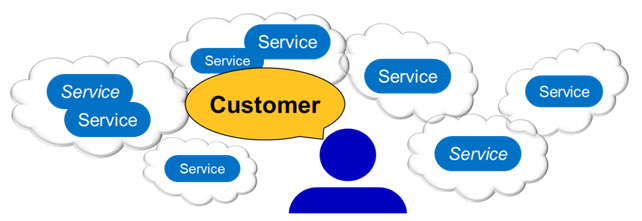
Master´s thesis “Total Portfolio for Public Services” (1) introduces the way to prepare existing public services for the digital era. Citizens and their life events can trigger new demand for digital public services, but introducing or improving digital services will require tectonic changes in the current service base. How does the current service base look like in public organizations? Most public organizations struggle with a myriad of independent services. Services and customer insights are scattered in disparate offices or entities; and so are the corresponding digital assets. This disparity makes the change towards a smooth digital experience hard and financially challenging to execute. As a result, customers often have to find and select their public services from bits and pieces of a fragmented, incoherent mass of services. Yet, citizens of today expect the same smooth experience from all services they consume – either digital of physical, public or private, automated or manual. What primarily matters for them is that the service gets its job done as expected, and when expected. It also matters that the customers can find the service easily. The cool “wow!” effect happens when the citizen gets the service available even before he or she realizes the need for it. And it is only after such a happy discovery that he or she starts inquiring how much the service can cost, and how the cost is charged i.e. through taxes, through insurance, or out of the pocket. If the cost is right, the citizen chooses the best option and enjoys the experience. Definitely, it is much nicer to pay a few dozens of euro for a childbirth, instead of 10 000 Euro or more, depending on potential complications. This angle is one of the strongpoints for consuming public services. They tend to be affordable and predictable without unexpected extra bills. Public service quality also tends to be high, as there is a lot of public attention, monitoring, and quality checks. In addition, public services are found in public offices, which makes them easy to spot. Private services must struggle much more for being noticed. In addition, many public services have traditionally been incumbent without much of a competition. All these factors make the current service base look very attractive and promising. But is it for long? Not only “what” but also “when” and “how easy” Digitalization changes this natural attractiveness of public services. A much wider, “heavier” public service base faces unprecedented direct rivalry and a threat of substitution from the private side in the ways that were not possible in pre-digital era (2, 3). Hence, today it is not enough to concentrate on the traditional strongpoints of public services (affordability, quality, wide coverage). These services must meet the customer needs better. Let´s start with “when”. In essence, public services consumption happens in certain life situations. When a child is born, certain childcare services are triggered. As the child grows, new service needs come to the picture, and they form a web of service needs. Imagine if those life situations could be identified and analyzed so well that the citizens could be offered the right services proactively. This is why Stiglitz-Fitoussi-Sen commission modeled the typical citizen´s core needs for the European Union in 2009 (4). Since then, for example, Finland and Estonia have established their Artificial Intelligence programs pursuing this capability to identify citizens’ life-events for focusing public services better (5, 6, 7). In other words, the providers of public services look ahead and have a clear vision how to be more proactive. So, after building such visions, why there is still a problem with “how easy” the public services can be? Unfortunately, this problem exists, and it is both managerial and technical. It originates from the fact that few public services are islands of their own, and they are not really restricted to certain service areas or tools either. Yet, the operational models of local governments have divisional silos which separate public services into the urban environment, cultural, education, social and health services. This dilemma makes an obstacle for triggering a change in public services into easy and proactive digital services, as envisaged above. What to do? My Master´s thesis (1) addresses these issues and proposes an approach to handling them through constructing a business operational concept named the ´Business Wheel´. The ´wheel´ first describes the related business dynamics and then suggests a Portfolio Management setup and the necessary organization around those portfolios. The key pivotal portfolio for a municipality is a Service Portfolio because local governments run hundreds of services. If they are run disparately, without clear service structures, it becomes almost impossible to match those hundreds of existing services with the citizen’s life situations in the way envisaged above. This is why the thesis recommends that local governments should consider the Service Portfolio and the customer life events first. Addressing both areas will directly lead to a need for fundamental transformation towards digital services, but there is also agility required in adapting strategic targeting. The success will depend on the ability to continuously assess the environment and effectively steer the execution. However, to capture the value, just steering and targeting is not enough. New and improved public services will be needed, which requires a substantial amount of innovation. All these parts of the ´Business Wheel´ and Service Portfolio practices should contribute to constructing a managerial ecosystem and prepare public services for a turnaround based on life-events triggered services. About the author Ilkka Kautto works as a directing chief specialist, ICT development in the City of Helsinki. He has over twenty years of experience in innovating and developing new digital solutions and related organizational capabilities in international technology cluster and public organizations. References Kautto, I. (2020). Total Portfolio for Public Services: How to Prepare Existing Public Services for a Turnaround to a Life-events Triggered Proactive Ecosystem. [Master´s Thesis]. Helsinki, Metropolia university of Applied Sciences. Christensen, C. et al. (2016). Competing Against Luck: The Story of Innovation and Customer Choice. 1st edition. New York, NY: HarperBusiness. Ulwick, A. (2017). Jobs-to-be-done for Government. April 19 2017. [online] [Accessed 2 March 2020]. Stiglitz, J. E. and Sen, A. and Fitoussi, J-P. (2009). Report by the commission on the measurement of economic performance and social progress. [PDF] [Accessed: 10 June 2020]. Sikkut, S. and Velsberg, O. and Vaher, C. (2020). #Kratt AI: The next stage of digital public services in #eEstonia. Republic of Estonia, GCIO Office. [PDF] [Accessed 25 February 2020]. Maunula, A. (2019). Julkisen sektorin digimenestyjät 2020, Suomi. [online] BearingPoint. [Accessed 19.1.2020]. Ministry of Finance (2020). The AuroraAI national artificial intelligence program begins – with the aim of using artificial intelligence to bring people and services together in a better way. [online] [Accessed: 10 February 2020].
From Top-Down to Bottom-Up Management for IT Industry – What does it Mean?

Many small and mediums-sized IT companies are packed with young and innovative millennials. These IT nerds, in addition to developing state-of-the-art solutions, want to have a wider influence in their companies. My study of IT companies discovered that millennials do not want to be managed by someone telling them what to do or to be measured how the instructions are followed. Instead, it is important to them to actively participate in the running of the daily operations. Therefore, it is important for a modern IT company to find out how to successfully run a company, in the demanding competitive environment, with modern management methods. The millennials know that a modern SME (small and medium-sized enterprise) IT company cannot rely on the management methods developed almost a hundred years ago. In their view, it is time to challenge the traditional approach and methods of strategy, which are often developed for large enterprises, not to SMEs. The millennial era gives power to employees and widens accountability not only to employees but also to leaders of the company. The stiff, conventional top-down management is turned upside-down into the bottom-up management, where decisions are made fast and by the real-life experts, and where cooperation is of utmost value. As the way people work is changing, the modern leadership turns managers into stewards whose main responsibility is to assist their employees to shine. This also leads to considerable changes in the companies’ culture. The key assets of an SME IT company are the competent and empowered employees. Those who innovate on a daily bases. As the resources of skilled, creative and passionate employees are scarce, leaders are faced with a challenge to win their brains and souls. In this situation, companies have to turn themselves into attractive modern employers and differentiate them from masses by up-to-date ways of leading their business. In nerds’ eyes, it can be done – first and foremost – by empowering those who are the real experts, and by turning error-free operations into error-allowed operations. With the help of new era millennials, highly engaged and committed companies are able to move fast, be agile in operations, and ready to turn the ship whenever needed. Even though there are thousands of strategy books available, still, studies reveal that nine out of ten employees do not understand their company’s strategy. Having worked for many years in IT industry, in leadership and management positions, I have always missed a handy and practical strategy implementation tool. My Master’s studies at Metropolia gave me this opportunity to explore and eventually develop such a tool and put it into a ‘Strategy implementation handbook’. In my study, I was helped and inspired by innovative and enthusiastic C- and O-level employees (i.e. from C-‘executive’ and O-‘operational’ levels) who shared their insights and helped to develop this handbook, specifically fit for use by IT SMEs. The Handbook consists of six concrete and easy-to-follow chapters how to implement a strategy in an IT company. I especially relied on some brilliant ideas of modern leadership from Red Hat Inc., one of the leading IT developing companies, and from the Open Organization community. I am grateful for their input. This Master’s Thesis is available in theseus.fi. Topic: A Generic Strategy Implementation Handbook for Small to Medium Sized IT companies. Researcher Kirsi Hoikkala (LinkedIn), Master of Engineering in Industrial Management Master’s project discovery: Conventional Management Methods are Challenged Master’s thesis often brings unexpected insights to both the thesis worker and their community of co-workers, and to the interested public. This year, Master of Engineering Kirsi Hoikkala, who has completed her Master’s degree in Industrial Management, came up with a discovery challenging the renowned management gurus. In her Master’s project, Kirsi explored how strategy is implemented in small and medium-sized innovative IT companies. And her study revealed some unexpected results. Master’s process instructor Zinaida Grabovskaia, PhL
A Master´s Thesis Study Found How Construction Business Sales Will Improve Significantly

My Master’s thesis was done for my home company, Pylon Rakennus Oy, a private repair construction company operating in Helsinki area. Construction industry is one of the last frontiers for sales and new customer acquisition development. Construction business, including repair construction, has traditionally based on competitive bidding. Therefore, pro-active sales has not played a significant role. Recently, increased competition and price erosion has driven repair construction companies to search for business potential in developing pro-active sales and by acquiring new customers, for example, among private property owners. Starting from this perspective, the study focused on exploring how sales actions prior the bidding stage and a new customer acquisition process can help to get beyond the painful competitive bidding. The study suggested that through improved visibility and relationship management, as well as through a better service offering, the company could get better access to new customers and a better gateway to joint property development projects. The study suggested considering sales as a strategic function, which originates from sales strategy. In order to convert strategy into sales performance, the study recommends allocating the sales resources based on customer prioritization. In addition, customer segmentation and offerings should be also considered as strategic decisions. In regard to the sales process, the study recommended the company to broaden its relationship network outside its buying network. The study found that relationships should be independent of any projects to increase visibility on the market. A customer reference marketing was found to be as the main tool to build company's image. Additionally, a good service offering is needed to ensure high quality and cost effective services. These actions will increase the touchpoints, thus enabling better access to customers, and providing better possibilities for alliance and negotiation contracts. In addition, the proposal presented a model for a three-step risk assessment to support the company’s project risk management during sales strategy, customer acquisition and bidding stage. This proposal was successfully accepted by the home company and now it works as a backbone for the case company’s sales development. The improved sales process will allow the company to become more customer-oriented and forward-looking. Better anticipation will improve the risk management, resource efficiency and, in the long run, will have a positive impact on both sales performance and profitability. Researcher Päivi Stordell, Master of Engineering in Industrial Management This Master’s thesis has gained a high praise from both the school and the home company, and is available in the AMK common database (https://www.theseus.fi/handle/10024/145863). Topic: ‘Developing the Sales Process in a Repair Construction Company’

The editorial team will provide the content of the Masterminds blog before publication.
The editorial team started its work at the beginning of 2022.
Pia Koirikivi, chief editor in Masterminds blog, Pedagogical Specialist
Minna Kaihovirta, Manager of Dialog
Iira Lankinen, Principal Lecturer
Riikka Wallin, Publications Specialist
Zinaida Grabovskaia, Senior Lecturer
Salla Kivelä, Principal Lecturer
asiantuntija yamk business informatics Business Informatics Master’s Program CERN Bootcamp Construction Business hankinnat hankintastrategia hankintatoimi ilmastonmuutos Industrial Management Industrial Management Master’s program johtaminen koulutus kulttuurituotanto Marjatta Kelo master Master's Thesis masterminds Masterminds blog Master of Engineering Master’s degree Metropolia Metropolia AMK Metropolia Master's Metropolia UAS metropolia YAMK opinnäytetyö osaaminen service design Sharing economy sosiaali-ja terveysala sosiaaliala study trip Sustainability talotekniikka terveyden edistäminen terveydenhuolto työhyvinvointi ura yamk YAMK-tutkinto YAMK opinnäytetyö ylempi AMK ylempi ammattikorkeakoulututkinto Zinaida Grabovskaia
