
Avainsana: business informatics
Roadmap to the Market for a New Medical Device
There are myriads of new interesting, innovative ideas how to help patience with various problems. However, much fewer ideas find their way to the market and become real innovations. Knowing that I am a Master´s student in business, a startup company has turned to me for help how to bring a new device to the market. Here, I share my ideas how to possibly approach this challenge. The Story Behind a New Device Back in October 2019 while attending a business event, I met a migraine care specialist who has dedicated 20 years of his healthcare career to creating safe and effective treatment methods for migraine care. Over these years, he has come to the idea of creating an anti-migraine device that could treat a migraine by placing the device on the patience´s head and repeatedly touching sensitive areas, similar to a massage, until the migraine disappears. The idea of the device is based on his experience of massaging head and neck, which he has proven successful in his practice as a physiotherapist when working with migraine patients. Now, after the idea have matured, the time has come to create this device that can mechanically treat the patient and reach to a much wider audience. Despite the previous experience of being an entrepreneur, the founder was in search of a team who could make the device launch professionally and enthusiastically. After some search, such a team was born: the founder himself; an engineer who has constructed the device prototype as his thesis work; another engineer who is focused on the computer side, and myself, responsible for exploring the best way of bringing the device to the market. Interesting, but Challenging After starting to work with this team as a consultant, I was simultaneously studying in a Metropolia’s Master´s program and searching for a good topic for my Master´s thesis. At first, the temporary nature of the migraine device project ruled it out for me as an option. But after diving deeper into the topic, after visits to business match-making events, conferences, and GE Healthcare Village in search of expert inputs, I have really fell in love with the challenge, and wished the best of success to this brilliant idea to revolutionize the migraine care with a hi-tech solution. And I decided to take it up as a Master´s thesis. My goal is to outline a roadmap how to bring this new medical device to the market. Such a roadmap will be used by the start-up team as a guide for bringing the low risk medical device to the market. What Business Gurus Say? After conducting the background investigation with the internal start-up team, a possible approach started to crystallize. My next step was to look deeply into what business literature say about launching new products. Surprisingly, there seems to be no single opinion on the topic. Some gurus put stress on a business model, others on cracking customer needs, still others on a clever Customer Value Proposition (CVP). And everyone seems to favor own perspective… There was nothing else to do but to structure all arguments, revise, re-think, and compile an end-to-end approach out of available suggestions. The draft of the roadmap to the market result looks like this: Identifying the Target Customer Groups & Competitors Step 1: As soon as the idea of a new product has emerged, the start-up team should look into Identifying the target customer groups & competitors. In other words, the team needs to clearly identify who are the main potential customers; and carefully check potential competitors. From the business science perspective, the team will need to do segmentation, targeting, positioning and competitor analysis. Segmentations distributes the customers into segments, while targeting and positioning outlines the proposition idea for each segment. Finally, competitor analysis checks competitor products. It is the target customers who will ultimately decide if the product meets their needs; therefore, the start-up team should start with the cusomers. (There are multiple gurus who promote these views, but we especially relied on Osterwalder 2014 (1), Leibson 2018 (2)). Identifying the Unserved Customer Needs Step 2. When the target customer groups are defined, the next step is to look into Identifying the Unserved Customer Needs of these customer groups. In other words, the start-up team should look into the factors that are critical for the target customers but currently are unrecognized, unserved, or underserved. The unserved needs most typically concern functionality/performance, convenience/usability (ease of use, reliability, efficiency, compatibility etc), customer experience (especially!), product/service design, price, and other needs. The unserved needs will pave the way for success of the new product since the current products do not meet them fully (inspired by Leibson 2018 (2), Breschi 2020 (3)). Define a Customer Value Proposition Step 3. As soon as the needs to be served by a new product are identified, the solutions to meet them are compiled to Define a Customer Value Proposition (CVP). It means formulating a clear and appealing offering for the target customers. The offering is typically structured into: “the jobs-to-be-done” (what customers need to achieve), “pain relievers” (what resolves customer problems and makes their lives easier), and “gains” (what customers gain in terms of economic, emotional, convenience etc. benefits). These elements will determine the strategy how to present and price the new product, and how to win customers. For example, in marketing, it will help to name the exact customer problems and offer clear solutions to them. The primary focus is placed on offering those things that will please the customers most. (Inspired by Osterwalder 2014 (1), Leibson 2018 (2), and Gierej, 2017 (4)). Minimal Viable Product Step 4. As soon as the CVP is defined, it is the time to establish and Refine the feature set for the intended Minimal Viable Product (MVP). In other words, at this stage the start-up team should be able to say: “This is our product! This is the list of features that own new product will include”. It means selecting those features (based on emotional and functional design, usability and reliability) that will create the necessary minimum package of a successful new product. Naturally, some customer needs and desires cannot be met at this initial stage, and they should wait for the future. However, the trick here is to clearly select which features (i.e. addressing customer needs) should absolutely be present in the new product, and which could appear later, but the new product will still be headed into the right direction. To implement it, the start-up should test the MVP idea with customers, and make sure that they agree on the viability of proposed MVP product. This stage will save time and cost for the start-up by carrying out a thorough customer research on a new product. Additionally, at this stage, it is also beneficial to collect ideas on a possible service around the new product when researching the MVP with customers. (Inspired by Leibson 2018 (2), (Gierej, 2017 (4), Walker 2018 (5), Ries 2011 (6)). Create a Prototype Step 5. After agreeing on the feature set for a MVP, the “paper stage” of the new product development is over. The next step is to physically Create a prototype and test it. The prototype is implemented through a cycle of building, measuring, learning & developing, and repeating the cycle until the prototype is ready. At this stage, when it becomes clear that the prototype is soon to appear, a possible service around the new product can be designed. It was not feasible to do earlier, since the fate of the prototype was not yet fully clear. Now, the Minimum Viable Service (MVS) can be developed. The MVS is co-designed with customers and discussed in detail to collect valuable feedback. The stages of MVS design include: (1) design of features (with customers), (2) design of client experience (with customers), (3) design of processes and systems (with customers), and finally (4) design of strategy and policy (based on customer insights and the start-up goals). (Inspired by Leibson 2018 (2), Ries 2011 (6), Pierini 2019 (7), Moritz 2005 (8)). Testing Step 6. Next step is to Test MVP/MVS with customers. Feedback and discussions are good, but not really enough. There must be interaction between the users and the product/service and the producer, so that the needed changes are spotted and well understood. In the test plan, customer should physically try the demo product, followed by in-depth interviews to identify customer perceptions. It will be more challenging to organize a demo service, therefore various service design techniques will be employed to “test” customer perceptions of the intended service. On the enterprise level, the gurus´ advice is to organize the landing web-pages to drive customers to these pages and test the demand for the new product (and service) via early marketing. Pre-order page will help customers to indicate their interest and order the product or service before it is launched into the market. The web-page should have explanatory videos showing how the users can operate the product. This stage will also – once again – include customer surveys to check and identify any possible issues in reliability or usability of the product. (Inspired by Leibson 2018 (2), Ries 2011 (6), Moritz 2005 (8)). Developing a Business Model Step 7. This step is focused on Building a viable Business Model for the start-up. “Startups don’t fail because they lack a product; they fail because they lack customers and a profitable business model”, Steve Blank (9). At this stage, when the start-up has built the prototype, interacted with target customers, and ensured the interest from the market, it is time to focus on earning money and a more long-term perspective. The start-up cannot any longer use the enthusiasm of its teams and investment money from business angels. The business life should start as soon as possible! The business model will reflect the key business choices (how to sell and what are the channels, physically or online, how to deliver the service, how to pay, how to repair, who are the partners etc), and most importantly, what is the profit logic for the product. (Inspired by Osterwalder 2014 (1)). Launching a Lean Start-up and Brand Step 8. Next step is to Launch a lean start-up and brand. Why not earlier? Because the reason for existence of a start-up is the new product and the business model. There is no meaning in a start-up that does not have them. Why lean? Because a small and innovative team has no time to tangle itself into “red tape”, and simply does not have resources for anything bigger than a micro – but very enthusiastic – company. The lean start-up will have a mission and vision that state the direction to head for. Also, marketing and branding strategy will aim at building a strong brand (i.e. strongly preferred by customers). The marketing strategy will reflect the views of the stakeholders, and customer relationships will aim to fulfill the customer promise and support engaging communications towards the target customer group. (Inspired by Reis 2011 (6), Rus et al. 2018 (10)). Market Entry and Operations Step 9. After that, off we go into the full-size market entry and operations! Successful market entry will be based on a detailed plan of how run, finance the operations, and grow. Here, many different factors must be taken into account: the size of the market, current and future trends, competition, regulatory policies of the host environment etc. The first step is to introduce a product into a new market for penetration. The next step is commercialize where the conditions facing a business are best for customers. Distribution will grow as the number of users increase and they follow. Simultaneously, all the time a review of the product and service performance is collected from customers who have experience in using them. (Reis 2011 (6), Datta 2014 (11)). Next Step: Seek Opinions of Business Practitioners As we noticed when reading literature, there are many approaches how to bring a new product to the market. This summarized approach relies on the concepts from business gurus published by Leibson, A. Osterwalder, E. Ries and many others. It is possible that some of the outlined steps should be done simultaneously, or some steps are missing, or need to be done earlier. With this initial draft of the roadmap how to bring a new product to the marker, we are now actively seeking comments from business practitioners before applying it into practice. The more valuable opinions from Yrityskeskus organizations, individual entrepreneurs, and business communities I can collect, the more robust the roadmap can be. I am early looking forward to your opinions, experienced business practitioners! Suggestions can be millions, but you have seen how successful solutions work in practice. Your option is sought after and highly appreciated! About the author Elizaveta Berezkina – a Master´s student in Business Informatics, has expertise in business administration of established organizations and international startups. After graduating as a Bachelor in Hospitality Management in 2014, has travelled the world, lived as expat in UK, and worked for various international companies in real estate, retail, management consulting, business concept development etc, which she is doing with an entrepreneurial mindset, positive attitude and curiosity, especially for innovations. Contact email: Elizaveta.Berezkina2@metropolia.fi References Osterwalder, A., Pigneur, Y., Bernarda, G., Smith, A. and Papadakos, T. (2014). Value Proposition Design: How to Create Products and Services Customers Want. Wiley. Leibson, H., 2018. How To Achieve Product-Market Fit. [online] (Jan 18, 2018). Breschi, A. (2019). 16 Types of Customer Needs (and How to Solve for Them). [online] Gierej, S., 2017. Techniques for Designing Value Propositions Applicable to the Concept of Outcome-Economy. [online] Walker, T. (2019). Persuasive Power Derived from the Benefit Pyramid+™: In Medical Device Marketing. [online] Ries, E. (2011). The Lean Startup: How Today's Entrepreneurs Use Continuous Innovation To Create Radically Successful Businesses. 1st ed. United States of America: Crown Business New York. Pierini, P. (2019). Don’T Fall In Love With Your Prototype. [online] Moritz, S. (2005). Practical Access to Service Design: Handbook. London. (PDF) Blank, S. (2009). The Customer Development Manifesto: Reasons For The Revolution (Part 1). [online] Rus, M., Konecnik Ruzzier, M. and Ruzzier, M. (2018). Startup Branding: Empirical Evidence Among Slovenian Startups. [online] Datta, A., Jessup, L. and Mukherjee, D. (2014). Understanding Commercialization Of Technological Innovation: Taking Stock And Moving Forward. [online] Image: Minnamoira (Pixabay License).
UPWORTHY STUDY TRIP to Stuttgart, the Manufacturing Hub
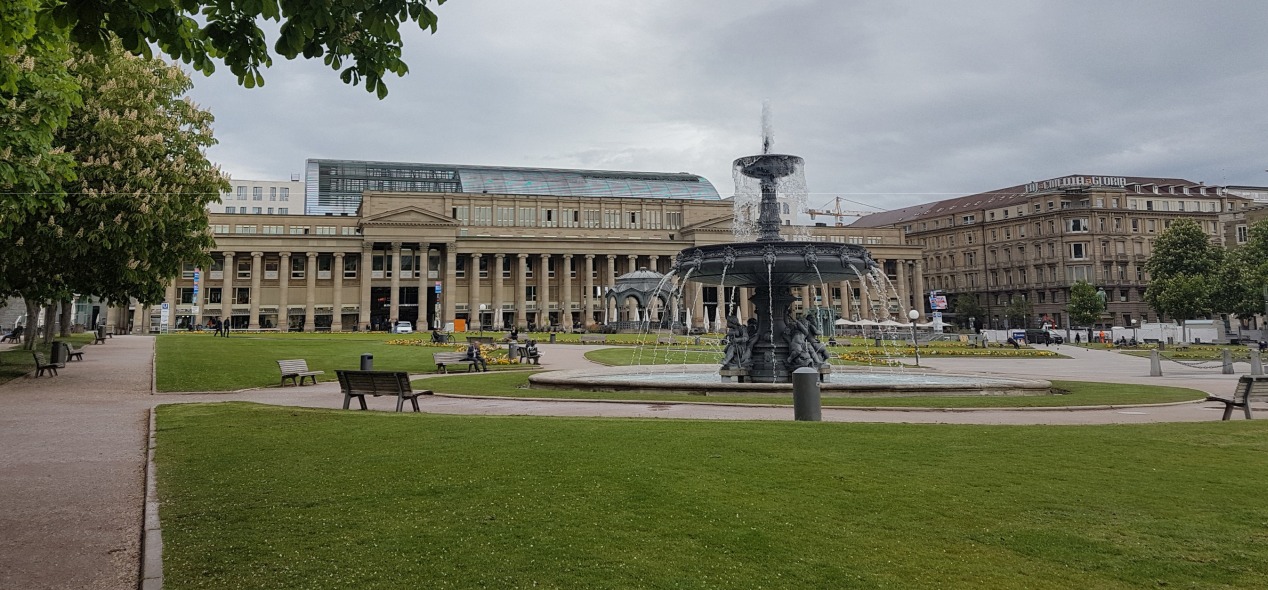
A Nice and Welcoming City & Butterflies in our Tummies As Master’s students of Metropolia University of Applied Sciences, when we were told that the study trip this year would be to Stuttgart, we got truly excited. A study trip to Stuttgart meant a promise to visit some best innovative companies and discuss some of their interesting projects on the horizon. Stuttgart in May is full of green leaves and flowers! From the late and snowy spring of Helsinki, we immediately moved to a lush, almost summer vegetation of Stuttgart, with fountains, sculptures, museums, market places and a busy downtown where the host university, Stuttgart Hochschule fűr Technik (HFT) campus, was located. As a group of Master’s students, we represented 9 different countries and a mix of different educational background and job profiles. We were looking forward to two exciting days of workshops, industry visits, and cultural exposure. Day 1, University Campus The first day was scheduled as a Team and Organizational Development day together with the local students. Our partner university invited Business Psychology students to co-create with us. There was a lot of collaboration, and the energy was amazing. We managed to learn the things that we would never thought of before. Freytag's Pyramid - The Classic Theatre Way of Communication The classic theatre way of communication was discussed based on the German playwright Gustav Freytag’s nifty diagram, Freytag's Pyramid. It develops from exposition to denouement, which - as we learnt - can be spectacularly used for application in marketing and sales. This session was very well planned, engaging and fun-filled with group activities moderated by Business Psychology students. The team task was to develop a plot how an online store MiHaNi could partner with a traditional physical store LuSuBa. The online store wanted to enable customer services and support, while LuSuBa looked to increase their sales by including the online channel. Six different teams, combining both HFT and Metropolia students, were formed (with three roles for each team, the Management, Sales and Marketing) for creating a plausible scenario for this plot. Each team demonstrated special skills, and a few rose up to instant fame with terrific acting skills. We also found the creative side of individuals here! This was followed by a quick floor walk at the “Job fair” that was located at this moment on the campus. It was amazing to find so many top companies having opportunities for fresh graduates. Day 1, Industry Visits Later on Day 1, we had a unique opportunity to enjoy a session conducted by Daniel Deparis (Head of Smart Lab @ Daimler) on the topic of “Strategy and Innovation”. The session gave us insight into Daimler's way of working, a crisp forum that emphasized that, in order to be innovative, a strong foundation – "the Why, the Team, and the Sponsor" – becomes vitally important. We could almost feel a real customer centricity urge that must be the main atmosphere at Daimler. Bliss and pains of being a pioneer, the flops and tops of innovation and importance of attitude were all reviewed. We also learnt that a lean start-up culture is the way to be successful in innovation. Day 2, Visit to Bosch Day 2 started with a factory tour to Bosch that gave insight about the current trends in Industry 4.0. During the guided factory tour, we were given the first-hand information on versatile Industry 4.0 solutions - connecting digital and physical technologies, AI, the Internet of Things, Robotic Process Automation, etc. - and saw how they can help companies to make their production line more efficient. We also went through the action floor with its connected services, interactive dashboard, enabled personnel for making informed decision - everything possible was done to digitalize work and help the production floor to work and be managed efficiently. This was a place where value is definitely created. The action floor also gave us an overview that there are some amazing job vacancies out there for engineering graduates. To be engineers, graduates - is definitely worth it! Day 2, Visit to Mercedes Benz Consulting This session started with a tour over the Mercedes Benz Consulting office. For many of us, Mercides Benz has been a dream from an early age. Visiting their consulting office and interacting with product developers, researchers and business development folks fueled us with the top up energy. We had an opportunity to see the Virtual Retail Lab, Consumer experience lab with games and AR to engage customers and, an interactive whiteboard that can be used for conducting interactive meetings with clients and brainstorming new areas within the company. No doubt, as the world is heading to a digital transformation, innovation in retail at Mercedes Benz will sure continue and we will perhaps get to see some real disruption very soon! Golden Handshake If you happen to visit Stuttgart, buffer some time to visit their wonderful downtown restaurants. We consider ourselves lucky to have had a chance to visit all the industrial companies. But it was also a great moment to have an evening with our course advisors. There, we discussed many interesting topics including the comparison of industries, museums, and also beers - to what it was some time ago. As all good things must come to an end, we gathered many memories from Stuttgart to cherish for the days to come. As Metropolia students, we would like to thank both Metropolia instructors and our Stuttgart advisors Prof. Dr. Patrick Planing and Prof. Dr. Katrin Allmendinger for arranging this trip that gave a new dimension to our learning. From dusk to dawn, they kept us busy to explore. It helped also to socialize and know each other a bit more personally and professionally. While we discussed, visualized and experienced innovation and its management “at the desk” in class, the study trip brought these lessons to life. About the Authors Sudhindra and Satish Kumar - MBA students at Master’s programme in Business Informatics, Metropolia University of Applied Sciences. Both have 18+ years of industry experience in diversified roles and responsibilities and hail from India. They both have something in common: they are avid readers, love travelling, inquisitive and believe in food for thought. Both possess a passion to be entrepreneurs. They have been together during this whole trip and decided to co-author this blog. Sudhindra – Sudhindb@metropolia.fi; Satishkumar - Satish.MudigereKeshava@metropolia.fi Antti Hovi - Senior lecturer at Metropolia University of Applied Sciences, the instructor and inspirer of “Innovation and Renewal” course who organizes and nurtures students in their innovation efforts, including the study trips. Photos by the authors.
How to start building data-driven business culture?

When reading about new technologies, innovations, news from business world or even people’s LinkedIn profiles, the term “data-driven” is on everyone’s lips. But what does it really mean and how can my company become data-driven? Working as a Data and Analytics professional for several years, I have encountered the same problem all over again: “We have data and we know it’s important and analytics is the thing, but how?” Some might think that the proper way to move forward is to buy an analytics tool or do a project where a bunch of consults come in, develop a solution to one problem, and go away. Depending on the organization’s starting point, it usually needs more and involves more than just technology. I started working at Veho, a leading Finnish automotive company, at the beginning of year 2018. My job is to make sure Veho becomes a company that benefits from internal analytics services and good quality data and also to ensure that Veho has the needed resources to do so. Exciting, but how to make this happen? I had just begun studies in Metropolia School of Applied Sciences to do my MBA in Business Informatics and this sounded like a challenge I could address when doing my master’s thesis. Why maturity matters? The main purpose of analytics is to get information out of data to help organizations to make better decisions and implement actions. Forbes conducted a study in 2017 and it showed that organizations which are at a leading level in data and analytics maturity grow more, make better profit and manage their risks better than the ones lacking in maturity. Maturity models for measuring an organization’s maturity have been around for some years. They are used especially in IT world, and data and analytics or big data maturity is no exception. As part of my thesis I studied IBM’s, Gartner’s and TDWI’s maturity models and they all share the same basic idea and purpose. They have different dimensions that are relevant when having a holistic view on data and analytics. Each of these dimensions has criteria that are linked to different stages. The organization’s current and desired states are mapped to suitable stages and there you go, a roadmap to analytics emerges. As an outcome of the thesis process I created a framework suitable for Veho’s business culture. It combines indicators and criteria from existing models for the most relevant dimensions: vision and strategy, organization and people, technology, analytics, and data management. Without any one of these the organization will struggle with the change. I used the best practices and the existing models as a base to analyze the current state at Veho and to define a target state with relevant stakeholders. The final framework combines all into a five-level maturity model with current and target states and could be used as a compass for an upcoming organization wide data and analytics transformation program. The framework has been validated by relevant stakeholders and in practice by using it as part of the action planning process. Cultural change ahead What I have learned when doing the study is that if an organization wants to be data-driven and to utilize its data assets, all aspects of cultural change need to be involved. The business strategy and the leaders must support the change. Organizational structure and relevant roles such as analysts or data stewards are essential. Certain technological solutions are necessary to implement all types of analytics, and it all comes down to good quality data. A maturity model is a helpful tool for designing the path to the desired outcome. When studying the subject, it became obvious that many companies are struggling with the same issues, and to be able to compete in the challenging business world the journey needs to start now. It will be a long road, but I believe an exciting and rewarding one. Salla Kuula Development Manager, Data and Analytics Veho Oy Ab References Forbes insights (2017). Data and advanced analytics: High stakes, high rewards. Forbes. Kuula S. (2018). Developing Data and Analytics Maturity Framework to Support Business Transformation, Case: Veho Oy Ab. Metropolia University of Applied Sciences. Master’s Degree Programme in Business Informatics. Helsinki. http://www.theseus.fi/handle/10024/158853 Image by Tumisu from Pixabay (Free-Photos, CC0).
New perspectives from a study trip
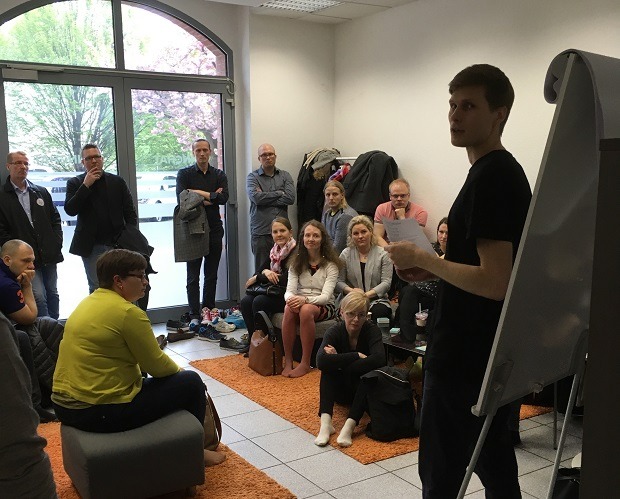
The possibility to participate in a study trip is included in several Metropolia Master’s programmes. Study trips and international study modules as well as exchange programs strengthen the international competencies of Master's students. Business Informatics student Laura Invenius wrote about a study trip to Berlin. Innovation and Renewal course is a mandatory module for Business Informatics Master's students. Luckily it included a two-day study trip to Berlin at the end of April 2017. The instructions stated that we needed to arrive to Berlin either on Wednesday evening or very early on Thursday and so we did! We had a WhatsApp group and people reported on regular intervals once they were arriving and so the excitement kept growing. On Thursday, we had a visit to a local university and with Hochschule für Technik und Wirtschaft Berlin's MBA students we did a group assignment together, in which we needed to innovate new business models for various companies. The discussion was vivid, both about the task, but also about the student life in Finland and Germany. After the group presentations, a company named Futurice, introduced themselves. Originally from Finland, they are now located in various locations in Europe, and have changed their business model several times. They have an interesting concept and employee policy, trying to find different capabilities and skills and forming teams based on these. On Friday, we visited Innovation Labs Berlin. It brings together startups in different phases and helps them through different challenges they might be facing. CEO Klaus Kammermeier told us about the startup scene in Berlin and why there are so many of them; living costs and quality of life in Berlin are good, the location in the center of Europe is excellent, those being the most important factors. After a quick currywurst lunch and a visit to Brandenburg Tor, we headed to Finnchat. Finnchat is a Finnish company that provides chat services on company websites. They are well known in Finland already, and are now trying to get footstep in Germany. We made a group work around their sales and marketing funnel. Quick visit to Kurfuerstendamm and then we had a fairwell dinner together at a very nice Italian restaurant in Mitte area. There was a lot of laughter and joy after an exciting program. Many of us stayed over the weekend and visited sights enjoying a sunny and warm spring weather. Laura Invenius Business Informatics student See also: Finnchat. com: Metropolian opiskelijat vierailulla Berliinissä Student Evgenia Molchina's blog: MBA Study Trip to Berlin
Digimarkkinointia vai insinööritiedettä?

Kuluttajamarkkinointi on kiinnostavassa vaiheessa. Analytiikkatyökalujen avulla voidaan käytännössä selvittää yksittäisen kuluttajan nettikäyttäytymisestä lähes mitä tahansa – mikäli tämä on antanut siihen luvan, eikä vaivaudu hirveästi selauspolkuaan suojailemaan. Niinhän se on, että keksit sallimalla verkkosivuston palvelu toimii paremmin ja maniostaja saa kohdennettua mainontansa tarkemmin. Tämä on kaikkien etu. Kuluttaja näkee vain itselleen “sopivimmat” mainokset ja mainostaja kokee tavoittavansa kohderyhmänsä paremmin. Niin mainonnan mittarit hänelle kertovat. Tämän perusteella kaikkien pitäisi olla erittäin tyytyväisiä. Alkuvuodesta lukuisat tahot julkaisivat kuluttajatrendejään vuodelle 2017. Kaiken Internet of Thingsin ja laajennetun- ja virtuaalitodellisuuden hypettämisen välissä pisti silmään digiajan kuluttajan entistäkin negatiivisempi suhtautuminen keskeyttävään markkinointiin. Siis bannerit, videoiden alussa väkipakolla näytetyt spotit ja turhat muka sisältömarkkinoinnin avulla tehdyt somepäivitykset kuuluvat tähän kategoriaan. Mikä niissä sitten ärsyttää, kun tietoa pitäisi kohdeyleisöstä olla enemmän kuin koskaan ennen? Valitettavasti tämä kohdeyleisöstä kertova tieto pyörii valistuneen markkinointipäällikön ja mahdollisesti mediatoimiston työpöydällä. Valistunut markkinointipäällikkö käyttää tätä tietoa osoittaakseen markkinoinnin tehokkuutta ja mediatoimisto suojaa itsensä kertomalla, kuinka näiden lukujen valossa ollaan oikeassa kanavassa. Mahdollisesti sisältö on insinööritieteen tarkkuudella riisuttu kaikesta “turhasta” kuten viihteellisistä elementeistä, sillä analytiikan perusteella tietyt elementit aiheuttavat positiivisen, ostopolulla eteenpäin vievän reaktion. Poistetaan siis kaikki turha ja tehdään kustannustehokkaasti, nopeasti, edullisesti ja mielellään muutama versio, jotta voidaan testata. Parempi vielä, kun kehitellään algoritmi, joka tuottaa mainoksen automaattisesti, ilman turhia välikäsiä. Botti puhuu kuluttajalle. Tämä jakamisen, linkitysten, sisällön tuotannon, vaikuttavuuden ja sitouttamisen mittaaminen on toki hyödyllistä ja tuottaa teknisesti hyviä tuloksia. Silti uskallan väittää, että harvassa ovat ne mainostajat, jotka oikeasti hyödyntävät kuluttajatietouttaan relevantin ja oikea-aikaisen sisällön tuottamiseen. Tämä vaatii nimittäin resursseja eli rahaa, budjettia ja viitseliäisyyttä koko organisaatiolta. Markkinointiosasto ei aina ole se oikea osasto viihdyttävän tai kiinnostavan sisällön tuottamiseen. Sisältö saattaa löytyä yllättävästä paikasta: joku organisaatiossa tietää jostakin asiasta enemmän, osaa tuottaa kiinnostavaa tekstiä, kuvaa tai videota ja kaiken lisäksi on kiinnostunut jakamaan tämän omassa sosiaalisessa verkostossaan. Tämä “hiljainen”, markkinoinnilta ja viestinnältä ohi humpsahtava tieto tulee varmasti julkaistuksi, mutta brändin ja markkinointiorganisaation siitä tietämättä. Kollegaa ei seurata, sisältö ei tule hyödynnetyksi ja tilaisuus menetetään. Näitä menetettyjä tilaisuuksia on lukuisia, koska loppujen lopuksi brändin sosiaalisen median mittaristo kertoo sen, mitä sen halutaan kertovan: kuinka tehokkaasti markkinointiosasto sijoittaa sen budjettiin varatut rahat ja tuottaako tämä ROI riittävästi. Näin insinööri voittaa ja digimarkkinointi muuttuu epäkiinnostavaksi, ärsyttäväksi hötöksi digitaaliseen universumiin. Sari Männistö, MBA-opiskelija Metropoliassa, Business Informatics -ylemmässä AMK-tutkinto-ohjelmassa . Sarilla on vuosien kokemus mainostoimistotyöskentelystä ja mainonnan tehokkuuden mittaamisesta. Parantaakseen ammattitaitoaan hän aloitti Master's-opinnot vuonna 2015 ja valmistuu toukokuussa. Männistö teki opinnäytetyönsä markkinoinnista sosiaalisen median kanavissa ja on lisäksi tutkinut paljon uusien teknologioiden vaikutusta markkinointiin ja sisällöntuotantoon.

The editorial team will provide the content of the Masterminds blog before publication.
The editorial team started its work at the beginning of 2022.
Pia Koirikivi, chief editor in Masterminds blog, Pedagogical Specialist
Minna Kaihovirta, Manager of Dialog
Iira Lankinen, Principal Lecturer
Riikka Wallin, Publications Specialist
Zinaida Grabovskaia, Senior Lecturer
Salla Kivelä, Principal Lecturer
asiantuntija yamk business informatics Business Informatics Master’s Program CERN Bootcamp Construction Business hankinnat hankintastrategia hankintatoimi ilmastonmuutos Industrial Management Industrial Management Master’s program johtaminen koulutus kulttuurituotanto Marjatta Kelo master Master's Thesis masterminds Masterminds blog Master of Engineering Master’s degree Metropolia Metropolia AMK Metropolia Master's Metropolia UAS metropolia YAMK opinnäytetyö osaaminen service design Sharing economy sosiaali-ja terveysala sosiaaliala study trip Sustainability talotekniikka terveyden edistäminen terveydenhuolto työhyvinvointi ura yamk YAMK-tutkinto YAMK opinnäytetyö ylempi AMK ylempi ammattikorkeakoulututkinto Zinaida Grabovskaia
