
Helping Sustainability: Consumer’s Influence Can Reach till the End of Supply Chain
By Sabari R. Prasanna and Zinaida Grabovskaia Metropolia’s part-time lecturer Sabari R. Prasanna, who teaches Business students on supply chains, visited Master’s program in Industrial Management and raised awareness of social and environmental issues in supply chains. It was an important visit that created discussion on sustainability issues across the whole supply chain with supply chain managers and professional purchasers. Master’s students of Industrial Management program are full-time professionals who are involved in decision-making and selecting suppliers on a daily basis. As sustainability becomes an ever more important issue for businesses, students were interested to discuss the ways how sustainability can be increased thought the efforts of both, responsible business and responsible consumers (Prasanna, 2015). What is sustainability and what it means for companies? A change to sustainable ways of doing business is a welcoming change, actively supported by legislation in many types of business sectors. Companies themselves also use sustainability as a competitive advantage. Energy companies, for example, use environmental benefits of alternative energy as an argument for being more attractive than, for example, fuel-based energy. Railways argue that they are more sustainable than road transportation since they create much less environmental pressures, and so on. Yet, companies still have to ‘sell’ this expensive change of becoming more sustainable to their shareholders. The old logic of ‘increase revenues – decrease costs’ is still very much prevalent in many businesses. Such businesses often argue for ‘reducing pollution by 10%’ rather than asking themselves How can we stop polluting? This logic of small steps is very much ingrained in public opinions as well, promoted by lobbyist and some politicians. In practice, to become more sustainable, companies need first to convince their shareholders that such a change is needed. Further on this road, the idea of running sustainable business practices should also win over priorities of financial profits (Epstein & Roy, 2001). As a result, the companies that wish to become more socially responsible, environmentally friendly and overall more sustainable, still need to make a lot of efforts to promote sustainability to their own shareholders. However, the stakeholders in doing business sustainably create a much wider community than the shareholders of any company. In case of an environmental disaster, or a human right violation, it is a much wider community that is affected, not just the immediate shareholders of a business. Thus, to influence shareholders, it is necessity to make first of all the stakeholders (i.e. a wider community) more interested in sustainability. This is a very powerful group that votes with their money, and can simply boycott an ugly business by refusing to buy from them. Nowadays, there are many examples of such consumer voice. As consumers, we have a huge power. However, what we know as consumers is yet very little, and – regrettably - there is often little interest in sustainability. As a result, consumers may not know that there are sometimes ugly things happening at the front end of the supply chain. There is a shocking example of cocoa firms kidnapping children to work as forced child labor in Ivory Cost. There is a film in Youtube about it. We all consume chocolate, but few know how cocoa suppliers commit horrible crimes in pursuit of reducing costs. Another example is production of palm oil that has led to massive deforestation in Malaysia and Indonesia, leading to rapid reduction in the Orangutans population due to disappearing rain forests. These are examples of violations done in pursuit of increasing shareholders value by lowering costs, and show what may happen, if no constrains are put to such practices. Here, legislators can lead the change by demanding the companies to become accountable for sustainability (as done, for example, in Sweden). With support from legislators, the new way for a business to look at sustainability is from the perspective of the triple bottom line (TBL) – stressing social, economic, and environmental elements. It means that not just profits, sales and products should be important, but also wider values beyond that - social and environmental perspectives, as well as wider economic and human rights issues. Still, there are many questions around sustainability, and managers are often confused - is there a moral mandate to practice sustainable ways of doing business? Who will pay for it? Is there any business opportunity in sustainability? Sabari believes that this last question is the most important one. If a business can create value from sustainability, then it raises sustainability to a totally different level of interest from business and stimulates innovating sustainable practices. To support responsible business on this way, there exist many encouraging examples from forerunning companies (such as Fazer Group). There are also examples of change in conceptual understanding of running business sustainably by big names in business science (such as Prof. Philip Kotler). Kotler was the father of the famous ‘4Ps’ – a marketing mix that drives profitability: Product, Price, Place, and Promotion. In one of his recent editorials in ‘Journal of Marketing’, Kotler indicates sustainability as a fifth critical element in addition to his well-known 4Ps, and argues for sustainability as a vital issue for any business (Kotler, 2011). Universities are also very active in promoting responsible buying and even coined a new term, pro-sumerism. One example is a podcast about research by Georgetown University, USA (Deloitte Insights, 2018). A lot of positive things are currently happening across many sectors. Holland abolishes the use of gas cars (only hybrids and electric cars will stay), companies in Norway start cleaning the ocean, etc. Policy makers together with general public come up with better practices to save the future. The only possible answer is to re-think the old paradigm of ‘increase revenue - reduce costs’. To make it happen, the pressure should come out from the public, so that it will make business to change the old harmful practices. As managers, in everyday decision making as well as in personal life, we all need to exercise our influence toward more sustainable ways of doing business, and through becoming more sustainable in our decisions as consumers. Sabari R. Prasanna is a Doctoral candidate at Hanken School of Economics specializing in humanitarian supply chain management, who is finalizing his PhD studies and is a part-time teacher in Metropolia’s Business school, Myyrmäki campus. He used to be an Assistant Professor in BIM, India. Sabari is currently interested in supply chain sustainability and making it attractive for business. Zinaida Grabovskaia (PhL) is senior lecturer and head of master’s program in Industrial Management at Metropolia UAS. The program specializes in service business especially for big industrial players. References Epstein, M. J., & Roy, M. J. (2001). Sustainability in Action: Identifying and Measuring the Key Performance Drivers. Long range planning, 34(5), 585-604. Deloitte Insights (2018). Turning Consumers into Prosumers for Ethical Shopping: Interview with Neeru Paharia: [Podcast]. Available from: https://www2.deloitte.com/insights/us/en/multimedia/podcasts/nudgeapalooza-2-behavioral-economics-insights.html Kotler, P. (2011). Reinventing Marketing to Manage the Environmental Imperative. Journal of Marketing, 75(4), 132-135. Prasanna, R. S. (2015). Management Ingredients to Embrace the New Paradigm: Green. European Business Review, 27(3), 318-333.
Aurinkosähkö kiinnostaa kiinteistön omistajia
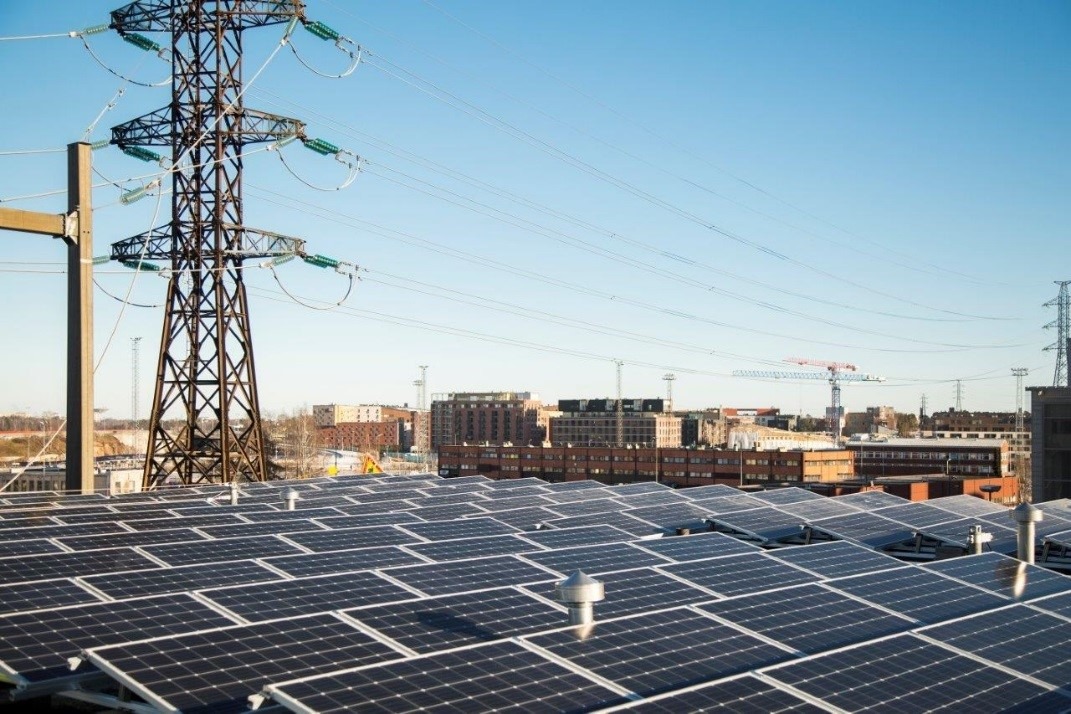
Kiinteistökohtainen aurinkosähkön tuotanto ei yksin pysäytä ilmastonmuutosta. Se voi olla osa ratkaisua, kun aurinkosähkön tuotannon arvioidaan lisääntyvän kiinteistöillä voimakkaasti lähivuosina ja 2020-luvulla. Kiinteistöillä suuri rooli aurinkosähkön tuotannossa Suomea velvoittavat EU:n tavoitteet uusiutuvan energian tuotannon lisäämisestä. Rakennusten katoilla on potentiaalia tuottaa aurinkosähköä eivätkä katot kilpaile maankäytöstä esimerkiksi ruoantuotannon kanssa. Voisiko kiinteistöillä siis olla merkittävä osuus ilmastotavoitteiden saavuttamisessa? Avainasemassa ovat luonnollisesti investointipäätöksiä tekevät kiinteistönomistajat. Metropolia Ammattikorkeakoulun talotekniikan ylemmän ammattikorkeakoulututkinnon opinnoissani keskitytään pitkälti energiatehokkuuteen ja uusiutuvan energian tuotantoon. Selvitin opinnäytetyössäni kiinteistönomistajien suhtautumista aurinkosähkön tuotantoon ja arvioin kiinteistöjen aurinkosähköpotentiaaleja. Kiinteistöt olivat kaupallisessa käytössä eli esimerkiksi toimitiloja ja logistiikkarakennuksia. Mukana oli myös muutama institutionaalinen vuokra-asuntosijoittaja, muttei asunto-osakeyhtiöitä. Asunto-osakeyhtiöiden edustajien näkemyksiä on selvittänyt Kiinteistöliitto ja raportin voi lukea täältä. Suomen rakennusten kattojen aurinkosähköpotentiaalista on tehty joitain karkeita arvioita. Defaix ym. (2012) arvioivat potentiaaliksi 7 prosenttia ja Pöyry Management Consulting (2017) 14 prosenttia Suomen vuotuisesta sähkönkulutuksesta vuonna 2030. Potentiaalin hyödyntämistä rajoittaa kuitenkin se, että suurilla kiinteistöillä, joilla on tuotantoon erinomaisesti soveltuvat katot, ei aina ole riittävää kulutusta sähkön hyödyntämiseksi kiinteistöllä. Suuren rakennuksen aurinkosähköpotentiaali voi olla lähemmäs gigawattitunnin vuodessa ja laitoksen nimellisteho megawatin luokkaa. Sähkön varastoiminen akkuun ja varsinkaan sähkön myyminen verkkoon taas eivät ole taloudellisesti kannattavia vaihtoehtoja. Ympäristöystävällisyys houkuttaa aurinkosähkön tuottamiseen Aurinkosähkön tuotanto kiinnostaa kiinteistönomistajia laajasti. Kyselyyni vastanneista kiinteistönomistajien edustajista 86 prosenttia on kiinnostunut aurinkosähköntuotannosta edustamillaan kiinteistöillä. Noin puolet olisi valmis tekemään investointipäätöksen tämän tai ensi vuoden aikana. Aurinkosähköstä on ilmeisen myönteisiä kokemuksia, sillä kaikki ne vastaajat, joiden kiinteistöllä on jo aurinkovoimala, ovat valmiita hankkimaan uudenkin voimalan lähivuosina. Aurinkosähkön hinta laskee koko ajan eikä kalliimman sähkön maissa tarvita enää tukiaisia, jotta tuotanto olisi kannattavaa (Vimpari & Junnila 2017; Lang ym. 2016). Samaa tilannetta lähestytään Suomessa. Taloudellinen kannattavuus ei kuitenkaan ole ainoa syy investointipäätöksen tekemisessä. Kiinteistönomistajat mainitsivat muiksi syiksi yleisimmin tuotannon ympäristöystävällisyyden ja toisiksi yleisimmin kiinteistön vuokrattavuuden ja/tai imagon. Vuokralaisilla on omia ympäristöohjelmia ja -tavoitteita, jotka vaikuttavat myös toimitilojen valintaan. Omistajat ovat huomanneet, että energiatehokkuus ja uusiutuvan energian tuottaminen parantavat kiinteistön vuokrattavuutta ja nostavat siten sen arvoa. Kolmannes niistäkin vastaajista, jotka pitivät aurinkosähkön tuotantoa kannattamattomana, voisi silti asennuttaa voimalan kiinteistölleen jo lähivuosina. Vuokralaisilla on mahdollisuus vaikuttaa aurinkosähkön tuotannon yleistymiseen muutenkin kuin valitsemalla kiinteistön, jolla jo on aurinkovoimala. Noin puolet kiinteistönomistajista suhtautuu vuokralaisen omaan tai vuokralaisen ja omistajan yhteiseen aurinkosähköhankkeeseen myönteisesti ja viidennes harkitsee asiaa tapauskohtaisesti. Kielteisen kannan heti kättelyssä ottavia on vain viidennes. Loput eivät osanneet tai halunneet kertoa kantaansa. Essi Kuikka Talotekniikan opiskelija, ylempi amk Lähteet: Defaix, P. R., van Sark, W. G. J. H. M., Worrel, E. ja de Wisser, E. 2012. Technical potential for photovoltaics on buildings in the EU-27. Solar Energy 86, s. 2644–2653 Hajautetun uusiutuvan energiantuotannon potentiaali, kannattavuus ja tulevaisuuden näkymät Suomessa 2017. Verkkoaineisto. Pöyry Management Consulting Oy. https://vnk.fi/documents/10616/3866814/5_2017_Hajautetun+uusiutuvan+energiantuotannon+potentiaali%2C+kannattavuus+ja+tulevaisuuden+n%C3%A4kym%C3%A4t+Suomessa/f7fa0126-2880-452d-954b-f52ea5f0a9a0?version=1.0. Luettu 10.10.2018. Lang, T., Ammann, D. ja Girod, B. 2016. Profitability in absence of subsidies: A techno-economic analysis of rooftop photovoltaic self-consumption in residential and commercial buildings. Renewable Energy 87, s. 77–87. Vimpari ja Junnila 2017. Evaluating decentralized energy investments: Spatial value of on-site PV electricity. Renewable and Sustainable Energy Reviews 70, s. 1217–1222.
CERN Bootcamp – A Different Learning Experience
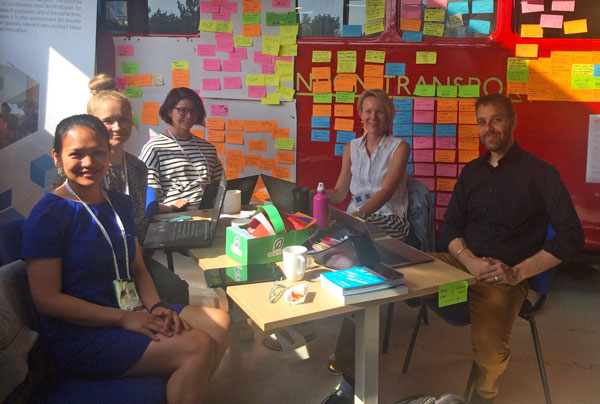
I’m studying Master’s degree in Design at Metropolia University of Applied Sciences. I am in the last stretch of my studies and in the spring I was missing just one last course when I saw an early introduction to the CERN Bootcamp -study concept. I stopped looking for other courses, since I knew this was the one for me. I put the date in my calendar and waited for the application period to start. CERN Bootcamp offered a perfect crash course for service design process, methods and tools. As a designer and design student concentrating in service design and design management, jumping in to the deep end felt easy. I would emphasize the easiness of the jumping with no fear. Swimming in the design current was as stormy and joyful ride as most design projects I have ever been involved in. Solving Huge Challenges The kick-off weekend in May showed us just how crazy this study period was to be. A crazy amount of work and a huge challenge. At the kick-off we the course students formed teams and chose the challenges to be solved during the Bootcamp. My team’s challenge was to find a solution for how to make climate change effects visual to consumers in purchase decision situations. No more or less than to have positive influence on climate change. No more or less than to influence people’s behaviors. It seemed overwhelming at first, but fortunately my whole team had their brains set to design thinking mode and we were ready and happy to jump in with full of curiosity. We could not wait to start the work. Different Expertise Was Our Strength The big push for me to apply to the CERN Bootcamp was to test my understanding and implementing skills of service design and mostly to work with new people. How would I work with totally new people? As I look back, throughout the whole experience, the greatest lessons I got out with was from the teamwork with my wonderful multidisciplinary team at CERN. My team worked really well together. We were students who all came from different fields and had different backgrounds and work experiences. Everyone was one hundred percent committed to the task and everyone brought in all their different expertise to the table. We worked really hard within an incredible workflow spiced with humor and good spirit. In addition to becoming acquainted with all these wonderful people in my team, I also had an opportunity to meet with other great people that I would have never met otherwise. Such as a physicist at Cern, experts on climate issues, consumer behavior and activism, as well as all the customers at Cern-cafeteria. All random people who were interested in our project and would stay with us and stir our views. And not the least the teachers and mentors without whom we would not have found the right tools and methods during the project and come up with a solution to the problem at the end. Having the chance to meet so many interesting people with fresh viewpoints and the opportunity to visit and stay at the incredible and almost surreal CERN made my CERN Bootcamp the most rewarding learning experience in my studies. Heidi Mäkelä

The editorial team will provide the content of the Masterminds blog before publication.
The editorial team started its work at the beginning of 2022.
Pia Koirikivi, chief editor in Masterminds blog, Pedagogical Specialist
Minna Kaihovirta, Manager of Dialog
Iira Lankinen, Principal Lecturer
Riikka Wallin, Publications Specialist
Zinaida Grabovskaia, Senior Lecturer
Salla Kivelä, Principal Lecturer
asiantuntija yamk business informatics Business Informatics Master’s Program CERN Bootcamp Construction Business hankinnat hankintastrategia hankintatoimi ilmastonmuutos Industrial Management Industrial Management Master’s program johtaminen koulutus kulttuurituotanto Marjatta Kelo master Master's Thesis masterminds Masterminds blog Master of Engineering Master’s degree Metropolia Metropolia AMK Metropolia Master's Metropolia UAS metropolia YAMK opinnäytetyö osaaminen service design Sharing economy sosiaali-ja terveysala sosiaaliala study trip Sustainability talotekniikka terveyden edistäminen terveydenhuolto työhyvinvointi ura yamk YAMK-tutkinto YAMK opinnäytetyö ylempi AMK ylempi ammattikorkeakoulututkinto Zinaida Grabovskaia
