
How Robotic Process Automation (RPA) Can Enhance Modern Services
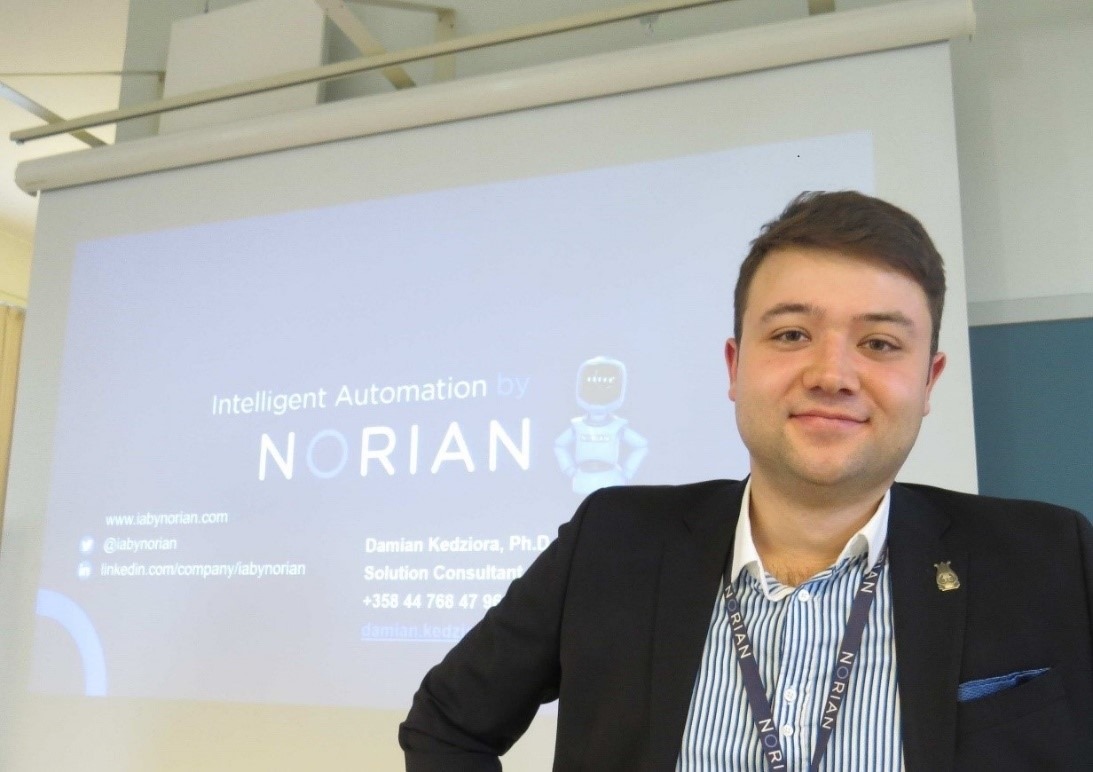
Robotics is strongly impacting the daily service operations today, both globally and on the micro level. What is RPA? Robotics Process Automation (RPA) in services industry is ‘an application of technology leading to automating business processes’. In other words, this is a situation when a ‘software robot’ captures and follows the same steps as a human worker would do when managing business processes: in transactions, data manipulation, and even communication with other digital systems (Willcocks et al. 2015). RPA is a concept imitating human thinking that is based on reasoning. The PRA process means a succession of definitions and optimization of steps, the same as in the process done by a human, but also streamlining it, and then checking and testing it. In the era of innovation, RPA is a quite young concept in the business science, only a few years old, but already perceived as the key element of the 6th innovation wave, along with Intelligent Automation (IA) and Artificial Intelligence (AI). PRA innovation for business and society This visible change to robots from human workers has provided a lot of debate in society. Similar magnitude of innovation, that disrupted traditional ways of doing things, happened already multiple times in human history. Each time it caused some bias and uncertainty among people. Among the most recent disruptions are the growing computer power, mobile and digital networks, and innovations in biotech industry. Every time, a new wave of innovation seemed to displace the old types of jobs and caused some degree of fear, or even panic in the population. Recently, following a rapid growth of service offshoring industry and facing consequences of relocating operational tasks to more cost-efficient locations (Kedziora et al. 2017), more and more companies have started looking towards robots and automatic solutions. Business sees PRA as a remedy to ease a huge amount of various repetitive business tasks. The trend in the 1990-2000-s was visible in using global sourcing (in simple words, outsourcing production and services). It later changed to nearshoring in the 2010-s (or getting production and services closer to home). Then, very recently business has shifted to digital sourcing (robotic workforce). This change in global services was triggered by the need to transfer some tasks to a ‘more efficient delivery source’ Robotization is gaining speed as we speak Presently, the popularity of robotics started rising really fast! There are many reasons for that: first, because robotics makes repetitive work faster and cheaper second, based on the estimations, there is around 35% of legacy systems in companies. They will need replacement in near future finally, similar to other current solutions, robotics is based on the Cloud. It makes its operations faster, cheaper and more sustainable. This last reason is especially important from the technical perspective. Cloud computing is based on the delivery of hardware infrastructure, applications, and systems software as a service(Armbrust et al. 2009). In other words, it provides a wonderful platform to sit a robot in a highly secure cloud computing facility. It is also more sustainable and ‘green’ to use. As a result, robotization has proven to be more effective that having humans in different countries. It optimizes capacity and makes literally ‘zero’ mistakes. It also makes a greener and more sustainable solution by reducing multiple types of operating costs. How to build an RPA solution? To address the demand for robots, the top global companies started offering Automation as a Service (AasS), a new business model for automated services. The software robot is able to automate various business processes (such as invoicing, procurement, customer service, etc), available 24/7, and operating interruption and error free, since robots rely on well-described processes with rules and structured data. The execution of change, according to the IA management framework, enables to develop virtual workforce in the cloud, which can be referred to as Centre of Excellence (CoE) (Norian, 2018). Presently, AasS solutions are based on first, the rule-based robotics, and second, Artificial Intelligence (AI) and Machine Learning (ML). Thus, we as users witness a paradigm shift from traditional coding and programming to the use of machine learning. Furthermore, ML algorithms are increasingly ‘taught’ to generate business rules for the robots, through exploring, describing and utilizing big data. Since such a data-driven approach requires large data sets, robotics is meaningful for such processes that are done massively, repetitively, and need high accuracy. In this case, investment in robotics will absolutely pay off. Optimization and management of a robotized process is possible through the Advanced User Interfaces (AUI) such as used for chat bots. They are based on natural language processing, and in the future, with the increased understanding of meaning in voice commands, will also be managed by voice. Most likely, the next coming trend is Cognitive Automation, and the future of robotics is very bright and promising. Damian Kedziora Damian Kedziora is a Doctor of Science in Industrial Engineering and Management from Lappeenranta University of Technology (2018). He has been working for top global corporations of banking and ICT industry for the past 6 years, focused on efficient service migrations for offshore locations. His focus of interests moved from the outsourcing of services to robotizing processes and using artificial intelligence in operations. Dr. Kedziora is currently an Intelligent Automation Solution consultant at NORIAN Accounting Oy*. He shared his insights about the trends in Robotic Process Automation (RPA) to Master’s students in Industrial Management. *NORIAN helps over 2,000 businesses in Northern Europe and Germany simplify their business and administrative processes. NORIAN has been serving businesses for twenty years and have been continuously investing in improving services and the newest technologies. The company is home to "Intelligent Automation by NORIAN", one of the leading Nordic providers of Robotic Process Automation. Visit www.norian.eu to learn more. References Armbrust, M., Fox, A., Griffith, R., Joseph, A. D., Katz, R. H., Konwinski, A., Lee, G., Patterson, D. A., Rabkin, A., Stoica, I.& Zaharia, M. (2009). Above the Clouds: A Berkeley View of Cloud Computing, Technical Report No. UCB/EECS-2009-28 Kedziora, D. Academic Insights on the Service Offshoring Industry’s Challenges Outsourcing&More Magazine. Mach 2017. Vol. 33, No. 2. (ISSN 2083-8867) NORIAN (2018): ‘Free your employees from monotonous tasks’ // access date, 23.10.18: https://www.iabynorian.com/services/free-employees-monotonous-tasks/ Willcocks, L.P., Lacity, M. and Craig, A. (2015). The IT Function and Robotic Process Automation. The Outsourcing Unit Working Paper Series, pp. 1–39, The London School of Economics and Political Science, London, UK.
Uusi julkaisu: Metropolia Master´s – Keskusteluja työelämän kehittämisestä

Ylempi ammattikorkeakoulututkinto eli YAMK-tutkinto on maisteritasoinen koulutus, joka on tarkoitettu jo työelämässä oleville. Tutkinto antaa uutta asiantuntijaosaamista erityisesti työelämän muutos- ja kehittämistilanteisiin. Opinnoissa korostuvat aidossa työelämän toimintaympäristössä – usein omalla työpaikalla – toteutettavat oppimistehtävät, joista keskeisin on tutkimuksellinen kehittämistyö eli opinnäytetyö. Metropolia Ammattikorkeakoulu on juhlinut vuonna 2018 kymmenettä toimintavuottaan. Sen kunniaksi toteutettiin ylempien ammattikorkeakoulututkintojen maailmaa valottava julkaisu Metropolia Master´s – Keskusteluja työelämän kehittämisestä (toim. Marjatta Kelo & Elina Ala-Nikkola). Julkaisussa tuodaan esiin välähdyksiä siitä, millaisia YAMK-opinnäytetöitä vuosien saatossa on eri aloilla tehty ja millaista osaamista ne ovat tuottaneet tekijälleen, hänen työyhteisölleen ja koko toimialalle. Julkaisu rakentuu ylempään AMK-tutkintoon valmistuneiden alumnien sekä Metropolia Ammattikorkeakoulussa työskentelevien asiantuntijoiden vuoropuhelusta. Ne avaavat ikkunoita siihen, miten työelämään linkitetyt maisteritasoiset opinnot vievät eteenpäin paitsi opiskelijoita yksilöinä myös työyhteisöjä ja koko toimialaa. Lisäksi julkaisussa pohditaan monesta näkökulmasta ylempien ammattikorkeakoulututkintojen merkitystä yhteiskunnalle ja yksilöille ja mukaan on tuotu myös näkökulmia muutamista myös aivan tuoreista tutkinnoista, joista ei vielä ole valmistunut opiskelijoita. Metropoliassa on tällä hetkellä 25 ylempään AMK-tutkintoon valmistavaa tutkinto-ohjelmaa, joista tässä julkaisussa ääneen pääse 14. Koska tarjoamme tutkintoja niin englanniksi kuin suomeksikin, on julkaisussa tekstejä molemmilla kielillä – opetuskielen mukaisesti. Julkaisu on luettavissa Metropolian verkkosivuilla verkkojulkaisuna osoitteessa https://www.metropolia.fi/masters2018 sekä e-kirjana osoitteessa: http://urn.fi/URN:NBN:fi:amk-2018121922374 Lisätietoja: kehityspäällikkö Marjatta Kelo, marjatta.kelo@metropolia.fi p.040-630 2191 julkaisut@metropolia.fi
New publication: Metropolia Master´s – Discussions on the development of work life
The University of Applied Sciences Master's Degree (YAMK) is a degree program intended for people who typically already have a Bachelor’s degree and are currently practicing their profession, but who wish to deepen their professional skills and competences through further studies. Studies in Metropolia Master’s degree programs provide new expert knowledge for tackling, in particular, demanding change and development projects at work. Metropolia University of Applied Sciences (UAS) is celebrating its tenth year of operation this year. In a new publication – Metropolia Master´s Discussions on the development of work life (ed. Marjatta Kelo & Elina Ala-Nikkola) – we wish to give the reader a quick glimpse of what kind of Master’s theses have been carried out over the years and what kind of know-how the authors, their work communities, and even entire industries have gained through these theses. The online publication is built on textual dialogue between Metropolia alumni and experts at Metropolia UAS. In their texts, the alumni first tell about their learning experiences and describe their own thesis. Next to each alumni text is a text by Metropolia expert/s, which serves to expand the perspective of the development project carried out by the alumni and mirrors the content and the significance of the development project to the current state of the field in question. Thus, the dialogue helps create a holistic picture of how Master's studies linked with work life help the students move forward in their careers as individuals, along with their work communities and the whole industry. In addition, the publication includes also some articles from new Master´s degree programs that no one has graduated from yet. Metropolia currently has 25 Master’s degree programs of which 14 are presented here. Since we offer degrees both in English and in Finnish, this publication includes texts in both languages - according to the language of instruction. Read online publication Metropolia Master´s Discussions on the development of work life: https://www.metropolia.fi/masters2018 or e-book: http://urn.fi/URN:NBN:fi:amk-2018121922374 For further information: kehityspäällikkö Marjatta Kelo, marjatta.kelo@metropolia.fi p. 040-630 2191 julkaisut@metropolia.fi

The editorial team will provide the content of the Masterminds blog before publication.
The editorial team started its work at the beginning of 2022.
Pia Koirikivi, chief editor in Masterminds blog, Pedagogical Specialist
Minna Kaihovirta, Manager of Dialog
Iira Lankinen, Principal Lecturer
Riikka Wallin, Publications Specialist
Zinaida Grabovskaia, Senior Lecturer
Salla Kivelä, Principal Lecturer
asiantuntija yamk business informatics Business Informatics Master’s Program CERN Bootcamp Construction Business hankinnat hankintastrategia hankintatoimi ilmastonmuutos Industrial Management Industrial Management Master’s program johtaminen koulutus kulttuurituotanto Marjatta Kelo master Master's Thesis masterminds Masterminds blog Master of Engineering Master’s degree Metropolia Metropolia AMK Metropolia Master's Metropolia UAS metropolia YAMK opinnäytetyö osaaminen service design Sharing economy sosiaali-ja terveysala sosiaaliala study trip Sustainability talotekniikka terveyden edistäminen terveydenhuolto työhyvinvointi ura yamk YAMK-tutkinto YAMK opinnäytetyö ylempi AMK ylempi ammattikorkeakoulututkinto Zinaida Grabovskaia
