
Turning Public Services to Digital
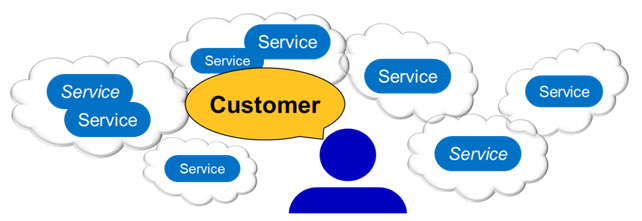
Master´s thesis “Total Portfolio for Public Services” (1) introduces the way to prepare existing public services for the digital era. Citizens and their life events can trigger new demand for digital public services, but introducing or improving digital services will require tectonic changes in the current service base. How does the current service base look like in public organizations? Most public organizations struggle with a myriad of independent services. Services and customer insights are scattered in disparate offices or entities; and so are the corresponding digital assets. This disparity makes the change towards a smooth digital experience hard and financially challenging to execute. As a result, customers often have to find and select their public services from bits and pieces of a fragmented, incoherent mass of services. Yet, citizens of today expect the same smooth experience from all services they consume – either digital of physical, public or private, automated or manual. What primarily matters for them is that the service gets its job done as expected, and when expected. It also matters that the customers can find the service easily. The cool “wow!” effect happens when the citizen gets the service available even before he or she realizes the need for it. And it is only after such a happy discovery that he or she starts inquiring how much the service can cost, and how the cost is charged i.e. through taxes, through insurance, or out of the pocket. If the cost is right, the citizen chooses the best option and enjoys the experience. Definitely, it is much nicer to pay a few dozens of euro for a childbirth, instead of 10 000 Euro or more, depending on potential complications. This angle is one of the strongpoints for consuming public services. They tend to be affordable and predictable without unexpected extra bills. Public service quality also tends to be high, as there is a lot of public attention, monitoring, and quality checks. In addition, public services are found in public offices, which makes them easy to spot. Private services must struggle much more for being noticed. In addition, many public services have traditionally been incumbent without much of a competition. All these factors make the current service base look very attractive and promising. But is it for long? Not only “what” but also “when” and “how easy” Digitalization changes this natural attractiveness of public services. A much wider, “heavier” public service base faces unprecedented direct rivalry and a threat of substitution from the private side in the ways that were not possible in pre-digital era (2, 3). Hence, today it is not enough to concentrate on the traditional strongpoints of public services (affordability, quality, wide coverage). These services must meet the customer needs better. Let´s start with “when”. In essence, public services consumption happens in certain life situations. When a child is born, certain childcare services are triggered. As the child grows, new service needs come to the picture, and they form a web of service needs. Imagine if those life situations could be identified and analyzed so well that the citizens could be offered the right services proactively. This is why Stiglitz-Fitoussi-Sen commission modeled the typical citizen´s core needs for the European Union in 2009 (4). Since then, for example, Finland and Estonia have established their Artificial Intelligence programs pursuing this capability to identify citizens’ life-events for focusing public services better (5, 6, 7). In other words, the providers of public services look ahead and have a clear vision how to be more proactive. So, after building such visions, why there is still a problem with “how easy” the public services can be? Unfortunately, this problem exists, and it is both managerial and technical. It originates from the fact that few public services are islands of their own, and they are not really restricted to certain service areas or tools either. Yet, the operational models of local governments have divisional silos which separate public services into the urban environment, cultural, education, social and health services. This dilemma makes an obstacle for triggering a change in public services into easy and proactive digital services, as envisaged above. What to do? My Master´s thesis (1) addresses these issues and proposes an approach to handling them through constructing a business operational concept named the ´Business Wheel´. The ´wheel´ first describes the related business dynamics and then suggests a Portfolio Management setup and the necessary organization around those portfolios. The key pivotal portfolio for a municipality is a Service Portfolio because local governments run hundreds of services. If they are run disparately, without clear service structures, it becomes almost impossible to match those hundreds of existing services with the citizen’s life situations in the way envisaged above. This is why the thesis recommends that local governments should consider the Service Portfolio and the customer life events first. Addressing both areas will directly lead to a need for fundamental transformation towards digital services, but there is also agility required in adapting strategic targeting. The success will depend on the ability to continuously assess the environment and effectively steer the execution. However, to capture the value, just steering and targeting is not enough. New and improved public services will be needed, which requires a substantial amount of innovation. All these parts of the ´Business Wheel´ and Service Portfolio practices should contribute to constructing a managerial ecosystem and prepare public services for a turnaround based on life-events triggered services. About the author Ilkka Kautto works as a directing chief specialist, ICT development in the City of Helsinki. He has over twenty years of experience in innovating and developing new digital solutions and related organizational capabilities in international technology cluster and public organizations. References Kautto, I. (2020). Total Portfolio for Public Services: How to Prepare Existing Public Services for a Turnaround to a Life-events Triggered Proactive Ecosystem. [Master´s Thesis]. Helsinki, Metropolia university of Applied Sciences. Christensen, C. et al. (2016). Competing Against Luck: The Story of Innovation and Customer Choice. 1st edition. New York, NY: HarperBusiness. Ulwick, A. (2017). Jobs-to-be-done for Government. April 19 2017. [online] [Accessed 2 March 2020]. Stiglitz, J. E. and Sen, A. and Fitoussi, J-P. (2009). Report by the commission on the measurement of economic performance and social progress. [PDF] [Accessed: 10 June 2020]. Sikkut, S. and Velsberg, O. and Vaher, C. (2020). #Kratt AI: The next stage of digital public services in #eEstonia. Republic of Estonia, GCIO Office. [PDF] [Accessed 25 February 2020]. Maunula, A. (2019). Julkisen sektorin digimenestyjät 2020, Suomi. [online] BearingPoint. [Accessed 19.1.2020]. Ministry of Finance (2020). The AuroraAI national artificial intelligence program begins – with the aim of using artificial intelligence to bring people and services together in a better way. [online] [Accessed: 10 February 2020].
Roadmap to the Market for a New Medical Device
There are myriads of new interesting, innovative ideas how to help patience with various problems. However, much fewer ideas find their way to the market and become real innovations. Knowing that I am a Master´s student in business, a startup company has turned to me for help how to bring a new device to the market. Here, I share my ideas how to possibly approach this challenge. The Story Behind a New Device Back in October 2019 while attending a business event, I met a migraine care specialist who has dedicated 20 years of his healthcare career to creating safe and effective treatment methods for migraine care. Over these years, he has come to the idea of creating an anti-migraine device that could treat a migraine by placing the device on the patience´s head and repeatedly touching sensitive areas, similar to a massage, until the migraine disappears. The idea of the device is based on his experience of massaging head and neck, which he has proven successful in his practice as a physiotherapist when working with migraine patients. Now, after the idea have matured, the time has come to create this device that can mechanically treat the patient and reach to a much wider audience. Despite the previous experience of being an entrepreneur, the founder was in search of a team who could make the device launch professionally and enthusiastically. After some search, such a team was born: the founder himself; an engineer who has constructed the device prototype as his thesis work; another engineer who is focused on the computer side, and myself, responsible for exploring the best way of bringing the device to the market. Interesting, but Challenging After starting to work with this team as a consultant, I was simultaneously studying in a Metropolia’s Master´s program and searching for a good topic for my Master´s thesis. At first, the temporary nature of the migraine device project ruled it out for me as an option. But after diving deeper into the topic, after visits to business match-making events, conferences, and GE Healthcare Village in search of expert inputs, I have really fell in love with the challenge, and wished the best of success to this brilliant idea to revolutionize the migraine care with a hi-tech solution. And I decided to take it up as a Master´s thesis. My goal is to outline a roadmap how to bring this new medical device to the market. Such a roadmap will be used by the start-up team as a guide for bringing the low risk medical device to the market. What Business Gurus Say? After conducting the background investigation with the internal start-up team, a possible approach started to crystallize. My next step was to look deeply into what business literature say about launching new products. Surprisingly, there seems to be no single opinion on the topic. Some gurus put stress on a business model, others on cracking customer needs, still others on a clever Customer Value Proposition (CVP). And everyone seems to favor own perspective… There was nothing else to do but to structure all arguments, revise, re-think, and compile an end-to-end approach out of available suggestions. The draft of the roadmap to the market result looks like this: Identifying the Target Customer Groups & Competitors Step 1: As soon as the idea of a new product has emerged, the start-up team should look into Identifying the target customer groups & competitors. In other words, the team needs to clearly identify who are the main potential customers; and carefully check potential competitors. From the business science perspective, the team will need to do segmentation, targeting, positioning and competitor analysis. Segmentations distributes the customers into segments, while targeting and positioning outlines the proposition idea for each segment. Finally, competitor analysis checks competitor products. It is the target customers who will ultimately decide if the product meets their needs; therefore, the start-up team should start with the cusomers. (There are multiple gurus who promote these views, but we especially relied on Osterwalder 2014 (1), Leibson 2018 (2)). Identifying the Unserved Customer Needs Step 2. When the target customer groups are defined, the next step is to look into Identifying the Unserved Customer Needs of these customer groups. In other words, the start-up team should look into the factors that are critical for the target customers but currently are unrecognized, unserved, or underserved. The unserved needs most typically concern functionality/performance, convenience/usability (ease of use, reliability, efficiency, compatibility etc), customer experience (especially!), product/service design, price, and other needs. The unserved needs will pave the way for success of the new product since the current products do not meet them fully (inspired by Leibson 2018 (2), Breschi 2020 (3)). Define a Customer Value Proposition Step 3. As soon as the needs to be served by a new product are identified, the solutions to meet them are compiled to Define a Customer Value Proposition (CVP). It means formulating a clear and appealing offering for the target customers. The offering is typically structured into: “the jobs-to-be-done” (what customers need to achieve), “pain relievers” (what resolves customer problems and makes their lives easier), and “gains” (what customers gain in terms of economic, emotional, convenience etc. benefits). These elements will determine the strategy how to present and price the new product, and how to win customers. For example, in marketing, it will help to name the exact customer problems and offer clear solutions to them. The primary focus is placed on offering those things that will please the customers most. (Inspired by Osterwalder 2014 (1), Leibson 2018 (2), and Gierej, 2017 (4)). Minimal Viable Product Step 4. As soon as the CVP is defined, it is the time to establish and Refine the feature set for the intended Minimal Viable Product (MVP). In other words, at this stage the start-up team should be able to say: “This is our product! This is the list of features that own new product will include”. It means selecting those features (based on emotional and functional design, usability and reliability) that will create the necessary minimum package of a successful new product. Naturally, some customer needs and desires cannot be met at this initial stage, and they should wait for the future. However, the trick here is to clearly select which features (i.e. addressing customer needs) should absolutely be present in the new product, and which could appear later, but the new product will still be headed into the right direction. To implement it, the start-up should test the MVP idea with customers, and make sure that they agree on the viability of proposed MVP product. This stage will save time and cost for the start-up by carrying out a thorough customer research on a new product. Additionally, at this stage, it is also beneficial to collect ideas on a possible service around the new product when researching the MVP with customers. (Inspired by Leibson 2018 (2), (Gierej, 2017 (4), Walker 2018 (5), Ries 2011 (6)). Create a Prototype Step 5. After agreeing on the feature set for a MVP, the “paper stage” of the new product development is over. The next step is to physically Create a prototype and test it. The prototype is implemented through a cycle of building, measuring, learning & developing, and repeating the cycle until the prototype is ready. At this stage, when it becomes clear that the prototype is soon to appear, a possible service around the new product can be designed. It was not feasible to do earlier, since the fate of the prototype was not yet fully clear. Now, the Minimum Viable Service (MVS) can be developed. The MVS is co-designed with customers and discussed in detail to collect valuable feedback. The stages of MVS design include: (1) design of features (with customers), (2) design of client experience (with customers), (3) design of processes and systems (with customers), and finally (4) design of strategy and policy (based on customer insights and the start-up goals). (Inspired by Leibson 2018 (2), Ries 2011 (6), Pierini 2019 (7), Moritz 2005 (8)). Testing Step 6. Next step is to Test MVP/MVS with customers. Feedback and discussions are good, but not really enough. There must be interaction between the users and the product/service and the producer, so that the needed changes are spotted and well understood. In the test plan, customer should physically try the demo product, followed by in-depth interviews to identify customer perceptions. It will be more challenging to organize a demo service, therefore various service design techniques will be employed to “test” customer perceptions of the intended service. On the enterprise level, the gurus´ advice is to organize the landing web-pages to drive customers to these pages and test the demand for the new product (and service) via early marketing. Pre-order page will help customers to indicate their interest and order the product or service before it is launched into the market. The web-page should have explanatory videos showing how the users can operate the product. This stage will also – once again – include customer surveys to check and identify any possible issues in reliability or usability of the product. (Inspired by Leibson 2018 (2), Ries 2011 (6), Moritz 2005 (8)). Developing a Business Model Step 7. This step is focused on Building a viable Business Model for the start-up. “Startups don’t fail because they lack a product; they fail because they lack customers and a profitable business model”, Steve Blank (9). At this stage, when the start-up has built the prototype, interacted with target customers, and ensured the interest from the market, it is time to focus on earning money and a more long-term perspective. The start-up cannot any longer use the enthusiasm of its teams and investment money from business angels. The business life should start as soon as possible! The business model will reflect the key business choices (how to sell and what are the channels, physically or online, how to deliver the service, how to pay, how to repair, who are the partners etc), and most importantly, what is the profit logic for the product. (Inspired by Osterwalder 2014 (1)). Launching a Lean Start-up and Brand Step 8. Next step is to Launch a lean start-up and brand. Why not earlier? Because the reason for existence of a start-up is the new product and the business model. There is no meaning in a start-up that does not have them. Why lean? Because a small and innovative team has no time to tangle itself into “red tape”, and simply does not have resources for anything bigger than a micro – but very enthusiastic – company. The lean start-up will have a mission and vision that state the direction to head for. Also, marketing and branding strategy will aim at building a strong brand (i.e. strongly preferred by customers). The marketing strategy will reflect the views of the stakeholders, and customer relationships will aim to fulfill the customer promise and support engaging communications towards the target customer group. (Inspired by Reis 2011 (6), Rus et al. 2018 (10)). Market Entry and Operations Step 9. After that, off we go into the full-size market entry and operations! Successful market entry will be based on a detailed plan of how run, finance the operations, and grow. Here, many different factors must be taken into account: the size of the market, current and future trends, competition, regulatory policies of the host environment etc. The first step is to introduce a product into a new market for penetration. The next step is commercialize where the conditions facing a business are best for customers. Distribution will grow as the number of users increase and they follow. Simultaneously, all the time a review of the product and service performance is collected from customers who have experience in using them. (Reis 2011 (6), Datta 2014 (11)). Next Step: Seek Opinions of Business Practitioners As we noticed when reading literature, there are many approaches how to bring a new product to the market. This summarized approach relies on the concepts from business gurus published by Leibson, A. Osterwalder, E. Ries and many others. It is possible that some of the outlined steps should be done simultaneously, or some steps are missing, or need to be done earlier. With this initial draft of the roadmap how to bring a new product to the marker, we are now actively seeking comments from business practitioners before applying it into practice. The more valuable opinions from Yrityskeskus organizations, individual entrepreneurs, and business communities I can collect, the more robust the roadmap can be. I am early looking forward to your opinions, experienced business practitioners! Suggestions can be millions, but you have seen how successful solutions work in practice. Your option is sought after and highly appreciated! About the author Elizaveta Berezkina – a Master´s student in Business Informatics, has expertise in business administration of established organizations and international startups. After graduating as a Bachelor in Hospitality Management in 2014, has travelled the world, lived as expat in UK, and worked for various international companies in real estate, retail, management consulting, business concept development etc, which she is doing with an entrepreneurial mindset, positive attitude and curiosity, especially for innovations. Contact email: Elizaveta.Berezkina2@metropolia.fi References Osterwalder, A., Pigneur, Y., Bernarda, G., Smith, A. and Papadakos, T. (2014). Value Proposition Design: How to Create Products and Services Customers Want. Wiley. Leibson, H., 2018. How To Achieve Product-Market Fit. [online] (Jan 18, 2018). Breschi, A. (2019). 16 Types of Customer Needs (and How to Solve for Them). [online] Gierej, S., 2017. Techniques for Designing Value Propositions Applicable to the Concept of Outcome-Economy. [online] Walker, T. (2019). Persuasive Power Derived from the Benefit Pyramid+™: In Medical Device Marketing. [online] Ries, E. (2011). The Lean Startup: How Today's Entrepreneurs Use Continuous Innovation To Create Radically Successful Businesses. 1st ed. United States of America: Crown Business New York. Pierini, P. (2019). Don’T Fall In Love With Your Prototype. [online] Moritz, S. (2005). Practical Access to Service Design: Handbook. London. (PDF) Blank, S. (2009). The Customer Development Manifesto: Reasons For The Revolution (Part 1). [online] Rus, M., Konecnik Ruzzier, M. and Ruzzier, M. (2018). Startup Branding: Empirical Evidence Among Slovenian Startups. [online] Datta, A., Jessup, L. and Mukherjee, D. (2014). Understanding Commercialization Of Technological Innovation: Taking Stock And Moving Forward. [online] Image: Minnamoira (Pixabay License).
Terveyserot uhka kuntien hyvinvoinnille

Terveys on elämän voimavara. Terveyserot asettavat ihmiset eriarvoiseen asemaan tämän voimavaran suhteen.Terveyden ja hyvinvoinnin edistäminen on kuntien keskeinen tehtävä. Hyvinvointikertomus on työväline, joka kuvaa hyvinvointia ja terveyttä sekä niiden edistämistä kunnassa. Metropolia Ammattikorkeakoulussa selvitimme, miten terveyserojen kaventaminen ilmeni hyvinvointityötä ohjaavissa kahdeksan kunnan hyvinvointikertomuksissa.Tulokset osoittivat, että terveyserojen taustatekijöitä tunnistettiin, mutta tavoitteita tai konkreettisia toimia terveyserojen kaventamiseksi ilmeni hyvin niukasti. Hyvinvoinnin edistämiseen tähtääviä tavoitteita kuvattiin laajalti, mutta näitä tavoitteita ei perusteltu terveyserojen kaventamisella. (1) Terveyserojen kaventamisen keinot Hyvinvointikertomus on työväline, jolla tuetaan kunnan tiedolla johtamista ja päätöksentekoa. Terveyden ja hyvinvoinnin edistämistä tuetaan kansallisesti tuottamalla: kuntakohtaista tietoa väestön terveydestä ja hyvinvoinnista työkaluja terveyden edistämisen toiminnan seuraamiseen (2) ja työkaluja hyvinvointisuunnitelmien/-kertomusten laatimiseen (3). Terveyseroihin vaikuttavat elinolot ja moninaiset sosiaaliset tekijät. Vaikuttavia tekijöitä ovat esimerkiksi lapsuuden kokemukset, asumisolot, koulutus, sosiaalinen tuki, tulotaso, työllisyystilanne, yhteisö ja terveyspalvelut. Näin pelkästään sosiaali- ja terveysalan toiminta ei riitä, vaan terveyden ja hyvinvoinnin edistäminen edellyttää poikkisektoraalista ja monialaista vaikuttamista. Terveyserojen kaventamisen toimintamallien kehittämisessä tulisi ymmärtää yksilöiden toimijuuden ja yhteiskunnan rakenteiden välisen vuorovaikutuksen merkitys hyvinvoinnille ja terveydelle. (4) Hyvinvointikertomuksissa terveyserot, niiden tunnistaminen ja kohdennetut toimet terveyserojen kaventamiseksi näkyivät niukasti (vain 13 % analysoidusta aineistosta). Vain kolmessa kunnassa oli tehty toimenpiteitä puhtaasti terveyserojen kaventamiseksi. Näitä toimia olivat: toimenpiteiden keskittäminen kaupunginosaan, jossa ilmeni muita enemmän huono-osaisuutta ja sosiaalisia ongelmia kaupunkikeskusten kehittäminen epäsuotuisan eriytymiskehityksen vähentämiseksi liikuntapalveluiden kohdentaminen kotoutumisvaiheessa oleville maahanmuuttajille Monissa kunnissa kohdennettiin eri asukasryhmille (nuoret, aikuiset tai seniorit) kehitettyjä terveyden ja hyvinvoinnin edistämisen toimintamalleja ja –palveluita. Näitä palveluita ei kuvattu varsinaisesti terveyserojen kaventamisen toimina. (1) Hyvinvointityö on kunnan kaikkien toimialojen tehtävä Hyvinvointityö ei rajoitu vain sosiaali- ja terveydenhuollon toimialaan. Terveys kaikissa politiikoissa -periaate (Health In All Policies) korostaa, että terveysnäkökohdat tulisi aina ottaa huomioon kaikessa poliittisessa päätöksenteossa. Tämä periaate tiedostetaan kunnissa. Se näyttäytyy infrastruktuurin ja rakennetun ympäristön, asuntopolitiikan, kuntalaisten osallisuuden vahvistamisen sekä kulttuurin hyvinvointivaikutusten ymmärryksenä. Terveyden monimuotoisuus näyttäytyi hyvinvointikertomuksissa seuraavasti: terveyteen vaikuttavat monitasoiset osatekijät pyrittiin pääsääntöisesti ottamaan huomioon ja kunnissa pyrittiin vaikuttamaan moniin terveyttä tukeviin ja ylläpitäviin tekijöihin. Näiden tekijöiden osuus koko analysoidusta aineistosta oli 12%.(1) Ympäristö- ja elinolosuhdetekijöiden tunnistamisessa osaksi hyvinvointityötä oli suurta vaihtelua kuntien kesken. Joissakin kunnissa kulttuurin merkitys hyvinvoinnille oli kirjattu hyvinvointikertomukseen laajasti ja kulttuuriin panostaminen nähtiin tulevaisuuden säästöinä terveyttä edistävien vaikutusten takia. Kulttuurin merkitys ilmeni hyvinvointikertomuksissa moninaisesti. Kulttuurin yhteydessä saatettiin kuvata kirjastoa, mutta laajimmillaan kulttuuri käsitti opiskelun, kuvataiteet, musiikin, esittävän taiteen kuin myös erilaiset tapahtumat. Eräässä hyvinvointikertomuksessa kulttuuri nähtiin myös osallisuuden kokemuksia lisäävänä tekijänä. (1) Kansalaisten osallisuus nähtiin tärkeänä osana hyvinvointia, se kuvattiin lähes kaikissa kertomuksissa. (1) Osallisuus on yksi terveyttä edistävä tekijä ja terveyden ja tasa-arvon edellytys. Osallisuutta pyritään vahvistamaan erilaisin toimin, esimerkiksi yksinäisyyden poistamisella, vaikuttamismahdollisuuksien luomisella sekä yhteisöllisyyden tukemisella ja sosiaalisen pääoman lisäämisellä. (5) Terveyserojen kaventamisen osa-alueet Terveyden ja hyvinvoinnin laitos (THL) on jäsentänyt hyvinvointi- ja terveyserojen kaventamisen osa-alueita. Näitä ovat tieto, seuranta ja arviointi, tavoitteen asettelu, tiedosta toimintaan siirtyminen ja yhteistyö eri toimijoiden kanssa. Mitä tämä käytännössä tarkoittaa? Terveyserojen kaventaminen tulee asettaa tavoitteeksi kaikilla päätöksenteon tasoilla. Terveyserojen syytekijöihin puuttuminen edellyttää kaikkien hallinnonalojen toimia. Yhteistyö eriarvoisuuden vähentämiseksi lisää myös ymmärrystä itse ilmiöstä ja sen ratkaisun mahdollisuuksista. Lisäksi tarvitaan yhteistyötä kolmannen sektorin ja vapaaehtoisten kanssa. On tärkeää saada eri toimijat ja koko yhteiskuntapolitiikka tukemaan terveyttä ja hyvinvointia siten, että heikommassa sosiaalisessa asemassa olevien väestöryhmien hyvinvointi ja suhteellinen asema paranevat. On siirryttävä tiedosta toimintaan. Monimuotoinen sosiaalinen eriarvoisuus on ilmiö. Sen vähentämiseksi kaavaillut toimenpiteet pitää muotoilla konkreettisiksi tehtäviksi. Näitä toimia ovat esimerkiksi arjen päätöksentekotilanteet, vakiintuneet yksittäiset työkalut ja työmenetelmät eri aloille, ohjelmat, hankkeet ja päätösten ennakkoarviointi. (6) Terveyseroihin on mahdollista vaikuttaa Ympäristö- ja elinolosuhdetekijöiden huomioon ottaminen ja erityisesti kuntalaisten osallisuuden kokemisen vahvistaminen tarjoavat mahdollisuuden myös terveyserojen kaventamiseen. Terveysero-näkökulman ottaminen huomioon sekä hyvinvointityön tavoitteiden asettelussa, toimien suunnittelussa ja toteutuksessa sekä vaikuttavuuden arvioinnissa voisi tuoda tehdyt toimet näkyvämmiksi ja siten myös helpommin arvioitaviksi. Osallisuuden lisäämiseksi kunnat voisivat myös hyödyntää entistä monipuolisemmin kokemusasiantuntijoita sekä hyvinvointitiedon tuottamisessa mutta myös hyvinvointikertomuksen laatimisessa. Vaikuttamisen seuranta edellyttää arviointia. Kuntien hyvinvointikertomuksissa ei juurikaan kuvattu toimien arviointia tai seurantaa. Niissä ei myöskään ollut konkreettisia tietoja käytetyistä mittareista eikä saavutettuja tuloksia esitetty. Vaikuttavuuden mittaamisen ja arvioinnin osaamisen kehittäminen kunnissa on selvityksen tulosten perusteella edelleen tarpeen. (1) Terveyden edistämisen ylemmän ammattikorkeakoulututkinnon opinnäytetyössä selvitettiin yhteistyössä THL:n Hyvinvoinnin ja terveyden edistämisen yksikön kanssa, miten terveyserojen kaventaminen ilmenee hyvinvointityötä ohjaavissa dokumenteissa kahdeksan kunnan hyvinvointikertomuksessa. Raportti on kokonaisuudessaan luettavissa täältä (Theseus). Lähteet Ijäs, Katariina. 2020. Sosioekonomiset terveyserot kuntien hyvinvointikertomuksissa. Opinnäytetyö ylempi (AMK). Terveyden edistämisen tutkinto-ohjelma. Metropolia Ammattikorkeakoulu. (PDF) THL. 2020. TEAviisari. Verkkodokumentti. Julkaistu: 20.11.2015. Päivitetty: 21.11.2018. HL. 2019. Kunnan hyvinvointikertomus. Verkkodokumentti. Päivitetty: 28.4.2020 Tilles-Tirkkonen, Tanja – Lappi, Jenni – Karhunen, Leila – Harjumaa, Marja – Absetz, Pilvikki – Pihlajamäki, Jussi. 2018. Sosioekonomisesti heikommassa asemassaolevien kiinnostus ja mahdollisuudet digitaalisten terveyspalveluiden käyttöön. Yhteiskuntapolitiikka 83:3. 317 – 323. (PDF). Maunu, Antti – Katainen, Anu – Perälä, Riikka – Ojajärvi, Anni. 2016. Terveys ja sosiaaliset erot: mitä on tutkittu ja mitä tarvitsee vielä tutkia? Sosiaalilääketieteen aikakausilehti. No. 53. 189 – 201. (PDF). THL. 2019. Hyvinvointi- ja terveyserojen kaventamisen osa-alueet. Kirjoittajat Katariina Ijäs, terveydenhoitaja (ylempi AMK), on valmistunut Metropolia Ammattikorkeakoulun terveyden edistämisen tutkinto-ohjelmasta. Hän työskentelee Vantaalla perusterveydenhuollossa terveydenhoitajana. Terveyden edistäminen on hänellä lähellä sydäntä ja erityisenä kiinnostuksen kohteena on sosiaalisen hyvinvoinnin edistämiseen ja eriarvoisuuden vähentämiseen liittyvien ilmiöiden tarkastelu. Arja Liinamo, Th, TtT, on Terveyden edistämisen yliopettaja, tutkintovastaava (Terveyden edistäminen, YAMK) ja projektipäällikkö Metropolia ammattikorkeakoulussa. Hänellä on hyvin pitkä työkokemus terveyden edistämisen asiantuntija- ja tutkimustehtävissä. Tällä hetkellä kiinnostuksen kohteen on erityisesti monialaisen terveyden edistämisen osaamisen ja toiminnan kehittäminen. Kuvalähteet: Kuva 1 Kuva 2 Kuva 3

The editorial team will provide the content of the Masterminds blog before publication.
The editorial team started its work at the beginning of 2022.
Pia Koirikivi, chief editor in Masterminds blog, Pedagogical Specialist
Minna Kaihovirta, Manager of Dialog
Iira Lankinen, Principal Lecturer
Riikka Wallin, Publications Specialist
Zinaida Grabovskaia, Senior Lecturer
Salla Kivelä, Principal Lecturer
asiantuntija yamk business informatics Business Informatics Master’s Program CERN Bootcamp Construction Business hankinnat hankintastrategia hankintatoimi ilmastonmuutos Industrial Management Industrial Management Master’s program johtaminen koulutus kulttuurituotanto Marjatta Kelo master Master's Thesis masterminds Masterminds blog Master of Engineering Master’s degree Metropolia Metropolia AMK Metropolia Master's Metropolia UAS metropolia YAMK opinnäytetyö osaaminen service design Sharing economy sosiaali-ja terveysala sosiaaliala study trip Sustainability talotekniikka terveyden edistäminen terveydenhuolto työhyvinvointi ura yamk YAMK-tutkinto YAMK opinnäytetyö ylempi AMK ylempi ammattikorkeakoulututkinto Zinaida Grabovskaia
