The University of Applied Sciences Master’s Degree (YAMK) is a degree program intended for people who typically already have a Bachelor’s degree and are currently practicing their profession, but who wish to deepen their professional skills and competences through further studies. Studies in Metropolia Master’s degree programs provide new expert knowledge for tackling, in particular, demanding change and development projects at work.
Metropolia University of Applied Sciences (UAS) is celebrating its tenth year of operation this year. In a new publication – Metropolia Master´s Discussions on the development of work life (ed. Marjatta Kelo & Elina Ala-Nikkola) – we wish to give the reader a quick glimpse of what kind of Master’s theses have been carried out over the years and what kind of know-how the authors, their work communities, and even entire industries have gained through these theses.
The online publication is built on textual dialogue between Metropolia alumni and experts at Metropolia UAS. In their texts, the alumni first tell about their learning experiences and describe their own thesis. Next to each alumni text is a text by Metropolia expert/s, which serves to expand the perspective of the development project carried out by the alumni and mirrors the content and the significance of the development project to the current state of the field in question. Thus, the dialogue helps create a holistic picture of how Master’s studies linked with work life help the students move forward in their careers as individuals, along with their work communities and the whole industry. In addition, the publication includes also some articles from new Master´s degree programs that no one has graduated from yet.
Metropolia currently has 25 Master’s degree programs of which 14 are presented here. Since we offer degrees both in English and in Finnish, this publication includes texts in both languages - according to the language of instruction.
Metropolia Master's bloggers
Bloggaajat ovat Metropolian YAMK-tutkintojen opiskelijoita, opettajia ja yhteistyökumppaneita. Aihepiirit käsittelevät laajasti ylemmän AMK-koulutuksen ajankohtaisia teemoja, työelämäyhteistyötä ja opiskelijoiden kokemuksia.
We also blog in English! Ota yhteyttä
The editorial team will provide the content of the Masterminds blog before publication. The editorial team started its work at the beginning of 2022. Pia Koirikivi, chief editor in Masterminds blog, Pedagogical Specialist Minna Kaihovirta, Manager of Dialog Iira Lankinen, Principal Lecturer Riikka Wallin, Publications Specialist Zinaida Grabovskaia, Senior Lecturer Salla Kivelä, Principal Lecturer
Bridging Worlds & A Journey of Growth
Only imagine being uprooted from one's life, leaving behind everything that was familiar, and stepping into an entirely new culture for higher education. It was not only the academic ambition per se, but also a leap of faith. This was where I stood at the crossroads of being an accomplished banking professional and yet a fresh student from Sri Lanka, when entering Finland with a resolution to grow, evolve, and thrive.
This was the reason, when choosing to study at Metropolia University of Applied Sciences, why it was so critical for me that this university would have a different approach to learning. I wanted a blend of theory and practical application to prepare my for the real world. It was a promise of not only academic insights but also of a holistic face-lift to my professional trajectory and personal journey.
Why Finland? Why Metropolia?
These were some of my many questions. I did my choice for reasons including Finland being ranked high in education and Metropolia for connecting the gap between theoretical and practical learning. I chose to risk and go ahead with the application.
With more than 18 years of work experience in the banking arena, I grew deeply interested in data analytics and operations efficiency. The Master's programme in Business Informatics at Metropolia was appealing not just for its industry relevance, but also for its practical application and problem-solving approach.
Challenges and Triumphs: The First Steps
Moving to Finland with my family was not an easy decision, as it would mean leaving behind a well-settled life and starting afresh. But this challenge was simultaneously an opportunity: the possibility of exposing ourselves to a new culture, new ideas, and new opportunities.
It all started with a journey of unexpected hurdles. Due to visa delays, I had to begin my studies remotely from Sri Lanka. What could have been an intimidating experience was relatively easy, thanks to the support from Metropolia. Online classes were well structured, keeping everyone engaged and moving forward in a fruitful direction, which the university itself clearly showing the ways how to stay connected and take part in the activities online.
Meanwhile, during this period, I also tried on my own initiative to complement my learning with additional activities and completed some optional courses in AI. Such a proactive approach allowed me not only to be on schedule but also enhanced my knowledge of emerging technologies, which proved so valuable later on when I was working on the thesis.
Settling in Finland
When my family and I finally arrived in Finland, the culture was warm in Reception and welcoming. Finland's emphasis on education and community integration were visible into every aspect of our new life, be it the language classes designed for migrants or the academic environment which felt very welcoming.
What really caught my attention when it came to Metropolia was how much they focused on collaborative and work-related learning. The classes are set up to ensure interaction, critical thinking, and practical application to concepts. This is not just education; it is preparation for the future.
The Metropolia Advantage: Theory Meets Practice
The education at Metropolia is different because it is not just about attending lectures and then doing an exam; it is about understanding how to use your knowledge in a real-life scenario. It was a nice discovery for me that Metropolia also provided learning opportunities beyond just the classroom. It offered opportunities for professional certifications (in Project Management and in Power BI), study tours, and company visits, which made it into a more diverse learning experience and enhanced both my knowledge and skills. This unique blend of academic theory and hands-on application, hallmarks of UAS studies, prepared me for real-world challenges, bridging the gap between classroom learning and workplace demands.
The Thesis Experience
The culmination of my studies was the completion of my thesis and the project was a real test of everything I had learned at Metropolia. The autumn semester was particularly demanding, as personal challenges tested my resolve. Although I began my thesis work early, the last two months became a race against time. With all credits except my thesis completed, I faced a pivotal decision: to graduate in December or postpone it for one more semester, until next June.
The unwavering support of my thesis supervisor and the staff of the Master’s degree programme in Business Informatics, was the turning point. Their professional guidance, empathetic approach, and steadfast encouragement were instrumental in helping me overcome the odds. They exemplified how Metropolia’s faculty truly invests in the success of their students, ensuring no one is left behind. Their belief in my potential and their determination to see me succeed pushed me toward the finish line. It is their guidance, combined with the practical learning approach of Metropolia, that allowed me to complete not only my thesis but also to deliver meaningful results.
Reflections & Lessons Learned
Looking back, my time at Metropolia has been a journey of growth, resilience, and discovery. Here are some of the key lessons I have taken away:
Adaptability is Key: Whether it is starting your studies remotely or integrating into a new culture, flexibility and willingness to adapt are essential.
Proactive Engagement Leads to Success: Taking initiative whether it is exploring additional learning opportunities or seeking help when needed can make all the difference.
Support Systems Matter: From family and friends to university faculty and peers, having a strong support network is invaluable.
Practical Learning is Empowering: Metropolia’s focus on applying knowledge to real-world problems prepares students not just to understand concepts but to use them effectively.
Advice for Future International Students
To those considering studies at Metropolia, my advice is simple: embrace the journey.
Plan Ahead: Whether it is organizing your study schedule or preparing for life in a new country, planning can ease the transition.
Stay Open to New Experiences: Finland has a lot to offer, from its education system to its culture. Be open to learning and growing both inside and outside the classroom.
Leverage Available Resources: Metropolia offers a wealth of resources, from language classes to career services. Make the most of them!
Stay Resilient: Challenges are inevitable, but they are also opportunities to grow. Stay focused on your goals and don’t hesitate to seek help when needed.
A Final Word
Metropolia is more than just a university, it is a community. It is a place where students from diverse backgrounds come together to learn, grow, and make a difference. My journey here has been one of the most rewarding experiences in my life, and I am so grateful for all the opportunities provided by it.
I carry with me, as I move on, not just the knowledge and skills I have learned but also the memories and lessons that have shaped me into what I am today. For everyone considering Metropolia, I´d say: take a leap. It is one decision that will challenge you, inspire you, and prepare you for a better future.
About the author
Jayampathini Kumarasinghe is a Master of Business Administration in Business Informatics (2024), a Metropolia´s alumnus, and an experienced banking professional from Sri Lanka who refreshed her professional skills in her Master´s studies at Metropolia and continues her professional career in Finland.
Both researchers and industry experts concur that workplaces with diverse and inclusive environments make positive impacts on organizations. They point out that having diversity, equity, and inclusion (hence DEI) initiatives at work improves corporate culture, client relations, enables the organization to move into new markets and even positively affects profitability. The three essential components – diversity, equity, and inclusion are interlinked and, when combined with business strategies, can help organizations thrive amid societal changes. (Ely and Thomas 2020.)
These topics inspired me during my MBA studies and I chose them as a topic for my Master’s thesis. In my thesis, I collaborated with a company in Finland that has a nascent DEI strategy and was interested to develop a roadmap to amplify the benefits of having DEI in the workplace to the company’s leadership.
Why the need to place a focus on DEI?
Diversity, Equity, and Inclusion (DEI), as a social pillar of sustainability policies, is part of the global goals in order to make a positive difference in own industry, as well as generate impact on society. DEI topics, as non-financial indicators, may be difficult to measure, unless they are conceptualized and well aligned to the strategy. This may pose a challenge to smaller companies, new to this area, and therefore the experience and developments in big companies deserve attention and dissemination.
Especially the appropriate selection of DEI indicators is the necessary step for any organization in the new era of CSRD. For organizations, key performance indicators (KPIs) are the essential managerial tools to determine whether the company is headed into the right direction. Metrics are vitally important, as evidenced by the proverbs "if you can't measure it, you can't manage it" and "what gets measured gets done" (Marr 2022). The DEI KPIs are important not only for reporting, but for implementing and truly “living” the strategy of the organization. They are indicative tools that will shed light on performance and point out the areas that require special care.
A look at EU’s Corporate Sustainability Reporting Directive (CSRD)
For the last two decades, the EU has been a champion in promoting DEI. The latest CSRD regulation (adopted since 5th January 2023) and its newly adopted EU standards (ESRS) include not only sustainability, but also - profoundly - social issues reporting, including DEI (see ESRS S1). As communicated in the EU Commission’s website on Corporate sustainability reporting:
“Companies subject to the CSRD will have to report according to European Sustainability Reporting Standards (ESRS). The standards were developed by the EFRAG, previously known as the European Financial Reporting Advisory Group, an independent body bringing together various different stakeholders. The standards will be tailored to EU policies, while building on and contributing to international standardisation initiatives.”
This latest EU CSRD legislation requires that all large companies disclose the information on the opportunities and risks they perceive as emerging from social and environmental issues, as well as their effects of their actions on the environment and human population (EU Commission, Press Corner, Q&A, 2023). At the European Commission's request, EFRAG (European Financial Reporting Advisory Group) drafted the standards to enforce the proposed CSRD, that focus on appropriate due process, transparency, and the knowledge of pertinent stakeholders. The 12 new standards (ESRS) cover the full range of sustainability issues and include the four significant “must-do” reports under the social facet, namely:
ESRS S1: Own workforce
ESRS S2: Workers in the value chain
ESRS S3: Affected communities, and
ESRS S4: Consumers and end-users.
The ESRS standards point to a range of recommended metrics for disclosures under the social pillar, namely in “ESRS S1: Own workforce” (such as the characteristics of the undertaking’s employees to collective bargaining and social dialogue). Figure 1 shows the range of KPIs in the newly adopted CSRD and ERSRS recommended for corporate reporting.
Figure 1. Metrics recommended by EFRAG for ESRS S1: Own workforce” (EFRAG 2022. Educational session on the first set of draft ESRS).
In addition, the newly adopted CSRD and ESRS give room for flexibility to organizations which specific aspects of DEI they can select for reporting on their DEI related topics. Especially the gender diversity policies are seen as the most common focus in workplaces and reporting practices. By having a gender-balanced workforce, companies can demonstrate their commitment to having an inclusive and equitable work environment.
This condition gives a unique chance to the front-running companies to excel and stand out among competitors by demonstrating their leadership via adopting not just mandatory, but wider reporting practices, beyond the required minimum.
Nordic companies are at the forefront in DEI reporting
Companies, especially the larger ones, have undergone digital and other transformations in the past decades. These changes were also closely related to sustainability and diversity issues. The organizations that successfully embraced these efforts as part of their business strategy were immediately spotted by other industry players, to a big extent, due to their excellence in reporting. These companies have managed to set examples of reporting that other organizations - as well as students in DEI topics - can learn from. The widely acknowledge examples of DEI leadership from Nordics include, for example, the following front-running companies. AFRY can be considered as an inspiring example of a leading international engineering, design, and advisory company when it comes to sustainability reporting. AFRY´s Annual and Sustainability Report 2023 (published in March 2024) measures and follows us on sustainability commitments through targets that encompasses its solutions, operations, and people. It also monitors its progress on a wide range of KPIs in DEI area (which is especially obvious when comparing to reports on DEI topics published in 2020 or earlier). Also, CGI make an interesting example among the largest IT companies in Finland that emphasizes in its DE&I governance. DEI is endorsed by the CEO and the executive committee, and that accountability for DE&I is a shared responsibility. DEI topics are embedded in the annual business plans for each Strategic Business Unit (for example, in CGI 2022 ESG report, p.45). The company clearly indicates its DEI targets and KPI also in its 2023 Sustainability report (published in 2024) and sets the targets, for example, to achieve the same level of gender diversity representation in leadership positions as is present across the entire company by 2025. (CGI 2023 ESG report, p.21).
These Nordic examples demonstrate that, by understanding and selecting measurable DEI targets and KPIs, the companies can create and follow more professional development plans, identify the multitude of domains where DEI can bring benefits to an organization, and thus point to a measurable impact of DEI on the overall performance. It makes this topic worth studying, also by the students at universities of applied sciences.
About the author:
Joan Mhyles Cruz is an MBA graduate in Business Informatics. In her student times, Joan was a student ambassador of Metropolia UAS and an advocate of DEI. She made this topic into her Master´s thesis done for one of the front-runners of DEI in Finland.
References:
AFRY (2022). Annual and Sustainability Report 2022. Retrieved on 30.10.2023. https://afry.com/sites/default/files/2023-04/annual-and-sustainability-report-2022.pdf
CGI (2022). Environmental, Social and Governance Report. Retrieved on 20.11.2023. https://www.cgi.com/sites/default/files/2023-03/cgi-2022-esg-report.pdf
CGI (2023). Environmental, Social and Governance Report. Retrieved on 20.04.2023.
https://www.cgi.com/sites/default/files/2024-05/cgi-2023-esg-report-en.pdf
Cruz, Joan Mhyles (2024). A DEI Roadmap for an Organization and Its Sustainability Reporting:Master´s Thesis. Metropolia UAS. https://urn.fi/URN:NBN:fi:amk-2024053018232
EFRAG (2022). Educational Session on Draft ESRS S1 Own workforce. Educational videos on the first set of draft ESRS (downloaded). Retrieved 30.11.2023. https://efrag.org/Assets/Download?assetUrl=%2Fsites%2Fwebpublishing%2FSiteAssets%2FFINAL_26.01_Long_S1_SR%2520PPT%25201%2520vers230126%2520%281%29.pdf
EFRAG (2022). European Sustainability Reporting Standards (Draft). ESRS S1 Own workforce. EFRAG November 2022. Retrieved on 20.11.2023. https://www.efrag.org/Assets/Download?assetUrl=%2Fsites%2Fwebpublishing%2FSiteAssets%2F13%2520Draft%2520ESRS%2520S1%2520Own%2520workforce%2520November%25202022.pdf
Ely, Robin J. and Thomas, David A. (2020). Getting Serious About Diversity: Enough Already with the Business Case. Harvard Business Review, Nov-Dec 2020. https://hbr.org/2020/11/getting-serious-about-diversity-enough-already-with-the-business-case
EU Commission. Corporate Sustainability Reporting. EU rules require large companies and listed companies to publish regular reports on the social and environmental risks they face, and on how their activities impact people and the environment. (online).
Retrieved on 01.02.2024.
https://finance.ec.europa.eu/capital-markets-union-and-financial-markets/company-reporting-and-auditing/company-reporting/corporate-sustainability-reporting_en
EU Commission (2023). People first – Diversity and inclusion. Fostering a diverse and inclusive workplace. Retrieved on 5.12.2023. https://commission.europa.eu/about-european-commission/organisational-structure/people-first-modernising-european-commission/people-first-diversity-and-inclusion_en#fostering-a-diverse-and-inclusive-workplace
EU Press Corner (2023). Questions and Answers on the Adoption of European Sustainability Reporting Standards. 31.07.2023 (Brussels). (online). Retrieved 20.11.2023. https://ec.europa.eu/commission/presscorner/detail/en/qanda_23_4043
EUROPA. EUR-Lex. Directive - 2022/2464. Official Journal of the European Union. Directive (EU) 2022/2464 of the European Parliament and of the Council of 14 December 2022 amending Regulation (EU) No 537/2014, Directive 2004/109/EC, Directive 2006/43/EC and Directive 2013/34/EU, as regards corporate sustainability reporting (Text with EEA relevance). 16.12.2022 (online). Retrieved on 10.12.2023. https://eur-lex.europa.eu/legal-content/EN/TXT/?uri=uriserv%3AOJ.L_.2022.322.01.0015.01.ENG&toc=OJ%3AL%3A2022%3A322%3ATOC
Marr, Bernard (2012). Key Performance Indicators: The 75 measures every manager needs to know. Introduction. KPIs are vital management tools (xxv). Pearson Education Limited.
Studying in a Master's program is more than just an academic endeavor; it's a gateway to a world of inspiring opportunities and experiences. This past May, a dynamic group of Metropolia's students studying in the Master in Business Administration programme, guided by their teacher Jimmy Ruokolainen, embarked on an Erasmus+ Student exchange to the Business Psychology Department at Hochschule für Technik Stuttgart in Germany. The students documented their experiences gained from the visit through blog posts, which were evaluated in a friendly competition.
Metropolia Mastermind blog is happy to post the winner of the competition that was created by MBA students Sofia Konttinen and Kasey Snider. Their captivating blog is entitled as "Seeking inspiration? Business Psychology at HFT Stuttgart will put a spin on your perspective!"
Take a look and enjoy the blog yourself!
One of the goals of the Research, Development, and Innovation (RDI) functions at Universities of Applied Sciences (UAS) is to connect the surrounding society to the outcomes of the work that they undertake. Each year many projects and research are started, continued and completed by UASs throughout Finland that can have a great impact on the surrounding local society. From the institutional perspective, it can be difficult to make the outcomes or relevance of these projects known outside of the institution in a coherent way. But the entire purpose of them is to improve society in some capacity.
It is important that companies and organisations know that they can reach out to UAS institutions and figure out if there is anything that would help develop services, products, customer’s experience, or even processes. There are many ways to get connected to work that is happening in your local community. This post aims to list the most common ways that business, organisations, and even individuals with ideas can reach out to UASs to benefit from their research, development and innovation (RDI) work.
There are also many different ways to benefit from this work. It can be on an individual level, unit level, or entire organisational level. This will depend on your own preference or capacity. Here are some ways that you or your organisation can connect with the university of applied science in your area (or beyond).
Multi-disciplinary Innovation Projects
It is becoming more common for institutions to create experiential learning in regards to different aspects of business development. This allows students to work with organisations and businesses to solve real problems.
At Metropolia University of Applied Sciences there is MINNO (multi-disciplinary innovation) Projects. These are experiential courses available for all students to take. It is a course that consists of 10 ECTS for the students. But more importantly, it is the ability for organisations to connect with the institution and to bring challenges for a diverse group of students to work on. The MINNO Project was recently lauded by the World Economic Forum as one of their 13 Skills-First Lighthouses. “The Skills-First Lighthouse recognition is given for practical and innovative activities that benefit society and individuals by identifying, strengthening and articulating skills in a work-life context.”
This will require your organisation to work together with the students to look for innovative solutions to the real problems you bring. If you want to consider putting your company forward to take part in MINNO, you can find more information about how to do it on the Metropolia website.
Accessing Available Courses for Upskilling
If there is a need or want to upskill individuals in an organisation, there are many courses available that have been created by the institutions from the work that has been completed in the Research, Development, and Innovation units and other units. These can be taken for free or with a small fee and cover a large range of topics. Most of the courses created by UASs come with academic credits attached but whether these are utilised or not is up to the individual.
Metropolia UAS, Haaga-Helia UAS, and Laurea UAS work together under the 3UAS (or 3AMK in Finnish) brand and through this website, it is possible to access the courses that are available. There are courses at almost every institution in Finland. In the future, there will the possibility to also access courses that are given through the U!reka European University partners also. The extent of which will become clearer in the next year or two.
While the MINNO project has companies working with groups of students on real business problems, there are many individual courses or even mini-courses that can be taken by anyone. In 2023, Metropolia launched the Service Design Sprint MOOC (Massive Online Open Course) which is available to anyone at anytime. It is free of charge and, if desired, can earn the participant 2 ECTS credits. This course will guide the participant through the process of using service design to solve business problems. It will also show you how it is possible to do this in a rapid and controlled manner. Because this course is available any time and for anyone, it could easily be done in someone’s free time or sponsored by a company with time given to complete the course.
Open University
For many years, open university courses have been available for anyone to take. This has not changed. In fact, open university courses from different educational institutions are becoming increasingly popular. It is important to note that the ‘open university’ in Finland is not one thing (like it is for example in the UK), each institution has its own version and these must be searched individually on each institution’s own portal.
Live Cohort Courses
Another way to access knowledge and upskilling opportunities is to join specific offerings through individual projects themselves. The Luovi project is a great example of how individuals and companies or organisations can take part in what is happening in their local UAS. Luovi is a set of trainings and upskilling for individuals working in the creative sector. It covers general working skills but in entrepreneurship, sustainability, digital skills, marketing, and branding. These skills are to support those in the creative sector who need to upskill in these areas. The other benefit of this kind of course is networking. You will get to meet people who are in similar or adjacent fields as yourself and create a community around the skills you learn. This is just one example of this kind of course. Contact the UAS near you to see if there are any courses that you could take part in.
Connecting With Classes
An additional, yet more informal, way to interact with the UAS expertise is to connect with lecturers of certain classes that are teaching what you are interested in. This can help provide the students with real cases with real organisations. For example, a small company (~6 employees) from the food industry connected with a lecturer in a marketing class to help them to explore some possibilities for market expansion. The company did not have enough staff, expertise, or financial resources to achieve usable results on their own, so they provided the problem to the students and allowed them to work on this real case and provide some real results for the company.
Connecting with Collaborative Platforms
Metropolia UAS has three innovation hubs which encompass seven collaborative platforms where collaboration is essential. The Hubs cover three thematic areas that are important to the institution:
Clean and Sustainable Solutions
Smart and Creative City
Future Proof Health and Wellbeing
Companies or organisations who work in these thematic areas are welcome to contact the Hubs and Collaborative Platforms. More information is available on each of their webpages:
Carbon Garage - supports companies with their green transition and bringing sustainability solutions into action.
CuWeRe - aims to build a more meaningful cultural wellbeing field in Finland and beyond.
Garage - includes the Robo Garage and the AIoT Garage where they offer a physical location, resources, and equipment for quick and longer experiments as well as large-scale implementation projects.
Helsinki XR Center - is the largest innovation, development and startup center in the Nordics dedicated to Extended Reality (XR) technologies.
Metropolia Workshop - (the Koskelo Workshop) is a flexible project workshop for automotive and mechanical engineering research, development and innovation (RDI) projects. Along with students and expert staff, they can implement projects from small-scale testing to larger projects.
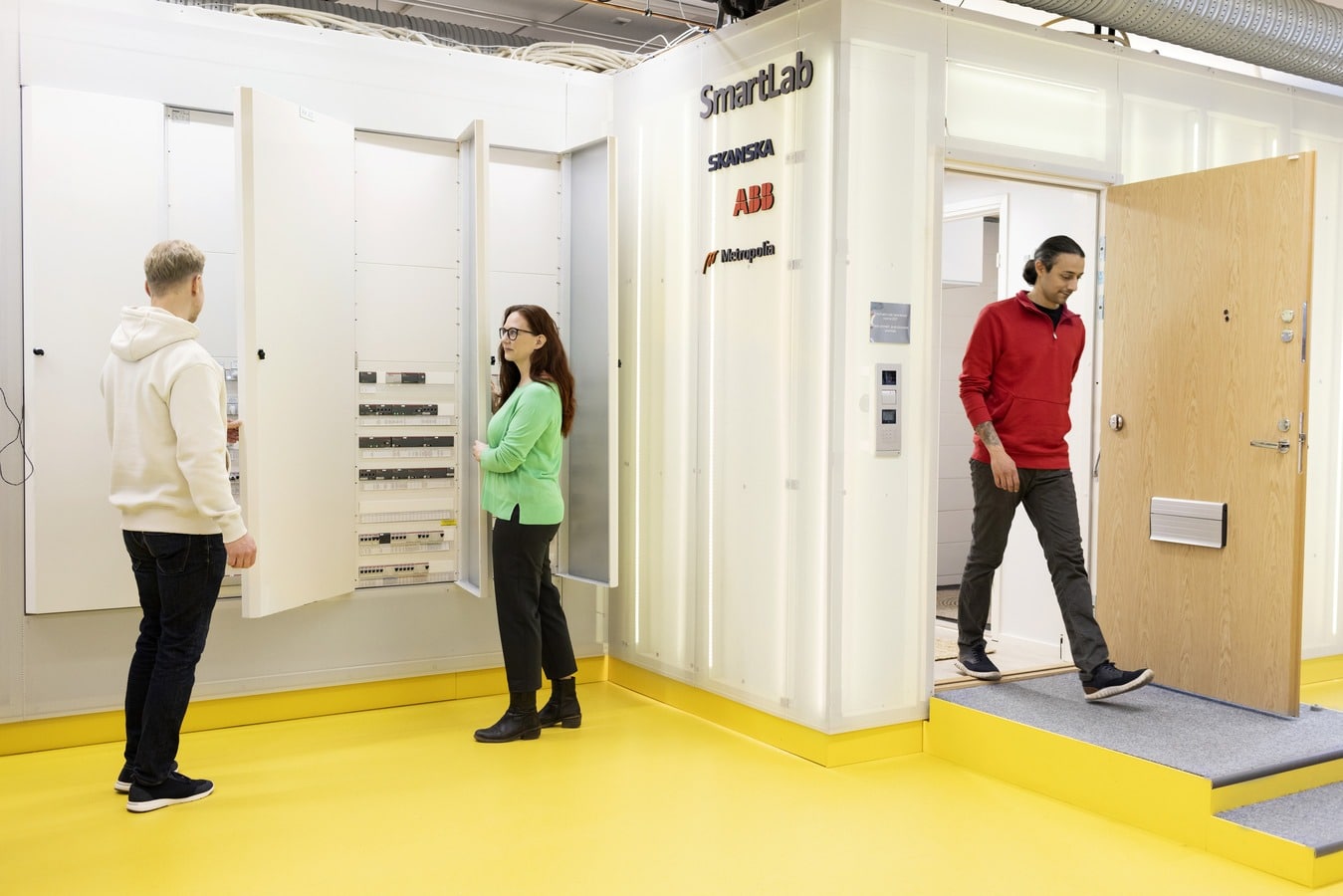
SmartLab - this smart home platform allows technologies, interfaces, and practices to be tested and developed and can be used to develop user-friendly solutions that serve housing.
Urbanfarmlab - consists of show-room and co-working space as well as controlled indoor farming spaces for technical and other pilots including generating new business models, indoor farming technologies and solutions.
There are many different opportunities to collaborate with your local Universities of Applied Sciences as business owners or organisations. You can do small projects, individual professional development, and even larger business and product or service development projects. The first step is to determine what is the scope of the development you are wanting or willing to commit to. Then to search through the University of Applied Sciences website that you want to work with to see what options might be available. There will always be someone on the other end that will help to find the right people to collaborate with.
Author
Pamela Spokes works as a Service Designer in Metropolia’s RDI team. Originally from Canada, Pamela has years of experience in university admin focusing on international recruitment, marketing, and the international student/staff experience. With a Bachelor’s from Canada, a Master’s degree from Sweden, an MBA in Service Innovation & Design from Laurea, and her AmO from Haaga-Helia, she is interested in purposefully designed experiences that are centred around the user. Don’t be surprised if she knocks on your door to talk about learning co-creation methods through intensive learning experiences.
Around the world, there is a lack of teaching innovation tools and methods in many subjects and we want to help bring innovation closer to anyone interested. In Helsinki capital region, the solution is 10 Days 100 Challenges. This isn’t just an ordinary innovation event where the outcome that you present only on the last day is important. The role of this event is to bring multi-faceted learning to each day. It's a place where you get to learn, make mistakes, regroup and get guidance at any point - all while working with real companies trying to solve real problems.
The Innovation Process
The participants and the participating companies go through a design process. The company’s role is to provide the participants with one or more real business challenges that they currently have. Challenges that they have not been able to solve in a traditional way or that they are not equipped to solve either because of a lack of time or human resource. The role of the participants is to use the skills they have learned to tackle those real business problems through a defined, understood, and tested process.
For this event, we decided to follow a standard Stanford d.school design thinking process (Graphic 1).
[caption id="attachment_10746" align="alignnone" width="620"] Graphic 1: The d.school Design Thinking Process (dschool.stanford.edu/resources)[/caption]
The process in 5 steps:
EMPATHISE = research the customer through various methods; learn who they are and what they do
DEFINE = distill what you learned about your customer and define the challenges/pain points they are having
IDEATE = co-create possibilities together and have as many ideas as you can, then sift through them and find the good ones
PROTOTYPE = take 1, 2, or 3 of those good ideas and build simple prototypes of them and see how they work in reality - iterate what doesn’t work, fail fast, move forward
TEST= test the iterated, simple prototypes with real people and in real situations; change what doesn’t work and create something useful
It was the job of the participants to follow these steps with the tools and methods they had been taught during the online course. The online course was also available as a resource for them to refer to during the process when/if needed.
The visual below was created so that everyone could understand what their role was and how they were expected to be engaging in the process; whether they were participants or company partners.
The central line describes the process to be undertaken while the top row explains the participant’s role:
complete the online course
interviews and review of company data
explore real customer problems
ideation and concepting
building a testable prototype
getting real feedback from users
creating and delivering a solution pitch
The bottom part of the visual is all about what the company partners are expected to do:
provide necessary company data
be available for questions and coaching the teams when needed
listen to the pitches and give feedback
[caption id="attachment_10745" align="alignnone" width="594"] Graphic 2: The 10 Days 100 Challenges Overview.[/caption]
Teams with mixed levels of knowledge and experience
The event starts by bringing diverse groups of students together to learn these tools and methods. This diversity provides some of the first challenge for the students, creating a common language so they can work effectively. Diversity is important because you never know who will be inspired to solve difficult problems in the future.
The participants are from Laurea, Haaga-Helia, and Metropolia Universities of Applied Sciences, and at different levels of knowledge and experience with this way of working and are purposefully mixed in their teams because of this. They are also mixed by their study level as some are Bachelor students and some are Master’s students.
It is a challenging seven days where students' new knowledge is really put to the test. There are team dynamics to take into consideration, as we try to design the teams on 4 different points:
field of study
gender
institution
potential for already knowing the process.
Trying to keep all these in balance makes sure that most people are working with people they probably have not worked with (or even know) before.
Splitting the Event and the Learning
The online course format allowed the students to learn at their own pace and it also allowed students who normally would not have courses in innovation included in their courses to learn and experience a way of working that is considered a life-wide skill.
The course was opened on May 2nd
The course had to be completed by May 26th
On May 27th we could see who had finished the course
We let everyone know who should arrive on May 30th.
This worked really well and there were no participants that showed up without completing the course. We wanted to make sure that everyone had at least a basic idea of the process that they will be using for this event as there were students from many different faculties from three Universities of Applied Sciences (3UAS).
There were two immediate positive outcomes of splitting the event and the learning:
The students were able to refer back to the course whenever they needed to refresh their memory about what expected or possible at that stage of the process.
We can open up the learning to anyone who wishes to learn about this process. We can also make the learning available to companies and individuals outside of this specific 3UAS collaboration.
Developing the Event Concept
The 2022 10 Days 100 Challenges Event already had 4 years of history to build on.
2018 - First year, in-person
2019 - Second year, in-person
2020 - Cancelled due to Covid
2021 - Third year, digital event
2022 - Fourth year, in-person
Luckily 2022 allowed us to go back to the original concept and use the Helsinki XR Center as our venue. We made a conscious decision to not have a hybrid event as service design and design sprints are much harder to do when teams are split between online and in person.
Another difference in 2022, we wanted to reduce the number of in-person days the event ran as 10 full days, in person can be difficult to maintain enthusiasm and also to fit into schedules where the students are potentially starting summer jobs. Especially, as we still are just coming out of the restrictions we have lived through the past 2 years.
So, instead of learning and doing at the same time, we created an online course that gathered all the learnings together. This allowed us to reduce the event to seven days, Monday to Friday plus the following Monday and Tuesday.
What the Teams Accomplished
In the end, we had 13 teams giving final pitches for solutions to the companies that were all different and innovative in their own way. Some teams opted for simple ppt presentations, some used role play, and some incorporated their prototypes into their pitch. These different methods of presentation represented new skills the students had learned and also getting outside of their comfort zone. More challenges had been overcome.
The beauty in innovation events like this, is that people are open to trying so many new things. As they battle through the 100 Challenges of the event, they get outside of their comfort zone every day.
The event took place on May 30 - June 6 at Metropolia’s Helsinki XR Center - Arabia Campus. Read more on 10D100C website.
Sustainable fashion isn't just about using eco-friendly materials or reducing waste; it's also about financial stewardship. When discussing various sustainability issues of the fashion industry, the financial concerns are easier neglected than environmental and social ones. This is understandable, since climate change, decrease in biodiversity and inhumane working conditions (just to name a few) are real and we are seeing evidence of those through different mediums every day.
Sustainable fashion isn't just about using eco-friendly materials or reducing waste; it's also about financial stewardship.
In the last couple of years, the Finnish media has reported on several textile and fashion businesses that are struggling financially or have filed for bankruptcy. That touches also upon many companies who have invested in responsible practices and alternative business models. By adopting practices that are economically, environmentally, and socially responsible, fashion businesses can attain long-term success.
In this teachers’ series blog post on sustainability in education, we explore the question: How can we, as teachers in a university of applied sciences, equip students in fashion and clothing programs with the green skills and knowledge needed for sustainable practices that enable their future businesses to grow without harming the environment or society?
Essential green skills in textile and clothing sector
The question about the most essential green skills in the textile and clothing sector in the future was addressed in the recent SusTexEdu project. The main outcome was, that a more critical and holistic understanding of sustainability is needed from future professionals. It is not enough to focus on environmentally friendly materials and technologies or factory audits, but one should also understand the basics of running a business (SusTexEdu, forthcoming).
A more critical and holistic understanding of sustainability is needed from future professionals.
Topics that should be covered more in textile and clothing education from sustainable business point of view include:
knowledge of the circular economy business (and their scalability)
setting and monitoring sustainability goals
price formation of sustainable products
consumer behaviour, marketing and communication.
This is based on the analysis of 68 survey responses and 17 thematic interviews that involved company representatives from five European countries (Belgium, Estonia, Finland, Hungary and Sweden) in 2022-2023 (SusTexEdu, forthcoming). Green skills in the context of textiles and clothing can include, for example, knowledge of sustainable production processes, eco-design, environmental impact assessments, latest standards or legislation (Euratex, 2021). In the SusTexEdu research, these aspects were also mentioned by the research participants as important future competences (SusTexEdu, forthcoming).
As stated in the SusTexEdu report: “There are already highly qualified people who master different sustainability topics, but they lack the business know-how, even if that would be extremely important for companies. It is crucial that those people who have the knowledge on durability, responsibility and ethical and moral motivation, can also convert that knowledge into business.”
Sustainability in Fashion and Clothing Degree Programmes
The textile and clothing sector is making progress towards a circular economy. It is a transformative concept that has the potential to alleviate the financial concerns of business owners while promoting sustainability. For the fashion industry this can mean designing clothes that are durable, repairable, and recyclable. It involves creating systems for returning and repurposing garments, thus reducing waste and creating new revenue streams. Through innovative research and educational programs, universities of applied sciences can equip students and industry professionals with the knowledge and skills needed to implement circular practices effectively.
Circular economy not only addresses environmental challenges but also opens up new avenues for economic growth and competitive advantage.
By focusing on the principles of reducing waste, extending product lifecycles, and regenerating natural systems, the universities’ initiatives help businesses transition from a linear to a circular model. This not only addresses environmental challenges but also opens up new avenues for economic growth and competitive advantage. The integration of circular economy principles into the curriculum and partnerships with industry leaders ensures that graduates are prepared to lead the transformation towards a more sustainable and profitable future in the textile and clothing sector.
Key components of the sustainability-focused fashion and clothing education should include:
Sustainable Design Practices: Students learn about eco-friendly materials, energy-efficient production techniques, and sustainable fashion design principles.
Circular Systems: Courses cover the principles of the circular economy, teaching students how to design for longevity, reuse, and recyclability.
Financial Stewardship: An emphasis on the importance of financial stewardship, helping students to critically think how sustainable practices can enhance profitability and business resilience.
Industry Collaboration: Partnerships (incl. internships, thesis projects) with sustainable brands and organizations provide students with real-world experience and insights into sustainable business practices.
Sustainability competence is for example at the core of Metropolia University of Applied Science Fashion and Clothing Degree Programmes. After completing the Bachelor’s degree, the student understands the main principles of circular economy and how their individual choices impact sustainable development within the textile value chain. The Master's Degree equips the students with an even more holistic understanding of various sustainability challenges, circular businesses and the ability to manage processes and projects while creating a new kind of operating culture in the field.
Even when sustainability and circularity are already well considered in the fashion and clothing education, the curricula should be regularly reviewed from those perspectives. Following the trends and different phenomena that impact the textile and clothing industry is crucial here. Sharing views and experiences with other educational institutions is equally important. Here are two examples of international projects that aim to study and enhance the sustainability education.
SusTexEdu - Nordic and Baltic Educational Roadmap for Sustainability in the Textile and Clothing Sector, funded by Nordplus (2021-2022)
SusTexEdu - Education Partnership of Textile and Clothing Sector Materials & Sustainability, funded by Erasmus+ (2022-2024)
Business Understanding as a Core Sustainability Competence
Integrating sustainability into teaching is not just about imparting environmental awareness but also about equipping students with the ability to apply sustainable practices in a business context. Therefore, it is essential for educators to bridge the gap between theoretical knowledge and practical business applications. By doing so, they will enable students to leverage their expertise in sustainability to drive innovative, responsible, and profitable business strategies.
Integrating sustainability into teaching is also about equipping students with the ability to apply sustainable practices in a business context.
This holistic approach ensures that graduates are not only well-versed in sustainability principles but also capable of implementing them effectively within the corporate world, thereby meeting the increasing demand for sustainable business practices in the industry.
This blog post is part of a series for teachers focusing on sustainability in education. Previously published posts in the series include: Ensuring Sustainable Wellbeing and Work for Teachers in a Changing World, Exploring the Intersection: AI and Sustainability in Higher Education and the introduction to the series Stories in Education for Sustainability: A Teachers' Series.
Writers
Essi Karell serves as a Senior Lecturer and Head of Master's Degree Programme in Fashion and Clothing at Metropolia. She has worked in the industry as a sportswear designer, but nowadays aims to train the future fashion professionals with a sustainable and circular mindset. She holds a PhD in Art and Design. Her research addresses sustainable clothing design practices and future competences in the textile and clothing sector. She is also a member of the Metropolia Sustainability in Education team.
Tricia Cleland Silva serves as the coordinator for the Metropolia Sustainability in Education team. She is a senior lecturer in the master degrees of Health Business Management and Leadership and Development in Nursing. She holds a PhD in Management and Organization. Her co-created method of Collaborative Story Craft and Story Mediation inspires her roles in sustainable development and inclusion within higher education and various communities of practice. She is also a parent, owns and runs a family business with her partner and an immigrant professional from Canada.
References
Euratex (2021). Pact for Skills for the EU TCLF industries.
SusTexEdu (forthcoming). Sustainability in the Textile and Clothing Sector (TCS): Competence Requirements Identified in the SusTexEdu Partner Countries. WP1 report / 2024.








Kommentit
Ei kommentteja