
Tag: Metaversumi
Metaverse inspires new ways of meeting in Web 3.0
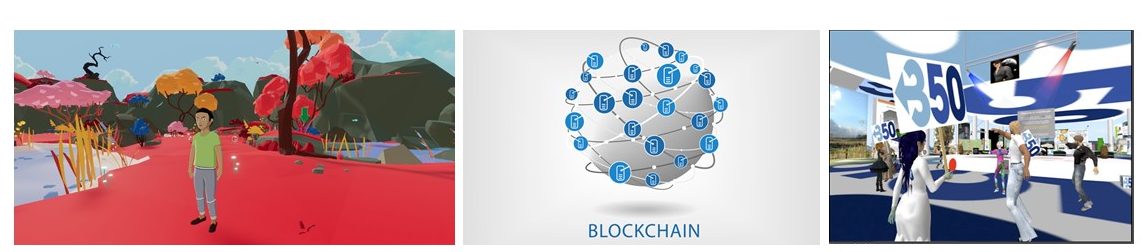
The creative industry is buzzing. In recent years, blockchains such as NFT, DAO, VR and XR have been increasingly mentioned in conversations. These are related to the web 3.0 development process, which is currently in its growth phase. This blog outlines what decentralized web 3.0 is. At the core of the blog, I am looking for an answer to what the metaverse is and how it relates to the future of creative industry players. Metaverse – a new operating environment for the creative industry The development of the Internet can be summarized in a simplified way, for example, as follows: Web 1.0 was an environment built into a network through hyperlinks, where we could see the content that was uploaded. Web 2.0 brought interactivity, which allowed users to also produce content for the internet, for example through social media. Web 3.0, which is still in development in many ways, brings with it a new kind of immersion, where the user works through an avatar in the artificial reality of the internet. There, physical and virtual reality blend more closely than before. Another dimension is created: the Metaverse, which is built from the words meta (including border-crossing) and universe. Diving into the metaverse is not only about the user experience, but also, to a large extent, about the ownership of one's own information and the underlying blockchain-based approach. In current technology, the mask used in diving is devices or sensors that are attached to people and have virtual reality programs installed on them. User interfaces are developing rapidly, and increasingly agile solutions are expected in the future. For the creative industry, the metaverse offers new global audiences and a platform to experience and offer new types of interactive and immersive experiences. The revenue logic is also different, as verification of ownership and trade of a work can be done without intermediaries, or at least with fewer intermediaries. At the core, communities instead of corporations Instead of platforms owned by large corporations or media companies, the new Web3.0 economy seems to be built, at least in part, on user activity and engagement. The user is an active part of the network, not a reader of advertisements. This bodes well for the creative industry. When the future of content production is decentralized, rather than controlled by large corporations, it is also shared and accessible to everyone. We no longer have to rely on large corporations or media companies to create content for us. Instead, we can create our own content and share it with everyone else in the world. Decentralized governance is implemented through the rapidly evolving blockchain technology. In a blockchain, non-participating actors can jointly produce and maintain databases in a decentralized manner. The artist, like anyone else who makes transactions on the blockchain, has access to view the contents of the blockchain. When each transaction is recorded provably and securely distributed across multiple machines in the community, the database is difficult to forge. A work sold on the blockchain also carries the original artist's information. If the work were to be resold, the original creator would have the opportunity to receive a portion of the purchase price. With success comes fame and glory, but the blockchain also enables continuous money production from resales of the work and, through it, potentially significant value development. New ways to engage with the audience One dimension of Web 3.0 is the metaverse, which forms a new digital meeting place – also between artist and audience. Avatars create a new digital meeting place that is not limited by national borders. The meeting can be about artistic content, but at its core it can also be, for example, a meeting with the artist and a moment of shared discussion. That is an opportunity that we in the Nordic region are not often given, at least not with top international artists. There is also a more ideological basis present in the public encounter. The art user can control their own data through smart contracts, receive additional digital services as part of their purchase, and follow the path of their purchase back to the original sale to ensure its authenticity. Platforms and new operating models offer an exciting new arena for creative expression. They offer, among other things, new ways to present artistic work and reach a wide audience around the world, new opportunities to monetize artistic products and services, and create immersive experiences. They also potentially bring new (younger) audiences to cultural content. Web 3.0 is evolving through various pilot projects: countless players are testing and agilely developing new platforms and services. An old Chinese proverb states that the best time to plant a tree was 20 years ago, the second best is now. Web 3.0 offers creative players a space of opportunity, the methods of which are currently being created. The best time to jump on board may well be now. Sources Frankenfield, J. (2022). What are smart contracts on the Blockchain and How They Work. Investopedia.com 24.3.2022 Kannan, S. (2022). Web3. Technopedia.com 18.5.2022. Malik, N., Wei, Y., Appel, G, & Luo, L. (2022). Blockchain technology for creative industries: Current state and research opportunities. International Journal of Research in Marketing 4.7.2022. Rennie, E., Holcombe-James, I., Kushnir, A., Webster, T. & Morgan B.A. (2022). Developments in Web3 for the Creative Industries. A Research Report for the Australia Council for the Arts. RMIT University Blockchain Innovation Hub. Whitaker, A. & Kräussl, R. (2020). Fractional Equity, Blockchain, and the Future of Creative Work. Management Science 23.7.2020.

Tämän blogin kirjoituksia ja toimitustyötä on tuettu vuoden 2023 loppuun asti Euroopan unionin sosiaalirahaston Luovat metaversumissa esiselvityksen osarahoituksen avulla ja vuoden 2024 alusta Euroopan unionin sosiaalirahaston osarahoittaman LUME – luovat web3-ajassa -hankkeen avulla.
Tässä blogissa käydään ammattilaiskeskustelua web3 kehittymisen myötä avautuvista uusista toiminta- ja ansaintamahdollisuuksista sekä ajankohtaisista ilmiöistä. Blogissa julkaistaan asiantuntijatekstejä, haastatteluja ja kantaa ottavia tekstejä, videoita, podcasteja tai niiden yhdistelmiä. Kirjoittajat ovat Metropolian ja sen yhteistyöorganisaatioiden asiantuntijoita. Haluatko julkaista Luovat web3 ajassa -blogissa? Ota yhteys päätoimittajaan sähköpostitse.
– Katri Halonen (päätoimittaja), yliopettaja, Metropolia Ammattikorkeakoulu, katri.halonen@metropolia.fi, p. 050 362 6407
– Leena Björkqvist, lehtori, Metropolia Ammattikorkeakoulu
– Jyrki Simovaara, lehtori, Humanistinen ammattikorkeakoulu
– Mayreth Wolff, lehtori Humanistinen ammattikorkeakoulu
Sähköpostiosoitteet: etunimi.sukunimi@metropolia.fi
Toimituskunta toimittaa Luovat web3 ajassa -blogin sisällöt ennen julkaisua.
Haluatko julkaista Luovat web3 ajassa -blogissa? Lue oheiset ohjeet (pdf) ja ota yhteys päätoimittajaan sähköpostitse.
Termipankki on tehty navigointiohjeeksi Metaversumiin.


AI ansaintalogiikka bitcoin Coldplay DAO Digital heritage digitalisaatio esineiden internet ESR osarahoitus fani fanit ikäpolvet inkluusio IoMusT IoT johtaja kesä2025 konsertti krypto kulttuurituotanto lippu lohkoketju luovat alat metaverse Metaversumi musiikki NFT satoshi sijoittaminen sustainability tasa-arvo tekoäly tokeni web3 Web3.0 yhteisöllisyys älysopimus