
Tag: konsertti
NFT challenges the concert ticket business
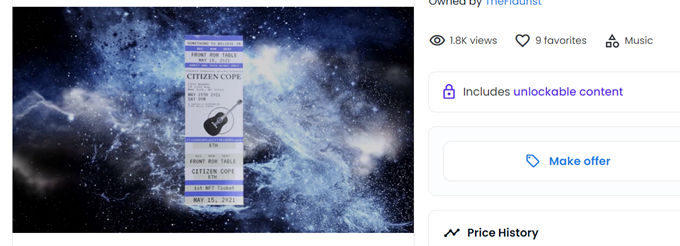
The ticket sales for pop rock band Coldplay's Helsinki gigs sparked a lot of discussion and even angry speeches in July 2023 (Partanen, 2023). The ticket sales used dynamic pricing, familiar from airplanes and hotels, in which the price changes according to demand. Dynamic pricing is one of the innovations in the field of performing arts ticket sales made possible by information technology and algorithms. The selling price of Coldplay tickets was not the only issue that sparked discussion. There were not enough concert tickets for everyone, so ticket resale began soon after the actual ticket sales ended. At the same time, concerns arose about the authenticity of the resold tickets, and those who had lost their tickets were warned about possible scammers (Linnake, 2023). Ticket sales seem to be changing, but dynamic pricing may just be the beginning of the next era. A much bigger change is just around the corner: NFT ticket sales. In the world of NFTs, a ticket to a Coldplay concert could have been a numbered NFT ticket purchased directly from an online store, with ownership transferred to the buyer upon purchase. Anyone could verify the authenticity of the ticket on the blockchain by looking at the ticket's history. An NFT ticket would have saved Coldplay fans many moments of excitement and frustration. In this blog, we explore how ticket sales can benefit from blockchain and NFTs. Anatomy of an NFT Ticket The special feature of an NFT ticket is related to the blockchain. The ticket is created by, for example, making a unique ticket identified by a number, which is recorded in a decentralized blockchain. The ticket can be sold, for example, on an online platform, and when making a purchase decision, the buyer can check the authenticity of the ticket by looking at the ticket's history on the blockchain. A ticket can be published as “nontransferable”, meaning it cannot be transferred to a new owner on the blockchain. It is also possible that the transfer is allowed under certain conditions. The original ticket holder can set additional conditions on the NFT ticket for resale. The conditions can include, for example, a royalty to be earned by the original holder on the resold ticket or a maximum allowed price. The information travels with the NFT on the blockchain and thus regulates the potential secondary market for the ticket. (Langston, 2023; Singh, 2023; Tan, 2023; Takyar.) In Metaverse, for example, in connection with concerts, “meet and greet” events are sometimes sold, where ticket holders get to meet the artist they admire in a virtual backroom. These limited VIP tickets are put on the market in a very limited number. The value of the ticket is often sought through an auction mechanism, where the ticket price is set according to supply and demand. If the ticket holder decides to sell the ticket, the original ticket holder also receives a share of the increased ticket sales price in their own virtual wallet. At the same time, the new buyer can always peek at the ticket history on the blockchain and thus ensure that it is not a pirated ticket. From paper ticket to QR code - what about collectibles? Paper concert tickets have their own loyal following. They also come with risks: getting lost, getting damaged in the rain or other misfortune can result in the entire ticket being lost. There is also a lot of counterfeiting of paper tickets. This has been addressed by QR code-based tickets sent to smartphones. The problem with QR codes is that it is difficult for the buyer to know for sure whether they have bought a genuine ticket, or whether they will be disappointed if the ticket turns out to be counterfeit (Takyar). An NFT-based ticket is more difficult to counterfeit. Each ticket is its own NFT managed on the blockchain (Langston, 2023; Singh, 2023; Tan, 2023). It is a unique product that directly contains information about which concert and which seat the ticket entitles its owner to. The ticket owner can show their NFT ticket upon entering the concert venue, and it can be scanned as a QR code or directly as a blockchain link to verify authenticity. Paper concert tickets can be valuable mementos and even collectibles. It is therefore reasonable to ask how the role of a ticket changes if its essence is a QR code that flashes on a smartphone. An NFT ticket can also be a valuable collectible, like a paper ticket, which can offer, in addition to admission, for example, music, an interview with the artist about an upcoming performance, or images of interest to fans. The content is only available in conjunction with the ticket, so exclusive content can increase the commemorative and collectible value of the ticket (Singh, 2023). An NFT ticket can also include products that are available for a limited time, such as a digital tour shirt to wear as an avatar during a concert and a physical version of the same shirt to be sent by mail. The ticket can therefore provide access to various additional services and products. Ticket services already exist There are already several commercial NFT ticket services available. They are distinguished from each other mainly by the different functionalities of the sales platforms, the blockchain used, the NFT standard used and the type of tickets. In addition to tickets, sales platforms can also have a significant number of other digital products related to the artist. For example, Dutch company GUTS tickets offers a blockchain-based ticket management service using the GET protocol it developed. During its existence, the company has sold over 4.2 million tickets for over 19,000 events (NFT ticket explorer 2.8.2023), and each ticket can be viewed on the blockchain. This creates a huge amount of data that can help concert organizers in data-driven potential assessment of ticket prices, sales times and concert occupancy rates. YellowHeart combines community participation with its tickets. Community members only get to see content targeted at them. They can also participate in, for example, ticket pre-sales and private events organized only for club members in the metaverse. The ticket therefore functions as a kind of web3 version of a fan club, uniting fans into a community, the activities of which are activated in YellowHeart's own metaverse, among other things. A somewhat similar club mentality has also been implemented in the field of music festivals, with the participation opportunity for Coachella integrated into the Fortnite game, which included lifetime access to ten auctioned NFT tickets (Disalvo, 2022; Langston, 2023). However, the ticket lost its value after the collapse of the FR cryptocurrency exchange operating in the Bahamas (Disalvo, 2022). The crypto world is still quite poorly regulated, and it has clear risks for users. Many things can go mainstream even with a single event. For example, the UEFA Champions League match between Real Madrid and Liverpool was delayed due to ticket counterfeiting. Police had to use tear gas to restore order (Polden, 2022). Michel Cadot, the French government’s Olympic ambassador, even proposed the introduction of blockchain tickets for the 2024 Paris Olympics. This could well be a step towards the normalization of NFT tickets for the event industry. Let's return to the Coldplay concert ticket dilemma mentioned at the beginning of this blog. The leap into the crypto world may seem complicated from a consumer's perspective. Ticket shops have indeed paid a lot of attention to user interfaces. One key step forward for consumers is, for example, the cryptocurrency eEuro, which is directly comparable to the euro. For the future, it is essential to ensure that shopping is also easy and risk-free for consumers in web3 environments. LÄHTEET Adele (2022). Paris 2024 Olympics May Introduce NFT Tickets. NFTevening news 14.6.2022. Disalvo, T. (2022). Coachella’s lifetime pass NFTs made unavailable due to FTX cryptocurrency crash. NME Music News 21.11.2022. Langston, T. (2023). NFT Tickets Are the Future of Live Events. Here’s Why. NFT now 30.3.2023. Linnake, T. (2023). Coldplayn loppuunmyydyt keikat synnyttivät ikävän ilmiön – näin Lippu.fi kommentoi. Iltasanomat 1.8.2023. Partanen, T. (2023). Coldplayn konserttien ennakkomyynnistä tuli uskomaton ryntäys – näin valtava ihmismassa yritti saada lippuja. Iltasanomat 25.7.2023. Polden, J. (2022). UEFA blame "fake tickets" for Champions League chaos as Liverpool demand investigation. Mirror sport news 29.5.2022. Singh, O. (2023). What is NFT ticketing and how does it work? Cointelegraph 14.2.2023. Tan, C. (2023). Seatlab NFT CEO Ryan Kenny Discusses How NFTs are Disrupting the Ticketing Industry. Metaverse post 23.3.2023. Takyar, A. (nn). Ticketing disrupt the ticketing industry? LeewayHertz blogit. KIRJOITTAJA Krista Jäntti on EventuallyXR-yrityksen perustaja ja toimitusjohtaja. Hänen erikoisosaamisalueenaan on metaversumiin ja tekoälyyn liittyvien uusien liiketoimintapalvelujen konseptoiminen sekä käyttäjäkokemusten suunnittelu ja tutkiminen. Krista on toiminut neuvonantajana lukuisissa suomalaisissa yrityksissä, kuten Varjo, Zoan, KONE, Sulava, LähiTapiola ja Nokia. Katri Halonen (Metropolian amk) toimii projektipäällikkönä Euroopan unionin osarahoittamasa LUME-hankkeessa, joka paikantaa web3:n mukana tulevia muutoksia luovien alojen ansaintaan.

Tämän blogin kirjoituksia ja toimitustyötä on tuettu vuoden 2023 loppuun asti Euroopan unionin sosiaalirahaston Luovat metaversumissa esiselvityksen osarahoituksen avulla ja vuoden 2024 alusta Euroopan unionin sosiaalirahaston osarahoittaman LUME – luovat web3-ajassa -hankkeen avulla.
Tässä blogissa käydään ammattilaiskeskustelua web3 kehittymisen myötä avautuvista uusista toiminta- ja ansaintamahdollisuuksista sekä ajankohtaisista ilmiöistä. Blogissa julkaistaan asiantuntijatekstejä, haastatteluja ja kantaa ottavia tekstejä, videoita, podcasteja tai niiden yhdistelmiä. Kirjoittajat ovat Metropolian ja sen yhteistyöorganisaatioiden asiantuntijoita. Haluatko julkaista Luovat web3 ajassa -blogissa? Ota yhteys päätoimittajaan sähköpostitse.
– Katri Halonen (päätoimittaja), yliopettaja, Metropolia Ammattikorkeakoulu, katri.halonen@metropolia.fi, p. 050 362 6407
– Leena Björkqvist, lehtori, Metropolia Ammattikorkeakoulu
– Jyrki Simovaara, lehtori, Humanistinen ammattikorkeakoulu
– Mayreth Wolff, lehtori Humanistinen ammattikorkeakoulu
Sähköpostiosoitteet: etunimi.sukunimi@metropolia.fi
Toimituskunta toimittaa Luovat web3 ajassa -blogin sisällöt ennen julkaisua.
Haluatko julkaista Luovat web3 ajassa -blogissa? Lue oheiset ohjeet (pdf) ja ota yhteys päätoimittajaan sähköpostitse.
Termipankki on tehty navigointiohjeeksi Metaversumiin.



AI ansaintalogiikka bitcoin Coldplay DAO Digital heritage digitalisaatio esineiden internet ESR osarahoitus fani fanit ikäpolvet inkluusio IoMusT IoT johtaja kesä2025 konsertti krypto kulttuurituotanto lippu lohkoketju luovat alat metaverse Metaversumi musiikki NFT satoshi sijoittaminen sustainability tasa-arvo tekoäly tokeni web3 Web3.0 yhteisöllisyys älysopimus