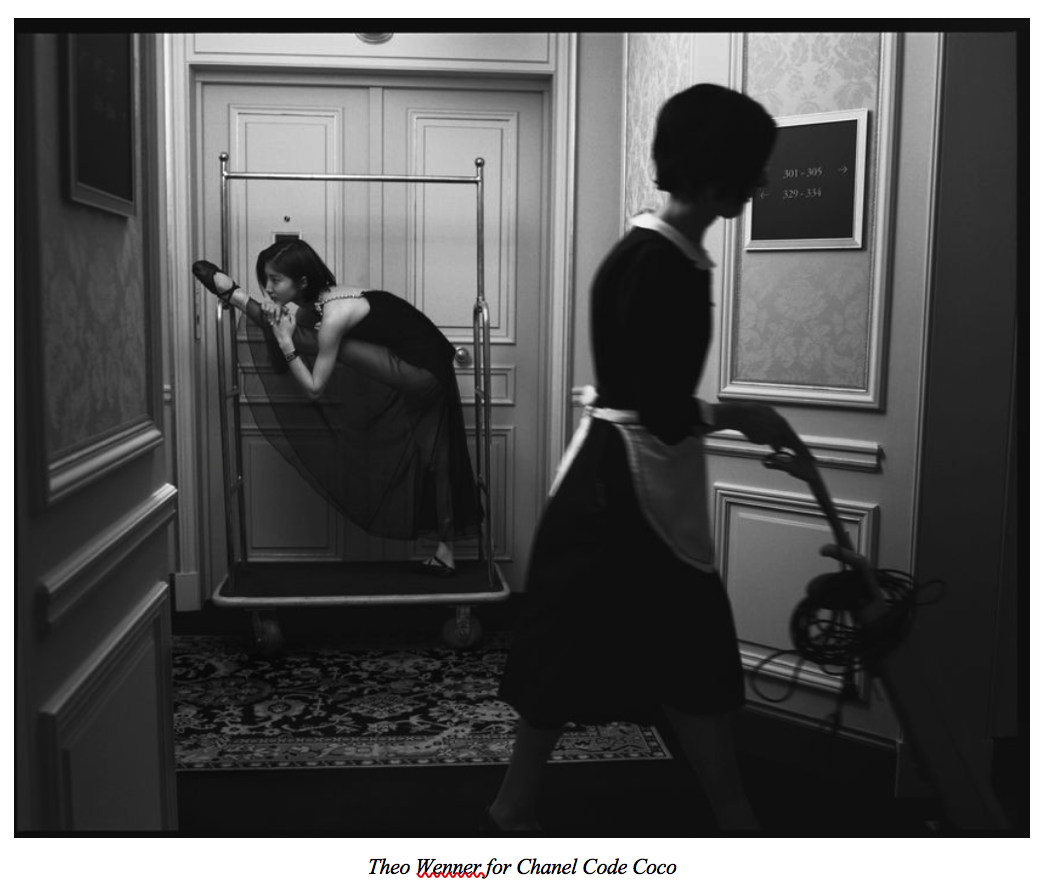
My Independent Project took place at Theo Wenner Studio in New York. Theo Wenner Studio is a photography studio specialized in still and moving image. The assignments mainly include high fashion photography, consisting editorials, advertising, campaigns, portraiture, look books and music videos. Above that the studio is producing different book and zine projects. The studio has also been working the early pre-production for movie production.
The perspective of my Independent Project was to study leadership and project management in photography production, understand the meaning of self-management in a position of a leader of the production and see all of this with an international perspective.
I was working in a position of Production Coordinator. My job was to continue supporting the studio manager in leading and managing the photo production process. My position enabled me to see leadership of large-scale photography production close by and gave me understanding about different methods of project management and leadership in United States.
New York is a true melting pot, as it is known to be. The creative industry is not comparable to any other city I’ve ever been into. The creative sector feels extremely powerful and there is a foothold for every small business. Americans, especially New Yorkers, are very used to working in multicultural atmosphere. Finns and Americans share many common traits in the working culture. Both countries believe that we are created equal and that is mirrored to the workplaces. It is very easy to catch the extroverted culture very fast: what is easier than talking about yourself, both in business and pleasure?
My conclusion of the project was that there are multiple levels of management roles. The more there are hierarchies in the industry, the more there are management and leadership levels. Nearly every party have their agents to manage the work flow, which gives the massive photography industry its stru
cture. All the industries where there are plenty of different types of agencies, requires also special expertise. Especially in the expertise work, a lot of self-management skills are needed. In that field it is crucial to understand how self-directed team is to be led.
I strongly recommend everyone to take a risk, throw themselves into the deep end and seek work place from abroad. During my year in New York I have learned managing photographic projects from inception to completion. I consider myself leaving from Finland as a production student and coming back home as a professional producer. That is the shortest way to describe my year in Theo Wenner Studio.
Kulttuurituotannon bloggaajat
Bloggaajat ovat Metropolian kulttuurituotannon opiskelijoita. Blogeissa kurkistetaan kulissien taakse, esitellään tuotantoja ja ajankohtaisia kulttuuritapahtumia. Opiskelijat kertovat kulttuurituotannon opiskelusta Metropoliassa ja siitä mitä tuotannoissa sekä projekteissa tapahtuu. Ota yhteyttä
Työskentelin tuotantoassistenttina Helsingin kansainvälisissä balettikilpailuissa 28.5-6.6.2026. Olin osa hotelli- ja aulatiimejä, mutta pääsin auttamaan myös kilpailutoimiston tehtävissä.
Suurimman osan ajastani vietin muiden vapaaehtoisten kanssa. Kahden viikon aikana ehdimme tutustua hyvin ja heidän seurassaan opin valtavasti baletin maailmasta. Olen henkilö, joka ei ole itse harrastanut balettia, joten oli paljon, mitä en tiennyt lajista.
Kilpailussa työskenteli yli 50 vapaaehtoista, joilla oli hyvin erilaisia taustoja. Monia yhdisti kuitenkin rakkaus balettiin. Osa oli harrastanut balettia nuoruudessaan, osa tanssi edelleen aikuisbalettia ja muutamilla oli kokemusta juuri tässä kilpailussa vapaaehtoisena toimimisesta.
Vapaaehtoinen pelastaa päivän
Opin kilpailun vapaaehtoisilta paljon baletin maailmasta, esimerkiksi eri variaatioista (eli tanssijoiden sooloista), valmentajista ja tuomareista. Samalla huomasin, kuinka korvaamaton merkitys vapaaehtoisilla oli kilpailun sujuvuudelle. He eivät ainoastaan opastaneet kilpailijoita vaan heidän asiantuntemuksensa auttoi ratkaisemaan tilanteita, joita moni ulkopuolinen ei olisi edes huomannut.
Yksi tilanne jäi erityisesti mieleeni. Kilpailija oli juuri valmistautumassa astumaan lavalle alkuerissä, kun eräs vapaaehtoinen huomasi hänen esiintymisasussaan jotain erikoista. Asu ei vastannut sitä variaatiota, jonka kilpailijan oli tarkoitus esittää.
Tilanne tarkistettiin nopeasti, ja kävi ilmi, että kilpailija olikin valmistautunut eri variaatioon kuin kilpailuun oli aikaisemmin ilmoitettu. Jos asiaa ei olisi huomattu ajoissa, lavalla olisi alkanut soida täysin väärä musiikki. Kilpailija ehti kuitenkin vaihtaa suunnitelmaansa viime hetkellä ja välttyi erittäin hankalalta tilanteelta tuomariston edessä.
Tuo hetki osoitti konkreettisesti, kuinka arvokasta vapaaehtoisten osaaminen oli. Heidän tarkkaavaisuutensa, kokemuksensa ja lajituntemuksensa eivät ainoastaan helpottaneet järjestelyjä, vaan saattoivat ratkaista kilpailijan kannalta ratkaisevan tilanteen.
Kun ajattelen kilpailua jälkikäteen, mieleeni nousee ensimmäisenä ihmiset, jotka olivat mahdollistamassa sitä. Oli hienoa päästä työskentelemään motivoituneiden vapaaehtoisten kanssa ja nähdä, kuinka yhteinen intohimo balettiin yhdisti ihmisiä. Se teki kokemuksesta erityisen ja muistuttivat minua vapaaehtoisten tekemän työn merkityksellisyydestä.
Oona, Kutu -22
Ilona Aunola, kulttuurituotannon opiskelija
Miltä kuulostaa työpäivä, jossa tehtävälista kasvaa jatkuvasti, aikataulut muuttuvat ja kaikkiin kysymyksiin ei saa heti vastausta? Minulle se oli arkea, kun työskentelin kesällä 2025 Art Films Productionilla osana syventävää projektiani.
Työskentelin pienessä elokuvatuotantoyhtiössä, jossa pääsin tekemään monipuolisesti tuotannon, viestinnän ja markkinoinnin tehtäviä. Projektin aikana yksi asia nousi kuitenkin muiden yläpuolelle: opin, kuinka tärkeää itsensä johtaminen on silloin, kun työ ei tule valmiiksi pilkottuna tehtävälistana.
Kaikki tehtävät eivät voi olla kiireellisiä
Pienessä organisaatiossa työtehtäviä tuli useista eri suunnista. Päivään saattoi kuulua esimerkiksi apurahahakemusten valmistelua, festivaalien kontaktointia, verkkosivujen päivittämistä, markkinointimateriaalien tekemistä ja erilaisia tuotannon käytännön tehtäviä.
Kaikkea ei tietenkään voinut tehdä samaan aikaan.
Aluksi ajattelin helposti, että seuraavaksi pitäisi vain tarttua siihen tehtävään, joka tuli ensimmäisenä vastaan. Projektin edetessä opin kuitenkin pysähtymään ja arvioimaan tehtävien tärkeyttä:
Mikä pitää tehdä juuri nyt? Mikä voi odottaa? Mikä vaikuttaa eniten koko tuotannon etenemiseen?
Priorisoinnista tuli yksi tärkeimmistä taidoista, joita projektin aikana kehitin. Erityisesti silloin, kun uusia tehtäviä tuli kesken kaiken, oma työskentely piti pystyä järjestämään uudelleen.
Itsensä johtaminen tarkoittikin minulle ennen kaikkea oman työn suunnittelua, ajankäytön hallintaa ja kykyä tehdä päätöksiä myös epävarmoissa tilanteissa.
Kaikkeen ei voi valmistautua etukäteen
Projektin aikana suunnitelmat eivät aina toteutuneet niin kuin olin ajatellut.
Yksi haastavimmista tilanteista syntyi laajan apurahahakemuksen kanssa. Hakemusta oli työstetty yli kuukauden, mutta lähetyspäivänä kaikki tiedostot eivät meinanneetkaan latautua palvelimelle.
Tällaisessa tilanteessa ei auta se, että jää odottamaan täydellistä ohjetta.
Minulle muodostui projektin aikana melko yksinkertainen toimintatapa: jos jokin asia on ongelma, tartun siihen heti.
Jos täytyi soittaa, soitin. Jos yksi ratkaisu ei toiminut, etsin toisen. Jos en tiennyt jotain, kysyin.
Opin, että itsensä johtaminen ei tarkoita sitä, että kaikki olisi aina hallinnassa. Se tarkoittaa myös kykyä toimia silloin, kun asiat eivät mene suunnitelmien mukaan.
Kun ohjausta ei ole jatkuvasti saatavilla
Pienessä työyhteisössä sain paljon vastuuta, mutta samalla ohjausta ei ollut aina mahdollista saada heti. Esihenkilöni työtilanne ja kiireet vaikuttivat siihen, kuinka nopeasti tehtäviin sai palautetta tai tarkennuksia.
Tämä oli välillä haastavaa. Joskus saatoin aloittaa tehtävän, jonka olin ymmärtänyt yhdellä tavalla, ja myöhemmin kävi ilmi, että tehtävänanto oli ymmärretty eri tavalla.
Tilanteet opettivat minulle, että omaa työtä pitää osata myös sanoittaa ja varmistaa. Pelkkä tehtävän suorittaminen ei aina riitä, vaan täytyy uskaltaa kysyä tarkentavia kysymyksiä ja kertoa, jos jokin asia ei ole selvä.
Samalla opin luottamaan enemmän omaan osaamiseeni.
Korkeakouluopiskelijana voi tuntua vaikealta sanoa ääneen, jos ajattelee tietävänsä jostain asiasta enemmän kuin oma esihenkilö. Projektin aikana opin kuitenkin, että ammatillinen itsevarmuus ei tarkoita sitä, että tietäisi kaiken. Se tarkoittaa myös sitä, että uskaltaa tuoda oman osaamisensa esiin.
Mitä tästä jäi käteen?
Syventävän projektin aikana opin paljon elokuvatuotannosta, mutta vielä enemmän opin omasta tavastani tehdä työtä.
Opin suunnittelemaan työpäiviäni, priorisoimaan tehtäviä ja toimimaan tilanteissa, joissa kaikki ei ollut valmiiksi määriteltyä. Opin myös tunnistamaan tilanteita, joissa omaa työmäärää pitää pysähtyä arvioimaan.
Yksi tärkeä oppi liittyi myös siihen, milloin työ on riittävän valmis. Huomasin helposti jääväni hiomaan yksityiskohtia pitkään. Työelämässä kaikkea ei kuitenkaan voi kehittää loputtomasti. Joskus on osattava todeta, että tämä on nyt tarpeeksi hyvä ja siirtyä seuraavaan tehtävään.
Ehkä suurin oivallukseni oli kuitenkin se, että tuottajan osaaminen ei ole sidottu vain yhteen kulttuurialaan. Elokuvatuotanto avasi minulle uuden näkökulman omaan ammatti-identiteettiini ja sai minut näkemään itseni tulevaisuudessa monipuolisemmin tuottajana.
Kun kukaan ei käske, mitä tehdä seuraavaksi, pitää osata päättää itse.
Ja juuri sitä taitoa haluan viedä tästä projektista mukanani seuraavaan työtehtävään.
Omaan taustaani kuuluu työkokemusta useilta eri aloilta jo ennen korkeakouluopintoja. Alanvaihtajana tämä kokemus voi ajoittain tuntua irralliselta, mutta nykyään tällainen monipolvinen työura on yhä tavallisempi. Näenkin, että itsensä johtamisen taitojen tulisi olla entistä kiinteämpi osa opiskelijaelämää. Omalla matkalla kohti kulttuurituottajaksi valmistumista tietoinen työskentely aiheen parissa on ollut käänteentekevää ammatti-identiteettini ja kestävämmän työelämän kehittymistä ajatellen. Prosessin aikana olen kokeillut uusia toimintatapoja, kuten mentorointiohjelmaa. Tämä avasi täysin uuden näkökulman johdattaen näin myös työn ääreen, jota en olisi muuten hakenut. Kyse oli ajatusmaailman muutoksesta ja oman rohkeuden sisäistämisestä.
Itsetuntemus
Vuonna 2025 työskentelin oman itsetuntemuksen parissa tietoisesti ja etenin itsensä johtamisessa vaihe vaiheelta sisältä ulospäin. Ajattelen, että tänä päivänä itsetuntemus tarvitsee tilaa jopa tylsistymiseen asti, jolloin voi kuulla itsestään hiljaisia viestejä. Muutos alkaa itsestä ja usein etsimämme vastaukset löytyvät lähempää kuin uskommekaan. Itsetuntemusta on mahdollista harjoittaa improvisaatio- ja taidelähtöisten menetelmien avulla ja etenkin kehollisuuteen yhdistettynä ne toimivat itselleni, kunhan päästää irti täydellisyyteen pyrkimisestä. Omaan itseen syväsukelluksen rinnalla tarvitsemme kuitenkin myös kontaktia muiden kanssa, jotta pystymme hahmottamaan itsemme todellisemmin.
Mentorointi
Olen ollut kiinnostunut mentoroinnista jo pitkään, mutta se tuntui itselleni aluksi todella kaukaiselta. Ehkä asia vaati hieman sulattelua ja olin vielä matkalla itsetuntemuksen kanssa, jonka kautta olin valmiimpi astumaan enemmän esille. Miltä sinusta kuulostaisi työelämän hiljaisen tiedon jakaminen ennalta tuntemattoman ihmisen kanssa? Itselleni mentorointi osoittautui yhdeksi parhaimmista yhteistyön muodoista tarjoten työkaluja kehittymiseni tueksi. Eri järjestöjen sekä yhdistysten kautta tämä on saavutettavampaa kuin osasin ajatella ja sain itse olla mukana aktorina Suomen Mentorit ry:n mentorointiohjelmassa. Kokemus näytti uudenlaisen asenteen työelämää kohtaan ja tulen pitämään mentoroinnin lähellä elämääni jatkossakin. Kulttuurialalla mentorointi olisi tärkeää saada tunnistetuksi osaksi työelämää, sillä jokainen meistä ansaitsee kuulluksi ja nähdyksi tulemisen kokemuksen.
Kiitollisuus
Tällä hetkellä kaiken alta nousee valtava kiitollisuus ja ehkä olen oppinut pysähtymään ja kuulemaan sen uudesta tietoisuuden tasosta käsin. Olen kokenut kiitollisuutta omaa matkaani kohtaan eri ammattinimikkeillä sekä niistä aidoista kohtaamisista, jotka ovat opettaneet minulle avun pyytämisen ja antamisen arvon. Itsensä johtaminen on myös palkitsemista ja kaunista sisäistä puhetta prosessin aikana ja siinä piilee valtava sisäisen motivaation voima, sillä silloin ei ole enää riippuvainen ulkoisesta hyväksynnästä. Olen löytänyt avoimuuden ja monipuolisen työskentelyn kautta entistä vahvemman yhteyden sisäiseen kompassiin ja tunnen olevani oikeassa paikassa tässä hetkessä. Tämän kaiken myötä olen oivaltanut, että on oltava myös valmis katsomaan asioita kärsivällisesti yksinkertaisten peruspilareiden kautta.
Mitä itsensä johtaminen merkitsee sinulle?
Suosittelen lämmöllä tutustumaan lisää mentorointiin osoitteessa: https://suomenmentorit.fi/mentorointiohjelma/
Valma Merimaa, kulttuurituotanto -24
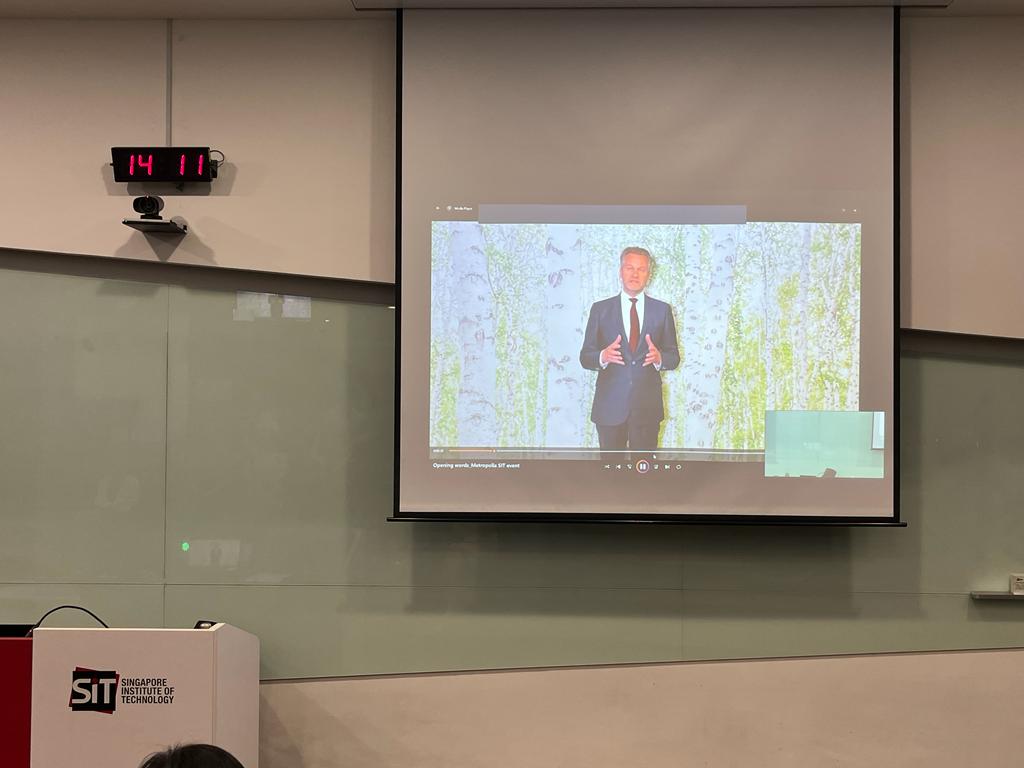
Already for the second time a workshop on the theme of advancing medical and health technologies in collaboration between Singapore Institute of Technology (SIT) and Metropolia University of Applied Sciences was organized in online-hybrid mode in Singapore on the 16th of August 2023. The workshop was opened by SIT Vice President Associate Professor Susanna Leong Su Jan who emphasized the importance of international collaboration in research and development in higher education institutions. The Ambassador of Finland in Singapore Antti Vänskä and Counselor for Education and Science Anna Korpi brought up similarities, strengths and challenges in Singaporean and Finnish societies, higher education and industry as well as the meaning and role of health technology in modern societies.
Overall, the focus of the workshop was on the role of technology in healthcare education and applied research in education and industry. Speakers of the seminar comprised Singaporean and Finnish public and private sector companies, health care organizations and higher education institutions.
Interesting speeches about health care innovations were delivered by Dr Mabel Yen Ngoc Nguyen, Co-Founder of Elocare Pte Ltd , Singapore, who spoke about Elocare’s mobile solution to manage menopause affecting women particularly in mid-life and Dr Darshan Kumar, Customer Success Manager, Aiforia (Finland) who shared about Aifora’s AI-based solutions for pathology image analysis. We also learned about modifying health through gut microbiome by Kaiyee Toh, Head, Laboratory and Research, AMILI, Singapore. The workshop also featured talks by Associate Professor Alfred Kow, Department of Surgery, and Dr Yujia Gao, Assistant Group Chief Technology Officer, both from the National University Hospital Singapore, who spoke about the need for liberalizing data flow by transforming data silos into a highly networked ecosystem and gave several use case scenarios on the use of AR/VR/AI for medical student education and staff training, which ultimately benefits patient care.
Finnish health technology company representants CEO Jouni Ihme from Innomentarium and Corporate Key Account Executive Ossi Koskinen from Siemens Heatlhineers highlighted the importance of health technology companies working together with higher education institutions’ (HEI) students, professors and researchers.
Citing CEO Jouni Ihme, “benefits of this kind of collaboration for health technology companies comprise having more resources such as HEI’s student’s and professors’ work participation for their research and development, access to HEI’s laboratory and other facilities needed for research and development as well as the scientific competence of HEIs for their use”.
The benefits of collaboration for the universities and their students comprise access to future health technology and research, possibilities to widen networks via health technology companies and advanced funding possibilities with health technology companies. For the students, collaboration with health technology companies give the possibility to study solving real life problems which motivates studying, getting familiar with health technology industries, possibility for internships and even workplaces after graduation.
Singapore and Finland are located far apart on the globe. However, with our previous collaboration since 2019, we have vastly similar outlook in vision and the important role of technology applied to the society. Principal Lecturer Eija Metsälä from Metropolia has previously stated, the text in the Finnish Act of the Universities of Applied Sciences about the pivotal role of Universities of Applied Sciences (932/2014) ‘’ to provide higher education for professional expert tasks and duties based on the requirements of the world of work and its development carry out applied research, development and innovation activities and artistic activities that serve education in universities of applied sciences, promote industry, business and regional development and regenerate the industrial structure of the region.’’ This is equally relevant to the Singaporean and global context.
Authors
Principal Lecturer, Docent Eija Metsälä, Metropolia University of Applied Sciences
Associate Professor Frank Guan, Singapore Institute of Technology
Assistant Professor Cheryl Pei Ling Lian, Singapore Institute of Technology
Associate Professor Cheow Wean Sin, Singapore Institute of Technology
What is the student recruitment’s insight in the age of ‘the new normal’?
According to the Studyportals COVID19 Impact Report, the recruitment of future students has moved online. The survey showed that
digital promotion (82%)
online counseling and support (74%)
and virtual events (60%)
are taken up by most of the education institutions.
In this blog post, we will discuss how to develop long-term student recruitment success online and foster engagement, in addition to ethical discussion.
Shifting to online brings long-term success
We see the post-COVID19 world shifting so that more and more communication and marketing between the university and the prospective students will be online. Thus, the role of student recruitment agents needs to change so that they will provide us more digital recruitment options like webinars and virtual fairs, and the university provides e.g. virtual campus tours.
The same trend is predicted by Studyportals survey, Studyportals COVID19 Impact Report, stating less money to be available for travel and staff, and more budgets available for digital recruitment tools. The good news is that the return on investment in digital marketing is easier to measure compared to traditional methods like fairs.
Perhaps the world has changed forever? We believe that operating on a different landscape will change our ways to interact with prospective students. This requires new approaches to brand visibility and engagement between educational agents and providers. There will be an increasingly significant role in digital marketing to develop brand visibility and engagement. This might include any or all of the following:
content marketing and storytelling via social media
use of student ambassadors
newsletters
webinars
virtual open days and study fairs
Not only digital marketing, but also teaching and learning is shifting online. The Covid-19 pandemic has accelerated the need to transform curricula of higher education institutions. The pandemic is impacting student preferences towards online possibilities. International students play an important role in today's universities, as they are a significant source of diversity and revenue. Therefore, in the future we need to be ready to offer more and more education online. Students’ expectations for instructional quality and a better technical experience online will rise throughout the year and many schools and universities will rely heavily on online delivery for much of 2020 (2).
How to foster engagement - student experiences and campus tours in the age of social distancing
In international student recruitment, online does not mean impersonal. There are several ways to remotely connect with students, their parents and educational partners without losing the human touch. Along with the prospective students, the study counselors and partner agents need to experience the campus. Thus, the role of digital material on campuses and study experiences have gained a significant role in marketing (1). Institutions need to think about the ways to leverage mobile self-guided tours to fill information gaps and provide an interactive campus experience that can be explored at home or on campus while maintaining social distance. In addition, with the help of the webinars, the prospective students can watch a presentation or a demo lecture, or simply have their questions answered live, feeling connected from the comfort and safety of their home.
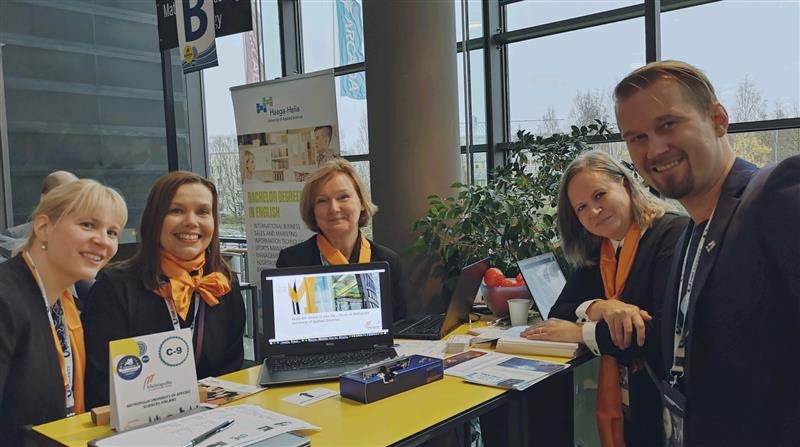
At Metropolia University of Applied Sciences, for the past three years, we have already been organizing webinars together with our educational partners with positive experiences. This autumn, we will be hosting various both undergraduate and graduate focused webinars together with our educational agents as well as participating in webinars organized by third parties. The benefit of virtual sessions is that it enables the university to chat in real-time with students who are interested in studying abroad. We have already participated in two marketing webinars in Indian market, and as a result we can already conclude that there is an ever growing interest towards Finland and Finnish higher education. We were happy to showcase our institution among some of the best universities in the world, an important milestone in university branding as such. We are eagerly looking forward to seeing how effectively this will generate leads and prospective students.
Emphasized role of ethics in partnerships
Due to the shift to online, the role of ethics is becoming even more important than before - this applies to the international student recruitment, collaboration between the educational agent and provider. The importance of ethics and human rights is highlighted in the transnational education roadmap by Finnish National Agency for Education (5).
One outstanding guideline to benchmark and follow is the Australian Agent Code Of Ethics. The Australian education and training sector expects education agents to adhere to seven ethical principles:
Integrity – being straightforward and honest in all professional and business dealings
Objectivity – not allowing professional judgment to be compromised by bias or conflict of interest
Professional competence and due care – maintaining professional knowledge and professional service, and acting diligently
Transparency – declaring conflicts of interest to all clients, especially when service fees are charged to both the education provider and the prospective student
Confidentiality – respecting and preserving the confidentiality of personal information acquired and not releasing such information to third parties without proper authority
Professional behaviour – acting in accordance with relevant laws and regulations and dealing with clients competently, diligently and fairly
Professionalism and purpose - acting in a manner that will serve the interests of clients and the wider society even at the expense of self-interest; recognising that dedication to these principles is the means by which the profession can earn the trust and confidence of stakeholder groups (4).
In addition, there is an increasing need to reach out to high school counselors. International schools offering K-12 English-medium instruction represent an increasingly important source of high-caliber students to universities around the world. An ISC Research report, “Higher Education Report: Pathways from K-12 English-medium International Schools to University 2018,” states that a key to recruiting success is strong relationships between universities and international school college counsellors (3).
Due to COVID19, many campus visits and college fairs have been cancelled. However, there is a need to communicate effectively and share the best possible and accurate information online with educational agents and high school counselors. With limited chances to meet face-to-face with the agents, education providers need to trust that agents adhere to high standards of professionalism and have accountability for their business partners.
At Metropolia UAS, we have strengthened our counselor cooperation and networks through our agent contacts in our target markets. Comprehensive training of the educational agents and high school counselors is the basics of ethical, efficient and successful student recruitment. We have put a considerable amount of our personal work in ensuring that our educational agents are top professionals in their field, highly committed to assisting applicants in finding a suitable educational path, with a thorough knowledge of the target market as well as of Finland and its higher education. They are experts on pre-screening the prospective students with motivation, sufficient ability and resources to study abroad. Naturally, our Head of Schools and Admissions Services play a significant role as well, and we are continuously working together to develop further our internal processes to meet our prospective students’ and educational partners’ needs for the best possible outcome.
Read also our previous blog post about Building reliable agent relationships in international student recruitment.
References:
Studyportals blog Digital Marketing and Recruitment for Universities during COVID-19
ICEF Monitor 6.5.2020
ICEF Monitor 5.2.2019
Australian government: Australian International Education and Training - Agent Code of Ethics.pdf
OPH: Koulutusviennin tiekartta 2020-2023
Authors
Aija Ahokas, Manager of Education Export / Senior Lecturer (MEd, RN, Specialist Qualification in Product Design). Ms Ahokas has many years of working experience abroad in the Middle East, in Saudi Arabia and United Arab Emirates. Her core competencies are in different international activities, networks and partnerships. In addition, her competencies include teaching and tutoring multicultural students especially in Nursing. Transnational education is close to her heart.
Sirpa Rutanen, Communications & Marketing Specialist (MA, Specialist Qualification in Product Design). Ms Rutanen is a strong professional in International Marketing and Communications, fluent in 7 Languages. Her core areas of expertise are International Marketing, Branding, Communication and Public Relations. Having lived in France and Germany, with relatives in four different continents, and worked over 10 years in International Sales for a major airline, her passion is in Intercultural Competence and Communication.
Together Ms Ahokas and Ms Rutanen have worked for over six years to develop and promote Metropolia and its international student recruitment and other educational services.
According to the questionnaire done to higher education institutions (HEI) by Opetushallitus, 80 % of Finnish higher education institutions had a strategy for recruiting international students. In these HEIs, four main focus areas were China, India, Russia and Vietnam. The main tools used in student recruitment were
different webpages
increased interest in using student recruitment agents
student ambassadors
optimizing search engines and marketing.
The main challenges were considered to be e.g. insufficient resources in marketing and recruiting, in addition to understanding target countries. (Opetus- ja kulttuuriministeriö 2019)
In 2018, there were in total 20.237 foreign students studying in higher education in Finland. Nearly 10 000 of them studied in universities of applied sciences, that is 6,7 % of the total amount of students. The most significant group of foreign students came from Asia (46 %), Vietnam being number one. The second biggest group came from Russia, China being number three. (1)
It is difficult to estimate how many international students use the services of student recruitment agents. However, according to the international studies, agents play a significant role in the global education market. With a competent agent, universities can strengthen the recruitment process of the most suitable and motivated students for their degree programs. This collaboration between university and agent requires mutual commitment, professionalism and responsible marketing. (5)
At Metropolia University of applied sciences, there are 1400 foreign degree students, covering over 100 nationalities. The percentage of foreign students was 8,64 % in 2019. Most of the non-EU/EEA students come from Vietnam, India and Nepal. In On-Demand education, the biggest groups come from India, Philippines and Vietnam. Where do our future international students come from and how can we increase the number of international students with the help of educational agents? In this blog post, we will discuss the needs and strategies to develop the international student recruitment services at Metropolia.
International student market and effects of Covid-19
According to the ICEF Monitor (2), the pandemic will have a significant impact on the global economy and international educators are looking ahead to try to prepare for the rest of 2020 and into 2021. Professor Simon Marginson, the director of the Centre for Global Higher Education at the University of Oxford, predicts the market shifting so that the international student market will become “a buyer’s market” - institutions and schools competing harder for a smaller population of prospective students. Secondly, he states that there will be a greater emphasis on intra-regional mobility. Issues of proximity, health security, and affordability will sharpen a trend towards greater mobility within the region, especially so in East Asia.
According to the Studyportals COVID19 Impact Report (6) the expectations for 2020 international enrolment are not promising:
83% of higher education professionals expect a decrease or large decrease of international enrolments
60% expect a drop overall.
This means that international mobility is becoming increasingly uncertain. Both professionally and personally, it has been a challenging time for us all as the market dynamics are reset. Despite of the immediate impacts of the coronavirus on international student recruitment, we at Metropolia UAS have been working remotely in close cooperation both with our existing educational agents and with potential new ones.
We have also new insights in mind as the education industry continues to look ahead to the post-COVID recovery. The outbreak of COVID19 certainly accelerated the plans for online education, however, we believe that for international markets one needs to clearly select the degree programmes we focus first since implementing them requires significant amount of time, money and effort. In this development our educational agents play an important role, helping us to analyse the specific market needs. We have been monitoring closely the prospective students behaviour, managed crisis communication towards our partner agents as well as applicants’ parents. Although the pandemic has made us to change our short-term plans, our focus is in the big picture and long-term goals - this means visualizing the internationalisation in the new post-COVID19 world.
Goals of international student recruitment
Regarding educational agents, our focus at Metropolia is in building reliable, long term partnerships that will provide us motivated students, rather than just opting for the quantity. In our partnerships, we have opted for the agents having connections and knowledge of both Finland and the market in concern.
Building trustworthy relationships takes time and a lot of benchmarking through various international events and networking both face-to-face and online.
Another important factor for us is to get potential applicants willing to stay and work in Finland, to boost Finland’s economy and future prospects. According to International higher education and research policy for years 2017–2025, one of the seven actions for the global development of higher education focuses on facilitating foreigners’ studying and working in Finland (4). It is estimated that the need for new labor in Finland will be around 60.000 people annually by year 2035.
During the spring, our focus has been in adapting to the pandemic with the help of online facilities and in supporting our agents during this difficult phase. These uncertain times have created a lot of concern from parents’ side whether to send their young adults to study abroad or not. According to ICEF Monitor (3), parents play a significant role in decision making for studies abroad, and they are also concerned about the return on investment for graduates. In practice, this means e.g. a strong need for emphasizing Finland as a safe country with a good healthcare system, highlighting our support and guidance functions at the university for our international students, as well as ensuring that our partner agents are carefully selected, reliable partners.
As a multidisciplinary university of applied sciences, we have a strong offering and expertise in the fields of
ICT
Electronics
Nursing
International Business
which have a huge demand in our target markets. Furthermore, U-Multirank 2020 (7) has presented Metropolia amongst the TOP 25 performing universities globally under the category “Co-publications with industrial partners”. According to the U-Multirank 2020 report, Metropolia performs well in the Regional Engagement dimension. This ranking is beneficial for us also in regards of student recruitment.
In terms of partnerships, we have started this spring collaboration with StudyNordic in the Indian market. We also work in very close collaboration with our already existing partners Edunation (Asian countries), Viope (India and China) and IIHS (Sri Lanka). Beside these existing target markets, we are also developing our agent relations to Middle East and Latin America. You can find our current educational partners listed on our website. We are happy to discuss a new potential partnership in international student recruitment.
References
Finnish National Agency of Education 2020. Tilastoja korkeakoulujen ulkomaalaisista tutkinto opiskelijoista vuonna 2018 (opens PDF) (24.06.2020)
ICEF Monitor - Looking ahead - scenario planning and recovery forecast for international education (01.04.2020)
ICEF Monitor - The crucial role of parents in international student recruitment and retention (17.04.2019)
International higher education and research policy for years 2017–2025 (opens PDF). Ministry of Education and Culture, Finland 2017:11.
Kansainvälisten korkeakouluopiskelijoiden maahantulo ja integroituminen sujuvaksi yhteistyöllä (aukeaa PDF). Opetus- ja kulttuuriministeriön julkaisuja 2019:31 (24.06.2020)
Studyportals.com COVID19 Impact Report, April 2020
U-Multirank 2020 report (opens PDF).
Authors:
Aija Ahokas, Manager of Education Export / Senior Lecturer (MEd, RN, Specialist Qualification in Product Design).Ms Ahokas has many years of working experience abroad in the Middle East, in Saudi Arabia and United Arab Emirates. Her core competencies are in different international activities, networks and partnerships. In addition, her competencies include teaching and tutoring multicultural students especially in Nursing. Transnational education is close to her heart.
Sirpa Rutanen, Communications & Marketing Specialist (MA, Specialist Qualification in Product Design). Ms Rutanen is a strong professional in International Marketing and Communications, fluent in 7 Languages. Her core areas of expertise are International Marketing, Branding, Communication and Public Relations. Having lived in France and Germany, with relatives in four different continents, and worked over 10 years in International Sales for a major airline, her passion is in Intercultural Competence and Communication.
Together Ms Ahokas and Ms Rutanen have worked for over six years to develop and promote Metropolia and its international student recruitment and other educational services.











Kommentit
Ei kommentteja