
Avainsana: study trip
Designing for Sustainability in Berlin. A master´s study trip to “International Week on Sustainability 2022”
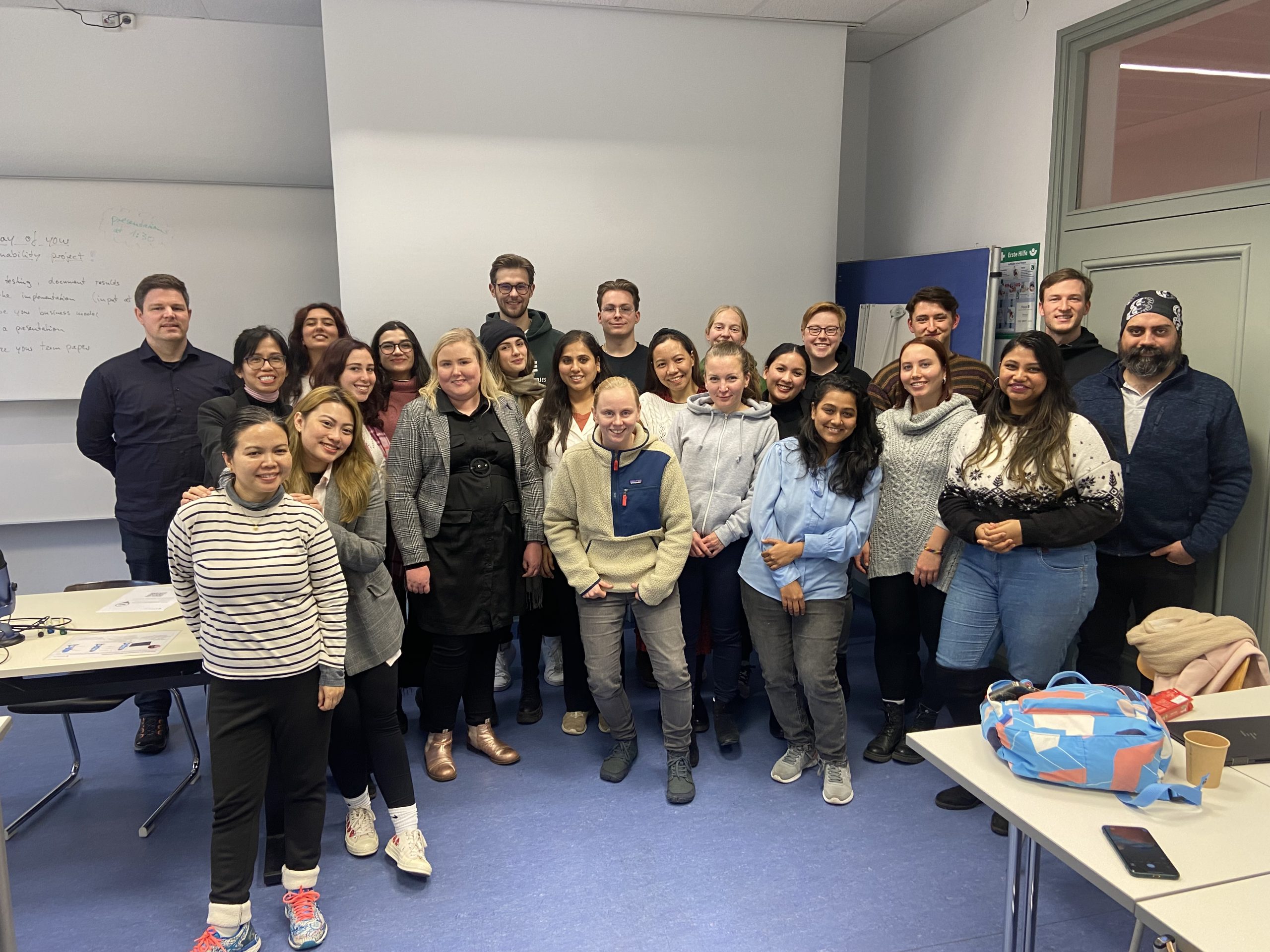
The Berlin School of Economics and Law (1) organizes the annual International Week on Sustainability (IWS) since 2019 with the goal is to integrate sustainability into the higher education curriculum. This year 2022, HWR invited master’s students from Metropolia for the second time to participate in the design and development of sustainable solutions together with companies and students from other countries in a series of workshops that lasted for 4 days, 18-21 November 2022. Our group of 10 master´s students was excited to get an approval from Meropolia´s International office. Additionally, the IWS study trip offered a chance to earn 3ECTS while solving real-world sustainability concerns, so we longed to go and try. The final argument in favor of the trip was its destination, as Berlin represents significant historical legacy, making it a unique opportunity to visit and experience it, difficult to pass by. Fast forward to November, it felt surreal to land at Berlin airport, and we were too excited to feel exhausted. Even the rain, slushy streets, and chilly air could not dim our spirits. In Berlin, we were all determined to expand our knowledge and make new connections. Day 1. Opening Day and Kick-off The program kick-off took place in HWR Startup Incubator Space located in the Siemens industrial park. It started with a briefing with project partners from Startup Incubator Berlin, which featured the startups in the sustainability field. The introduction also included a brief review of Service Design methods and tools covered by Prof. Christian Klang of HWR. There were about 30 participants coming from different academic and business fields who were assigned to five working teams. Each team selected one of the following challenges: 1) incentivizing nature-based solutions to climate change; 2) making travel sustainable and meaningful; 3) incentivizing CO2 reduction during commute; and 4) communicating vegan food delivery effectively. Teams put their hands to work on the challenge they had selected. The startups sat down with the teams to explain their projects and share their motivations and visions. Ideas poured in as each team concentrated on solving the issues and gathering data. Day 1 came to a close with more questions than answers. Day 2 and 3. Ideation and Prototyping Day 2 sessions were held on the HWR campus (2). As we had grown accustomed to the modern design of Metropolia´s campuses, the large corridors, arched hallways, and marble floors in the HWR campus were a little surprising. Teams worked seriously to build and test their prototypes. It became obvious that cooperation is essential to the success of the projects and this is where online tools for team collaboration became critically useful. Ideas and information were together put in an online board to make sure that good ideas and critical pieces of information are not missed out. The challenge was to make business sense out of all the ideas and information that we had, as we quickly realized that bright ideas and passion were necessary but not enough. We kept reminding ourselves that we needed to find solutions that would be viable, feasible, doable, and would make business sense for our partner startup. The second day ended with coffee and laughter, as we watched the first snowfall of the year covering HWR. On Day 3, we went to The Morp Company, a consulting firm that offers sustainability advice. A brief workshop on the use of the business model canvas as a tool to address corporate sustainability concerns was held and received very well as a hands-on new tool. Day 4. Pitch for Impact Day 4 was a pitching day. As teams presented their ideas and answered questions from partner startups and other participants, it was inspiring to see the variety of proposed solutions. There were no earthshaking proposals, but the teams focused on concepts that made real business sense and would advance true sustainability. Although the solution reports still need to be finalized, we felt a sense of accomplishment for having done something worthwhile as the last session ended. Discovering Berlin In all honesty, finding our way to the session locations in the morning was a bit challenging. Because of this, coffee and Google Maps have become our close allies. When in Berlin, we didn’t just snap pictures. We needed to get out there, interact, and connect. Berlin is blissful for shoppers and vibrant for foodies and art lovers. A frequent conversation starter during this trip was “Is this your first time in Berlin?” It was easy to say “Yes” in response to this question. “How do you find Berlin?” and “Which sites have you visited?” were the typical follow-up queries. With each passing day, we would find ourselves giving different answers because Berlin is too diverse to describe in a few words. Despite our time constraints due to working 4 full days on projects, we were nevertheless able to visit some famous sites. We were lucky to witness the start of Berlin's Christmas market and were able to sample local food including currywurst, kebab, stollen cake, and local wine. We had our taste of misadventure too during the first attempt to visit the Brandenburg gate, as we ended up at a factory site due to our over-reliance on Google Maps. On the last day of the trip, it was difficult to bid Berlin goodbye. Armed with new knowledge and filled with the brilliant sparks of Berlin, we boarded our plane to return to Finland. References The Berlin School of Economics and Law (Hochschule für Wirtschaft und Recht, HWR, Berlin) is one of the largest universities of applied sciences in Berlin. It was founded in 2009 as a result of merged of two other big higher education institutions, and it now enjoys more than 150 partners around the globe, including Metropolia UAS, its long-time partner. Read more about HWR from its web-pages: https://www.hwr-berlin.de/en/ Berlin School of Economics and Law, Badensche Str. 52, 10825 Berlin. The picture below shows the marble floors and grand interiors of this campus. About the author Karen Espiritu is a 1st year MBA student in Business Informatics at Metropolia Business School. Karen is a certified project manager and a result-driven professional who is passionate about fostering organizational sustainability on all three fronts: economic, social, and environmental. She enjoys blogging in her spare time and is an active student ambassador of Metropolia. Her video about IWS-2022 in Berlin can be found here: https://www.youtube.com/watch?v=DPiUds0fVvo
UPWORTHY STUDY TRIP to Stuttgart, the Manufacturing Hub
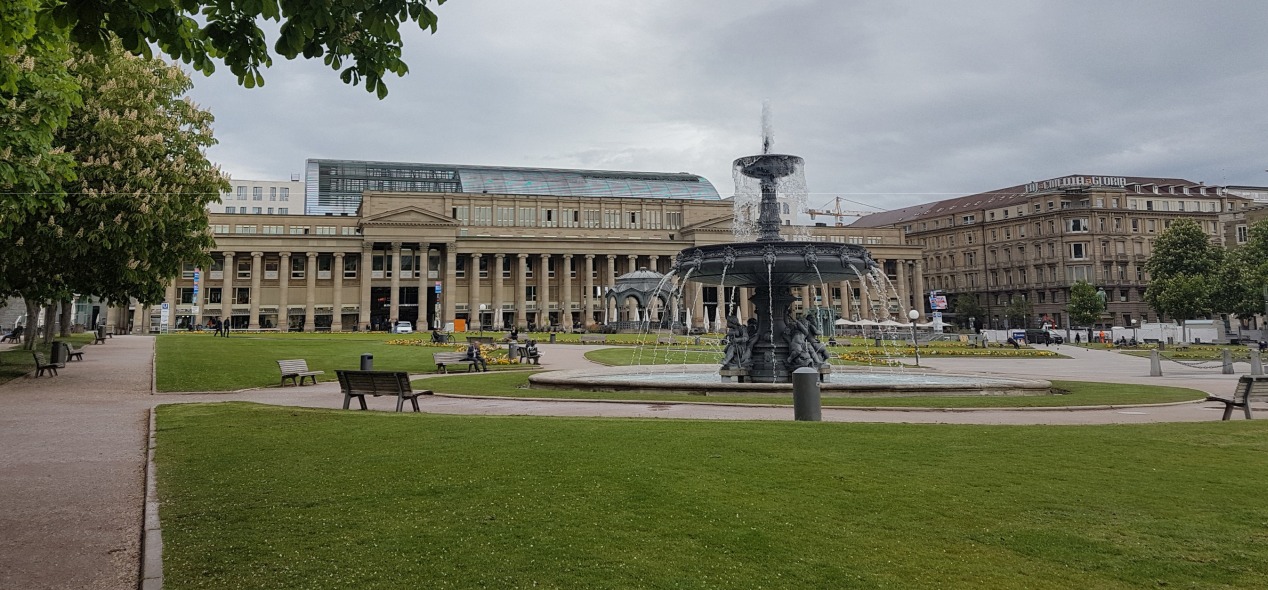
A Nice and Welcoming City & Butterflies in our Tummies As Master’s students of Metropolia University of Applied Sciences, when we were told that the study trip this year would be to Stuttgart, we got truly excited. A study trip to Stuttgart meant a promise to visit some best innovative companies and discuss some of their interesting projects on the horizon. Stuttgart in May is full of green leaves and flowers! From the late and snowy spring of Helsinki, we immediately moved to a lush, almost summer vegetation of Stuttgart, with fountains, sculptures, museums, market places and a busy downtown where the host university, Stuttgart Hochschule fűr Technik (HFT) campus, was located. As a group of Master’s students, we represented 9 different countries and a mix of different educational background and job profiles. We were looking forward to two exciting days of workshops, industry visits, and cultural exposure. Day 1, University Campus The first day was scheduled as a Team and Organizational Development day together with the local students. Our partner university invited Business Psychology students to co-create with us. There was a lot of collaboration, and the energy was amazing. We managed to learn the things that we would never thought of before. Freytag's Pyramid - The Classic Theatre Way of Communication The classic theatre way of communication was discussed based on the German playwright Gustav Freytag’s nifty diagram, Freytag's Pyramid. It develops from exposition to denouement, which - as we learnt - can be spectacularly used for application in marketing and sales. This session was very well planned, engaging and fun-filled with group activities moderated by Business Psychology students. The team task was to develop a plot how an online store MiHaNi could partner with a traditional physical store LuSuBa. The online store wanted to enable customer services and support, while LuSuBa looked to increase their sales by including the online channel. Six different teams, combining both HFT and Metropolia students, were formed (with three roles for each team, the Management, Sales and Marketing) for creating a plausible scenario for this plot. Each team demonstrated special skills, and a few rose up to instant fame with terrific acting skills. We also found the creative side of individuals here! This was followed by a quick floor walk at the “Job fair” that was located at this moment on the campus. It was amazing to find so many top companies having opportunities for fresh graduates. Day 1, Industry Visits Later on Day 1, we had a unique opportunity to enjoy a session conducted by Daniel Deparis (Head of Smart Lab @ Daimler) on the topic of “Strategy and Innovation”. The session gave us insight into Daimler's way of working, a crisp forum that emphasized that, in order to be innovative, a strong foundation – "the Why, the Team, and the Sponsor" – becomes vitally important. We could almost feel a real customer centricity urge that must be the main atmosphere at Daimler. Bliss and pains of being a pioneer, the flops and tops of innovation and importance of attitude were all reviewed. We also learnt that a lean start-up culture is the way to be successful in innovation. Day 2, Visit to Bosch Day 2 started with a factory tour to Bosch that gave insight about the current trends in Industry 4.0. During the guided factory tour, we were given the first-hand information on versatile Industry 4.0 solutions - connecting digital and physical technologies, AI, the Internet of Things, Robotic Process Automation, etc. - and saw how they can help companies to make their production line more efficient. We also went through the action floor with its connected services, interactive dashboard, enabled personnel for making informed decision - everything possible was done to digitalize work and help the production floor to work and be managed efficiently. This was a place where value is definitely created. The action floor also gave us an overview that there are some amazing job vacancies out there for engineering graduates. To be engineers, graduates - is definitely worth it! Day 2, Visit to Mercedes Benz Consulting This session started with a tour over the Mercedes Benz Consulting office. For many of us, Mercides Benz has been a dream from an early age. Visiting their consulting office and interacting with product developers, researchers and business development folks fueled us with the top up energy. We had an opportunity to see the Virtual Retail Lab, Consumer experience lab with games and AR to engage customers and, an interactive whiteboard that can be used for conducting interactive meetings with clients and brainstorming new areas within the company. No doubt, as the world is heading to a digital transformation, innovation in retail at Mercedes Benz will sure continue and we will perhaps get to see some real disruption very soon! Golden Handshake If you happen to visit Stuttgart, buffer some time to visit their wonderful downtown restaurants. We consider ourselves lucky to have had a chance to visit all the industrial companies. But it was also a great moment to have an evening with our course advisors. There, we discussed many interesting topics including the comparison of industries, museums, and also beers - to what it was some time ago. As all good things must come to an end, we gathered many memories from Stuttgart to cherish for the days to come. As Metropolia students, we would like to thank both Metropolia instructors and our Stuttgart advisors Prof. Dr. Patrick Planing and Prof. Dr. Katrin Allmendinger for arranging this trip that gave a new dimension to our learning. From dusk to dawn, they kept us busy to explore. It helped also to socialize and know each other a bit more personally and professionally. While we discussed, visualized and experienced innovation and its management “at the desk” in class, the study trip brought these lessons to life. About the Authors Sudhindra and Satish Kumar - MBA students at Master’s programme in Business Informatics, Metropolia University of Applied Sciences. Both have 18+ years of industry experience in diversified roles and responsibilities and hail from India. They both have something in common: they are avid readers, love travelling, inquisitive and believe in food for thought. Both possess a passion to be entrepreneurs. They have been together during this whole trip and decided to co-author this blog. Sudhindra – Sudhindb@metropolia.fi; Satishkumar - Satish.MudigereKeshava@metropolia.fi Antti Hovi - Senior lecturer at Metropolia University of Applied Sciences, the instructor and inspirer of “Innovation and Renewal” course who organizes and nurtures students in their innovation efforts, including the study trips. Photos by the authors.
New perspectives from a study trip
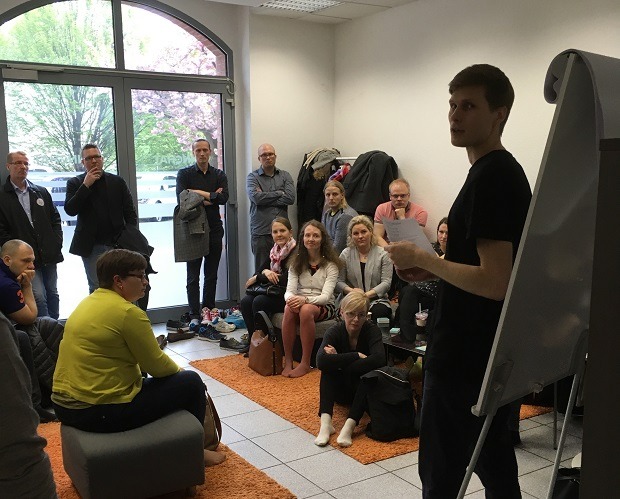
The possibility to participate in a study trip is included in several Metropolia Master’s programmes. Study trips and international study modules as well as exchange programs strengthen the international competencies of Master's students. Business Informatics student Laura Invenius wrote about a study trip to Berlin. Innovation and Renewal course is a mandatory module for Business Informatics Master's students. Luckily it included a two-day study trip to Berlin at the end of April 2017. The instructions stated that we needed to arrive to Berlin either on Wednesday evening or very early on Thursday and so we did! We had a WhatsApp group and people reported on regular intervals once they were arriving and so the excitement kept growing. On Thursday, we had a visit to a local university and with Hochschule für Technik und Wirtschaft Berlin's MBA students we did a group assignment together, in which we needed to innovate new business models for various companies. The discussion was vivid, both about the task, but also about the student life in Finland and Germany. After the group presentations, a company named Futurice, introduced themselves. Originally from Finland, they are now located in various locations in Europe, and have changed their business model several times. They have an interesting concept and employee policy, trying to find different capabilities and skills and forming teams based on these. On Friday, we visited Innovation Labs Berlin. It brings together startups in different phases and helps them through different challenges they might be facing. CEO Klaus Kammermeier told us about the startup scene in Berlin and why there are so many of them; living costs and quality of life in Berlin are good, the location in the center of Europe is excellent, those being the most important factors. After a quick currywurst lunch and a visit to Brandenburg Tor, we headed to Finnchat. Finnchat is a Finnish company that provides chat services on company websites. They are well known in Finland already, and are now trying to get footstep in Germany. We made a group work around their sales and marketing funnel. Quick visit to Kurfuerstendamm and then we had a fairwell dinner together at a very nice Italian restaurant in Mitte area. There was a lot of laughter and joy after an exciting program. Many of us stayed over the weekend and visited sights enjoying a sunny and warm spring weather. Laura Invenius Business Informatics student See also: Finnchat. com: Metropolian opiskelijat vierailulla Berliinissä Student Evgenia Molchina's blog: MBA Study Trip to Berlin

The editorial team will provide the content of the Masterminds blog before publication.
The editorial team started its work at the beginning of 2022.
Pia Koirikivi, chief editor in Masterminds blog, Pedagogical Specialist
Minna Kaihovirta, Manager of Dialog
Iira Lankinen, Principal Lecturer
Riikka Wallin, Publications Specialist
Zinaida Grabovskaia, Senior Lecturer
Salla Kivelä, Principal Lecturer
asiantuntija yamk business informatics Business Informatics Master’s Program CERN Bootcamp Construction Business hankinnat hankintastrategia hankintatoimi ilmastonmuutos Industrial Management Industrial Management Master’s program johtaminen koulutus kulttuurituotanto Marjatta Kelo master Master's Thesis masterminds Masterminds blog Master of Engineering Master’s degree Metropolia Metropolia AMK Metropolia Master's Metropolia UAS metropolia YAMK opinnäytetyö osaaminen service design Sharing economy sosiaali-ja terveysala sosiaaliala study trip Sustainability talotekniikka terveyden edistäminen terveydenhuolto työhyvinvointi ura yamk YAMK-tutkinto YAMK opinnäytetyö ylempi AMK ylempi ammattikorkeakoulututkinto Zinaida Grabovskaia
