Tulevaisuudessa tutkija on somesta tuttu
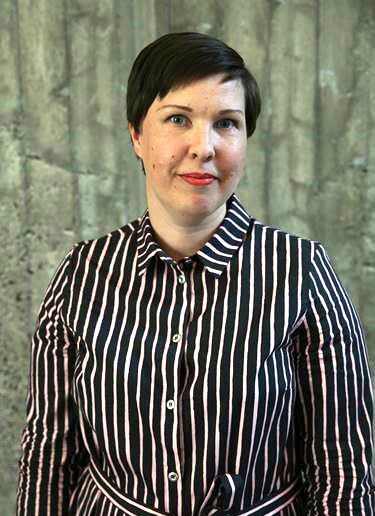
Onko mielikuvasi tutkijasta kirjapinojen taakse piiloutuneen yksinäisen puurtajan? Otin YAMK-opinnäytetyössäni tavoitteekseni selvittää, miten tutkijat käyttävät sosiaalista mediaa. Kiinnostus aiheeseen syntyi työssäni sosiaalisen median asiantuntijana Helsingin yliopistossa. Opinnäytetyöni kohderyhmänä olivat kaikki suomalaiset tutkijat, väitöskirjan tekijät ja eri alojen tohtorit. Aineisto kerättiin verkkokyselyllä alkuvuodesta 2018. Opinnäytetyössäni kartoitin tutkijoiden käyttämiä sosiaalisen median palveluja, mutta sen lisäksi halusin selvittää myös mitä mieltä tutkijat ovat viestinnästä osana työnkuvaansa. Someaktiivit tutkijat eivät kammiossa piileksi Kyselyyn vastanneista tutkijoista 73 prosenttia käyttää sosiaalista mediaa päivittäin tai viikoittain ja 88 prosenttia kokee sen hyödylliseksi työssään. Voidaan sanoa, että kyselyyn on vastannut sosiaalista mediaa aktiivisesti käyttävä tutkijoiden joukko. Tämä ei ole yllättävää sillä kysely levisi aktiivisesti sosiaalisessa mediassa. Vaikka vastaajien joukko on aktiivisiin käyttäjiin painottunut, sain kyselyn vastauksista viitteitä siitä miten erityisesti tutkijat voivat hyötyä sosiaalisen median palvelujen käytöstä. Tutkijat käyttävät sosiaalista mediaa oman alansa seuraamiseen ja alan sisällä verkostoitumiseen. Sosiaalisesta mediasta voi olla apua myös tutkimuksen tekemisessä esimerkiksi ideoinnissa, lähteiden etsimisessä ja aineiston hankkimisessa. Sosiaalinen media voi vaikuttaa positiivisesti tutkijan tunnettuuteen ja siihen, miten hän saa tutkimustaan esille julkisuudessa. Tutkijoiden mielestä sosiaalisen median välityksellä vaikuttaminen on mahdollista, mutta päätöksentekijöihin vaikuttaminen koetaan vaikeaksi. Harvalla on määritelty omalle viestinnälleen tavoitteita tai mittareita. Tämä tekee vaikuttavuuden arvioinnista vaikeaa. Hyöty ja helppous motivoivat tutkijoita twiittaamaan Oletko tutkija jonka mielestä tieteestä puhutaan liian vähän julkisuudessa? Sosiaalinen media on hyvä työkalu viestintään ja verkostoitumiseen. Sosiaalisen median kanavista Twitter koettiin ylivoimaisesti hyödyllisimmäksi. Twitteristä tutkija löytää yleensä sekä oman alansa verkostoja että tieteestä kiinnostunutta yleisöä. Tiedeviestinnän vaikuttavuuden lisäämiseksi tutkijoiden on tärkeää muistaa verkostoitua myös oman tutkijayhteisönsä ulkopuolisten kanssa. Esimerkiksi Twitterissä kannattaa ottaa seurattavaksi toimittajia ja päättäjiä, sekä pyrkiä rakentamaan vuorovaikutuksesta keskustelevaa. Äskettäin Science Magazinessa julkaistun tutkimuksen mukaan tutkijoiden vaikuttavuus Twitterissä kasvaa seuraajien määrän ylitettyä 1000 seuraajan rajan. Vaikuttavuuden kasvun tekijänä on, että rajan ylityttyä suurin osa seuraajista on muita kuin toisia tutkijoita, esimerkiksi toimittajia ja yleisön edustajia. Viestivä tutkija vie voiton Viestintä on osa tutkijan työtä. Tästä olimme tutkimukseeni vastanneiden 357 tutkijan mielestä harvinaisen samaa mieltä, sillä peräti 92 prosenttia oli väitteen kannalla. Tutkijoista joka kymmenes ei käytä sosiaalista mediaa työssään lainkaan mikä ei sinänsä poikkea muusta väestöstä. Tulevaisuuden näkymissä sosiaalisen median käyttö näyttää pysyvän samanlaisena tai kasvavana. Sosiaalista mediaa käyttämättömistä tutkijoista kolmannes arvioi aloittavansa sosiaalisen median käytön rahoittajien niin vaatiessa. Viestinnän sisällyttäminen selkeämmin työnkuvaan voisi motivoida myös joitakin tutkijoita. Myös rekrytoinnissa tulisi huomioida tutkijan olemassa olevat viestintäverkostot. Haastan tutkijoita suunnittelemaan sosiaalisen median viestintäänsä. Yksinkertaisimmillaan tämä tarkoittaa seuraaviin kysymyksiin vastaamista: mitä, miksi, kenelle ja miten. Viestin tavoiteltu kohderyhmä vaikuttaa sekä viestin muotoiluun että valittuun kanavaan. Onnistunutta tiedeviestintää pitäisi juhlia. Odotan milloin maassamme jaetaan ensimmäinen Vuoden tiedesomettajan -palkinto. Ehkä jo tänä vuonna? Anu Valkeajärvi Blogiteksti perustuu kirjoittajan opinnäytetyöhön Tutkija asiantuntijana sosiaalisessa mediassa. Sosiaalisen median merkitys tutkijoiden viestinnässä ja verkostoitumisessa. (Metropolia Ammattikorkeakoulu 2018) Anu Valkeajärvi on sosiaalisen median asiantuntija, joka valmentaa asiantuntijoita viestintään ja vuorovaikutukseen sosiaalisessa mediassa. Hän on valmistunut Metropolian mediatuottamisen tutkinto-ohjelmasta (nyk. Digitaalisten mediapalvelujen tutkinto-ohjelma) medianomiksi, ylempi AMK. Twitter: https://twitter.com/valkeajarvi
Roadmap to Your Education – Where Are You Now? Where You Want to be Next?
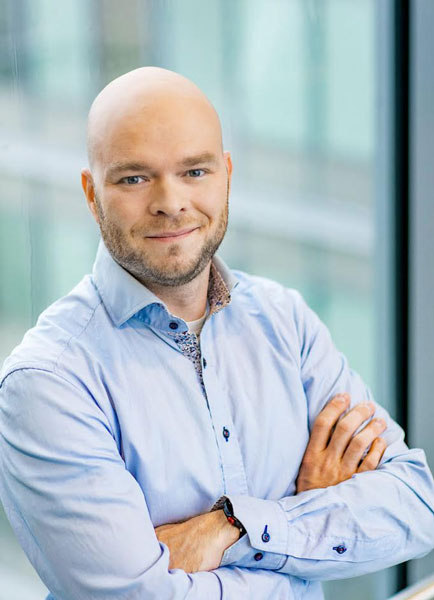
Just think of this fact: Forrester Research predicts that today's youngest workers will hold 12 to 15 jobs in their lifetime. How then to choose a study path, when you are 18 years old and hardly have any work experience? It seems we all need to become lifelong learners. I have accepted this fact and found for myself that two questions always help me: first, Where am I now? and most importantly, Where do I want to be next? Modern jobs are demanding, and require a large toolkit of skills that cannot come from only sitting in a classroom. Moreover, formal education to the job - at some point of life – may not be enough, if people also want to do the work they find inspiring and meaningful, but is going beyond their current qualification. In addition, different jobs and life experiences may reshape one’s interest areas. As a result, the need to learn new things comes about more often than ever before. Based on my own experience, to manage with this fast pace and change, I’d encourage young students to take a shorter study path after high school, and then acquire work experience according to one’s own interest areas. To illustrate my point, I will share my own experience. I started by completing my Bachelor’s degree in 2005 at Metropolia AMK (Stadia at that time) in Automotive Engineering. After four years of studying, as I realized already during my studies, I wanted to do research work and I aimed at VTT (Technical Research Centre of Finland). That was the best option in the field and my own best choice. Persistency - and a bit of luck - helped me to get a job at VTT as an R&D engineer, as I always dreamt. Next, after a couple of years of practical, highly educational work at VTT, I asked myself ‘Where do I want to be next?’. Honestly, I wanted to go abroad for new challenges and moved to the Netherlands, to work as a Testing engineer at TNO (the Dutch counterpart of VTT). During my time at TNO, I was lucky to work with major international engine and vehicle manufacturers. These years gave me practical knowledge about the business side of the automotive industry. Then, after experiencing the business side, the question loomed again; Where do I want to be next? I returned to Finland and back to VTT, as I now felt clearly that my interest area shifted from pure research to a more commercially oriented research work. As soon as I outlined my desire where I want to be next, I got a call from a headhunter offering an opportunity at Neste Oil as an Engine researcher. The role was precisely in my dream area, in-between the R&D and business units, which was a perfect match with my new ’where to go to’. Meanwhile I kept doing various short courses in communication, marketing, sustainability, and innovation to strengthen my Bachelor’s technical background with business expertise. Finally, after some four years, I felt a clear ‘next to go to’ in sales. But now it was a far too big stretch from my technical roles towards commercial work. Yet, the company trusted me and gave me the opportunity at Neste’s wholesale business unit as a Technical Account Manager. Pretty soon, I realized an acute need for in-depth knowledge in sales, marketing and business administration. This time, my next ‘where to go to’ was to get a Master’s degree from business studies. My basic requirement was to find a short, compact study module of an MBA type catered for the demanding technical environment. I found the best match at Metropolia, in Industrial Management Master’s studies. The curriculum was very close to an MBA course, with the topics I wanted to learn. Also, the classes and course tasks were organized in such a way that I could keep my new full-time work and even perform many of the given research assignments at my company. After a compact (and very tight!) year of super-interesting Master’s studies, I graduated from Metropolia, Industrial Management Master’s degree program as a Master of Engineering in 2015, much better equipped for my new role. It took me about two years to digest all the new knowledge and develop new skills, before my next ‘Where to go to?’ started maturing. This time, it felt as a clear call for business development. My job offered so many new challenges that a combination of technical knowledge with the expertise in sales - and knowledge of industrial services - really fired off well for me. A global shift to services, that makes the core of Industrial Management Master’s degree program at Metropolia, approach our team on a very practical level. We have faced a challenging task to introduce services into a very traditional industry. Luckily, after my Master’s studies, especially courses in Service business, I felt more confident in my work on many occasions. Even now, I keep complementing these skills through various short courses in Service design, which I found very useful. Now, I am also lucky to see how my team members decided to follow a similar study path and made into two extremely talented and intelligent students. They also keep asking the same questions: Where am I now? and Where do I want to be next? in order to decide which courses to take to match their interest areas, and it will probably help them in their future careers as well. I share this approach hoping that someone may find it useful for making one’s own choices. The world is changing in an ever-faster pace, and to keep up with this pace requires honesty and timely grasping lifelong learning opportunities. Tuukka Hartikka Commercial development manager Neste corp.
From Top-Down to Bottom-Up Management for IT Industry – What does it Mean?
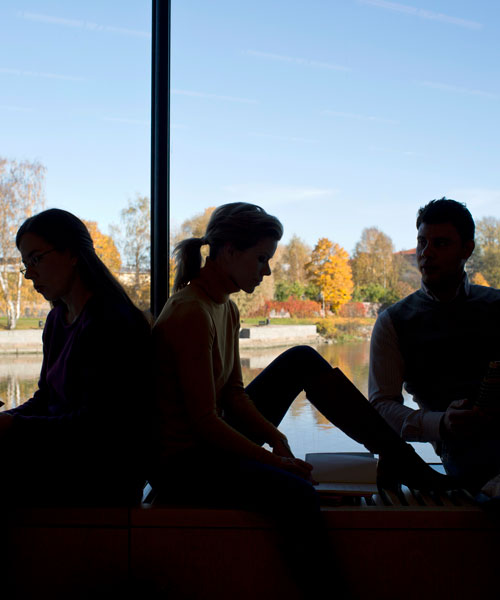
Many small and mediums-sized IT companies are packed with young and innovative millennials. These IT nerds, in addition to developing state-of-the-art solutions, want to have a wider influence in their companies. My study of IT companies discovered that millennials do not want to be managed by someone telling them what to do or to be measured how the instructions are followed. Instead, it is important to them to actively participate in the running of the daily operations. Therefore, it is important for a modern IT company to find out how to successfully run a company, in the demanding competitive environment, with modern management methods. The millennials know that a modern SME (small and medium-sized enterprise) IT company cannot rely on the management methods developed almost a hundred years ago. In their view, it is time to challenge the traditional approach and methods of strategy, which are often developed for large enterprises, not to SMEs. The millennial era gives power to employees and widens accountability not only to employees but also to leaders of the company. The stiff, conventional top-down management is turned upside-down into the bottom-up management, where decisions are made fast and by the real-life experts, and where cooperation is of utmost value. As the way people work is changing, the modern leadership turns managers into stewards whose main responsibility is to assist their employees to shine. This also leads to considerable changes in the companies’ culture. The key assets of an SME IT company are the competent and empowered employees. Those who innovate on a daily bases. As the resources of skilled, creative and passionate employees are scarce, leaders are faced with a challenge to win their brains and souls. In this situation, companies have to turn themselves into attractive modern employers and differentiate them from masses by up-to-date ways of leading their business. In nerds’ eyes, it can be done – first and foremost – by empowering those who are the real experts, and by turning error-free operations into error-allowed operations. With the help of new era millennials, highly engaged and committed companies are able to move fast, be agile in operations, and ready to turn the ship whenever needed. Even though there are thousands of strategy books available, still, studies reveal that nine out of ten employees do not understand their company’s strategy. Having worked for many years in IT industry, in leadership and management positions, I have always missed a handy and practical strategy implementation tool. My Master’s studies at Metropolia gave me this opportunity to explore and eventually develop such a tool and put it into a ‘Strategy implementation handbook’. In my study, I was helped and inspired by innovative and enthusiastic C- and O-level employees (i.e. from C-‘executive’ and O-‘operational’ levels) who shared their insights and helped to develop this handbook, specifically fit for use by IT SMEs. The Handbook consists of six concrete and easy-to-follow chapters how to implement a strategy in an IT company. I especially relied on some brilliant ideas of modern leadership from Red Hat Inc., one of the leading IT developing companies, and from the Open Organization community. I am grateful for their input. This Master’s Thesis is available in theseus.fi. Topic: A Generic Strategy Implementation Handbook for Small to Medium Sized IT companies. Researcher Kirsi Hoikkala (LinkedIn), Master of Engineering in Industrial Management Master’s project discovery: Conventional Management Methods are Challenged Master’s thesis often brings unexpected insights to both the thesis worker and their community of co-workers, and to the interested public. This year, Master of Engineering Kirsi Hoikkala, who has completed her Master’s degree in Industrial Management, came up with a discovery challenging the renowned management gurus. In her Master’s project, Kirsi explored how strategy is implemented in small and medium-sized innovative IT companies. And her study revealed some unexpected results. Master’s process instructor Zinaida Grabovskaia, PhL

The editorial team will provide the content of the Masterminds blog before publication.
The editorial team started its work at the beginning of 2022.
Pia Koirikivi, chief editor in Masterminds blog, Pedagogical Specialist
Minna Kaihovirta, Manager of Dialog
Iira Lankinen, Principal Lecturer
Riikka Wallin, Publications Specialist
Zinaida Grabovskaia, Senior Lecturer
Salla Kivelä, Principal Lecturer
asiantuntija yamk business informatics Business Informatics Master’s Program CERN Bootcamp Construction Business hankinnat hankintastrategia hankintatoimi ilmastonmuutos Industrial Management Industrial Management Master’s program johtaminen koulutus kulttuurituotanto Marjatta Kelo master Master's Thesis masterminds Masterminds blog Master of Engineering Master’s degree Metropolia Metropolia AMK Metropolia Master's Metropolia UAS metropolia YAMK opinnäytetyö osaaminen service design Sharing economy sosiaali-ja terveysala sosiaaliala study trip Sustainability talotekniikka terveyden edistäminen terveydenhuolto työhyvinvointi ura yamk YAMK-tutkinto YAMK opinnäytetyö ylempi AMK ylempi ammattikorkeakoulututkinto Zinaida Grabovskaia
