
Sosiaali- ja terveydenhuollon kehittämisessä tarvitaan tietoa palveluiden vaikuttavuudesta

Sote-alan masters-tutkintojen opiskelijat järjestivät ajankohtaisseminaarin uudistuvasta sosiaali- ja terveysalasta marraskuussa 2019 jo kuudetta kertaa. Tänä vuonna seminaarin teemana oli yhteiskunnallinen vaikuttavuus, jota tarkasteltiin lastensuojelun, vaikuttavuuden mittaamisen sekä terveydenhuollon digitaalisten ratkaisujen vaikutusarvioinnin näkökulmista. Lastensuojelun vaikuttavuudesta on vain vähän tietoa Yliopettaja Sirkka Rousu Metropolia Ammattikorkeakoulusta muistutti sote-alan ammattilaisten yhteiskunnallisesta tilivelvollisuudesta. Myös lastensuojelun tulee kyetä osoittamaan toimintansa tulokset ja vaikuttavuus. Asiakkailla - lapsilla, nuorilla ja heidän perheillään on oikeus odottaa, että he saavat juuri heidän tarpeidensa kannalta oikeanlaista apua ja tukea oikea-aikaisesti. Ammattilaisilla on velvollisuus kehittää työtään ja hyödyntää siinä asiakaskokemuksista ja työn vaikutuksista kertovaa tietoa. Kun käytetään yhteiskunnan voimavaroja, tulee lastensuojelusta vastaavien organisaatioiden käyttää resurssit niin, että palveluilla on vaikutusta. Nykyisin lastensuojelusta tuotettu asiakastieto ei anna eväitä arvioida juurikaan lastensuojelun asiakasvaikuttavuutta eikä myöskään yhteiskunnallista vaikuttavuutta. Keskeinen tieto olisi se, miten on onnistuttu varmistamaan lapsen kehitys ja terveys silloin, kun lapsen vanhemmat eivät ole pystyneet vastamaan lapsen tai nuoren tarpeisiin. Tällaista tietoa syntyy päivittäisessä asiakastyössä, mutta tietojärjestelmistä sitä ei saada ulos - kirjattu tieto ei ole rakenteisessa muodossa. Siksi tieto jää pääosin hyödyntämättä. Suurin osa nykytiedosta on asiakas-, lastensuojeluilmoitusten tai hoitovuorokausien määrätietoa. Tutkimustietoa lastensuojelun vaikutuksista ei tuoteta systemaattisesti. Katse myös lastensuojelun onnistumistekijöihin! Olennaista ei niinkään ole jonkin yksittäisen tukitoimenpiteen vaikuttavuuden arviointi. Vaikuttaviksi kuvattujen toimenpiteiden yhdistävät ominaisuudet liittyvät työskentelyotteeseen ja ihmisten väliseen vuorovaikutukseen: siihen, että ihminen tulee kohdatuksi, kuulluksi ja nähdyksi; siihen, että hän kokee olevansa osallinen ja merkityksellinen sellaisena ihmisenä kuin on; siihen, että toimitaan yhteistyössä luottamusta rakentaen; ja siihen, että kulloinkin auttamisessa on oikeanlainen intensiteetti sekä tarpeisiin ja tavoitteisiin sopivat tukitoimet. Lastensuojelun onnistumista vaikeuttavat työntekijöiden suuri vaihtuvuus ja suuret asiakasmäärät sekä osin myös täsmäpalvelujen puutteet. Lastensuojelun onnistumista tullaan jäsentämään Onnistumisen tekijät -tutkimusryhmässä yhdessä neljän sosiaalialan ylemmän AMK-tutkinnon opiskelijan kanssa. Tuotamme avoimella kyselyllä tietoa ihmisten elämäntarinoiden avulla, ja pyydämme heitä myös itse jäsentämään onnistumistekijöitä. Samoin kokoamme avoimella kyselyllä tietoa lastensuojelun työntekijöiltä, ja myös työssä onnistumista mahdollistavista työskentelyolosuhteista. Tutkija Erja Koponen Terveyden ja hyvinvoinnin laitokselta tarkasteli seminaarissa vaikuttavuuden mittaamisen nykytilannetta ja kehittämistarpeita. Koponen esitteli Osallistavan sosiaaliturvan kuntakokeilussa hyödynnettyä AVAIN-mittaria. Sen avulla tuotetaan tietoa sosiaalityöstä, sen vaikutuksista sekä sosiaalityön asiakkaina olevien ihmisten elämäntilanteista. Mittari kehitettiin vuosien 2011 - 2012 aikana THL:n ja kuntien yhteistyöhankkeessa. Mittarin avulla asiakas ja työntekijä seuraavat asiakkaan kanssa sovittujen tavoitteiden saavuttamista ja siihen liittyviä tekijöitä. Osallistavan sosiaaliturvan kuntakokeilujen asiakasarvioinneissa ja asiakkaan tavoitesuunnitelmissa oli kirjattu erityisesti tilannetta tukevia tekijöitä, joista yleisimpiä olivat asiakkaan motivaatio, suhtautuminen palveluihin sekä perhesuhteet. Vaikeuttavista tilannetekijöistä yleisimpiä olivat taloustilanteeseen ja psyykkiseen terveyteen liittyvät tekijät. Terveydenhuollon digitaalisten ratkaisujen vaikutusarvioinnin näkökulmista kertoi tuotantotalouden professori Paul Lillrank Aalto-yliopistosta. Alalla innovoidaan jatkuvasti uusia teknologisia ja digitaalisia ratkaisuja lääketieteen ja sairaanhoidon käyttöön, sekä sairauksien ehkäisyyn. Tärkeä kysymys meneillään olevissa kehityshankkeissa on, millaisin mekanismein uusi tuote on vaikuttanut ihmisten terveyteen ja millaisissa olosuhteissa tämä on toteutunut. Lue koko artikkelin teksti Uudistuva sosiaalialan osaaminen –blogista. Kirjoittajat: Sirkka Rousu, yliopettaja, HT ja sosiaalityöntekijä & Katriina Rantala-Nenonen, lehtori, YTM.
UPWORTHY STUDY TRIP to Stuttgart, the Manufacturing Hub
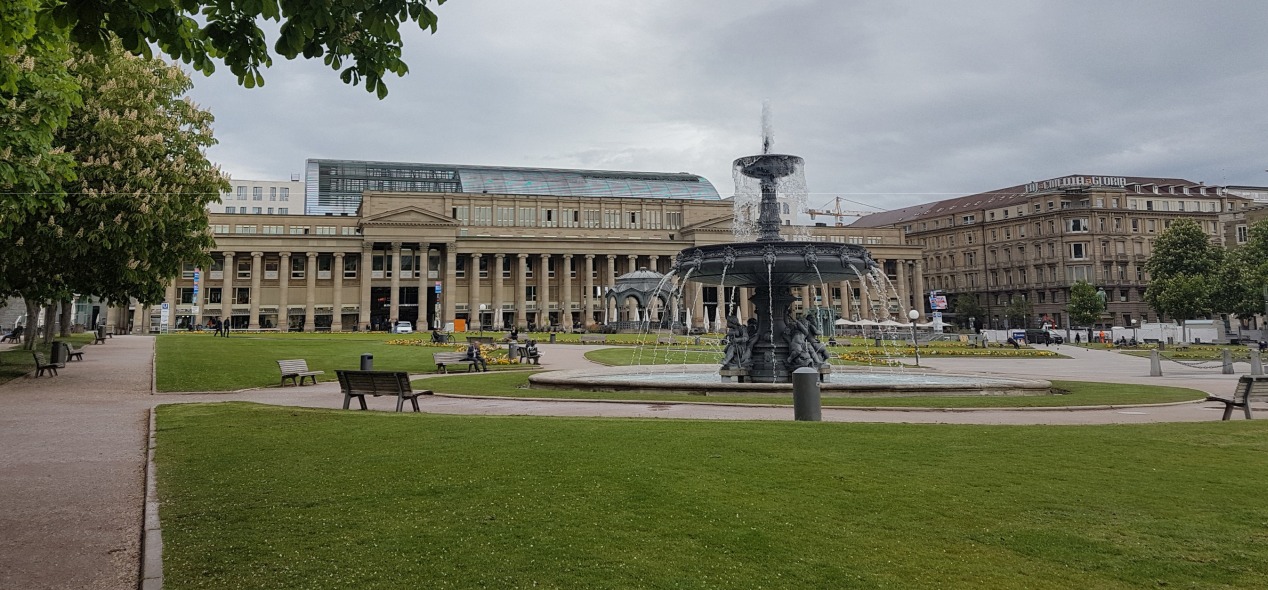
A Nice and Welcoming City & Butterflies in our Tummies As Master’s students of Metropolia University of Applied Sciences, when we were told that the study trip this year would be to Stuttgart, we got truly excited. A study trip to Stuttgart meant a promise to visit some best innovative companies and discuss some of their interesting projects on the horizon. Stuttgart in May is full of green leaves and flowers! From the late and snowy spring of Helsinki, we immediately moved to a lush, almost summer vegetation of Stuttgart, with fountains, sculptures, museums, market places and a busy downtown where the host university, Stuttgart Hochschule fűr Technik (HFT) campus, was located. As a group of Master’s students, we represented 9 different countries and a mix of different educational background and job profiles. We were looking forward to two exciting days of workshops, industry visits, and cultural exposure. Day 1, University Campus The first day was scheduled as a Team and Organizational Development day together with the local students. Our partner university invited Business Psychology students to co-create with us. There was a lot of collaboration, and the energy was amazing. We managed to learn the things that we would never thought of before. Freytag's Pyramid - The Classic Theatre Way of Communication The classic theatre way of communication was discussed based on the German playwright Gustav Freytag’s nifty diagram, Freytag's Pyramid. It develops from exposition to denouement, which - as we learnt - can be spectacularly used for application in marketing and sales. This session was very well planned, engaging and fun-filled with group activities moderated by Business Psychology students. The team task was to develop a plot how an online store MiHaNi could partner with a traditional physical store LuSuBa. The online store wanted to enable customer services and support, while LuSuBa looked to increase their sales by including the online channel. Six different teams, combining both HFT and Metropolia students, were formed (with three roles for each team, the Management, Sales and Marketing) for creating a plausible scenario for this plot. Each team demonstrated special skills, and a few rose up to instant fame with terrific acting skills. We also found the creative side of individuals here! This was followed by a quick floor walk at the “Job fair” that was located at this moment on the campus. It was amazing to find so many top companies having opportunities for fresh graduates. Day 1, Industry Visits Later on Day 1, we had a unique opportunity to enjoy a session conducted by Daniel Deparis (Head of Smart Lab @ Daimler) on the topic of “Strategy and Innovation”. The session gave us insight into Daimler's way of working, a crisp forum that emphasized that, in order to be innovative, a strong foundation – "the Why, the Team, and the Sponsor" – becomes vitally important. We could almost feel a real customer centricity urge that must be the main atmosphere at Daimler. Bliss and pains of being a pioneer, the flops and tops of innovation and importance of attitude were all reviewed. We also learnt that a lean start-up culture is the way to be successful in innovation. Day 2, Visit to Bosch Day 2 started with a factory tour to Bosch that gave insight about the current trends in Industry 4.0. During the guided factory tour, we were given the first-hand information on versatile Industry 4.0 solutions - connecting digital and physical technologies, AI, the Internet of Things, Robotic Process Automation, etc. - and saw how they can help companies to make their production line more efficient. We also went through the action floor with its connected services, interactive dashboard, enabled personnel for making informed decision - everything possible was done to digitalize work and help the production floor to work and be managed efficiently. This was a place where value is definitely created. The action floor also gave us an overview that there are some amazing job vacancies out there for engineering graduates. To be engineers, graduates - is definitely worth it! Day 2, Visit to Mercedes Benz Consulting This session started with a tour over the Mercedes Benz Consulting office. For many of us, Mercides Benz has been a dream from an early age. Visiting their consulting office and interacting with product developers, researchers and business development folks fueled us with the top up energy. We had an opportunity to see the Virtual Retail Lab, Consumer experience lab with games and AR to engage customers and, an interactive whiteboard that can be used for conducting interactive meetings with clients and brainstorming new areas within the company. No doubt, as the world is heading to a digital transformation, innovation in retail at Mercedes Benz will sure continue and we will perhaps get to see some real disruption very soon! Golden Handshake If you happen to visit Stuttgart, buffer some time to visit their wonderful downtown restaurants. We consider ourselves lucky to have had a chance to visit all the industrial companies. But it was also a great moment to have an evening with our course advisors. There, we discussed many interesting topics including the comparison of industries, museums, and also beers - to what it was some time ago. As all good things must come to an end, we gathered many memories from Stuttgart to cherish for the days to come. As Metropolia students, we would like to thank both Metropolia instructors and our Stuttgart advisors Prof. Dr. Patrick Planing and Prof. Dr. Katrin Allmendinger for arranging this trip that gave a new dimension to our learning. From dusk to dawn, they kept us busy to explore. It helped also to socialize and know each other a bit more personally and professionally. While we discussed, visualized and experienced innovation and its management “at the desk” in class, the study trip brought these lessons to life. About the Authors Sudhindra and Satish Kumar - MBA students at Master’s programme in Business Informatics, Metropolia University of Applied Sciences. Both have 18+ years of industry experience in diversified roles and responsibilities and hail from India. They both have something in common: they are avid readers, love travelling, inquisitive and believe in food for thought. Both possess a passion to be entrepreneurs. They have been together during this whole trip and decided to co-author this blog. Sudhindra – Sudhindb@metropolia.fi; Satishkumar - Satish.MudigereKeshava@metropolia.fi Antti Hovi - Senior lecturer at Metropolia University of Applied Sciences, the instructor and inspirer of “Innovation and Renewal” course who organizes and nurtures students in their innovation efforts, including the study trips. Photos by the authors.
Older employees open up a new horizon in service work

Where to get help with children and house work, if you are a busy professional? Who to ask for help? Where to get reliable help? Where one can offer own help, if there is a wish to help others? - These questions were at the center of many student projects in “Service design” course held at the Summer Business School-2019 at Metropolia UAS. A Finnish service enterprise, Onnexi, was invited to the course as a successful example of an enterprise solving this puzzle. Challenges of a busy professional This summer Master’s students participated in “Service Design” course where student teams conceptualized own ideas for new or improved services. Not surprisingly, most of the students - who work as employees for companies and study alongside full-time work - were keen to explore and design daily services that they urgently need yet missing in their own lives. Young mothers proposed a service concept for a platform to contact other mothers for exchange of free babysitting services. Parents of school children proposed improvements to WILMA. Those who experienced long queues in hospitals proposed improvements to emergency visit notifications and queuing. The project that found most interest, however, was an imaginary service of “Buying & selling time”. The proposal was to launch a service platform where clients can ask for and find almost any services that a family may need - starting from organizing a children’s birthday, looking after a child or an elderly person, and up to lawn mowing, or carpenter work. Busy professionals admit that this type of service is highly needed yet missing in their lives! To address this interest, a special guest, Onnexi Oy, was invited to the course and share their know-how in this service area. Onnexi.fi - a Finnish example of solving a “busy professional” problem When looking for a real example of such a “buying and selling time” service, one can be surprised that it is almost missing or extremely scarce in Finland. This also struck attention of Ulla-Maija Soininen, now CEO of Onnexi Oy, when she herself was in search of a similar service. Ulla-Maija, not long ago an employee of KONE and a specialist in industrial process development, was in search of helping hands to look after her lonely mother who lived in Northern Finland, a long way away from Hyvinkää. No one in the family lived in the North anymore, and no search for a reliable aid could help Ulla-Maija to solve this puzzle. Ulla-Maija, with her background in process development, invested a great deal of her time to conduct a systemic search only to discover that there is no one to help her. It soon became evident that, if she wanted to get help, she would need to organize such a service herself. After some deep thinking and attending short-time entrepreneurial courses, Ulla-Maija decided to bravely try and start her own service enterprise, firstly in small steps, alongside her main work. As many other entrepreneurs, Ulla-Maija soon discovered that her project takes much more time that she expected, but it also started becoming more and more important to her as her true heart was put into the job. Knowing the global trends for ageing population (1), and the Finnish trend for more unemployment in the older groups (2), Ulla-Maija decided to match the needs with the demand - and base her service on the most reliable employee group, the older people themselves. Services by older employees As she tells herself, Ulla-Maija never previously suspected that there are so many active, motivated, physically well-fit retirees, who are looking for a meaningful job, which they can do excellently. Being a busy professional herself, she was on the other side of the puzzle for most of her life. Now, when she discovered her own new meaning in life, Ulla-Maija decided to focus fully on her service idea. She finds great joy in helping to match the right people - those who are full of energy, experience and motivation to help, with those who are in need of help and have multiple tasks at their hands. As for the client base, the picture has turned out to be not so black and white as it was initially expected. The older age groups also make a big client segment themselves - for the household routines, cheering-up visits, help with IT and use of tools, and nowadays even for professional medical services by the older nurses! This latest demand came as a surprise for Ulla-Maija as a client organization turned to Onnexi for help. Onnexi was able to provide them with older nurses. Following this success, more and more organizations are now turning for help to Onnexi’s older workers. Currently, Onnexi, a Finnish enterprise that operates in Kanta-Häme, Turku, Pori and Tampere, offers services provided by the older age groups to families and other elderly. In other words, Ulla-Maija was able to realize her dream and successfully launched a new service, where the support is provided only by the older-aged workers. The service offerings are now growing fast, and Onnexi started arriving also to other Finnish regions. Social entrepreneurship as a trend The trend for social entrepreneurship and business with meaning has grown visibly since early 2000s. It has become a popular topic in business literature, and the “social value” of business is now discussed by big business names such as Michael Porter (3). Business with a social meaning is now a well-recognized trend, and as an entrepreneurial activity it is often defined as “an innovative use of resources to explore and exploit opportunities that meet a social need in a sustainable manner” (Sud et al. 2009) (4). Social media and internet often serve as the main channels for promoting and selling such services, getting the word-of-mouth across, as well as for immediately publishing feedback and reviews, and thus providing a platform for both finding and offering social services. The business model by Onnexi seems to offer something that is yet new in Finland but somewhat familiar in other countries (such as a famous example of “German grandmothers”). In the case of Onnexi, the service seem to tap those sectors that previously were not considered for service work - the older workers domain, even for traditionally “younger” employment sectors such as nursing jobs. In addition to social entrepreneurship, this service idea can be considered from the perspective of Sharing economy, since it places the use of untapped resources at the heart. Offering better than Sharing economy: “Service Design” lessons of Master’s students Sharing economy is generally defined as a model to use the underused resources. “Sharing economy is the product of a new age where underutilized assets become peer-to-peer services for hire, enabled by the internet and smartphones”. (5) Thus, key ingredients in Sharing economy are: (a) identifying and creatively re-thinking the available resources for sharing, (b) use of service platforms. A though-provoking example from Onnexi shows how “the puzzle of a busy professional” can be approached via sharing of under-used resources. Moreover, another learning from Onnexi comes from solving “the Sharing economy puzzle”. (The Sharing economy puzzle is created by its two biggest concerns, trust and taxes, that come as a result of direct peer-to-peer sharing, and they bother potential customers very much). In both respects, Onnexi sets a unique example of solving these concerns and provider important learning for others in this sector. For Master’s students, the biggest learning came from inspiring deep reflection on the role of service design for conceiving successful services. While students in their imaginary projects had challenges in providing security for a free-access “Buying & selling time” service, Ulla-Maija approaches trust and security as the corner-stones of her service idea. Her service is designed in such a way that all workers at Onnexi are full-time employees, not volunteers. They make an indispensable part of the enterprise, all of them are well-known in Onnexi, and thus the clients can trust them. Ulla-Maija invests a lot of her time matching the talents and interests of her employees with the needs of the clients, with the aim of building long-lasting ties between the families and their aids. In other words, the sharing problems get solved! Regarding other learnings, this year’s service design projects showed a shift in student interest from developing industrial services towards testing out own service ideas, especially in social and shared services. As such, their service design projects focused on exploring the opportunities how to launch new service platforms, exchange baby-sitting services, make WILMA user-friendly, spent less times in hospital or hotel queues, and - especially frequently - how to get & offer reliable and safe help for homes and families. In Metropolitan area UAS universities, this growing trend has been recognized and recently turned into a new learning module “Sharing economy” based on 3AMK cooperation between Metropolia, Haaga-Helia and Laurea. (6) The learning journey will continue into a new, inspiring direction! ========================== About the authors Ulla-Maija Soininen is a CEO of Onnexi Oy that she founded to address a growing need for finding reliable help. Zinaida Grabovskaia is Metropolia’s instructor in Service Design and Head of Master’s programme in Business Informatics, who is welcoming innovative service businesses to share ideas with the students and learn together. References Bughin, J. and Woetzel, J (2019). Navigating a World of Disruption. McKinsey Online. Yle uutiset, Lahti, 28.8.2019. Väestö ikääntyy ja työttömyys kasvaa – Lahdessa huollettavien osuus väestöstä lisääntyy. Driver, M. (2012). An Interview with Michael Porter: Social Entrepreneurship and the Transformation of Capitalism. Academy of Management Learning & Education, Vol. 11, No. 3, 421–431. Sud, M., Van Sandt,C.V., and Baugous, A. (2009). Social Entrepreneurship: The Role of Institutions. Journal of Business Ethics, 85: 201-216. Paajanen, S. (2016). Business-to-Business Resource Sharing: White Paper. VTT: Business Innovation & Foresight. - Definitions of Sharing Economy. A New Learning Lane: Circular Economy for Sustainable Growth 15 credits (5.11.2019). Onnexi Oy Facebook LinkedIn Metropolia’s Summer Business School

The editorial team will provide the content of the Masterminds blog before publication.
The editorial team started its work at the beginning of 2022.
Pia Koirikivi, chief editor in Masterminds blog, Pedagogical Specialist
Minna Kaihovirta, Manager of Dialog
Iira Lankinen, Principal Lecturer
Riikka Wallin, Publications Specialist
Zinaida Grabovskaia, Senior Lecturer
Salla Kivelä, Principal Lecturer
asiantuntija yamk business informatics Business Informatics Master’s Program CERN Bootcamp Construction Business hankinnat hankintastrategia hankintatoimi ilmastonmuutos Industrial Management Industrial Management Master’s program johtaminen koulutus kulttuurituotanto Marjatta Kelo master Master's Thesis masterminds Masterminds blog Master of Engineering Master’s degree Metropolia Metropolia AMK Metropolia Master's Metropolia UAS metropolia YAMK opinnäytetyö osaaminen service design Sharing economy sosiaali-ja terveysala sosiaaliala study trip Sustainability talotekniikka terveyden edistäminen terveydenhuolto työhyvinvointi ura yamk YAMK-tutkinto YAMK opinnäytetyö ylempi AMK ylempi ammattikorkeakoulututkinto Zinaida Grabovskaia
