What Are Good Instructors Made Of?
14.9.2021
Hiiltä ja timanttia
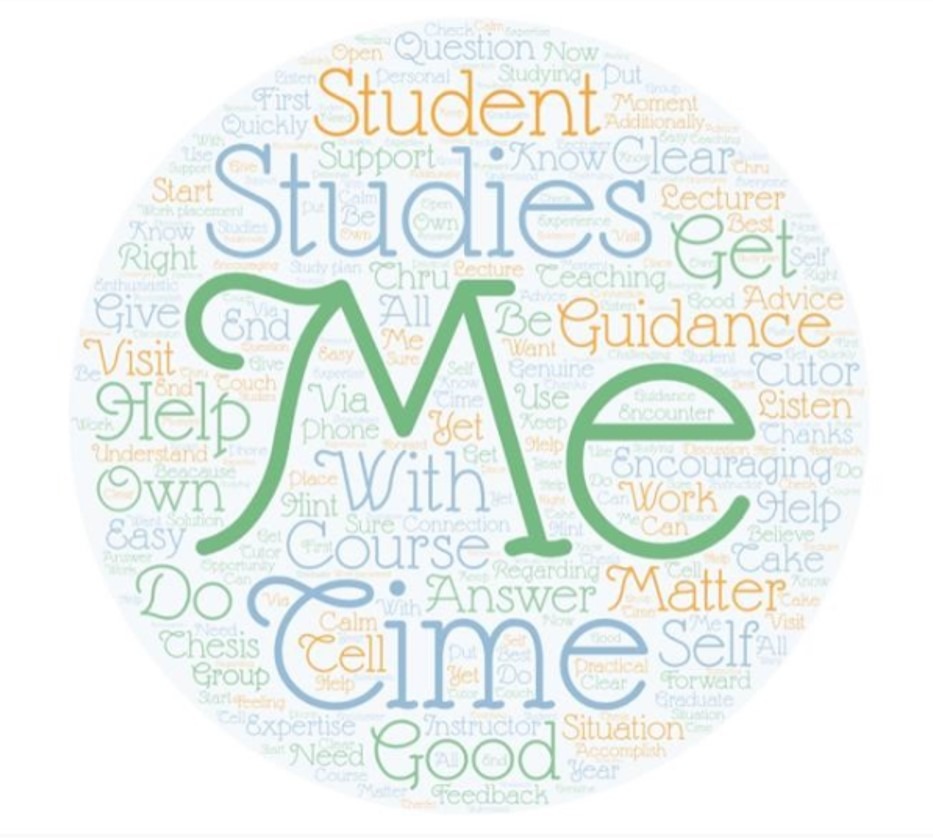
At the end of year 2020, Metropolia asked students and alumni to share their stories of good student guidance and counselling that they have received during their studies at Metropolia. This survey was a part of the on-going development project where a student-oriented guidance model is being created for Metropolia. The nearly 200 responses drew a picture of numerous Metropolia staff members as compassionate and versatile professionals as well as genuinely empowering and supportive instructors.
The development of student guidance is one of the goals in the current Metropolia strategy. One concrete part of it is building a student-oriented guidance model. The development of the model started in autumn 2020, and the goal is to complete the model during 2021.
One of the basic building blocks in the student-oriented guidance model is understanding that guidance belongs to everyone. It is not only top-down, information flowing from a teacher to a student, but guidance takes place in all encounters. In this article, we focus on the interaction and guidance between the teacher (instructor) and the student.
The quotes presented in this article were received from the student survey. The citations were edited to protect the privacy of the respondents, but the contents were not changed.
Good Guidance Needs Time, Attention and Respect
According to the classic view of Onnismaa (2007), good guidance needs time, attention and respect. In a guidance situation, the relationship between the instructor and the student is equal and confidential. Guidance should not be grounded on the instructor's assumptions or beliefs, but rather on solutions derived from facts, listening and interaction.
Good guidance strengthens the student's self-confidence and sense of agency.
There was a feeling that the situation will work out and they have faith in me.
No fuss, but straightforward nudging.
My thesis process was stretched, but the teacher didn’t blame me for it. Doing the work was more motivating when you were trusted and things were handled with a positive mindset.
In accordance with the holistic guidance model (Watts & Van Esbroeck 1998), guidance is a layered and comprehensive collaboration between different actors for the benefit of the guided person. These actors include teachers and guidance counsellors, tutors and student services coordinators, informaticians and janitors. The counselling of learning and studies includes also guidance of professional as well as personal growth.
I received individual guidance through a video call for information search within my field of studies and for using the school library.
I am rethinking my career choice. I received tips and advice from my guidance counsellor on putting my studies on hold and possibly resuming after the pause.
The different aspects of guidance are integrated into each other when everyone working with the student gives their share – either knowingly or unknowingly. The interaction between the student and the teacher plays a particularly important role in the student's learning process. In the survey answers guidance counsellors also came out as a significant supporters in students' study paths and lives.
Guidance Is Part of Every Teacher’s Work
Every teacher is involved in student guidance and counselling, whether they knowingly make a decision to do so or not. The guidance situation is always a threat and an opportunity at the same time - what the teacher does and says can have far-reaching consequences. Even after decades, someone still remembers the frustrated gust of an elementary school teacher: "You'll never be anything!" On the other hand, the teacher's supportive words can give the student faith in their own competence and support them in their life for a long time.
The teacher's feedback was sincere, so I knew it was true.
She heard and understood me and said I don’t have to do more than I’m able to.
The teacher didn’t allow me to get it too easy. Teacher should and must require performance based on what the student is capable of.
Whenever a teacher encounters a student, he or she influences the student's self-perception as a learner, student and person, but in addition the teacher has an influence on the student’s attitudes, motivation, self-confidence as well as perception of hope and faith. That is why it is important to think about and be aware of how you act in different guidance situations.
Consider these:
How do I influence this student through my own actions and my verbal and non-verbal communication?
Do I create hope or despair, courage or fear?
Do I teach life-long skills?
Do I offer quick advice and pre-chewed answers or do I respect the student's right to make choices and decisions about his or her own life, whether they are right or wrong in my opinion?
Does my guidance stem from compassion and genuine desire to help?
A Little Guide to Good Guidance
In the student survey, a few themes were often mentioned together with good guidance. These themes can be summarised as a four-item guide:
1. Stop and listen
Listening actively is sometimes easier said than done. However, the supportive effect of presence and active listening can be significant. Correspondingly, without these, the speaker may be left frustrated (Freese, 2021).
Compassion, a sense of personality. An equal, sincere encounter.
I remember the warmth and how easy it was to approach this teacher. The teacher encouraged me to get in touch.
2. Ask and encourage
Coaching is an approach where the coach helps the coachee to harness their strengths when targeting their goals. A coach operates with open-ended questions and refrains from ready-made answers. (Ruutu, 2020).
The instructor can also help the student to see things from new perspectives, which can already be a sufficient help to initiate the student´s own problem solving (Mattila, 2011). The instructor’s encouraging words concerning the student’s ability to move forward in a situation can be crucial. In fact, a strong self-reliance seems to protect well-being and reduce stress, according to some research (Ruutu, 2020).
The teacher challenged me to think.
I received good and encouraging, but above all critical and challenging guidance that changed my self-perception as a researcher and a professional in my own field.
In a difficult situation, I received gentle and encouraging guidance. I was able to put my studies on hold since I had clear plans for the future.
3. Focus on the encounter, not the tool
During the Covid pandemic the chance for real-life encounters was dramatically decreased. But luckily we have had the opportunity for genuine connection via online tools. The video call connection is more reminiscent of face-to-face interaction than we might have thought (Hietanen & co, 2020), and psychological security can be built in the encounter regardless of the medium (Raivio, 2021).
The guidance via Zoom went great. No rush at all, the teacher had enough time to figure out the basics.
I can email the teacher and the he will respond quickly. If necessary, he offers to explain in Teams if something is unclear.
When I needed help in recognition of prior learning, the teacher helped with it “hand in hand” via Zoom.
4. Trust in yourself and know your boundaries
There’s no requirement for the teacher to be an expert in all fields. A good instructor is a genuine, compassionate person who stays present and listens actively. A good instructor also knows their boundaries and when the student needs more specialised services. Respecting your boundaries is also a way of cherishing your own well-being.
Guidance is nor brain surgery nor rocket science. Even with a little guiding touch it’s possible to help the student to solve problems that would otherwise be difficult to overcome. Sufficient guidance could be for example as simple as asking questions or helping to break a bigger problem down into smaller parts (Säljö, 120). In fact, over-caring can make it difficult for the student to stay active and increase their sense of dependence (Lindqvist, 129).
The teacher knew how to prioritise, bring focus and encourage.
One challenge at a time, the teacher helped us move forward in our studies. He encouraged and supported us whenever we needed.
Developing Guidance Skills is a Part of Strategy Implementation at Metropolia
Metropolia's strategy 2021–2030 emphasises eg. respect for humanity and support for continuous learning. In addition, Metropolia's values – openness, community, high quality and expertise – are the core pillars of good guidance.
One of the goals in the student-driven guidance model is to enable the teacher and the student to meet each other honestly and intentionally. This kind of encounter requires time, attention and respect – which cannot take place if the student is only a part of a faceless student mass for the teacher. Genuine encounters require an open and confidential atmosphere. All members of the higher education community, both students and all staff, are responsible for creating and maintaining it.
We all have what it takes to be a good instructor. Often the tiniest consideration is enough: a smile and a sincere question “How are you?” can give the student the experience of being seen and heard. A good instructor is not expected to be perfect or to apply a particular top-down guidance role; the personal approaches to guidance are a richness!
Teachers enthusiasm inspired me.
No hyping or fake pushing but a lot of work!
You can talk to a teacher about things by the real names without interfering with issues of prestige and status.
Authors
Ulla Forsström, Paula Lindqvist, Mari Rupponen, Raisa Varsta, Anne Ojala-Soini and Anne-Mari Raivio are members of Metropolia's steering development group. The development of the learner-driven guidance model started in 2020, and the aim is to complete and use the model during 2021. The model's core idea is summed up in our service promise:
You will receive appropriate guidance on your own study path in a way that suits different situations and at the right time. Appreciating and interactive guidance supports your learning and goals at different stages of life.
Sources
Freese, Pekka 2021: Aktiivinen kuuntelu – Psykologi kertoo miksi, mitä ja miten. Read 22.4.2021.
Hietanen, Jonne O.; Peltola, Mikko J. & Hietanen, Jari K. 2020: Psychophysiological responses to eye contact in a live interaction and in video call (Wiley Online Library). Read 22.4.2021.
Lindqvist, Martti 2016: Auttajan varjo. Kustannusosakeyhtiö Otava, Otavan kirjapaino Oy, Keuruu.
Mattila, Antti S. 2011: Näkökulman vaihtamisen taito. WSOY, in co-operation Bonnier Books Finland. Printed in the EU.
Metropolian strategia 2021-2030.
Onnismaa, J. 2007: Ohjaus- ja neuvontatyö: Aikaa, huomiota ja kunnioitusta. Gaudeamus Helsinki University Press.
Raivio, Anne-Mari 2021: Voimavaraistava kohtaaminen – myös verkossa! In Varsta, R.; Raivio, A. & Ruotsalainen, T. (Eds.): Kohtaatko ihmisiä uralla? Voimavaraistava ohjausote (Theseus). 21–31. Metropolia Univeristy of Applied Sciences, Helsinki. Read 22.4.2021.
Ruutu, Sirkku 2020: Coachin työkalupakki. Alma Talent Oy, Balto Print, Lithuania.
Säljö, Roger 2004: Oppimiskäytännöt. Sosiokulttuurinen näkökulma. WSOY, WS Bookwell, Juva.
Watts A.G. & Van Esbroeck R. 1998: New Skills for New Futures. Higher Education Guidance and Councelling Services in the European Union. Fedora: VubPress.
Lue tämä blogikirjoitus suomeksi: Mistä on hyvät ohjaajat tehty?
Trust as a transversal skill

2.5.2022
Uudistuva sosiaalialan osaaminen
Team members who trust one another can better communicate and coordinate behaviors, given their openness, familiarity, and reliability. (1)
Meaning of trust in multi- and interprofessional social and health care teamwork is essential, to understand and create a more balanced and emotional, sustainable working environment. In trusting the working environment, people feel safety (2). It increases satisfaction and involvement in work. There are two different approaches to trust from an individual’s point of view:
Affective trustis based on interpersonal dynamics like co-identification and familiarity. It is also often emotional, such as offering feelings like becoming understood or believing in others’ goodwill. In contrast,
Cognitive trust is based on people’s competence and predictability. (1). Both of them are needed to recognize and create a trusting working environment.
Especially in multi- and interprofessional teams this needs to be taken into account, because team members’ professional backgrounds and approaches can be different from each other. However, it is important to remember that trust is a very multilateral/multifaceted phenomenon, and it has been traditionally approached as a part of social capital (3, 4, 5). At work, its complicated and systematic nature is relevant to be recognized and remembered; even when approached from an individual point of view or as a skill.
Trust as a skill
Trust is often defined as a ‘phenomenon,’ ‘value,’ attitude’, or ‘emotion’, but in this text, we want to approach it as a ‘skill’ in a professional context. By that, we mean that it can be approached as a skill to improve trusting relationships between professionals, within professional networks and with a client/patient.
According to European Qualifications Framework, EQF (6), skills refer to the ability to apply knowledge and to use expertise to complete tasks and solve problems. In the context of EQF, skills are described as
cognitive (e.g., involving the use of logical, intuitive, and creative thinking)
or practical (e.g., involving manual dexterity and the use of methods, materials, tools, and instruments).
Trust – as a skill – can be located to soft skills or transversal skills. Transversal skills are transferable skills from one field to another. Transversal skills can be taught and learned (7). Trust can be seen to be part of interpersonal/social & emotional skills (Pedagogical Framework in ITSHEC project 2022).
Trust in everyday professional practice
Interaction and collaboration between people in small everyday practices can be very makeable for people. They can strengthen the feeling of respect, belonging and feeling of welcoming.
For instance, neuroscientist Paul Zak (8) has shown in his studies that “when someone shows you trust, a feel-good jolt of oxytocin surges through your brain and triggers you to reciprocate”.
According to that, there is a strong link between trust and overall health and psychosocial well-being (9). This is one of the reasons why trust should be approached also from a pedagogical point of view, as a skill.
Trust, as a skill, can express itself in the following ways in everyday practices as an ability to:
open a dialogue
keep timetables and promises (even with insignificant matters)
behave predictably
express goodwill to other
outline shared goals, benefits, and risks
set professional boundaries without losing kindness and caring attitude
cooperate with others and to take account of various emotions in various contexts
improve non-discriminatory atmosphere
show interpersonal and social-emotional skills.
However, even if trust has often been approached as individual’s characteristics (or skills), attention needs also be paid to cultural trust propensity. In other words, it characterizes how willingly people trust each other in different cultures (10). Feeling of trust makes people happier with their lives (8). The skills of building trust are reflected in everyday interaction (11).
Changing working environments and trust
In global online work, employees evaluate reliability of a new person based on their speech, behavior, and perceived emotional state (12). For instance, ad hoc or project-specific organizations also need a climate of trust (swift trust). Then there is not so much time to build trust (13). In addition, virtual work can disturb quantity of interaction, but also the quality of engagement. Especially when a team is geographically dispersed, the number of modes of communication is limited. (1). Moreover, from supervisors’ point of view trust is traceable to reciprocity, open interaction, common goal and commitment, mutual respect, predictability, and security (14).
We need to pay more attention to understanding working conditions and different working environments behind trusting environments. Trust is not just a phenomenon, but it can also be seen as a transversal skill, which can be learned and developed. It demands from people awareness and willingness to self-reflection and open feedback. Trust and kindness are mutually flourishing and empowering. In a trusting relationship, the starting point is optimistic and hopeful, rather than always expecting the worst, suspecting, or fearing failures. In ITSHEC project, we will improve awareness of trust as a professional skill, as part of transversal skills. Lack of trust makes everyday life more difficult, unpredictable, and demanding. We need professional social and health care services to improve and strengthen people’s lives. Trustworthy professionals actualize a human-centered approach.
Authors
Eija Raatikainen (PhD) is a Principal lecturer in Metropolia University of Applied Sciences. Her academic focus is ”Trust” and “Empathy”, as phenomenon in different fields; like in Social Work, multiprofessional co-creation and project work, as well as educational practice and pedagogy. Additionally, she has a long track record as a project manager in various projects.
Katriina Rantala-Nenonen (M.Soc.Sc.) is a senior lecturer at Metropolia University of Applied Sciences. She teaches social sciences and works in national and international projects of social services and education. In ITSHEC project she works as a developing lecturer.
The article has been published earlier in Tikissä-blog of Metropolia University of Applied Sciences
References
Dinh, J. V., Reyes, D.L., Kayga L., Lindgren C., Feitosa & Salas, E. (2021),Developing team trust: Leader insights for virtual settings, Organizational Dynamics, 50, (1).
Edmondson, A.C. & Zhike, L. (2014), Psychological Safety: The History, Renaissance, and Future of an Interpersonal Construct.Annual Review of Organizational Psychology and Organizational Behavior. Vol. 1:23-43.
Coleman, J. S. (1988), “Social Capital in the Creation of Human Capital”, American Journal of Sociology, Vol. 94, Supplement, pp. 95 – 130.
Putnam, R.D. (1993), “Making Democracy Work. Civic Traditions in Modern Italy”, Princeton: Princeton University Press.
Putnam, R.D. (2000), “Bowling Alone. The Collapse and Revival of American Community”, New York, Simon & Schuster.
Framework and the Framework for Qualifications of the European Higher Education Area (2018), The Finnish National Agency for Education. The National Coordination Point for the European Qualifications Framework.
Raatikainen, E. & Rantala-Nenonen, K. 2021. Transversaalit taidot ammatillisen kasvun jäsentäjänä. Teoksessa Jakonen, M., Houni, P., Mutanen, A., Halonen, I. & Aali, P. (2021). Työn järjestyksiä. YFI julkaisuja.11. Jyväskylän yliopisto.
Zak, P.J. (2017), Trust Factor: The Science of Creating High-Performance Companies Hardcover – Illustrated, January 1, 2017 The Neuroscience of Trust (hbr.org)
Martikainen P., Bartley M & Lahelma, E. (2002), Psychosocial determinants of health in social epidemiology, International Journal of Epidemiology, Volume 31, Issue 6, December 2002, Pages 1091–1093
Mansour, J. & Zaheer, A. (2021), The Geography of Trust: Building Trust in Global Teams, Organizational Dynamics, Vo. 50, (2)
Savolainen, T. (2016), Luottamus digijohtamisen voimavara ja taitohaaste.
Blomqvist, K. (2018) Luottamus murroksessa. Työn tuuli-lehden julkaisu 2/2018 (PDF).
Salmivaara, V., Martela, F. & Heikkilä, J.-P. (2020), Radikaali psykologinen turvallisuus tilapäisorganisaation luovan ja tuloksellisen toiminnan mahdollistajana.(39), 3,(2020): Hallinnon Tutkimus, 188-204.
Raatikainen, E. (2021), Esimiesten näkemyksiä hyvästä työarjesta ja luottamuksellisesta työilmapiiristä, 34-50. Teoksessa Helminen, H, (toim) 2021. Nuoret ja työn merkitys. IT- ja sote alojen vastavalmistuneiden työhön sitoutuminen (tsr.fi).Haaga-Helian julkaisut 1/2021.
Changing Circumstances: Accessing Resources for Years to Come for Immigrants, Entrepreneurs & Immigrant Entrepreneurs

27.9.2024
Various Variables
No matter how long you spend in Finland, there will always be new experiences. It is a very similar situation for new entrepreneurs. New situations need new information and solutions. Having lived in Finland for almost 20 years, I know that there are still things that come up where I have absolutely no idea what to do. What I have learned in all these years, is where to start looking for the answer. In the information age, this is one of the most important skills you can have.
We don’t need to know all the information at once; in fact, we wouldn’t be able to process all the information even if we heard it. A lot of things are unnecessary until they are necessary. If you arrive in country as a single, independent student, you don’t need to understand the daycare system, and in entrepreneurship, understanding how to take a company internationally is not the first thing you will learn in your entrepreneurial journey. This is the same situation for immigrants and entrepreneurs all over the world.
Whole-life Events
Just like integration, entrepreneurship is a whole-life event. As an immigrant, no matter what you are doing to subsidise your life, this means two things:
You will be creating a whole life for you and your family – not just the hours you study at an institution or work at a job.
You will spend your whole life integrating.And in parallel, as an entrepreneur, your time is now not bought by an employer but can now take far more of your daily time to create. You are only stopped by the limits that you impose on yourself.
As every new challenge comes your way, you will need to figure out how to address it. Some of the challenges you might find yourself facing as an immigrant are:
finding housing
accessing healthcare services
searching for jobs
becoming an entrepreneur
finding ways to spend your leisure time
learning Finnish or Swedish
dealing with emergencies
finding and completing further education
understanding the primary education system
As an entrepreneur, you are seeking help with:
concepting an idea
testing your ideas
learning new software
learning how to understand your potential market and customers
building a customer base
designing and re-designing offers
building a website
understanding how to utilise different social media channels for selling and brand building
accounting
deciding which tasks to delegate and which services to buy from others
AS previously stated, no one resource will help you in all these situations, understanding where to find these resources that can help you with all of these questions is a very big step in the right direction.
Support During Studies
When you come to Finland as a student, there is a good chance that you have come alone, and you are ready for all kinds of adventures. You will also be lucky enough to have a general support system that the institution provides. This is great and it can really help you to settle in and find your feet.
Then you graduate, a celebratory event which also means big changes in your life. When you are a student there are many services that you do not need to seek outside the institution. It is possible that as an alumnus, you can access certain institutional services, so make sure that you check with your former institution to see what is still accessible for both your immigrant journey and your entrepreneurial one.
Staying in Finland After Studying
Once you have finished your education, you may be looking for a more permanent job (possibly different than the one you have done while at school if you have been working) or to expand on any entrepreneurial thoughts you may have had during your studies. These, again, are slightly different sets of skills and resources that you will need.
A good place to find both information about your new situation in life and even entrepreneurship is the Newcomer’s Guide (pdf) produced by the Cities of Helsinki, Espoo, and Vantaa. The label ‘Newcomer’ is too narrow, in my opinion, for the information that it contains. You definitely need some of this information when you first arrive, but it is helpful to refer to the guide at different stages of your life in Finland.
The Newcomer’s Guide also has advice on where to look for different kinds of employment, including entrepreneurship and a review of the startup ecosystem. Being gainfully employed is a huge part of many people’s integration. Sometimes that requires you to start your own company. There is a whole ecosystem in the capital area for this and the guide helps to explain it. In the near future, there will also be an online service that Metropolia UAS and the City of Helsinki are currently developing that will help aspiring or budding entrepreneurs to find the right path through their entrepreneurial journey.
In order to further your understanding of what is currently available to you as an entrepreneur, you can read my previous Various Variables blog post Entrepreneurship – Using Your Skills in Different Ways and this previous blog post by Vejay Nair & Marika Antikainen.
My own experience
For myself, I reflected on what contexts I have inhabited during these past 20 years in Finland. I have been:
a single exchange student (with no dependents)
a married person (to a Finn)
a degree student
a married parent
a divorced single parent
an unemployed spouse
an unemployed single parent
a full-time entrepreneur
a part-time entrepreneur
a temporary employee
a full-time employee.
It has been quite a journey, but it is one that has new challenges at every bullet point. This diversity and length of experience is also the reason that I feel that I have some insight that can help to guide people in finding the right resources at the right time. All of the situations above have taught me the value of being open and asking for help.
Continue To Be Open
The common skill that I have cultivated the most being an immigrant and an entrepreneur is to ask for help in order to understand new things. Life is full of things that do not make sense, are just outside of our current skill set, or we need a little time to learn. YouTube videos are a deep resource to anyone who wants to do something new. But outside of online resources, you can ask real people for help to find what you need. Not everyone will be able to help you, but every time you ask, you get a tiny bit closer to the answer. Even if it is just eliminating what is not the answer.



















Kommentit
Ei kommentteja