Slowing Down to Speed Up – From First Idea to Prototype
6.9.2023
Pamela Spokes
Photo: Pamela Spokes
It might not sound logical but a Design Sprint actually requires you to slow down at the beginning, or this is how some people perceive it. For some people, they believe they know what they are doing and what the solution is and they just want to jump into the creation part of their idea. But in a group, not everyone will understand the idea the same way from the beginning and not everyone will agree on what solution to create.
There is never one way to solve a problem.
What is a Design Sprint?
The Design Sprint is
a specific process
with specific exercises
done for specific amounts of time
that are tailored to developing a feature of a product, service, or message over the course of 4-5 days. There are 2 main elements: the exercises and the time-boxing.
The order of the exercises is designed to build off each other and to move the process forward at each moment. The time-boxing keeps people on task so that they are not wasting time with chit-chat or off-topic discussions. It helps to focus everyone on a specific exercise if everyone knows that they only have 15 or 20 minutes to produce ideas or concepts that they will present to the group.
These 2 elements are produced within the framework of the Design Sprint process. Image 1 shows the original 5-day Sprint process.
Image 1. Five days Design Sprint chart.
Monday: Gathering data through interviews with experts (inside and possibly outside of the organisation), mapping the process, and choosing a target
Tuesday: Sketching solutions to choose from
Wednesday: Deciding on the best solution (or pieces of solutions)
Thursday: Building a realistic prototype
Friday: Testing with target customers
In a later updated 4-day Sprint process, Day 1 and Day 2 have been combined. On Monday, the gathering data is shortened by swapping individual interviews for a group interview and from that data collected, it is mapped and the sketching happens. Day 2 is already where the decisions are made. Everything else is also shifted a day earlier.
Ideation
Ideation takes place in very specific ways and with specific instructions. A lot of the design sprint is considered to be “Together Alone” work. This means that ideas are being produced by individuals quietly without discussion while they are in a group. Others call this “brainwriting”. Like brainstorming but without the noise and the voices of only the bold and the loudest being heard.
Together alone work allows everyone to have time to think, produce ideas (on sticky notes and A4 paper), and to verbalise them in turn. It is only after the time set aside for ideation that there is a discussion. In order for there to be a discussion there needs to be some idea already formed. This rule helps to reduce the amount to time spend off topic.
Including others
One of the main reasons to do “Together Alone” work is to make sure that everyone has a chance to “say” what they think. Many times, in meetings or even other kinds of workshops where brainstorming is prioritised, only the loudest and most out-going participants have the opportunity to speak and be heard.
Until everyone has been heard, and all the ideas have been analysed and discussed, it is undecided what ‘moving forward’ actually means.
Including all voices is very important to get the best outcomes for whatever the Design Sprint is working on. It is this part that sometimes people feel that they are being held back. If they are used to working alone or if they are one of the extroverts of the team, they can be used to going full speed to the next phase of the process.
Frontloading interaction to speed up prototyping
So, from this ‘slow’ start, you are frontloading the team interaction so that it is much clearer to everyone what is happening and what is agreed upon so that in the building phase will go much smoother and faster.
It is faster because
there are no new ideas being added at the last minute.
if there are different little teams working on different parts of the solution, they know what they each must do.
it has been thoroughly discussed and decided collectively.
everyone has some ownership of the process and the outcome.
This should help in the last two days which are all about building and testing the prototype go much faster as everyone is already on the same page.
Case Study: An adapted Design Sprint for Summer XR Design students
Inspired by the Design Sprint process, the process was adapted for a group of American Master’s students during an intensive Introduction to XR Design. For this process, we had entirely new concepts that the students were working on. While the Design Sprint itself was not entirely suitable for the project, parts of it and, more importantly, the philosophy of the Design Sprint was. The idea that you can take an idea from almost nothing to something that can be presented to people for initial testing.
Each group consisted of 3-5 students. They presented their initial concepts to each other and had to determine which concept, or combination of concepts that they would work on as a group over the 2 weeks.
Many concepts started their lives with one creator. It is important when working on the concept that everyone own the idea rather than the idea is seen as the brainchild of one individual in a team, as this can breed resentment and lack of commitment.
It is really important to “slow down” in the beginning to make sure that the concepts are shaped and changed by everyone in some way. Everyone must feel heard and considered, even if their ideas are not the ones ultimately chosen. This brings sense of ownership that will carry the project through.
Most of the facilitated exercises happened during the first day and a half with the aim to make the concepts team efforts. It was a time for them to slow down (in the sense of not jumping straight to building the prototype) and to really focus on developing the concept with the XR technology they learned during the course and in collaboration with the team.
Concept Design Sprint Schedule
In this modified Design Sprint, we spent the first day exploring the problem and creating a good How Might We Question that we could center our solutions around and got into the concept sketching exercises. This first day was long and hard and everyone was tired. But it was necessary to get fully on track.
The second day was a half day as there was a company visit planned for the afternoon. This day was spent on reviewing the sketches from the day before and to make final decisions as well introduce the need for personas and a journey map. These were required for the final presentation.
During day 3 and day 4 there was no facilitated parts. Essentially, the students were left to work on their concepts while 3 lecturers roamed around answering questions and offering to be a soundboard for ideas and technological possibilities.
The final day was split where the morning was for finalising their presentations/pitches and then the afternoon was the actual presentations by each team.
Team Outcomes
In the end the presentations were comprehensive for the short time that they had to develop their concepts.
The ability for them to slow down at the beginning of the sprint certainly seemed to have allowed them all to feel a piece of ownership of the concept and to move in one direction together. It is a good outcome as the teams were set up in advance by the lecturer without any prior knowledge of the participants.
The slowing down also helped with elements of team building. When a group slows down at the beginning of the process, there is an opportunity for people to come together and hear each other. It also gives them time to think about how they can combine ideas and make sure that they are solving the same problem. With the cohesion and clarity that results from taking time at the beginning of the process, the group is able to jump more confidently into the prototyping phase and move more quickly from that point onwards.
Author
Pamela Spokes works as a Service Designer in Metropolia’s RDI team. Originally from Canada, Pamela has years of experience in university admin focusing on international recruitment, marketing, and the international student/staff experience. With a Bachelor’s from Canada, a Master’s degree from Sweden, an MBA in Service Innovation & Design from Laurea, and her AmO from Haaga-Helia, she is interested in purposefully designed experiences that are centred around the user. Don’t be surprised if she knocks on your door to talk about learning co-creation methods through intensive learning experiences.
Tikissä on Metropolian tutkimus-, kehittämis- ja innovaatiotoiminnan (TKI) blogi. Bloggaajat ovat ammattikorkeakoulun henkilöstöä sekä muita TKI-toiminnan asiantuntijoita. Jos haluat kirjoittaa blogiin, ota yhteyttä toimituskuntaan.
Milla Åman Kyyrö, päätoimittaja Viestinnän asiantuntija, TKI-hankkeet ja kehittäminen p. 050 342 0341 milla.amankyyro@metropolia.fi
Päivi Keränen Projektipäällikkö, Muotoilu p. 040 184 1952 paivi.keranen@metropolia.fi
Jussi Linkola Projektisuunnittelija, Hankeviestintä- ja julkaisupalvelut p. 040 184 2448 jussi.linkola@metropolia.fi
Toimituskunta toimittaa Tikissä-blogin sisällöt ennen julkaisua.
Ulla Vehkaperä
on perehtynyt Metropoliassa innovaatiotoimintaan ja -pedagogiikkaan. Hän innostuu työelämän ja opiskelijoiden kanssa yhteistoiminnassa toteutettavista opintojaksoista ja projekteista. Koulutukseltaan Ulla on toimintaterapeutti, terveystieteen maisteri, työnohjaaja ja toiminnallisten ryhmien ohjaaja. Hyvinvointialan yrittäjyys ja uusien palveluiden kehittäminen vievät hänet mennessään. Vapaa-ajalla Ullan voi löytää tilkkutöiden ja ystävien parista. Ota yhteyttä
Katri Myllylä
työskentelee Metropoliassa viestinnän lehtorina median osaamisalueella. Hän on koulutukseltaan kasvatustieteiden maisteri ja taiteen kandidaatti. Lisäksi Katri on pätevöitynyt ammatilliseksi erityisopettajaksi ja opinto-ohjaajaksi. Viestinnän ja median teoriaopetusten lisäksi hän työskentelee opinnäytetöihin ja opiskelijoiden ohjaukseen liittyvien moninaisten työtehtävien parissa. Katri toimii myös viestinnän tutkinto-ohjelmassa graafisen suunnittelun tutkintovastaavana. Muutaman vuoden ajan Katri on pendelöinyt kotoaan Tampereelta Metropolian eri toimipisteisiin, nykyisin ensisijaisesti Arabian kampukselle. Ota yhteyttä
Elina Ala-Nikkola
on osallistuvan ja luovan työotteen, ekosysteemisten työtapojen, viestinnän ja kulttuurihyvinvoinnin edistämisen kehittäjä Metropoliassa. Hän innostuu uuden äärellä olemisesta, eri alojen asiantuntijoiden kohtaamisesta ja osaamisen kehittämisestä yhdessä oppien. Hän on kulttuurituottaja (ylempi AMK), joka vapaa-ajallaan muun muassa lukee, hiihtää, kiertää museoita, kutoo islantilaisia paitoja ja nauttii musiikista. Ota yhteyttä
Johanna Holvikivi
työskentelee Metropoliassa hyvinvoinnin ja kuntoutuksen alueella opetus- ja kehittämistehtävissä. Hän on toiminut pitkään esimiehenä ja kehittänyt korkeakoulun opetusta ja laadukasta oppimista. Johanna on kiinnostunut erityisesti osaamisen johtamisesta, coachingistä ja työnohjauksesta. Hän pitää yhdessä tekemisestä ja uskoo yhteisöllisyyden voimaan. Hänen harrastuksiinsa lukeutuvat intohimoinen kirjojen lukeminen, pyöräily ja veneily. Ota yhteyttä
Jarmo Tuppurainen
työskentelee Metropolian sovelletun elektroniikan tutkimus- ja kehitysyksikkö Electriassa teknologiapäällikkönä. Pääosa hänen työtään on hankkeiden vetäminen. Julkaisutoiminnassa Jarmoa kiinnostaa erityisesti tieteen ja tekniikan kansantajuistaminen. Vapaa-aika Jarmolla kuluu perheen parissa ja aktiivisen liikunnan merkeissä. Ota yhteyttä
Kati Forsman
työskentelee Metropoliassa TKI-viestinnän parissa. Hän aikoi ensin ammattikorkeakoulun lehtoriksi, mutta viestintäasiat veivät hänet mennessään. Metropolian monialaisesta ilmapiiristä Kati nostaa innostavia sisältöjä ja tapahtumia muiden ihmeteltäväksi ja ihailtavaksi. Opiskelijoiden uudet innovaatioprojektit yllättävät Katin positiivisesti kerta toisensa jälkeen. Vapaa-ajasta Kati nauttii koiran kanssa lenkkeillen sekä tytärten taitoluisteluharrastuksen, mökkeilyn ja puutarhanhoidon parissa. Ota yhteyttä
Carita Hand
työskentelee lehtorina Metropolian terveysalalla vastuullaan gerontologisen hoitotyön sekä johtamisen opinnot. Peruskoulutukseltaan hän on sairaanhoitaja ja terveystieteiden maisteri. Näiden lisäksi hänellä on johtamisen ja tuotekehittäjän erikoisammattitutkinnot sekä muistihoitajan koulutus. Hänen ydinosaamistaan ovat muistisairaiden hoitotyö, lähiesimiestyö ja työhyvinvointi. Carita on intohimoinen uuden tiedon etsijä ja kokeilija, joka ei halua unohtaa heikommassa ja haavoittuvammassa asemassa olevia. Hän voimaantuu luonnossa. Ota yhteyttä
Pirjo Koski
työskentelee Metropoliassa hoitotyön lehtorina terveyspalveluiden osaamisalueella. Hän on koulutukseltaan terveystieteiden tohtori ja taustaltaan erikoissairaanhoitaja, kätilö ja opettaja. Pirjo opettaa Metropoliassa tutkimus- ja kehitystyön menetelmiä ja terveyden edistämistä sekä ohjaa opiskelijoiden opinnäytetöitä ja innovaatioprojekteja sekä osallistuu hankkeiden suunnitteluun. Pirjolla on pitkä oman alansa kansainvälinen työkokemus. Hän asuu puolisonsa kanssa Helsingissä ja viettää vapaa-aikaansa huvilallaan Keski-Suomessa liikkuen ja kirjoittaen. Hänen mottonsa kuuluu: "Ne jotka ovat tarpeeksi hulluja uskoakseen, että voivat muuttaa maailman, vielä tekevät sen.” — Steve Jobs. Ota yhteyttä
Milla Åman Kyyrö
on työskennellyt Metropoliassa vuodesta 2006. Hän on erikoistunut tutkimus-, kehittämis- ja innovaatiohankkeiden viestintään. Tikissä-blogin päätoimittajana Milla aloitti vuonna 2018. Hän työskentelee viestinnän asiantuntijana ja Hankeviestintä- ja julkaisupalvelut -tiimin esihenkilönä. Koulutukseltaan Milla on Master of Media Management (MA) ja kulttuurituottaja (YAMK). Ota yhteyttä
Eija Raatikainen
työskentelee yliopettajana Metropolian sosiaalisen hyvinvoinnin osaamisalueella. Työnkuvaan kuuluu kansallinen ja kansainvälinen hanketyö projektityöntekijänä ja projektipäällikkönä. Eija toimii teemavastaavana (Osallisuuden ja toimijuuden vahvistaminen) Asiakaslähtöiset hyvinvointi- ja terveyspalvelut innovaatiokeskittymässä. Eija on Sosiaalipedagogisen aikakauskirjan apulaispäätoimittaja. Ota yhteyttä
Anna-Maria Vilkuna
aloitti Metropolian TKI-toiminnasta vastaavana johtajana alkuvuodesta 2016. Ammattikorkeakoulun TKI-toimintaa hän on kehittänyt eri tehtävissä yli kymmenen vuoden ajan, ja tähän työhön häntä motivoivat lahjakkaat opiskelijat, ammattitaitoiset kollegat ja monipuoliset yhteistyökumppanit. Koulutukseltaan Anna-Maria on Suomen myöhäiskeskiajasta väitellyt historian tutkija, mikä selittänee kiinnostuksen ottaa haltuun erilaisia ilmiöitä ja tarkastella niitä niin historiallisesti kuin tulevaisuusorientoituneesti. Työn, perheen ja ystävien lisäksi elämään sisältöä antavat luontoretket patikoiden, pyöräillen ja veneillen. Ota yhteyttä
Jussi Linkola
on työskennellyt tutkimus-, kehtys- ja innovaatiohankkeiden parissa eri rooleissa. Hän on suunnittellut ja toteuttanut hankkeita, toiminut viestintäsuunnittelijana, projektipäällikkönä ja viimeksi media-alan asiantuntijalehtorina. Jussi tavoittelee selkeää, täsmällistä ja saavutettavaa viestintää. Ota yhteyttä
Olen saanut kirjoittaa Tikissä-blogiin vuodesta 2018 lähtien. Matka on ollut antoisa. Koska Tikissä on nykymuodossaan vähitellen lähdössä viettämään blogialustojen hyvin ansaittuja eläkepäiviä, ajattelin kertoa hieman omien asiantuntijatekstieni kirjoittamisesta. Miksi innovaatioista kirjoittaminen on niin tärkeää?
Mistä aiheet tulevat?
TV-mainokseen asti päätynyt kirjailija Jörn Donnerin lausahdus, lukeminen kannattaa aina, pätee ainakin omalla kohdallani myös asiantuntijablogien kirjoittamiseen. Moni aihe on kummunnut siitä, että olen lukenut työhön tai harrastuksiini liittyvää kirjallisuutta, muita julkaisuja, lehtiä tai katsonut dokumentteja, teknologiasta, historiasta, startup-kehittämisestä tai vaikkapa muotoilusta. Olen jostakin niistä huomannut uuden, käsittelemättömän näkökulman tai mielestäni kiintoisan aiheen ja halunnut kirkastaa sen blogitekstiksi. Tämä ei tarkoita, että olisin suoraan referoinut jotakin aiemmin lukemaani tai näkemääni. Päinvastoin, asiantuntijablogiartikkelin kirjottamiseen saa ja täytyy käyttää aikaa. Ideasta on monta kertaa ollut pitkä matka lopulliseen tekstiin. Tietojen pitää olla oikein ja lähteiden saatavilla, jotta lukija halutessaan voi mennä syvemmälle aiheeseen. Ja erityisen haasteellista on, että kaikki pitää voida esittää tiiviissä paketissa.
Eikö innovaatioista ole kirjoitettu ja touhotettu jo ihan liikaa?
Innovaatio on käsite, jota säännöllisesti käytetään tiedotusvälineissä, kun halutaan korostaa, että talouden ja yhteiskunnan on kehityttävä. Kaupallisten innovaatioiden merkitystä korostetaan myös tämänhetkisen hallituksen ohjelmassa. Kukin tietenkin käyttäköön arkipuheissaan innovaatio-sanaa, kuten muitakin sanoja, haluamallaan tavalla. Mutta ilman yhteistä ymmärrystä siitä, että innovaatio ei ole vain hyvä idea, vaan ideasta kirkastunut keksinnöllinen tulos, jolle on hyödyntämisväylä, on vaikea kuvitella toimivaa ja tuloksellista suunnittelu- ja kehitystyötä.
Kolme toistuvaa teemaa
Pääsääntöisesti olen käsitellyt kolmea eri teemaa. Ensinnäkin innovaatioiden tunnistamiseen, niiden luomiseen ja hyödyntämiseen kuuluvia asioita: mitä tulee ottaa huomioon, kun olettaa tehneensä keksinnön, mikä innovaatio oikeasti on, mistä saa tukea ja apua, kun haluaa hyödyntää luomaansa tulosta? Toiseksi esimerkkejä muotoilun ja teknologian historiasta. Miten aikoinaan tehdyt innovaatiot usein tietämättämme vaikuttavat edelleen arkeemme ja nykypäiväämme. Ja kolmantena, alkavaa yrittäjyyttä ja edellytyksiä, joiden avulla se on mahdollista. Toisinaan olen pohtinut näiden kaikkien kolmen yhtymäkohtia. Näitä samoja teemoja olen aikeissa käsitellä jatkossakin.
Blogikirjoitusteni pyrkimys on ollut tuottaa lukijalle pieniä oivalluksia. Miten jokin innovaatioasia voi yllättävällä tavalla liittyä johonkin toiseen, näennäisesti täysin eri asiaan.
Haluan myös luoda positiivista ajattelua, että kuka vain voi olla innovaattori. Ideoida uutta, kehittää, ja tunnistaa tekemästään työstä keksinnöllisiä asioita, jotka voivat parhaimmassa tapauksessa johtaa taloudelliseen hyödyntymiseen, esimerkiksi yritystoiminnan kautta. Ja, että hän ei ole yksin ponnisteluidensa kanssa. Päinvastoin, muotoilun, teknologian ja kulttuurin innovaatioiden historia on täynnä tarinoita. Hämmästyttäviä yhteensattumia. Tekijöiden kohtaamisia, jotka muuttivat kaiken. Onnistumisia. Ja traagisia tai surkuhupaisia epäonnistumisia, vaikka tavoitteena on ollut luoda jotakin hyvää ja hyödyllistä. Värikästä yritteliäisyyttä. Hyvässä ja pahassa. Uskon, että näiden aiheiden avaaminen ja niistä kertominen kannattaa jatkossakin. Vaikka historia ei toistakaan itseään, voimme ainakin oppia jotakin edellisten innovaattoreiden onnistumisista ja eritoten, virheistä.
Tässä yhteydessä on syytä myös kiittää blogin toimituskuntaa, erityisesti päätoimittaja Milla Åman Kyyröä, jonka kanssa on ollut ilo tehdä yhteistyötä. Ilman Millan oivaltavia kommentteja ja korjausehdotuksia monet tekstini olisivat voineet olla huomattavasti turpeampia ja moniselitteisempiä.
Tämä on viimeinen blogini Tikissä-alustalla, mutta blogiseikkailuni jatkuvat - mikäli päätoimittajat niin sallivat - vuoden 2025 puolella tulossa olevilla Metropolian uusilla upeilla julkaisualustoilla. Siihen asti toivotan kaikille Tikissä-blogeja lukeville luovuuden hetkiä ja kekseliästä loppuvuotta 2024!
Kirjoittaja
Juha Järvinen työskentelee innovaatioasiantuntijana Metropolian TKI-palveluissa. Hän on koulutukseltaan taiteen tohtori ja teollinen muotoilija. Uusien innovatiivisten ratkaisujen, oivallusten ja toimintamallien löytäminen ja edistäminen innostavat häntä. Paremman tulevaisuuden kehittämiseen tähyävän päivätyön vastapainona hän harrastaa menneisyyteen liittyviä asioita, kuten sukututkimusta, keräilyä ja vanhoja autoja.
Työpaikan saamisessa tarvitaan avuksi työkaluja ja menetelmiä. Mutta miten valita toimivimmat? Tässä artikkelissa on muutamia ajatuksia työnhakuun sopivista tukikeinoista projektinhallinnan näkökulmasta. Tekoälykin on otettu avuksi.
Eikö työllistyminen olekaan projekti?
Työllistyminen voisi pintapuolisesti tarkastellen olla projekti: se vaatii työtä, yksi kerta riittää ja siinä on selkeä tavoite. Onnistuneen projektin tueksi tarvitaan SMART-menetelmää, sen tiedän kokeneena projektipäällikkönä. SMART-menetelmää käytetään projektinhallinnassa yleisesti tarkistuslistana projektin tavoitteiden kuvaamisessa. Siispä olisi hyvä tehdä työpaikkaa etsiville ohje siitä, kuinka SMART-menetelmää voi käyttää työllistymisessä.
Työllistymisprojektissa ensimmäisenä mieleeni tuleva tavoitteenasettelu on tämä: töihin pitäisi päästä, mahdollisimman nopeasti ja mahdollisimman hyvällä palkalla. Kivaa täytyy olla ja hyvä porukka. Tämä on SMART-mallin näkökulmasta hyvä tavoite sikäli, että työllistyminen on konkreettinen (Specific) ja mitattavissa oleva (Measurable) tavoite. Lisäksi vastuuhenkilökin on selvillä (Assignable). Mutta tässä tavoitteen muotoilussa olevat aikataulu-, palkka- ja laatutavoitteet ovat epämääräisiä. Ne eivät ole konkreettisia ja vaikka esimerkiksi palkka on numeroilla mitattava, ei tavoitetta ole asetettu lukuna. Siksi nämä tavoitteen osat eivät ole välttämättä realistisia (Realistic) ja tietyssä ajassa toteutettavia (Time-bound).
Tässä vaiheessa olen entistä vakuuttuneempi siitä, että SMART-mallin soveltamisesta työnhaussa on syytä tehdä ohje.
Kokeilen, kuinka pitkälle ohjeen laatimisessa pääsee tekoälyn avulla. ChatGPT 3.5 vinkkaa seuraavaa: “sen sijaan että asettaisit tavoitteen ‘haluan olla parempi kitaransoittaja’, voit tehdä sen SMART-periaatteen mukaisesti: ‘haluan oppia soittamaan kolme uutta kitarakappaletta kuukauden sisällä, käyttäen päivittäin vähintään tunti harjoitteluun’.
Mielestäni tekoälyn suosittelema esimerkki on enemmänkin toimintasuunnitelma kuin projektimääritelmä. Laatutason määrittely puuttuu ja tarvittava työmäärä on esitetty muodossa “vähintään”, kun sen pitäisi yleensä olla muotoa “enintään”.
SMART-mallin soveltaminen työllistymiseen ei siis ole ihan suoraviivainen asia, ainakaan tekoälyllä tehtynä. Joudun näin ollen toteamaan, että ohjeen laatimisesta ei selviä ilman omaa pohdintaa ja työpanosta.
Työnhaku on kaikkea paitsi yksinkertaista
Työpaikan hankkiminen ei itse asiassa sovi kovin hyvin projektiajatteluun. Erityisesti kun työpaikan saaminen osoittautuu vaikeaksi ja pitkittyy, muuttuu hakeminen prosessinomaiseksi. Samat työvaiheet toistuvat kulloiseenkin tilanteeseen sovitettuina.
Jatkuva itselle sopiva työllistyminen on lähes elämänmittainen prosessi, johon kannattaa panostaa vaikka olisikin töissä. Niin sanottuja varmoja eläkevirkoja ei enää juuri ole.
Projektinhallinnan menetelmät pyrkivät varmistamaan, että projektin toteutus onnistuu. Tärkeää onnistumiselle on projektin tavoitteen hyvä määrittely ja tässä SMART-menetelmä on erinomainen apu. Mutta projektinhallinnan menetelmien menestyksekäs hyödyntäminen edellyttää myös sitä, että lähtötilanne tunnetaan hyvin ja että ulkoisia epävarmuuksia ja riskejä voidaan hallita. Työpaikan haussa näin ei ole, sillä työmarkkinatilanne muuttuu koko ajan työpaikkojen avautuessa ja sulkeutuessa. Tähän ei työnhakija pysty käytännössä mitenkään vaikuttamaan eikä myöskään kilpailuun. Samoja työpaikkoja hakee moni muukin. Yksittäinen henkilö ei myöskään pysty tekemään työnhakua määräänsä enempää eli työnhaku on huomattavasti sekä aikataulu- että resurssirajoitteista.
Työnantajien kannalta tarkasteltuna tyypilliset rekrytointiprosessit koostuvat varsin vakiintuneista vaiheista, joilla rajataan harkittavien työnhakijoiden joukkoa. Työnhakijan on selvittävä kaikista vaiheista eteenpäin ja viimeisestä vaiheesta selvittyään hän saa työpaikan.
Työpaikan hakemiseen ja saamiseen työnhakijalle kuuluvat vaiheet voivat olla prosessinomaisia, kuten esimerkiksi kulloinkin avoinna olevien työpaikkojen etsintä ja verkostoituminen. Toiset vaiheet ovat projektinomaisia, kuten esimerkiksi hakemuksen tekeminen tiettyyn avoinna olevaan työpaikkaan.
Menetelmät ja työkalut on valittava tehtävän luonteen mukaan
Työnhakijat voivat parantaa mahdollisuuksiaan selvitä rekrytoinnin vaiheista eteenpäin sekä panostamalla yksittäiseen vaiheeseen, kun se on ajankohtainen, että investoimalla aikaansa omien valmiuksien kehittämiseen. Näitä valmiuksia ovat työnhakuun tarvittavien dokumenttien, portfolion ja sosiaalisen median sisältöjen laatu sekä kyky muokata ansioluetteloa ja hakukirjettä kunkin haettavan työpaikan vaatimuksia vastaavalla tavalla. Myös työnhaun prosessin eri vaiheiden osaaminen on tällainen valmius.
Paremmat valmiudet kasvattavat todennäköisyyttä menestyä rekrytointiprosessissa ja mahdollistavat osallistumisen useampiin rekrytointiprosesseihin samaan aikaan.
Olen oivaltanut, että työnhakijalle olisi hyödyllistä tarkastella omia työllistymisvalmiuksiaan kypsyysmalliajattelun avulla. Näin erityisesti, jos työnhaku pitkittyy. Itse asiassa myös jokaisen töissä olevan olisi hyödyllistä tarkastella työllistymisvalmiuksiaan kypsyysmallin avulla varautumistoimena ja oman uranhallinnan osana.
Nyt kun ymmärrän, mitä oikeastaan haluan, löytyvät oikeat kysymykset tekoälylle helpommin. ChatGPT:n tekstiä tiivistäen: kypsyysmalli on kehys tai työkalu, joka auttaa organisaatioita, yrityksiä tai prosesseja arvioimaan tai mittaamaan niiden nykyistä suorituskykyä tai kehitysvaihetta tietyllä alueella.
SMART- ja kypsyysmallin työnhakuun soveltuva vertailu tekoälyllä
Lopulta pääsen tekoälyn kanssa asiaan eli sanoittamaan tätä tekstiä varten vertailua SMART-mallin ja kypsyysmallin soveltuvuudesta työllistymisvalmiuksien kehittämiseen: SMART-malli soveltuu hyvin konkreettisten tavoitteiden asettamiseen ja seurantaan. Työllistymisvalmiuksien kehittämisessä se voisi auttaa yksilöä asettamaan selkeitä ja mitattavia tavoitteita, kuten hankkimaan uusia taitoja tietyllä aikataululla tai saavuttamaan tietyn tason osaamisessa.
Kypsyysmalli voi auttaa yksilöä hahmottamaan, missä vaiheessa hänen työllistymisvalmiutensa ovat ja mitä askelia tarvitaan kehittymiseen. Se voi tarjota laajemman viitekehyksen eri osa-alueiden kehittämiseen, kuten ammatillisiin taitoihin, pehmeisiin taitoihin tai verkostoitumiseen.
Hyödyllistä olisi yhdistää molemmat lähestymistavat: asettaa SMART-tavoitteita osana suurempaa kypsyysmallia, jolloin yksilö voi seurata konkreettista edistymistään samalla kun hän hakee laajempaa kehitystä työllistymisvalmiuksissaan.
Johtopäätöksenä totean, että työllistymistä tukevassa Uraohjain+-hankkeessa tehdään siis opastus sekä SMART-menetelmän että kypsyysmallin hyödyntämisestä työnhaussa. Ja tekoälyn.
Kirjoittaja
Tapani Martti (DI, AmO) on lehtori Metropoliassa ja toimii työllistymistä tukevaa palvelua kehittävässä, EU:n osarahoittamassa Uraohjain+-hankkeessa Metropolian osuuden projektipäällikkönä ja it-alan asiantuntijana.
Mistä lähtökohdista voisi yhdistää hanketoiminnan, yritysyhteistyön ja yrittäjyyshengen ammattikorkeakoulussa uudella tavalla, parantamaan hanketoiminnan tuloksellisuutta?
Olemme miettineet tätä yhdessä Metropolia Ammattikorkeakoulun Turbiini-kampusinkubaattorin ja puhtaat ja kestävät ratkaisut innovaatiokeskittymän toimijoiden kesken, käytyämme kesällä 2023 koulutuksen, jossa pääroolissa oli Ash Mauryan kehittämä Lean Canvas ja sen toteuttamiseen tarvittavat toimintatavat. Sen tarkoitus on tarjota malleja ja toimintatapoja, jotka mahdollistavat startup-yritysten kasvua ja toimintaa. Kesän kuumina iltoina jäimme miettimään, että olisiko tässä jotain sellaista, jota voisi käyttää myös hanketoiminnassa ja tukemaan yrittäjämäisen toimintatavan ja ajattelumallin leviämistä kampusinkubaattorista laajemmin Metropolian tutkimus-, kehittämis-, innovaatio- ja oppimistoimintaan (TKIO).
Hankkeiden ja startuppien yhdistävät ja erottavat tekijät
Monessa kohtaa hanketoiminnalla ja startupilla on yllättävän paljon samankaltaisia piirteitä, vaikka se voi kauempaa tarkastellen tuntua yllättävältä. Samankaltaisuuksia on rahoituksessa ja sen kestossa, tiimin koossa, tarpeessa ymmärtää kohdeyritysten tarve, tuntemattomien muuttujien määrässä ja tehtävien priorisoinnissa.
Toki on myös selkeitä eroja, kuten meidän tapauksessamme hanketoiminta osana isoa korkeakoulua ja tästä tuleva turvallisuuden taso, onnistumisen mittaamisen ja siitä tulevien seurausten ero ja hankerahoituksen viranomaishallinnasta tulevat erityispiirteet.
Käymme seuraavaksi nämä tarkemmin läpi ja tarjoamme lopuksi ideamme siitä, kuinka Lean Canvasta voisi käyttää tukemaan tuloksellista hanketoimintaa.
Rahoitus on onnistumisen edellytys
Startup-toiminnassa käytetään usein kiitoradan käsitettä, jossa lasketaan aikaa siihen, että olemassa oleva rahoitus loppuu tiedossa olevalla menorakenteella. Tästä tulee pisin mahdollinen toiminta-aika, jonka sisällä yrityksen on joko löydettävä riittävästi maksavia asiakkaita tai saatava lisärahoitusta. Hankkeet taas rahoitetaan tietyllä summalla tietyksi ajaksi ja tässä on yleensä heikosti neuvotteluvaraa. Näin syntyy yhteneväinen aikajänne, tyypillisesti pari vuotta, ja aikataulupaine saada tuloksia aikaan.
Startupin tavoite on usein ensimmäisten vuosien aikana löytää paikkansa markkinoilta sekä rakentaa siihen sopiva liiketoimintamalli. Tämän kautta yrityksen seuraava rahoituskierros mahdollistuu ja toiminta jatkaa. Hanke pyrkii siihen, että sen kehittämät toimenpiteet jäisivät elämään ja että sen tekemän kehityksen pohjalta voidaan rakentaa seuraava hanke. Ei hankkeen itsensä vuoksi, vaan ennen kaikkea sen löytämän tiedon tai osaamisen jatkojalostamiseen eteenpäin.
Työroolit ja tehtävien laaja-alaisuus
Usein hanketiimi ja startup-tiimi ovat samaa kokoluokkaa, muutamia henkilöitä, joilla on omat tehtävänsä ja osaamisensa, mitä he tuovat projektin palvelukseen. Johtuen kireästä aikataulusta ja tarpeen epäselvästä määrittelystä, tiimit joutuvat usein tekemään tehtäviä ristiin ja projektipäällikkö joutuu ottamaan saman roolin kuin toimitusjohtaja, eli tekemään tarvittaessa kaikkien tehtäviä ja myös niitä tehtäviä, joita kukaan muu ei tee, mutta tulee saada tehtyksi.
Toimiva startup tarvitsee selkeän ymmärryksen tuottamastaan palvelusta ja sen lisäarvosta asiakkaalleen saadakseen myyntiä. Toimiva hanke tarvitsee ymmärryksen tuottamastaan lisäarvosta hankkeen kohteena oleville yrityksille voidakseen onnistua saavuttamaan tavoitteet, jotka rahoittajalle on luvattu. Molemmat toimivat suuren epävarmuuden ja muuttujien keskellä.
Niin yritystä aloittaessa kuin hanketta kirjoittaessa on alustava käsitys siitä, mitä tavoitellaan ja miten. Nämä seikat ovat taipuvaisia muuttumaan, kun hankkeen käytännön toteutus alkaa. Muutokset voivat johtua toimintaympäristön muutoksista, henkilöstövaihdoksista, väärinarvioidusta tarpeesta tai teknisistä muutoksista. Tämä vaatii kykyä reagoida nopeasti muuttuviin tilanteisiin ja toimintaympäristöön.
Työsuunnitelman ositus ja tehtävien priorisointi
Molemmissa toiminnoissa on myös olennaista tehdä priorisointia tehtävien suorittamisen ja suoritusjärjestyksen suhteen. On tehtäviä, jotka tulee tehdä mahdollisimman nopeasti. Osan tehtävistä joutuu välttämättä resurssipulan takia siirtämään ajassa eteenpäin.
Eroja, onko niitä?
Metropolian kontekstissa toimittaessa meillä on varmuus siitä, että hanke pyörii annetun ajan, palkat tulevat ajallaan, toimitilat ovat tarkoituksenmukaiset ja saamme toiminnallemme Metropolian mainehyödyn. Aloittavalla yrityksellä on riskinsä kaikissa näissä osa-alueissa.
Onnistumisen mittaamisessa hankkeen ja yritystoiminnan kohdalla on eroja. Yritys mittaa onnistumista euroilla, myynnillä ja tuloksella. Mutta jos otetaan tarkasteluun Mauryan esittelemä käsite friction, joka voidaan ymmärtää kiinnostuksella, tällöin tavoitteet ovat lähempänä toisiaan.
Hanketoiminnasta ei ole tehtävissä liiketoimintakauppoja tai arvoaan kasvattaneen yrityksen myyntiä.
On kuitenkin nähtävissä, että onnistuneista hankkeista olisi mahdollista lähteä kehittämään myös yritystoimintaa, kun onnistutaan tunnistamaan tuotteen tai palvelun tarve, ja kehittämään siihen riittävän hyvin toimiva ratkaisu. Tai palvelu hanketoimintaa tekevän korkeakoulun palveluvalikoimaan. Uskomme, että tämä on mahdollisuutena kiinnostava.
Sarjan aiemmissa kirjoituksissa on esitelty Running lean -kirjasta otettuja työkaluja ja ajatusmalleja, kuten
lean canvas
UVP eli ainutkertainen arvolupaus
traction eli kiinnostus kohdeyritysten parissa
hissipuhe
90 päivän sykli.
Näiden pohjalta on mahdollista luoda ja rakentaa paremmin toimivia, enemmän yhteistyökumppaneiden tavoitteisiin osuvia hankkeita tukemaan ammattikorkeakoulun TKIO-toimintaa.
Kirjoittaja
Timo Nykopp toimii TKI-Tiimipäällikkönä Metropolian Puhtaat ja kestävät ratkaisut innovaatiokeskittymässä. Koulutukseltaan hän on Restonomi (AMK) ja kauppatieteiden maisteri.
Lähde
Ash Maurya: Running Lean: Iterate from Plan A to a Plan That Works. 3rd edition (2022), O’Reilly media.
Positively busy at the moment at work and in winter sports, I am happy about rich snow this winter. I come from Lapland, close to the see, from Keminmaa. In professional life, my biggest interest is innovation, and Metropolia University of Applied Sciences helped on sharpen my focus. Here, in response to my alma mater’s request, I tell a story of my search and discovery.
The Start of the Career
After graduation as a Bachelor in IT from Turku University of Applied Sciences, I worked some time for Teleste Oyj in Turku. My history in Teleste started with a Bachelor’s thesis, which I successfully completed and continued my work for the company. After the company cost cutting and organizational change, I started looking for work in Telecom and very specifically in Ericsson. At that time, my friend who studied with me in Turku was working for Ericsson. He told such exciting stories about his assignments at Ericsson that I started to be envious. In 2009, I got a position in Ericsson. That was not an easy time to get an IT job. Wide networking with professionals, previous experience, and practical engineering knowledge helped to land my dream job.
In Ericsson, we were building a 3G network. Our team delivered a very successful project that offered our customers early access to technology which for that time achieved massive data rates. At that time, our team within Ericsson was one of the first to work with this technology, and I was a Service Engineer. I traveled the world and worked for 9 years in this position, continuing as a Solution Architect. After 9 years, I decided to educate myself. I heard many of my colleagues talking of a Master’s degree in Metropolia, saying nice things, so I decided to look more precisely at this option.
Studying Master’s Degree Program
In daily work, I am closely working with innovation and innovation framework in Ericsson, as it is my ticket to something really interesting. Before I could make a decision if it would be best to work fully with innovation, or I can use a few hours every week, I decided to look for education. After googling all types of programs, my search always brought me the Master’s program in Industrial Management at Metropolia for studies in innovation. After reading a detailed description of the program, it was easy to decide. It explained well what this degree is about, where, who for, and what to do; even what the school day will be. When I looked at the content of the studies, I was very excited and decided to take this very program. It was precisely the thing!
Before the Industrial Management curriculum, I was not sure if I should pursue a management role. But after my Metropolia classes, I realized that it is very interesting and something for me.
Using my Networks to Test my Interest in Management Role
The studies were tougher that I expected, in a demanding way; but I love challenge, it is very good for me as a person. After my Master’s graduation, I started to apply to the management roles inside Ericsson. At the time, I was the sports club chairman at Ericsson Finland as well as a company management employee representative in our local organization. So, I used my network to discuss this role. My activities help me to look at different angles at the business that I am working in: employee management, health and safety, sports clubs management, the company hobby clubs with social activities, etc.
I went to my network and discussed with them that I am now interested and feel ready for a management role, and I am very serious about it. Soon after, we had a mentoring session with the top management in Finland, and after a while, they announced a position in Service Management. I got it. In this role, I have a wide responsibility in services delivery including budget, first hand customer negotiations, and developing customer experience and customer satisfaction. I can master all these areas (taught to us in Metropolia). This is a great leverage of many different types of positions.
For Innovation You Need to Know the Substance
As my next step, I need to maintain and develop the innovation understands and skills, and work on the substance. For innovation, if you discuss it with our instructor Thomas Rohweder, you need to know the substance. No matter how creative you are, a firm professional ground and understanding of real life is needed. In other words, you need to bring your own professional skills into innovation - it could be IT, machine learning, anything related to industrial mega-trends. Importantly, you also need to understand business and finance. So, before my next step upon the managerial ladder, I decided to develop operations excellence, take responsibility over the finances, and master the substance – all these efforts will bring results.
When I started in Service Management, I remember how I was surprised with my service contracts. What is this service? How many customers do we have for it? It was a surprise to hear that this service exists for only one customer, and it was especially developed for this one customer, co-designed, co-created – through innovation, value creation, customer experience – all the topics from my studies! (Some departments, e.g. Sales, at that time did not even realize these concepts, but just made it happen). Now it is one of the foundations for successful service. That area is critically important to make customer dreams and wishes happen.
On the personal side, since I came from Lapland, it is common there to go camping and hiking. This is simply my passion to go hiking, being in the nature. My other hobbies are sports and music. Before the engineering career, I was very excited about music. So, when I first heard about innovations, it sparked my interest. I realized this is the field where I can be creative to combine applied sciences, practice, engineering – and creation. In the past, it was common to combine science and creativity; the people of Renaissance all loved music, science and arts.
Combining Innovation and Development
I am interested in a role that allows a big degree of creativity and freedom to innovate. However, if it is purely innovation, such as full-time innovation coach, it creates a lot of costs. In any traditional company it is ‘no-no’, and it is tricky to have such position. So, I want to focus on combining innovation and development. Here, freedom to innovate is super important. It allows to think and create clever efficiency gains such as with automation or create value with targeted investments by validated innovation ideas. I believe that one can cut costs only within limits but with systematic innovation create value where only sky is your limit. In service delivery organization, we need to innovate on everything, even in Sales, as we need to sell good things. If there is an innovative idea, we make it happen.
My dream job is to innovate and coach young professionals, as I was coaching PhD students from Aalto, it was wonderful, and PhD students from Stockholm in Ericsson Innovation Awards competition. I would also like to have a role in innovation management, and link innovation routinely to real life operational challenges, and make it work, and make good business out of it. There is a lot of creativity in this - very exciting!
The Next Step?
One more thing. All my instructors - Zinaida, Thomas, James - all suggested that I should go for a PhD. This is something that I am still thinking about. However, as I am very clear about what I want, innovation is my passion and an innovation management role is my focus. This is what truly makes me tick.
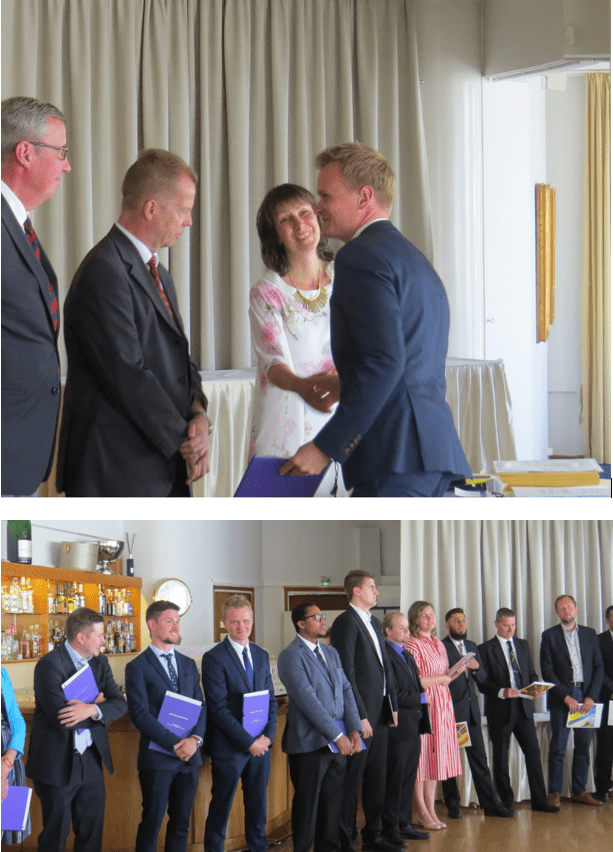
[caption id="attachment_2261" align="alignleft" width="620"] Juho Vieruaho plays at the Graduation party. “I have not played for a long time, but it was very nice! I remember from school that the people were exceptional: Merve Özkan with her two PhD’s, my other colleagues – there were many great people with experience at work and from education.[/caption]
Photos by Zinaida Grabovskaia
Juho Vieruaho is currently a Service Delivery Manager at Ericsson who graduated as a Master’s of Engineering in Industrial Management from Metropolia University of Applied Sciences in 2018.
Society, our work, and our everyday lives require us all to be more innovative and more intentional. Since around 500BC when the ancient Greek philosopher Heraclitus allegedly noted that ‘Change is the only constant’, the world has been in flux. This has not only continued, but it has accelerated.
If we want to develop more innovators, we need to provide spaces that allow for innovators to develop.
Responding to this challenge requires everyone to be ready and skilled in how to think more strategically about change, adaption, and innovation. Higher education institutions are a great place to hone these innovation skills, for both the students and the staff that fill them. But for these skills to be taught, the spaces that support this kind of learning need to be appropriate. This need is for the continued relevance of the institution itself but also for the society around it. There must be more innovation both inside and outside of the institution. If we want to develop more innovators, we need to provide spaces that allow for innovators to develop.
The Importance of Developing Innovators
For people to be innovative in their work, they need to learn the skills of incremental innovation. How it happens, what it looks like, how you get from the starting point to the deployment, and to fundamentally understand that deployment is not the end of the process. This is the kind of understanding that employers are beginning to expect from their employees. Continuous improvement is using innovation skills in everyday work and required structured collaboration. It is how institutions and the alumni from them continue to be relevant in this ever-changing world.
Innovations vs. Innovators
Developing innovations and developing innovators are different. One is an investment in your core business (or future business opportunities) while the other is an investment in people. This investment in people will provide them some agency over the development of how they do (and develop) their own work. To support individuals to become innovators in their own areas of expertise, we need to give them the right spaces to learn those skills and then to deploy them.
The necessary skills are not going to be developed in traditional classrooms or in ordinary meeting rooms.
The necessary skills are not going to be developed in traditional classrooms or in ordinary meeting rooms. There needs to be environmental cues (both physical and atmospheric) that this space is different. That you are here to work differently and to learn differently. It must also indicate that we are here to work collaboratively and that we are willing to change how we interact and work together to get different results.
Tailoring Spaces for Impactful Collaboration
Different actions and outcomes have different needs and what the space provides. It is difficult to have a deep, personal conversation if a group of people are sitting at desks looking in one direction (away from each other and at the back of heads). Different configurations are needed for different parts of any innovation process whether this is in a company, an educational institution, or in a public service.
Discussion
When there is a discussion, whether it is for learning new things or for sharing knowledge, a circle is often the way this should be done. Everyone can see each other, it promotes communication, and it isn’t hierarchical. Research shows that if you want people to be more collaborative, feel a sense of belonging, and participate more, you should seat them in a circular pattern.
This gathering pattern is something that is quintessentially human. When we imagine small groups gathering at all times through history, we imagine circles. We see circles everywhere information is shared and discussions are had: campfires, grade school storytelling, the United Nations, U.S. Congress, the Finnish Parliament, indigenous peoples’ gatherings, healing circles, etc. Gathering in circles is essential to humans feeling seen and heard.
“Circular physical arrangements such as these endure because of the powerful influences that people can have on each other when participating in these formations.” - J. Falout, 2014
Ideation
When we need to do some intense ideation, we may or may not need tables. Or we may need a small table space to write or draw our idea and some clear wall space to display our ideas. This one part of the process will need to use two different kinds of spaces. This flexibility in spatial design becomes a catalyst for fostering flexible minds. If there is a need to create more innovative and flexible people in our organisations, then the spaces that they work in also need to reflect this. Traditional office setups, with cubicles and open offices, fall short in being able to cultivate true innovators.
Small group work
Ideas are often developed by small groups. Individuals can be too myopic (seeing only their own ideas) while too big groups will become unwieldy and stagnate as it becomes difficult to find consensus to move on. This means that there needs to be spaces where groups of 3-5 people can develop ideas into concepts. These concepts will need to be developed further into something that can be prototyped. This can only happen in smaller groups. This is a great opportunity to either have multiple different ideas taken to the prototype stage or to have different versions of the same thing be created. This gives everyone a chance to fully participate in the development and prototyping stages as well as to see the options that different groups can produce. There is never one solution to any given problem.
Building/prototyping
When an individual and a group wish to build a prototype or even two or three, having spaces and tools available to accomplish this is important. Prototypes, for both products and services, come in all shapes and sizes - from room-sized cardboard layouts to handheld tools and Lego floor plans. This means that you can never be sure if people will need tables to display their final prototypes or just need them in the building phase. If they just need them in the building phase, they may need a larger open bit of floor space to roleplay the service/product or to walk people through it. This means that tables need to be easily stored away.
Presentations/Pitches
Presenting as a skill, whether to your peers or to co-workers, is an important part of finding buy-in and being understood. Presenting to a group can be done either while they are seated in the circular position or in a more standard theatre pattern. But what research tells us is that a circular seating pattern “can activate fundamental human needs and consequently affect persuasion.” When you are pitching an idea to a group, a circular pattern can help persuade them to agree with you. Interesting research finding that may be useful for those people who find themselves in that situation and can affect the environment and how people are seated.
All Spaces Are Designed
It is important to understand that spaces are always designed. Someone makes a decision about what kind of furniture will be used, where the focus of the room will go, how much furniture is to be ordered. Each little decision is the design. Determining how the space will be used will define what is available for the users.
When Static Spaces Fail to Meet Dynamic Needs
Consider this: what happens when the needs of the space are dynamic and change even within the confines of one 3-hour block? What happens to those in the room when the space is not changeable? At some point a decision was made to define the space's purpose, closing the door to any alternative considerations. This is most of the built spaces around the world. When we look at learning and teaching environments, they are primarily organised so that the students look at the teacher or to teach professional skills. Neither of these are appropriate for learning or developing innovation skills.
The next evolution was to make desks movable, so students could participate in group work. But still the desks took up most of the classroom floor space. Again, what happens when you don’t really need the desks and what you need is for people to do less listening and more doing? Now the desks are a bit of a liability. It reminds me of the poster that compared different modes of transportation and the space they take up (car vs bus vs bicycle). It exemplifies how much space “things” take up in the surrounding space. In their example it was cars, in mine, it is desks.
Many are expecting different results from the same environment.
I don’t disagree that there are still concepts that need to be learned individually and, in an orientation, where you are looking at a teacher. But it is important to remember that this is not how everything needs to be taught. Increasingly, spaces are being set aside for different ways of learning. But they are rare and maybe not fully understood.
This is the same problem in many corporate settings. Many are expecting different results from the same environment. In big companies there may be open spaces available but they are not necessarily set up for impactful collaboration, some will be meeting spaces, some will be presentation spaces.
Shaping Tomorrow’s Innovators
We all need to make sure that our learning spaces are future focused and fit for purpose.
The goal is to make sure that both inside and outside educational institutions people are able to confidently face and address the challenges ahead. We all need to make sure that our learning spaces are future focused and fit for purpose. At the beginning of allocating learning spaces and planning teaching, it would be important to considering the five above needs: discussion, ideation, group work, prototyping, and presentations, to achieve the best learning outcomes.
Writer
Pamela Spokes, BA, MA, MBA, AmO works as a Service Designer in Metropolia’s RDI team. Originally from Canada, Pamela has many years of experience working in higher education institutions in different countries and in different roles. She teaches the English Pre-Incubator Programme and Service Design in different Schools.
Team members who trust one another can better communicate and coordinate behaviors, given their openness, familiarity, and reliability. (1)
Meaning of trust in multi- and interprofessional social and health care teamwork is essential, to understand and create a more balanced and emotional, sustainable working environment. In trusting the working environment, people feel safety (2). It increases satisfaction and involvement in work. There are two different approaches to trust from an individual’s point of view:
Affective trustis based on interpersonal dynamics like co-identification and familiarity. It is also often emotional, such as offering feelings like becoming understood or believing in others’ goodwill. In contrast,
Cognitive trust is based on people’s competence and predictability. (1). Both of them are needed to recognize and create a trusting working environment.
Especially in multi- and interprofessional teams this needs to be taken into account, because team members’ professional backgrounds and approaches can be different from each other. However, it is important to remember that trust is a very multilateral/multifaceted phenomenon, and it has been traditionally approached as a part of social capital (3, 4, 5). At work, its complicated and systematic nature is relevant to be recognized and remembered; even when approached from an individual point of view or as a skill.
Trust as a skill
Trust is often defined as a ‘phenomenon,’ ‘value,’ attitude’, or ‘emotion’, but in this text, we want to approach it as a ‘skill’ in a professional context. By that, we mean that it can be approached as a skill to improve trusting relationships between professionals, within professional networks and with a client/patient.
According to European Qualifications Framework, EQF (6), skills refer to the ability to apply knowledge and to use expertise to complete tasks and solve problems. In the context of EQF, skills are described as
cognitive (e.g., involving the use of logical, intuitive, and creative thinking)
or practical (e.g., involving manual dexterity and the use of methods, materials, tools, and instruments).
Trust – as a skill – can be located to soft skills or transversal skills. Transversal skills are transferable skills from one field to another. Transversal skills can be taught and learned (7). Trust can be seen to be part of interpersonal/social & emotional skills (Pedagogical Framework in ITSHEC project 2022).
Trust in everyday professional practice
Interaction and collaboration between people in small everyday practices can be very makeable for people. They can strengthen the feeling of respect, belonging and feeling of welcoming.
For instance, neuroscientist Paul Zak (8) has shown in his studies that “when someone shows you trust, a feel-good jolt of oxytocin surges through your brain and triggers you to reciprocate”.
According to that, there is a strong link between trust and overall health and psychosocial well-being (9). This is one of the reasons why trust should be approached also from a pedagogical point of view, as a skill.
Trust, as a skill, can express itself in the following ways in everyday practices as an ability to:
open a dialogue
keep timetables and promises (even with insignificant matters)
behave predictably
express goodwill to other
outline shared goals, benefits, and risks
set professional boundaries without losing kindness and caring attitude
cooperate with others and to take account of various emotions in various contexts
improve non-discriminatory atmosphere
show interpersonal and social-emotional skills.
However, even if trust has often been approached as individual’s characteristics (or skills), attention needs also be paid to cultural trust propensity. In other words, it characterizes how willingly people trust each other in different cultures (10). Feeling of trust makes people happier with their lives (8). The skills of building trust are reflected in everyday interaction (11).
Changing working environments and trust
In global online work, employees evaluate reliability of a new person based on their speech, behavior, and perceived emotional state (12). For instance, ad hoc or project-specific organizations also need a climate of trust (swift trust). Then there is not so much time to build trust (13). In addition, virtual work can disturb quantity of interaction, but also the quality of engagement. Especially when a team is geographically dispersed, the number of modes of communication is limited. (1). Moreover, from supervisors’ point of view trust is traceable to reciprocity, open interaction, common goal and commitment, mutual respect, predictability, and security (14).
We need to pay more attention to understanding working conditions and different working environments behind trusting environments. Trust is not just a phenomenon, but it can also be seen as a transversal skill, which can be learned and developed. It demands from people awareness and willingness to self-reflection and open feedback. Trust and kindness are mutually flourishing and empowering. In a trusting relationship, the starting point is optimistic and hopeful, rather than always expecting the worst, suspecting, or fearing failures. In ITSHEC project, we will improve awareness of trust as a professional skill, as part of transversal skills. Lack of trust makes everyday life more difficult, unpredictable, and demanding. We need professional social and health care services to improve and strengthen people’s lives. Trustworthy professionals actualize a human-centered approach.
Authors
Eija Raatikainen (PhD) is a Principal lecturer in Metropolia University of Applied Sciences. Her academic focus is ”Trust” and “Empathy”, as phenomenon in different fields; like in Social Work, multiprofessional co-creation and project work, as well as educational practice and pedagogy. Additionally, she has a long track record as a project manager in various projects.
Katriina Rantala-Nenonen (M.Soc.Sc.) is a senior lecturer at Metropolia University of Applied Sciences. She teaches social sciences and works in national and international projects of social services and education. In ITSHEC project she works as a developing lecturer.
The article has been published earlier in Tikissä-blog of Metropolia University of Applied Sciences
References
Dinh, J. V., Reyes, D.L., Kayga L., Lindgren C., Feitosa & Salas, E. (2021),Developing team trust: Leader insights for virtual settings, Organizational Dynamics, 50, (1).
Edmondson, A.C. & Zhike, L. (2014), Psychological Safety: The History, Renaissance, and Future of an Interpersonal Construct.Annual Review of Organizational Psychology and Organizational Behavior. Vol. 1:23-43.
Coleman, J. S. (1988), “Social Capital in the Creation of Human Capital”, American Journal of Sociology, Vol. 94, Supplement, pp. 95 – 130.
Putnam, R.D. (1993), “Making Democracy Work. Civic Traditions in Modern Italy”, Princeton: Princeton University Press.
Putnam, R.D. (2000), “Bowling Alone. The Collapse and Revival of American Community”, New York, Simon & Schuster.
Framework and the Framework for Qualifications of the European Higher Education Area (2018), The Finnish National Agency for Education. The National Coordination Point for the European Qualifications Framework.
Raatikainen, E. & Rantala-Nenonen, K. 2021. Transversaalit taidot ammatillisen kasvun jäsentäjänä. Teoksessa Jakonen, M., Houni, P., Mutanen, A., Halonen, I. & Aali, P. (2021). Työn järjestyksiä. YFI julkaisuja.11. Jyväskylän yliopisto.
Zak, P.J. (2017), Trust Factor: The Science of Creating High-Performance Companies Hardcover – Illustrated, January 1, 2017 The Neuroscience of Trust (hbr.org)
Martikainen P., Bartley M & Lahelma, E. (2002), Psychosocial determinants of health in social epidemiology, International Journal of Epidemiology, Volume 31, Issue 6, December 2002, Pages 1091–1093
Mansour, J. & Zaheer, A. (2021), The Geography of Trust: Building Trust in Global Teams, Organizational Dynamics, Vo. 50, (2)
Savolainen, T. (2016), Luottamus digijohtamisen voimavara ja taitohaaste.
Blomqvist, K. (2018) Luottamus murroksessa. Työn tuuli-lehden julkaisu 2/2018 (PDF).
Salmivaara, V., Martela, F. & Heikkilä, J.-P. (2020), Radikaali psykologinen turvallisuus tilapäisorganisaation luovan ja tuloksellisen toiminnan mahdollistajana.(39), 3,(2020): Hallinnon Tutkimus, 188-204.
Raatikainen, E. (2021), Esimiesten näkemyksiä hyvästä työarjesta ja luottamuksellisesta työilmapiiristä, 34-50. Teoksessa Helminen, H, (toim) 2021. Nuoret ja työn merkitys. IT- ja sote alojen vastavalmistuneiden työhön sitoutuminen (tsr.fi).Haaga-Helian julkaisut 1/2021.
















Kommentit
Ei kommentteja