The beautiful, old ”american” cars from 1950s and 1960s are gas-driven and huge in size. Unfortunately, their motors running with gasoline and are nowadays considered as nature-destructive vehicles. Globally, hundreds of thousands, even millions of old cars have their own fan base. Enthusiasts are worried to see their own piece of beloved machinery loose their usability. Is there any way of updating the retro cars with modern technology, without losing the design, oh-so-cosy interior and the old feel?
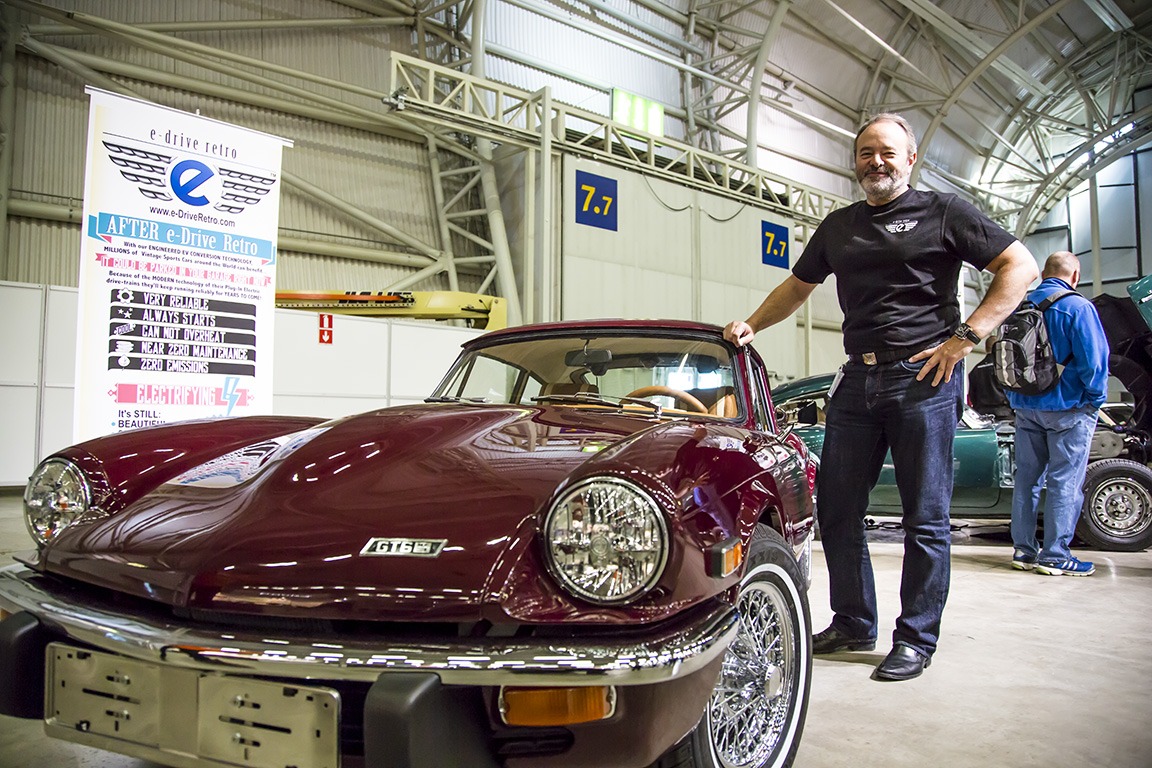
Running cars with electricity instead of gas has been seen as the greener option. As the cleantech focuses on engineering and making cars emission-free, car owners are still worried if all the new cars have to have the futuristic design. Thanks to the vision of one man, lucky coincident and young engineering talent we might still be able to see the vintage cars driving on streets. Mr. Michael M. Richardson from E-drive Retro has begun to realise his vision of upcycling the vintage beauties.
Technology’15 Convention was recently held in Helsinki, Finland. Mr. Richardson’s company and two lovely vintage cars were the showpiece audience wanted to see and understand more closely. The Estonian-based assembly line has not popped out of the blue. E-drive Retro has been developing technological solutions in collaboration with Helsinki Metropolia University of Applied Sciences as part of car and electric engineering students’ innovation project.
The vision of bringing life to old cars has been bubbling under for a decade in mr. Richardson’s mind. According to mr. Richardson, the time was not ripe before Tesla made the whole e-car industry take a leap ahead. Hard work starts paying as audience will become more familiar with the idea of plugging the car into the wall instead of driving it to the nearest gas station.
But how did mr. Richardson find Metropolia’s engineering students in the first place? “It was a coincidence”, he says “I happened to bump into an old student of mine, who was studying at Metropolia. She gave me the hint, I found out more and soon enough we were collaborating. Couldn’t be more pleased with the results!”
Watch Michael M. Richardson’s sharing his thoughts on the vintage car upcycling and the project work on the Youtube-clip below.
For more detailed information, please contact E-drive Retro’s homepage here.
Tuire Ranta-Meyer
on toiminut korkeakoulutuksen parissa johtajana ja asiantuntijana yli 30 vuotta. Hänet tunnetaan niin Metropolian kulttuurialan perustajana ja johtajana kuin korkeakoulujen yhteiskunnallisen vaikuttavuuden puolestapuhujana. Hän on myös Suomen johtava Erkki Melartin-tutkija, vertaisarvioidun tieteellisen kausilehden päätoimittajana, useiden yhdistysten ja valtuuskuntien puheenjohtaja tai luottojäsen. Hän innostuu mahdottomalta tuntuvista haasteista ja harrastaa mitä vain viulunsoitosta vintageen − mutta ei pelaa koripalloa eikä suosi avantouintia. Tuire on valmistunut sekä musiikin että filosofian maisteriksi ja väitellyt tohtoriksi Jyväskylässä. Vuodesta 2010 alkaen hänellä on ollut dosentuuri Jyväskylän yliopistossa. Metropoliassa hän toimii yhteistyöstä ja verkostoista vastaavana johtajana. Ota yhteyttä
Hei alumnimme
Alumnimme menestyvät maailmalla upeasti. AMK-tutkinnon suorittaneita on yli 20 000 ja YAMK-tutkinnonkin on ehtinyt tahkota kokoon monituhatlukuinen joukko. Itsekin talon alumnina olen ylpeä meistä kaikista.
Hoidin Metropolian alumnisuhdetoiminnan koordinaattorin tehtävää vuodet 2013-2016, jolloin toimintaa kehitettiin alumnisuhdetoiminnan kehittäjäverkostossa aktiivisesti. Valitettavasti erilaiset korkeakoulutukseen kohdistuneiden resurssien leikkuut veivät pohjan käytännön toteutukselta. Ideat jäivät paperille.
Metropolian alumneja ovat jokainen meillä opiskellut tai työskennellyt, myös kaikki edeltävien oppilaitostemme alumnit ovat alumnejamme.
Kaikessa yksinkertaisuudessaan Metropolian alumnipolku on seuraavanlainen:
Orientaatiojaksolla sanan "alumni" makustelu - kyllä, se olet sinä, vaikket koskaan valmistuisi tai liittyisi mihinkään alumnirekisteriin. Olet kasvatti, suojatti, saanut Metropolialta oppia.
Opintojen aikana opiskelijan ja alumnin kohtaamiset - monessa tutkinto-ohjelmassa kutsutaan alumnit kertomaan työelämän totuuksista. Muitakin mukavia kohtaamisia voi tapahtua.
Opintojen päättyessä - varmistus, että oma LinkedIn-profiili on ajantasalla ja siellä on ainakin oman ryhmän henkilöt kontakteina. Lisäksi mahdollisesti alumnirekisteriin liittyminen.
Työelämään siirtyessä alumnina kasvaminen - sijoittumiskyselyihin ja -tutkimuksiin vastaaminen, oman verkoston puitteissa ammatin ja alma materin edustaminen, oman ammatillisen identiteetin kehittäminen, ammattikorkeakoulutuksen puolesta puhuminen.
Takaisin kotiin - YAMK-opintoihin hakeutuminen, luennoitsijaksi tuleminen, tapahtumiin osallistuminen, stipendirahastoon tai varainhankintatoimintaan rahan lahjoittaminen...
Metropolialla on oma alumnirekisterinsä, käytössä kesäkuusta 2014 saakka. Sinne liittyneille lähetetään alumniuutiskirje neljästi vuodessa. Rekisteröityä voi täyttämällä e-lomakkeen. Ei maksa mitään, ei velvoita mihinkään.
Suurin joukko metropolialaisia alumneja löytyy LinkedIn -palvelusta. Meitä on siellä tällä hetkellä yli 20 000 metropolialaisuutta tunnustavaa.
Päivittelemme ajoittain Metropolian alumnit -Facebook-sivua. Metropolian Facebook-sivulta löytyvät ajankohtaisimmat alma materin kuulumiset.
Facebookin Metropolia Career -sivulla on työtarjouksien jättöpaikka. Parintuhannen seuraajan joukossa enimmälti opiskelijoita. Käy silti siellä, jos työtarjouksia etsit.
Twiittaillaankin.
Mikäli olet kiinnostunut oman tutkinto-/koulutusohjelmasi alumnitoiminnasta, ota suoraan yhteys vanhoihin opettajiin tai koulutussuunnittelijoihin. He kaipaavat usein teitä alumneja. Meillä vain ei ole välineitä tavoittaa suoraan teitä - valmistumisen jälkeen emme saa automaattisesti tietoomme uusia sähköpostiosoitteitanne. Kotiin kirjeen lähettämiseksi keinot vielä on olemassa, mutta se on tyyristä lystiä.
Mikset siis suoraan itse kysyisi, mitä tutkinto-ohjelman arkeen kuuluu ja voitko tulla jollekin opintojaksolle kertomaan oman alasi työnteon arjesta, tavataksesi entisiä opettajiasi ja nykyisiä opiskelijoita? Tällaisesta proaktiivisesta toiminnasta voi olla hyötyä sinulle ja työnantajallesi. Tutustumalla nuorempiin vuosikertoihin, on mahdollista saada tuoreita näkökulmia, jakaa oma uratarina, tai etsiä harjoittelijoita tai kesätyöntekijöitä.
Suhteet perustuvat luottamukselle ja niiden luominen alkaa jo ensimmäisestä opiskelupäivästä. Vaalikaa suhteitanne, opinahjoonne ja etenkin omiin opiskeluaikaisiin tuttaviinne. Ihmiseltä ihmiselle annettu aika on arvokkain lahja, jonka voimme kukin itseltämme toisille jakaa. Ensi vuonna Metropolia täyttää jo kymmenen vuotta. Kootkaa vanhat luokkakaverit yhteen ja skoolatkaa - meille ja teille.
Ystävyydellä. Näillä sanoin jätän tämän blogimerkinnän toistaiseksi viimeiseksi tällä palstalla.
Menestystä toivottaen!
Milla Åman
Valmistuin automaatioinsinööriksi Metropolian Myyrmäen yksiköstä 2015. Päädyin rakennusautomaatiosuunnittelijaksi suunnittelutoimisto Optiplan Oy:lle. Ensin pääsin työharjoitteluun, eikä aikaakaan, kun sain mahdollisuuden tehdä myös lopputyöni. Minua ilahdutti heidän positiivinen suhtautuminen harjoittelijoihin sekä panostukset työviihtyvyyteen ja valmistumisen jälkeen päädyinkin tänne vakituiseen työsuhteeseen. Minulle annettiin jo harjoitteluaikana vastuullisia tehtäviä, joissa pystyin kehittämään taitojani niin automaatiossa, projektityössä kuin kokonaisuuksien hallinnassa.
Rakennusautomaatiosuunnittelijan tehtävä on kuvata kaavioin ja toimintaselostuksin, miten rakennuksen moninaisia lämpö- vesi- ja ilmanvaihtojärjestelmiä ohjataan ja säädetään siten, että rakennus pysyy kunnossa ja siellä on viihtyisää olla.
Metropolian automaatiolinja on tekniikasta yleisesti kiinnostuneelle erinomainen valinta. Automaatio on erittäin laaja alue kattaen opintoja aina ohjelmoinnista, rakentamiseen, teollisuuteen ja logistiikkaan. Ennen Optiplanille tuloa en edes kuvitellut työskenteleväni rakennusalalla.
Metropolian automaatiolinja on kattavuudessaan kehuttava. Kun valmistumisen jälkeen päivitin ansioluetteloni ja kirjasin, mistä kaikista automaatiojärjestelmistä olin koulussa kokemusta saanut, niin listan pituus ja monipuolisuus oli vakuuttavaa.
Ja kaikille opiskelijoille, jotka epäilevät osaavatko he soveltaa oppejaan työelämässä: AMK antaa työkalut ja työelämä opettaa käyttämään niitä - hyvät työnantajat myös ymmärtävät tämän. Ole siis innokas oppimaan työelämässä ja valmis antamaan muutama extratunti työuran alussa asioiden ymmärtämiseen, niin vuoden jälkeen huomaat, mitä tarkoitan :).
Tomi Siebel valmistui Metropolian kone- ja tuotantotekniikan insinööriksi 2014. Asuinpaikka on Saksa, jossa Tomi työskentelee tittelillä Quality Engineer yrityksessä HP Pelzer GmbH. HP Pelzer on maailman johtava autoteollisuuden akustisten- ja eristys osien valmistaja Hän asuu Kaiserslauternissa, mutta käy töissä Wittenissä Ruhrin alueella 330 kilometrin päässä. Etäisyydet kotoa töihin ovat yleiset Saksassa. Autobahn palvelee kaikkialla. Viikonloppuisin ollaan kotona, työviikot jossain lähempänä.
Tomi Siebelin tehtävä on toimia laatuinsinöörinä Volvo-projektissa. Pelzer tekee Volvolle uuteen S90/V90-malliin takakontin sisustusta. Käytännössä Siebelin työ on projektin johtamista; PPAP-prosessin saattamista loppuun, laatuvaatimuksien ja spesifikaatioiden täyttäminen on laadunvalvonnan kulmakiviä.
Valmistumisen jälkeen Siebel muutti heti Saksaan, eikä hänellä vielä ollut työkokemusta. ”Lähetin 300 hakemusta ja sain muutaman haastattelun. Se ei ollut helpoin vaihtoehto, halusin silti tehdä niin ja se on toiminut hyvin. Aluksi oli vaikeaa, en tarkalleen tiennyt mitä pitäisi tehdä tai tarjota yrityksille. Työnhaussa meni nelisen kuukautta, aloitin lopulta pienessä, juuri perustetussa firmassa, joka teki autonosien laadunvalvontaa. Meillä oli muutamia ulkomaalaisia asiakkaita, joita yritettiin markkinoida euroopassa, joka ei onnistunut. Yritys meni konkurssiin ja siitä tuli opittua paljon kaikenlaista, yrityksen nousu ja tuho. Sen jälkeen oli helpompi löytää töitä, lähetin 20 hakemusta, tuli 5 haastattelupyyntöä: parin kuukauden päästä olin seuraavassa työpaikassa.
Täällä on laatuinsinööreille autoteollisuudessa paljon töitä, koska teollisuus perustuu alihankkijoihin. Toimiva autoteollisuus vaatii alihankkijoiden valvontaa. Projektinhallintaan, alihankkijoiden valvontaan ja laatuinsinöörin aloille löytyy töitä Saksassa”.
”Nykyiseen tehtävään päädyin hakemalla. Hain eri paikkoihin, mulle soitettiin ja kysyttiin lyhyen haastattelun jälkeen, paljonko haluan palkkaa. Yleensä Saksassa kysytään heti palkka, sitten sanotaan summa, se on ok tai ei, riippuen yrityksen kaavaillusta budjetista. Kairon taksikuskit ovat hyvä preppauskeino palkkaneuvotteluihin. Palkka- ja hintatasosta sen verran, että taso Saksassa ei houkuttele palaamaan Suomeen. Olen nyt siirtymässä projektipäälliköksi omaan projektiin. Toinen Saksassa yleinen juttu on että insinöörit työllistyy ensin rekrytointifirmojen kautta ja myöhemmin siirtyy vakituiseksi yritykseen, näin minunkin tapauksessa. Mielikuvani on, että työnteko Saksassa on tahdiltaan kovempaa kuin Suomessa."
Siebel jatkaa: ”Täällä pitää toimittaa. Ei voi taukoja pitää, jos on töitä. Jos haluaa edetä, kelloa ei voi katsoa. Kun ei ole töitä, on vapaampaa jos on tehnyt työnsä hyvin. Kun pitää tehdä töitä, on vaarallista sanoa että kello on neljä, täytyy lähteä kotiin. Varsinkin autoteollisuudessa on hektistä. Varastot on pieniä, koko ajan pitää tulla uutta tavaraa alihankkijoilta. On vaarana että tehdas pysähtyy, jos ketju ei toimi. Siksi pitää olla varautunut koko ajan.”
Siebelin mukaan työkulttuuri Saksassa riippuu kuitenkin työpaikasta. ”Kun menet haastatteluun, sun täytyy pitää siitä henkilöstä joka sua haastattelee, se on yleensä sun tuleva pomo. Jos se toimii hyvin, sopii ajattelutapa hyvin yhteen. Työpaikat, jotka olen saanut, niissä on haastattelujen jälkeen ollut ajatus, että toi meni hyvin, persoonallisuudet ovat kohdanneet hyvin. Sitten on ollut haastattelut, joiden jälkeen on ollut tunne etten haluaisi työskennellä tuolla, eikä niitä paikkoja ole mulle tarjottukaan”, Siebel summaa.
Urakehitykseensä Siebel kokee koulutuksen ja oman asenteen vaikuttaneen eniten.
”Koulutuksen avulla pääsee näihin työtehtäviin. Koulutus on pakko olla. Uskon, että uralla on paljon kiinni asenteesta. Yritän lukea paljon kirjoja, jotka auttaa itsensä kehittämiseen. Ne ovat auttaneet siihen, miten reagoida tilanteisiin ja ongelmiin. Esimerkiksi, miten pysyä positiivisena. Suosittelen kirjaa Dale Carnegie; Miten saan ystäviä, menestystä ja vaikutusvaltaa. Tärkein sisältö tuossa kirjassa on neuvottelusta, eli miten olla mukava henkilö ja saada toinen ymmärtämään sun pointti niin, että molemmat on tyytyväisiä. Eli lähinnä miten esittää asioita.”
Metropoliassa annetusta opista Siebel kokee hyötyneensä etenkin siinä, miten työskennellä hyvin ja laadukkaasti. Miten raportoida, esimerkiksi labrakursseissa ja opinnäytetyössä oppii tiettyä järjestelmällisyyttä ja laadukasta työtä.
Lisäksi kiitoksen ansaitsevat opettajat. ”He, jotka ovat olleet työelämässä. Heiltä sai tietoa, jota ei oppikirjoista saa, erityinen kiitos opinnäytetyöni ohjaajalle lehtori Jarmo Perttulalle.” Myös kieliopinnot Tomi Siebel kokee tärkeäksi anniksi. ”Saksaa olen opiskellut ammattikorkeakoulussa, on tärkeää saavuttaa tietty taso että pystyy kommunikoimaan. Arkikeskustelujen täytyy sujua. Englanti pitää olla vahva, joka tukee vaikeammissa keskusteluissa.”
Valinta lähteä opiskelemaan insinööriksi syntyi lukiossa. Nyt Siebel kuvailee: ”Tämä on ollut mahtava matka, oon nähny niin paljon, päässyt matkustamaan työn kautta niin paljon, Euroopan ulkopuolelle tapaamaan eri paikkoihin uusia ihmisiä. Toki on raskasta olla koko ajan matkustamassa, mutta toisaalta tulee nähtyä niin paljon ja on tapahtumien keskipisteessä. Teen globaalisti töitä, tapaan paljon eri kansallisuuksia töissä, kuten Kiina, Tsekki, Hollanti, Britannia, meillä on monikansallinen tiimi. Minulle kansainvälistyminen on sitä, että tunnet, että sinulla on mahdollisuus asua myös muissa maissa.”
Rekrytoitumisvinkkeinä Tomi Siebel kertoo, että jos haluaa esimerkiksi autoteollisuuteen töihin, ”kannattaa ostaa muutama kirja tietystä aiheesta, jotka kiinnostaa. Autoteollisuuden uraa havittelevan kannattaa valita teoksia APQP:stä, PPAP:sta ja FMEA:sta, edellä mainitut järjestelmät ovat konkreettista tietoa, minkä voi tuoda esille työhaastattelussa. Siitä pääsee alkuun. Sen jälkeen voi etsiä sopivan polun eteenpäin."
"Opiskelijoille haluaisin vielä sanoa, että työnteko on helpompaa kuin opiskelu, eikä menestymistä työelämässä ole syytä epäröidä. Tarttukaa rohkeasti tilaisuuksiin, mutta vasta kun koulu on suoritettu kunnialla loppuun!”
Master´s thesis “Total Portfolio for Public Services” (1) introduces the way to prepare existing public services for the digital era. Citizens and their life events can trigger new demand for digital public services, but introducing or improving digital services will require tectonic changes in the current service base.
How does the current service base look like in public organizations?
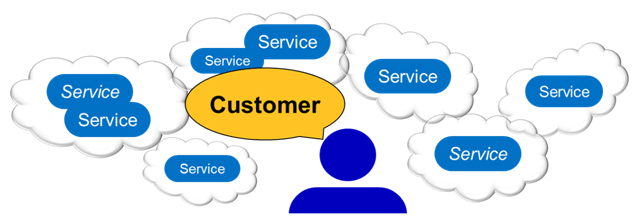
Most public organizations struggle with a myriad of independent services. Services and customer insights are scattered in disparate offices or entities; and so are the corresponding digital assets. This disparity makes the change towards a smooth digital experience hard and financially challenging to execute. As a result, customers often have to find and select their public services from bits and pieces of a fragmented, incoherent mass of services.
Yet, citizens of today expect the same smooth experience from all services they consume – either digital of physical, public or private, automated or manual. What primarily matters for them is that the service gets its job done as expected, and when expected. It also matters that the customers can find the service easily. The cool “wow!” effect happens when the citizen gets the service available even before he or she realizes the need for it. And it is only after such a happy discovery that he or she starts inquiring how much the service can cost, and how the cost is charged i.e. through taxes, through insurance, or out of the pocket. If the cost is right, the citizen chooses the best option and enjoys the experience.
Definitely, it is much nicer to pay a few dozens of euro for a childbirth, instead of 10 000 Euro or more, depending on potential complications. This angle is one of the strongpoints for consuming public services. They tend to be affordable and predictable without unexpected extra bills. Public service quality also tends to be high, as there is a lot of public attention, monitoring, and quality checks. In addition, public services are found in public offices, which makes them easy to spot. Private services must struggle much more for being noticed. In addition, many public services have traditionally been incumbent without much of a competition. All these factors make the current service base look very attractive and promising. But is it for long?
Not only “what” but also “when” and “how easy”
Digitalization changes this natural attractiveness of public services. A much wider, “heavier” public service base faces unprecedented direct rivalry and a threat of substitution from the private side in the ways that were not possible in pre-digital era (2, 3). Hence, today it is not enough to concentrate on the traditional strongpoints of public services (affordability, quality, wide coverage). These services must meet the customer needs better.
Let´s start with “when”. In essence, public services consumption happens in certain life situations. When a child is born, certain childcare services are triggered. As the child grows, new service needs come to the picture, and they form a web of service needs. Imagine if those life situations could be identified and analyzed so well that the citizens could be offered the right services proactively. This is why Stiglitz-Fitoussi-Sen commission modeled the typical citizen´s core needs for the European Union in 2009 (4). Since then, for example, Finland and Estonia have established their Artificial Intelligence programs pursuing this capability to identify citizens’ life-events for focusing public services better (5, 6, 7). In other words, the providers of public services look ahead and have a clear vision how to be more proactive.
So, after building such visions, why there is still a problem with “how easy” the public services can be? Unfortunately, this problem exists, and it is both managerial and technical. It originates from the fact that few public services are islands of their own, and they are not really restricted to certain service areas or tools either. Yet, the operational models of local governments have divisional silos which separate public services into the urban environment, cultural, education, social and health services. This dilemma makes an obstacle for triggering a change in public services into easy and proactive digital services, as envisaged above.
What to do?
My Master´s thesis (1) addresses these issues and proposes an approach to handling them through constructing a business operational concept named the ´Business Wheel´. The ´wheel´ first describes the related business dynamics and then suggests a Portfolio Management setup and the necessary organization around those portfolios. The key pivotal portfolio for a municipality is a Service Portfolio because local governments run hundreds of services. If they are run disparately, without clear service structures, it becomes almost impossible to match those hundreds of existing services with the citizen’s life situations in the way envisaged above.
This is why the thesis recommends that local governments should consider the Service Portfolio and the customer life events first. Addressing both areas will directly lead to a need for fundamental transformation towards digital services, but there is also agility required in adapting strategic targeting. The success will depend on the ability to continuously assess the environment and effectively steer the execution.
However, to capture the value, just steering and targeting is not enough. New and improved public services will be needed, which requires a substantial amount of innovation. All these parts of the ´Business Wheel´ and Service Portfolio practices should contribute to constructing a managerial ecosystem and prepare public services for a turnaround based on life-events triggered services.
About the author
[caption id="attachment_3793" align="alignleft" width="151"] Ilkka Kautto.[/caption]
Ilkka Kautto works as a directing chief specialist, ICT development in the City of Helsinki. He has over twenty years of experience in innovating and developing new digital solutions and related organizational capabilities in international technology cluster and public organizations.
References
Kautto, I. (2020). Total Portfolio for Public Services: How to Prepare Existing Public Services for a Turnaround to a Life-events Triggered Proactive Ecosystem. [Master´s Thesis]. Helsinki, Metropolia university of Applied Sciences.
Christensen, C. et al. (2016). Competing Against Luck: The Story of Innovation and Customer Choice. 1st edition. New York, NY: HarperBusiness.
Ulwick, A. (2017). Jobs-to-be-done for Government. April 19 2017. [online] [Accessed 2 March 2020].
Stiglitz, J. E. and Sen, A. and Fitoussi, J-P. (2009). Report by the commission on the measurement of economic performance and social progress. [PDF] [Accessed: 10 June 2020].
Sikkut, S. and Velsberg, O. and Vaher, C. (2020). #Kratt AI: The next stage of digital public services in #eEstonia. Republic of Estonia, GCIO Office. [PDF] [Accessed 25 February 2020].
Maunula, A. (2019). Julkisen sektorin digimenestyjät 2020, Suomi. [online] BearingPoint. [Accessed 19.1.2020].
Ministry of Finance (2020). The AuroraAI national artificial intelligence program begins – with the aim of using artificial intelligence to bring people and services together in a better way. [online] [Accessed: 10 February 2020].
I remember myself some 3-4 years ago. I had a struggle in deciding if I could go and study in Helsinki for a Master’s degree, or is it totally out of question for me, as I lived in Rauma at that time. I decided to take this crazy step and travelled twice a week to Helsinki along with a full-time job. I became a student in Master’s program in Logistics Management.
My studies were very interesting and fulfilling, but I could not get rid of my worries at work. My job challenge was to gain real benefit for the company by introducing common transportation and logistics services (by air and ocean) throughout a big corporation operating globally. This was a big and real challenge. Fortunately, I was able to concentrate on this problem in my Master’s thesis project. I researched the current state of logistics in business units, and revised the existing approach with the help of my colleagues and thesis instructors. These efforts helped to take a new perspective and look at the old and familiar problem with new eyes.
The key suggestion for the company was to strengthen the global logistics by managing it through an effective steering global logistics group. This group should be connected by well-working communication between the responsible persons in business units. The next step was to investigate, collect and prioritize the needs and wishes of the business units, as well as to investigate their experiences with current logistics. Based on this information, and with the help of the members of the steering group, to establish a list if KPIs for the corporate logistics provider, that would address their needs, and conscientiously select the best out of the desirable providers. Only after it could be possible to introduce corporate contacts for transportation and logistics.
The key finding was, that launching contracts with a global transportation and logistics providers alone is absolutely not enough. The critical issues are: (a) to involve the business units in constructive cooperation by identifying and following mutual interests and gains, and (b) to closely follow the implementation by monitoring a carefully selected list of KPIs that would reflect the real needs of business units. In short, to establish the needs, to identify mutual interests, and to closely follow the performance.
This was an interesting and challenging job. I learned a lot while working for Metso and Valmet where all types of logistics were well-organized and extensively used, and my experience there was diverse.
Half a year ago I got the position in Cargotec where I have been leading Logistics for the Cargotec group. The company has over 10 factories where equipment is produced in such countries as US, Poland, Malaysia, and China. On the other hand, spare parts warehouses are located, for example in France, and multiple other countries. All of these places need to be connected with well-working logistics.
This is a challenge and a big gain for the company. Interestingly, this is also a continuation of my thesis topic, but growing in size and scale. After the first implementation, it will make another round of testing myself, the selected approach, and the new steering logistics group that will play a key role in these developments.
I am looking forward to the future, to effective cooperation and enthusiastic and experienced colleagues, and to find good solutions together. The next immediate steps include defining the global logistics strategy for the next three years, hearing everyone, exploring the current ways, finding mutual gains, prioritizing and deciding together, and following implementations effectively.
In addition, I want to thank my work colleagues, my fellow students, and Metropolia instructors from my previous studies. I use all my lecture notes and my thesis results from Metropolia still today. They have been absolutely helpful.
Even though I graduated two years ago, I still remember your contribution to get us to graduate in time. It was really worth of travelling 67 times between Rauma and Helsinki, nearly 35 000 kilometers in total, between September and May 2016 by Onnibus. I am now living in Turku, where we moved from Rauma, and almost every week I am in Helsinki, Ruoholahti, passing by Metropolia. My many thanks to you all, from Pasi Kurkinen, the "long distance man".
Pasi Kurkinen
Pasi Kurkinen, Master of Engineering in Logistics Management (2016) lives in Turku and works for Cargotec Corporation as a Global category manager for logistics. He moved to this position half a year ago, after working with global logistics in Metso and Valmet. Two years ago Kurkinen also completed his Master’s thesis project in Metropolia UAS on his key challenge at work – how to implement unified logistics contacts in a global company, and how to commit business units to change from individual to corporate transportation and logistics.
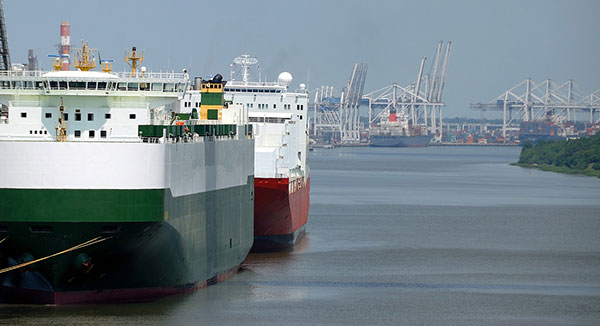
Kuvalähde: paulbr75, Pixabay.com, CC0.
By Sabari R. Prasanna and Zinaida Grabovskaia
Metropolia’s part-time lecturer Sabari R. Prasanna, who teaches Business students on supply chains, visited Master’s program in Industrial Management and raised awareness of social and environmental issues in supply chains. It was an important visit that created discussion on sustainability issues across the whole supply chain with supply chain managers and professional purchasers. Master’s students of Industrial Management program are full-time professionals who are involved in decision-making and selecting suppliers on a daily basis. As sustainability becomes an ever more important issue for businesses, students were interested to discuss the ways how sustainability can be increased thought the efforts of both, responsible business and responsible consumers (Prasanna, 2015).
What is sustainability and what it means for companies? A change to sustainable ways of doing business is a welcoming change, actively supported by legislation in many types of business sectors. Companies themselves also use sustainability as a competitive advantage. Energy companies, for example, use environmental benefits of alternative energy as an argument for being more attractive than, for example, fuel-based energy. Railways argue that they are more sustainable than road transportation since they create much less environmental pressures, and so on.
Yet, companies still have to ‘sell’ this expensive change of becoming more sustainable to their shareholders. The old logic of ‘increase revenues – decrease costs’ is still very much prevalent in many businesses. Such businesses often argue for ‘reducing pollution by 10%’ rather than asking themselves How can we stop polluting? This logic of small steps is very much ingrained in public opinions as well, promoted by lobbyist and some politicians. In practice, to become more sustainable, companies need first to convince their shareholders that such a change is needed. Further on this road, the idea of running sustainable business practices should also win over priorities of financial profits (Epstein & Roy, 2001).
As a result, the companies that wish to become more socially responsible, environmentally friendly and overall more sustainable, still need to make a lot of efforts to promote sustainability to their own shareholders. However, the stakeholders in doing business sustainably create a much wider community than the shareholders of any company. In case of an environmental disaster, or a human right violation, it is a much wider community that is affected, not just the immediate shareholders of a business. Thus, to influence shareholders, it is necessity to make first of all the stakeholders (i.e. a wider community) more interested in sustainability. This is a very powerful group that votes with their money, and can simply boycott an ugly business by refusing to buy from them. Nowadays, there are many examples of such consumer voice.
As consumers, we have a huge power. However, what we know as consumers is yet very little, and – regrettably - there is often little interest in sustainability. As a result, consumers may not know that there are sometimes ugly things happening at the front end of the supply chain. There is a shocking example of cocoa firms kidnapping children to work as forced child labor in Ivory Cost. There is a film in Youtube about it. We all consume chocolate, but few know how cocoa suppliers commit horrible crimes in pursuit of reducing costs. Another example is production of palm oil that has led to massive deforestation in Malaysia and Indonesia, leading to rapid reduction in the Orangutans population due to disappearing rain forests. These are examples of violations done in pursuit of increasing shareholders value by lowering costs, and show what may happen, if no constrains are put to such practices.
Here, legislators can lead the change by demanding the companies to become accountable for sustainability (as done, for example, in Sweden). With support from legislators, the new way for a business to look at sustainability is from the perspective of the triple bottom line (TBL) – stressing social, economic, and environmental elements. It means that not just profits, sales and products should be important, but also wider values beyond that - social and environmental perspectives, as well as wider economic and human rights issues.
Still, there are many questions around sustainability, and managers are often confused - is there a moral mandate to practice sustainable ways of doing business? Who will pay for it? Is there any business opportunity in sustainability? Sabari believes that this last question is the most important one. If a business can create value from sustainability, then it raises sustainability to a totally different level of interest from business and stimulates innovating sustainable practices.
To support responsible business on this way, there exist many encouraging examples from forerunning companies (such as Fazer Group). There are also examples of change in conceptual understanding of running business sustainably by big names in business science (such as Prof. Philip Kotler). Kotler was the father of the famous ‘4Ps’ – a marketing mix that drives profitability: Product, Price, Place, and Promotion. In one of his recent editorials in ‘Journal of Marketing’, Kotler indicates sustainability as a fifth critical element in addition to his well-known 4Ps, and argues for sustainability as a vital issue for any business (Kotler, 2011). Universities are also very active in promoting responsible buying and even coined a new term, pro-sumerism. One example is a podcast about research by Georgetown University, USA (Deloitte Insights, 2018).
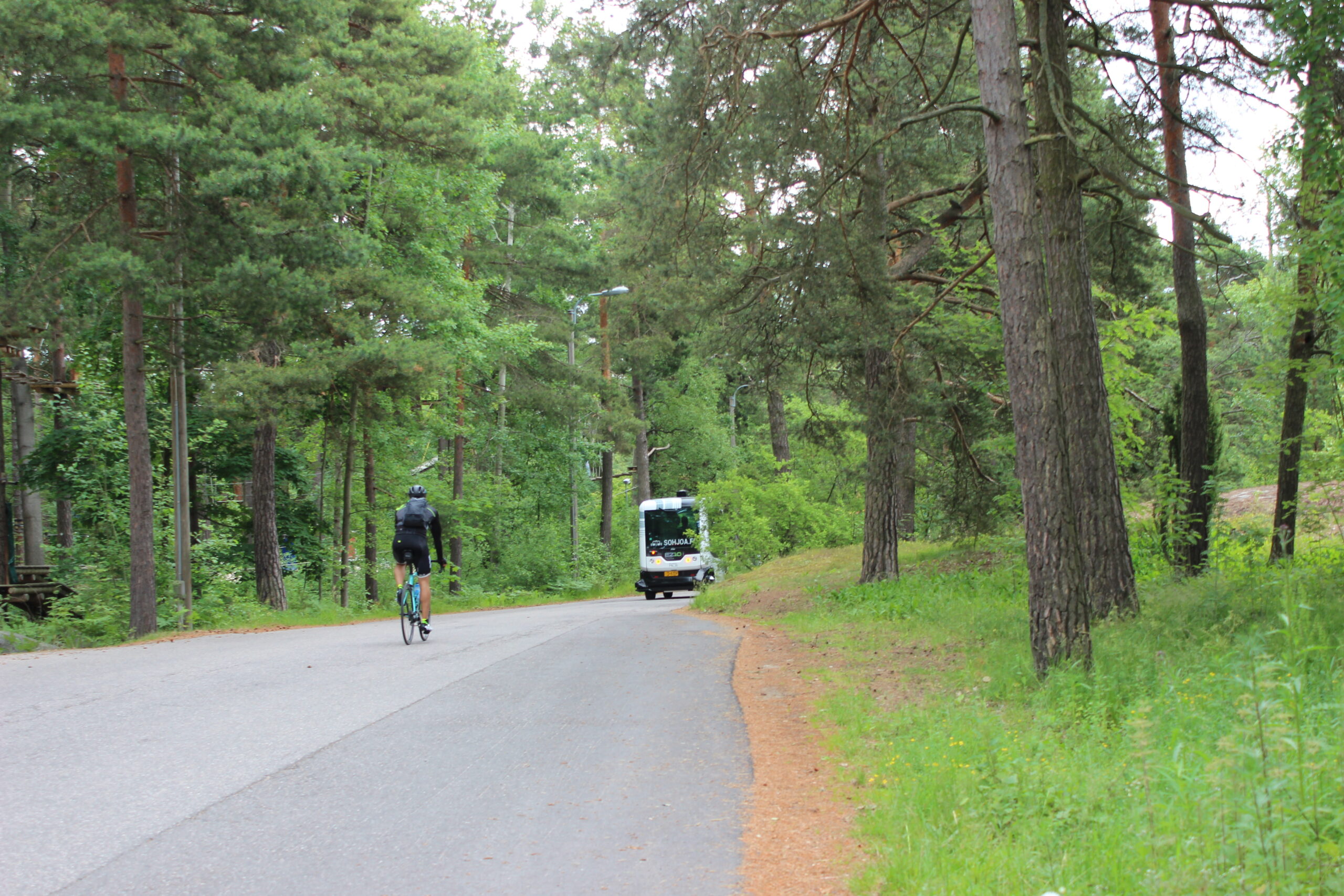
A lot of positive things are currently happening across many sectors. Holland abolishes the use of gas cars (only hybrids and electric cars will stay), companies in Norway start cleaning the ocean, etc. Policy makers together with general public come up with better practices to save the future. The only possible answer is to re-think the old paradigm of ‘increase revenue - reduce costs’. To make it happen, the pressure should come out from the public, so that it will make business to change the old harmful practices. As managers, in everyday decision making as well as in personal life, we all need to exercise our influence toward more sustainable ways of doing business, and through becoming more sustainable in our decisions as consumers.
Sabari R. Prasanna is a Doctoral candidate at Hanken School of Economics specializing in humanitarian supply chain management, who is finalizing his PhD studies and is a part-time teacher in Metropolia’s Business school, Myyrmäki campus. He used to be an Assistant Professor in BIM, India. Sabari is currently interested in supply chain sustainability and making it attractive for business.
Zinaida Grabovskaia (PhL) is senior lecturer and head of master’s program in Industrial Management at Metropolia UAS. The program specializes in service business especially for big industrial players.
References
Epstein, M. J., & Roy, M. J. (2001). Sustainability in Action: Identifying and Measuring the Key Performance Drivers. Long range planning, 34(5), 585-604.
Deloitte Insights (2018). Turning Consumers into Prosumers for Ethical Shopping: Interview with Neeru Paharia: [Podcast]. Available from: https://www2.deloitte.com/insights/us/en/multimedia/podcasts/nudgeapalooza-2-behavioral-economics-insights.html
Kotler, P. (2011). Reinventing Marketing to Manage the Environmental Imperative. Journal of Marketing, 75(4), 132-135.
Prasanna, R. S. (2015). Management Ingredients to Embrace the New Paradigm: Green. European Business Review, 27(3), 318-333.







Kommentit
Ei kommentteja