
Tekijä: Heidi Stenberg
Is it all about happiness?

Migration is by no means a new phenomenon. Many Finnish families have their own American cousin or a Swedish aunt with interesting stories. Migration thus evokes many feelings as a historical phenomenon. I was very pleased to be able to participate in Migration conference 2017,that was organized this year in Athens, Greece. Is aiming at happiness an underlying factor in migration? Saskia Sassen, a Dutch-American sociology Professor at The University of Columbia, has widely examined globalization as a phenomenon. After Sassen´s keynote speech, all in the audience understood how multidimensional phenomenon migration is. Her research concentrates on the underlying governmental issues that are the hidden factors causing the basic reasons for migration such as wars and religious conflicts. Yet, the main reason for people leaving their home country seems to be hopes for achieving better life that the home country is not able to provide. In Athens, it was easy to reminisce the philosophies of the ancient era. Even Aristotle indicated that a good life is achieved, when a man can use his abilities and capabilities for the society he feels connected to, and when he feels of being a useful member of this society. Unfortunately, while walking on the streets of Athens, I was forced to face the immigration crisis of 2015 in Europe in its real terms. This tragedy of the immigration overflow, is something you can still witness today. Having a good life and achieving happiness seems an unreachable quest for many living on the streets. It seemed paradoxical that I have just learnt about different research results on which factors increase the risk of violence among immigrants such as insecurity, uncertainty and hopelessness as I could see these feelings in people’s eyes when walking back to my hotel. How do different countries relate to immigration? Nelli Esipova from Gallup World Poll, had a presentation on immigration acceptance in different countries. The research focused on presenting a research setting, in which the acceptance index in the world was set as 5,299. The acceptance index included 164 countries and 1,7 million interviews among adult respondents. The research was conducted in USA in 2017 and in the other research countries in 2016. Among the top ten countries that accepted the immigration the least were e.g. Estonia (2,37) and Hungary (1,69). Among the top ten most accepting countries for immigration, the Northern Countries were represented as Sweden scored 7,92 and Iceland 8,26. Finland scored 6,58, which was above the World and also the European index. According to the survey results, immigration acceptance was higher on a personal level among those, who know immigrants personally, and acceptance was increased with other factors such as having a degree in higher education, living in an urban environment, economic status and belonging to the Z-generation. In EU countries, it was especially noted that opinions were also formed based on the interviewer’s positive emotions and social ability. If a good integration is based on happiness and in experience of having a good life, how can we contribute towards this feeling among the immigrants? Immigration is portrayed in the European media more through tragedies than through success stories. The media has a significant role in forming attitudes and in shaping the attitude among the general public. “Close the borders” and “Isolation” strategies have never been sustainable solutions on immigration based on research results and historical evidence. On the contrary, immigration is also proved to bring out many positive socio-economic possibilities. Being a member of a community, feeling of being part of something bigger, and finding your life to be meaningful have proven to increase happiness and well-being according to various research. We aim to reach these factors also in our services for immigrants at SIMHE-Metropolia. When planning our services, our vision was to include our customers in developing the service concept and that we create such services that we would like to use if living abroad as immigrant by ourselves.
Recognising competencies of educated immigrants
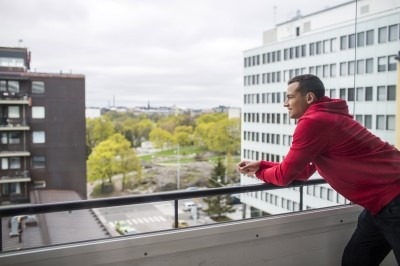
Since the last autumn, there has been an intense debate on what should be done in this new situation with a growing number of asylum seekers and immigrants that has exceeded even the wildest guesses. ”Rajat kiinni”, “Close the borders”, has been one approach and on the other hand it has been considered if immigrants could be seen as a resource to benefit Finland. Metropolia’s solution is to offer a service concept produced by the SIMHE project, which is funded by the Ministry of Education and Culture. The aim is to recognise the competences of highly educated immigrants and to guide them, and those who are eligible to apply to higher education, to interesting and meaningful educational and career paths. Setting objectives for the project is easier than implementing them into contemporary society. Mathematical competence, professional engineering competence and digital competence were selected to form the pilot test on recognising engineering competence that was implemented in April at Metropolia. The test parts were compiled by the Metropolia experts in mathematics, different engineering degree programmes and in digital competence. We considered what kind of competence the Finnish employers might value, and on the other hand, we thought that immigrants could benefit from the recognition of competences for example, if they apply to higher education in Finland, as an institution of higher education has already made an evaluation on their competences. When choosing the content to the recognition of competence, we looked at the issue from a perspective of integrating immigrants into Finnish society. 30 immigrants participated in the recognition of competence day out of which 28 were male and 2 female. The majority of them were from Iraq, a few from Syria and Afghanistan, one from Iran and one from Belarus. The participants’ age varied between 20 and 44. A few of them had been in Finland for nearly three years, the majority for 6-10 months. It was possible to do the test in Arabic, in English or in Finnish. The language options were based on the fact in which language the participants had filled-in the enrolment form. The results will be ready soon and we will reflect on them as well as on methods used in the recognition of competence together with participants and our experts. We need to reflect critically on both - the used methods and the chosen fields of competencies. Is the recognition of mathematical competence relevant when working as an engineer? Those participating in the pilot, already had a degree, or studies in higher education in the field of technology. Why would someone, who already has a degree, and who has made the official recognition and international comparability of qualifications want to participate in our recognition of competence? What do the participants benefit from recognition of competence will probably not become clear until a long-term follow-up is done based on their individual educational and career paths. Do the individual’s and society’s perceptions about adequate educational and career paths meet? This is also an interesting question to be considered later. How do I get a chance to show my competence, attitude, motivation and will to do anything reasonable that would benefit both myself and Finland? How and where can I get more competence that can help me to get a job? These kind of questions are now directed to Metropolia. At this point, I must humbly state that these things we work with in the SIMHE project launched this spring are quite enormous. In the project we will consider the new models to recognise the competence of highly educated immigrants and asylum seekers and to guide them to adequate educational and career paths. This is done together with the Ministry of Education and Culture, Finnish National Board of Education, CIMO, Ministry of Employment and the Economy and the UniPID network. There is clearly a demand for our new service concept - hopefully employers and educational institutions will grasp this new potential. Let´s turn the societal debate even more towards the direction of possibilities!
Blog introduces information, tips and insights that help international talents with a higher education background to integrate and find their study and career paths in Finland. The blog is part of Metropolia’s #talentboost actions.
Outi Lemettinen (head editor)
Riikka Wallin
Anu Luoma
Email addresses: firstname.surname@metropolia.fi
Editorial Board handles all the publications of Various Variables blog before publishing.


Belongingness Career Career Boost careercoaching careers employability employment entrepreneur entrepreneurship Evaluation Finnish as a second language Finnish working life Guidance Happiness higher education higher education institutions highly educated immigrants Immigrants Inclusion Integration international student international talent job search job searching skills language learning learning platform mapping of competences mathematics mentoring Migration Moodle Networking networks online learning Participation Recognising competencies recognition of competences Research SIMHE SIMHE-Metropolia Skills Society strengths Studying in Finland talent boost