Avainsana: trust
Trust as a transversal skill

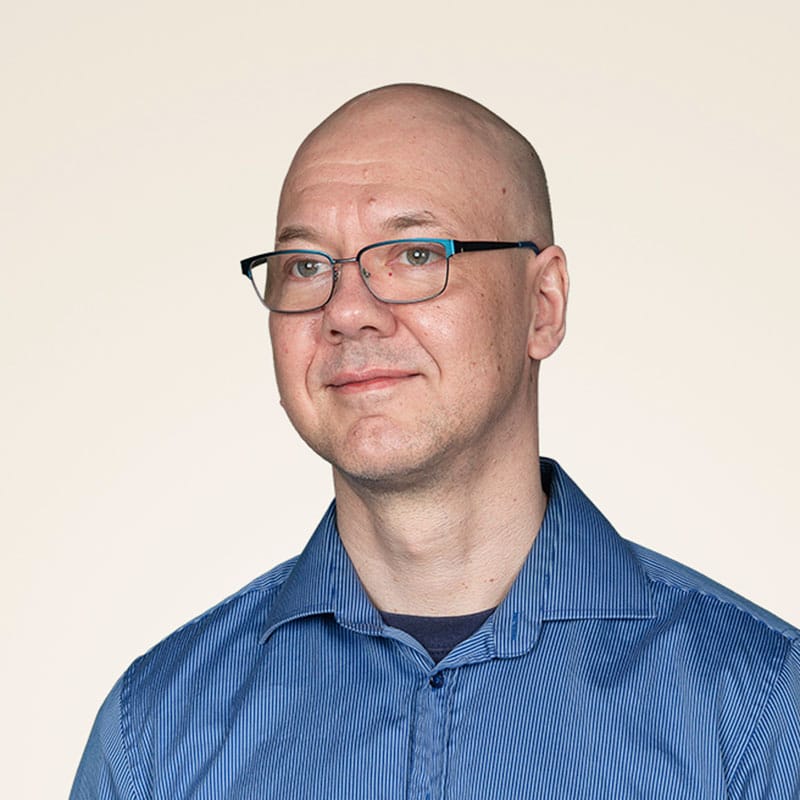
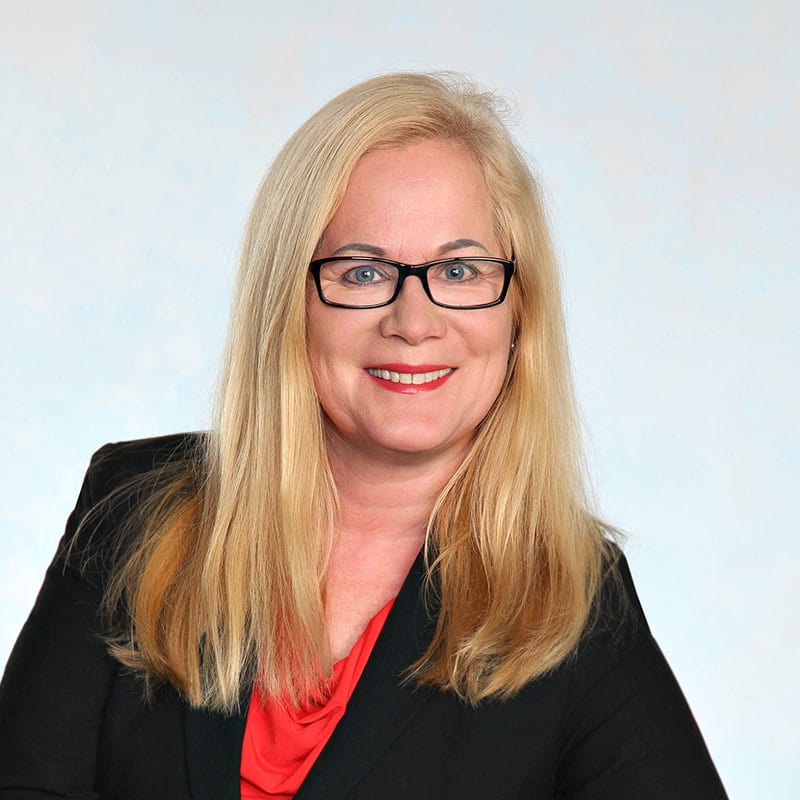
Team members who trust one another can better communicate and coordinate behaviors, given their openness, familiarity, and reliability. (1) Meaning of trust in multi- and interprofessional social and health care teamwork is essential, to understand and create a more balanced and emotional, sustainable working environment. In trusting the working environment, people feel safety (2). It increases satisfaction and involvement in work. There are two different approaches to trust from an individual’s point of view: Affective trust is based on interpersonal dynamics like co-identification and familiarity. It is also often emotional, such as offering feelings like becoming understood or believing in others’ goodwill. In contrast, Cognitive trust is based on people's competence and predictability. (1). Both of them are needed to recognize and create a trusting working environment. Especially in multi- and interprofessional teams this needs to be taken into account, because team members’ professional backgrounds and approaches can be different from each other. However, it is important to remember that trust is a very multilateral/multifaceted phenomenon, and it has been traditionally approached as a part of social capital (3, 4, 5). At work, its complicated and systematic nature is relevant to be recognized and remembered; even when approached from an individual point of view or as a skill. Trust as a skill Trust is often defined as a ‘phenomenon,’ ‘value,’ attitude’, or ‘emotion’, but in this text, we want to approach it as a ‘skill’ in a professional context. By that, we mean that it can be approached as a skill to improve trusting relationships between professionals, within professional networks and with a client/patient. According to European Qualifications Framework, EQF (6), skills refer to the ability to apply knowledge and to use expertise to complete tasks and solve problems. In the context of EQF, skills are described as cognitive (e.g., involving the use of logical, intuitive, and creative thinking) or practical (e.g., involving manual dexterity and the use of methods, materials, tools, and instruments). Trust - as a skill - can be located to soft skills or transversal skills. Transversal skills are transferable skills from one field to another. Transversal skills can be taught and learned (7). Trust can be seen to be part of interpersonal/social & emotional skills (Pedagogical Framework in ITSHEC project). Trust in everyday professional practice Interaction and collaboration between people in small everyday practices can be very makeable for people. They can strengthen the feeling of respect, belonging and feeling of welcoming. For instance, neuroscientist Paul Zak (8) has shown in his studies that “when someone shows you trust, a feel-good jolt of oxytocin surges through your brain and triggers you to reciprocate”. According to that, there is a strong link between trust and overall health and psychosocial well-being (9). This is one of the reasons why trust should be approached also from a pedagogical point of view, as a skill. Trust, as a skill, can express itself in the following ways in everyday practices as an ability to: open a dialogue keep timetables and promises (even with insignificant matters) behave predictably express goodwill to other outline shared goals, benefits, and risks set professional boundaries without losing kindness and caring attitude cooperate with others and to take account of various emotions in various contexts improve non-discriminatory atmosphere show interpersonal and social-emotional skills However, even if trust has often been approached as individual’s characteristics (or skills), attention needs also be paid to cultural trust propensity. In other words, it characterizes how willingly people trust each other in different cultures (10). Feeling of trust makes people happier with their lives (8). The skills of building trust are reflected in everyday interaction (11). Changing working environments and trust In global online work, employees evaluate reliability of a new person based on their speech, behavior, and perceived emotional state (12). For instance, ad hoc or project-specific organizations also need a climate of trust (swift trust). Then there is not so much time to build trust (13). In addition, virtual work can disturb quantity of interaction, but also the quality of engagement. Especially when a team is geographically dispersed, the number of modes of communication is limited. (1). Moreover, from supervisors' point of view trust is traceable to reciprocity, open interaction, common goal and commitment, mutual respect, predictability, and security (14). We need to pay more attention to understanding working conditions and different working environments behind trusting environments. Trust is not just a phenomenon, but it can also be seen as a transversal skill, which can be learned and developed. It demands from people awareness and willingness to self-reflection and open feedback. Trust and kindness are mutually flourishing and empowering. In a trusting relationship, the starting point is optimistic and hopeful, rather than always expecting the worst, suspecting, or fearing failures. In ITSHEC project, we will improve awareness of trust as a professional skill, as part of transversal skills. Lack of trust makes everyday life more difficult, unpredictable, and demanding. We need professional social and health care services to improve and strengthen people's lives. Trustworthy professionals actualize a human-centered approach. Authors Eija Raatikainen (PhD) is a Principal lecturer in Metropolia University of Applied Sciences. Her academic focus is ”Trust” and “Empathy”, as phenomenon in different fields; like in Social Work, multiprofessional co-creation and project work, as well as educational practice and pedagogy. Additionally, she has a long track record as a project manager in various projects. Katriina Rantala-Nenonen (M.Soc.Sc.) is a senior lecturer at Metropolia University of Applied Sciences. She teaches social sciences and works in national and international projects of social services and education. In ITSHEC project she works as a developing lecturer. References Dinh, J. V., Reyes, D.L., Kayga L., Lindgren C., Feitosa & Salas, E. (2021), Developing team trust: Leader insights for virtual settings, Organizational Dynamics, Vol. 50, (1). Edmondson, A.C. & Zhike, L. (2014), Psychological Safety: The History, Renaissance, and Future of an Interpersonal Construct. Annual Review of Organizational Psychology and Organizational Behavior. Vol. 1:23-43. Coleman, J. S. (1988), “Social Capital in the Creation of Human Capital”, American Journal of Sociology, Vol. 94, Supplement, pp. 95 - 130. Putnam, R.D. (1993), “Making Democracy Work. Civic Traditions in Modern Italy”, Princeton: Princeton University Press. Putnam, R.D. (2000), “Bowling Alone. The Collapse and Revival of American Community”, New York, Simon & Schuster. Framework and the Framework for Qualifications of the European Higher Education Area (2018), The Finnish National Agency for Education. The National Coordination Point for the European Qualifications Framework. Raatikainen, E. & Rantala-Nenonen, K. 2021. Transversaalit taidot ammatillisen kasvun jäsentäjänä. Teoksessa Jakonen, M., Houni, P., Mutanen, A., Halonen, I. & Aali, P. (2021). Työn järjestyksiä. YFI julkaisuja.11. Jyväskylän yliopisto. Zak, P.J. (2017), Trust Factor: The Science of Creating High-Performance Companies Hardcover – Illustrated, January 1, 2017 The Neuroscience of Trust (hbr.org) Martikainen P., Bartley M & Lahelma, E. (2002), Psychosocial determinants of health in social epidemiology, International Journal of Epidemiology, Volume 31, Issue 6, December 2002, Pages 1091–1093 Mansour, J. & Zaheer, A. (2021), The Geography of Trust: Building Trust in Global Teams, Organizational Dynamics, Vo. 50, (2) Savolainen, T. (2016), Luottamus digijohtamisen voimavara ja taitohaaste. Blomqvist, K. (2018) Luottamus murroksessa. Työn tuuli-lehden julkaisu 2/2018 (PDF). Salmivaara, V., Martela, F. & Heikkilä, J.-P. (2020), Radikaali psykologinen turvallisuus tilapäisorganisaation luovan ja tuloksellisen toiminnan mahdollistajana.(39), 3,(2020): Hallinnon Tutkimus, 188-204. Raatikainen, E. (2021), Esimiesten näkemyksiä hyvästä työarjesta ja luottamuksellisesta työilmapiiristä, 34-50. Teoksessa Helminen, H, (toim) 2021. Nuoret ja työn merkitys. IT- ja sote alojen vastavalmistuneiden työhön sitoutuminen (tsr.fi). Haaga-Helian julkaisut 1/2021.
Strengthening youth’s trust in the future

According to OECD (2021), Finland is a high-trust society, ranking among the top performers among the OECD countries. In other words, trust is a meaningful phenomenon in Finnish society. What is trust? Trust can be seen as a simple, but also a complex phenomenon. Trust can be an approach, like an emotion, attitude, cognitive choice or even an unconscious issue, depending on theories. Thus, trust is based on individuals’ emotions, experiences, thoughts and attitudes; it can also be explored from a wider perspective, like from its relational character. There is evidence that Finnish people trust their families (as an institution) more than other institutions (1). In addition, young people also trust most people who are close to them. Trust in non-family members must be earned (2). However, there is evidence that if people just blindly trust anyone, it is likely that no one probably trusts them (3). Trust and youth guidance Improving youth’s trust in the future is important because trust has many positive consequences. It can strengthen young people's self-confidence in their own abilities, but also improve the ability to trust others. The Finnish Government (4, 5) considers guidance to be very important. It has been pointed out that there is a special need for guidance for those groups who are currently underrepresented in the participation in continuous education. Further, people must be able to trust in the future and their own opportunities, and feel to be part of the environment as a meaningful resource. (6) For example, some studies of adolescents' trust experiences (7) suggest that ‘Relationship Education’ programs can make a difference. They can enhance young people's understanding of and willingness to trust. In other words, trust can be learned, and it is never too late to learn to trust, even if it can be, in some cases, challenging. For example, Zitting (8) has pointed out that without peoples’ trust in public administration it is difficult to trust other people. This shows that ‘trust’ has its ‘to come full circle' effect. We cannot approach it from only one perspective, when a wider understanding of it is needed. Who am I? What am I able to do? What am I capable of achieving? These are the three main questions in the dialogue and guidance with young people in the FUTU project. Those questions are based on the theoretical understanding of the Social Pedagogical Approach to improve participation, agency and life management skills in everyday life practice. There is also an understanding of ‘future research' behind FUTU -projects’ understand of pedagogical guidance. Trust is one of the key elements, also to make the guidance relationship between a young person and an adult stronger. Successful guidance can empower and support participation and the feeling of meaningful belonging. In the FUTU project, we will improve future-oriented guidance to support the young people to see alternative ways to build a positive and realistic future. The aim is to see one’s own future as something that includes positive options and is worth striving. Additionally, we promote and support youth’s active participation. The pessimistic shortsightedness will be transformed into aims, inspiration and encouragement regarding the future. The young people will be empowered to plan their own future. According to some experts who took part in the FUTU project’s (9) digital training and workshops, trust as a part of youth guidance can be defined as follows: “...If the future feels scary ...the facilitator can set goals that can be achieved for the future and make a “plan” to achieve them step by step. The higher the probability that a young person achieves even a small part of the set goal, the more likely it is to build confidence in their own skills and help them achieve even bigger goals in the future.” “For example, ...do not promise uncertain things. Create a communal, supporting and open atmosphere.” “Time is actively and regularly allocated to conversations, rather than leaving the client to ‘separately hope for conversation time’." “Trust in the future can be increased in many different ways. If it is a matter of a young person's disbelief in themselves and their own actions, one can extract successes from the young person's own past and reflect them on the current situation: how have you succeeded in the past? What kind of things has it demanded?” To sum up, according to the Youth Act (10) the aim is to promote young people’s skills and capabilities to function in society, support their growth, independence and sense of community, and support young people’s growth and living conditions. Nevertheless, studies have found (11) that realization of inclusion of children and young people requires special skills and attitudes from service professionals. Even though there are a lot of experts and professionals with a big heart and strong empathy skills, this challenge cannot be bypassed. Professionals need to have an understanding of trust as an important element of supportive guidance relationships, as well as an empowerment element in youth’s life - ‘trust resource’. How Finnish society can support young people’s trust in the future? A successful restructuring of services needs a stronger climate of dialogue and trust between state, regional and local actors. (4, 5, 6). Additionally, OECD (12) supports Finland paying more attention to people who are at risk for ‘feeling left behind’. OECD encourages Finland to understand the expectations and perceptions of different groups of society with respect to transparency and participation. By understanding trust and its diverse nature, as well as the empowering nature of it, it can be utilized in guidance work to support young people in finding their own trust resources. By supporting young persons’ self-confidence, they can become more visible to themselves. It can make a difference while fighting giving up, hopelessness and pessimism in life. (2). In the best case, trust can increase trust and improve young people's hope for the future. Trust is a serious element to take into consideration, while developing, designing and creating new services, methods and tools for youth well-being, participation and their quality of life. References Simola J., Westinen J., Pitkänen V. & Heikkilä, A. (2021) Luottamusta ilmassa, mutta kuinka paljon? Tutkimus eri sukupolvien luottamuksesta yhteiskunnan instituutioihin. Raatikainen, E. & Poikolainen, J. (2020) Young men’s experiences of trust and distrust as a framework for their future. The Finnish Journal of Youth Research (“Nuorisotutkimus”) Vol 38, (2), 37–51. Frowen, I. (2005) Professional Trust. British Journal of Educational Studies 53(1), 34–53. Finnish Government (2020), 3.6 Fair, equal and inclusive Finland Government Programme, Finnish Government, Helsinki, 3.6 Fair, equal and inclusive Finland (valtioneuvosto.fi) Finnish Government (2020), 3.7 Finland that promotes competence, education, culture and innovation, Government Programme, Finnish Government, Helsinki, 3.7 Finland that promotes competence, education, culture and innovation (valtioneuvosto.fi) McElroy-Heltzel, S.E., Jordan, T.R., Futris, T.G., Barton W.A., Landor, A.K. & Sheats, K.J. (2019) Sources of socialization for interpersonal trust: an exploration of low-income Black adolescents’ experiences, Journal of Youth Studies, 22:1, 124-137 Zitting, J. (2021) Luottamusta voi edistää parantamalla sosiaalista osallisuutta (DIAK.fi). Creating Positive Future - FUTU project. Creating Positive Future - FUTU | Metropolia UAS Youth Act (2017). Legislation - OKM - Ministry of Education and Culture, Finland Peltola, M. & Moisio, M. (2020) Ääniä ja äänettömyyttä palvelukentillä. Katsaus lasten ja nuorten palvelukokemuksia koskevaan tietoon. Nuorisotutkimusverkosto. OECD (2021) Drivers of Trust in Public Institutions in Finland. OECD Publishing, Paris. Creating Positive Future - FUTU | Metropolia UAS Means to achieve the project goal are promotion of future-oriented positive thinking, life management skills and ability to take action. In addition, the project can support the young people into further vocational training and transition into the job market.
Tikissä on Metropolian tutkimus-, kehittämis- ja innovaatiotoiminnan (TKI) blogi. Bloggaajat ovat ammattikorkeakoulun henkilöstöä sekä muita TKI-toiminnan asiantuntijoita. Jos haluat kirjoittaa blogiin, ota yhteyttä toimituskuntaan.
Milla Åman Kyyrö, päätoimittaja
Viestinnän asiantuntija, TKI-hankkeet ja kehittäminen
p. 050 342 0341
milla.amankyyro@metropolia.fi
Päivi Keränen
Projektipäällikkö, Muotoilu
p. 040 184 1952
paivi.keranen@metropolia.fi
Jussi Linkola
Projektisuunnittelija, Hankeviestintä- ja julkaisupalvelut
p. 040 184 2448
jussi.linkola@metropolia.fi
Toimituskunta toimittaa Tikissä-blogin sisällöt ennen julkaisua.








3AMK ammattikorkeakoulu asiantuntija Dallaten FUTU hanke hankeviestintä hankkeet hyvinvointi innovaatio innovaatio-opinnot innovaatiot Innovation johtaminen Katse tulevaisuuteen kehittäminen keksintö kestävä kehitys koulutus metropolia minno nuoret Oona-hanke opiskelijat oppiminen osaaminen osaamisen kehittäminen resilienssi service design sosiaali- ja terveysala tekoäly tki TKI-toiminta tulevaisuus tuottavuus tutkimus työelämä työhyvinvointi työllistyminen viestintä vuorovaikutus yhteiskehittäminen yrittäjyys yritystoiminta yritysyhteistyö

Ideoimme, rikastamme ja kehitämme käytäntöön uusia ratkaisuja yhteistyössä yritysten, julkisen sektorin, järjestöjen ja asukkaiden kanssa.