Avainsana: sustainability
Sustainable wellbeing through inclusiveness in the construction industry

The construction industry is one of the nation's most important prominent socio-economic drivers. It guides the built environment we work and live in. The built environment has a vast and direct impact on our day-to-day life as it is the context for every single human activity. Technological developments have reshaped how construction projects are handled. New tools and processes have influenced how we design, construct and operate facilities and infrastructures. Data-driven construction approaches and digitalization in construction projects are popular today. They provide the possibilities of wider collaboration not only among the project stakeholders but also as a tool for direct participation for the end users of the facility. A bilateral relationship between the people working in the construction industry and the local government's policymakers is crucial to fostering inclusiveness. Creating an inclusive community will aid in promoting unity among the diverse population. It is a key to build a shared vision that hinges on the acceptance of vibrancy and contrast of societies to utilize the strengths of the diverse community. Digitalization is the new era of empowering people The COVID-19 pandemic has affected the global economy in profound ways. Nevertheless, if we look at the positive impacts of the pandemic, it has transformed the way an industry works for the better in the long run. At first, changing the work mode from going to the offices to online meetings and working from home seemed challenging to adopt not just for the employee but also for employers. Moreover, the transformation extended beyond the offices into the real world, evolving and digitalizing people's daily lives. Inclusive research, development and innovation (RDI) and Digital Living Labs contribute significantly to these dimensions of digitalization. Inclusive RDI in this framework is the key to enable stakeholder participation as partners in all phases of the RDI processes. Additionally, digital living lab(s) provide easy to use and accessible digital (and/or physical) platform(s). These aid the participation and collaboration through participatory research partnership, support co-creation and appropriation of innovations. A construction project is collaborative in nature as the tasks and activities are divided into different specializations and many organizations. Today, the construction projects and stakeholders incorporate data-driven approaches, tools and activities for the built facility's design, development, construction, and operation. The centralized data, collaborative network and technology itself and its parallel associates such as artificial intelligence, robotics, and IoT based smart systems, are key target areas of investments in research and development. They support strategic governance and the transition to digital construction methodologies and processes. Participatory approaches in construction projects Construction projects and their successful planning and implementation require a wide range of collaboration. Model-based information tools and environments provide direct participation possibilities today. Such a common platform for information sharing and collaboration is known as Common Data Environment (CDE). CDE is an “agreed source of information for any given project or asset for collecting, managing and disseminating each information container through a managed process” (ISO 19650-1:2019) (Figure 1). Information content and its development during the various stages of the project needs intensive collaboration between the project stakeholders. Inclusion of the indirect participants like the end users of the facilities as well as residents of the area is important. It provides the opportunities for social inclusion where everyone’s voice is heard. Reciprocity, openness of data and the usefulness of the activity for everyone involved is at the digital environment's core. CDE environments enable participation and collection of the opinions of such user groups. It allows the indirect participants to participate in the development actively. Such environments also provide an accessible and easy to use tool to know and understand the project through different 3D model-based environments. It can as well be used to give a real time update about the impact of the project in the day-to-day life of the residents (Figure 2). The challenge is, however, to enable stakeholders' participation throughout the RDI process as equal partners, and not only as informants for the researchers and developers. Sustainable well-being in the construction projects The EU diversifies its focus through sustainable development goals and sustainability in the construction industry is one of the key focuses. While the construction industry alone is responsible for 20% of the global energy consumption and approximately one-third of energy-related CO2 emissions; our built environment utilizes the world’s 40% of energy, 50% of natural resources and contributes to 40% of carbon dioxide emissions (WEF, 2016). Ecological sustainability is considered as the basis for achieving social and economic sustainability goals. The transformational change for the policy development for an integrated approach to Agenda 2030 demands the conventional growth to be replaced by policies that prioritizes welfare and wellbeing and puts ecological and social objects at the forefront of policy making. While the environmental impacts of the construction industry are huge, socio-cultural impacts are very minorly focused in such developments. Building Information Modeling (BIM) provides virtual design Model based tools, applications and processes commonly known today as Building Information Modeling (BIM) provides the ability for virtual design and construction prior to the construction of the actual infrastructure. BIM provides a way to check its constructability aspects prior to the actual construction possibilities and tools in making informed decisions for creating a better outcome that can minimize waste of resources, optimize energy and help achieve passive design strategies and achieve sustainable solutions based on the set strategies. These include energy efficient building, comfortable spaces and so on. While these tools have diversified use for the direct construction project participants, these also support inclusion and participation of the indirect stakeholders and consistently works towards developing innovative solutions to achieve smart living, social wellbeing, and sustainable cities. An ideal scenario for attaining the projected vision is to utilize digital platforms where stakeholders can collaborate on future interventions to deliver better user experiences based on refined data and through the common data environment that has the potential to be developed as a daily life digilab throughout the life cycle of the built environment (Figure 3). Introducing the interactive model through the CDE implementation will help include all the stakeholders from the inception of an idea until its lifecycle that provides the potential in creation of a positive wellbeing of all. Such an inception would help in: active participation and inclusion of all the direct and indirect participants use digital tools to virtually explore the proposed solutions easy collection, review, and dissemination of the information for perceived benefits analyze the potential impact of the proposed development on the everyday life activities and in terms of sustainability aspects. Conclusion: creating a Common Data Environment (CDE) ecosystem The main challenge of ensuring all people in a society are included can be solved by creating a CDE ecosystem that promotes and sustains participatory co-research, development and innovation activities. Metropolia University of Applied Sciences is currently co-developing a 'Daily Life Digital Lab (DigiLab)' platform as a part of the inclusive ecosystem concept to support stakeholder engagement and collaboration. External stakeholders can participate in the different phases of a construction project and contribute to the final product's concept, design, and implementation. Moreover, DigiLab will make the information exchange between external and internal stakeholders more accessible by bringing both parties on a common platform. Consequently, internal stakeholders will have the opportunity to evaluate the ideas set forth by external stakeholders, which will have a positive impact on the overall project throughout its lifecycle. Inclusive and participatory approaches amongst the stakeholders through the digital tools and platforms will enable the participation and engagement to co-create the sustainable built-environment that is accepted by the majority, if not by all. Authors Sunil Suwal (MSc. Construction and Real Estate Management) works as a Lecturer at Metropolia University of Applied Sciences. Manika Bajracharya, Sharmaa Devi Muthusami, Vipul Agrawal are Construction and Real Estate Management professionals, and students of ConREM, Metropolia. References Adrian Burgess (2016), Demystifying the Common Data Environment (pbctoday.co.uk) ISO 19650-1:2019, Organization and digitization of information about buildings and civil engineering works, including building information modelling (BIM). Information management using building information modelling. Part 1: Concepts and principles (ISO 19650-1:2018) Suwal, S., Laukkanen, M., Jäväjä, P., Häkkinen, T., & Kubicki, S. (2019, August). BIM and Energy Efficiency training requirement for the construction industry. In IOP Conference Series: Earth and Environmental Science (Vol. 297, No. 1, p. 012037). IOP Publishing. WEF -World Economic Forum. (2016). Shaping the Future of Construction: A Breakthrough in Mindset and Technology. Cologny, Switzerland: World Economic Forum Jäväjä, P., Suwal, S., Porkka, J., & Jung, N. (2013, June). Enhancing customer orientation in construction industry by means of new technology. In 7th Nordic Conference on Construction Economics and Organisation 2013 (pp. 215-226). About the project Sustainable well-being is created together in participatory RDI partnership The blog post is related with a RDI project called “HYTKE - Creating wellbeing in daily life through inclusive RDI”. HYTKE project aims to build an inclusive RDI culture across the Metropolia organization and networks, improve access and competence to RDI participation for a wider range of stakeholders and embed participation and accessible technology more comprehensively in RDI projects. Inclusive RDI is at the core of Metropolia’s strategy 2030 and focuses to generate positive societal impact by strengthening its role as an enabler of participation, everyday wellbeing and holistically sustainable RDI culture and solutions with a multidisciplinary approach.
Stewardship in the New European Bauhaus

Our planet cannot sustain us with our current way of life; climate change has already disrupted its human and natural systems. According to the newest IPCC report, there is still hope, but swift and decisive actions are needed right now, on all levels, from the individual to local, national and global. Acting now, it is possible to cut the greenhouse gas emissions to half compared to 2019 by the end of this decade [1]. Change is seldom easy—harmonising our living with our planet calls for our collective will and skill. Climate action and sustainable lifestyle must trickle down to our everyday lives. We all need to do our bit and this blog post shares Metropolia’s approach to the topic. Much like the sustainability science approach [2], Metropolia's research, development and innovation (RDI) activities can be characterised as problem-based, transdisciplinary and solution-oriented. They aim to contribute to a fair societal sustainability transition, particularly in the urban Helsinki region contexts. This ambition has led Metropolia to join as a partner in the New European Bauhaus (NEB) initiative [3] that aspires to translate the European Green Deal [4] into a tangible (and positive!) experience for all Europeans to participate in and progress together. The pan-European initiative seeks to facilitate and steer the societal transformation along three inseparable values: sustainability, aesthetics, and inclusion. Conscious action for sustainability transition The concept of stewardship, often defined as the wise and responsible use of natural resources [4], provokes thoughts and ideas for bringing the triad of NEB values to life. In sustainability science, stewardship refers to the active shaping of trajectories of social-ecological change to support resilience and human wellbeing [5], which, in essence, also depicts the core aim of the NEB initiative. As the quest for sustainability expands beyond a top-down implementation of technical expertise, stewardship demands caring: personal, value-based involvement and engagement with the social and ecological processes related to the urban landscape in question. In order to succeed, a stewardship action requires knowledge and learning about how to reach desired outcomes – a well-meaning and decisive action, without a proper understanding of the local systems and their dynamics, may lead to unwanted and harmful environmental or societal effects. On the other hand, even the most caring, well-knowledged, and skillful stakeholders cannot achieve lasting solutions without real agency to influence governance processes.[5] Thus, effective stewardship in urban landscapes calls for care, knowledge, and agency combined. [5,7] Fleshing out the NEB values The three dimensions of stewardship unlock intriguing reflections on the NEB values of sustainability, aesthetics, and inclusion. All three stewardship dimensions have interlinkages with all NEB values and bring practical pointers for the initiative's implementation. For example, the NEB value of aesthetics (but also inclusion and sustainability) can connect inspiringly with the care aspect of stewardship as studies [7,9,10] indicate that the sense of place affects motivations for pro-environmental behaviour. Layering the two frameworks together as one forms a more in-depth picture of the task at hand; the pathfinding for sustainability transitions. Adding the layer of stewardship dimensions to complement the NEB values draws to attention the capacities needed for effective individual and collective actions pursuing sustainability. At the same time, the NEB values describe the aspired characteristics of both the development process and its outcomes. At its best, the developed framework can help harness the resources of Metropolia – its multidisciplinary staff, students, and learning environments – to facilitate, on its part, the needed sustainability transitions in collaboration with the network of partners, ranging from citizens to NGOs, companies and city administrations. In the coming years, this working model can nurture collective and active stewardship to shape our city environments into beautiful, inclusive and sustainable places that support wellbeing in the urban dwellers' daily lives. From paper to action Binding the mentioned two layers together in practical action calls for a well-thought working model. In the ongoing Hytke project, Metropolia develops a Framework for Participatory RDI Partnership that broadens participation and the role of stakeholders towards active partners throughout the RDI process. The participatory RDI partnership underlines that everyone has valuable expertise to share in the knowledge co-production for sustainable wellbeing.[10] The NEB related local collaborative development actions will provide an excellent opportunity for testing the framework in practice. Author Päivi Keränen (MA, PhD candidate) works as a project manager and coordinator of the 'Sustainable urban development' theme at the 'Functional City for People' innovation hub of Metropolia. Designer at heart, she promotes and weaves together practical NEB related initiatives in collaboration with partners from within and outside of Metropolia. In her previous projects, she has had the opportunity to explore the combinations of design and resilience thinking, novel XR technologies, and participatory urban planning processes. Currently, she works as a project specialist in the transdisciplinary Hytke project shaping participatory co-research, development, and innovation activities of Metropolia to boost the sustainable wellbeing in daily lives. She also works with the Circular Green Blocks project applying service design methods in co-developing circular economy solutions suitable for the city block level. References IPCC (2022). Summary for Policymakers [H.-O. Pörtner, D.C. Roberts, E.S. Poloczanska, K. Mintenbeck, M. Tignor, A. Alegría, M. Craig, S. Langsdorf, S. Löschke, V. Möller, A. Okem (eds.)]. In: Climate Change 2022: Impacts, Adaptation, and Vulnerability. Contribution of Working Group II to the Sixth Assessment Report of the Intergovernmental Panel on Climate Change [H.-O. Pörtner, D.C. Roberts, M. Tignor, E.S. Poloczanska, K. Mintenbeck, A. Alegría, M. Craig, S. Langsdorf, S. Löschke, V. Möller, A. Okem, B. Rama (eds.)]. Cambridge University Press. Soini, K. (2017). Kestävyystiede–kestävyystutkimuksen uusi paradigma?. Tieteessä tapahtuu, 35(1). European Commission (2021). New European Bauhaus: new actions and funding to link sustainability to style and inclusion. Retrieved April 21, 2022 European Commission (2019). A European Green Deal: Striving to be the first climate-neutral continent. Retrieved April 24, 2022 West, S., Haider, L. J., Masterson, V., Enqvist, J. P., Svedin, U., & Tengö, M. (2018). Stewardship, care and relational values. Current opinion in environmental sustainability, 35, 30-38. Andersson, E., Enqvist, J., & Tengö, M. (2017). Stewardship in urban landscapes. Published in C. Bieling and T. Plieninger, (eds). The Science and Practice of Landscape Stewardship. Cambridge University Press, Cambridge, UK. Enqvist, J. (2017). Stewardship in an urban world: Civic engagement and human–nature relations in the Anthropocene (Doctoral dissertation, Stockholm Resilience Centre, Stockholm University). Enqvist, J. P., West, S., Masterson, V. A., Haider, L. J., Svedin, U., & Tengö, M. (2018). Stewardship as a boundary object for sustainability research: Linking care, knowledge and agency. Landscape and Urban Planning, 179, 17-37. Larson, S., De Freitas, D. M., & Hicks, C. C. (2013). Sense of place as a determinant of people's attitudes towards the environment: Implications for natural resources management and planning in the Great Barrier Reef, Australia. Journal of environmental management, 117, 226-234. Halpenny, E. A. (2010). Pro-environmental behaviours and park visitors: The effect of place attachment. Journal of environmental psychology, 30(4), 409-421. Sipari, S., Helenius, S., Vänskä, N. & Salonen, A. O. (2022) Osallistuvalla TKI-kumppanuudella kohti kestävää hyvinvointia?
Mobility Revolution – A Shift towards Urban Sustainability
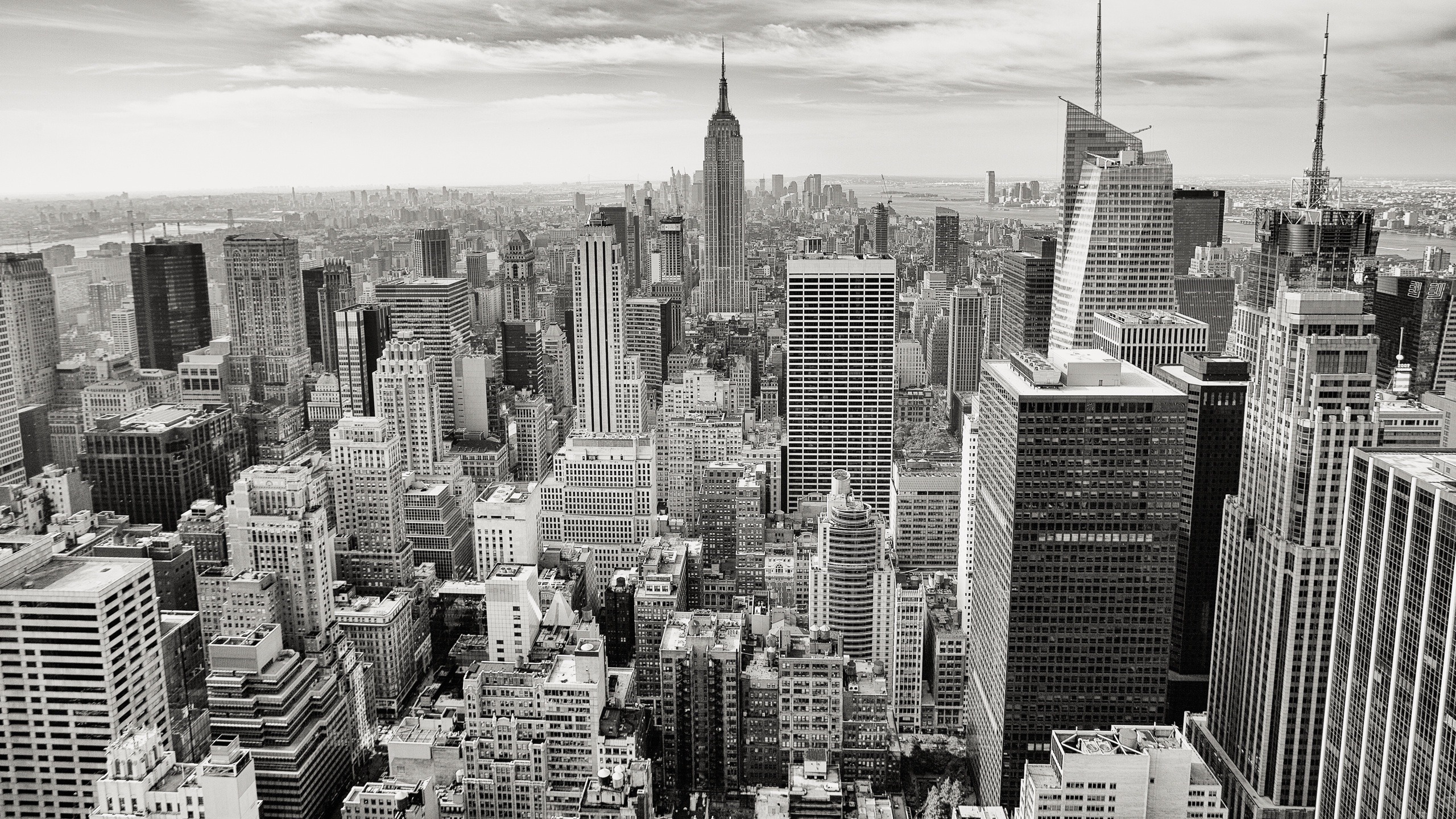
We have ended up into a transport culture nobody wants. Nobody wants to spend time in traffic jams. There is also little desire to turn cities into parking lots. People want to make cities more livable. This means making them less vehicle-centric. Fewer cars are better for me, the society and the planet. Mobility revolution starts from changing values. In welfare societies people take surviving for granted. Nothing material is intrinsically valuable for them because they have used to have food, shelter, education opportunities and health care. Thus people are increasingly looking for deeper meaning in their lives rather than aiming at owning more goods. They are moving from ownership to usership. The change from ownership to usership – in the context of mobility – is demonstrated by the fact that in Stockholm, Sweden only one in ten 18-year-olds gets a driving license. In the USA nearly one in five young adults do not have a driver’s license. In Germany multi-modality increases and the ownership of private cars declines. This trend is also identified in Helsinki, Finland. Vehicles are more often replaced by trouble-free access and good availability of mobility. In practical terms multi-modality means that there is seamless multi-modal transport system which can reduce car-dependency and its adverse consequences by supporting a shift from private cars to car-sharing and collective transport. Collective transport can be run by government or private companies. Mobility revolution is already underway. People already prefer walking because it helps taking care of health. This trend will be supported by the fact that autonomous vehicles – supposed to be launched in 2018-2022 – are sensitive. They do not take risks. This gives more power to pedestrians and cyclists. In future, railway transport will still take care of the most significant form of mobility for large masses in urban contexts. Bus services will adapt much more flexibly to citizens’ actual needs. Shared, self-driving vehicles and city bikes fulfill the more individual needs of mobility. It is notable that carsharing is projected to exceed 23 million members globally by 2024. Many people have already recognised that a bicycle is one of the most efficient urban transportation ever invented: versatile, agile, fast, and clean. City bikes as part of the multi-modal transport service have been tested with promising results in several cities. The next step is that self-driving buses will be added to the system. This will be tested in Finland soon. Autonomous vehicles without drivers do not inspire full confidence. Even if 90 percent accidents are due to human errors would you allow a self-driving car to take your child to school? In order to increase passengers´ sense of security the driver can be replaced for example by a pop-up shopkeeper selling products of the local bakery. By such integration of additional services, the concept of multimodal mobility could be enlarged. Local versions of Mobility as a Service (MaaS) have been piloted in Helsinki, Paris, Eindhoven, Gothenburg, Montpellier, Vienna, Hanover, Las Vegas, Los Angeles, Denver, Singapore, and Barcelona. MaaS integrates public transportation to other mobility services that also include private-sector operators. Journey planning mobile applications help us identify and compare different modal options for trips. Mobility revolution can be strongly supported by governmental policies. A governmental policy is an effective way to enhance comprehensive social change. For example, the governmental decision-making related to smoking has been effective in Finland since the 1970s. If smoking decreases in the current rate, it will be a rare habit in the 2040s, and in 2040 Finland will practically be a smoke-free country. Thus smooth co-operation between mobility management players, public and private transportation providers, and local authorities responsible for transportation is a core thing for developing a seamless multi-modal transport system. A deep shift towards multi-modal mobility services in society is possible when people recognise that their own, personal benefits can be combined with the altruistic ecological and social benefits. Photo: Anders Jildén, unsplash.com
Tikissä on Metropolian tutkimus-, kehittämis- ja innovaatiotoiminnan (TKI) blogi. Bloggaajat ovat ammattikorkeakoulun henkilöstöä sekä muita TKI-toiminnan asiantuntijoita. Jos haluat kirjoittaa blogiin, ota yhteyttä toimituskuntaan.
Milla Åman Kyyrö, päätoimittaja
Viestinnän asiantuntija, TKI-hankkeet ja kehittäminen
p. 050 342 0341
milla.amankyyro@metropolia.fi
Päivi Keränen
Projektipäällikkö, Muotoilu
p. 040 184 1952
paivi.keranen@metropolia.fi
Jussi Linkola
Projektisuunnittelija, Hankeviestintä- ja julkaisupalvelut
p. 040 184 2448
jussi.linkola@metropolia.fi
Toimituskunta toimittaa Tikissä-blogin sisällöt ennen julkaisua.








3AMK ammattikorkeakoulu asiantuntija Dallaten FUTU hanke hankeviestintä hankkeet hyvinvointi innovaatio innovaatio-opinnot innovaatiot Innovation johtaminen Katse tulevaisuuteen kehittäminen keksintö kestävä kehitys koulutus metropolia minno nuoret Oona-hanke opiskelijat oppiminen osaaminen osaamisen kehittäminen resilienssi service design sosiaali- ja terveysala tekoäly tki TKI-toiminta tulevaisuus tuottavuus tutkimus työelämä työhyvinvointi työllistyminen viestintä vuorovaikutus yhteiskehittäminen yrittäjyys yritystoiminta yritysyhteistyö

Ideoimme, rikastamme ja kehitämme käytäntöön uusia ratkaisuja yhteistyössä yritysten, julkisen sektorin, järjestöjen ja asukkaiden kanssa.