
Avainsana: studies
Using Open Innovation to Support Local Companies

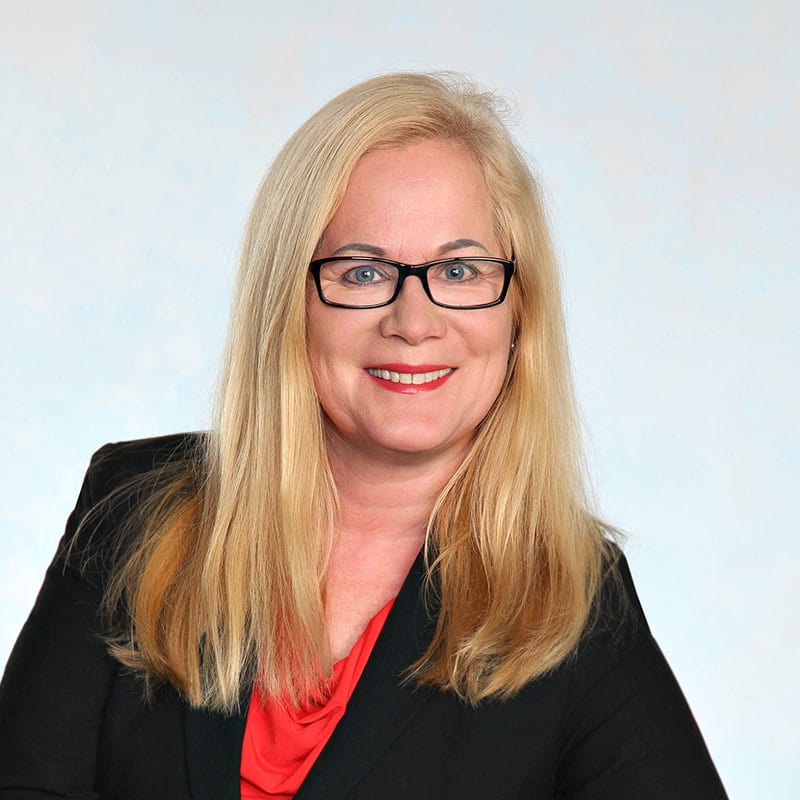
Open innovation is when a company works in conjunction with an external group by opening up their business practices and data to create new solutions to business issues. In 2021, the Helsinki Region was designated as a European Entrepreneurial Region (EER) and with this, Metropolia University of Applied Sciences took the opportunity to redesign one of their open innovation programmes to make it accessible by Small and Medium-sized Enterprises (SMEs). I came on board this project as a service design expert for two reasons, one to design the project according to service design methods, and two to provide the content expertise on the subjects - service design and the design sprint. Facilitating open innovations in various forms At Metropolia, one open innovation programme, 10 Days 100 Challenges (10D100C), has been running since 2018. The first three years of the 10 Days 100 Challenges event was designed as 10 full days with the learnings embedded in each day as the sprint progressed. The delivery of the event changed in 2020. It was transferred online, due to the Covid pandemic, and it was unfortunately canceled in 2021 at the last minute due to the same reason. The European Entrepreneurship Region designation gave the opportunity for a re-think for the 2022 version of 10 Days 100 Challenges programme. It was decided that Small and Medium-sized Enterprises would benefit from the content that was taught during the event, but we understood that many would not be able to fully participate in the full 10-day event. In order to make 10D100C programme accessible to the small and medium-sized companies, the teaching content was taken out of the event and made into an online course. By extracting the learnings, it makes them available to anyone who wants to learn about service design and improve their business development skills. This is why it has been built as a Massive Online Open Course (MOOC). Creating a course everyone can access A MOOC is a type of course that is created especially to be accessed by anyone who wishes to take it. That is the Massive and the Open part. Inevitably, to make it accessible to as many people as possible, it is also Online. In this course, we have made it accessible at any time, meaning that there are no start dates or end dates. Participants do it at their own pace, starting and ending when they want. This type of course also requires the participant to be persistent and to finish under their own direction. This can be hard for some, but perseverance pays off with a new understanding of how to tackle business problems in a different way. The development of the fully accessible course The first part of creating this course was interviewing the leaders of SMEs. We focused primarily on companies with 5-20 employees but also interviewed slightly larger company representatives and other stakeholders. This research was to find out how much people know about service design and the design sprint methodology. After the interviews, the first version of the course was created. It was from this Alpha version that we got internal feedback based on the content. From the feedback, there were some additions made to the content and further explanations made where it was necessary. The Beta version of the content was tested in conjunction with the 2022 10 Days 100 Challenges event that took place May 30th to June 7th. The course was set as a prerequisite to attend the event. To make sure that everyone attending had a similar foundation of understanding in these methods. The final version has been further developed on the feedback of the students who participated in the event. It has also been designed on the University of Helsinki MOOC Center’s platform. It will be officially launched and be open for anyone to take in April 2023. Companies participating in the course This course has been developed in a way that it is text-based, self-directed, and self-paced. This means that it there are no videos and one reason for this is that it is easy to update and respond to feedback. It is self-directed and self-paced because there is a deep understanding that those who are involved in small businesses or are entrepreneurs are very busy people. The local small and medium-sized companies are also the least likely to have the time and money to take traditional professional development or human resources (HR) departments, which would organise training. Author Pamela Spokes works as a Service Designer in Metropolia’s RDI team. Originally from Canada, Pamela has years of experience in university admin focusing on international recruitment, marketing, and the international student/staff experience. With a Bachelor’s from Canada, a Master’s degree from Sweden, an MBA in Service Innovation & Design from Laurea, and her AmO from Haaga-Helia, she is interested in purposefully designed experiences that are centred around the user. Don’t be surprised if she knocks on your door to talk about learning co-creation methods through intensive learning experiences.Pamela Spokes
Student recruitment online – How to develop long-term success in uncertainty?

What is the student recruitment’s insight in the age of ‘the new normal’? According to the Studyportals COVID19 Impact Report, the recruitment of future students has moved online. The survey showed that digital promotion (82%) online counseling and support (74%) and virtual events (60%) are taken up by most of the education institutions. In this blog post, we will discuss how to develop long-term student recruitment success online and foster engagement, in addition to ethical discussion. Shifting to online brings long-term success We see the post-COVID19 world shifting so that more and more communication and marketing between the university and the prospective students will be online. Thus, the role of student recruitment agents needs to change so that they will provide us more digital recruitment options like webinars and virtual fairs, and the university provides e.g. virtual campus tours. The same trend is predicted by Studyportals survey, Studyportals COVID19 Impact Report, stating less money to be available for travel and staff, and more budgets available for digital recruitment tools. The good news is that the return on investment in digital marketing is easier to measure compared to traditional methods like fairs. Perhaps the world has changed forever? We believe that operating on a different landscape will change our ways to interact with prospective students. This requires new approaches to brand visibility and engagement between educational agents and providers. There will be an increasingly significant role in digital marketing to develop brand visibility and engagement. This might include any or all of the following: content marketing and storytelling via social media use of student ambassadors newsletters webinars virtual open days and study fairs Not only digital marketing, but also teaching and learning is shifting online. The Covid-19 pandemic has accelerated the need to transform curricula of higher education institutions. The pandemic is impacting student preferences towards online possibilities. International students play an important role in today's universities, as they are a significant source of diversity and revenue. Therefore, in the future we need to be ready to offer more and more education online. Students’ expectations for instructional quality and a better technical experience online will rise throughout the year and many schools and universities will rely heavily on online delivery for much of 2020 (2). How to foster engagement - student experiences and campus tours in the age of social distancing In international student recruitment, online does not mean impersonal. There are several ways to remotely connect with students, their parents and educational partners without losing the human touch. Along with the prospective students, the study counselors and partner agents need to experience the campus. Thus, the role of digital material on campuses and study experiences have gained a significant role in marketing (1). Institutions need to think about the ways to leverage mobile self-guided tours to fill information gaps and provide an interactive campus experience that can be explored at home or on campus while maintaining social distance. In addition, with the help of the webinars, the prospective students can watch a presentation or a demo lecture, or simply have their questions answered live, feeling connected from the comfort and safety of their home. At Metropolia University of Applied Sciences, for the past three years, we have already been organizing webinars together with our educational partners with positive experiences. This autumn, we will be hosting various both undergraduate and graduate focused webinars together with our educational agents as well as participating in webinars organized by third parties. The benefit of virtual sessions is that it enables the university to chat in real-time with students who are interested in studying abroad. We have already participated in two marketing webinars in Indian market, and as a result we can already conclude that there is an ever growing interest towards Finland and Finnish higher education. We were happy to showcase our institution among some of the best universities in the world, an important milestone in university branding as such. We are eagerly looking forward to seeing how effectively this will generate leads and prospective students. Emphasized role of ethics in partnerships Due to the shift to online, the role of ethics is becoming even more important than before - this applies to the international student recruitment, collaboration between the educational agent and provider. The importance of ethics and human rights is highlighted in the transnational education roadmap by Finnish National Agency for Education (5). One outstanding guideline to benchmark and follow is the Australian Agent Code Of Ethics. The Australian education and training sector expects education agents to adhere to seven ethical principles: Integrity – being straightforward and honest in all professional and business dealings Objectivity – not allowing professional judgment to be compromised by bias or conflict of interest Professional competence and due care – maintaining professional knowledge and professional service, and acting diligently Transparency – declaring conflicts of interest to all clients, especially when service fees are charged to both the education provider and the prospective student Confidentiality – respecting and preserving the confidentiality of personal information acquired and not releasing such information to third parties without proper authority Professional behaviour – acting in accordance with relevant laws and regulations and dealing with clients competently, diligently and fairly Professionalism and purpose - acting in a manner that will serve the interests of clients and the wider society even at the expense of self-interest; recognising that dedication to these principles is the means by which the profession can earn the trust and confidence of stakeholder groups (4). In addition, there is an increasing need to reach out to high school counselors. International schools offering K-12 English-medium instruction represent an increasingly important source of high-caliber students to universities around the world. An ISC Research report, “Higher Education Report: Pathways from K-12 English-medium International Schools to University 2018,” states that a key to recruiting success is strong relationships between universities and international school college counsellors (3). Due to COVID19, many campus visits and college fairs have been cancelled. However, there is a need to communicate effectively and share the best possible and accurate information online with educational agents and high school counselors. With limited chances to meet face-to-face with the agents, education providers need to trust that agents adhere to high standards of professionalism and have accountability for their business partners. At Metropolia UAS, we have strengthened our counselor cooperation and networks through our agent contacts in our target markets. Comprehensive training of the educational agents and high school counselors is the basics of ethical, efficient and successful student recruitment. We have put a considerable amount of our personal work in ensuring that our educational agents are top professionals in their field, highly committed to assisting applicants in finding a suitable educational path, with a thorough knowledge of the target market as well as of Finland and its higher education. They are experts on pre-screening the prospective students with motivation, sufficient ability and resources to study abroad. Naturally, our Head of Schools and Admissions Services play a significant role as well, and we are continuously working together to develop further our internal processes to meet our prospective students’ and educational partners’ needs for the best possible outcome. Read also our previous blog post about Building reliable agent relationships in international student recruitment. References: Studyportals blog Digital Marketing and Recruitment for Universities during COVID-19 ICEF Monitor 6.5.2020 ICEF Monitor 5.2.2019 Australian government: Australian International Education and Training - Agent Code of Ethics.pdf OPH: Koulutusviennin tiekartta 2020-2023 Authors Aija Ahokas, Manager of Education Export / Senior Lecturer (MEd, RN, Specialist Qualification in Product Design). Ms Ahokas has many years of working experience abroad in the Middle East, in Saudi Arabia and United Arab Emirates. Her core competencies are in different international activities, networks and partnerships. In addition, her competencies include teaching and tutoring multicultural students especially in Nursing. Transnational education is close to her heart. Sirpa Rutanen, Communications & Marketing Specialist (MA, Specialist Qualification in Product Design). Ms Rutanen is a strong professional in International Marketing and Communications, fluent in 7 Languages. Her core areas of expertise are International Marketing, Branding, Communication and Public Relations. Having lived in France and Germany, with relatives in four different continents, and worked over 10 years in International Sales for a major airline, her passion is in Intercultural Competence and Communication. Together Ms Ahokas and Ms Rutanen have worked for over six years to develop and promote Metropolia and its international student recruitment and other educational services.
Tikissä on Metropolian tutkimus-, kehittämis- ja innovaatiotoiminnan (TKI) blogi. Bloggaajat ovat ammattikorkeakoulun henkilöstöä sekä muita TKI-toiminnan asiantuntijoita. Jos haluat kirjoittaa blogiin, ota yhteyttä toimituskuntaan.
Milla Åman Kyyrö, päätoimittaja
Viestinnän asiantuntija, TKI-hankkeet ja kehittäminen
p. 050 342 0341
milla.amankyyro@metropolia.fi
Päivi Keränen
Projektipäällikkö, Muotoilu
p. 040 184 1952
paivi.keranen@metropolia.fi
Jussi Linkola
Projektisuunnittelija, Hankeviestintä- ja julkaisupalvelut
p. 040 184 2448
jussi.linkola@metropolia.fi
Toimituskunta toimittaa Tikissä-blogin sisällöt ennen julkaisua.












3AMK ammattikorkeakoulu asiantuntija Dallaten FUTU hanke hankeviestintä hankkeet hyvinvointi innovaatio innovaatio-opinnot innovaatiot Innovation johtaminen Katse tulevaisuuteen kehittäminen keksintö kestävä kehitys koulutus metropolia minno nuoret Oona-hanke opiskelijat oppiminen osaaminen osaamisen kehittäminen resilienssi service design sosiaali- ja terveysala tekoäly tki TKI-toiminta tulevaisuus tuottavuus tutkimus työelämä työhyvinvointi työllistyminen viestintä vuorovaikutus yhteiskehittäminen yrittäjyys yritystoiminta yritysyhteistyö

Ideoimme, rikastamme ja kehitämme käytäntöön uusia ratkaisuja yhteistyössä yritysten, julkisen sektorin, järjestöjen ja asukkaiden kanssa.