
Avainsana: international collaboration
Advancing medical and health technologies – collaboration between Singapore Institute of Technology and Metropolia University of Applied Sciences Finland

Already for the second time a workshop on the theme of advancing medical and health technologies in collaboration between Singapore Institute of Technology (SIT) and Metropolia University of Applied Sciences was organized in online-hybrid mode in Singapore on the 16th of August 2023. The workshop was opened by SIT Vice President Associate Professor Susanna Leong Su Jan who emphasized the importance of international collaboration in research and development in higher education institutions. The Ambassador of Finland in Singapore Antti Vänskä and Counselor for Education and Science Anna Korpi brought up similarities, strengths and challenges in Singaporean and Finnish societies, higher education and industry as well as the meaning and role of health technology in modern societies. Overall, the focus of the workshop was on the role of technology in healthcare education and applied research in education and industry. Speakers of the seminar comprised Singaporean and Finnish public and private sector companies, health care organizations and higher education institutions. Interesting speeches about health care innovations were delivered by Dr Mabel Yen Ngoc Nguyen, Co-Founder of Elocare Pte Ltd , Singapore, who spoke about Elocare’s mobile solution to manage menopause affecting women particularly in mid-life and Dr Darshan Kumar, Customer Success Manager, Aiforia (Finland) who shared about Aifora’s AI-based solutions for pathology image analysis. We also learned about modifying health through gut microbiome by Kaiyee Toh, Head, Laboratory and Research, AMILI, Singapore. The workshop also featured talks by Associate Professor Alfred Kow, Department of Surgery, and Dr Yujia Gao, Assistant Group Chief Technology Officer, both from the National University Hospital Singapore, who spoke about the need for liberalizing data flow by transforming data silos into a highly networked ecosystem and gave several use case scenarios on the use of AR/VR/AI for medical student education and staff training, which ultimately benefits patient care. Finnish health technology company representants CEO Jouni Ihme from Innomentarium and Corporate Key Account Executive Ossi Koskinen from Siemens Heatlhineers highlighted the importance of health technology companies working together with higher education institutions’ (HEI) students, professors and researchers. Citing CEO Jouni Ihme, “benefits of this kind of collaboration for health technology companies comprise having more resources such as HEI’s student’s and professors’ work participation for their research and development, access to HEI’s laboratory and other facilities needed for research and development as well as the scientific competence of HEIs for their use”. The benefits of collaboration for the universities and their students comprise access to future health technology and research, possibilities to widen networks via health technology companies and advanced funding possibilities with health technology companies. For the students, collaboration with health technology companies give the possibility to study solving real life problems which motivates studying, getting familiar with health technology industries, possibility for internships and even workplaces after graduation. Singapore and Finland are located far apart on the globe. However, with our previous collaboration since 2019, we have vastly similar outlook in vision and the important role of technology applied to the society. Principal Lecturer Eija Metsälä from Metropolia has previously stated, the text in the Finnish Act of the Universities of Applied Sciences about the pivotal role of Universities of Applied Sciences (932/2014) ‘’ to provide higher education for professional expert tasks and duties based on the requirements of the world of work and its development carry out applied research, development and innovation activities and artistic activities that serve education in universities of applied sciences, promote industry, business and regional development and regenerate the industrial structure of the region.’’ This is equally relevant to the Singaporean and global context. Authors Principal Lecturer, Docent Eija Metsälä, Metropolia University of Applied Sciences Associate Professor Frank Guan, Singapore Institute of Technology Assistant Professor Cheryl Pei Ling Lian, Singapore Institute of Technology Associate Professor Cheow Wean Sin, Singapore Institute of Technology
Innovation in a pandemic world and beyond
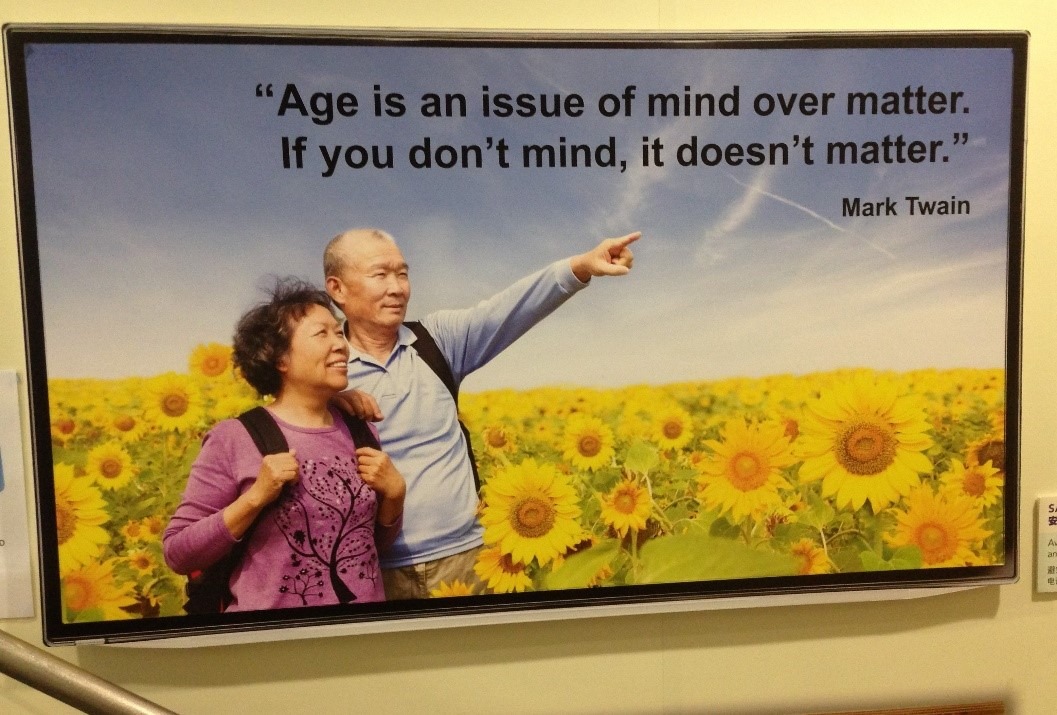
An online article (2020) from The Strait Times, ‘Going online for physical therapy’, offers a timely reminder why like invention, necessity is also the mother of innovation. Needs and necessity will drive innovation, and innovation will more likely become a culture and a way of life, if it is driven by a constant need to innovate, whether for survival, for profit, or other reasons. What drives innovation? How to make innovation part of an organisation? While we can spend time debating on these questions, barebones answer would often be much simpler; it is when we have no other better or viable choices. Innovation may be driven by many reasons, but necessity will always be one major driver. Whether a pandemic that leaves us little room to move, a change in policy and government intervention in the market, a new social norm that displace past entrenched behaviours, etc., all these may just mean one thing, you need to innovate to overcome all these new challenges. In this blogpost, we will discuss the need for innovations in elderly care, and describe the collaboration in innovation studies between two higher education institutions; Ngee Ann Polytechnic in Singapore and Metropolia University of Applied Sciences. Definition of innovation and innovation competence According to Cambridge Academic Content Dictionary, innovation is a new idea or method, or the use of new ideas and methods. As evidenced by research, innovations are important in all professional fields, including health care and social services. Collaboration between higher education institutions and working life promotes innovations, and students facing real-world problems develop their innovation competences. (Hero & Lindfors 2019) According to Hero (2019), there are factors related to individual innovation competence. These factors are for example self-esteem and self-management motivation and engagement flexibility and responsibility creative thinking and social skills collaboration and communication skills development project management skills such as leadership skills one’s own and other’s discipline content knowledge concretisation and implementation planning skills Two ageing societies - Finland and Singapore Both Finland and Singapore are ageing societies. According to Statistics Finland (2021), the percentage of people aged 65 years and over in Finland was in 2000: 13,5 % in 2018: 19,2% in 2019: 19,6 % . The percentage of people aged over 85 years in 2019 was 2,7 %. In Finland, at the end of 2019, there were 874,314 persons aged at least 70, and the number has grown by 100,000 in three years (Findicator 2020). In Singapore, the proportion of people aged 65 years and over was in 2008: 8,7 % in 2018: 13,7 %. There are fewer working-aged people to support residents over 65 years (Singapore Department of Statistics 2021). By 2030, about one in five residents would be 65 years or older. In the near future, the operating environment for health care and social services will change substantially. Due to an ageing population with high longevity and a shortage of skilled healthcare staff, many countries have to innovate. Dementia and other degenerative diseases will be among the most prevalent diseases affecting the future world population as people live longer. Changes in age structure increase the emphasis on individual service needs. Therefore, innovations are important, as society needs smart solutions and new kinds of processes to develop, especially related to digitalization and technological innovations. Smart solutions and innovations to reduce the risk of infections The ongoing COVID-19 pandemic is upon us, whether we like it or not. It has permanently changed the world, we live in and how we live. The need to isolate and avoid close contact is alien to healthcare and the sacrosanct relationship with patients, which included touch and proximity. The relentless pandemic leaves healthcare providers little choice. The past has been fractured and our old ways are no longer viable; we need to reset to a new normal, change and adapt to the new landscape. Bed that can shift the patient around within itself, intelligent mattress that can adjust its cushioning and shift impact points together with patients’ position, and clothing that can sense prolonged pressure on a particular spot and alert care-givers; these will improve care of bedridden patients and reduce the chance of pressure sores and ulcers. Smart equipment will mitigate the human manpower crunch and also reduce need and frequency of direct human-to-human contact and exposure, reducing the risk posed by infectious diseases. We already have diapers that can sense moisture or evenly detect urine and faeces directly. Some utilise bulky reusable set-up while others have small microchips implanted directly in the diapers. These micro-devices can push signals to handphones, computers, etc., to alert care-giver to the need to replace the soiled diapers. (Chu 2020) In post COVID-19 world care given remotely? Post COVID-19, we are going to continue to see not just simply more provision of such services, but also improving the quality of the care provided remotely. Technological advances in the years to come will sustain this drive. The recent positive news on the vaccine front will not bring back the cherished past, even if it heralds the beginning of the end of this pandemic. Still, it will buy us time to plan and adapt for the future. Innovation will be crucial to how well we fare in this post-pandemic future. Starting with the remote delivery of services like physiotherapy in Singapore, we can see how the pandemic accelerates the trend of technology enabled, remotely-provided services. Imagine a patient in the comfort of his or her home, wearing an VR goggles and following a rehabilitation program guided by an AI robot/software. He or she will also be wearing a special smart suit embedded with spatial sensors during the exercise. Their movements will be monitored and viewed by a physiotherapist at the other end, as well as captured by video cameras, which will feed the videos for analysis by computer for real time analysis and decision, like whether the steps or exercise is correctly performed. The sensors in the suit will also track movements and generate data for analysis. You might even wonder whether one would still need a person to sit in front of the screen to monitor the patient. That role could simply be taken over by an AI robot, computer or software. This might be sooner than you think. Innovation studies at Metropolia and Ngee Ann Polytechnic Based on the report of Bloomberg Innovation Index 2019, Finland was #3 in innovation. In addition, Metropolia focuses on the promotion and support of the development of the Helsinki Metropolitan Area and the society though innovation solutions (Metropolia 2021). In Metropolia, all the undergraduate degree students take part in innovation studies, and innovation is in the heart of Metropolia´s strategy. Every year, Metropolia students complete over 1000 innovation projects. Most of them are implemented in multidisciplinary students groups. Ngee Ann Polytechnic seeks to support and develop an innovative mindset amongst the students and foster an entrepreneur-friendly environment through a host of initiatives and programs. For example, students can take part in cross-disciplinary studies organized by NP’s Department of Interdisciplinary Studies. Fresh NP students are required to enroll in the module ‘Innovation made possible’ while ‘Project ID: connecting the dots’ are for final year students. A campus ecosystem also exists for experimenting new ideas and models, and supporting students to develop and set up their business start-ups. The Global Entrepreneurial Internship Program enables enterprising students to experience the realities of start-up life at leading innovation hubs and the school has own innovation incubator, ‘The Sandbox’, which is a one-stop center offering support to budding innovators and entrepreneurs since 2015. MANPIT -project focuses on innovations in elderly care One example of international collaboration between Ngee Ann Polytechnic and Metropolia is the project called “MANPIT”. The aim of this project is to share the best practices in innovation studies between the two institutions. This 3,5 year project is financed by EDUFI Asia-programme. Collaboration between institutions opens up new dimensions for students. Students undertake the same project theme as their counterparts; they need to solve the same problem(s) with a different set of constraints. Currently Ngee Ann Polytechnic students are working with HOVI Care (Singapore) as the industry partner on the MANPIT project on care for patients with dementia. A patient with dementia might have the same underlying pathologies and cognitive impairments in both Finland and Singapore, but the care processes may be quite different due to different local conditions. In land scarce urban Singapore, nature therapies involving the vast greens and animals might not be as accessible or available compared to Finland, so the approaches will have to adapt to the situation. A real hiking trip in Finland might be feasible, but a short workout in the living room might be more often the case in Singapore. On a more micro-level, patients’ functional status, educational level, availability of care-givers at home, etc., can influence the care process and indirectly dictate how to innovate and design the solutions. These create an opportunity for the students to understand how different factors come into a dynamic inter-play to drive innovation and solutions. Need for change This pandemic for all the evils it has brought upon us does impose upon us a need to change which we cannot refuse. Thus, we have to change and adapt, faster and more extensive. Innovation can be our saviour and the light that shines amidst this darkness and the future beyond. References Bloomberg Innovation Index, 2019. Bloomberg Innovation Index, 2019 (opens on timesnownews.com) Cambridge Dictionary (read 17.02.2021) Findicator 2020 Hero, L-M 2019. Learning to develop innovations. Individual competence, multidisciplinary activity systems and student experience (Doctoral dissertation). Annales universitatis Turkuensis, 475, Faculty of Education, University of Turku, Finland. Hero, L-M & Lindfors, E 2019. Students’ learning experience in a multidisciplinary innovation project. Education + Training, Vol. 61 Issue: 4, pp.500-522. Kaur A, 2020. Going online for physical therapy. The Straits Times. Metropolia 2021 Chu, J 2020. Low-cost “smart” diaper can notify caregiver when it´s wet. MIT News Office. Statistics Finland Singapore Department of Statistics 2021 Authors Aija Ahokas, Manager of Education Export / Senior Lecturer (MEd, RN, Specialist Qualification in Product Design). Ms Ahokas has many years of working experience abroad. Her core competencies are in different international activities, networks and partnerships, and international project management. Ms Ahokas is the project manager of MANPIT-project. Transnational education is close to her heart. Hannele Hokkanen, Senior Lecturer (MSc (health care), RN, Specialist Qualification in Product Design). Ms Hokkanen teaches gerontological nursing and she is the coordinator of innovation projects in health care. Hong-Yong TAN, Senior Manager for Timetabling / Lecturer (MBBS). Dr Tan has previously worked at different public hospitals and healthcare organisations in Singapore, in various clinical and administrative roles. He is currently a lecturer with the School of Health Sciences in Ngee Ann Polytechnic where he teaches at both the diploma and post-diploma levels. He is always curious and eager to explore and learn, traits that he hopes to rub off on his students.
Tikissä on Metropolian tutkimus-, kehittämis- ja innovaatiotoiminnan (TKI) blogi. Bloggaajat ovat ammattikorkeakoulun henkilöstöä sekä muita TKI-toiminnan asiantuntijoita. Jos haluat kirjoittaa blogiin, ota yhteyttä toimituskuntaan.
Milla Åman Kyyrö, päätoimittaja
Viestinnän asiantuntija, TKI-hankkeet ja kehittäminen
p. 050 342 0341
milla.amankyyro@metropolia.fi
Päivi Keränen
Projektipäällikkö, Muotoilu
p. 040 184 1952
paivi.keranen@metropolia.fi
Jussi Linkola
Projektisuunnittelija, Hankeviestintä- ja julkaisupalvelut
p. 040 184 2448
jussi.linkola@metropolia.fi
Toimituskunta toimittaa Tikissä-blogin sisällöt ennen julkaisua.









3AMK ammattikorkeakoulu asiantuntija Dallaten FUTU hanke hankeviestintä hankkeet hyvinvointi innovaatio innovaatio-opinnot innovaatiot Innovation johtaminen Katse tulevaisuuteen kehittäminen keksintö kestävä kehitys koulutus metropolia minno nuoret Oona-hanke opiskelijat oppiminen osaaminen osaamisen kehittäminen resilienssi service design sosiaali- ja terveysala tekoäly tki TKI-toiminta tulevaisuus tuottavuus tutkimus työelämä työhyvinvointi työllistyminen viestintä vuorovaikutus yhteiskehittäminen yrittäjyys yritystoiminta yritysyhteistyö

Ideoimme, rikastamme ja kehitämme käytäntöön uusia ratkaisuja yhteistyössä yritysten, julkisen sektorin, järjestöjen ja asukkaiden kanssa.