
Avainsana: international
Advancing medical and health technologies – collaboration between Singapore Institute of Technology and Metropolia University of Applied Sciences Finland

Already for the second time a workshop on the theme of advancing medical and health technologies in collaboration between Singapore Institute of Technology (SIT) and Metropolia University of Applied Sciences was organized in online-hybrid mode in Singapore on the 16th of August 2023. The workshop was opened by SIT Vice President Associate Professor Susanna Leong Su Jan who emphasized the importance of international collaboration in research and development in higher education institutions. The Ambassador of Finland in Singapore Antti Vänskä and Counselor for Education and Science Anna Korpi brought up similarities, strengths and challenges in Singaporean and Finnish societies, higher education and industry as well as the meaning and role of health technology in modern societies. Overall, the focus of the workshop was on the role of technology in healthcare education and applied research in education and industry. Speakers of the seminar comprised Singaporean and Finnish public and private sector companies, health care organizations and higher education institutions. Interesting speeches about health care innovations were delivered by Dr Mabel Yen Ngoc Nguyen, Co-Founder of Elocare Pte Ltd , Singapore, who spoke about Elocare’s mobile solution to manage menopause affecting women particularly in mid-life and Dr Darshan Kumar, Customer Success Manager, Aiforia (Finland) who shared about Aifora’s AI-based solutions for pathology image analysis. We also learned about modifying health through gut microbiome by Kaiyee Toh, Head, Laboratory and Research, AMILI, Singapore. The workshop also featured talks by Associate Professor Alfred Kow, Department of Surgery, and Dr Yujia Gao, Assistant Group Chief Technology Officer, both from the National University Hospital Singapore, who spoke about the need for liberalizing data flow by transforming data silos into a highly networked ecosystem and gave several use case scenarios on the use of AR/VR/AI for medical student education and staff training, which ultimately benefits patient care. Finnish health technology company representants CEO Jouni Ihme from Innomentarium and Corporate Key Account Executive Ossi Koskinen from Siemens Heatlhineers highlighted the importance of health technology companies working together with higher education institutions’ (HEI) students, professors and researchers. Citing CEO Jouni Ihme, “benefits of this kind of collaboration for health technology companies comprise having more resources such as HEI’s student’s and professors’ work participation for their research and development, access to HEI’s laboratory and other facilities needed for research and development as well as the scientific competence of HEIs for their use”. The benefits of collaboration for the universities and their students comprise access to future health technology and research, possibilities to widen networks via health technology companies and advanced funding possibilities with health technology companies. For the students, collaboration with health technology companies give the possibility to study solving real life problems which motivates studying, getting familiar with health technology industries, possibility for internships and even workplaces after graduation. Singapore and Finland are located far apart on the globe. However, with our previous collaboration since 2019, we have vastly similar outlook in vision and the important role of technology applied to the society. Principal Lecturer Eija Metsälä from Metropolia has previously stated, the text in the Finnish Act of the Universities of Applied Sciences about the pivotal role of Universities of Applied Sciences (932/2014) ‘’ to provide higher education for professional expert tasks and duties based on the requirements of the world of work and its development carry out applied research, development and innovation activities and artistic activities that serve education in universities of applied sciences, promote industry, business and regional development and regenerate the industrial structure of the region.’’ This is equally relevant to the Singaporean and global context. Authors Principal Lecturer, Docent Eija Metsälä, Metropolia University of Applied Sciences Associate Professor Frank Guan, Singapore Institute of Technology Assistant Professor Cheryl Pei Ling Lian, Singapore Institute of Technology Associate Professor Cheow Wean Sin, Singapore Institute of Technology
Student recruitment online – How to develop long-term success in uncertainty?

What is the student recruitment’s insight in the age of ‘the new normal’? According to the Studyportals COVID19 Impact Report, the recruitment of future students has moved online. The survey showed that digital promotion (82%) online counseling and support (74%) and virtual events (60%) are taken up by most of the education institutions. In this blog post, we will discuss how to develop long-term student recruitment success online and foster engagement, in addition to ethical discussion. Shifting to online brings long-term success We see the post-COVID19 world shifting so that more and more communication and marketing between the university and the prospective students will be online. Thus, the role of student recruitment agents needs to change so that they will provide us more digital recruitment options like webinars and virtual fairs, and the university provides e.g. virtual campus tours. The same trend is predicted by Studyportals survey, Studyportals COVID19 Impact Report, stating less money to be available for travel and staff, and more budgets available for digital recruitment tools. The good news is that the return on investment in digital marketing is easier to measure compared to traditional methods like fairs. Perhaps the world has changed forever? We believe that operating on a different landscape will change our ways to interact with prospective students. This requires new approaches to brand visibility and engagement between educational agents and providers. There will be an increasingly significant role in digital marketing to develop brand visibility and engagement. This might include any or all of the following: content marketing and storytelling via social media use of student ambassadors newsletters webinars virtual open days and study fairs Not only digital marketing, but also teaching and learning is shifting online. The Covid-19 pandemic has accelerated the need to transform curricula of higher education institutions. The pandemic is impacting student preferences towards online possibilities. International students play an important role in today's universities, as they are a significant source of diversity and revenue. Therefore, in the future we need to be ready to offer more and more education online. Students’ expectations for instructional quality and a better technical experience online will rise throughout the year and many schools and universities will rely heavily on online delivery for much of 2020 (2). How to foster engagement - student experiences and campus tours in the age of social distancing In international student recruitment, online does not mean impersonal. There are several ways to remotely connect with students, their parents and educational partners without losing the human touch. Along with the prospective students, the study counselors and partner agents need to experience the campus. Thus, the role of digital material on campuses and study experiences have gained a significant role in marketing (1). Institutions need to think about the ways to leverage mobile self-guided tours to fill information gaps and provide an interactive campus experience that can be explored at home or on campus while maintaining social distance. In addition, with the help of the webinars, the prospective students can watch a presentation or a demo lecture, or simply have their questions answered live, feeling connected from the comfort and safety of their home. At Metropolia University of Applied Sciences, for the past three years, we have already been organizing webinars together with our educational partners with positive experiences. This autumn, we will be hosting various both undergraduate and graduate focused webinars together with our educational agents as well as participating in webinars organized by third parties. The benefit of virtual sessions is that it enables the university to chat in real-time with students who are interested in studying abroad. We have already participated in two marketing webinars in Indian market, and as a result we can already conclude that there is an ever growing interest towards Finland and Finnish higher education. We were happy to showcase our institution among some of the best universities in the world, an important milestone in university branding as such. We are eagerly looking forward to seeing how effectively this will generate leads and prospective students. Emphasized role of ethics in partnerships Due to the shift to online, the role of ethics is becoming even more important than before - this applies to the international student recruitment, collaboration between the educational agent and provider. The importance of ethics and human rights is highlighted in the transnational education roadmap by Finnish National Agency for Education (5). One outstanding guideline to benchmark and follow is the Australian Agent Code Of Ethics. The Australian education and training sector expects education agents to adhere to seven ethical principles: Integrity – being straightforward and honest in all professional and business dealings Objectivity – not allowing professional judgment to be compromised by bias or conflict of interest Professional competence and due care – maintaining professional knowledge and professional service, and acting diligently Transparency – declaring conflicts of interest to all clients, especially when service fees are charged to both the education provider and the prospective student Confidentiality – respecting and preserving the confidentiality of personal information acquired and not releasing such information to third parties without proper authority Professional behaviour – acting in accordance with relevant laws and regulations and dealing with clients competently, diligently and fairly Professionalism and purpose - acting in a manner that will serve the interests of clients and the wider society even at the expense of self-interest; recognising that dedication to these principles is the means by which the profession can earn the trust and confidence of stakeholder groups (4). In addition, there is an increasing need to reach out to high school counselors. International schools offering K-12 English-medium instruction represent an increasingly important source of high-caliber students to universities around the world. An ISC Research report, “Higher Education Report: Pathways from K-12 English-medium International Schools to University 2018,” states that a key to recruiting success is strong relationships between universities and international school college counsellors (3). Due to COVID19, many campus visits and college fairs have been cancelled. However, there is a need to communicate effectively and share the best possible and accurate information online with educational agents and high school counselors. With limited chances to meet face-to-face with the agents, education providers need to trust that agents adhere to high standards of professionalism and have accountability for their business partners. At Metropolia UAS, we have strengthened our counselor cooperation and networks through our agent contacts in our target markets. Comprehensive training of the educational agents and high school counselors is the basics of ethical, efficient and successful student recruitment. We have put a considerable amount of our personal work in ensuring that our educational agents are top professionals in their field, highly committed to assisting applicants in finding a suitable educational path, with a thorough knowledge of the target market as well as of Finland and its higher education. They are experts on pre-screening the prospective students with motivation, sufficient ability and resources to study abroad. Naturally, our Head of Schools and Admissions Services play a significant role as well, and we are continuously working together to develop further our internal processes to meet our prospective students’ and educational partners’ needs for the best possible outcome. Read also our previous blog post about Building reliable agent relationships in international student recruitment. References: Studyportals blog Digital Marketing and Recruitment for Universities during COVID-19 ICEF Monitor 6.5.2020 ICEF Monitor 5.2.2019 Australian government: Australian International Education and Training - Agent Code of Ethics.pdf OPH: Koulutusviennin tiekartta 2020-2023 Authors Aija Ahokas, Manager of Education Export / Senior Lecturer (MEd, RN, Specialist Qualification in Product Design). Ms Ahokas has many years of working experience abroad in the Middle East, in Saudi Arabia and United Arab Emirates. Her core competencies are in different international activities, networks and partnerships. In addition, her competencies include teaching and tutoring multicultural students especially in Nursing. Transnational education is close to her heart. Sirpa Rutanen, Communications & Marketing Specialist (MA, Specialist Qualification in Product Design). Ms Rutanen is a strong professional in International Marketing and Communications, fluent in 7 Languages. Her core areas of expertise are International Marketing, Branding, Communication and Public Relations. Having lived in France and Germany, with relatives in four different continents, and worked over 10 years in International Sales for a major airline, her passion is in Intercultural Competence and Communication. Together Ms Ahokas and Ms Rutanen have worked for over six years to develop and promote Metropolia and its international student recruitment and other educational services.
Developing reliable educational agent relationships in international student recruitment
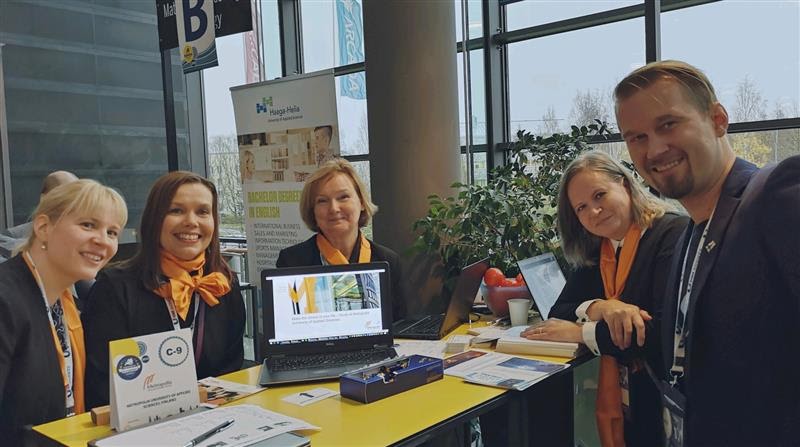
According to the questionnaire done to higher education institutions (HEI) by Opetushallitus, 80 % of Finnish higher education institutions had a strategy for recruiting international students. In these HEIs, four main focus areas were China, India, Russia and Vietnam. The main tools used in student recruitment were different webpages increased interest in using student recruitment agents student ambassadors optimizing search engines and marketing. The main challenges were considered to be e.g. insufficient resources in marketing and recruiting, in addition to understanding target countries. (Opetus- ja kulttuuriministeriö 2019) In 2018, there were in total 20.237 foreign students studying in higher education in Finland. Nearly 10 000 of them studied in universities of applied sciences, that is 6,7 % of the total amount of students. The most significant group of foreign students came from Asia (46 %), Vietnam being number one. The second biggest group came from Russia, China being number three. (1) It is difficult to estimate how many international students use the services of student recruitment agents. However, according to the international studies, agents play a significant role in the global education market. With a competent agent, universities can strengthen the recruitment process of the most suitable and motivated students for their degree programs. This collaboration between university and agent requires mutual commitment, professionalism and responsible marketing. (5) At Metropolia University of applied sciences, there are 1400 foreign degree students, covering over 100 nationalities. The percentage of foreign students was 8,64 % in 2019. Most of the non-EU/EEA students come from Vietnam, India and Nepal. In On-Demand education, the biggest groups come from India, Philippines and Vietnam. Where do our future international students come from and how can we increase the number of international students with the help of educational agents? In this blog post, we will discuss the needs and strategies to develop the international student recruitment services at Metropolia. International student market and effects of Covid-19 According to the ICEF Monitor (2), the pandemic will have a significant impact on the global economy and international educators are looking ahead to try to prepare for the rest of 2020 and into 2021. Professor Simon Marginson, the director of the Centre for Global Higher Education at the University of Oxford, predicts the market shifting so that the international student market will become “a buyer’s market” - institutions and schools competing harder for a smaller population of prospective students. Secondly, he states that there will be a greater emphasis on intra-regional mobility. Issues of proximity, health security, and affordability will sharpen a trend towards greater mobility within the region, especially so in East Asia. According to the Studyportals COVID19 Impact Report (6) the expectations for 2020 international enrolment are not promising: 83% of higher education professionals expect a decrease or large decrease of international enrolments 60% expect a drop overall. This means that international mobility is becoming increasingly uncertain. Both professionally and personally, it has been a challenging time for us all as the market dynamics are reset. Despite of the immediate impacts of the coronavirus on international student recruitment, we at Metropolia UAS have been working remotely in close cooperation both with our existing educational agents and with potential new ones. We have also new insights in mind as the education industry continues to look ahead to the post-COVID recovery. The outbreak of COVID19 certainly accelerated the plans for online education, however, we believe that for international markets one needs to clearly select the degree programmes we focus first since implementing them requires significant amount of time, money and effort. In this development our educational agents play an important role, helping us to analyse the specific market needs. We have been monitoring closely the prospective students behaviour, managed crisis communication towards our partner agents as well as applicants’ parents. Although the pandemic has made us to change our short-term plans, our focus is in the big picture and long-term goals - this means visualizing the internationalisation in the new post-COVID19 world. Goals of international student recruitment Regarding educational agents, our focus at Metropolia is in building reliable, long term partnerships that will provide us motivated students, rather than just opting for the quantity. In our partnerships, we have opted for the agents having connections and knowledge of both Finland and the market in concern. Building trustworthy relationships takes time and a lot of benchmarking through various international events and networking both face-to-face and online. Another important factor for us is to get potential applicants willing to stay and work in Finland, to boost Finland’s economy and future prospects. According to International higher education and research policy for years 2017–2025, one of the seven actions for the global development of higher education focuses on facilitating foreigners’ studying and working in Finland (4). It is estimated that the need for new labor in Finland will be around 60.000 people annually by year 2035. During the spring, our focus has been in adapting to the pandemic with the help of online facilities and in supporting our agents during this difficult phase. These uncertain times have created a lot of concern from parents’ side whether to send their young adults to study abroad or not. According to ICEF Monitor (3), parents play a significant role in decision making for studies abroad, and they are also concerned about the return on investment for graduates. In practice, this means e.g. a strong need for emphasizing Finland as a safe country with a good healthcare system, highlighting our support and guidance functions at the university for our international students, as well as ensuring that our partner agents are carefully selected, reliable partners. As a multidisciplinary university of applied sciences, we have a strong offering and expertise in the fields of ICT Electronics Nursing International Business which have a huge demand in our target markets. Furthermore, U-Multirank 2020 (7) has presented Metropolia amongst the TOP 25 performing universities globally under the category “Co-publications with industrial partners”. According to the U-Multirank 2020 report, Metropolia performs well in the Regional Engagement dimension. This ranking is beneficial for us also in regards of student recruitment. In terms of partnerships, we have started this spring collaboration with StudyNordic in the Indian market. We also work in very close collaboration with our already existing partners Edunation (Asian countries), Viope (India and China) and IIHS (Sri Lanka). Beside these existing target markets, we are also developing our agent relations to Middle East and Latin America. You can find our current educational partners listed on our website. We are happy to discuss a new potential partnership in international student recruitment. References Finnish National Agency of Education 2020. Tilastoja korkeakoulujen ulkomaalaisista tutkinto opiskelijoista vuonna 2018 (opens PDF) (24.06.2020) ICEF Monitor - Looking ahead - scenario planning and recovery forecast for international education (01.04.2020) ICEF Monitor - The crucial role of parents in international student recruitment and retention (17.04.2019) International higher education and research policy for years 2017–2025 (opens PDF). Ministry of Education and Culture, Finland 2017:11. Kansainvälisten korkeakouluopiskelijoiden maahantulo ja integroituminen sujuvaksi yhteistyöllä (aukeaa PDF). Opetus- ja kulttuuriministeriön julkaisuja 2019:31 (24.06.2020) Studyportals.com COVID19 Impact Report, April 2020 U-Multirank 2020 report (opens PDF). Authors: Aija Ahokas, Manager of Education Export / Senior Lecturer (MEd, RN, Specialist Qualification in Product Design).Ms Ahokas has many years of working experience abroad in the Middle East, in Saudi Arabia and United Arab Emirates. Her core competencies are in different international activities, networks and partnerships. In addition, her competencies include teaching and tutoring multicultural students especially in Nursing. Transnational education is close to her heart. Sirpa Rutanen, Communications & Marketing Specialist (MA, Specialist Qualification in Product Design). Ms Rutanen is a strong professional in International Marketing and Communications, fluent in 7 Languages. Her core areas of expertise are International Marketing, Branding, Communication and Public Relations. Having lived in France and Germany, with relatives in four different continents, and worked over 10 years in International Sales for a major airline, her passion is in Intercultural Competence and Communication. Together Ms Ahokas and Ms Rutanen have worked for over six years to develop and promote Metropolia and its international student recruitment and other educational services.
20th International Conference on Web Engineering ICWE’20 Successfully Completed
June 9-12, 2020 was exciting times for Aalto University, Metropolia University of Applied Sciences, Tampere University, and University of Helsinki. We jointly hosted the 20th International Conference on Web Engineering (opens ICWE’20). The conference is one of the key events for the Web Engineering community, and this year it included one day of workshops, tutorials, and PhD symposium, followed by three days of the main event. When we for the first time promoted the event in Daejeon, South Korea in June 2019, the world was a very different place. We were worried about things such as venue (downtown, easily accessible, with nice places to visit nearby), getting to Finland (Finnair has a great network for entering Europe from various places) and social program (Helsinki has great restaurants and an option to go to a sauna by the seaside, in downtown). However, during the spring things took a different turn, and we basically had to abandon all the plans virtually overnight, leaving us two options, either to postpone the event or to go completely online. We decided to go for the latter -- what would have been more natural for a community of web engineering researchers and practitioners? This meant that the website became the portal of just about everything related to the conference, including links to live sessions, video presentations, slides, Slack channels, and so on. Despite our worries while organising things, it turned out that indeed it is feasible to organize an international conference completely online. Here’s a couple of ideas that we adopted that worked well. Staying focused online is harder than staying focused when someone is physically present and presenting. To allow the participants to familiarize with the topics, we collected video presentations of the accepted papers and put them online well before the event. To further focus on the essentials when online, we changed the format of the sessions. Usually, ICWE has had 1.5 hour sessions, with three 30 min presentations, consisting of 20-25 min presentation and 5-10 min questions. We shortened the sessions to 60 min, and the presentations to 20 min. Since full videos of presentations were available for viewing beforehand, the format of the presentation was 5 min for recap by the authors(s), and 15 min of interaction, questions, comments, and so on. This worked surprisingly well, and, given that communication is slower online than in in-premise situations, provided a nice opportunity to interact with the presenters. Keynotes were streamed live, to maintain excitement throughout the presentation. The three keynotes, presented by David Bryant (Fellow in Emerging Technologies, Mozilla), Prof. Dr. Olaf Zimmermann (University of Applied Sciences of Eastern Switzerland) and Jaakko Lempinen (Head of AI, YLE) all delivered number of experiences as well as inspired a lively discussion afterwards. Every session in the conference had a Slack channel, where the topics related to that session could be discussed. Many session chairs used the channel to discuss practicalities with the presenters, and the audience used that to raise questions. This definitely would work on a physical conference, too. While the event did not require any physical traveling, this is not to say that it was an easy four-day activity. Instead, the event was intense, and it was clearly possible to see the intensity of people, at least when they had their camera on. Having the event completely online also meant taking into account details such as the time zones while composing the program, which added a layer of complexity in the planning of the event. Goodbye all you ICWE’20 delegates, and thanks to those of you who helped us to organize the event. It was great to have you all in Finland, even if only remotely. Texts: Tommi Mikkonen and Niko Mäkitalo, University of Helsinki, Kari Salo, Metropolia; Kari Systä Tampere University, Markku Laine, Aalto University. -- This blog post is not editorial content of Tikissä.
Tikissä on Metropolian tutkimus-, kehittämis- ja innovaatiotoiminnan (TKI) blogi. Bloggaajat ovat ammattikorkeakoulun henkilöstöä sekä muita TKI-toiminnan asiantuntijoita. Jos haluat kirjoittaa blogiin, ota yhteyttä toimituskuntaan.
Milla Åman Kyyrö, päätoimittaja
Viestinnän asiantuntija, TKI-hankkeet ja kehittäminen
p. 050 342 0341
milla.amankyyro@metropolia.fi
Päivi Keränen
Projektipäällikkö, Muotoilu
p. 040 184 1952
paivi.keranen@metropolia.fi
Jussi Linkola
Projektisuunnittelija, Hankeviestintä- ja julkaisupalvelut
p. 040 184 2448
jussi.linkola@metropolia.fi
Toimituskunta toimittaa Tikissä-blogin sisällöt ennen julkaisua.











3AMK ammattikorkeakoulu asiantuntija Dallaten FUTU hanke hankeviestintä hankkeet hyvinvointi innovaatio innovaatio-opinnot innovaatiot Innovation johtaminen Katse tulevaisuuteen kehittäminen keksintö kestävä kehitys koulutus metropolia minno nuoret Oona-hanke opiskelijat oppiminen osaaminen osaamisen kehittäminen resilienssi service design sosiaali- ja terveysala tekoäly tki TKI-toiminta tulevaisuus tuottavuus tutkimus työelämä työhyvinvointi työllistyminen viestintä vuorovaikutus yhteiskehittäminen yrittäjyys yritystoiminta yritysyhteistyö

Ideoimme, rikastamme ja kehitämme käytäntöön uusia ratkaisuja yhteistyössä yritysten, julkisen sektorin, järjestöjen ja asukkaiden kanssa.