
Avainsana: Innovation
Innovation Challenges as a Professional Development Method

One of the most rewarding parts of my work is facilitating change. Especially mindset change in individuals. This can come in many forms and the one that I think is the best is in more intensive learning experiences such as innovation challenges. Learning what is possible in a short amount of time can be a real mindset shift for many people. This mindset shift is what is needed in almost every business and organisation today to move away from older, more traditional methods of development where it can take months or even a year to develop products or services. Every Organisation Needs Adaptability It isn’t that the older way of doing things is necessarily all bad. But the world moves at such a pace now, that having speedier tools that can be deployed, when necessary, will give individuals and their organisations an advantage. This agility and adaptability allow people to think in more diverse ways, include people they may not have done previously, and give them tools to try new ways in a more simple and straightforward way. Facilitating Change Mindset The first thing that is required by everyone involved in any of these intensive learning events is an open mind that is willing to look beyond the regular boundaries for what is possible. Open to developing a mindset that includes things like: valuing and enhancing creativity increased tolerance towards ambiguity a higher willingness to take risks being intrinsically motivated through curiosity and, very importantly, a willingness to accept failure as not only a valid outcome but viewing it as a learning experience. During the event, the participants will be practicing and enhancing these different mindset skills as well as learning new tools and methods for problem-solving. In essence, they will be reinforcing the new mindset by learning tools and methods that reinforce their use in the future. The mindset described above is often referred to as the Entrepreneurial Mindset. Learning By Doing Learning by doing is used in many institutions. It is an “active learning methodology based on experience to assimilate concepts through actions.” (1) This methodology is used slightly differently in different places, but it is not new at all. When you look way back into education and history, you can read that as early as 4th century, Aristotle says in Nicomachean Ethics Book 2 “We learn an art or craft by doing the things that we shall have to do when we have learnt it” [often quoted as ‘What we have to learn to do, we learn by doing’]. (2) The objective of this learning by doing method is to build fundamental memories of how to do something. To avoid the natural forgetting that often happens when we only hear or read about how to do something. Using the learning by doing method, the participant internalises the concept more deeply when it is an experience rather than just a mental memory. Intense Learning Experiences: Sprints, Jams, and Hackathons With this learning by doing method in mind, intense learning experiences are important framework for quickly embedding new methods and mindsets into participants. This framework is both flexible and modern. Intense learning experiences are when groups of participants come together for a limited amount of time. Ideally this timeframe would be 2-10 days but can be just one day for a very short learning experience. This experience will be simultaneously rigorously scheduled while the progress and content are ambiguous. Participants work in teams with a challenge that has been either provided by the trainer or an organisational partner. The process that everyone uses is standardised - like the service design methodology. This allows for everyone to follow the process and understand what is expected of them in the present and what will come next. A shared process creates a clarity in the face of the ambiguous (and ambitious) task at hand. It is important to make sure each participant of a group knows what is happening and to be able to contribute appropriately. This also allows any organisational partners to feel secure that their time is not being wasted and that it is not too chaotic to follow the progress of the team. All the while, the participants are learning and using a reusable set of methods that they can apply elsewhere once the event is over. The teacher also has a framework for which to base learning progress and assessment on if assessment is part of the learning journey of the participants. There are many different types of innovation challenges, three of them are more fully explained in previous blog posts: Service jams, Hackathons, and Design sprints. Each of which are for a different purpose. Skills practiced and developed The skills that are developed during an intense include: the process that is being used (design thinking, design sprint, etc) teamwork skills tolerating ambiguity/uncertainty taking learnings from failures being user-centric user/customer research methods ideation creating concepts from individual ideas prototyping & testing concepts knowing where to spend time and where to speed up There are certainly more that will come from this kind of event, it really depends on the individuals. The last bullet point is illustrated better in another blog article called Slowing Down to Speed Up – From First Idea to Prototype. Sprinting skills can be really helpful to move a project forward much more quickly than previously attempted. These skills are useful for most people in most jobs. Change is hard but having an agreed upon method is already an important step. Having this will help many people to move projects along faster than usual. This can help organisations succeed faster but also to move on from failures faster. Both of these save staff time and the organisation’s financial resources. Author Pamela Spokes works as a Service Designer in Metropolia’s RDI team. Originally from Canada, Pamela has years of experience in university admin focusing on international recruitment, marketing, and the international student/staff experience. With a Bachelor’s from Canada, a Master’s degree from Sweden, an MBA in Service Innovation & Design from Laurea, and her AmO from Haaga-Helia, she is interested in purposefully designed experiences that are centred around the user. Don’t be surprised if she knocks on your door to talk about learning co-creation methods through intensive learning experiences. Resources Learning by doing: what is it and what is its methodology? (smowl.net) Oxford Essential Quotations (5 ed.) Aristotle 384–322 BC, Greek philosopher. (oxfordreference.com)
The critical role of research managers and associates in securing the future of RDI

Research managers and associates (RMAs) play a pivotal role in simplifying administrative processes, promoting ethical research, and enhancing research productivity for researchers. In this blog we highlight the evolving role of RMAs, the challenges and skills of RMAs, and the importance of recognizing and upskilling professionals in various areas in the research, development, and innovations (RDI) field. We also emphasize the significance of networks like EARMA and EU initiatives to support RMAs. Currently the greatest challenges the RMAs perceive are the recognition of the profession, AI, increasing competition of funding, and complexity of the professional landscape. The needed future skills include flexibility, resilience, communication, multitasking, and empathy. This was surveyed during the European Association for Research Managers and Associates (EARMA) annual conference in Prague in April 2023, with 1400 participants. Evolving roles and needed skills of research managers and associates RMAs play a crucial role in supporting and facilitating research activities within research performing organizations. Many studies show that RMAs are valuable in simplifying administrative tasks, providing resources, and offering comprehensive support to researchers, enabling them to focus on their research while navigating the complexities of the research landscape. This support enhances the quality of research, efficiency, and effectiveness of research activities within institutions (1). Moreover, these identified skills as well as major challenges are largely also on the agenda of the EU. To strengthen the EU’s position in the global RDI landscape, the European Commission introduced a common European Research Area (ERA) in 2000. This New ERA was adopted by the European Council in 2021, also putting forward the first ERA policy agenda with 20 action points to address the current challenges Europe is facing (2). One part of this policy agenda is Action 17, which addresses the strategic capacity of Europe’s public research performing organizations (including universities, universities of applied sciences, research centers etc.) (see also EARMA, 2023). The aim of the action is to strengthen the European area in the global research landscape, and, in practice, this means that the EU wants to respond to and develop solutions for the issues that research managers and administrators (RMAs) in Europe face. Important for us is that Finland, among 14 other member states, has announced its support for this action. Addressing European-wide RDI challenges with strategic actions As a response to challenges, the European Commission envisions building strategic capability of RMAs in four key areas: (1) upskilling, (2) recognition, (3) networking, and (4) capacity building. This will be facilitated by existing RMA communities and organizations, such as EARMA (3). In addition, two EU-wide development projects have been initiated: the RM Roadmap (earma.org) and the CARDEA Horizon Europe projects (ucc.ie). The European Commission coordinates the existing projects, aligns the initiatives on the European level and provides funding together with the Member States for activities on a national level. In Finland, the national organization Finn-ARMA (Finnish Association of Research Managers and Administrators) is taking forward the initiatives by the RM Roadmap project. We can think of at least three reasons why this is a critical development of both from the institutional perspective as well as individual level. From the institutional perspective this provides better opportunities to facilitate securing the talented RMA professionals in their ever challenging and demanding roles through better recognition of the profession and providing diverse professional opportunities for them - the role of RMAs is a critical but often invisible intermediary between science and administration (4). Moreover, funding to facilitate capability building of RMAs will be available to facilitate the development of activities at the research organizations. And finally, providing upskilling and training in a coordinated manner at the European level benefits especially small institutions, such as Laurea, Metropolia and Haaga-Helia, as we have less internal resources for training of staff. From the individual perspective, this provides a better opportunity for all professionals involved in RDI to formally get recognized and merited for the critical and highly demanding work that RMAs, such as Specialists, Coordinators, Project Managers, Grant writers, and Data and open science experts do. Moreover, this also encourages the professionals to get involved in networks, such as EARMA to meet fellow colleagues and to engage in professional development activities. As universities of applied science are still fairly small and young in terms of RDI activities, these communities and networks provide an excellent opportunity for knowledge sharing and learning from peers. And finally, soon there will be a number of training and upskilling activities provided for the professionals, facilitating professional development. As an example of bringing the developmental aspirations into practice, in Haaga-Helia, profile streams have been identified and developed for RMAs. The focus of the experts can be in RDI support (with special focus e.g. on open science, PM knowledge), EU affairs, or research development. Experts can be hired as a Specialist or Senior Specialist. Finnish Universities of Applied Sciences’ impactful collaboration In the Finnish capital region, 3UAS alliance with universities of applied sciences Haaga-Helia, Laurea and Metropolia, we are working together to facilitate the achievement of ever growing impactful RDI objectives of Finland. The parliamentary research and development working group has outlined the goals of raising the level of spending on research and development to four percent of gross domestic product by 2030 (5). In order to succeed in this, we need to for example encourage collaboration between academia, industry, and government to foster innovation and knowledge transfer. promote partnerships, joint projects, and knowledge-sharing. to participate in international research collaborations and programs to leverage resources and share expertise. Authors Maarit Haataja works as R&D Manager at Metropolia University of Applied Sciences. Maarit has a doctorate in biology and has worked for the past 25 years in the fields of research, research funding, business cooperation, research impact and as a supervisor. Virpi Turkulainen works as Head of Research Services in Haaga-Helia University of Applied Sciences. She has a doctorate in industrial management and has worked in research and higher education for 20 years in Europe, USA and Asia. -- EARMA is the European Association for Research Managers and Administrators and the main European organization for research managerial and administrative professionals. This year’s EARMA Conference took place in Prague, in the Czech Republic, April 24-26, 2023. Over 1400 participants gathered in a Prague Congress Centre. The conference provides an opportunity to network, share best practices, and connect with research managers and administrators from all over the world. References Andersen, J., Toom, K., Poli, S., Miller, P.F. (2017). Research Management Europe and Beyond, Elsevier, 378 pp. European Commission (2021). European Research Area Policy Agenda - Overview of actions for the period 2022-2024 (PDF). EARMA (2023). Action 17 and its potential for the RMA community (earma.org) Santos, J.M.R.C.A., Varela, C. & Kerridge, S. (2021). Professionals at the interface of science: is there more than meets the eye? Perspectives: Policy and Practice in Higher Education, 25:3, 100-105. Valtioneuvosto (2023). Tutkimus- ja kehittämistoiminnan rahoituksen käyttöä koskeva monivuotinen suunnitelma: Parlamentaarisen TKI-työryhmän 2022 loppuraportti (PDF). Valtioneuvoston julkaisuja, 2023:13, 70 pp.
Slowing Down to Speed Up – From First Idea to Prototype

It might not sound logical but a Design Sprint actually requires you to slow down at the beginning, or this is how some people perceive it. For some people, they believe they know what they are doing and what the solution is and they just want to jump into the creation part of their idea. But in a group, not everyone will understand the idea the same way from the beginning and not everyone will agree on what solution to create. There is never one way to solve a problem. What is a Design Sprint? The Design Sprint is a specific process with specific exercises done for specific amounts of time that are tailored to developing a feature of a product, service, or message over the course of 4-5 days. There are 2 main elements: the exercises and the time-boxing. The order of the exercises is designed to build off each other and to move the process forward at each moment. The time-boxing keeps people on task so that they are not wasting time with chit-chat or off-topic discussions. It helps to focus everyone on a specific exercise if everyone knows that they only have 15 or 20 minutes to produce ideas or concepts that they will present to the group. These 2 elements are produced within the framework of the Design Sprint process. Image 1 shows the original 5-day Sprint process. Monday: Gathering data through interviews with experts (inside and possibly outside of the organisation), mapping the process, and choosing a target Tuesday: Sketching solutions to choose from Wednesday: Deciding on the best solution (or pieces of solutions) Thursday: Building a realistic prototype Friday: Testing with target customers In a later updated 4-day Sprint process, Day 1 and Day 2 have been combined. On Monday, the gathering data is shortened by swapping individual interviews for a group interview and from that data collected, it is mapped and the sketching happens. Day 2 is already where the decisions are made. Everything else is also shifted a day earlier. Ideation Ideation takes place in very specific ways and with specific instructions. A lot of the design sprint is considered to be “Together Alone” work. This means that ideas are being produced by individuals quietly without discussion while they are in a group. Others call this “brainwriting”. Like brainstorming but without the noise and the voices of only the bold and the loudest being heard. Together alone work allows everyone to have time to think, produce ideas (on sticky notes and A4 paper), and to verbalise them in turn. It is only after the time set aside for ideation that there is a discussion. In order for there to be a discussion there needs to be some idea already formed. This rule helps to reduce the amount to time spend off topic. Including others One of the main reasons to do “Together Alone” work is to make sure that everyone has a chance to “say” what they think. Many times, in meetings or even other kinds of workshops where brainstorming is prioritised, only the loudest and most out-going participants have the opportunity to speak and be heard. Until everyone has been heard, and all the ideas have been analysed and discussed, it is undecided what ‘moving forward’ actually means. Including all voices is very important to get the best outcomes for whatever the Design Sprint is working on. It is this part that sometimes people feel that they are being held back. If they are used to working alone or if they are one of the extroverts of the team, they can be used to going full speed to the next phase of the process. Frontloading interaction to speed up prototyping So, from this ‘slow’ start, you are frontloading the team interaction so that it is much clearer to everyone what is happening and what is agreed upon so that in the building phase will go much smoother and faster. It is faster because there are no new ideas being added at the last minute. if there are different little teams working on different parts of the solution, they know what they each must do. it has been thoroughly discussed and decided collectively. everyone has some ownership of the process and the outcome. This should help in the last two days which are all about building and testing the prototype go much faster as everyone is already on the same page. Case Study: An adapted Design Sprint for Summer XR Design students Inspired by the Design Sprint process, the process was adapted for a group of American Master’s students during an intensive Introduction to XR Design. For this process, we had entirely new concepts that the students were working on. While the Design Sprint itself was not entirely suitable for the project, parts of it and, more importantly, the philosophy of the Design Sprint was. The idea that you can take an idea from almost nothing to something that can be presented to people for initial testing. Each group consisted of 3-5 students. They presented their initial concepts to each other and had to determine which concept, or combination of concepts that they would work on as a group over the 2 weeks. Many concepts started their lives with one creator. It is important when working on the concept that everyone own the idea rather than the idea is seen as the brainchild of one individual in a team, as this can breed resentment and lack of commitment. It is really important to “slow down” in the beginning to make sure that the concepts are shaped and changed by everyone in some way. Everyone must feel heard and considered, even if their ideas are not the ones ultimately chosen. This brings sense of ownership that will carry the project through. Most of the facilitated exercises happened during the first day and a half with the aim to make the concepts team efforts. It was a time for them to slow down (in the sense of not jumping straight to building the prototype) and to really focus on developing the concept with the XR technology they learned during the course and in collaboration with the team. Concept Design Sprint Schedule In this modified Design Sprint, we spent the first day exploring the problem and creating a good How Might We Question that we could center our solutions around and got into the concept sketching exercises. This first day was long and hard and everyone was tired. But it was necessary to get fully on track. The second day was a half day as there was a company visit planned for the afternoon. This day was spent on reviewing the sketches from the day before and to make final decisions as well introduce the need for personas and a journey map. These were required for the final presentation. During day 3 and day 4 there was no facilitated parts. Essentially, the students were left to work on their concepts while 3 lecturers roamed around answering questions and offering to be a soundboard for ideas and technological possibilities. The final day was split where the morning was for finalising their presentations/pitches and then the afternoon was the actual presentations by each team. Team Outcomes In the end the presentations were comprehensive for the short time that they had to develop their concepts. The ability for them to slow down at the beginning of the sprint certainly seemed to have allowed them all to feel a piece of ownership of the concept and to move in one direction together. It is a good outcome as the teams were set up in advance by the lecturer without any prior knowledge of the participants. The slowing down also helped with elements of team building. When a group slows down at the beginning of the process, there is an opportunity for people to come together and hear each other. It also gives them time to think about how they can combine ideas and make sure that they are solving the same problem. With the cohesion and clarity that results from taking time at the beginning of the process, the group is able to jump more confidently into the prototyping phase and move more quickly from that point onwards. Author Pamela Spokes works as a Service Designer in Metropolia’s RDI team. Originally from Canada, Pamela has years of experience in university admin focusing on international recruitment, marketing, and the international student/staff experience. With a Bachelor’s from Canada, a Master’s degree from Sweden, an MBA in Service Innovation & Design from Laurea, and her AmO from Haaga-Helia, she is interested in purposefully designed experiences that are centred around the user. Don’t be surprised if she knocks on your door to talk about learning co-creation methods through intensive learning experiences.
7 Reasons Why Creativity at Work is Essential

Research has shown that European employees are less engaged at work than in other parts of the world. Gallup’s State of the Global Workplace: 2022 Report (1) puts European employees’ engagement levels at only 14%. This is 7% lower than the global average (21%) and 19% lower than the US and Canada (33%). It has been noted that Europe can be a great place to live but not a great place to work. Gallup notes three big areas that affect employee engagement: Having clear expectations Feeling connected and supported by your team Finding purpose in your work Jari Hakanen, Research Professor at the Finnish Institute of Occupational Health (TTL), stresses that “[F]or work engagement, some of the most important work resources are people being able to use their skills in diverse ways, learn new things, and develop.” (2) All three of these can be practiced and experienced through more creativity at work. Changes mindsets from failure to learning It is really important that people can internalise the difference between failure and learning. At some point, fairly early on, we go from learning to failure. Where things that don’t work out are determined to be failures. In reality, we must fail to succeed in most things. Things do not come out fully formed in any process. Using creativity at work allows people to see failure as learning. Work can be a highly competitive environment but while some competition is good, it is never good to have a workforce that is happy when another part of the company isn’t successful. Ideally, you would want these antagonistic relationships to become collaborative. And to do that, there needs to be a mindset of ‘failing forward’. This is a mindset shift that can be unsettling for both the employees and the management. Trusting that failing is a part of success means that failure needs to be shrunk both in real costs and mental costs. Allows for adaptability When you exercise creativity, you are able to look at things from different angles. You are able to can see customers’ needs from different angles. You are open to new ideas and comments from others to improve the idea. When you are coming from a point of creativity, you want your solution/idea/product to be the best it can be and will be consciously and subconsciously searching for connections and things to improve it. Creativity will also have people looking in unusual directions for possibilities. It will also have people interested in collaborating with people that they normally would not. Encourages innovation and learning Innovation is made up of trial and error (or trial and learning). Innovation is never instant. No service or product has ever sprung from someone’s brain fully mature and ready to be delivered. Thinking creatively and collaboratively will help ideas get better and turn into testable concepts. Those concepts will be influenced by those who can wield creativity more effectively. Creativity is also good when you have constraints because it gives you boundaries. Sometimes those boundaries are what spark innovation. Sometimes open possibilities are too free and can overwhelm. These boundaries allow you to test and try things that you might not otherwise. Fosters growth - because it is about solving problems Humans love a mystery. They are hard-wired to find patterns and solve problems. By solving problems in an organisation, it will inevitably become more efficient and more focused. Growth happens when you do a few things really well. You can see organisations that grow too wide often split up into smaller entities in order to focus better and to foster growth. Using creativity and creative thinking in your organisation will allow individuals to challenge their current way of thinking. This can be seen by more efficient processes, new ideas to be explored, or even completely new niches to dominate in. Improved work satisfaction Allowing more creativity gives people permission to get excited about their work. It also allows people the time to recharge from the day-to-day tasks that they might be taking on. These tasks, while important, may take a lot of energy but do not replenish that energy. Improving work satisfaction is one of the biggest ways to improve engagement at work. A lack of engagement leads to many negative outcomes; most significantly for the organisation is high staff turnover. Boosts productivity and performance When people are excited about their work, they naturally boost their productivity and performance. It is human nature to be curious and curiosity allows for new ideas and new connections to spring forth. Creative thinking uses different parts of the brain than most jobs and these activities can stimulate people’s minds and provide possibilities for serendipity and inspiration. Having permission to think creatively gets people to be more open to possibilities of collaboration and breaking internal (and external) silos that may have formed in an organisation. Creates lasting value When you take all the previous points into account: new mindset around failure, increased adaptability, innovation, solving real problems, improved work satisfaction, better productivity and performance, you give people multiple opportunities for creating lasting value. The process of being creative and being open to new ideas encourages us to solve real problems. By solving real problems, staff are more inspired in their work and take ownership of outcomes. Encouraging an open mind and receptiveness to new ideas also helps to improve diversity in who you serve and in how you serve them, and who gets to create in the organisation. Author Pamela Spokes works as a Service Designer in Metropolia’s RDI team. Originally from Canada, Pamela has years of experience in university admin focusing on international recruitment, marketing, and the international student/staff experience. With a Bachelor’s from Canada, a Master’s degree from Sweden, an MBA in Service Innovation & Design from Laurea, and her AmO from Haaga-Helia, she is interested in purposefully designed experiences that are centred around the user. Don’t be surprised if she knocks on your door to talk about learning co-creation methods through intensive learning experiences. Resources Gallup’s State of the Global Workplace: 2022 Report TTL.fi press release
Learning to Innovate Every Day – 10 Days 100 Challenges Event

Around the world, there is a lack of teaching innovation tools and methods in many subjects and we want to help bring innovation closer to anyone interested. In Helsinki capital region, the solution is 10 Days 100 Challenges. This isn’t just an ordinary innovation event where the outcome that you present only on the last day is important. The role of this event is to bring multi-faceted learning to each day. It's a place where you get to learn, make mistakes, regroup and get guidance at any point - all while working with real companies trying to solve real problems. The Innovation Process The participants and the participating companies go through a design process. The company’s role is to provide the participants with one or more real business challenges that they currently have. Challenges that they have not been able to solve in a traditional way or that they are not equipped to solve either because of a lack of time or human resource. The role of the participants is to use the skills they have learned to tackle those real business problems through a defined, understood, and tested process. For this event, we decided to follow a standard Stanford d.school design thinking process (Graphic 1). The process in 5 steps: EMPATHISE = research the customer through various methods; learn who they are and what they do DEFINE = distill what you learned about your customer and define the challenges/pain points they are having IDEATE = co-create possibilities together and have as many ideas as you can, then sift through them and find the good ones PROTOTYPE = take 1, 2, or 3 of those good ideas and build simple prototypes of them and see how they work in reality - iterate what doesn’t work, fail fast, move forward TEST= test the iterated, simple prototypes with real people and in real situations; change what doesn’t work and create something useful It was the job of the participants to follow these steps with the tools and methods they had been taught during the online course. The online course was also available as a resource for them to refer to during the process when/if needed. The visual below was created so that everyone could understand what their role was and how they were expected to be engaging in the process; whether they were participants or company partners. The central line describes the process to be undertaken while the top row explains the participant’s role: complete the online course interviews and review of company data explore real customer problems ideation and concepting building a testable prototype getting real feedback from users creating and delivering a solution pitch The bottom part of the visual is all about what the company partners are expected to do: provide necessary company data be available for questions and coaching the teams when needed listen to the pitches and give feedback Teams with mixed levels of knowledge and experience The event starts by bringing diverse groups of students together to learn these tools and methods. This diversity provides some of the first challenge for the students, creating a common language so they can work effectively. Diversity is important because you never know who will be inspired to solve difficult problems in the future. The participants are from Laurea, Haaga-Helia, and Metropolia Universities of Applied Sciences, and at different levels of knowledge and experience with this way of working and are purposefully mixed in their teams because of this. They are also mixed by their study level as some are Bachelor students and some are Master’s students. It is a challenging seven days where students' new knowledge is really put to the test. There are team dynamics to take into consideration, as we try to design the teams on 4 different points: field of study gender institution potential for already knowing the process. Trying to keep all these in balance makes sure that most people are working with people they probably have not worked with (or even know) before. Splitting the Event and the Learning The online course format allowed the students to learn at their own pace and it also allowed students who normally would not have courses in innovation included in their courses to learn and experience a way of working that is considered a life-wide skill. The course was opened on May 2nd The course had to be completed by May 26th On May 27th we could see who had finished the course We let everyone know who should arrive on May 30th. This worked really well and there were no participants that showed up without completing the course. We wanted to make sure that everyone had at least a basic idea of the process that they will be using for this event as there were students from many different faculties from three Universities of Applied Sciences (3UAS). There were two immediate positive outcomes of splitting the event and the learning: The students were able to refer back to the course whenever they needed to refresh their memory about what expected or possible at that stage of the process. We can open up the learning to anyone who wishes to learn about this process. We can also make the learning available to companies and individuals outside of this specific 3UAS collaboration. Developing the Event Concept The 2022 10 Days 100 Challenges Event already had 4 years of history to build on. 2018 - First year, in-person 2019 - Second year, in-person 2020 - Cancelled due to Covid 2021 - Third year, digital event 2022 - Fourth year, in-person Luckily 2022 allowed us to go back to the original concept and use the Helsinki XR Center as our venue. We made a conscious decision to not have a hybrid event as service design and design sprints are much harder to do when teams are split between online and in person. Another difference in 2022, we wanted to reduce the number of in-person days the event ran as 10 full days, in person can be difficult to maintain enthusiasm and also to fit into schedules where the students are potentially starting summer jobs. Especially, as we still are just coming out of the restrictions we have lived through the past 2 years. So, instead of learning and doing at the same time, we created an online course that gathered all the learnings together. This allowed us to reduce the event to seven days, Monday to Friday plus the following Monday and Tuesday. What the Teams Accomplished In the end, we had 13 teams giving final pitches for solutions to the companies that were all different and innovative in their own way. Some teams opted for simple ppt presentations, some used role play, and some incorporated their prototypes into their pitch. These different methods of presentation represented new skills the students had learned and also getting outside of their comfort zone. More challenges had been overcome. The beauty in innovation events like this, is that people are open to trying so many new things. As they battle through the 100 Challenges of the event, they get outside of their comfort zone every day. The event took place on May 30 - June 6 at Metropolia’s Helsinki XR Center - Arabia Campus. Read more on 10D100C website.
Innovation Events in Three Parts: Hackathons

Author is a design thinking enthusiast and a service designer, who has designed, organised or taken part in three different types of innovation events: Hackathons, Service Jams, and Design Sprints. These topics are covered in the subsequent parts of this series, they can be read in any order. Find the introduction post on Tikissä and the first part Service Jams on Tikissä. So, you may have wondered what is the difference between a Hackathon, a Jam, and a Design Sprint? These words swirl around with an assumption that people know what they are and what the difference is. All three of these events are what I would call innovative learning by doing events. They all require a new way of thinking and working and they will all have the participants learning at an intense rate. It used to be that Hackathons were thought to be only for hard core coders but as time has gone on, more participants with complimentary skills have been involved. My first job as an entrepreneur consultant was to organise an in-house hackathon for a software company of about 100 employees. This was used as a team day for anyone who wanted to take the day to focus on a personal project, either related to their work or something totally unrelated. It was amazing to introduce them to a few service design techniques that helped them keep the end user in mind. So, let’s look at what HACKATHONS as an intensive learning by doing events can offer to participants. When a hackathon is a Hackathon? There are many events that people end up calling hackathons. Lots of times this is done for a few reasons: The person doesn’t really know what a hackathon is Hackathon is a very trendy word and it makes their event sound cool and edgy or, it is a hackathon or has some hackathon elements. These are, of course, flexible to some degree and also Hackathons have become wider in scope but it is still centered around a technical solution. The original hackathons are tech/coding related events where the goal is “to create functioning software or hardware by the end of the event.” Others have called hackathons an event where “a group of programmers work together on a collaborative project”. It is also acknowledged that “most hackathons are competitions where several teams are competing to create prototypes that innovate on a theme or improve upon an existing project.” Hackathons are time-bound and themed events. And with this broad explanation, it is important to note that there are all different kinds of hackathons, just to mention few categories: internal open online offline one-off events extended, multi-phase events So many of the outcomes will be determined by the other decisions that are made. In open events, it is possible to have many different goals. A company may be sponsoring it and looking for specific fixes or developments. Multiple actors may be coming together to work on broader societal issues or industry-wide issues. There are so many goals of hackathons. It may even be based on a certain technology that the owners/creators want to test and see how external people/groups would use it. If this will be an internal event within a company, then it is highly likely that this event will be based on a pressing business problem or it could be a staff event to get people out of their everyday groove. Depending on how the company wants to run it, it could be a one-day event that focuses teams on one specific problem or it could be a more open problem that they are looking for new ideas to define the issues. How Hackathons work? Hackathons are events that primarily take between 24 and 72 hours. This isn’t to say that there are no hackathons that are longer but most fall in the 24 to 72-hour time frame. This 1-3-day timeframe is the framework for the intense process that defines hackathons and other intense learning experiences. What are the outcomes? Just as there are many versions of what a hackathon is, but most commonly, the outcome of a hackathon is an MVP of a product/service technical in nature, networking with other people with their or complementary skills and with the hackathon organisers and other stakeholders, there are also learning outcomes whether those are rapid prototyping methods or team-working skills (or others). How teams are created? There are two ways to attend: some have individuals join and form teams on the first day and some as people to join as a team. An extension of the team is the solution. Sometimes it will be a pre-requisite to submit a first draft of your team’s idea. Therefore, it is more of an application to join the Hackathon rather than just attending one. What skills are needed? In a more typical hackathon, there will be a need for technical skills. Both frontend and backend development skills are very useful...but it doesn’t stop there. It is also advisable to have other skills on your team such as design skills, project management skills, user experience skills, et cetera. What makes great hackathon teams? The best kinds of teams are diverse ones. Diverse in life experiences, diverse in backgrounds, and as mentioned above, diverse in skills. It is also good that everyone is there to learn and have fun. What connections are made? The variety and depth of connections you will make at a hackathon will depend on many factors, such as if you join with a team already or form one on the first day. The ability to connect with others can also be affected by the schedule. For example, it may be easier to make connections if there are social moments or events as part of the schedule. Where would you find a hackathon? If you have a big company sponsor who has a particular problem to fix, especially something that is related to the tech, then a Hackathon is probably the way to go. There is a lot of information out there. You can quite easily find out how to set one up. Finding the information is easy, actual execution may not be so easy. So, reach out to the HXRC team and ask them if they know of any events taking place either internally or externally that you can check out. Author Pamela Spokes works as a Service Designer in Metropolia’s RDI team. Originally from Canada, Pamela has years of experience in university admin focusing on international recruitment, marketing, and the international student/staff experience. With a Bachelor’s from Canada, a Master’s degree from Sweden, an MBA in Service Innovation & Design from Laurea, and her AmO from Haaga-Helia, she is interested in purposefully designed experiences that are centred around the user. Don’t be surprised if she knocks on your door to talk about learning co-creation methods through intensive learning experiences. Are you wanting to teach or learn these skills? Could you use this in a project or a course that you are a part of? You can reach out and ask for advice. I am happy to hear from you!
Innovation Events in Three Parts: Service Jams

Author is a design thinking enthusiast and a service designer, who has designed, organised or taken part in three different types of innovation events: Hackathons, Service Jams, and Design Sprints. These topics are covered in the subsequent parts of this series, they can be read in any order. Find the introduction post on Tikissä. So, you may have wondered what is the difference between a Hackathon, a Jam, and a Design Sprint? These words swirl around with an assumption that people know what they are and what the difference is. All three of these events are what I would call innovative learning by doing events. They all require a new way of thinking and working and they will all have the participants learning at an intense rate. Service Jams were the very first of this type of event that I was introduced to back in 2014 and it was mind-expanding. The very fact that we could go from no team, no idea (even less than a blank sheet of paper) to a whole service or product concept that we could demonstrate and explain within two days, was almost like magic. It introduced me to the concept of “serious play”. With this in mind, let’s look at what service jams as an intensive learning by doing events can offer to participants. When a hackathon is really a Jam There are many events that people end up calling hackathons. Lots of times this is done for a few reasons: Hackathon is a very trendy word and it makes their event sound cool and edgy or, the person has only heard of hackathons. But not all of these events are Hackathons. In this article we explore an event that would be called a Jam or a Service Jam. A Jam, in this context, like the Global Service Jam, is an event that is based on service design methodology to encourage collaborative service development/co-creation. The goal is to learn the service design methodology while participating in a hands-on, less talking and more doing process. Therefore, a Jam is not a competition as such, it is more of a community-building event. Often these are 2-3-day events run over a weekend so that anyone can participate. These can also have a competitive element to them but it is more about the process than the outcome. Why Jam? One of the founders of the Global Service Jam, Adam St. Lawrence, has stated that the desired outcome of a Jam is “more innovators rather than more innovations”. When I think of a Jam, I am thinking of a bunch of people coming together to create something that they could not have created on their own. Jams are not as well known as Hackathons, and it is perfectly possible that someone who is using a Jam approach is still calling what they are doing a Hackathon. In my mind, there is a difference but it isn’t one that is worth arguing over. Some people call events Hackathons because that name is recognisable or because it is cool. And to be honest, they are more similar than they are different. But here I want to explore the Jam as its own kind of event because they can be quite different in some fundamental ways. So the most famous, and possibly the only, Jams come from the organisation Global Jams. Global Jams was initiated by Markus Hormess and Adam Lawrence of WorkPlayExperience back in 2011. There are now 3 Jams that are administered by Global Jams - Global Service Jam, Global Gov Jam, and Global Sustainability Jam. Each of these is held at different times of the year on an annual basis and may have slightly different formats. How Jams work? Jams are an intense, time-bound co-creation event based on design thinking and service design methodologies. This event is intended to be low on talking and high on doing and it is highly possible that you will see posters or badges or t-shirts that say “Doing Not Talking”. You have just 48 hours to go from no idea to prototype with a team of people you just met (Global Gov Jams can take longer and be placed mid-week so that government employees can incorporate it into their workweek). During the event, the organisers will weave in short teaching moments that will guide you step-by-step in the service design process as you need them (not all at once). This is incremental knowledge through the 48 hours to keep you on pace and to keep you moving forward. It is this knowledge that will help you tackle the secret theme - a secret that is kept until the official unveiling. What are the outcomes? There are some fundamental outcomes to learn that you can move a project forward far faster than you ever imagined - by getting you to engage an entrepreneurial mindset to teach more people about the service design process to build something that you could not have built alone a willingness to experiment to meet and work new people almost the most important thing, is to have fun! One way to sum this up is going back to the quote “the Jam is about making innovators and not innovations”. How teams are created? One of the few rules of the Jam is that you should only bring an open mind...not a team, not an idea, or even a plan. Teams are only created at the event after it starts. Once the theme has been revealed, teams can be organised around ideas presented by individual participants. What skills are needed? As you are not expected to bring anything with you, there are no specific skills needed to participate in a Jam. The only ‘skills’ you need to have is an open mind along with a willingness to learn, experiment, and co-create. What makes the best Jam teams? “The best teams” are quite subjective. As mentioned above, a Jam is not necessarily a competition, it is more of a community-building event. It is suggested by the organisers that if you are going to have prizes that they can be for things not related to ‘hard outcomes’ such as the actual solution. They will be more along the line of “best team spirit” or funny ones such as “most wall space used” or “most props used”. What connections are made? There are so many people to connect with at a Jam. There are your new teammates that you will intensively work with, there also might be fun breaks worked into the schedule where you interact with others at the event, and then there will be the mentors and the organisers. Where would you find a Service Jam? A Service Jam is really handy for teaching the service design process or design thinking methodology. It is a learning-by-doing experience where that is the main objective. This can also be used as an approach to try out a design challenge. This can be used as a standalone event. The Global Service Jam (globaljams.org) and the sister events GovJam and Sustainability Jam are usually held over 3 or 4 days, depending on who the target audience is. Author Pamela Spokes works as a Service Designer in Metropolia’s RDI team. Originally from Canada, Pamela has years of experience in university admin focusing on international recruitment, marketing, and the international student/staff experience. With a Bachelor’s from Canada, a Master’s degree from Sweden, an MBA in Service Innovation & Design from Laurea, and her AmO from Haaga-Helia, she is interested in purposefully designed experiences that are centred around the user. Don’t be surprised if she knocks on your door to talk about learning co-creation methods through intensive learning experiences. Are you wanting to teach or learn these skills? Could you use this in a project or a course that you are a part of? A service jam is a soft landing in the intense innovation learning-by-doing event. You can reach out and ask for advice. I am happy to hear from you!
Innovation Events to Facilitate Teaching, Learning, and Shifting Mindsets

Author is a design thinking enthusiast and a service designer, who has designed, organised or taken part in three different types of innovation events: Hackathons, Service Jams, and Design Sprints. These topics are covered in the subsequent parts of this series, they can be read in any order. Hackathons, Service Jams, and Design Sprints are design methods and innovative learning-by-doing events. They aim to produce new, innovative solutions to identified challenges such as “Creating Stronger Communities” or “AI and Working Life” and to teach modern methods of problem solving. Regardless of the chosen method, all three are great ways to engage participants in a useful and mutually beneficial way. All three require a new way of thinking and working and they will all have the participants learning at an intense rate. It is also important to note that intense learning-by-doing experiences can shift and change to meet the needs of the problem at hand. So, let’s look at what these intensive events can offer in an educational environment to participants, teachers, and companies. Entrepreneurial Mindset The first thing that is required by everyone involved in any of these events is an entrepreneurial mindset or an interest in developing one. This mindset includes things like valuing and enhancing creativity increased tolerance towards uncertainty a higher willingness to take risks being intrinsically motivated through curiosity and, very importantly, a willingness to accept failure as not only a valid outcome but viewing it as a learning experience. During the event, the participants will be practicing and enhancing this mindset as well as learning new tools and methods for problem-solving. In essence, they will be reinforcing the entrepreneurial mindset by learning tools and methods that allow them to use it in the future. This means that each group involved - the teacher, the participant, and the company representative - has to be open to and to embrace this way of working. Teachers have to allow and encourage curiosity, uncertainty, creativity, and even failure as a viable option. Same with companies. This can be a challenge. For teachers, it can also be hard to grade. This is why the European Union has created an assessment framework for the entrepreneurial mindset - EntreComp. All participants welcome One of the most important aspects of co-creation and innovative learning events is that they include and bring together participants from different disciplines. This allows for different lived experiences, knowledge, skillsets, and other things that enhance learning to come together. This in itself is a learning experience for participants who have not worked on a project with someone outside their area of interest or expertise. Following a set framework These methods of learning-by-doing are guided by a framework that is both flexible and modern. While the students are working in teams with the challenge-providing companies, everyone is able to follow where they are in the process and what is expected of them next. This allows the companies to feel secure that their time is not being wasted or that it is not too chaotic to follow. While the participants are learning and using a reusable set of methods that they can apply elsewhere once the event is over. The teacher also has a framework which to base learning progress and assessment on. However, none of these events is set in stone. That is not the purpose of this type of learning. It is quite the opposite of the intention. Having an open mind is the number one requirement for any innovative co-creation methods and processes. Being able to use these methodologies and to embody an entrepreneurial mindset package of behaviours and attitudes is what will propel individuals and teams forward to take on the challenges of the future. Some parts of a process may be shorter or longer depending on the information available. You may have research already that you can draw on so the research segment is shortened, etc. You may find it hard to reach real customers to test your prototype on so that needs to be extended to meet their schedules. Where to find intense innovative learning events When you read the other posts, you will see that in each of these types of events, we looked at the intended outcomes, how they are conducted, how good teams are created, what kind of connections are made, and how they might look for in the education field. It is important to note upfront that for each of these kinds of events, there are multiple learning outcomes, some overlapping and some exclusive. In other words, while the events are different in many ways, they can also blur into each other at times. The next question becomes, where can you find these events? These events come in many different shapes and sizes. You can find these in: Credit-bearing classes Private companies In-house events at companies and organisations Competitions Paid for events Free events Events that pay the participants There are so many ways to access these events and if you are thinking about running one of these events, it is probably best to try one as a participant first. The best way to understand the value of this intensive experience is to be involved. How to find this kind of event at Metropolia University of Applied Sciences? If you are interested in getting involved in an intensive learning event, then you can check out the 10 Days 100 Challenges design sprint that takes place in the end of May or beginning of June and coordinated by the 3AMK team in the Research, Development, and Innovation (RDI) unit. This event brings together students and teachers of Metropolia, Laurea, and Haaga-Helia. It also allows a variety of students to work with real companies and demonstrate what they are capable of. As a service designer who has organised and run this kind of event multiple times, I can say that participants almost always come out of these experiences changed in some way. Author Pamela Spokes works as a Service Designer in Metropolia’s RDI team. Originally from Canada, Pamela has years of experience in university admin focusing on international recruitment, marketing, and the international student/staff experience. With a Bachelor’s from Canada, a Master’s degree from Sweden, an MBA in Service Innovation & Design from Laurea, and her AmO from Haaga-Helia, she is interested in purposefully designed experiences that are centred around the user. Don’t be surprised if she knocks on your door to talk about learning co-creation methods through intensive learning experiences.
Innovation in a pandemic world and beyond
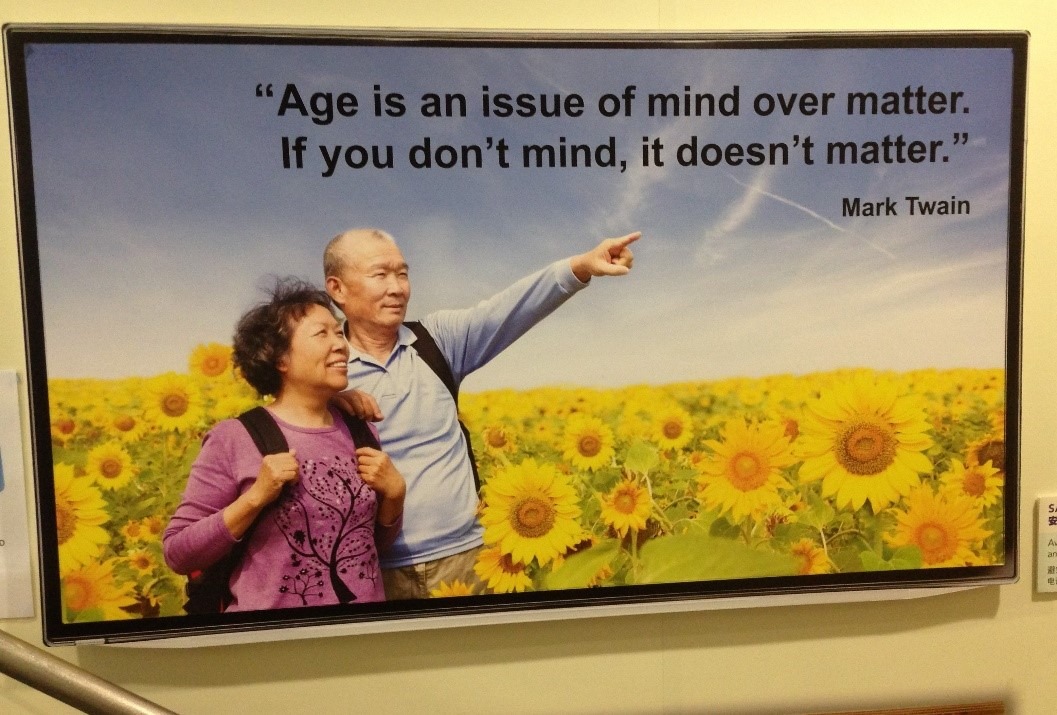
An online article (2020) from The Strait Times, ‘Going online for physical therapy’, offers a timely reminder why like invention, necessity is also the mother of innovation. Needs and necessity will drive innovation, and innovation will more likely become a culture and a way of life, if it is driven by a constant need to innovate, whether for survival, for profit, or other reasons. What drives innovation? How to make innovation part of an organisation? While we can spend time debating on these questions, barebones answer would often be much simpler; it is when we have no other better or viable choices. Innovation may be driven by many reasons, but necessity will always be one major driver. Whether a pandemic that leaves us little room to move, a change in policy and government intervention in the market, a new social norm that displace past entrenched behaviours, etc., all these may just mean one thing, you need to innovate to overcome all these new challenges. In this blogpost, we will discuss the need for innovations in elderly care, and describe the collaboration in innovation studies between two higher education institutions; Ngee Ann Polytechnic in Singapore and Metropolia University of Applied Sciences. Definition of innovation and innovation competence According to Cambridge Academic Content Dictionary, innovation is a new idea or method, or the use of new ideas and methods. As evidenced by research, innovations are important in all professional fields, including health care and social services. Collaboration between higher education institutions and working life promotes innovations, and students facing real-world problems develop their innovation competences. (Hero & Lindfors 2019) According to Hero (2019), there are factors related to individual innovation competence. These factors are for example self-esteem and self-management motivation and engagement flexibility and responsibility creative thinking and social skills collaboration and communication skills development project management skills such as leadership skills one’s own and other’s discipline content knowledge concretisation and implementation planning skills Two ageing societies - Finland and Singapore Both Finland and Singapore are ageing societies. According to Statistics Finland (2021), the percentage of people aged 65 years and over in Finland was in 2000: 13,5 % in 2018: 19,2% in 2019: 19,6 % . The percentage of people aged over 85 years in 2019 was 2,7 %. In Finland, at the end of 2019, there were 874,314 persons aged at least 70, and the number has grown by 100,000 in three years (Findicator 2020). In Singapore, the proportion of people aged 65 years and over was in 2008: 8,7 % in 2018: 13,7 %. There are fewer working-aged people to support residents over 65 years (Singapore Department of Statistics 2021). By 2030, about one in five residents would be 65 years or older. In the near future, the operating environment for health care and social services will change substantially. Due to an ageing population with high longevity and a shortage of skilled healthcare staff, many countries have to innovate. Dementia and other degenerative diseases will be among the most prevalent diseases affecting the future world population as people live longer. Changes in age structure increase the emphasis on individual service needs. Therefore, innovations are important, as society needs smart solutions and new kinds of processes to develop, especially related to digitalization and technological innovations. Smart solutions and innovations to reduce the risk of infections The ongoing COVID-19 pandemic is upon us, whether we like it or not. It has permanently changed the world, we live in and how we live. The need to isolate and avoid close contact is alien to healthcare and the sacrosanct relationship with patients, which included touch and proximity. The relentless pandemic leaves healthcare providers little choice. The past has been fractured and our old ways are no longer viable; we need to reset to a new normal, change and adapt to the new landscape. Bed that can shift the patient around within itself, intelligent mattress that can adjust its cushioning and shift impact points together with patients’ position, and clothing that can sense prolonged pressure on a particular spot and alert care-givers; these will improve care of bedridden patients and reduce the chance of pressure sores and ulcers. Smart equipment will mitigate the human manpower crunch and also reduce need and frequency of direct human-to-human contact and exposure, reducing the risk posed by infectious diseases. We already have diapers that can sense moisture or evenly detect urine and faeces directly. Some utilise bulky reusable set-up while others have small microchips implanted directly in the diapers. These micro-devices can push signals to handphones, computers, etc., to alert care-giver to the need to replace the soiled diapers. (Chu 2020) In post COVID-19 world care given remotely? Post COVID-19, we are going to continue to see not just simply more provision of such services, but also improving the quality of the care provided remotely. Technological advances in the years to come will sustain this drive. The recent positive news on the vaccine front will not bring back the cherished past, even if it heralds the beginning of the end of this pandemic. Still, it will buy us time to plan and adapt for the future. Innovation will be crucial to how well we fare in this post-pandemic future. Starting with the remote delivery of services like physiotherapy in Singapore, we can see how the pandemic accelerates the trend of technology enabled, remotely-provided services. Imagine a patient in the comfort of his or her home, wearing an VR goggles and following a rehabilitation program guided by an AI robot/software. He or she will also be wearing a special smart suit embedded with spatial sensors during the exercise. Their movements will be monitored and viewed by a physiotherapist at the other end, as well as captured by video cameras, which will feed the videos for analysis by computer for real time analysis and decision, like whether the steps or exercise is correctly performed. The sensors in the suit will also track movements and generate data for analysis. You might even wonder whether one would still need a person to sit in front of the screen to monitor the patient. That role could simply be taken over by an AI robot, computer or software. This might be sooner than you think. Innovation studies at Metropolia and Ngee Ann Polytechnic Based on the report of Bloomberg Innovation Index 2019, Finland was #3 in innovation. In addition, Metropolia focuses on the promotion and support of the development of the Helsinki Metropolitan Area and the society though innovation solutions (Metropolia 2021). In Metropolia, all the undergraduate degree students take part in innovation studies, and innovation is in the heart of Metropolia´s strategy. Every year, Metropolia students complete over 1000 innovation projects. Most of them are implemented in multidisciplinary students groups. Ngee Ann Polytechnic seeks to support and develop an innovative mindset amongst the students and foster an entrepreneur-friendly environment through a host of initiatives and programs. For example, students can take part in cross-disciplinary studies organized by NP’s Department of Interdisciplinary Studies. Fresh NP students are required to enroll in the module ‘Innovation made possible’ while ‘Project ID: connecting the dots’ are for final year students. A campus ecosystem also exists for experimenting new ideas and models, and supporting students to develop and set up their business start-ups. The Global Entrepreneurial Internship Program enables enterprising students to experience the realities of start-up life at leading innovation hubs and the school has own innovation incubator, ‘The Sandbox’, which is a one-stop center offering support to budding innovators and entrepreneurs since 2015. MANPIT -project focuses on innovations in elderly care One example of international collaboration between Ngee Ann Polytechnic and Metropolia is the project called “MANPIT”. The aim of this project is to share the best practices in innovation studies between the two institutions. This 3,5 year project is financed by EDUFI Asia-programme. Collaboration between institutions opens up new dimensions for students. Students undertake the same project theme as their counterparts; they need to solve the same problem(s) with a different set of constraints. Currently Ngee Ann Polytechnic students are working with HOVI Care (Singapore) as the industry partner on the MANPIT project on care for patients with dementia. A patient with dementia might have the same underlying pathologies and cognitive impairments in both Finland and Singapore, but the care processes may be quite different due to different local conditions. In land scarce urban Singapore, nature therapies involving the vast greens and animals might not be as accessible or available compared to Finland, so the approaches will have to adapt to the situation. A real hiking trip in Finland might be feasible, but a short workout in the living room might be more often the case in Singapore. On a more micro-level, patients’ functional status, educational level, availability of care-givers at home, etc., can influence the care process and indirectly dictate how to innovate and design the solutions. These create an opportunity for the students to understand how different factors come into a dynamic inter-play to drive innovation and solutions. Need for change This pandemic for all the evils it has brought upon us does impose upon us a need to change which we cannot refuse. Thus, we have to change and adapt, faster and more extensive. Innovation can be our saviour and the light that shines amidst this darkness and the future beyond. References Bloomberg Innovation Index, 2019. Bloomberg Innovation Index, 2019 (opens on timesnownews.com) Cambridge Dictionary (read 17.02.2021) Findicator 2020 Hero, L-M 2019. Learning to develop innovations. Individual competence, multidisciplinary activity systems and student experience (Doctoral dissertation). Annales universitatis Turkuensis, 475, Faculty of Education, University of Turku, Finland. Hero, L-M & Lindfors, E 2019. Students’ learning experience in a multidisciplinary innovation project. Education + Training, Vol. 61 Issue: 4, pp.500-522. Kaur A, 2020. Going online for physical therapy. The Straits Times. Metropolia 2021 Chu, J 2020. Low-cost “smart” diaper can notify caregiver when it´s wet. MIT News Office. Statistics Finland Singapore Department of Statistics 2021 Authors Aija Ahokas, Manager of Education Export / Senior Lecturer (MEd, RN, Specialist Qualification in Product Design). Ms Ahokas has many years of working experience abroad. Her core competencies are in different international activities, networks and partnerships, and international project management. Ms Ahokas is the project manager of MANPIT-project. Transnational education is close to her heart. Hannele Hokkanen, Senior Lecturer (MSc (health care), RN, Specialist Qualification in Product Design). Ms Hokkanen teaches gerontological nursing and she is the coordinator of innovation projects in health care. Hong-Yong TAN, Senior Manager for Timetabling / Lecturer (MBBS). Dr Tan has previously worked at different public hospitals and healthcare organisations in Singapore, in various clinical and administrative roles. He is currently a lecturer with the School of Health Sciences in Ngee Ann Polytechnic where he teaches at both the diploma and post-diploma levels. He is always curious and eager to explore and learn, traits that he hopes to rub off on his students.
Tikissä on Metropolian tutkimus-, kehittämis- ja innovaatiotoiminnan (TKI) blogi. Bloggaajat ovat ammattikorkeakoulun henkilöstöä sekä muita TKI-toiminnan asiantuntijoita. Jos haluat kirjoittaa blogiin, ota yhteyttä toimituskuntaan.
Milla Åman Kyyrö, päätoimittaja
Viestinnän asiantuntija, TKI-hankkeet ja kehittäminen
p. 050 342 0341
milla.amankyyro@metropolia.fi
Päivi Keränen
Projektipäällikkö, Muotoilu
p. 040 184 1952
paivi.keranen@metropolia.fi
Jussi Linkola
Projektisuunnittelija, Hankeviestintä- ja julkaisupalvelut
p. 040 184 2448
jussi.linkola@metropolia.fi
Toimituskunta toimittaa Tikissä-blogin sisällöt ennen julkaisua.












3AMK ammattikorkeakoulu asiantuntija Dallaten FUTU hanke hankeviestintä hankkeet hyvinvointi innovaatio innovaatio-opinnot innovaatiot Innovation johtaminen Katse tulevaisuuteen kehittäminen keksintö kestävä kehitys koulutus metropolia minno nuoret Oona-hanke opiskelijat oppiminen osaaminen osaamisen kehittäminen resilienssi service design sosiaali- ja terveysala tekoäly tki TKI-toiminta tulevaisuus tuottavuus tutkimus työelämä työhyvinvointi työllistyminen viestintä vuorovaikutus yhteiskehittäminen yrittäjyys yritystoiminta yritysyhteistyö

Ideoimme, rikastamme ja kehitämme käytäntöön uusia ratkaisuja yhteistyössä yritysten, julkisen sektorin, järjestöjen ja asukkaiden kanssa.