Strengthening youth’s trust in the future

9.12.2021
Tikissä
According to OECD (2021), Finland is a high-trust society, ranking among the top performers among the OECD countries. In other words, trust is a meaningful phenomenon in Finnish society.
What is trust?
Trust can be seen as a simple, but also a complex phenomenon. Trust can be an approach, like an emotion, attitude, cognitive choice or even an unconscious issue, depending on theories. Thus, trust is based on individuals’ emotions, experiences, thoughts and attitudes; it can also be explored from a wider perspective, like from its relational character.
There is evidence that Finnish people trust their families (as an institution) more than other institutions (1). In addition, young people also trust most people who are close to them. Trust in non-family members must be earned (2). However, there is evidence that if people just blindly trust anyone, it is likely that no one probably trusts them (3).
Trust and youth guidance
Improving youth’s trust in the future is important because trust has many positive consequences. It can strengthen young people's self-confidence in their own abilities, but also improve the ability to trust others.
The Finnish Government (4, 5) considers guidance to be very important. It has been pointed out that there is a special need for guidance for those groups who are currently underrepresented in the participation in continuous education. Further, people must be able to trust in the future and their own opportunities, and feel to be part of the environment as a meaningful resource. (6) For example, some studies of adolescents' trust experiences (7) suggest that ‘Relationship Education’ programs can make a difference. They can enhance young people's understanding of and willingness to trust. In other words, trust can be learned, and it is never too late to learn to trust, even if it can be, in some cases, challenging.
For example, Zitting (8) has pointed out that without peoples’ trust in public administration it is difficult to trust other people. This shows that ‘trust’ has its ‘to come full circle' effect. We cannot approach it from only one perspective, when a wider understanding of it is needed.
Who am I? What am I able to do? What am I capable of achieving?
These are the three main questions in the dialogue and guidance with young people in the FUTU project. Those questions are based on the theoretical understanding of the Social Pedagogical Approach to improve participation, agency and life management skills in everyday life practice. There is also an understanding of ‘future research' behind FUTU -projects’ understand of pedagogical guidance. Trust is one of the key elements, also to make the guidance relationship between a young person and an adult stronger. Successful guidance can empower and support participation and the feeling of meaningful belonging.
In the FUTU project, we will improve future-oriented guidance to support the young people to see alternative ways to build a positive and realistic future. The aim is to see one’s own future as something that includes positive options and is worth striving. Additionally, we promote and support youth’s active participation. The pessimistic shortsightedness will be transformed into aims, inspiration and encouragement regarding the future. The young people will be empowered to plan their own future.
According to some experts who took part in the FUTU project’s (9) digital training and workshops, trust as a part of youth guidance can be defined as follows:
“...If the future feels scary ...the facilitator can set goals that can be achieved for the future and make a “plan” to achieve them step by step. The higher the probability that a young person achieves even a small part of the set goal, the more likely it is to build confidence in their own skills and help them achieve even bigger goals in the future.”
“For example, ...do not promise uncertain things. Create a communal, supporting and open atmosphere.”
“Time is actively and regularly allocated to conversations, rather than leaving the client to ‘separately hope for conversation time’."
“Trust in the future can be increased in many different ways. If it is a matter of a young person's disbelief in themselves and their own actions, one can extract successes from the young person's own past and reflect them on the current situation: how have you succeeded in the past? What kind of things has it demanded?”
To sum up, according to the Youth Act (10) the aim is to promote young people’s skills and capabilities to function in society, support their growth, independence and sense of community, and support young people’s growth and living conditions. Nevertheless, studies have found (11) that realization of inclusion of children and young people requires special skills and attitudes from service professionals. Even though there are a lot of experts and professionals with a big heart and strong empathy skills, this challenge cannot be bypassed. Professionals need to have an understanding of trust as an important element of supportive guidance relationships, as well as an empowerment element in youth’s life - ‘trust resource’.
How Finnish society can support young people’s trust in the future?
A successful restructuring of services needs a stronger climate of dialogue and trust between state, regional and local actors. (4, 5, 6). Additionally, OECD (12) supports Finland paying more attention to people who are at risk for ‘feeling left behind’. OECD encourages Finland to understand the expectations and perceptions of different groups of society with respect to transparency and participation.
By understanding trust and its diverse nature, as well as the empowering nature of it, it can be utilized in guidance work to support young people in finding their own trust resources. By supporting young persons’ self-confidence, they can become more visible to themselves. It can make a difference while fighting giving up, hopelessness and pessimism in life. (2).
In the best case, trust can increase trust and improve young people's hope for the future. Trust is a serious element to take into consideration, while developing, designing and creating new services, methods and tools for youth well-being, participation and their quality of life.
References
Simola J., Westinen J., Pitkänen V. & Heikkilä, A. (2021) Luottamusta ilmassa, mutta kuinka paljon? Tutkimus eri sukupolvien luottamuksesta yhteiskunnan instituutioihin.
Raatikainen, E. & Poikolainen, J. (2020) Young men’s experiences of trust and distrust as a framework for their future. The Finnish Journal of Youth Research (“Nuorisotutkimus”) Vol 38, (2), 37–51.
Frowen, I. (2005) Professional Trust. British Journal of Educational Studies 53(1), 34–53.
Finnish Government (2020), 3.6 Fair, equal and inclusive Finland
Government Programme, Finnish Government, Helsinki, 3.6 Fair, equal and inclusive Finland (valtioneuvosto.fi)
Finnish Government (2020), 3.7 Finland that promotes competence, education, culture and innovation, Government Programme, Finnish Government, Helsinki, 3.7 Finland that promotes competence, education, culture and innovation (valtioneuvosto.fi)
McElroy-Heltzel, S.E., Jordan, T.R., Futris, T.G., Barton W.A., Landor, A.K. & Sheats, K.J. (2019) Sources of socialization for interpersonal trust: an exploration of low-income Black adolescents’ experiences, Journal of Youth Studies, 22:1, 124-137
Zitting, J. (2021) Luottamusta voi edistää parantamalla sosiaalista osallisuutta (DIAK.fi).
Creating Positive Future - FUTU project. Creating Positive Future - FUTU | Metropolia UAS
Youth Act (2017). Legislation - OKM - Ministry of Education and Culture, Finland
Peltola, M. & Moisio, M. (2020) Ääniä ja äänettömyyttä palvelukentillä. Katsaus lasten ja nuorten palvelukokemuksia koskevaan tietoon. Nuorisotutkimusverkosto.
OECD (2021) Drivers of Trust in Public Institutions in Finland. OECD Publishing, Paris.
Creating Positive Future - FUTU | Metropolia UAS Means to achieve the project goal are promotion of future-oriented positive thinking, life management skills and ability to take action. In addition, the project can support the young people into further vocational training and transition into the job market.
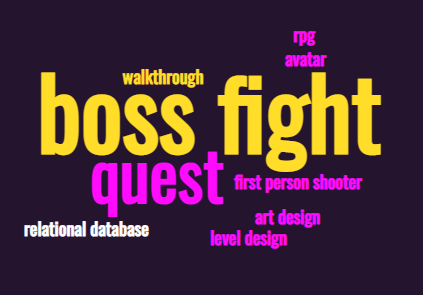
Integrating through Simulation – Boss Fight in English Communication Class 💥
21.12.2021
Coal and Diamonds
Close your eyes and imagine a group of people having a team meeting to kick-off a game development project. A glance at the meeting agenda reveals items such as assigning a project manager, discussing the different skills and roles needed for the project and brainstorming on an initial game idea. For the game idea, you hear someone mentioning a 2D platformer with a boss fight.
Now imagine all this taking place in an English communication class full of engineering students and on an online platform. Is it working, are they learning and are they enjoying it? Yes, yes and yes.
In this blog text, I’ll be discussing integrating and simulating English studies successfully into any study module in any discipline by providing an example from a game development study module at Metropolia UAS.
Quest for Meaningful and Inspiring Learning Experiences
Universities of Applied Sciences are by default focused on project and problem based learning, which means simulating projects and solving problems typical for worklife is at the center of most learning. This approach has a solid foundation in research, which claims that students (and teachers!) are more motivated and learn more in integrated and simulated learning contexts (see e.g. Loepp 1999; Terenzini 2020).
Integrating subjects is not a new idea and several well-established models, such as the interdisciplinary model or the problem-based model, exist for different types of contexts and school levels (Loepp 1999). Well-executed integration is not something to be taken for granted despite following a model, but typically requires strong personal commitment and dedication from the individual teachers involved.
In Metropolia University of Applied Sciences, game development (Metropolia, 2021) is one of the four 15cu study modules, aka themes, IT engineering students complete during their first year of studies. Game development was considered an important theme as Finnish gaming companies are attractive employers for IT students, thanks to the success of Rovio and Supercell to mention a few. The current game development theme has been designed to include the following courses/topics:
C# object oriented programming
Basics of relational databases
Game development tools and project implementation
Communication in English and development of presentation skills
Concept of StartUp business model
Basics of Mathematics and Physics.
When the gaming theme was first created in connection with a curriculum revision 7 years ago, a great amount of work by the teachers went into integrating the different subjects into a gaming project. It wasn’t a very structured and formal process, but looking back now we managed to address many of the questions suggested by best practice to arrive at a meaningful and inspiring entity, which is work-life oriented.
Key Questions to Answer
As listed by Steamedu (2021), some of the key questions that merit close attention when creating a module are:
Why is this module needed?
What is the purpose/goals of the module?
What is the content of the module?
What is the expected result?
What kind of module is this? (e.g. exploratory, design, expressive, project based, combination etc.)
When will the activities of the module take place, what is the time frame?
Where does the module take place? In which learning environments?
What tools are needed to successfully complete the module? E.g. equipment, tools, materials, financial resources, technology, online tools, books, human resources, etc.
How is the module evaluated for module quality and outcome, learning outcomes, effectiveness of project methods
What are the risks associated with the module?
Answering these questions and planning the theme further made me realize it would be possible to engage in true integration and I remember the excitement and inspiration I felt right from the very beginning. The excitement hasn’t faded either. Working together with the other teachers on this integrated module has been highly rewarding all these years. The module has also been developed further every year in the spirit of continuous development and I personally feel I’ve managed to create a course structure and content I’m truly satisfied with as the course additionally simulates work-life as closely as possible.
Course Walkthrough
My focus in the latter part of this text is on providing my readers a walkthrough on how English communication was integrated into the game development theme through the gaming project where students develop a game in teams in 8 weeks only, and how the English communication part has developed just recently. I will share my insights with you here for a structured approach to simulating work-life in the classroom, in my case from the communication point of view.
For the English course, the early-year course contents were agreed upon with the other English communication teachers involved in the game development module. From the start, it was clear we would let the students work on their projects in class in English, with them using the skills and knowledge they had acquired in their other game development courses, for example programming, taught in Finnish. The only subjects in the gaming module, which proved to have no real common ground for integration with the English course, were math and physics.
Other components of the English class included for instance project communication skills, presentation skills, reporting skills and making CV’s in English. All of these centered on teaching how to communicate about the gaming project at the final seminar organized at the end of the 8-week project. An example of animated presentation slides by one team from this fall is found here. (Blatter et al. 2021).
Towards True Simulation
Later, my own classes started to evolve even more towards simulating work life in game development. The four specific questions I asked myself when continuously developing the structure and content of my classes are shown below. These questions are of course applicable for any job in any field by just changing the term game developer with a different job.
What is a typical work day in the life of a game developer?
Which aspects of this work can be easily simulated in my class?
Which aspects need modifying in order to work in my class?
And most importantly, how can I make the students come to class and start working without the necessity of a lengthy teacher briefing first? I felt this was significant mainly because this is how most work takes place: people come to work and start working without anybody telling them every time what to do.
To come up with answers to my questions I went looking for a precise answer to my first question by googling “What does a typical work day look like for a game developer?” Naturally, I got several hits and this is for instance what gaming industry expert Jason W. Bay (2016) has to say about it in his podcast aimed at wannabe game developers:
Once everybody is in the office, it’s pretty common to have a team meeting, especially for studios that use Scrum as a development method. Teams will usually have a morning stand-up meeting to talk about what they accomplished the day before, what they’re going to accomplish today, and discuss any problems that might be blocking their progress.
After that, everybody goes back to their desks to handle email, plan their day, and get to work. Most of the day is spent doing the core part of the job. Artists will spend that time planning and creating the game art. Programmers will spend the time writing and debugging source code. Designers might spend it by writing documentation or putting together game levels and so on.
Current Course Core
Based on this description and working out answers to my questions 2 and 3 to modify the required parts, my course (in Zoom due to the pandemic) is currently built around
team meetings at the beginning of classes where the students
plan what they’re going to accomplish that day and who needs to do what. They then go on to
work, alone or together, on the tasks they specified and before class is over, get together with their team to
discuss progress made and any problems they encountered. If a solution was found, they spend some time advising each other on how to avoid similar problems.
The game-related tasks can be anything from coding and art design to building relational databases. As the very last thing in every class, students share their progress with the class, in brief, by showing their Trello or Microsoft planner which they use to manage their whole project in a visually pleasing way in one platform, available to all team members at all times.
Classroom Turned into Workplace
My question number 4 got solved by adopting this repetitive way of working through team meetings, as I am now able to have students come to class and know exactly what to do completely on their own. What’s more, they are using the IT and other skills they’ve learnt in courses taught by other teachers in the module, but now communicating about them in English in order to work on their projects. To me, this way of working is as close as it gets to integrating courses and simulating real life gaming workplaces.
Since the course contents continue to feature presentation skills, reporting skills and such as before, I obviously spend class time on teaching these skills, but in each class actual work on the tasks, whether game related or communication skills related, starts by having a meeting and deciding on which tasks to work on that particular day.
Challenges
Two challenges remain for this type of integration:
In the ideal situation, all students would work on all aspects of the gaming project, but in practice one student tends to work on coding, another one on game art and yet another on something else, according to their personal skills. This of course emulates work-life in gaming in a great way, but is not the best way in terms of learning purposes, which would require all students spend time working on coding, for instance.
Monitoring what students are doing during class is difficult in Zoom, even though it is possible to visit the breakout rooms. This is mainly because students spend a great amount of time also watching tutorials and looking for information online. This means there might be total silence in the room when I go there. In the classroom, it is easier to see at one glance what is going on with different teams. This is why I recommend contact lessons for this type of activity.
In my experience, and despite the challenges, the best way to increase the level of motivation and inspiration of teachers and students alike is by integration and simulation. It makes learning (and teaching!) fun and exciting, just like playing a game. Today, all this is easier than ever thanks to advances in digital technology. Wanna play?
References
Bay J. 2016. What is a typical day in the life of a video game developer?
Blatter J., Oksanen S., Virtanen R. 2021. Final Presentation (Google slides)
Loepp F. 1999. Models of Curriculum Integration.
Metropolia. 2021. Study Guide. Information and Communication Technology. Game Development. (in Finnish)
Steamedu. 2021. GUIDELINES FOR INTEGRATING DIFFERENT SUBJECTS
Terenzini P. 2020. Six characteristics that promote student learning (opinion)










Comments
No comments