Since the last autumn, there has been an intense debate on what should be done in this new situation with a growing number of asylum seekers and immigrants that has exceeded even the wildest guesses. ”Rajat kiinni”, “Close the borders”, has been one approach and on the other hand it has been considered if immigrants could be seen as a resource to benefit Finland. Metropolia’s solution is to offer a service concept produced by the SIMHE project, which is funded by the Ministry of Education and Culture. The aim is to recognise the competences of highly educated immigrants and to guide them, and those who are eligible to apply to higher education, to interesting and meaningful educational and career paths.
Setting objectives for the project is easier than implementing them into contemporary society.
Mathematical competence, professional engineering competence and digital competence were selected to form the pilot test on recognising engineering competence that was implemented in April at Metropolia. The test parts were compiled by the Metropolia experts in mathematics, different engineering degree programmes and in digital competence. We considered what kind of competence the Finnish employers might value, and on the other hand, we thought that immigrants could benefit from the recognition of competences for example, if they apply to higher education in Finland, as an institution of higher education has already made an evaluation on their competences.
When choosing the content to the recognition of competence, we looked at the issue from a perspective of integrating immigrants into Finnish society.
30 immigrants participated in the recognition of competence day out of which 28 were male and 2 female. The majority of them were from Iraq, a few from Syria and Afghanistan, one from Iran and one from Belarus. The participants’ age varied between 20 and 44. A few of them had been in Finland for nearly three years, the majority for 6-10 months. It was possible to do the test in Arabic, in English or in Finnish. The language options were based on the fact in which language the participants had filled-in the enrolment form. The results will be ready soon and we will reflect on them as well as on methods used in the recognition of competence together with participants and our experts.
We need to reflect critically on both – the used methods and the chosen fields of competencies.
Is the recognition of mathematical competence relevant when working as an engineer? Those participating in the pilot, already had a degree, or studies in higher education in the field of technology. Why would someone, who already has a degree, and who has made the official recognition and international comparability of qualifications want to participate in our recognition of competence? What do the participants benefit from recognition of competence will probably not become clear until a long-term follow-up is done based on their individual educational and career paths.
Do the individual’s and society’s perceptions about adequate educational and career paths meet? This is also an interesting question to be considered later.
How do I get a chance to show my competence, attitude, motivation and will to do anything reasonable that would benefit both myself and Finland? How and where can I get more competence that can help me to get a job? These kind of questions are now directed to Metropolia. At this point, I must humbly state that these things we work with in the SIMHE project launched this spring are quite enormous. In the project we will consider the new models to recognise the competence of highly educated immigrants and asylum seekers and to guide them to adequate educational and career paths. This is done together with the Ministry of Education and Culture, Finnish National Board of Education, CIMO, Ministry of Employment and the Economy and the UniPID network.
There is clearly a demand for our new service concept – hopefully employers and educational institutions will grasp this new potential.
Let´s turn the societal debate even more towards the direction of possibilities!
Blog introduces information, tips and insights that help international talents with a higher education background to integrate and find their study and career paths in Finland. The blog is part of Metropolia’s #talentboost actions.
Outi Lemettinen (head editor) Riikka Wallin Anu Luoma Email addresses: firstname.surname@metropolia.fi Editorial Board handles all the publications of Various Variables blog before publishing.
Emilia Deseille
is passionate about career development of international talents in Finland. Having studied and worked abroad on several occasions, she has experience in starting a career abroad, and feels at home in a multilingual and intercultural environment. Before joining the SIMHE Metropolia team as a career coach and employer relations specialist, Emilia was working in the field of labor market integration in Austria. She has a Master of Social Sciences degree in Development and International Cooperation, and studies in Intercultural Communication and Adult Education. In her spare time, Emilia enjoys dancing and doing other sports with friends, and the language geek in her enjoys learning new languages. Ota yhteyttä
Niina Tapanainen
currently works as a SIMHE Career Coach supporting highly educated immigrants living in Finland. Niina has a Master’s Degree in Education and is a qualified Guidance Counsellor and Psychology (as a second subject) Teacher. She has worked nearly two decades within the career and guidance counselling field mainly in Higher Education Institutions. She loves continuous learning and spends rest of her free time enjoying life: relaxing, dreaming and whatever interesting comes her way. Ota yhteyttä
Learning Finnish can significantly enhance the study experience and job opportunities for international students and employees at Metropolia UAS. Many international students choose not to stay in Finland after graduation. Research shows that limited Finnish language skills can hinder their sense of inclusion, affecting workplace well-being, integration, and long-term residency (1). Learning Finnish is crucial for those wishing to stay in Finland. Proficiency in Finnish positively impacts students’ inclusion, well-being, and adaptability (2).
In light of these findings, Metropolia has developed language guidelines emphasizing early Finnish language training in degree programmes (3). Even basic Finnish knowledge can be beneficial in daily life and leisure activities.
International students often face difficulties securing internships or jobs in Finland. Even in English-speaking environments, situations requiring Finnish can arise, leading to feelings of shame and inferiority. The goal of the language guidelines is not to create a monolingual (Finnish or English) environment but to foster a multilingual Metropolia that embraces evolving language skills: Finnish-speaking students are encouraged to use and practice English more frequently, while international students are supported in learning Finnish alongside their other studies — not just in Finnish language courses, but throughout all their studies.
A multilingual Metropolia: a place where everyone feels at home
Language-aware thinking takes a respectful and approving attitude towards different languages and forms of language (4). At Metropolia, we encourage lecturers of degree programmes to incorporate multiple languages into their teaching, allowing international students to hear simple, frequently occurring Finnish expressions and routine phrases as part of their teaching in English (e.g., huomenta kaikille, nyt pidetään tauko, haetaan vähän kahvia) and to become familiar with key course concepts in Finnish — and in other languages that exist in the group — as well. When the group translates important concepts into different languages based on the group's linguistic backgrounds, it often reveals various aspects and nuances of the concept and thus deepens the learning experience. For instance, various aspects of ”early childhood education” are illuminated for the students when they collaboratively reflect on the meanings and connotations of the term "education" in different languages, e.g. kasvatus, education, utbildning, educazione, onderwijs.
It is also important for international students to have opportunities to participate in language-supported internships and to engage with Finnish workplaces early in their language studies. This experience, supported by an internship pair and a language mentor, would greatly enhance their language acquisition.
If there are Finnish speakers within an English-speaking study group, it would be beneficial for them to take an active interest in the Finnish language learning of international students. By doing so, they could provide opportunities for these students to practice Finnish in everyday communication during lunch or coffee breaks.
Is it necessary to learn Finnish when everyone in Finland speaks English?
If the entire Metropolia community exclusively communicates in English with the language learner from the beginning, there is a risk that the institution itself may inadvertently limit the learner's opportunity to acquire Finnish through authentic interactions (5). By incorporating Finnish into safe, informal interactions, in addition to formal language courses, it becomes easier to gradually extend language use to internships and other professional settings. This approach allows the learner's language skills to develop first in informal, low-stakes situations.Many international professionals who have lived and worked in Finland for an extended period have emphasized that learning Finnish was the key to accessing Finnish culture and achieving true integration. Even when work is conducted smoothly in English, managing everyday life can be significantly more challenging without Finnish language proficiency (6).
Many international employees have emphasized that learning Finnish was the key to accessing Finnish culture and achieving true integration.
Metropolia plays a pivotal role in supporting language learning
The language guidelines highlight the crucial involvement of the higher education community in language learning process. A key aspect of developing language skills is Metropolia's provision of a safe and supportive environment for learners to use and practice Finnish. This is especially significant for students who are proficient in English, as they often face challenges in receiving support for learning Finnish: Finnish speakers tend to switch into English when they recognize that their interlocutor is a fluent English speaker or a language learner.
It is essential to provide international students and staff with ample opportunities to practice the language, and they must also seize these opportunities (7). Successful language learners typically exhibit the following traits: a desire to learn, a positive attitude towards the learning process, and the courage to make and learn from mistakes — language is most effectively acquired through active use.
Language is most effectively acquired through active use
To facilitate language learning outside the language courses, it is essential that the surrounding community provides opportunities for learners to engage in meaningful interactions in the target language. A significant obstacle to language acquisition, particularly in bachelor programmes, is the absence of meaningful interactional opportunities in Finnish. Also, an ideology that downplays the value of Finnish language often isolates international students in an English-speaking environment, hindering their Finnish language development (8).
Making student's language skills and goals visible
The language guidelines emphasize the importance of the Language PSP (Personal Study Plan), which is completed collaboratively by the student and their tutor or supervisor (9). This plan outlines the language aspirations and expectations of international students and brings to light the various factors that influence language learning. Finnish, while often regarded as challenging, is not inherently more difficult than many other languages. The primary challenge in acquiring Finnish appears to be the difficulty foreigners face in actively using the language, even within Finland.
The language courses, interaction opportunities, and support provided by higher education institutions alone are insufficient to ensure successful language acquisition. Learners themselves must engage with these opportunities, enroll in as many Finnish language courses as possible, and begin using Finnish, even if their proficiency is limited to a few phrases. It is also essential to dispel the myth of perfect language proficiency. None of us achieves perfection in any language; effective communication can occur even with an accent or minor errors. The essential goal is to be understood and to effectively convey one's message.
A language-aware Metropolia recognizes the crucial role of language skills in students' integration into Finland and their employment prospects. It is also important to understand that multiple languages can be utilized depending on the context. For instance, courses may be conducted bilingually, and it would be beneficial if, in group assignments, students had the option to submit their work in Finnish, English, or a combination of both.
A language-aware Metropolia acknowledges the value of diverse language skills and accepts that English and Finnish may be spoken with various accents and in different ways. Interaction with language learners may require Finnish speakers to slow down their speech and use gestures to facilitate understanding. Although this approach demands some adaptability from Finnish speakers, achieving mutual comprehension in Finnish can be greatly empowering for the language learner.
International student, embrace the opportunity to learn Finnish and enhance your life in Finland!
Three key considerations for international students learning Finnish:1. Proficiency in Finnish is crucial for securing employment and fully enjoying life in Finland.2. Begin speaking Finnish as early as possible, even if only using basic phrases. Start with routine greetings and simple inquiries to practice listening and speaking. Gradually incorporate more Finnish into your conversations as your skills improve.3. Enroll in as many Finnish language courses as possible and seek out internship opportunities where Finnish is the primary language. Actively request language support and mentors. Although learning Finnish requires considerable effort, it is a worthwhile investment that will yield significant benefits.Metropolia language guidelines in nutshell.More tips and ideas for planning and implementing multilingual situations and learning language in different kind of situations will soon be published on the Metropolia intranet. Stay tuned!
Author
Eveliina Korpela works as a senior lecturer at Metropolia UAS and as a researcher at the University of Helsinki in a project Multilingual Worklife and Means of Participation. She is currently developing multilingual practices and language learning at work also in Kielibuusti-project. She has co-published numerous Finnish language textbooks and, along with her research team, authored a Guide for a Multilingual Workplace (Monikielisen työyhteisön opas, Alma Talent, 2023).
Sources
Nikulin, M. 2019. Akateemisen maahanmuuttajan suomen kielen taidon tarve työssä ja arjessa. Lähivõrdlusi. Lähivertailuja, 29, 171–203. http://dx.doi.org/10.5128/LV29.06
Cf. Stilling, E. 2022. Med språket som strategiskt verktyg. Guide till ett språkutvecklande arbetssätt för chefer, HR-personal och beslutsfattare. Tukholma: Föreningen Vård- och omsorgscollege. https://vofront-files.vo-college.se/vofront_files/218c4845-cc38-4a38-84c0-8e88da116abe.p
Language guidelines in nutshell. https://www.metropolia.fi/en/about-us/language-guidelines
Kielibuusti-hankkeen sivut. (2024) https://www.kielibuusti.fi/en/employers/multilingual-workplace/steps-toward-language-awareness-in-the-workplace
Cf. Lønsmann, D. 2015. Language ideologies in a Danish company with English as a corporate language: ‘it has to be English’. Journal of Multilingual and Multicultural Development, 36 (4), 339–356.
Lehtimaja, I., Korpela, E., Komppa, J., Kotilainen, L. & Kurhila, S. 2023. Monikielisen työyhteisön opas. Helsinki: Alma Talent.
Kirilova, M., & Lønsmann, D. 2020. Dansk – nøglen til arbejde? Ideologier om sprogbrug og sproglæring i to arbejdskontekster i Danmark. Nordand – Nordisk tidsskrift for andrespråksforskning , 15 (1), 37–57. https://doi.org/10.18261/issn.2535-3381-2020-01-03
Intke-Hernandez, M. 2021. Kielenoppija tarvitsee tuekseen kielitietoisuutta ja yhteisiä tekoja. Kieli, koulutus ja yhteiskunta, 12 (6). https://www.kieliverkosto.fi/fi/journals/kieli-koulutus-ja-yhteiskunta-joulukuu-2021/kielenoppija-tarvitsee-tuekseen-kielitietoisuutta-ja-yhteisia-tekoja
Kielibuusti-hankkeen sivut. Kieli-HOPS. Language PSP. https://www.kielibuusti.fi/en/learn-swedish/language-learning-tips-and-resources/plan-your-language-learning-with-language-psp
No matter how long you spend in Finland, there will always be new experiences. It is a very similar situation for new entrepreneurs. New situations need new information and solutions. Having lived in Finland for almost 20 years, I know that there are still things that come up where I have absolutely no idea what to do. What I have learned in all these years, is where to start looking for the answer. In the information age, this is one of the most important skills you can have.
We don’t need to know all the information at once; in fact, we wouldn’t be able to process all the information even if we heard it. A lot of things are unnecessary until they are necessary. If you arrive in country as a single, independent student, you don’t need to understand the daycare system, and in entrepreneurship, understanding how to take a company internationally is not the first thing you will learn in your entrepreneurial journey. This is the same situation for immigrants and entrepreneurs all over the world.
Whole-life Events
Just like integration, entrepreneurship is a whole-life event. As an immigrant, no matter what you are doing to subsidise your life, this means two things:
You will be creating a whole life for you and your family – not just the hours you study at an institution or work at a job.
You will spend your whole life integrating.And in parallel, as an entrepreneur, your time is now not bought by an employer but can now take far more of your daily time to create. You are only stopped by the limits that you impose on yourself.
As every new challenge comes your way, you will need to figure out how to address it. Some of the challenges you might find yourself facing as an immigrant are:
finding housing
accessing healthcare services
searching for jobs
becoming an entrepreneur
finding ways to spend your leisure time
learning Finnish or Swedish
dealing with emergencies
finding and completing further education
understanding the primary education system
As an entrepreneur, you are seeking help with:
concepting an idea
testing your ideas
learning new software
learning how to understand your potential market and customers
building a customer base
designing and re-designing offers
building a website
understanding how to utilise different social media channels for selling and brand building
accounting
deciding which tasks to delegate and which services to buy from others
AS previously stated, no one resource will help you in all these situations, understanding where to find these resources that can help you with all of these questions is a very big step in the right direction.
Support During Studies
When you come to Finland as a student, there is a good chance that you have come alone, and you are ready for all kinds of adventures. You will also be lucky enough to have a general support system that the institution provides. This is great and it can really help you to settle in and find your feet.
Then you graduate, a celebratory event which also means big changes in your life. When you are a student there are many services that you do not need to seek outside the institution. It is possible that as an alumnus, you can access certain institutional services, so make sure that you check with your former institution to see what is still accessible for both your immigrant journey and your entrepreneurial one.
Staying in Finland After Studying
Once you have finished your education, you may be looking for a more permanent job (possibly different than the one you have done while at school if you have been working) or to expand on any entrepreneurial thoughts you may have had during your studies. These, again, are slightly different sets of skills and resources that you will need.
A good place to find both information about your new situation in life and even entrepreneurship is the Newcomer’s Guide (pdf) produced by the Cities of Helsinki, Espoo, and Vantaa. The label ‘Newcomer’ is too narrow, in my opinion, for the information that it contains. You definitely need some of this information when you first arrive, but it is helpful to refer to the guide at different stages of your life in Finland.
The Newcomer’s Guide also has advice on where to look for different kinds of employment, including entrepreneurship and a review of the startup ecosystem. Being gainfully employed is a huge part of many people’s integration. Sometimes that requires you to start your own company. There is a whole ecosystem in the capital area for this and the guide helps to explain it. In the near future, there will also be an online service that Metropolia UAS and the City of Helsinki are currently developing that will help aspiring or budding entrepreneurs to find the right path through their entrepreneurial journey.
In order to further your understanding of what is currently available to you as an entrepreneur, you can read my previous Various Variables blog post Entrepreneurship – Using Your Skills in Different Ways and this previous blog post by Vejay Nair & Marika Antikainen.
My own experience
For myself, I reflected on what contexts I have inhabited during these past 20 years in Finland. I have been:
a single exchange student (with no dependents)
a married person (to a Finn)
a degree student
a married parent
a divorced single parent
an unemployed spouse
an unemployed single parent
a full-time entrepreneur
a part-time entrepreneur
a temporary employee
a full-time employee.
It has been quite a journey, but it is one that has new challenges at every bullet point. This diversity and length of experience is also the reason that I feel that I have some insight that can help to guide people in finding the right resources at the right time. All of the situations above have taught me the value of being open and asking for help.
Continue To Be Open
The common skill that I have cultivated the most being an immigrant and an entrepreneur is to ask for help in order to understand new things. Life is full of things that do not make sense, are just outside of our current skill set, or we need a little time to learn. YouTube videos are a deep resource to anyone who wants to do something new. But outside of online resources, you can ask real people for help to find what you need. Not everyone will be able to help you, but every time you ask, you get a tiny bit closer to the answer. Even if it is just eliminating what is not the answer.
Employment may be difficult to find for some newcomers to Finland. One of the ways to make sure that your skills continue to develop or are utilised is to become an entrepreneur. There are different kinds of entrepreneurship in Finland. Many factors will determine if you want to try entrepreneurship, but it is always worth considering even if it is not your first choice.
As mentioned, there are different forms of entrepreneurship; the two most common forms are a sole entrepreneur (toiminimi in Finnish) or a limited company (Osakeyhtiö in Finnish). Other options exist as well such as becoming a light entrepreneur and a freelancer. Each have their own rules and regulations. For more specific information on these forms of entrepreneurship, you can visit the Uusyrityskeskus (New Business Centre) in your city, or you can check out more information in the yearly guidebook that the Uusyrityskeskus creates.
All of the initial information that you will need to consider becoming an entrepreneur is included in this comprehensive pdf guidebook. It is also available in Swedish and Finnish. The 2019 version of the guide is also available in Russian, Arabic, Chinese and French on the Uusyrityskeskus website. These will still be helpful because the information does not change too much year on year. Remember to always double check it – especially if it is about taxes, pensions, or anything that you need to pay. These numbers can change yearly.
What Will I Sell?
There are different ways to become an entrepreneur. In this section, we will look more closely at four different ways to become an entrepreneur. Your own situation and skillset will determine which route you take. You can have an idea that you have created yourself, you can decide to create a consultancy to sell the skills that you already have, or you can even purchase a business that already exists.
Consulting Others
A consultancy is when you take the skills and education that you already have and sell those to customers. A consultancy is a service business which means that you provide expert services for customers. Consultancies, in general, do not sell products.
Buying an Existing Business
As current entrepreneurs wish to retire, there are more and more businesses in Finland that require new owners. Purchasing an existing business is a solid way to become an entrepreneur if this is what you want. The companies already have customers and there is a defined market for them. It is also possible that a fresh pair of eyes will find new ways to make the business grow and modernise. This is sometimes referred to as Business Transfer or Business Acquisition
The Federation of Finnish Enterprises (Suomen Yrittäjät) has a unit dedicated to this specific way of becoming an entrepreneur. They even run some information sessions about it. You can see all the information that they have on this topic on their website.
Your Own Idea
You may even have your own idea of what you can do. This can be a café, an import/export business, selling crafts that you make, etc. The possibilities are endless. You can even decide if you want to do this entirely online or in a physical shop. Possibilities exist to do this by yourself or partnering with someone else. Often this kind of entrepreneur is called self-employed.
Create a Startup
A startup is a term that has been confused over the years and is sometimes used to describe starting any kind of company. But this would be incorrect. A startup is a company that is intended to be scaled pretty quickly. Most likely, this means that it is a tech-based company. Finland’s capital area, which includes Helsinki, Espoo, and Vantaa, is well known for its startup ecosystem and has produced quite a few tech startups.
Finding an Idea
There are many ways to find an idea for starting a business. Below I have listed five ways to begin exploring how to find your idea. The outcome of this brainstorming will fit into one of the four categories in the previous section about what to sell.
1. Let Go of Originality
There is a place for original ideas, but it is rare to have one. Someone somewhere will have thought of the same thing either in part or as a whole. That is ok. Having ‘competitors’ means that there is already a market for that service or product you are considering. Google was not the first browser and Apple was not the first phone maker.
2. Use Your Skillset
As mentioned above, you have a bunch of skills that can be utilised. You just need to thoroughly analyse them to identify how you might package them. What do you know well that others do not? What can you do easily that others need help with? These types of questions will help you to understand what your unique selling point is.
3. Solve a Problem or Identify Underserved Needs
We walk around every day being irritated by things that we feel do not work well or are not fit for purpose. Are any of these things fixable by you in a way that you could monetise? Use your irritation to create a sellable solution.
The same principle can be applied to underserved needs. Can you see that a certain product is missing that you have seen other places? As someone coming from outside the country, there are places where you can imagine a different way or product for doing something. Different cultures solve problems differently and this new perspective could help to find gap in the market. This gap may be filled using something that you know about that others do not. A great example of this is the Finnish astiankuivauskaappi (dish drying cabinet). It even has its own Wikipedia entry.
4. Build on Products or Services That Already Exist
Sometimes you see a product or service that could be extended or improved with an independent addition. When iPhones started coming out, independent retailers began to provide all kinds of covers for them. This was something that they could see that people would need since they were very expensive and needed protection, but it also allowed people to personalise their phone as a statement. You could be an expert in Excel spreadsheets and you could decide to sell courses in how to increase productivity with that tool, or you could create an e-book that has a glossary of ‘hacks’.
5. Ask Family and Friends
Asking family and friends what they think you do well or even analyse what it is that they ask for help in from you is a great place to start your exploration. Sure, you may help them for free because they are your family and friends, but would there be a market for turning those skills into something you can sell. Maybe you create simple websites for your friends so that they can display a portfolio or even for their business.
Support for Entrepreneurship
Once you have come up with your idea, it is time to start thinking seriously about testing your idea and figuring out how you will create your business. Some decisions will be about what kind of funding you will need to make it happen. In the beginning, it is a good idea to ‘bootstrap’ which means to try to make it with as little outside funding as possible. But that does not mean that everything should be done on your own.
The Startup Grant (StarttiRaha)
Even though the name seems that it is only for startups, the Startup Grant, can be used for almost all types of companies. There are some types of companies that they will not give the grant for, but you should check with the Uusyrityskeskus to find out if your company idea is eligible.
The Startup Grant is intended for helping new company owners cover basic needs during the starting up phase of the company. This means that if you receive it, it is approved for 6 months and then you are able to apply to have a second 6 months. It is important that you do not register your company before you are given approval for this grant.
Help to Become an Entrepreneur
There are many organisations out there that want to help entrepreneurs. Many times, the help is providing information, but it can also be with things such as:
Registering the company
Giving advice before and after you have started it
Industry specific advice
Mentoring
Idea development
and more
There are many organisations that can help:
Business Helsinki
Business Espoo
Yritys Vantaa
Suomen Yrittäjät
Startup Refugees
The Shortcut
Kiuas
For more information about organisations that can support your entrepreneurial development, you can check out this previous blog post by Vejay Nair & Marika Antikainen.
Becoming an Entrepreneur as a Student
There is even a way to get help if you are a student. At many universities and universities of applied sciences in Finland, you will find courses and units that focus on helping students to become entrepreneurs.
At Metropolia, this is the Turbiini pre-incubator programme. This course allows students to earn credits for developing their ideas and for learning the skills needed to become an entrepreneur. In 2023, 175 students went through the Turbiini course and already in 2024, there are 118 students signed up for the course in the first half of the year. The course is run in Finnish and in English. If you are not an official Metropolia student, then you can apply to take the course through Metropolia’s Open University.
Blogger
Pamela Spokes works as a Service Designer in Metropolia’s RDI team. Originally from Canada, Pamela has years of experience in university admin focusing on international recruitment, marketing, and the international student and staff experience. With a Bachelor’s degree from Canada, a Master’s degree from Sweden, an MBA in Service Innovation & Design from Laurea UAS, and her AmO from Haaga-Helia UAS, she is well-versed in being a global citizen. She has lived in Finland for more than 15 years and is also an entrepreneur.
According to OECD (2021), Finland is a high-trust society, ranking among the top performers among the OECD countries. In other words, trust is a meaningful phenomenon in Finnish society.
What is trust?
Trust can be seen as a simple, but also a complex phenomenon. Trust can be an approach, like an emotion, attitude, cognitive choice or even an unconscious issue, depending on theories. Thus, trust is based on individuals’ emotions, experiences, thoughts and attitudes; it can also be explored from a wider perspective, like from its relational character.
There is evidence that Finnish people trust their families (as an institution) more than other institutions (1). In addition, young people also trust most people who are close to them. Trust in non-family members must be earned (2). However, there is evidence that if people just blindly trust anyone, it is likely that no one probably trusts them (3).
Trust and youth guidance
Improving youth’s trust in the future is important because trust has many positive consequences. It can strengthen young people's self-confidence in their own abilities, but also improve the ability to trust others.
The Finnish Government (4, 5) considers guidance to be very important. It has been pointed out that there is a special need for guidance for those groups who are currently underrepresented in the participation in continuous education. Further, people must be able to trust in the future and their own opportunities, and feel to be part of the environment as a meaningful resource. (6) For example, some studies of adolescents' trust experiences (7) suggest that ‘Relationship Education’ programs can make a difference. They can enhance young people's understanding of and willingness to trust. In other words, trust can be learned, and it is never too late to learn to trust, even if it can be, in some cases, challenging.
For example, Zitting (8) has pointed out that without peoples’ trust in public administration it is difficult to trust other people. This shows that ‘trust’ has its ‘to come full circle' effect. We cannot approach it from only one perspective, when a wider understanding of it is needed.
Who am I? What am I able to do? What am I capable of achieving?
These are the three main questions in the dialogue and guidance with young people in the FUTU project. Those questions are based on the theoretical understanding of the Social Pedagogical Approach to improve participation, agency and life management skills in everyday life practice. There is also an understanding of ‘future research' behind FUTU -projects’ understand of pedagogical guidance. Trust is one of the key elements, also to make the guidance relationship between a young person and an adult stronger. Successful guidance can empower and support participation and the feeling of meaningful belonging.
In the FUTU project, we will improve future-oriented guidance to support the young people to see alternative ways to build a positive and realistic future. The aim is to see one’s own future as something that includes positive options and is worth striving. Additionally, we promote and support youth’s active participation. The pessimistic shortsightedness will be transformed into aims, inspiration and encouragement regarding the future. The young people will be empowered to plan their own future.
According to some experts who took part in the FUTU project’s (9) digital training and workshops, trust as a part of youth guidance can be defined as follows:
“...If the future feels scary ...the facilitator can set goals that can be achieved for the future and make a “plan” to achieve them step by step. The higher the probability that a young person achieves even a small part of the set goal, the more likely it is to build confidence in their own skills and help them achieve even bigger goals in the future.”
“For example, ...do not promise uncertain things. Create a communal, supporting and open atmosphere.”
“Time is actively and regularly allocated to conversations, rather than leaving the client to ‘separately hope for conversation time’."
“Trust in the future can be increased in many different ways. If it is a matter of a young person's disbelief in themselves and their own actions, one can extract successes from the young person's own past and reflect them on the current situation: how have you succeeded in the past? What kind of things has it demanded?”
To sum up, according to the Youth Act (10) the aim is to promote young people’s skills and capabilities to function in society, support their growth, independence and sense of community, and support young people’s growth and living conditions. Nevertheless, studies have found (11) that realization of inclusion of children and young people requires special skills and attitudes from service professionals. Even though there are a lot of experts and professionals with a big heart and strong empathy skills, this challenge cannot be bypassed. Professionals need to have an understanding of trust as an important element of supportive guidance relationships, as well as an empowerment element in youth’s life - ‘trust resource’.
How Finnish society can support young people’s trust in the future?
A successful restructuring of services needs a stronger climate of dialogue and trust between state, regional and local actors. (4, 5, 6). Additionally, OECD (12) supports Finland paying more attention to people who are at risk for ‘feeling left behind’. OECD encourages Finland to understand the expectations and perceptions of different groups of society with respect to transparency and participation.
By understanding trust and its diverse nature, as well as the empowering nature of it, it can be utilized in guidance work to support young people in finding their own trust resources. By supporting young persons’ self-confidence, they can become more visible to themselves. It can make a difference while fighting giving up, hopelessness and pessimism in life. (2).
In the best case, trust can increase trust and improve young people's hope for the future. Trust is a serious element to take into consideration, while developing, designing and creating new services, methods and tools for youth well-being, participation and their quality of life.
References
Simola J., Westinen J., Pitkänen V. & Heikkilä, A. (2021) Luottamusta ilmassa, mutta kuinka paljon? Tutkimus eri sukupolvien luottamuksesta yhteiskunnan instituutioihin.
Raatikainen, E. & Poikolainen, J. (2020) Young men’s experiences of trust and distrust as a framework for their future. The Finnish Journal of Youth Research (“Nuorisotutkimus”) Vol 38, (2), 37–51.
Frowen, I. (2005) Professional Trust. British Journal of Educational Studies 53(1), 34–53.
Finnish Government (2020), 3.6 Fair, equal and inclusive Finland
Government Programme, Finnish Government, Helsinki, 3.6 Fair, equal and inclusive Finland (valtioneuvosto.fi)
Finnish Government (2020), 3.7 Finland that promotes competence, education, culture and innovation, Government Programme, Finnish Government, Helsinki, 3.7 Finland that promotes competence, education, culture and innovation (valtioneuvosto.fi)
McElroy-Heltzel, S.E., Jordan, T.R., Futris, T.G., Barton W.A., Landor, A.K. & Sheats, K.J. (2019) Sources of socialization for interpersonal trust: an exploration of low-income Black adolescents’ experiences, Journal of Youth Studies, 22:1, 124-137
Zitting, J. (2021) Luottamusta voi edistää parantamalla sosiaalista osallisuutta (DIAK.fi).
Creating Positive Future - FUTU project. Creating Positive Future - FUTU | Metropolia UAS
Youth Act (2017). Legislation - OKM - Ministry of Education and Culture, Finland
Peltola, M. & Moisio, M. (2020) Ääniä ja äänettömyyttä palvelukentillä. Katsaus lasten ja nuorten palvelukokemuksia koskevaan tietoon. Nuorisotutkimusverkosto.
OECD (2021) Drivers of Trust in Public Institutions in Finland. OECD Publishing, Paris.
Creating Positive Future - FUTU | Metropolia UAS Means to achieve the project goal are promotion of future-oriented positive thinking, life management skills and ability to take action. In addition, the project can support the young people into further vocational training and transition into the job market.
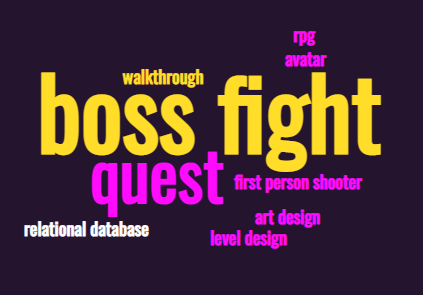
Close your eyes and imagine a group of people having a team meeting to kick-off a game development project. A glance at the meeting agenda reveals items such as assigning a project manager, discussing the different skills and roles needed for the project and brainstorming on an initial game idea. For the game idea, you hear someone mentioning a 2D platformer with a boss fight.
Now imagine all this taking place in an English communication class full of engineering students and on an online platform. Is it working, are they learning and are they enjoying it? Yes, yes and yes.
In this blog text, I’ll be discussing integrating and simulating English studies successfully into any study module in any discipline by providing an example from a game development study module at Metropolia UAS.
Quest for Meaningful and Inspiring Learning Experiences
Universities of Applied Sciences are by default focused on project and problem based learning, which means simulating projects and solving problems typical for worklife is at the center of most learning. This approach has a solid foundation in research, which claims that students (and teachers!) are more motivated and learn more in integrated and simulated learning contexts (see e.g. Loepp 1999; Terenzini 2020).
Integrating subjects is not a new idea and several well-established models, such as the interdisciplinary model or the problem-based model, exist for different types of contexts and school levels (Loepp 1999). Well-executed integration is not something to be taken for granted despite following a model, but typically requires strong personal commitment and dedication from the individual teachers involved.
In Metropolia University of Applied Sciences, game development (Metropolia, 2021) is one of the four 15cu study modules, aka themes, IT engineering students complete during their first year of studies. Game development was considered an important theme as Finnish gaming companies are attractive employers for IT students, thanks to the success of Rovio and Supercell to mention a few. The current game development theme has been designed to include the following courses/topics:
C# object oriented programming
Basics of relational databases
Game development tools and project implementation
Communication in English and development of presentation skills
Concept of StartUp business model
Basics of Mathematics and Physics.
When the gaming theme was first created in connection with a curriculum revision 7 years ago, a great amount of work by the teachers went into integrating the different subjects into a gaming project. It wasn’t a very structured and formal process, but looking back now we managed to address many of the questions suggested by best practice to arrive at a meaningful and inspiring entity, which is work-life oriented.
Key Questions to Answer
As listed by Steamedu (2021), some of the key questions that merit close attention when creating a module are:
Why is this module needed?
What is the purpose/goals of the module?
What is the content of the module?
What is the expected result?
What kind of module is this? (e.g. exploratory, design, expressive, project based, combination etc.)
When will the activities of the module take place, what is the time frame?
Where does the module take place? In which learning environments?
What tools are needed to successfully complete the module? E.g. equipment, tools, materials, financial resources, technology, online tools, books, human resources, etc.
How is the module evaluated for module quality and outcome, learning outcomes, effectiveness of project methods
What are the risks associated with the module?
Answering these questions and planning the theme further made me realize it would be possible to engage in true integration and I remember the excitement and inspiration I felt right from the very beginning. The excitement hasn’t faded either. Working together with the other teachers on this integrated module has been highly rewarding all these years. The module has also been developed further every year in the spirit of continuous development and I personally feel I’ve managed to create a course structure and content I’m truly satisfied with as the course additionally simulates work-life as closely as possible.
Course Walkthrough
My focus in the latter part of this text is on providing my readers a walkthrough on how English communication was integrated into the game development theme through the gaming project where students develop a game in teams in 8 weeks only, and how the English communication part has developed just recently. I will share my insights with you here for a structured approach to simulating work-life in the classroom, in my case from the communication point of view.
For the English course, the early-year course contents were agreed upon with the other English communication teachers involved in the game development module. From the start, it was clear we would let the students work on their projects in class in English, with them using the skills and knowledge they had acquired in their other game development courses, for example programming, taught in Finnish. The only subjects in the gaming module, which proved to have no real common ground for integration with the English course, were math and physics.
Other components of the English class included for instance project communication skills, presentation skills, reporting skills and making CV’s in English. All of these centered on teaching how to communicate about the gaming project at the final seminar organized at the end of the 8-week project. An example of animated presentation slides by one team from this fall is found here. (Blatter et al. 2021).
Towards True Simulation
Later, my own classes started to evolve even more towards simulating work life in game development. The four specific questions I asked myself when continuously developing the structure and content of my classes are shown below. These questions are of course applicable for any job in any field by just changing the term game developer with a different job.
What is a typical work day in the life of a game developer?
Which aspects of this work can be easily simulated in my class?
Which aspects need modifying in order to work in my class?
And most importantly, how can I make the students come to class and start working without the necessity of a lengthy teacher briefing first? I felt this was significant mainly because this is how most work takes place: people come to work and start working without anybody telling them every time what to do.
To come up with answers to my questions I went looking for a precise answer to my first question by googling “What does a typical work day look like for a game developer?” Naturally, I got several hits and this is for instance what gaming industry expert Jason W. Bay (2016) has to say about it in his podcast aimed at wannabe game developers:
Once everybody is in the office, it’s pretty common to have a team meeting, especially for studios that use Scrum as a development method. Teams will usually have a morning stand-up meeting to talk about what they accomplished the day before, what they’re going to accomplish today, and discuss any problems that might be blocking their progress.
After that, everybody goes back to their desks to handle email, plan their day, and get to work. Most of the day is spent doing the core part of the job. Artists will spend that time planning and creating the game art. Programmers will spend the time writing and debugging source code. Designers might spend it by writing documentation or putting together game levels and so on.
Current Course Core
Based on this description and working out answers to my questions 2 and 3 to modify the required parts, my course (in Zoom due to the pandemic) is currently built around
team meetings at the beginning of classes where the students
plan what they’re going to accomplish that day and who needs to do what. They then go on to
work, alone or together, on the tasks they specified and before class is over, get together with their team to
discuss progress made and any problems they encountered. If a solution was found, they spend some time advising each other on how to avoid similar problems.
The game-related tasks can be anything from coding and art design to building relational databases. As the very last thing in every class, students share their progress with the class, in brief, by showing their Trello or Microsoft planner which they use to manage their whole project in a visually pleasing way in one platform, available to all team members at all times.
Classroom Turned into Workplace
My question number 4 got solved by adopting this repetitive way of working through team meetings, as I am now able to have students come to class and know exactly what to do completely on their own. What’s more, they are using the IT and other skills they’ve learnt in courses taught by other teachers in the module, but now communicating about them in English in order to work on their projects. To me, this way of working is as close as it gets to integrating courses and simulating real life gaming workplaces.
Since the course contents continue to feature presentation skills, reporting skills and such as before, I obviously spend class time on teaching these skills, but in each class actual work on the tasks, whether game related or communication skills related, starts by having a meeting and deciding on which tasks to work on that particular day.
Challenges
Two challenges remain for this type of integration:
In the ideal situation, all students would work on all aspects of the gaming project, but in practice one student tends to work on coding, another one on game art and yet another on something else, according to their personal skills. This of course emulates work-life in gaming in a great way, but is not the best way in terms of learning purposes, which would require all students spend time working on coding, for instance.
Monitoring what students are doing during class is difficult in Zoom, even though it is possible to visit the breakout rooms. This is mainly because students spend a great amount of time also watching tutorials and looking for information online. This means there might be total silence in the room when I go there. In the classroom, it is easier to see at one glance what is going on with different teams. This is why I recommend contact lessons for this type of activity.
In my experience, and despite the challenges, the best way to increase the level of motivation and inspiration of teachers and students alike is by integration and simulation. It makes learning (and teaching!) fun and exciting, just like playing a game. Today, all this is easier than ever thanks to advances in digital technology. Wanna play?
References
Bay J. 2016. What is a typical day in the life of a video game developer?
Blatter J., Oksanen S., Virtanen R. 2021. Final Presentation (Google slides)
Loepp F. 1999. Models of Curriculum Integration.
Metropolia. 2021. Study Guide. Information and Communication Technology. Game Development. (in Finnish)
Steamedu. 2021. GUIDELINES FOR INTEGRATING DIFFERENT SUBJECTS
Terenzini P. 2020. Six characteristics that promote student learning (opinion)
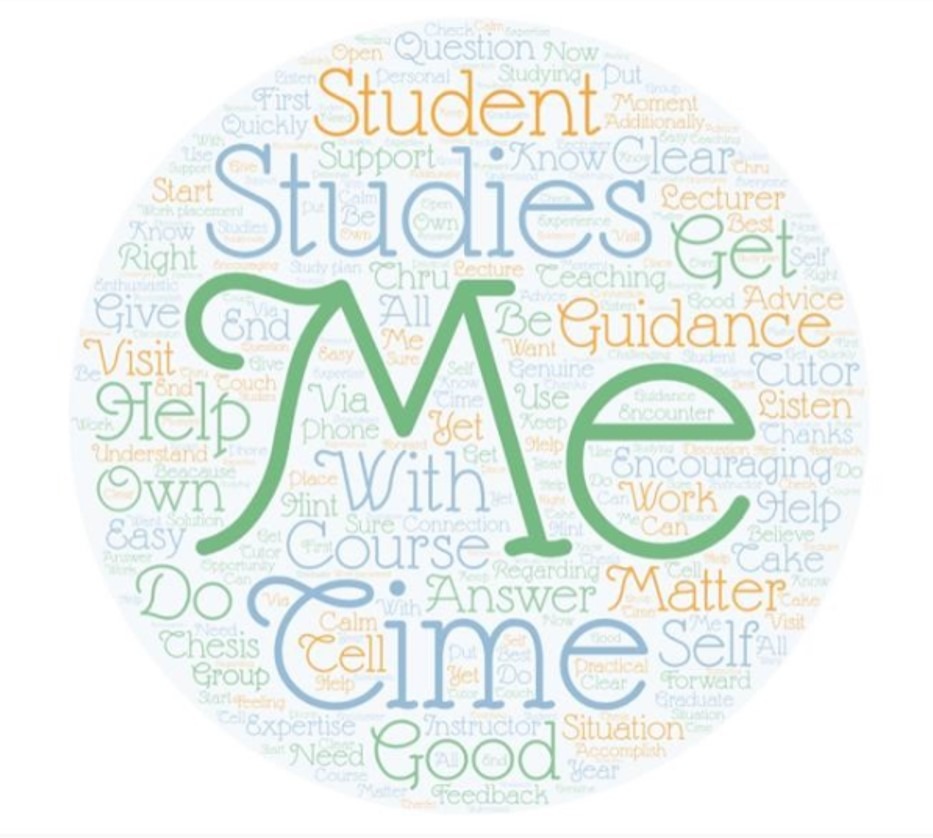
At the end of year 2020, Metropolia asked students and alumni to share their stories of good student guidance and counselling that they have received during their studies at Metropolia. This survey was a part of the on-going development project where a student-oriented guidance model is being created for Metropolia. The nearly 200 responses drew a picture of numerous Metropolia staff members as compassionate and versatile professionals as well as genuinely empowering and supportive instructors.
The development of student guidance is one of the goals in the current Metropolia strategy. One concrete part of it is building a student-oriented guidance model. The development of the model started in autumn 2020, and the goal is to complete the model during 2021.
One of the basic building blocks in the student-oriented guidance model is understanding that guidance belongs to everyone. It is not only top-down, information flowing from a teacher to a student, but guidance takes place in all encounters. In this article, we focus on the interaction and guidance between the teacher (instructor) and the student.
The quotes presented in this article were received from the student survey. The citations were edited to protect the privacy of the respondents, but the contents were not changed.
Good Guidance Needs Time, Attention and Respect
According to the classic view of Onnismaa (2007), good guidance needs time, attention and respect. In a guidance situation, the relationship between the instructor and the student is equal and confidential. Guidance should not be grounded on the instructor's assumptions or beliefs, but rather on solutions derived from facts, listening and interaction.
Good guidance strengthens the student's self-confidence and sense of agency.
There was a feeling that the situation will work out and they have faith in me.
No fuss, but straightforward nudging.
My thesis process was stretched, but the teacher didn’t blame me for it. Doing the work was more motivating when you were trusted and things were handled with a positive mindset.
In accordance with the holistic guidance model (Watts & Van Esbroeck 1998), guidance is a layered and comprehensive collaboration between different actors for the benefit of the guided person. These actors include teachers and guidance counsellors, tutors and student services coordinators, informaticians and janitors. The counselling of learning and studies includes also guidance of professional as well as personal growth.
I received individual guidance through a video call for information search within my field of studies and for using the school library.
I am rethinking my career choice. I received tips and advice from my guidance counsellor on putting my studies on hold and possibly resuming after the pause.
The different aspects of guidance are integrated into each other when everyone working with the student gives their share – either knowingly or unknowingly. The interaction between the student and the teacher plays a particularly important role in the student's learning process. In the survey answers guidance counsellors also came out as a significant supporters in students' study paths and lives.
Guidance Is Part of Every Teacher’s Work
Every teacher is involved in student guidance and counselling, whether they knowingly make a decision to do so or not. The guidance situation is always a threat and an opportunity at the same time - what the teacher does and says can have far-reaching consequences. Even after decades, someone still remembers the frustrated gust of an elementary school teacher: "You'll never be anything!" On the other hand, the teacher's supportive words can give the student faith in their own competence and support them in their life for a long time.
The teacher's feedback was sincere, so I knew it was true.
She heard and understood me and said I don’t have to do more than I’m able to.
The teacher didn’t allow me to get it too easy. Teacher should and must require performance based on what the student is capable of.
Whenever a teacher encounters a student, he or she influences the student's self-perception as a learner, student and person, but in addition the teacher has an influence on the student’s attitudes, motivation, self-confidence as well as perception of hope and faith. That is why it is important to think about and be aware of how you act in different guidance situations.
Consider these:
How do I influence this student through my own actions and my verbal and non-verbal communication?
Do I create hope or despair, courage or fear?
Do I teach life-long skills?
Do I offer quick advice and pre-chewed answers or do I respect the student's right to make choices and decisions about his or her own life, whether they are right or wrong in my opinion?
Does my guidance stem from compassion and genuine desire to help?
A Little Guide to Good Guidance
In the student survey, a few themes were often mentioned together with good guidance. These themes can be summarised as a four-item guide:
1. Stop and listen
Listening actively is sometimes easier said than done. However, the supportive effect of presence and active listening can be significant. Correspondingly, without these, the speaker may be left frustrated (Freese, 2021).
Compassion, a sense of personality. An equal, sincere encounter.
I remember the warmth and how easy it was to approach this teacher. The teacher encouraged me to get in touch.
2. Ask and encourage
Coaching is an approach where the coach helps the coachee to harness their strengths when targeting their goals. A coach operates with open-ended questions and refrains from ready-made answers. (Ruutu, 2020).
The instructor can also help the student to see things from new perspectives, which can already be a sufficient help to initiate the student´s own problem solving (Mattila, 2011). The instructor’s encouraging words concerning the student’s ability to move forward in a situation can be crucial. In fact, a strong self-reliance seems to protect well-being and reduce stress, according to some research (Ruutu, 2020).
The teacher challenged me to think.
I received good and encouraging, but above all critical and challenging guidance that changed my self-perception as a researcher and a professional in my own field.
In a difficult situation, I received gentle and encouraging guidance. I was able to put my studies on hold since I had clear plans for the future.
3. Focus on the encounter, not the tool
During the Covid pandemic the chance for real-life encounters was dramatically decreased. But luckily we have had the opportunity for genuine connection via online tools. The video call connection is more reminiscent of face-to-face interaction than we might have thought (Hietanen & co, 2020), and psychological security can be built in the encounter regardless of the medium (Raivio, 2021).
The guidance via Zoom went great. No rush at all, the teacher had enough time to figure out the basics.
I can email the teacher and the he will respond quickly. If necessary, he offers to explain in Teams if something is unclear.
When I needed help in recognition of prior learning, the teacher helped with it “hand in hand” via Zoom.
4. Trust in yourself and know your boundaries
There’s no requirement for the teacher to be an expert in all fields. A good instructor is a genuine, compassionate person who stays present and listens actively. A good instructor also knows their boundaries and when the student needs more specialised services. Respecting your boundaries is also a way of cherishing your own well-being.
Guidance is nor brain surgery nor rocket science. Even with a little guiding touch it’s possible to help the student to solve problems that would otherwise be difficult to overcome. Sufficient guidance could be for example as simple as asking questions or helping to break a bigger problem down into smaller parts (Säljö, 120). In fact, over-caring can make it difficult for the student to stay active and increase their sense of dependence (Lindqvist, 129).
The teacher knew how to prioritise, bring focus and encourage.
One challenge at a time, the teacher helped us move forward in our studies. He encouraged and supported us whenever we needed.
Developing Guidance Skills is a Part of Strategy Implementation at Metropolia
Metropolia's strategy 2021–2030 emphasises eg. respect for humanity and support for continuous learning. In addition, Metropolia's values – openness, community, high quality and expertise – are the core pillars of good guidance.
One of the goals in the student-driven guidance model is to enable the teacher and the student to meet each other honestly and intentionally. This kind of encounter requires time, attention and respect – which cannot take place if the student is only a part of a faceless student mass for the teacher. Genuine encounters require an open and confidential atmosphere. All members of the higher education community, both students and all staff, are responsible for creating and maintaining it.
We all have what it takes to be a good instructor. Often the tiniest consideration is enough: a smile and a sincere question “How are you?” can give the student the experience of being seen and heard. A good instructor is not expected to be perfect or to apply a particular top-down guidance role; the personal approaches to guidance are a richness!
Teachers enthusiasm inspired me.
No hyping or fake pushing but a lot of work!
You can talk to a teacher about things by the real names without interfering with issues of prestige and status.
Authors
Ulla Forsström, Paula Lindqvist, Mari Rupponen, Raisa Varsta, Anne Ojala-Soini and Anne-Mari Raivio are members of Metropolia's steering development group. The development of the learner-driven guidance model started in 2020, and the aim is to complete and use the model during 2021. The model's core idea is summed up in our service promise:
You will receive appropriate guidance on your own study path in a way that suits different situations and at the right time. Appreciating and interactive guidance supports your learning and goals at different stages of life.
Sources
Freese, Pekka 2021: Aktiivinen kuuntelu – Psykologi kertoo miksi, mitä ja miten. Read 22.4.2021.
Hietanen, Jonne O.; Peltola, Mikko J. & Hietanen, Jari K. 2020: Psychophysiological responses to eye contact in a live interaction and in video call (Wiley Online Library). Read 22.4.2021.
Lindqvist, Martti 2016: Auttajan varjo. Kustannusosakeyhtiö Otava, Otavan kirjapaino Oy, Keuruu.
Mattila, Antti S. 2011: Näkökulman vaihtamisen taito. WSOY, in co-operation Bonnier Books Finland. Printed in the EU.
Metropolian strategia 2021-2030.
Onnismaa, J. 2007: Ohjaus- ja neuvontatyö: Aikaa, huomiota ja kunnioitusta. Gaudeamus Helsinki University Press.
Raivio, Anne-Mari 2021: Voimavaraistava kohtaaminen – myös verkossa! In Varsta, R.; Raivio, A. & Ruotsalainen, T. (Eds.): Kohtaatko ihmisiä uralla? Voimavaraistava ohjausote (Theseus). 21–31. Metropolia Univeristy of Applied Sciences, Helsinki. Read 22.4.2021.
Ruutu, Sirkku 2020: Coachin työkalupakki. Alma Talent Oy, Balto Print, Lithuania.
Säljö, Roger 2004: Oppimiskäytännöt. Sosiokulttuurinen näkökulma. WSOY, WS Bookwell, Juva.
Watts A.G. & Van Esbroeck R. 1998: New Skills for New Futures. Higher Education Guidance and Councelling Services in the European Union. Fedora: VubPress.
Lue tämä blogikirjoitus suomeksi: Mistä on hyvät ohjaajat tehty?












Kommentit
Ei kommentteja