
Interview with Heidi Stenberg, Director of School of Rehabilitation and Examination

Metropolia's core activities in learning and business are conducted through 10 different departments, with the School of Rehabilitation and Examination being one of them. This department includes a variety of degrees, both at the bachelor's and master's levels. My main task as the director of school is to lead the activities of my department in accordance with Metropolia's strategy, with a particular focus on learning activities. As the Director of School of Rehabilitation and Examination, I am responsible for the results, personnel, finances, and quality of the department. In practical terms, this means close cooperation with team and degree coordinators, planners, and lecturers. I have been working as the Director of School of Rehabilitation and Examination for just over a year. My predecessor also served as Metropolia's representative on Urhea's Board, so this role naturally transitioned to me. As Metropolia's representative, I actively collaborate with Urhea, so it was only natural that I participate in the Pro-Athlete UAS audit process. I am active in sports myself, and my children have also engaged in various sports. A few Finnish championship medals have even landed in my family. Promoting an active lifestyle and supporting elite sports are also personally close to my heart. Heidi Stenberg is the director of school of Rehabilitation and examination and Metropolia's representative on the board of the Helsinki Metropolitan Area Sports Academy, Urhea. What is Your Role as Metropolia's Representative on Urhea's Board? Urhea's board consisting of representatives from sports federations, secondary schools, universities, and cities, among others. In addition, the board includes various athlete, support service, and expert members. Metropolia is one of Urhea's seven university partners and one of the founding members of the Urhea Foundation. Collaboration with Urhea is very important for Metropolia. Urhea's mission is to enable success in sports and dual careers through close cooperation with network partners. Urhea's board meets regularly several times a year, and as Metropolia's representative, I bring the university's perspectives to the board meetings. The representative role emphasizes strategic cooperation, i.e., how Metropolia, as Urhea's university partner, can support Urhea in succeeding in its strategy. Another important task in this role is to ensure the flow of information so that Metropolia's Urhea actors and sports team are informed about the issues discussed in the board. Collaboration with Urhea also involves participating in various events, which either I or other Urhea actors, such as Urhea Customer Manager Titta Komssi or Study Counselor Paula Lindqvist, attend. How is the Combination of Elite Sports and Higher Education Promoted in Different Departments? Elite athletes have been identified as an important customer group at Metropolia, and as a university of applied sciences, we are committed to supporting athlete students' opportunities for dual careers. The combination of elite sports and higher education is promoted in various ways within the departments. Promoting dual careers for athlete students requires cooperation both within Metropolia and externally. I communicate about the "Athlete Metropolia" concept to other directors of schools in our joint meetings. Another example of internal cooperation is the athlete student pathways built for different competence areas, which have been facilitated by experts in continuous learning. Many of Metropolia's experts are involved in this internal cooperation. In addition, personal study plans (HOPS) for students include various ways for athlete students to complete their studies, allowing them to choose the options that best support their sports careers. These include online studies and the recognition and accreditation of prior learning (AHOT). In addition to HOPS, tutors and study counselors assist athlete students in scheduling their studies. It is crucial for athlete students to highlight their athlete status so that Metropolia can implement the elite athlete process. What New Insights has the Pro-Athlete UAS Audit Process Brought to the Cooperation Between Metropolia and the Sports Academy? The audit process is still ongoing, but the work done so far has emphasized the importance of broader cooperation with partners. Our task at the university of applied sciences is to train new professionals to meet the needs of the changing workforce and to build educational pathways that align with the Ministry of Education and Culture's Vision for Higher Education and Research 2030. Creating and maintaining cooperation structures is extremely important, and the Pro-Athlete UAS audit process has reinforced this idea. Metropolia has several business and organizational partners, with designated customer managers from Metropolia's staff working with them. The appointment of a customer manager demonstrates our commitment and investment in cooperation, which we hope will be as smooth as possible for all parties involved. Collaboration with Urhea is not only the responsibility of the customer manager but also involves a sufficiently broad group of actors to ensure that the cooperation progresses as planned. Systematic and organized cooperation is needed, and for this purpose, Metropolia has assembled a sports team from its staff and the student organization METKA. The sports team's task is to advance development processes and identify areas for improvement in Metropolia's operations. The audit process currently involves a self-assessment, where we examine Metropolia's activities and practices to enable dual careers for athlete students. In the next phase of the audit, an external group will interview Metropolia's staff and students regarding these practices. It is very important to conduct such audits because they provide us with insights and data on how we can better support athlete students and enable dual careers. What Message do You Want to Convey about the University's Pro-Athlete Sports Activities and the Significance of the Audit? The Pro-Athlete UAS audit highlights the importance of elite sports - I believe elite sports have a significant impact on national identity. Watching sports competitions and seeing Finns succeed in sports brings great experiences to many. The 2024 Paris Olympics provided me with such experiences. Although the media portrayed Finnish Olympic success as weak, there were also successes. I closely followed dressage, where Finns performed excellently. It was thrilling to watch the competitions - I lived through the competition. Elite sports can provide us with wonderful, shared memories. Sports have been a part of my life since childhood through my father, and watching many sports competitions has left a strong, emotional memory. I still vividly remember how the whole family watched Finnish elite athletes' performances in both individual and team sports on TV with excitement during my childhood. At Metropolia, we have the privilege of playing a significant role in supporting elite athletes. We are part of a larger whole - we can help ensure that Finnish elite sports thrive. The audit is an important tool for us to examine our own activities and further develop the support for athlete students and the enabling of dual careers at Metropolia.
What is HUMKK? Athlete Student, Ask Your Study Counselor!

Metropolia is currently preparing for the Pro-Athlete UAS status audit, which will be held in March 2025. In this blog series, Metropolia's top and competitive athlete students, as well as staff and partners involved in HUMKK preparations, will have their say. Introducing Paula Lindqvist, a Long-time University of Applied Sciences Expert and Study Counselor Paula has extensive experience as a study counselor and vocational special education teacher, and for some time as a degree program coordinator. Her job also includes being the contact person for athlete students. Her daily work largely consists of guiding students: study plans, matters related to taking study breaks, considering and completing unfinished studies fill many workdays. Being a study counselor at a university of applied sciences is very versatile and lively work: the job description includes many different types of tasks, not all of which are necessarily related to each other. It is then good to remember how these things can be tied together into event chains – or delegated to the right party in collaboration with colleagues. What is the Current Situation of Athlete Students at Metropolia: How Many Are There, What Sports Do They Represent, and What Kind of Issues Do They Turn to You For? The Helsinki Metropolitan Area Sports Academy Urhea has reported about 30 athlete students to us, and the number is certainly higher when including other goal-oriented competitive and high-performance athletes. Metropolia also has league-level athletes who may not have realized their status as high-performance students or simply do not feel the need for additional support in their studies due to the existing flexibility. By systematically informing study plan advisors, tutors, and study counselors, we can get a broader and more accurate picture of high-performance students at Metropolia. The open pathway for athletes also supports identification. Describe a Typical Workday in Handling Student and Athlete Student Matters There are generally no two identical workdays, although there are almost always student meetings. The basic work routine includes many different team meetings (e.g., Counselor Team, Special Education Team) and meetings with students and study psychologists, counselor info sessions, and similar sessions, as well as study technique info sessions for new groups. I also try to participate in training webinars whenever possible. A very large part of the work involves responding to emails from students, teachers, and external parties: answering questions and inquiries from applicants, high school counselors, and TE services advisors. What Kind of Athlete Student Issues Do You Want to Influence and How? Firstly, to be able to see different strengths: people produce skills in various fields, such as culture and art. Applicants who want to study with a sports focus are important to us, and their skill development is seen as versatile, thus avoiding confrontation such as art vs. sports – a student can and often is talented in both! I hope for administrative action. If a student with a competitive or sports background at Metropolia needs discretionary study time because of the demands of sport, we must act equally because we want to encourage the student to succeed in their dual career, i.e. developing two types of competences at the same time. Additional expertise: a special merit pathway could possibly also come to Metropolia, as it is in some other higher education institutions. We could investigate this. It is important to develop teachers' understanding, e.g., when an athlete is in the national team or a team, which we at the institution do not always fully understand (yet). Commitment and participation in essential sports-related events are important for the athlete, and athlete students are usually very conscientious. Study schedules need to be even more flexible in these areas. Greetings to Athlete Students Aspiring to Metropolia As a university of applied sciences at the beginning of its HUMKK path, Metropolia works hard and listens sensitively to its students in this matter as well. Cooperation with METKA is already being done on the athlete student issue. Additionally: from cheerleaders to weightlifters, the range of sports among our students is absolutely amazing! There are even sports that one didn't realize existed, such as underwater rugby (an example of a graduated student). Our students have potential and skills! It is worth promoting the academic recognition of sports and the joy of one's own sport!
Annika: Competitive Athlete and Student

Annika, a 26-year-old working Master's student and volleyball player: I have always enjoyed all kinds of sports and, in addition to volleyball, I also played ice hockey and soccer as a child. I also play padel and badminton to varying degrees. Besides volleyball, I spend almost all my free time in the summer playing beach volleyball at Hietaniemi beach. You could say that I identify very strongly as a competitive athlete, as I spend the most time on it throughout the year. Volleyball as a Sport I started playing volleyball at the age of 6, inspired by my mother and older brother. Playing volleyball and team sports teach children very important group and leadership skills, which are still useful today, for example, in work and study life. Through volleyball and beach volleyball, I have also made many friends. Although teams have changed over the years, friendships have remained. Volleyball is a very tactical and technical sport. There is always something to learn, even after 18 years of playing. Although basic skills can be learned at a young age, development never stops, and skills are honed to perfection, which may never be fully achieved. Every opponent is different, and you have to adapt very quickly to what the opponent is doing in the games. Volleyball also requires mental strength, as your individual performance must be at a high level if you want to succeed in games. These pressures must be endured from match to match. Master's Studies at Metropolia Outside of volleyball, I work in training and developing patient information systems. After working for the two years required for Master's studies, I started exploring further study opportunities through Opintopolku. I knew I was interested in all forms of digitalization, but I didn't know what universities of applied sciences had to offer. I found a Master's program in digital services expertise in the social and health sector offered by Metropolia. After reading more about this program, it was actually quite easy for me to choose this program. It had everything I hoped for in further studies. Scheduling I started my studies in the fall of 2023, and in addition to this, I have been working between 80-100% of full-time hours. It goes without saying that combining competitive sports, studies, and work has sometimes been challenging. Although there are enough hours in the day to accomplish everything, it is also important to remember to rest, recover, and maintain a social life. A typical week often includes a normal workday, 6-7 training sessions, a game day, and school assignments. Due to my day job, I often cannot attend lectures. In this program, it has been particularly important to me that I can advance my studies on my own time, as all lectures can be recorded and watched later. Additionally, all lectures are remote, which greatly eases a busy schedule. There have been some group assignments, and I have been able to complete some of them by juggling my own schedules. However, sometimes it has been impossible to complete group work due to scheduling challenges, and in such cases, teachers have offered the possibility of taking exams, which has suited my situation well. Study Support at Metropolia In the program, the ideation and planning of the thesis start very early, which gives more time to work on it. My thesis supervisor has been very understanding about the progress of the work but constantly encourages and guides me to keep working on the thesis. I am satisfied with the guidance also from the perspective that students are required to make progress despite competitive sports or other things that may slow it down. However, I have chosen to combine competitive sports and studies, and I should not expect to get a lot of relief from study-related matters. As a competitive athlete, I must accept that I may not be able to graduate on time if I want to take care of my mental well-being during my studies. Therefore, it has been reassuring to know that studies can be done more at my own pace, keeping certain deadlines in mind. Factors for Endurance Many people ask me how I manage to study, work, and compete in sports at the same time. As strange as it sounds, playing volleyball helps me cope with everyday life. When you love the sport you get to play every day, everyday life doesn't feel heavy. Of course, constant communication with my coach, supervisor, and tutor teacher is also central. An athlete must also recognize when to lighten training and when to take a whole day off from training. I have also found that clear scheduling of when I do school assignments helps me. You need to find the methods that work best for you. It is very important for an athlete to have a support network to rely on in difficult times, and I am grateful for mine. Greetings to Applicants Competitive sports and this program fit very well together because the studies are completely remote and all lectures are recorded. So, if you can't attend a lecture due to work or a competition trip, you can delve into the week's topics better on a day off. There aren't many lectures, but more independent work is done. In terms of group work, it is good to be prepared in advance that you will likely have to take more exams if your training and competition schedule does not allow for group work. And if you do group work, you need to invest just as much in it, whether you are a competitive athlete or not. However, I definitely recommend further studies so that there is something to do after a sports career. It is also worth exploring scholarship options, for example, from the URA-Foundation.
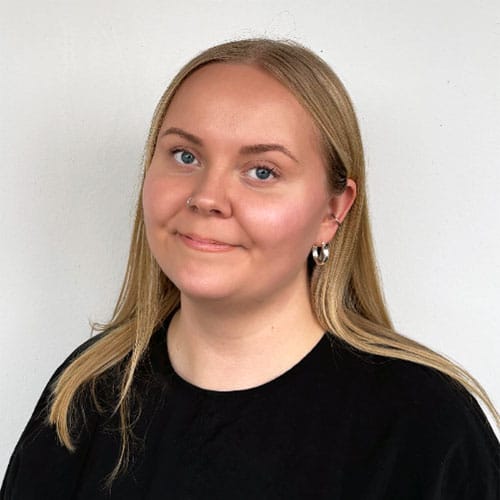
- HyMy Village and the HUMKK Audit – An Interview with HyMy Village Designer Sofi Olsson
- Jukka Tirri – Specialist Expert in Collegiate Sports and Key Contributor to the HUMKK Auditing Process
- TItta Komssi: Coordinator of the Metropolia Sports Team, Sports Customer Manager, Head of Degree Programme in Physiotherapy and Senior Lecturer
- Interview with Heidi Stenberg, Director of School of Rehabilitation and Examination
- What is HUMKK? Athlete Student, Ask Your Study Counselor!