
Tag: Studying in Finland
Why Finnish is Easier to Learn than You Think

When talking about languages, Finnish always comes up as being a hard language to learn. There are 15 grammatical cases and other grammatical things that can make you feel horrified. Sure, Finnish may be a bit hard language to grasp but it is not as hard as Japanese, Korean or Arabic, according to the US State Department’s Foreign Service Institute, FSI (1). Does this make you feel any better? Good! There are actually a few different reasons why I think Finnish is easier to learn than you think. Let’s get into it! Gender-neutrality, Loanwords and Suffixes Firstly, Finnish is a somewhat gender-neutral language since there is no grammatical gender (2). We only have one pronoun hän, which includes every gender. So, you only need to know one pronoun. On top of that, Finns also like to use pronoun se (which translates to it) to refer to a person. Therefore, when speaking Finnish, you will be fine just using the pronoun hän and/or se. Nouns are neutral in Finnish too. If you speak for example Italian or Spanish, you are probably used to nouns being either feminine or masculine. In Finnish, there are no feminine or masculine nouns. Also, the vocabulary is something worth mentioning. There are many loanwords from different languages in Finnish (3). English being the lingua franca, the English loanwords ease learning Finnish for a lot of people because the words are already familiar. For example, a banana is simply banaani, a paper is paperi, a hotel is hotelli and a camera is kamera. In addition, there are no articles in the Finnish grammar. You don’t have to worry about whether a, an or the is necessary. In Finnish, there are other ways to define and clarify things and situations. The aforesaid 15 grammatical cases come in handy with this one. Finnish is also, like all the Uralic languages, an agglutinative language which means affixes are attached to the word stems to form a word (4). I will give you an example of how this works. If you want to say my dog, in Finnish you say koirani. So, to break it down, the word for a dog is koira, and the possessive suffix is -ni which means my. In short, this is how conjugation works in Finnish: you add affixes to the end of the word. Finnish is a Phonetic Language If you have ever tried to learn, for example, French, you probably know that in some languages the words are written in one way but the pronunciation sounds like a completely different word. Well, luckily Finnish isn’t like this! Finnish is a phonetic language which basically means words are pronounced exactly as they are written (5). If you can master ääkköset (meaning the letters ä, ö and å), you’ll be on your way to being a fluent Finnish speaker! Also, there is something called vowel harmony which can make the pronunciation of Finnish words a bit easier. Vowel harmony means that front (ä, ö, y) and back (a, o, u) vowels can’t exist in the same word. Then there are two neutral vowels (i, e) that can exist with both front and back vowels. So, if you are wondering how to conjugate a certain word, this knowledge will come in handy. Plain Language Helps You Learn the Language To finish this off, I have an extra tip for you that you can use when you are on your journey to learn Finnish and already understand the language a bit. In Finland there’s plain language (selkokieli) versions available on many things (6). For example, we have plain language news on the television, and most government’s institutions have web pages written in plain language as well. These are useful for someone learning the language, because the sentences and grammar in general are simpler and easier to understand. If you are feeling down about learning Finnish, I hope this blog post can bring you some comfort. Finnish is definitely a unique language, but it is very possible to learn and be good at it. It just takes some practice. Author Jenni Savolainen is a communications intern at the Learning Networks and Services team at Metropolia University of Applied Sciences and a master's student at the University of Turku majoring in the Finnish language. Sources: Yle News 2013. Finnish among most difficult languages for English speakers. News article. Viewed on 21st of March 2023. Pirie, J. 2017. Finnish Grammar. Web site. Viewed on 23rd of March 2023. Tamminen-Parre, S. 2009. Collocations, attitudes, and English loan words in Finnish. Language Variation - European Perspectives III (2011), pages 215-225. Karlsson, F. 2006. Finnish as an agglunative language. Academic article. Viewed on 17th of March 2023. A taste of Finnish 2014. Finnish language. Course material. Viewed on 21st of March 2023. fi 2021. Plain language is easy to use. Web page. Viewed on 21st of March 2023.
Courage to Use Finnish – Growing into a Professional
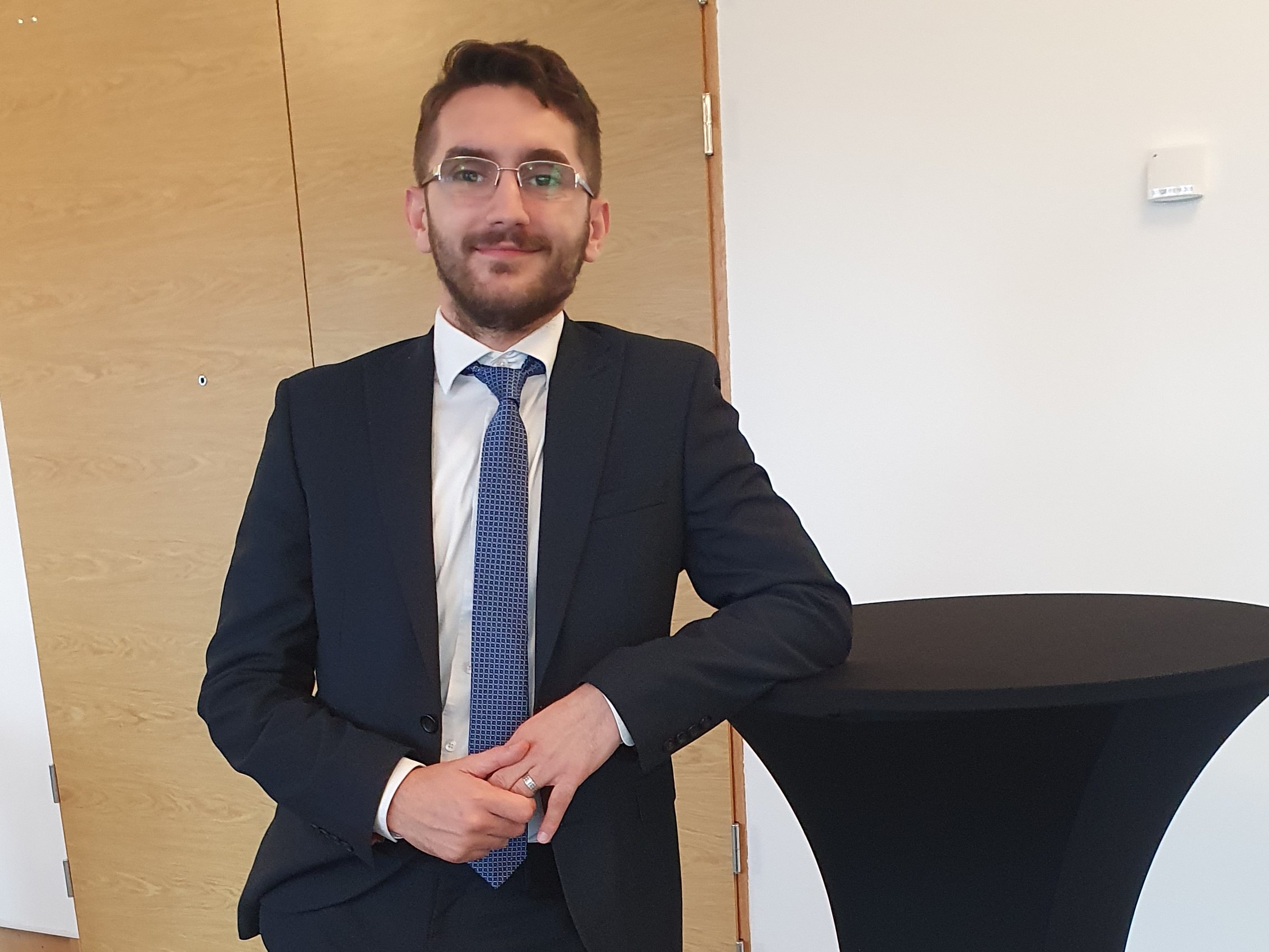
Immigration and emigration are sensitive topics to those who come to a new country and to those who accept the individuals. Those coming to a new country usually face struggle with integration and inclusion, especially when it comes to education and employment. The main barrier is often the language. My Finnish beginnings When I moved from Kosovo to Finland in July 2012, I started high school in Eira High School for Adults in Helsinki after less than a month. I, of course, started in an English-speaking program. Back then, I was completely new to my new home country and I was getting culture shocks almost every day, not only by Finland and the Finnish culture but by the international community within the program as well. I started learning basic Finnish immediately. However, after some time I noticed that my Finnish language progress was hindered by me speaking English all the time. I would switch to English completely when I did not remember a word in Finnish. When I started speaking Finnish with my friends who had the nerves to talk to me and correct me, it encouraged me to start switching from English speaking courses to Finnish ones. I started with Math where the need for complex vocabulary is not as relevant as in other subjects. Being in an international community in high school, I could hear every Finnish accent there is, which in hindsight benefited me massively as now I can easily understand different Finnish accents. Outside of school I started using Finnish in supermarkets and restaurants. When it came to the matriculation exams in Finnish language, I chose Finnish, Math, English and History. I barely passed them all, but did nonetheless. Even though my writing and spoken Finnish skills were not the best, I challenged myself, and I triumphed. Towards using the language at work My professional life in Finland has mostly consisted of working in Finnish speaking environments. When at the age of 18 I started a summer job working as a cleaner, I spoke only broken Finnish. By the next year I already saw an improvement in my spoken language skills. My Finnish was basic at the time but still it allowed me to access the coffee room discussions and gave me the necessary motivation one needs to continue learning. During my period when I worked as a security guard, I could no longer work with only broken Finnish, because the job required clear communication with people. For example, I could not use Google Translate in the spot, like I had when I worked as a cleaner. After the job as a security guard, I worked mainly in English for a while, gaining experience in Marketing and Content Creation. During my work placement in autumn 2020 at SIMHE services in Metropolia University of Applied Sciences, my professional Finnish has gone to another level. From the begining my focus was set into developing my Finnish in an office environment, also applying a model developed in SIMHE to support my language learning in a goal-oriented manner. This has boosted my confidence to use Finnish at work and improved my professional proficiency. Diverse workplace: not just the language, but also new perspectives and innovation Although employment might feel quite difficult for internationals in Finland, there is always hope and positive stories. I understand many of us search for jobs only in English, which are quite scarce, even though the number has been growing throughout the years. However, I would encourage everyone try and challenge yourself with Finnish. I have been through the process myself and I understand it is not easy and it gets tiring from time to time. It's good to keep in mind that we are trying to be professionals in a different country, which takes a lot of adapting and perseverance. At the end of the day, it is not all black clouds, because the international community is growing bigger and bigger in Finland, bringing a diverse set of skills to work communities. It’s good to understand that we as internationals not only represent our backgrounds and our culture, but we are skilled individuals as well, who bring innovation and other points of view to the table. Language is a barrier to be overcome, for sure - what we can do as foreigners is to try our best to adapt to the working culture and requirements in Finland. It takes courage to use Finnish as a beginner, but as long as you try, it shows professional motivation and opens a path to learning more. Ahmet Binaku is an intern at SIMHE Services and 4th year student in European Business Administration in Metropolia University of Applied Sciences (at the time of the writing)
How to succeed in higher education in Finland?

When browsing through various websites of Finnish higher education institutions (HEIs), you notice that the institutions emphasize the difference between studying in Finnish higher education and studying in some other country. But what does that actually mean? What are the differences between the Finnish system and a system in a completely different culture? The Finnish higher education system – simple or not? To understand the way of studying in Finnish HEIs, you need to start by exploring the Finnish culture, which is a complex mix of different traits. Two characteristics come up especially. The first is the emphasis of individuality. In the Finnish culture people are expected to take considerable responsibility of their own lives. In more collective cultures, people might rely on communities of different types in their life planning, such as their family or relatives. The second is the focus on independence. In the Finnish culture, it is highly appreciated to control your own life, to make independent choices and to take responsibility of them. When studying in countries with the collective culture as a strong influencer, the focus is on teacher centered teaching methods. The Finnish way of studying, strongly affected by our individual culture, focuses more on student centered teaching methods and emphasizes the responsibility of the students as active agents in their own learning. In the Finnish world of HEIs there is a sense of equality between teachers and students. In more collective cultures the teacher is considered as a know-it-all. Do not get intimidated by all this. You can learn to find your way and succeed in the Finnish world of higher education. Start by digging into your past. You have probably already acquired a vast collection of different study skills during your life. It is also equally important to understand, that while the previously learned study skills are useful, you might have to modify them suitable for studying in a Finnish higher education institution. And also, you might have to learn some totally new skills as well. The skills you need in order to survive in Finnish higher education In the Finnish universities and universities of applied sciences, study and learning skills are highly emphasized. Here are some examples (based on e.g. Kangasniemi & Murtonen 2017): Self-knowledge: Start by aiming to form an image of the skills and knowledge base, that you already have, and of the skills and knowledge you still need to learn to reach your goals. Not only in studying but also in working life, the key skill is to be able to map your competences. Self-direction: Self-direction has a major role in the Finnish world of higher education. For many students coming outside of Finland, this might be the key element which makes the Finnish way of studying so difficult to take in. Self-direction means, that you take responsibility of your own learning. You independently aim for understanding, and also for developing your thinking and expertise. Time management: The Finnish higher education gives you considerable freedom. But with that freedom comes responsibility. The courses take up a lot of your time and include also significant amount of independent work in addition to contact lessons, which need to fit into your everyday life. If you start studying in a somewhat new language, remember that it might take you longer to take on materials. Planning skills: Be prepared to plan the schedule of completing your degree including a yearly plan for courses to be finished. In addition to scheduling your studies, consider how you want your degree to look like. When planning, keep your focus in your future: what would be a good and useful mix of studies for the working life? Self-direction plays a strong part here as you ponder and find out things yourself. Readiness for team work: One of the most central ways to work around a course theme is to team work. This requires for you to be ready to communicate as you are not the only one in the team. Think of yourself in a group. What are your strengths and weaknesses? Step by step you create self-knowledge of you as a team member. Need tools for your survival kit? If you want to prepare yourself before pursuing degree studies in higher education, consider brushing up your study skills as well as Finnish language skills in the Metropolia Preparatory Education for Studies at the University of Applied Sciences for Immigrants, open for applications in August. Online version of the preparatory education, including a course in developing your study skills, is offered during the year 2019 by the development project Valmentavasta Valmiiksi, so stay tuned. Sources: Kangasniemi, Mari & Murtonen, Mari. 2017. Yliopiston toimijoiden näkemyksiä vastuullisen yliopisto- opiskelijan taidoista. Yliopistopedagogiikka. 24:1. https://yliopistopedagogiikka.files.wordpress.com/2017/07/kangasniemi-murtonen_press.pdf AMK-opintoihin valmentavat koulutukset maahanmuuttajille –website. 11.5.2018. http://www.metropolia.fi/koulutukset/maahanmuuttajille/ Valmentavasta Valmiiksi - project website. 11.5.2018. http://www.metropolia.fi/tutkimus-kehittaminen-ja-innovaatiot/hankkeet/valmentavasta-valmiiksi/
Blog introduces information, tips and insights that help international talents with a higher education background to integrate and find their study and career paths in Finland. The blog is part of Metropolia’s #talentboost actions.
Outi Lemettinen (head editor)
Riikka Wallin
Anu Luoma
Email addresses: firstname.surname@metropolia.fi
Editorial Board handles all the publications of Various Variables blog before publishing.



Belongingness Career Career Boost careercoaching careers Connecting employability employment entrepreneur entrepreneurship Finnish as a second language Finnish Job Market Finnish work culture Finnish working life Finnish workplace norms Guidance higher education higher education institutions highly educated immigrants Immigrants Inclusion Integration International jobseekers in Finland international student international talent job search job searching skills language learning mapping of competences mentoring Networking networks online learning recognition of competences Self-employment SIMHE SIMHE-Metropolia Skills Society strengths Studying in Finland Support talent boost Work in Finland Working in Finland