
Tag: SIMHE-Metropolia
Courage to Use Finnish – Growing into a Professional
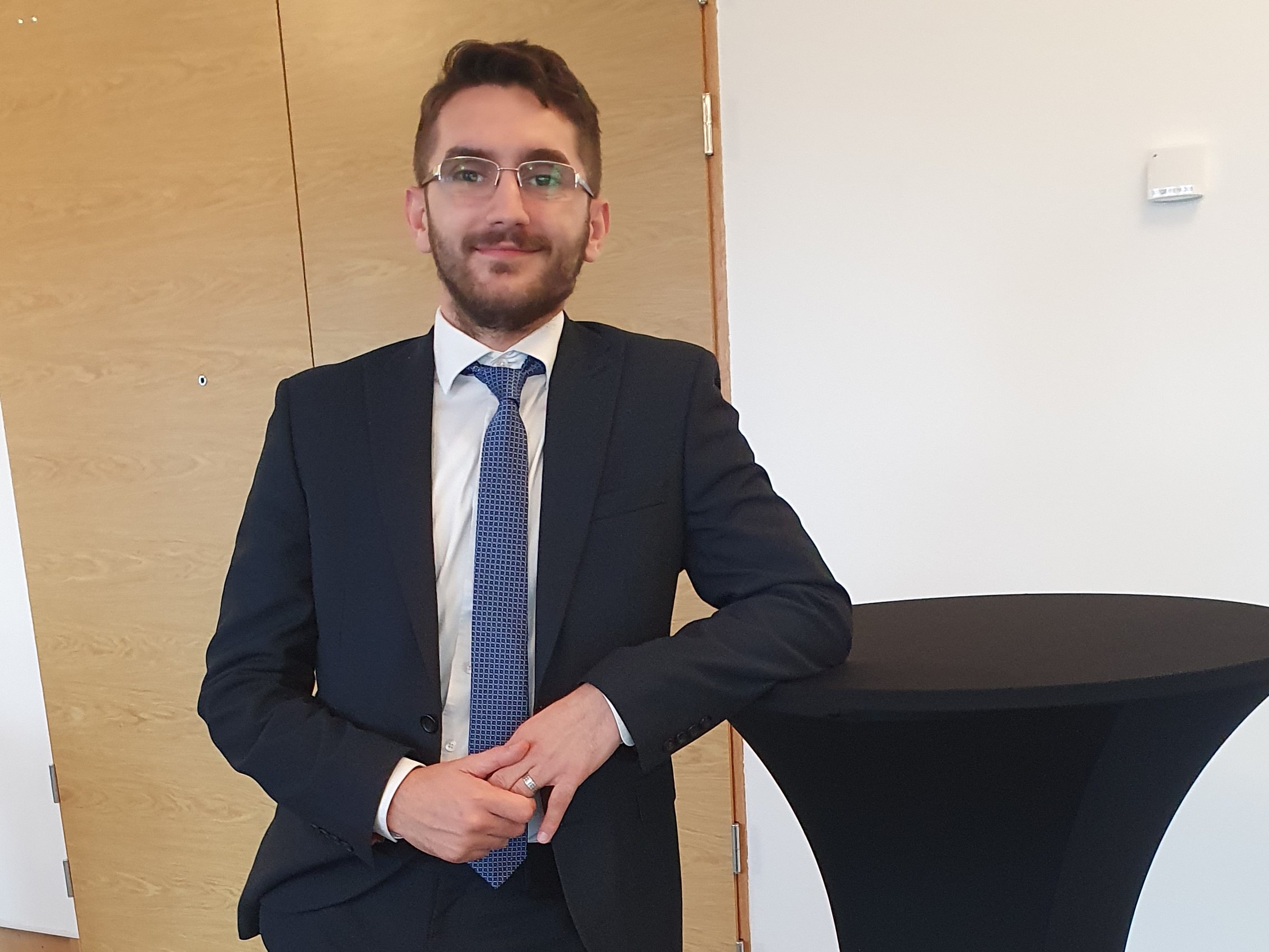
Immigration and emigration are sensitive topics to those who come to a new country and to those who accept the individuals. Those coming to a new country usually face struggle with integration and inclusion, especially when it comes to education and employment. The main barrier is often the language. My Finnish beginnings When I moved from Kosovo to Finland in July 2012, I started high school in Eira High School for Adults in Helsinki after less than a month. I, of course, started in an English-speaking program. Back then, I was completely new to my new home country and I was getting culture shocks almost every day, not only by Finland and the Finnish culture but by the international community within the program as well. I started learning basic Finnish immediately. However, after some time I noticed that my Finnish language progress was hindered by me speaking English all the time. I would switch to English completely when I did not remember a word in Finnish. When I started speaking Finnish with my friends who had the nerves to talk to me and correct me, it encouraged me to start switching from English speaking courses to Finnish ones. I started with Math where the need for complex vocabulary is not as relevant as in other subjects. Being in an international community in high school, I could hear every Finnish accent there is, which in hindsight benefited me massively as now I can easily understand different Finnish accents. Outside of school I started using Finnish in supermarkets and restaurants. When it came to the matriculation exams in Finnish language, I chose Finnish, Math, English and History. I barely passed them all, but did nonetheless. Even though my writing and spoken Finnish skills were not the best, I challenged myself, and I triumphed. Towards using the language at work My professional life in Finland has mostly consisted of working in Finnish speaking environments. When at the age of 18 I started a summer job working as a cleaner, I spoke only broken Finnish. By the next year I already saw an improvement in my spoken language skills. My Finnish was basic at the time but still it allowed me to access the coffee room discussions and gave me the necessary motivation one needs to continue learning. During my period when I worked as a security guard, I could no longer work with only broken Finnish, because the job required clear communication with people. For example, I could not use Google Translate in the spot, like I had when I worked as a cleaner. After the job as a security guard, I worked mainly in English for a while, gaining experience in Marketing and Content Creation. During my work placement in autumn 2020 at SIMHE services in Metropolia University of Applied Sciences, my professional Finnish has gone to another level. From the begining my focus was set into developing my Finnish in an office environment, also applying a model developed in SIMHE to support my language learning in a goal-oriented manner. This has boosted my confidence to use Finnish at work and improved my professional proficiency. Diverse workplace: not just the language, but also new perspectives and innovation Although employment might feel quite difficult for internationals in Finland, there is always hope and positive stories. I understand many of us search for jobs only in English, which are quite scarce, even though the number has been growing throughout the years. However, I would encourage everyone try and challenge yourself with Finnish. I have been through the process myself and I understand it is not easy and it gets tiring from time to time. It's good to keep in mind that we are trying to be professionals in a different country, which takes a lot of adapting and perseverance. At the end of the day, it is not all black clouds, because the international community is growing bigger and bigger in Finland, bringing a diverse set of skills to work communities. It’s good to understand that we as internationals not only represent our backgrounds and our culture, but we are skilled individuals as well, who bring innovation and other points of view to the table. Language is a barrier to be overcome, for sure - what we can do as foreigners is to try our best to adapt to the working culture and requirements in Finland. It takes courage to use Finnish as a beginner, but as long as you try, it shows professional motivation and opens a path to learning more. Ahmet Binaku is an intern at SIMHE Services and 4th year student in European Business Administration in Metropolia University of Applied Sciences (at the time of the writing)
Now everybody’s viral – how we made it to the new decade of online education and work
Homework, experiments, essays, even physical education, all being done by children, adolescents and adult learners all over the world in front of their laptops, from their homes. Never before have parents, spouses and other significant others been so close to the pedagogical aspect of educational process. The coronavirus crisis has changed our daily life in so many ways, but education has been in the spotlight since the beginning of this uncertain new decade. The world from home By the end of March, Unesco estimates that almost 90% of the world’s student population has been affected by worldwide closures of schools. In Finland, contact teaching has been suspended from 17th March 2020 – except for early childhood and pre-primary education (grades 1 to 3). Thus, about one million learners from primary school pupils to higher education students are studying online at least until mid-May this year, without knowing exactly when they will return to school buildings and university campuses again. Remote learning has become a reality on such a scale that not even the most optimistic Edutech executive could have predicted. But it came with many concerns, too, especially for the vulnerable population being them in Finland or Somalia. Firstly, nearly 60% of the globe’s population is online, so a lack of access to the internet is still a barrier for many students. Secondly, specialists are concerned that remote learning could enlarge the gap of inequality. And last, but not least, many kids depend on the school to get a decent meal. Still, the general feeling is that governments, companies, and NGOs are making a considerable effort to keep the learning going. Google, Microsoft and Zoom, for example, are offering many of their video conference software for free since the beginning of the crisis. Finnish Edutechs partnered up to provide free resources suited for distance learning. The Hongkong government, for example, announced that it should maintain a consortium providing more than 900 educational assets for free even after COVID-19 is under control. Will this crisis change the way we see and implement education? Specialists of the World Economic Forum writes that this unique experience might also be an opportunity to remind ourselves of the skills students need in this unpredictable world. Resilience is a value that must be woven into the educational system to make sure that those skills continue to be a priority for all students. Chip Paucek, chief executive of the online education company 2U Inc., expects that after schools try online tools during the outbreak, they’ll be more inclined to opt for “blended” educational experiences that mix in-person classes with online tie-ins after the situation improves. As nobody is considering shutting down schools and universities forever, it seems that the task will be to retain the online learning aspects and integrate them with face-to-face learning. Hamish Coates, director of the Higher Education Division of the Institute of Education at Tsinghua University, told The Times Higher Education that “there will almost certainly be a post-virus boom” in online higher education. SIMHE-Metropolia moved services swiftly to the virtual mode The guidance and counselling services have now been implemented solely online since mid-March at SIMHE-Metropolia. In normal times, the majority of our guidance and counselling customers wish to meet face-to-face at the Metropolia Myllypuro campus. However, providing counselling via phone or over the internet is not totally alien to us as meeting remotely has served some customers’ needs the best in the past, too. Being available online gives a total new concept of accessibility and convenience for the personal guidance discussion as there is no need to travel anywhere on either side. There is also more flexibility in scheduling the meeting times and customers have been very up to the new mode of meeting so far. The downside is a lack of all cues of non-verbal communication and the closeness and togetherness that can be experienced when sharing the same physical space. For now, two Guidance Generalia lectures have taken place virtually with over 30 participants. All has gone remarkably well, and elements of two-way communication were established via chat and the attendants posed questions quite actively. The lecture series will be carried out as a web-based format for the rest of the spring-term, and perhaps continue to co-exist with the face-to-face lectures once we are able to be campus-based again. The digital future is already here Even though the digital leap of the 2020’s was somewhat forced for many, the elements of web-based learning have emerged prior to the crisis too. At Metropolia, online teaching and guidance and counselling for preparatory course for immigrants was tested out in 2019 as part of the Getting Ready - A higher education program for immigrants project. As we are facing a somewhat unpredictable future ahead, Metropolia will offer preparatory courses for immigrants online also in autumn 2020. Teachers now have needed to adjust, not only the methods, but how to acquire a new mindset towards teaching. For Anne-Mari Raivio, senior lecturer of School of Business at Metropolia, the next step is to focus not on the tools but on the pedagogical side of online teaching and learning. “After this mandatory digital leap we will have more brains thinking about how we can add and create meaningful digital encounters to enhance learning”, she says. Undebatably, the societies around the globe will wake up to a different morning once the pandemic has surpassed. Millions, if not billions, of people have now learnt to work and study from home and this is not to be regarded only as a bad thing. In Finland, like the students, over a million workers have confined themselves in a remote work-mode, and about half of them are willing to continue this way even after they are able return to the offices one day. We do not know how this all will end, but perhaps we could confide in Albert Einstein’s wisdom in his quote “In the midst of every crisis, lies great opportunity.” Writers Juliana Holanda is a Brazilian journalist who lives in Finland since 2019 and has used SIMHE-Metropolia's guidance and counselling services as part of her integration process. Marianne Autero works as a career coach at SIMHE-Metropolia. Sources COVID-19 Educational Disruption and Response. Viewed 6.4.2020 Digital trends 2020: Every single stat you need to know about the internet Viewed 6.4.2020 Helsingin Sanomat 13.4.2020. Etäopetusta saa nyt miljoona opiskelijaa, mutta varsinaista kotikoulua käy vain noin 400 oppilasta. Viewed 13.4.2020 Free apps and resources to support distance learning in schools affected by the coronavirus outbreak. Viewed 6.4.2020 3 ways the coronavirus pandemic could reshape education, World Economc Forum. Viewed 6.4.2020 This is online education’s moment’ as colleges close during coronavirus pandemic. Viewed 6.4.2020 Will the coronavirus make online education go viral? Viewed 6.4.2020 SIMHE-Metropolia. Viewed 6.4.2020 Metropolia Myllypuro campus. Viewed 7.4.2020 On-line counselling pros and cons. Viewed 13.4.2020 Guidance Generalia lectures. Viewed 13.4.2020 Getting Ready – A Higher Education Preparatory Program for Immigrants. Viewed 13.4.2020 SIMHE-Supporting Immigrants in Higher Education in Finland. Viewed 13.4.2020 E-mail interview with Senior Lecturer Anne-Mari Raivio, Metropolia University of Applied Sciences YLE uutiset.5.4.2020. Yli miljoona suomalaista siirtynyt etätöihin koronakriisin aikana - heistä noin puolet haluaa jatkaa etätöissä koronan jälkeenkin. Viewed 13.4.2020
Networking – key to employment

How have you boosted your professional networks in the past couple of months? As we embarked into this decade, the Finnish Innovation Fund Sitra published a compilation of future mega trends (1) stating that the importance of networks and managing them will only continue growing. But how to discover and seize opportunities for networking? This is with no doubt one of the most frequently asked questions I encounter in my work as a career coach for international talents at Metropolia University of Applied Sciences. Institutes of higher education boosting networking between businesses and international talents Networks surely are vital for the integration process of a newcomer entering the Finnish labor market, and the lack of professional networks is perceived as one of the main obstacles to the employment of international talents. This scarcity of networks gives rise to another issue: Employers are struggling to spot the international talents with suitable profiles, while the latter group finds it hard to discover Finnish businesses in their own field (2). According to a study on cooperation between Finnish institutes of higher education and businesses, issued by the Ministry of Economic Affairs and Employment and the Ministry of Education and Culture (3), the main objective for businesses collaborating with institutes of higher education was recruiting new workforce. Further development of networking opportunities meeting the needs of everyone involved is for sure in demand, and it seems to be a timely objective for us at institutes of higher education. Perks of tailored recruiting events We, the SIMHE Metropolia team (4), have the luxury of working with various groups of international talents: both current international degree students, and persons with a higher education degree from abroad seeking to develop their career in Finland. Among these professionals of different fields, the common denominator is their motivation to create networks to local businesses and find their niche in them. Hence, we decided to organize a recruiting event focusing on businesses interested in the potential of our English-speaking international talents. The event, “Metropolia Match - Boost your Business” took place in early March and successfully united businesses with high-skilled talents. According to their feedback, the participating companies were pleased to attend an event tailored specifically for English speakers, and thanked the attending international talents for being well prepared and genuinely interested in hearing more about the businesses. For example, the recruiting company Digipool (5) not only discovered several interesting profiles for their clients, in line with the common procedure for recruiting companies, but also hired a recruitment consultant and a marketing specialist straight from the event to boost their own business. We are looking forward to the next round, as soon as gatherings of people are possible again. Next time perhaps with an increasing amount of businesses tapping the potential of our international talents! Networking events instead of recruiting events Events are great opportunities for brushing up on your networking and self-presentation skills and hence being less nervous when you have a chance to impress a potential employer at a job interview. Thus no need to be disappointed, if a visit at a career fair did not lead into a direct job offer yet, since you probably made new connections anyway. Due to this reason, it would actually make more sense to talk about networking events instead of recruiting events. Besides forging new connections at events, there are other benefits likely to arise. Perhaps you could receive valuable feedback on your CV or LinkedIn profile by a recruiting professional, or learnt more about the skills needed by an interesting company, and then used this knowledge for the most brilliant job application they are about to receive. Talk about perks! Growing your professional networks online And yes - due to the exceptional situation we are currently facing, lots of upcoming events have been cancelled. It is thus the ideal timing to fix up your LinkedIn profile and see what kind of opportunities for networking are available there, for example groups and channels in your professional field. This is also the prime time to keep an eye on emerging virtual platforms, such as the Find a job in Finland Meetup (6). Or maybe you will come up with a new online-based solution for networking? Other steps taken to create new networking opportunities What kind of a role can Finnish institutes of higher education, such as universities of applied sciences, have in facilitating networking among international talents and local businesses seeking for talented workforce, apart from organizing networking events? According to the study on cooperation between Finnish institutes of higher education and businesses (3), one key issue mentioned by the businesses was that institutes of higher education do not seem to be sufficiently informed on the actual needs of businesses. To address this issue, we at SIMHE Metropolia (4) aim at acknowledging the skills needs of companies as the first step in the collaboration process. For example, our current project SIMHE path (7) strives for matching the skills needs of participating businesses operating in the field of ICT with the skills of the project participants. The latter group consists of persons with a higher education degree in the field of ICT completed abroad, often supplemented by even years of work experience in their field, yet lacking sufficient networks for finding employment in Finland. Matching the profiles of international talents with the skills needs of businesses To tackle the challenge of international talents lacking both networks and information concerning the skills needs of their professional field in Finland (2), we first mapped the skills needs of the ICT companies taking part in the SIMHE path project. This information was then utilized in order to match the companies with the participants’ skills. If needed, the participants have an opportunity to supplement their skills by taking online courses in the field of ICT, to even better correspond with the expectations of potential employers. Considering that “What are the top skills in my field that employers based in Finland are looking for?” is one of the top questions asked by the international talents at our career counselling and guidance services, this kind of opportunities are desirable. The SIMHE path project also showcases the plurality of ways for an institute of higher education to facilitate networking between businesses and international talents. If you have ideas on what kind of further networking opportunities would be interesting to you, we are all ears! Would you like to utilize the extra hours at home by getting feedback on your CV or LinkedIn profile, or by discussing possible ways of developing your skills? You can book a free career counselling and guidance appointment by sending an email to simhe-info@metropolia.fi, and chat with us on Skype! Interested in reading more about the experiences of a previous SIMHE path participant? This blog describes the path of Shaki, our participant in the 2019 intake to SIMHE path (8). Writer Emilia Deseille, career coach and employer relations specialist at SIMHE services, Metropolia University of Applied Sciences. Sources: 1) The Finnish Innovation Fund Sitra 2020. Megatrendit 2020. Viewed on 6 April 2020. 2) Ministry of Education and Culture 2019. Kansainvälisten korkeakouluopiskelijoiden maahantulo ja integroituminen sujuvaksi yhteistyöllä. Opetus- ja kulttuuriministeriön julkaisuja 2019:31. Published on 16 September 2019. 3) Crazytown 2019. Korkeakoulujen työelämäyhteistyön tilannekuva (PDF). Published on 1 February 2019. 4) SIMHE - Supporting Immigrants in Higher Education in Finland. Viewed on 6 April 2020. 5) Digipool - Helping businesses in their digital growth. Viewed on 6 April 2020. 6) Meetup: Find a job in Finland - peer-2-peer and recruiter insights. Viewed on 19 March 2020. 7) SIMHE path: From Recognizing and Supplementing Competences to Employment. Viewed on 19 March 2020. 8) Metropolia blogs. Various Variables. SIMHE path connecting Finnish employers and international talents. Published on 3 February 2020.
SIMHE path ─ connecting Finnish employers and international talents
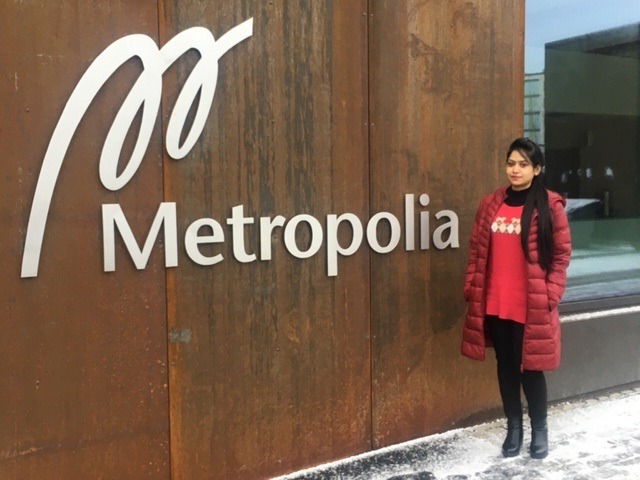
“Sisu. I love this word, it explains me very well!” exclaims Shaki, who is a business professional from Bangladesh. She is determined to build her career in Finland, which she has already learnt to call home. To boost her career, Shaki has taken part in SIMHE Path (1) during autumn 2019. The project is run by SIMHE-Metropolia (2) and it aims to build an educational model to promote the swift employment of highly educated immigrants by providing career counselling, mapping of competences, relevant supplementary studies and links to companies. Knowing the skills-set required in the Finnish labor market Shaki arrived in Finland just about a year ago, in January 2019. She holds an MBA degree and has several years of work experience in the field of accounting in an export-oriented company. She has also run a small online business. In Finland, Shaki would like to find a job related to accounting, investment, and banking. Having looked for jobs online, Shaki has noticed that most companies require a fluent command of Finnish. While improving her language skills, Shaki also realised that she needs to focus on how to fit her professional competences into the Finnish job market. This is where SIMHE path came to help her. “I know accounting techniques, but what I lack is the language skills needed to work in Finnish”, Shaki explains. Being able to communicate in Finnish can be a crucial skill in many jobs in terms of profession and interacting with co-workers (3). SIMHE path evaluates how your current competences fit the Finnish context Shaki first heard about SIMHE-Metropolia's services (4) on her Finnish course and immediately got interested. Luckily, the call for participants for SIMHE path in autumn 2019 happened to be open, and Shaki’s background in Business Administration matched the participant criteria (5). Shaki participated in an orientation session, an in-depth professional discussion with Metropolia’s Senior Lecturer in International Business, a CV workshop, and a feedback session during autumn 2019. As part of the in-depth professional discussion, Shaki also received an evaluation document that she can use for example in job-search as a reference of having her skills evaluated by a Finnish higher education institution. The Mapping of Competences (6) has been one of SIMHE-Metropolia’s services since 2016, and it is currently conducted as part of SIMHE path. Shaki has been happy with the process. In her words, it clarified things and helped her envision alternative paths. She will now look into the possibility of taking on additional studies, possibly in the field of ICT. Shaki is determined to make her way into the Finnish job market. University-level education, a keen motivation to study Finnish and sisu are a combination that will surely boost Shaki’s career and help her land her to find dream job in Finland. Shaki is open to new opportunities the future may bring: “Now I want to say yes, yes, yes!” she smiles. Spring 2020 SIMHE path to connect international ICT professionals with Finnish companies There are many immigrants residing in Helsinki and its surrounding Metropolitan area (7). Employment is seen as one of the best ways to integrate into society and it also helps in learning Finnish language. In spring 2020, we will pilot another round of SIMHE path, this time in close cooperation with ICT companies. The ICT field is growing rapidly, and up to 70 % of companies in the industry are hiring (8). In SIMHE Path, there will be a new call for participants during February 2020. This time it will be open for those who have completed a degree in ICT. Could that be you? Your competences will be mapped and compared to the companies’ needs, and the aim is to find you an internship in a company matching your background. Stay tuned, more information coming soon! Registration for spring 2020 SIMHE-path will begin on 7 February 2020. Link for enrolment will be provided on this blog post on the date. Writers Marianne Autero works as a Career Coach at SIMHE-Metropolia services. She focuses on especially in planning, developing and implementing guidance and counselling practices for immigrants and is responsible for the guidance process in the SIMHE Path project. Leena Honkasalo worked as Project Planner in the SIMHE Path project. Sources: 1) SIMHE path https://www.metropolia.fi/en/research-development-and-innovation/all-projects/simhe-path/ (Read 20.1.2020) 2) SIMHE-Metropolia https://www.metropolia.fi/en/about-us/simhe/ (Read 20.1.2020) 3) Stenberg H., Autero M & Häkkinen, M. 2017. Kielen merkitys korkeasti koulutettujen maahanmuuttajien ohjaamisessa. Kieliverkosto. https://www.kieliverkosto.fi/fi/journals/kieli-koulutus-ja-yhteiskunta-lokakuu-2017-2/kielen-merkitys-korkeasti-koulutettujen-maahanmuuttajien-ohjaamisessa (Read 20.1.2020) 3) Kyntäjä E. 2018. OECD-raportti maahanmuuttajien kotoutumisesta Suomeen. Virolaiset omaa luokkaansa – pärjäävät parhaiten https://www.tuglas.fi/oecd-raportti-maahanmuuttajien-kotoutumisesta-suomeen (Read 20.1.2020) 4) SIMHE-Metropolia services https://www.metropolia.fi/en/services/for-immigrants/ (Read 20.1.2020) 5) SIMHE-path supports employment https://www.metropolia.fi/en/academics/courses-for-immigrants/simhe/ (Read 20.1.2020) 6) Autero, M. 2018. Osaamisen kartoitus tukee maahanmuuttajan työelämään ohjaamista. Teoksessa Stenberg H., Autero M., Ala-Nikkola E. (Eds.)., (2018). Osaamisella ei ole rajoja: Vastuukorkeakoulutoiminta maahanmuuttajien integraation tukena Suomessa. Metropolia Ammattikorkeakoulu. URN:ISBN:978-952-328-081-6 6) Autero M. (2018). Supporting Highly Educated Immigrants’ Career Paths in Finland https://blogit.metropolia.fi/variousvariables/2018/02/13/supporting-highly-educated-immigrants-career-paths-finland/ 7) Helsingin tila ja kehitys 2019. https://tilajakehitys.hel.fi/ulkomaalaistaustaisten_tyollisyys (Read 20.1.2020) 8) Finnish Software and E-business Association (2019): Talouskasvun hiipuminen ei näy ohjelmistoalalla ja verkkoteollisuudessa. Press release 17.1.2019. Available online: https://www.ohjelmistoebusiness.fi/tiedotteet/talouskasvun-hiipuminen-ei-nay-ohjelmistoalalla-ja-verkkoteollisuudessa/.
My Journey in Supporting Immigrant Women in Higher Education

By June this year, we have met over 800 highly educated immigrants in personal guidance at SIMHE-Metropolia (1). In 2018, we met more women than men in personal guidance. Although, the gender ratio has been fairly equal among the sexes in previous years too. In general, immigrant-background women face more difficulties in entering the labour market compared to their male counterparts as pointed out by 2018 OECD report on skills and labour market integration of immigrants in Finland (2). Career mentoring is a joint effort towards better employability I have volunteered as a mentor for an immigrant-background lady in the Finnish Family Federation’s nine-month Womento mentoring programme (3) in 2018-2019. The programme has been running since 2011 to pair up highly educated female immigrants and native Finnish women. The mentor-menteer pairs usually share similar educational and professional backgrounds. Thus, our autumn 2018 group had 12 mentor-mentee pairs with the mentees interested in finding careers in their field in Finland. I was also happy to find few of my previous SIMHE customers among the mentees in our group. Furthermore, the mentors have a long experience in their field and a genuine interest to support their mentees. As a result, the mentees become more familiar with the Finnish society and working-life. We have met with my mentee in the joint sessions at the Finnish Family Federation and in our one-to-one meetings about once or twice in every two months since October 2018. As we shared common interests and educational background, it has been of mutual benefit to talk, share experiences and discuss about the trends in the field. My mentee had education as her main goal and we have been very pleased that she has accomplished her goal during our mentoring voyage. I have now been a mentor twice in my professional life. At first, in Metropolia’s own mentoring programme in 2017-2018 and now in the Womento programme. Therefore, I strongly recommend mentoring to anyone who is willing to support others in finding their way in working life and in Finland. Above all, the small investment you put in as your time and devotion results in many wonderful encounters and enticing discussions. Additionally, you will get new and fresh idea for you to use as well. How to make Finland a home - let’s focus on the spouses Finland is in need of international talents (4) due to an ageing population and already existing competence-deficit in some fields. Many brave newcomers have already moved here with their families. Universities, like Aalto University (5) in Helsinki region as well as Finnish business sector (6) have also paid attention to make it all easier to move to Finland - also with the family. It is somewhat common that women move to Finland along with their company-recruited husbands. Thus, highly educated wives are also looking for their path in Finland. Some of them have perhaps spent several years at home due to taking care of their children. Once your family has settled in at work, daycare or school, you wish to get back to business too! Companies do try to make it better for people to settle. For instance, I participated in a Supercell spouse event in May to introduce our SIMHE services. Albeit, this was not a new concept at Supercell as they had had a spouse event (7) also in 2018. The get-together was well organised with guest speakers from municipality services like International House Helsinki (8), well-being experts from Compass Psychology (9) to start-up scene at Shortcut (10). There was also plenty of time to mingle prior to and after the presentations. I had vivid discussions with some affluent ladies from Mexico, Singapore, Russia, Kazakstan and India over a buffet meal. It’s a woman’s world Moving between countries and settling into new cultures is more and more prevalent trend in our contemporary world. Although, giving immigrant women possibilities to integrate in the society through education and work benefits not only them, but also their families and the Finnish society in general. Living in a new country without any connection to education or work can be a daunting experience for an educated person. However, I have met many courageous ladies who are ready to tackle the obstacles. In conclusion, English writer Virginia Woolf has encapsulated this phenomenon so well nearly a century ago in her quote “As a woman I have no country. As a woman I want no country. As a woman, my country is the whole world”. Sources SIMHE-Metropolia website: https://www.metropolia.fi/en/about-us/simhe/ (Read 3 June 2019) OECD (2018), Working Together: Skills and Labour Market Integration of Immigrants and their Children in Finland, OECD Publishing, Paris. https://doi.org/10.1787/9789264305250-en Väestöliitto website: https://www.vaestoliitto.fi/monikulttuurisuus/womento/career-mentoring/ (Read 3 June 2019) Kauppakamarin linjaus: Suomi ei selviä ilman työperusteista maahanmuuttoa https://kauppakamari.fi/wp-content/uploads/2017/11/tyoperusteinen-maahanmuuttolinjaukset.pdf (Read 3 June 2019) Aalto University website: https://www.aalto.fi/fi/palvelut/for-families-and-spouses (Read 3 June 2019) TalentBoost Finland website: https://www.businessfinland.fi/en/do-business-with-finland/work-in-finland/in-brief/ (Read 3 June 2019) Business Tampere news 14.3.2018. International talents boost growth – Talent Boost Spouse event on 22 March: https://businesstampere.com/international-talents-boost-growth-talent-boost-spouse-event-on-22-march/ (Read 3 June 2019) International House Helsinki website: https://www.ihhelsinki.fi/ (Read 3 June 2019) Compass Psychology website: https://compasspsychology.fi/ (Read 3 June 2019) Shortcut website: https://theshortcut.org/ (Read 3 June 2019)
Finding suitable career paths for the highly educated immigrants

SIMHE-Metropolia customers have many characteristics in common yet the need for an individual and personal approach for planning their path in Finland is highly demanded. The most frequently discussed topics, that are almost always in the core of the discussions when it comes to career paths and taking the first steps: how to create a coherent image of yourself as a professional, and how to sell and brand your competences to employers? Also, how does a certain field work in Finland, and which competences are appreciated in the field? How to update and supplement those competences if necessary? I will share some thoughts concerning these topics below. What are you made of? Knowing your skills and assets can take you far in today’s working life (1). To create a coherent image of you as an expert in your field, you could start by searching answers e.g. to these questions: What are your interests? Where are you good at? Which are your core skills and competences? What can you do with them? Which are concrete examples of your talents? It is also beneficial to strive to understand how your competences position you in your field in the Finnish context (2), as different skills might be appreciated, different applications used, or different educational level required. Finding out about the educations in your field gives you an image of the skills set that is valued and offered by the Finnish degrees. To perform a detailed comparison between your skills acquired in e.g. a degree in higher education and the Finnish counterpart, have a look at the curricula open for all at the websites of the higher education institutions. Do you know your field of expertise in Finland? It is important to understand the characteristics of the field you aim to, as fields can be different between countries. There are multiple ways to access information, but one could be through the organizations functioning in your field in Finland. You can get information e.g. about the different companies operating in your field. Another good way to get information is to go through the open job vacancies ads, as they give you information of what the employers are looking for. Remember, that you don’t have to tick every box to apply. Different mentoring programmes exist to give you an opportunity to connect with an expert from your own field to add to your field-specific knowledge, but also the opportunity to find out more e.g. about the practices for applying for a job and contacting interesting employers with an open application. Overall, networking is a key skill in today’s working life. Where can you update your skills set? At the moment, the pressure to continuous self-development and learning is strong in Finland, as job descriptions are more and more complex and multidisciplinary (1). This applies to everyone, not only immigrants. After mapping your competences, comparing them with the competences gained through the local degrees, and familiarizing yourself with the competences the working life requires, it might be easier to understand what kind of completing of your skills could benefit you. Options to build up your expertise could be e.g. open university/university of applied sciences studies, different educational opportunities offered by the TE-office or degree studies in an educational institution. Supplementary studies do not only increase your expertise, but also help you build up your networks and knowledge of your own field. (5.) Preparatory educations for immigrants aiming for studies in higher education can give you an intensive Finnish language learning opportunity. How to brand and sell yourself? The ability to brand yourself and to sell your skills is crucial, especially because it might be that the employers do not know what skills your degree completed abroad has given you. Research shows, that the employers find it difficult to comprehend the true skills of the immigrant applicants (3). At the same time, the capacity and potential of immigrants is not in full use (4). Building your cv towards a skill based cv could help. Instead of focusing only on the formal degrees you have completed, in a skill based cv you focus on outlining the key skills the degree and everything else in your life has given you. The emphasis is in describing how you convert all that learned into practice, with the help of practical examples from your personal history. Don't forget to add in the results you have gained during your work history. (6) Sources 1 Hakala, L. (2018) Työelämä muuttuu - mitä työelämävalmiuksia tarvitsemme? https://stm.fi/artikkeli/-/asset_publisher/tyoelama-muuttuu-mita-tyoelamavalmiuksia-tarvitsemme- 2 Autero, M. (2018) Osaamisen kartoitus tukee maahanmuuttajan työelämään ohjaamista. In the title Osaamisella ei ole rajoja – Vastuukorkeakoulutoiminta maahanmuuttajien integraation tukena Suomessa. https://www.metropolia.fi/fileadmin/user_upload/TK/Julkaisut/pdf/2018_stenberg_ym_osaamisella_ei_ole_rajoja_TAITO.pdf 3 Hakala, K. & Pesonen, J. (2018) Työnantajien haasteet korkeasti koulutettujen maahanmuuttajien työllistämisessä. https://unlimited.hamk.fi/ammatillinen-osaaminen-ja-opetus/tyonantajien-haasteet/ 4 Uudenmaan liitto. (2019) Helsingin seudun muuttotutkimus: Koulutettujen maahanmuuttajien osaamista ei hyödynnetä, paitsi huippualoilla. https://www.uudenmaanliitto.fi/uudenmaan_liitto/uutishuone/tiedotteet/helsingin_seudun_muuttotutkimus_koulutettujen_maahanmuuttajien_osaamista_ei_hyodynneta_paitsi_huippualoilla.34372.blog 5 Hiitelä, E. & Kolu, M. (2018) Korkeasti koulutettu maahanmuuttaja matkalla työelämään. https://verkkolehdet.jamk.fi/elo/2018/11/29/korkeasti-koulutettu-maahanmuuttaja-matkalla-tyoelamaan/ 6 Uusivirta, M. (2019) Pelkkä töiden listaus ei enää riitä - Näin laadit osaamista korostavan cv:n, jonka avulla erotut ja saat työpaikan varmemmin. https://www.hs.fi/ura/art-2000006091980.html
Do you need supplementary education?
Application process has started to five different educational models, which enable your rapid transition to individual career path. The aim is to remove the language barrier and build up the networks for you to get employed. Deploying competence in Finland According to UTH-research (1), in the Helsinki Metropolitan Area with 47% of the immigrant population of Finland, a special need has been identified to create an ecosystem for the integration of highly educated immigrants to work-life. As the number of immigrants living in Helsinki, Espoo and Vantaa is growing yearly, deploying the competence of each and everyone makes a big difference both in the society and in the daily lives of highly educated immigrants. Jobseekers with higher education and immigration background are facing multiple obstacles in finding employment that corresponds to their skills and education. For example, the previous education might not be recognized by the recruiting companies or lack of some niche skills might prevent the use of the existing education. Comparison of the foreign-born unemployment data available from OECD (2) and the total unemployment rate (3) shows that the immigrants have a lot higher unemployment rate in Finland and this has been recognized by the SIMHE (Supporting Immigrants in Higher Education) services at the Metropolia University of Applied Sciences. Paths to support your integration and employment Since 2016, SIMHE-Metropolia (Supporting Immigrants in Higher Education) has been offering its services for recognizing the competences and for guiding to suitable educational and career paths. Within SIMHE services, Deploying Competence in Finland Project will facilitate your participation to private and public sector jobs via different development paths: first, it will create an ecosystem for promoting your integration in the Helsinki Metropolitan Area. In addition, higher education institutions will implement several educational paths for recognition and completion of your competence. Each educational model enables your rapid transition to an individual career path. The above development paths will be supplemented by improving the accessibility of the education offering of the higher education institutions by collecting the relevant courses to an easy-to-access location. What is our goal with the project? The aim of the project is to develop a cross-administrative ecosystem, which enables the recognition and completion of your competence and rapid transition to individual career path, for promoting your integration in the Helsinki Metropolitan Area. Most importantly, the project includes partnerships from potential employers: direct link with the public and private sector employers ensures that the additional training is impacting the right skills and facilitate your employment. We aim to strengthen the inclusion and equality of the multicultural population in the Helsinki Metropolitan Area, and also promote your employment and integration as active members of the society. Check if you belong to our target group! Check if you are in the target group in this specific project! Do you have a higher education degree in the following areas? If yes, do you need to get the legal qualification? Nursing, Metropolia University of Applied Sciences (continuous application) If you have a nursing degree from an ETA or EU country, you belong to our target group. During this path, you will get to know about the Finnish service system, legislation and decrees. Early childhood education and care, University of Helsinki Centre for Continuing Education HY+ (application deadline 5th April, 2019) If you have a degree in early childhood education and care from abroad, you belong to our target group. The aim of this path is to complement your existing degree with certain pedagogical studies required in Finland. In addition, different supplementary studies, providing a bridge for the participants to professional and managerial positions, are organized in three different paths: Construction and Real Estate Management, Metropolia University of Applied Sciences (application deadline 30th April, 2019) Sales, Haaga-Helia University of Applied Sciences (application deadline 30th April, 2019) Travel and hospitality, Laurea University of Applied Sciences (application deadline 30th April, 2019) All the educational paths have a common objective, which is to develop your Finnish language skills in the specific area of studies. More information about the specific requirements concerning each path and the scheduling can be found from the website of the project. If you have a degree in one of the areas mentioned above, do not hesitate to apply! Sources: UTH-research online: http://www.terveytemme.fi/uth/(read 11th March, 2019) OECD data online: https://data.oecd.org/migration/foreign-born-unemployment.htm (read 11th March, 2019) Statistics Finland’s Labour Force Survey online: https://www.stat.fi/til/tyti/2017/06/tyti_2017_06_2017-07-25_tie_001_en.html (read 11th March, 2019) More information: Deploying Competence in Finland Project Korkeasti koulutettujen maahanmuuttajien osaaminen käyttöön Suomessa –hanke SIMHE path - From Recognizing and Supplementing Competences to Employment SIMHE (Supporting Immigrants in Higher Education in Finland) SIMHE-Metropolia
How to succeed in higher education in Finland?

When browsing through various websites of Finnish higher education institutions (HEIs), you notice that the institutions emphasize the difference between studying in Finnish higher education and studying in some other country. But what does that actually mean? What are the differences between the Finnish system and a system in a completely different culture? The Finnish higher education system – simple or not? To understand the way of studying in Finnish HEIs, you need to start by exploring the Finnish culture, which is a complex mix of different traits. Two characteristics come up especially. The first is the emphasis of individuality. In the Finnish culture people are expected to take considerable responsibility of their own lives. In more collective cultures, people might rely on communities of different types in their life planning, such as their family or relatives. The second is the focus on independence. In the Finnish culture, it is highly appreciated to control your own life, to make independent choices and to take responsibility of them. When studying in countries with the collective culture as a strong influencer, the focus is on teacher centered teaching methods. The Finnish way of studying, strongly affected by our individual culture, focuses more on student centered teaching methods and emphasizes the responsibility of the students as active agents in their own learning. In the Finnish world of HEIs there is a sense of equality between teachers and students. In more collective cultures the teacher is considered as a know-it-all. Do not get intimidated by all this. You can learn to find your way and succeed in the Finnish world of higher education. Start by digging into your past. You have probably already acquired a vast collection of different study skills during your life. It is also equally important to understand, that while the previously learned study skills are useful, you might have to modify them suitable for studying in a Finnish higher education institution. And also, you might have to learn some totally new skills as well. The skills you need in order to survive in Finnish higher education In the Finnish universities and universities of applied sciences, study and learning skills are highly emphasized. Here are some examples (based on e.g. Kangasniemi & Murtonen 2017): Self-knowledge: Start by aiming to form an image of the skills and knowledge base, that you already have, and of the skills and knowledge you still need to learn to reach your goals. Not only in studying but also in working life, the key skill is to be able to map your competences. Self-direction: Self-direction has a major role in the Finnish world of higher education. For many students coming outside of Finland, this might be the key element which makes the Finnish way of studying so difficult to take in. Self-direction means, that you take responsibility of your own learning. You independently aim for understanding, and also for developing your thinking and expertise. Time management: The Finnish higher education gives you considerable freedom. But with that freedom comes responsibility. The courses take up a lot of your time and include also significant amount of independent work in addition to contact lessons, which need to fit into your everyday life. If you start studying in a somewhat new language, remember that it might take you longer to take on materials. Planning skills: Be prepared to plan the schedule of completing your degree including a yearly plan for courses to be finished. In addition to scheduling your studies, consider how you want your degree to look like. When planning, keep your focus in your future: what would be a good and useful mix of studies for the working life? Self-direction plays a strong part here as you ponder and find out things yourself. Readiness for team work: One of the most central ways to work around a course theme is to team work. This requires for you to be ready to communicate as you are not the only one in the team. Think of yourself in a group. What are your strengths and weaknesses? Step by step you create self-knowledge of you as a team member. Need tools for your survival kit? If you want to prepare yourself before pursuing degree studies in higher education, consider brushing up your study skills as well as Finnish language skills in the Metropolia Preparatory Education for Studies at the University of Applied Sciences for Immigrants, open for applications in August. Online version of the preparatory education, including a course in developing your study skills, is offered during the year 2019 by the development project Valmentavasta Valmiiksi, so stay tuned. Sources: Kangasniemi, Mari & Murtonen, Mari. 2017. Yliopiston toimijoiden näkemyksiä vastuullisen yliopisto- opiskelijan taidoista. Yliopistopedagogiikka. 24:1. https://yliopistopedagogiikka.files.wordpress.com/2017/07/kangasniemi-murtonen_press.pdf AMK-opintoihin valmentavat koulutukset maahanmuuttajille –website. 11.5.2018. http://www.metropolia.fi/koulutukset/maahanmuuttajille/ Valmentavasta Valmiiksi - project website. 11.5.2018. http://www.metropolia.fi/tutkimus-kehittaminen-ja-innovaatiot/hankkeet/valmentavasta-valmiiksi/
Blog introduces information, tips and insights that help international talents with a higher education background to integrate and find their study and career paths in Finland. The blog is part of Metropolia’s #talentboost actions.
Outi Lemettinen (head editor)
Riikka Wallin
Anu Luoma
Email addresses: firstname.surname@metropolia.fi
Editorial Board handles all the publications of Various Variables blog before publishing.



Belongingness Career Career Boost careercoaching careers Connecting employability employment entrepreneur entrepreneurship Finnish as a second language Finnish Job Market Finnish work culture Finnish working life Finnish workplace norms Guidance higher education higher education institutions highly educated immigrants Immigrants Inclusion Integration International jobseekers in Finland international student international talent job search job searching skills language learning mapping of competences mentoring Networking networks online learning recognition of competences Self-employment SIMHE SIMHE-Metropolia Skills Society strengths Studying in Finland Support talent boost Work in Finland Working in Finland