
Tag: Integration
Changing Circumstances: Accessing Resources for Years to Come for Immigrants, Entrepreneurs & Immigrant Entrepreneurs

No matter how long you spend in Finland, there will always be new experiences. It is a very similar situation for new entrepreneurs. New situations need new information and solutions. Having lived in Finland for almost 20 years, I know that there are still things that come up where I have absolutely no idea what to do. What I have learned in all these years, is where to start looking for the answer. In the information age, this is one of the most important skills you can have. We don’t need to know all the information at once; in fact, we wouldn’t be able to process all the information even if we heard it. A lot of things are unnecessary until they are necessary. If you arrive in country as a single, independent student, you don’t need to understand the daycare system, and in entrepreneurship, understanding how to take a company internationally is not the first thing you will learn in your entrepreneurial journey. This is the same situation for immigrants and entrepreneurs all over the world. Whole-life Events Just like integration, entrepreneurship is a whole-life event. As an immigrant, no matter what you are doing to subsidise your life, this means two things: You will be creating a whole life for you and your family – not just the hours you study at an institution or work at a job. You will spend your whole life integrating.And in parallel, as an entrepreneur, your time is now not bought by an employer but can now take far more of your daily time to create. You are only stopped by the limits that you impose on yourself. As every new challenge comes your way, you will need to figure out how to address it. Some of the challenges you might find yourself facing as an immigrant are: finding housing accessing healthcare services searching for jobs becoming an entrepreneur finding ways to spend your leisure time learning Finnish or Swedish dealing with emergencies finding and completing further education understanding the primary education system As an entrepreneur, you are seeking help with: concepting an idea testing your ideas learning new software learning how to understand your potential market and customers building a customer base designing and re-designing offers building a website understanding how to utilise different social media channels for selling and brand building accounting deciding which tasks to delegate and which services to buy from others AS previously stated, no one resource will help you in all these situations, understanding where to find these resources that can help you with all of these questions is a very big step in the right direction. Support During Studies When you come to Finland as a student, there is a good chance that you have come alone, and you are ready for all kinds of adventures. You will also be lucky enough to have a general support system that the institution provides. This is great and it can really help you to settle in and find your feet. Then you graduate, a celebratory event which also means big changes in your life. When you are a student there are many services that you do not need to seek outside the institution. It is possible that as an alumnus, you can access certain institutional services, so make sure that you check with your former institution to see what is still accessible for both your immigrant journey and your entrepreneurial one. Staying in Finland After Studying Once you have finished your education, you may be looking for a more permanent job (possibly different than the one you have done while at school if you have been working) or to expand on any entrepreneurial thoughts you may have had during your studies. These, again, are slightly different sets of skills and resources that you will need. A good place to find both information about your new situation in life and even entrepreneurship is the Newcomer’s Guide (pdf) produced by the Cities of Helsinki, Espoo, and Vantaa. The label ‘Newcomer’ is too narrow, in my opinion, for the information that it contains. You definitely need some of this information when you first arrive, but it is helpful to refer to the guide at different stages of your life in Finland. The Newcomer’s Guide also has advice on where to look for different kinds of employment, including entrepreneurship and a review of the startup ecosystem. Being gainfully employed is a huge part of many people’s integration. Sometimes that requires you to start your own company. There is a whole ecosystem in the capital area for this and the guide helps to explain it. In the near future, there will also be an online service that Metropolia UAS and the City of Helsinki are currently developing that will help aspiring or budding entrepreneurs to find the right path through their entrepreneurial journey. In order to further your understanding of what is currently available to you as an entrepreneur, you can read my previous Various Variables blog post Entrepreneurship – Using Your Skills in Different Ways and this previous blog post by Vejay Nair & Marika Antikainen. My own experience For myself, I reflected on what contexts I have inhabited during these past 20 years in Finland. I have been: a single exchange student (with no dependents) a married person (to a Finn) a degree student a married parent a divorced single parent an unemployed spouse an unemployed single parent a full-time entrepreneur a part-time entrepreneur a temporary employee a full-time employee. It has been quite a journey, but it is one that has new challenges at every bullet point. This diversity and length of experience is also the reason that I feel that I have some insight that can help to guide people in finding the right resources at the right time. All of the situations above have taught me the value of being open and asking for help. Continue To Be Open The common skill that I have cultivated the most being an immigrant and an entrepreneur is to ask for help in order to understand new things. Life is full of things that do not make sense, are just outside of our current skill set, or we need a little time to learn. YouTube videos are a deep resource to anyone who wants to do something new. But outside of online resources, you can ask real people for help to find what you need. Not everyone will be able to help you, but every time you ask, you get a tiny bit closer to the answer. Even if it is just eliminating what is not the answer.
My Journey in Supporting Immigrant Women in Higher Education

By June this year, we have met over 800 highly educated immigrants in personal guidance at SIMHE-Metropolia (1). In 2018, we met more women than men in personal guidance. Although, the gender ratio has been fairly equal among the sexes in previous years too. In general, immigrant-background women face more difficulties in entering the labour market compared to their male counterparts as pointed out by 2018 OECD report on skills and labour market integration of immigrants in Finland (2). Career mentoring is a joint effort towards better employability I have volunteered as a mentor for an immigrant-background lady in the Finnish Family Federation’s nine-month Womento mentoring programme (3) in 2018-2019. The programme has been running since 2011 to pair up highly educated female immigrants and native Finnish women. The mentor-menteer pairs usually share similar educational and professional backgrounds. Thus, our autumn 2018 group had 12 mentor-mentee pairs with the mentees interested in finding careers in their field in Finland. I was also happy to find few of my previous SIMHE customers among the mentees in our group. Furthermore, the mentors have a long experience in their field and a genuine interest to support their mentees. As a result, the mentees become more familiar with the Finnish society and working-life. We have met with my mentee in the joint sessions at the Finnish Family Federation and in our one-to-one meetings about once or twice in every two months since October 2018. As we shared common interests and educational background, it has been of mutual benefit to talk, share experiences and discuss about the trends in the field. My mentee had education as her main goal and we have been very pleased that she has accomplished her goal during our mentoring voyage. I have now been a mentor twice in my professional life. At first, in Metropolia’s own mentoring programme in 2017-2018 and now in the Womento programme. Therefore, I strongly recommend mentoring to anyone who is willing to support others in finding their way in working life and in Finland. Above all, the small investment you put in as your time and devotion results in many wonderful encounters and enticing discussions. Additionally, you will get new and fresh idea for you to use as well. How to make Finland a home - let’s focus on the spouses Finland is in need of international talents (4) due to an ageing population and already existing competence-deficit in some fields. Many brave newcomers have already moved here with their families. Universities, like Aalto University (5) in Helsinki region as well as Finnish business sector (6) have also paid attention to make it all easier to move to Finland - also with the family. It is somewhat common that women move to Finland along with their company-recruited husbands. Thus, highly educated wives are also looking for their path in Finland. Some of them have perhaps spent several years at home due to taking care of their children. Once your family has settled in at work, daycare or school, you wish to get back to business too! Companies do try to make it better for people to settle. For instance, I participated in a Supercell spouse event in May to introduce our SIMHE services. Albeit, this was not a new concept at Supercell as they had had a spouse event (7) also in 2018. The get-together was well organised with guest speakers from municipality services like International House Helsinki (8), well-being experts from Compass Psychology (9) to start-up scene at Shortcut (10). There was also plenty of time to mingle prior to and after the presentations. I had vivid discussions with some affluent ladies from Mexico, Singapore, Russia, Kazakstan and India over a buffet meal. It’s a woman’s world Moving between countries and settling into new cultures is more and more prevalent trend in our contemporary world. Although, giving immigrant women possibilities to integrate in the society through education and work benefits not only them, but also their families and the Finnish society in general. Living in a new country without any connection to education or work can be a daunting experience for an educated person. However, I have met many courageous ladies who are ready to tackle the obstacles. In conclusion, English writer Virginia Woolf has encapsulated this phenomenon so well nearly a century ago in her quote “As a woman I have no country. As a woman I want no country. As a woman, my country is the whole world”. Sources SIMHE-Metropolia website: https://www.metropolia.fi/en/about-us/simhe/ (Read 3 June 2019) OECD (2018), Working Together: Skills and Labour Market Integration of Immigrants and their Children in Finland, OECD Publishing, Paris. https://doi.org/10.1787/9789264305250-en Väestöliitto website: https://www.vaestoliitto.fi/monikulttuurisuus/womento/career-mentoring/ (Read 3 June 2019) Kauppakamarin linjaus: Suomi ei selviä ilman työperusteista maahanmuuttoa https://kauppakamari.fi/wp-content/uploads/2017/11/tyoperusteinen-maahanmuuttolinjaukset.pdf (Read 3 June 2019) Aalto University website: https://www.aalto.fi/fi/palvelut/for-families-and-spouses (Read 3 June 2019) TalentBoost Finland website: https://www.businessfinland.fi/en/do-business-with-finland/work-in-finland/in-brief/ (Read 3 June 2019) Business Tampere news 14.3.2018. International talents boost growth – Talent Boost Spouse event on 22 March: https://businesstampere.com/international-talents-boost-growth-talent-boost-spouse-event-on-22-march/ (Read 3 June 2019) International House Helsinki website: https://www.ihhelsinki.fi/ (Read 3 June 2019) Compass Psychology website: https://compasspsychology.fi/ (Read 3 June 2019) Shortcut website: https://theshortcut.org/ (Read 3 June 2019)
Do you need supplementary education?
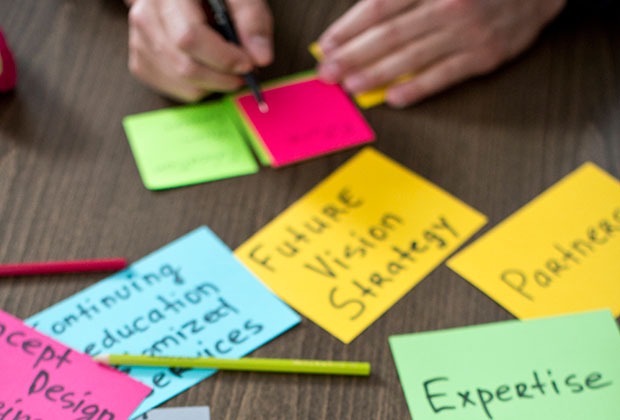
Application process has started to five different educational models, which enable your rapid transition to individual career path. The aim is to remove the language barrier and build up the networks for you to get employed. Deploying competence in Finland According to UTH-research (1), in the Helsinki Metropolitan Area with 47% of the immigrant population of Finland, a special need has been identified to create an ecosystem for the integration of highly educated immigrants to work-life. As the number of immigrants living in Helsinki, Espoo and Vantaa is growing yearly, deploying the competence of each and everyone makes a big difference both in the society and in the daily lives of highly educated immigrants. Jobseekers with higher education and immigration background are facing multiple obstacles in finding employment that corresponds to their skills and education. For example, the previous education might not be recognized by the recruiting companies or lack of some niche skills might prevent the use of the existing education. Comparison of the foreign-born unemployment data available from OECD (2) and the total unemployment rate (3) shows that the immigrants have a lot higher unemployment rate in Finland and this has been recognized by the SIMHE (Supporting Immigrants in Higher Education) services at the Metropolia University of Applied Sciences. Paths to support your integration and employment Since 2016, SIMHE-Metropolia (Supporting Immigrants in Higher Education) has been offering its services for recognizing the competences and for guiding to suitable educational and career paths. Within SIMHE services, Deploying Competence in Finland Project will facilitate your participation to private and public sector jobs via different development paths: first, it will create an ecosystem for promoting your integration in the Helsinki Metropolitan Area. In addition, higher education institutions will implement several educational paths for recognition and completion of your competence. Each educational model enables your rapid transition to an individual career path. The above development paths will be supplemented by improving the accessibility of the education offering of the higher education institutions by collecting the relevant courses to an easy-to-access location. What is our goal with the project? The aim of the project is to develop a cross-administrative ecosystem, which enables the recognition and completion of your competence and rapid transition to individual career path, for promoting your integration in the Helsinki Metropolitan Area. Most importantly, the project includes partnerships from potential employers: direct link with the public and private sector employers ensures that the additional training is impacting the right skills and facilitate your employment. We aim to strengthen the inclusion and equality of the multicultural population in the Helsinki Metropolitan Area, and also promote your employment and integration as active members of the society. Check if you belong to our target group! Check if you are in the target group in this specific project! Do you have a higher education degree in the following areas? If yes, do you need to get the legal qualification? Nursing, Metropolia University of Applied Sciences (continuous application) If you have a nursing degree from an ETA or EU country, you belong to our target group. During this path, you will get to know about the Finnish service system, legislation and decrees. Early childhood education and care, University of Helsinki Centre for Continuing Education HY+ (application deadline 5th April, 2019) If you have a degree in early childhood education and care from abroad, you belong to our target group. The aim of this path is to complement your existing degree with certain pedagogical studies required in Finland. In addition, different supplementary studies, providing a bridge for the participants to professional and managerial positions, are organized in three different paths: Construction and Real Estate Management, Metropolia University of Applied Sciences (application deadline 30th April, 2019) Sales, Haaga-Helia University of Applied Sciences (application deadline 30th April, 2019) Travel and hospitality, Laurea University of Applied Sciences (application deadline 30th April, 2019) All the educational paths have a common objective, which is to develop your Finnish language skills in the specific area of studies. More information about the specific requirements concerning each path and the scheduling can be found from the website of the project. If you have a degree in one of the areas mentioned above, do not hesitate to apply! Sources: UTH-research online: http://www.terveytemme.fi/uth/(read 11th March, 2019) OECD data online: https://data.oecd.org/migration/foreign-born-unemployment.htm (read 11th March, 2019) Statistics Finland’s Labour Force Survey online: https://www.stat.fi/til/tyti/2017/06/tyti_2017_06_2017-07-25_tie_001_en.html (read 11th March, 2019) More information: Deploying Competence in Finland Project Korkeasti koulutettujen maahanmuuttajien osaaminen käyttöön Suomessa –hanke SIMHE path - From Recognizing and Supplementing Competences to Employment SIMHE (Supporting Immigrants in Higher Education in Finland) SIMHE-Metropolia
Highly skilled immigrants aboard to build Finland

Pedro Góis (2017) informs that in USA alone, immigrants have been involved with founding companies such as “Google, Intel, WhatsApp, PayPal, eBay, Tesla, and Yahoo” and even though immigrants “make up less than 15 percent of the US population, skilled immigrants account for over half of Silicon Valley start-ups and over half of patents”. Could this be achieved in Finland as well? Building companies operating in English and having international potential such as the IT companies Góis mentioned will keep being created in Finland. However, working in many professional fields here requires the knowledge of our national language(s), mainly Finnish but speaking also Swedish can be an advantage. The language skills and navigating how our education and work-life operates typically takes time in the beginning. Yet they are significant puzzle pieces to integration. Back to studying basics? Anything human rarely surprises me, but I must say that the first time I heard a foreigner having a Bachelor´s Degree Certificate telling me he is studying in Finnish Basic Education - I went speechless. Basic Education is the school Finnish youngsters nearly always complete by the age of seventeen (EDUFI 2017a). Sadly, we in SIMHE-Metropolia have had a handful of clients like him who have taken too many steps backwards. SIMHE-Metropolia: 1) aims for faster integration It touches my heart when a client says after a thank you that they wish they had met me X years (that number could range from two to multiple years) earlier. Thus, I completely agree with the Minister of Education, Ms. Sanni Grahn-Laasonen, “We cannot afford to miss or waste anyone’s skills.” (Ministry of Education and Culture 2017b) and therefore need to better and faster recognize and utilize immigrants’ existing skills. 2) guides highly skilled immigrants My first three months in SIMHE-Metropolia have flown by fast because there is no shortage of clients. We guide those immigrants who reside in Finland but are not currently degree students in higher education (=HE) here. The minimum criteria to become a SIMHE client is that one is eligible to apply to HE in their home country and therefore in Finland as well. Actually, most of our clients already have at least one HE degree. 3) helps to steer multiple ways SIMHE-Metropolia has many services which we constantly develop. I mainly focus on group and personal guidance. In personal guidance discussions, we reserve an hour so we can holistically go through the immigrant´s situation and possible options. We focus on the topics they want, most typically connected to studies and career. SIMHE-Metropolia has been operating as of spring 2016 and already some of our clients have succeeded in gaining admission to studies or work where they were hoping. New initiatives for integration When it comes to degree studies, in my opinion vocational institutions are further with flexible options like apprenticeship training and competence-based qualification (terms from EDUFI 2017b). Fortunately, there is a momentum in Finland to accelerating immigrants’ integration seen in for example the launch of International House of Helsinki and that Espoo adopted English as their third official language. The Minister of Education allocated in total 5.5 million euros to various measures promoting development of for instance immigrants´ educational paths (Ministry of Education and Culture 2017a). From prep courses to graduates Some HE institutions like Metropolia University of Applied Sciences (UAS) have preparatory courses for immigrants. One of the projects which received funding from the Minister of Education is called in Finnish “Valmentavasta valmiiksi” where we in Metropolia UAS have teamed up with eight other UAS to develop preparatory courses. The idea is to develop them to be more nationally compatible and that the student who wants to graduate with a degree in higher education on that field would have a clear path for that. Utilizing everyone’s skills I have met so many clever and inspiring immigrants, most of whom are eager to stay and become full members of the Finnish society as fast as possible. Thus, I hope that initiatives like the above mentioned will help to make it more and more possible. I wish work places will to a greater extent take advantage of the diverse skills and ideas our multilingual and -cultural clients can bring. Sources: EDUFI (2017a) Finnish National Agency for Education. Education system in Finland picture available at http://www.oph.fi/english/education_system [retrieved 1.12.2017] EDUFI (2017b) Finnish National Agency for Education. Opetushallinnon sanasto available at http://www03.oph.fi/sanasto/listaakaikki_s.asp [retrieved 1.12.2017] Góis, Pedro (2017) Facing the human capital challenges of the 21st century’s new era of mobility: Migrant populations in higher education – students, academics, researchers. Keynote lecture, 13 December 2016 published in Käyhkö, Katinka; Bontenbal, Ilona & Bogdanoff, Minna (Eds.), "Open the doors!": Migrants in Higher Education: Fostering Cooperation at Universities Seminar 13.-14.12.2016 in Jyväskylä. Available also online: http://urn.fi/URN:ISBN:978-951-39-6977-6 Ministry of Education and Culture (2017a) Solutions for accelerating immigrants’ educational paths are sought and supported. Press release published in 11.8.2017 at http://minedu.fi/artikkeli/-/asset_publisher/maahanmuuttajien-koulutuspolkuja-vauhditetaan?_101_INSTANCE_0R8wCyp3oebu_languageId=en_US [retrieved 1.12.2017] Ministry of Education and Culture (2017b) Steering group: We need better ways to recognise immigrants’ skills. Press release 25.9.2017 published in English on 29.9.2017 at http://minedu.fi/en/article/-/asset_publisher/maahanmuuttajien-osaaminen-tunnistettava-nykyista-paremmin [retrieved 1.12.2017]
Is it all about happiness?

Migration is by no means a new phenomenon. Many Finnish families have their own American cousin or a Swedish aunt with interesting stories. Migration thus evokes many feelings as a historical phenomenon. I was very pleased to be able to participate in Migration conference 2017,that was organized this year in Athens, Greece. Is aiming at happiness an underlying factor in migration? Saskia Sassen, a Dutch-American sociology Professor at The University of Columbia, has widely examined globalization as a phenomenon. After Sassen´s keynote speech, all in the audience understood how multidimensional phenomenon migration is. Her research concentrates on the underlying governmental issues that are the hidden factors causing the basic reasons for migration such as wars and religious conflicts. Yet, the main reason for people leaving their home country seems to be hopes for achieving better life that the home country is not able to provide. In Athens, it was easy to reminisce the philosophies of the ancient era. Even Aristotle indicated that a good life is achieved, when a man can use his abilities and capabilities for the society he feels connected to, and when he feels of being a useful member of this society. Unfortunately, while walking on the streets of Athens, I was forced to face the immigration crisis of 2015 in Europe in its real terms. This tragedy of the immigration overflow, is something you can still witness today. Having a good life and achieving happiness seems an unreachable quest for many living on the streets. It seemed paradoxical that I have just learnt about different research results on which factors increase the risk of violence among immigrants such as insecurity, uncertainty and hopelessness as I could see these feelings in people’s eyes when walking back to my hotel. How do different countries relate to immigration? Nelli Esipova from Gallup World Poll, had a presentation on immigration acceptance in different countries. The research focused on presenting a research setting, in which the acceptance index in the world was set as 5,299. The acceptance index included 164 countries and 1,7 million interviews among adult respondents. The research was conducted in USA in 2017 and in the other research countries in 2016. Among the top ten countries that accepted the immigration the least were e.g. Estonia (2,37) and Hungary (1,69). Among the top ten most accepting countries for immigration, the Northern Countries were represented as Sweden scored 7,92 and Iceland 8,26. Finland scored 6,58, which was above the World and also the European index. According to the survey results, immigration acceptance was higher on a personal level among those, who know immigrants personally, and acceptance was increased with other factors such as having a degree in higher education, living in an urban environment, economic status and belonging to the Z-generation. In EU countries, it was especially noted that opinions were also formed based on the interviewer’s positive emotions and social ability. If a good integration is based on happiness and in experience of having a good life, how can we contribute towards this feeling among the immigrants? Immigration is portrayed in the European media more through tragedies than through success stories. The media has a significant role in forming attitudes and in shaping the attitude among the general public. “Close the borders” and “Isolation” strategies have never been sustainable solutions on immigration based on research results and historical evidence. On the contrary, immigration is also proved to bring out many positive socio-economic possibilities. Being a member of a community, feeling of being part of something bigger, and finding your life to be meaningful have proven to increase happiness and well-being according to various research. We aim to reach these factors also in our services for immigrants at SIMHE-Metropolia. When planning our services, our vision was to include our customers in developing the service concept and that we create such services that we would like to use if living abroad as immigrant by ourselves.
365 steps later
Supporting Immigrants in Higher Education in Finland (SIMHE) has now been part of my professional life exactly for a year. It has most certainly been a year of many new encounters, views, angles, ideas, networks, seminars and happenings. This has been most apparent in terms of guidance and counselling as I have met around 300 educated immigrant-background people through one-to-one personal guidance discussions, Guidance Generalia lectures and in orientating customers to our Recognition of Competences Services. It was a very good year How could I describe the past year and its eventful occurrences? We started from an empty desk, only having a grasp of what there is to do, or what we wish to accomplish. Things evolved very fast and the first pilot in recognition of competences services, SIMHE-Metropolia internet pages and guidance and counselling services got a kick-start during April-May 2016. Evidently, once you get going, things tend to grow bigger and bigger, like a snowball effect. I have come across with people from many walks of life as my counselees have had education in engineering, nursing, law, medicine, business, pharmacology, languages and teaching, just mention a few. Some of them have been in Finland only for months, whereas some have been living here even for years. Despite their various backgrounds, all SIMHE customers share a need to get information and help in learning how to surf in the Finnish education system and labour market, or getting to know what are the authorities regulating certain professions in Finland. This has also put my skills to the test as I have myself learned so many new things by searching for information from various channels. Likewise, I have also learnt a lot from my customers and their international experience. It’s all about networks Many SIMHE customers’ main objective is to get employed in their field of expertise. Job-searching has been a daunting experience for many as there is little or no response from the employers, even after numerous applications and contact-making. It has become as a surprise to some that having the credentials and qualifications is somewhat meaningless, unless you have the networks and connections with the local people. It is a matter of trust, or sometimes of mere existence. If you have no one to endorse you and your competences, you are non-visible in the labour market. Thus, one of our challenges is to help to create such networks in making people exist in the eyes of the Finnish employers. Again, we aim to support this through our own networks like TE-office, Helsinki Chamber of Commerce and Start-Up Refugees in addition to our Recognition of Competences Services. The show must go on SIMHE-Metropolia and SIMHE-Jyväskylä pioneered the concept throughout 2016 with good results and a strong support from Ministry of Education and Culture. Issues revolving around immigration phenomenon have become more and more prevalent in Finland and the implications are apparent on all levels of education. The actions to be taken are described on The educational tracks and integration of immigrants - problematic areas and proposals for actions document that was handed to Minister of Education and Culture, Sanni Grahn-Laasonen, at Metropolia in mid-February 2017. SIMHE is getting even a stronger foothold in 2017 as more educational institutions are joining the concept and the work will continue until the end of 2020, or even beyond. We are very happy to welcome University of Helsinki, University of Turku, Oulu UAS and Karelia UAS to heighten the service concept and bring in fresh views and ideas. There is most certainly a need to open-up and brush-up the existing policies to create ways for immigrants to have an access to education, also on its highest level. SIMHE-concept could work as a stepping stone for supporting more inclusive education in catering the needs of immigrants and the Finnish society.
Can you see it more clearly now?
SIMHE-Metropolia services has now reached its next step – or even two of them – in making the Finnish education and higher education system more approachable and understandable for the immigrants living in Finland. We launched the monthly Guidance Generalia lecture series in June and now, after the round two in the end of August, it is time to evaluate the outcome. Don’t you Know, it’s all so simple from early day care to the doctoral level! Guidance Generalia lecture aims at unravelling the mysteries of the Finnish education system and how to enter in the higher education in particular. The lecture is open for anyone and is advertised on SIMHE’s For Immigrants website and through other networks. We are also introducing guest speakers this autumn from many relevant arenas such as TE-office, National Board of Education, Kela for Finnish Social Security System and so forth to help people to make the most of the events. For us, who have travelled through the system from early childhood day care to the higher education, all is very smooth and clear; this is how the story goes and we take this highly praised system for granted. However, for those, who come from the outside, it may come across as foggy and almost unreal: there are free meals in the primary and secondary levels of education and what does it even mean to have a dual model in the tertiary level? Overcoming the language barrier The first ever Guidance Generalia in June, set the mark for what we wish to reach. We have a service promise to master the lecture in Finnish and in English, simultaneously. It is even possible to have an interpret on our expense, if there is enough demand for additional languages on top of these two. The limits of our language were certainly not the limits of our world as the June lecture was managed in Finnish, in English and in Arabic with the help of an interpret. Or, perhaps, it was muddled through as having three different languages made it feel like being in an international airport at times. The message went through to the twenty something participants, even though them, the interpret and I were mopping sweat from our foreheads after two hours of intensive schooling. However, as we are able and capable to develop, the August lecture introduced the renewed state of the affairs with a new set of slides to help to overcome the language malarkey. We are in this together August setting was thus thoroughly planned and the session welcomed yet again some thirty participants. This time we were lucky in terms of lingua franca as all participants were able to follow the lecture in English. We managed to create a very reciprocal way of making the education system more familiar to the participants and the lecture passed by with many questions, comments and remarks. Participants were very pleased that someone offers such services just for them and for their needs. We were also happy to invite the first guest speakers, Bayazidi Saeed and Ahmad Moussa from Uudenmaan TE-Office where they work with highly educated immigrants to support their employment. Mr Saeed and Mr Moussa explained the role of TE-office in supporting education for immigrants during and after their integration program period. They gave an invaluable insight into the TE-office services for independent education. Expanding the cooperation Guidance Generalia has proven to add up substance to SIMHE’s service palette. It is also a very good forum to meet up with people to tackle questions that are general to all. Additionally, it enables us to reach those who need more personal support in their individual quest in the Finnish education system. The next session will take place in September with a guest speaker from the Finnish National Board of Education who will tell us more about recognition of international qualifications in Finland. We are also expanding our horizons as the lecture will be simultaneously streamed to participants in central Finland in cooperation with SIMHE-Jyväskylä and JAMK University of Applied Sciences.
To have someone who listens to me…
Supporting Immigrants in Higher Education, SIMHE-Metropolia, started its guidance services for educated immigrants, or those who are willing to apply for higher education, in early May 2016. Now that I have had a dozen or so customers visiting me, it is a good time elaborate the outcome by far. I wish to raise few issues that I find important when guiding people with little or no experience in the Finnish society, let alone in our education system and all that lies within. You are not dealing with the statistics when meeting someone face-to-face It is somewhat easy to hide behind the statistics and look into the immigration phenomenon through numbers, figures and percentages. There are currently over 200, 000 immigrants residing in Finland for various reasons and the amount is growing year by year. However, statistics do not count, when you have someone sitting in front of you in need of guidance and advice. At this point, your task is to listen to his or her individual life story and try to make people to see the difference that they are able to make for their lives. Immigrants are often seen as one pool of people and objects, not as capable individuals who are able to make their own decisions. All my customers have been highly educated and talented people who are just facing new circumstances they were not able to predict. They are ready to make a new start, even to take a step back in their already acquired competence level in order to fit in and fulfil the requirements of our society. My task is to provide the necessary facts and information to support the process. I am not being naïve as I know the existing hardships and obstacles on both sides, but giving options and possibilities is what matters here. Knowing me, knowing you is the best I can do Guidance is always about communication, seeking common grounds and establishing trust between people. I have worked with international degree students from various parts of the world for ten years, so the change in the clientele was not that dramatic to me. I have learnt through experience and my own education in intercultural communication that knowing yourself well is the key for understanding others. Also, guidance work is first and foremost done through your own personality traits for which I hope to come across as competent, down-to-earth kind of person with a tender heart. Yet this needs to be decided by my customers. Firstly, I feel humble and privileged to have this opportunity to be able to be one of those, who make Finland and its peculiarities more familiar and less haunting for immigrants. Secondly, my guidance work puts me in the learning curve too as every person needs to be treated not only as a member of a certain group, culture or ethnical background, but as a unique individual. My job is not to fortify the existing boundaries but rather lower them to help us to find the common platform to build our dialogue together. Thirdly, meeting people from other cultures gives you more than it takes from you as you broaden your horizons through every encounter. If you just let it happen. Like a beacon shimmering light at night How do I see the SIMHE project and its objectives after working in the project for three months? It seems to be well needed for sure and has been welcomed by many. There is a constant need for having a place where an immigrant-background people are able to seek for advice in the amazing maze of the Finnish education system and society when searching suitable paths for themselves. We are not to change the world, perhaps we only just tickle a corner of it, but I find SIMHE and its guidance services to have its stance among other similar activities. I somehow see SIMHE project like a beacon shimmering light at night; you do not see everything clearly at one glance, but you start to get the big picture by each beam of light. The more familiar you make the system and its demands and possibilities to immigrants, the easier it is for them to find their individual paths in Finland. It takes time, but it’s worth a go for us and them. We will have the first Guidance Generalia lecture in June, so stay tuned for hearing more about it soon!
Recognising competencies of educated immigrants
Since the last autumn, there has been an intense debate on what should be done in this new situation with a growing number of asylum seekers and immigrants that has exceeded even the wildest guesses. ”Rajat kiinni”, “Close the borders”, has been one approach and on the other hand it has been considered if immigrants could be seen as a resource to benefit Finland. Metropolia’s solution is to offer a service concept produced by the SIMHE project, which is funded by the Ministry of Education and Culture. The aim is to recognise the competences of highly educated immigrants and to guide them, and those who are eligible to apply to higher education, to interesting and meaningful educational and career paths. Setting objectives for the project is easier than implementing them into contemporary society. Mathematical competence, professional engineering competence and digital competence were selected to form the pilot test on recognising engineering competence that was implemented in April at Metropolia. The test parts were compiled by the Metropolia experts in mathematics, different engineering degree programmes and in digital competence. We considered what kind of competence the Finnish employers might value, and on the other hand, we thought that immigrants could benefit from the recognition of competences for example, if they apply to higher education in Finland, as an institution of higher education has already made an evaluation on their competences. When choosing the content to the recognition of competence, we looked at the issue from a perspective of integrating immigrants into Finnish society. 30 immigrants participated in the recognition of competence day out of which 28 were male and 2 female. The majority of them were from Iraq, a few from Syria and Afghanistan, one from Iran and one from Belarus. The participants’ age varied between 20 and 44. A few of them had been in Finland for nearly three years, the majority for 6-10 months. It was possible to do the test in Arabic, in English or in Finnish. The language options were based on the fact in which language the participants had filled-in the enrolment form. The results will be ready soon and we will reflect on them as well as on methods used in the recognition of competence together with participants and our experts. We need to reflect critically on both - the used methods and the chosen fields of competencies. Is the recognition of mathematical competence relevant when working as an engineer? Those participating in the pilot, already had a degree, or studies in higher education in the field of technology. Why would someone, who already has a degree, and who has made the official recognition and international comparability of qualifications want to participate in our recognition of competence? What do the participants benefit from recognition of competence will probably not become clear until a long-term follow-up is done based on their individual educational and career paths. Do the individual’s and society’s perceptions about adequate educational and career paths meet? This is also an interesting question to be considered later. How do I get a chance to show my competence, attitude, motivation and will to do anything reasonable that would benefit both myself and Finland? How and where can I get more competence that can help me to get a job? These kind of questions are now directed to Metropolia. At this point, I must humbly state that these things we work with in the SIMHE project launched this spring are quite enormous. In the project we will consider the new models to recognise the competence of highly educated immigrants and asylum seekers and to guide them to adequate educational and career paths. This is done together with the Ministry of Education and Culture, Finnish National Board of Education, CIMO, Ministry of Employment and the Economy and the UniPID network. There is clearly a demand for our new service concept - hopefully employers and educational institutions will grasp this new potential. Let´s turn the societal debate even more towards the direction of possibilities!
Blog introduces information, tips and insights that help international talents with a higher education background to integrate and find their study and career paths in Finland. The blog is part of Metropolia’s #talentboost actions.
Outi Lemettinen (head editor)
Riikka Wallin
Anu Luoma
Email addresses: firstname.surname@metropolia.fi
Editorial Board handles all the publications of Various Variables blog before publishing.



Belongingness Career Career Boost careercoaching careers Connecting employability employment entrepreneur entrepreneurship Finnish as a second language Finnish Job Market Finnish work culture Finnish working life Finnish workplace norms Guidance higher education higher education institutions highly educated immigrants Immigrants Inclusion Integration International jobseekers in Finland international student international talent job search job searching skills language learning mapping of competences mentoring Networking networks online learning recognition of competences Self-employment SIMHE SIMHE-Metropolia Skills Society strengths Studying in Finland Support talent boost Work in Finland Working in Finland