
Tag: Immigrants
Supporting Inclusion by Welcoming Highly Educated Immigrants Living in Finland to Teach

It benefits Finland when a maximum number of people living here feel they can contribute and be essential members of our community. There are numerous social and financial costs to us all if even one member of the society is excluded (1). In fact, promoting inclusion is a goal for both the Finnish government and the European Union. In Finland one of the most important forms of participating in our community is work (2). As a SIMHE Career Coach I support highly educated immigrants living in Finland in different life situations. Some of them are working, some are on a family leave planning on returning to work and some might be active jobseekers. As our services are voluntary, the common nominator with our clients is their goal to find work that fits their expertise and interests so they can contribute to Finnish society. Along the way I have encountered professionals of various fields. Some have been working as teachers or lecturers in another country; some of them for foreign universities. Finland is getting more multicultural, so there is also a need for teachers from various cultural backgrounds to better relate to and offer guidance to our students (3). Finnish Qualifications for Teachers with Foreign Degrees Senior Lecturer Minttu Räty validates my experience that teachers tend to be recruited to Finnish higher education institutions based on a combination of career, teaching, and scientific contributions and skills in addition to their formal qualifications. Language and work life skills acquired in Finnish organisations are especially valued because most studies are in Finnish and both students and colleagues may wish teachers to share also local experience and knowledge (4). Someone without formal qualifications can typically be a substitute teacher in Finnish basic and upper secondary education or in liberal adult education as well as in basic education in the arts for maximum a year depending on the school level. However, for permanent posts at public schools a qualification detailed by Finnish law is required (5). If someone is a qualified teacher abroad and they wish to continue their profession in Finland, they might choose to apply for a recognition of their professional competence via Finnish National Agency for Education (6). Teachers’ pedagogical studies can be supplemented in English. Many other qualifying studies are available only in Finnish and possibly Swedish. Also, most teaching positions require teachers using these national languages of Finland. In Finnish higher education teachers’ pedagogical studies are valued and could be required especially in the future (7). Five Finnish Universities of Applied Sciences who all have a School of Vocational Teacher Education, carried out the Opettajaksi Suomeen OSU project in Finnish during 2021 - 2023 (3). Many who participated in the OSU project completed their pedagogical studies and some of those have also been employed as vocational teachers in upper secondary education (8). Supporting Professionals to Lecture at Higher Education Institutions We should better utilise the knowledge and skills of highly educated immigrants who live in Finland. According to the Laurea University of Applied Sciences Intercultural Learning Online ILO project news this challenge should also be tackled by our universities and colleges. A growing number of immigrants would benefit from having representative role models also as educational institution staff members (9). I am glad that the ILO project thought of supporting highly educated professionals from abroad by showcasing their experience as guest lecturers. During this project within a wide European network migrants got to keep open lectures in English. Through these new connections in higher education institutions, they can find ways to continue working in their new European home. Some of the students attending those lectures received study credits in their higher education institution (10). The ILO project plan to publish materials targeted at both highly educated immigrants and all of us working in higher education institutions (4). The materials are published for use and further development, and you will find them online in March 2024. Among other things the project promoted intercultural understanding by having joint workshops where multicultural project participants collaborated to link project topics and guest lecturers into higher education courses (11). For example, during autumn 2023 Laurea UAS offered a course called Intercultural and Multiprofessional Competencies to their degree, exchange and open students. I participated in the course as a student to discuss these familiar topics. During the course we completed and gave feedback on a Massive Open Online Course (MOOC) that was being developed. We were also welcomed to two Erasmus+ projects. Our teacher Tiina Wikström wrote that as ILO project guest lecturers “migrants will get for example supporting networks, experiences and certificates that support their employability” (12). How Can We Support Intercultural Inclusion into Finnish Workplaces? Everyone benefits if we succeed in creating multicultural teams in Finland. Did you know that diverse teams are smarter and more innovative and thus generate more return? (13). Tiina Wikström wrote that it is essential that highly skilled migrants find employment that genuinely match their education (12). This is also the aim of SIMHE Services at Finnish higher education institutions. We want to ensure that highly educated immigrants can enter appropriate education and career paths that match their pre-existing skills and interests in Finland (14). I share a dream with my colleague Metropolia's SIMHE Career Coach Latvian-born Elvira Vainio (15). Our wish is to will live in a Finland where new employees are chosen based on their relevant skills – not limited by their name nor cultural background. I believe that providing our students with relatable role models, such as teachers and guest lecturers, is important in building a Finland where everyone feels understood and included. Author Niina Tapanainen currently works as a SIMHE Career Coach supporting highly educated immigrants living in Finland. Niina has a Master’s Degree in Education and is a qualified Guidance Counsellor and Psychology (as a second subject) Teacher. She has worked nearly two decades within the career and guidance counselling field mainly in Higher Education Institutions. She loves continuous learning and spends rest of her free time enjoying life: relaxing, dreaming and whatever interesting comes her way. Sources: 1. Hilli, Petri; Ståhl, Timo; Merikukka, Marko & Ristikari, Tiina 2017. Syrjäytymisen hinta – case investoinnin kannattavuuslaskemasta. Retrieved on 11 Dec 2023. https://www.julkari.fi/bitstream/handle/10024/135714/YP1706_Hilliym.pdf?sequence 2. THL 2022. Finnish Institute for Health and Welfare. Osallisuus. Web page. Updated on 4 May 2022. Retrieved on 11 Dec 2023. https://thl.fi/fi/web/hyvinvointi-ja-terveyserot/eriarvoisuus/hyvinvointi/osallisuus 3. TUNI 2023. Tampere University of Applied Sciences. Opettajaksi Suomeen OSU. In English. Web page. Retrieved on 11 Dec 2023. https://sites.tuni.fi/osu/in-english 4. Räty, Minttu 2023. ILO-project Manager in Laurea University of Applied Sciences. Personal video interview on 17 November 2023 supplemented with personal emails on 24 November 2023 and on 13 December 2023. 5. Asetus opetustoimen henkilöstön kelpoisuusvaatimuksista 1998. Finnish decree on the eligibility requirements for teaching personnel 14.12.1998/986. https://www.finlex.fi/fi/laki/ajantasa/1998/19980986 6. EDUFI 2023. Finnish National Agency for Education. Finnish National Agency for Education's decisions on eligibility for positions in the field of education and training. Web page. Retrieved on 23 Nov 2023. https://www.oph.fi/en/services/finnish-national-agency-educations-decisions-eligibility-positions-field-education-and 7. OAJ 2023. Trade Union of Education. Teaching in higher education. Web page. Retrieved on 11 Dec 2023. https://www.oaj.fi/en/education/what-does-teaching-involve/teaching-in-higher-education 8. TUNI 2023. Tampere University of Applied Sciences. OSU -Opettajaksi Suomeen -hankkeesta hyviä kokemuksia. Blog post on 16 Nov 2023. Retrieved on 11 Dec 2023. https://blogs.tuni.fi/taokblogi/hankkeet/osu-opettajaksi-suomeen-hankkeesta-hyvia-kokemuksia 9. Räty, Minttu 2022. Laurea University of Applied Sciences. ILO-projektissa korkeasti koulutetuille maahanmuuttajille mahdollisuuksia luennoida opiskelijoille. News published on 3 March 2022. Retrieved on 20 November 2023. https://www.laurea.fi/ajankohtaista/uutiset/ilo-projektissa-korkeasti-koulutetuille-maahanmuuttajille-mahdollisuuksia-luennoida-opiskelijoille 10. ILO-project 2022. Intercultural Learning Online. Web page. Retrieved on 20 Nov 2023. www.iloproject.eu 11. ILO-project 2022. Project Aims, Activities and Expected Results. Web page. Retrieved on 20 Nov 2023. https://iloproject.eu/project-aims 12. Wikström, Tiina 2022. On the move: Supporting highly educated migrants in Europe Case: Erasmus+ project ILO. Article on 28 April 2022. Retrieved on 11 Dec 2023. https://journal.laurea.fi/on-the-move-supporting-highly-educated-migrants-in-europe-case-erasmus-project-ilo/#953c953c 13. Rock, David & Grant, Heidi 2016. Why Diverse Teams Are Smarter. Harward Business Review. Published on 4 November 2016. Retrieved on 11 Dec 2023. https://hbr.org/2016/11/why-diverse-teams-are-smarter 14. EDUFI 2023. Finnish National Agency for Education. SIMHE services at higher education institutions. Web page. Retrieved on 11 Dec 2023. https://www.oph.fi/en/simhe-services-higher-education-institutions 15. Vainio, Elvira 2022. Nimi leimaa työnhakijaa – asenteet vaikeuttavat maahanmuuttajien työllistymistä. Tikissä on Metropolian tutkimus-, kehittämis- ja innovaatiotoiminnan (TKI) blogi. Blog post on 18 August 2022. Retrieved on 20 November 2023. https://blogit.metropolia.fi/tikissa/2022/08/18/nimi-leimaa-tyonhakijaa-asenteet-vaikeuttavat-maahanmuuttajien-tyollistymista
My Journey in Supporting Immigrant Women in Higher Education

By June this year, we have met over 800 highly educated immigrants in personal guidance at SIMHE-Metropolia (1). In 2018, we met more women than men in personal guidance. Although, the gender ratio has been fairly equal among the sexes in previous years too. In general, immigrant-background women face more difficulties in entering the labour market compared to their male counterparts as pointed out by 2018 OECD report on skills and labour market integration of immigrants in Finland (2). Career mentoring is a joint effort towards better employability I have volunteered as a mentor for an immigrant-background lady in the Finnish Family Federation’s nine-month Womento mentoring programme (3) in 2018-2019. The programme has been running since 2011 to pair up highly educated female immigrants and native Finnish women. The mentor-menteer pairs usually share similar educational and professional backgrounds. Thus, our autumn 2018 group had 12 mentor-mentee pairs with the mentees interested in finding careers in their field in Finland. I was also happy to find few of my previous SIMHE customers among the mentees in our group. Furthermore, the mentors have a long experience in their field and a genuine interest to support their mentees. As a result, the mentees become more familiar with the Finnish society and working-life. We have met with my mentee in the joint sessions at the Finnish Family Federation and in our one-to-one meetings about once or twice in every two months since October 2018. As we shared common interests and educational background, it has been of mutual benefit to talk, share experiences and discuss about the trends in the field. My mentee had education as her main goal and we have been very pleased that she has accomplished her goal during our mentoring voyage. I have now been a mentor twice in my professional life. At first, in Metropolia’s own mentoring programme in 2017-2018 and now in the Womento programme. Therefore, I strongly recommend mentoring to anyone who is willing to support others in finding their way in working life and in Finland. Above all, the small investment you put in as your time and devotion results in many wonderful encounters and enticing discussions. Additionally, you will get new and fresh idea for you to use as well. How to make Finland a home - let’s focus on the spouses Finland is in need of international talents (4) due to an ageing population and already existing competence-deficit in some fields. Many brave newcomers have already moved here with their families. Universities, like Aalto University (5) in Helsinki region as well as Finnish business sector (6) have also paid attention to make it all easier to move to Finland - also with the family. It is somewhat common that women move to Finland along with their company-recruited husbands. Thus, highly educated wives are also looking for their path in Finland. Some of them have perhaps spent several years at home due to taking care of their children. Once your family has settled in at work, daycare or school, you wish to get back to business too! Companies do try to make it better for people to settle. For instance, I participated in a Supercell spouse event in May to introduce our SIMHE services. Albeit, this was not a new concept at Supercell as they had had a spouse event (7) also in 2018. The get-together was well organised with guest speakers from municipality services like International House Helsinki (8), well-being experts from Compass Psychology (9) to start-up scene at Shortcut (10). There was also plenty of time to mingle prior to and after the presentations. I had vivid discussions with some affluent ladies from Mexico, Singapore, Russia, Kazakstan and India over a buffet meal. It’s a woman’s world Moving between countries and settling into new cultures is more and more prevalent trend in our contemporary world. Although, giving immigrant women possibilities to integrate in the society through education and work benefits not only them, but also their families and the Finnish society in general. Living in a new country without any connection to education or work can be a daunting experience for an educated person. However, I have met many courageous ladies who are ready to tackle the obstacles. In conclusion, English writer Virginia Woolf has encapsulated this phenomenon so well nearly a century ago in her quote “As a woman I have no country. As a woman I want no country. As a woman, my country is the whole world”. Sources SIMHE-Metropolia website: https://www.metropolia.fi/en/about-us/simhe/ (Read 3 June 2019) OECD (2018), Working Together: Skills and Labour Market Integration of Immigrants and their Children in Finland, OECD Publishing, Paris. https://doi.org/10.1787/9789264305250-en Väestöliitto website: https://www.vaestoliitto.fi/monikulttuurisuus/womento/career-mentoring/ (Read 3 June 2019) Kauppakamarin linjaus: Suomi ei selviä ilman työperusteista maahanmuuttoa https://kauppakamari.fi/wp-content/uploads/2017/11/tyoperusteinen-maahanmuuttolinjaukset.pdf (Read 3 June 2019) Aalto University website: https://www.aalto.fi/fi/palvelut/for-families-and-spouses (Read 3 June 2019) TalentBoost Finland website: https://www.businessfinland.fi/en/do-business-with-finland/work-in-finland/in-brief/ (Read 3 June 2019) Business Tampere news 14.3.2018. International talents boost growth – Talent Boost Spouse event on 22 March: https://businesstampere.com/international-talents-boost-growth-talent-boost-spouse-event-on-22-march/ (Read 3 June 2019) International House Helsinki website: https://www.ihhelsinki.fi/ (Read 3 June 2019) Compass Psychology website: https://compasspsychology.fi/ (Read 3 June 2019) Shortcut website: https://theshortcut.org/ (Read 3 June 2019)
Do you need supplementary education?
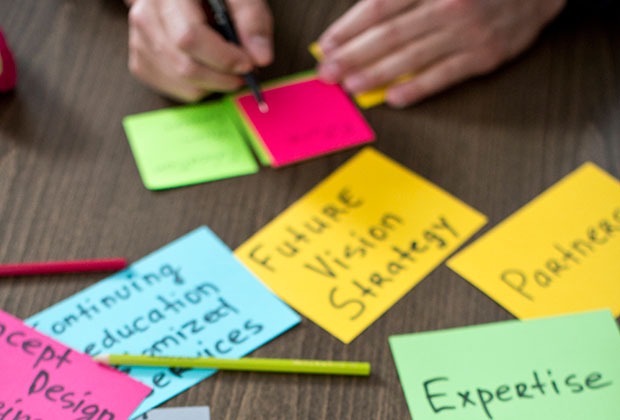
Application process has started to five different educational models, which enable your rapid transition to individual career path. The aim is to remove the language barrier and build up the networks for you to get employed. Deploying competence in Finland According to UTH-research (1), in the Helsinki Metropolitan Area with 47% of the immigrant population of Finland, a special need has been identified to create an ecosystem for the integration of highly educated immigrants to work-life. As the number of immigrants living in Helsinki, Espoo and Vantaa is growing yearly, deploying the competence of each and everyone makes a big difference both in the society and in the daily lives of highly educated immigrants. Jobseekers with higher education and immigration background are facing multiple obstacles in finding employment that corresponds to their skills and education. For example, the previous education might not be recognized by the recruiting companies or lack of some niche skills might prevent the use of the existing education. Comparison of the foreign-born unemployment data available from OECD (2) and the total unemployment rate (3) shows that the immigrants have a lot higher unemployment rate in Finland and this has been recognized by the SIMHE (Supporting Immigrants in Higher Education) services at the Metropolia University of Applied Sciences. Paths to support your integration and employment Since 2016, SIMHE-Metropolia (Supporting Immigrants in Higher Education) has been offering its services for recognizing the competences and for guiding to suitable educational and career paths. Within SIMHE services, Deploying Competence in Finland Project will facilitate your participation to private and public sector jobs via different development paths: first, it will create an ecosystem for promoting your integration in the Helsinki Metropolitan Area. In addition, higher education institutions will implement several educational paths for recognition and completion of your competence. Each educational model enables your rapid transition to an individual career path. The above development paths will be supplemented by improving the accessibility of the education offering of the higher education institutions by collecting the relevant courses to an easy-to-access location. What is our goal with the project? The aim of the project is to develop a cross-administrative ecosystem, which enables the recognition and completion of your competence and rapid transition to individual career path, for promoting your integration in the Helsinki Metropolitan Area. Most importantly, the project includes partnerships from potential employers: direct link with the public and private sector employers ensures that the additional training is impacting the right skills and facilitate your employment. We aim to strengthen the inclusion and equality of the multicultural population in the Helsinki Metropolitan Area, and also promote your employment and integration as active members of the society. Check if you belong to our target group! Check if you are in the target group in this specific project! Do you have a higher education degree in the following areas? If yes, do you need to get the legal qualification? Nursing, Metropolia University of Applied Sciences (continuous application) If you have a nursing degree from an ETA or EU country, you belong to our target group. During this path, you will get to know about the Finnish service system, legislation and decrees. Early childhood education and care, University of Helsinki Centre for Continuing Education HY+ (application deadline 5th April, 2019) If you have a degree in early childhood education and care from abroad, you belong to our target group. The aim of this path is to complement your existing degree with certain pedagogical studies required in Finland. In addition, different supplementary studies, providing a bridge for the participants to professional and managerial positions, are organized in three different paths: Construction and Real Estate Management, Metropolia University of Applied Sciences (application deadline 30th April, 2019) Sales, Haaga-Helia University of Applied Sciences (application deadline 30th April, 2019) Travel and hospitality, Laurea University of Applied Sciences (application deadline 30th April, 2019) All the educational paths have a common objective, which is to develop your Finnish language skills in the specific area of studies. More information about the specific requirements concerning each path and the scheduling can be found from the website of the project. If you have a degree in one of the areas mentioned above, do not hesitate to apply! Sources: UTH-research online: http://www.terveytemme.fi/uth/(read 11th March, 2019) OECD data online: https://data.oecd.org/migration/foreign-born-unemployment.htm (read 11th March, 2019) Statistics Finland’s Labour Force Survey online: https://www.stat.fi/til/tyti/2017/06/tyti_2017_06_2017-07-25_tie_001_en.html (read 11th March, 2019) More information: Deploying Competence in Finland Project Korkeasti koulutettujen maahanmuuttajien osaaminen käyttöön Suomessa –hanke SIMHE path - From Recognizing and Supplementing Competences to Employment SIMHE (Supporting Immigrants in Higher Education in Finland) SIMHE-Metropolia
How to succeed in higher education in Finland?

When browsing through various websites of Finnish higher education institutions (HEIs), you notice that the institutions emphasize the difference between studying in Finnish higher education and studying in some other country. But what does that actually mean? What are the differences between the Finnish system and a system in a completely different culture? The Finnish higher education system – simple or not? To understand the way of studying in Finnish HEIs, you need to start by exploring the Finnish culture, which is a complex mix of different traits. Two characteristics come up especially. The first is the emphasis of individuality. In the Finnish culture people are expected to take considerable responsibility of their own lives. In more collective cultures, people might rely on communities of different types in their life planning, such as their family or relatives. The second is the focus on independence. In the Finnish culture, it is highly appreciated to control your own life, to make independent choices and to take responsibility of them. When studying in countries with the collective culture as a strong influencer, the focus is on teacher centered teaching methods. The Finnish way of studying, strongly affected by our individual culture, focuses more on student centered teaching methods and emphasizes the responsibility of the students as active agents in their own learning. In the Finnish world of HEIs there is a sense of equality between teachers and students. In more collective cultures the teacher is considered as a know-it-all. Do not get intimidated by all this. You can learn to find your way and succeed in the Finnish world of higher education. Start by digging into your past. You have probably already acquired a vast collection of different study skills during your life. It is also equally important to understand, that while the previously learned study skills are useful, you might have to modify them suitable for studying in a Finnish higher education institution. And also, you might have to learn some totally new skills as well. The skills you need in order to survive in Finnish higher education In the Finnish universities and universities of applied sciences, study and learning skills are highly emphasized. Here are some examples (based on e.g. Kangasniemi & Murtonen 2017): Self-knowledge: Start by aiming to form an image of the skills and knowledge base, that you already have, and of the skills and knowledge you still need to learn to reach your goals. Not only in studying but also in working life, the key skill is to be able to map your competences. Self-direction: Self-direction has a major role in the Finnish world of higher education. For many students coming outside of Finland, this might be the key element which makes the Finnish way of studying so difficult to take in. Self-direction means, that you take responsibility of your own learning. You independently aim for understanding, and also for developing your thinking and expertise. Time management: The Finnish higher education gives you considerable freedom. But with that freedom comes responsibility. The courses take up a lot of your time and include also significant amount of independent work in addition to contact lessons, which need to fit into your everyday life. If you start studying in a somewhat new language, remember that it might take you longer to take on materials. Planning skills: Be prepared to plan the schedule of completing your degree including a yearly plan for courses to be finished. In addition to scheduling your studies, consider how you want your degree to look like. When planning, keep your focus in your future: what would be a good and useful mix of studies for the working life? Self-direction plays a strong part here as you ponder and find out things yourself. Readiness for team work: One of the most central ways to work around a course theme is to team work. This requires for you to be ready to communicate as you are not the only one in the team. Think of yourself in a group. What are your strengths and weaknesses? Step by step you create self-knowledge of you as a team member. Need tools for your survival kit? If you want to prepare yourself before pursuing degree studies in higher education, consider brushing up your study skills as well as Finnish language skills in the Metropolia Preparatory Education for Studies at the University of Applied Sciences for Immigrants, open for applications in August. Online version of the preparatory education, including a course in developing your study skills, is offered during the year 2019 by the development project Valmentavasta Valmiiksi, so stay tuned. Sources: Kangasniemi, Mari & Murtonen, Mari. 2017. Yliopiston toimijoiden näkemyksiä vastuullisen yliopisto- opiskelijan taidoista. Yliopistopedagogiikka. 24:1. https://yliopistopedagogiikka.files.wordpress.com/2017/07/kangasniemi-murtonen_press.pdf AMK-opintoihin valmentavat koulutukset maahanmuuttajille –website. 11.5.2018. http://www.metropolia.fi/koulutukset/maahanmuuttajille/ Valmentavasta Valmiiksi - project website. 11.5.2018. http://www.metropolia.fi/tutkimus-kehittaminen-ja-innovaatiot/hankkeet/valmentavasta-valmiiksi/
Supporting Highly Educated Immigrants’ Career Paths in Finland
Since 2016, SIMHE-Metropolia has been actively developing and modelling its services to find out ways to improve highly educated immigrants’ education and employment possibilities in Finland. The number of customers at SIMHE-Metropolia has risen steadily over the past two years totalling in over 550 users for Guidance and Counselling and Recognition of Competences services in 2017. Creating a sustainable yet flexible method for recognising immigrants' competences SIMHE-Metropolia first piloted recognition of competences for highly educated immigrants in the field of technology in spring 2016 with some 30 customers to establish what would be the best method and participant criteria for the process. The current method, Mapping of Competences, has now been carried out in the fields of technology and business thrice since autumn 2016 with some 150 customers. The choice of fields was based on them not being regulated professions in Finland and Metropolia offers Bachelor’s and Master’s programmes in both fields. Mapping of Competences is managed and conducted by SIMHE-Metropolia. The field-related expertise is provided by heads of degree programmes or departments who work in the fields of technology and/or business at Metropolia. In autumn 2017, the Mapping of Competences service was also offered for suitable customers through Public employment and business services (TE Services) in Uusimaa region with almost 60 customers along with some 25 customers who entered the process through SIMHE-Metropolia’s own registration path. The continuation of the cooperation with TE Services is yet to be realised later in 2018. Recognition of Prior Learning is also needed for those not currently in higher education Recognising existing skills and competences is not a new concept in university of applied sciences as Recognition of Prior Learning (RPL) is strongly supported in study planning for example at Metropolia to create individual learning paths for degree students. SIMHE-Metropolia’s service thus augments and modifies RPL concept to highly educated immigrants who are not able to use such services as they are not registered in higher education institution in Finland. The official Recognition and Comparability of International Qualifications is conducted by Finnish National Agency for Education whereas SIMHE-Metropolia’s service aims at taking a more practical approach for recognising competences by helping customers to make their foreign qualifications and competences also more familiar to the Finnish employers. Self-knowledge and understanding of the Finnish context make a difference Education is highly appreciated in Finland, but being a highly educated immigrant in Finland does not always result in swift access to education or work. Immigrants often lack an inherent knowledge of the Finnish society and culture, they may lack sufficient language skills to enter in their field of expertise, and most importantly, they are not certain how their existing competences match with the Finnish requirements. Even though educated immigrants are needed in the Finnish labour market, we tend to run somewhat homespun and closed labour market in Finland (Kauppalehti 29.1. 2018). As customers are in a centre in Mapping of Competences, the aim is to offer both individual encounters in addition to group meetings throughout the process by helping customers to understand how their formerly acquired skills and competences match with the Finnish requirements find suitable educational paths, when applicable support employment and obtain information and ideas on various ways for job-search in Finland be able to express their competences better Now I know, where I am SIMHE-Metropolia's customers share common features like high level of education and being of foreign origin, but they are yet a very heterogeneous group of people with varied backgrounds, hopes and dreams how to live their lives in Finland. The best achievement over the past two years we have run the service, is to see how we have been able to empower people and give them tools for building possible career paths. Now that we have developed the ways to support self-knowledge and growth in more localised professional identity through our services, the next steps are to create even more ways to match the job-searching talents with those in need of skilled workforce. The existing events like Recruitment and Matching Morning by COME project help immigrants to meet up and network with employers-to-be. The road is still rocky and bendy, yet a lot has been accomplished by far. The most important thing is to include immigrants to the Finnish society by not always emphasising what they may not have, but rather embrace a feeble question raised by one of our customers: What if I am perfect already? More information: Maahanmuuton vastuukorkeakoulutoiminta Opetus- ja kulttuuriministeriön julkaisuja 2017:38 https://julkaisut.valtioneuvosto.fi/handle/10024/80706 Työ- ja elinkeinoministeriön julkaisuja.Työelämä 36/2017 Maahanmuuttajien koulutuspolkujen nopeuttaminen ja joustavat siirtymät -työryhmän loppuraportti ja toimenpide-esitykset http://julkaisut.valtioneuvosto.fi/bitstream/handle/10024/80625/TEMjul_36_2017_verkkojulkaisu.pdf?sequence=1&isAllowed=y Kauppalehti 29.1. 2018 https://www.kauppalehti.fi/uutiset/uutinen/HzNP4peF?ref=ampparit:730b&ext=ampparit Mäki, Kimmo. 5.12. 2017 Osaamme sanoittaa osaamista http://www.amkverkkovirta.fi/osaammeko-sanoittaa-osaamista
Healthy Mind, Healthy Life – How to improve the sense of belongingness among highly educated immigrants in Finland?

Why is belonging so important for us? We all have the need of belonging to something. The basic need, according to Baumeister and Leary, is, the feeling of doing purposeful things and taking part. Whether it is inside your family, the workplace, or say, the local chess-club, the need to connect is vital. This feeling improves our well-being, and lowers the levels of loneliness and depression. Belongingness can be achieved through what you do, and as an adult, a big part of your everyday life is concerned with your work. So what would happen, if this sense would be taken away from you unwillingly? Or for example, if you could not work within the field of expertise you have? This is sadly, everyday life among many highly educated immigrants in Finland today. My question is, how can this happen, and how can we prevent this? Work as a part of one’s well-being As Burton and Waddell stated, upon discovering your own fields of interests in adulthood, work and your workplace becomes a big part of your everyday life. It is the source of your income, and satisfies many of your psycho social needs. Your own work is central for your identity and enables you to see where you stand in relation to others. Belongingness increases your willingness to work within groups by the group norms and rules. The closer you feel with your working community, the more purposeful you feel, and the more efficient and goal achieving you are. So we could almost say that work is key for one’s well-being. As I have been arguing, work improves your well-being, work links to belongingness, which on the other hand is an essential need for all humans. So what if the “work-piece” of the bigger puzzle falls apart, what is there left for you, can you feel purposeful at all? Arriving to a new country, is work the key to belongingness? As a refugee, you enter a so-called Limbo phase when leaving your home country. This is a very distressing time where your life is in an “in between phase” in the migration process before the asylum decision. You face uncertainty regarding your future, you have abnormal living arrangements and might even have economic challenges and limited access to activities. How do you achieve a feeling of safeness and belongingness, when your whole life is turbulent, at the same time the country you are in has an unfamiliar culture and language? I myself, as a previous exchange student know how important it is to find at least one stable pillar in your life when everything else is unfamiliar. In my case, my studies kept me going. As a highly educated immigrant, I would assume you would want to work somewhere where you feel you are valued for your own competences. The importance of pursuing a career in your own field of expertise cannot be stressed enough. As an immigrant, you already have a tenfold risk for developing post traumatic stress disorders and other symptoms of distress and depression. So why would you make the future even more disrupted by not allowing one to work who already possesses a higher education degree? Thoughts about the future and solutions for this? For Finland to be a more international country, we need to strive for a more international working force as well. The SIMHE-services have encountered several cases where highly educated immigrants want to continue their own career path, but because of the regulations or not finding a place, they cannot. They are so motivated in maintaining their skills and connect, that some would even work for free. A downgrade from your own field of expertise creates a feeling of self-worthlessness and increases lacks of motivation. Highly educated immigrants need to be recognized for their skills and degrees they possess. They need, just like anyone else, to feel the sense of belongingness, that they are a part of something. As an intern, and as a social psychology student, I sense that the services that SIMHE provides is of great importance, but could in the future also be done on a bigger scale. What is there left for us to do? How can we improve our integration of highly educated people in Finland? Did you, while reading this and after reviewing the SIMHE-Metropolia web page, come up with new ideas or questions regarding this topic? Or do you even already have a solution for us? We at SIMHE-Metropolia would like to hear more about your thoughts! Elsa Rinne, SIMHE Metropolia trainee, Social psychology student at Svenska Social- och Kommunalhögskolan vid Helsingfors Universitet
365 steps later
Supporting Immigrants in Higher Education in Finland (SIMHE) has now been part of my professional life exactly for a year. It has most certainly been a year of many new encounters, views, angles, ideas, networks, seminars and happenings. This has been most apparent in terms of guidance and counselling as I have met around 300 educated immigrant-background people through one-to-one personal guidance discussions, Guidance Generalia lectures and in orientating customers to our Recognition of Competences Services. It was a very good year How could I describe the past year and its eventful occurrences? We started from an empty desk, only having a grasp of what there is to do, or what we wish to accomplish. Things evolved very fast and the first pilot in recognition of competences services, SIMHE-Metropolia internet pages and guidance and counselling services got a kick-start during April-May 2016. Evidently, once you get going, things tend to grow bigger and bigger, like a snowball effect. I have come across with people from many walks of life as my counselees have had education in engineering, nursing, law, medicine, business, pharmacology, languages and teaching, just mention a few. Some of them have been in Finland only for months, whereas some have been living here even for years. Despite their various backgrounds, all SIMHE customers share a need to get information and help in learning how to surf in the Finnish education system and labour market, or getting to know what are the authorities regulating certain professions in Finland. This has also put my skills to the test as I have myself learned so many new things by searching for information from various channels. Likewise, I have also learnt a lot from my customers and their international experience. It’s all about networks Many SIMHE customers’ main objective is to get employed in their field of expertise. Job-searching has been a daunting experience for many as there is little or no response from the employers, even after numerous applications and contact-making. It has become as a surprise to some that having the credentials and qualifications is somewhat meaningless, unless you have the networks and connections with the local people. It is a matter of trust, or sometimes of mere existence. If you have no one to endorse you and your competences, you are non-visible in the labour market. Thus, one of our challenges is to help to create such networks in making people exist in the eyes of the Finnish employers. Again, we aim to support this through our own networks like TE-office, Helsinki Chamber of Commerce and Start-Up Refugees in addition to our Recognition of Competences Services. The show must go on SIMHE-Metropolia and SIMHE-Jyväskylä pioneered the concept throughout 2016 with good results and a strong support from Ministry of Education and Culture. Issues revolving around immigration phenomenon have become more and more prevalent in Finland and the implications are apparent on all levels of education. The actions to be taken are described on The educational tracks and integration of immigrants - problematic areas and proposals for actions document that was handed to Minister of Education and Culture, Sanni Grahn-Laasonen, at Metropolia in mid-February 2017. SIMHE is getting even a stronger foothold in 2017 as more educational institutions are joining the concept and the work will continue until the end of 2020, or even beyond. We are very happy to welcome University of Helsinki, University of Turku, Oulu UAS and Karelia UAS to heighten the service concept and bring in fresh views and ideas. There is most certainly a need to open-up and brush-up the existing policies to create ways for immigrants to have an access to education, also on its highest level. SIMHE-concept could work as a stepping stone for supporting more inclusive education in catering the needs of immigrants and the Finnish society.
Can you see it more clearly now?
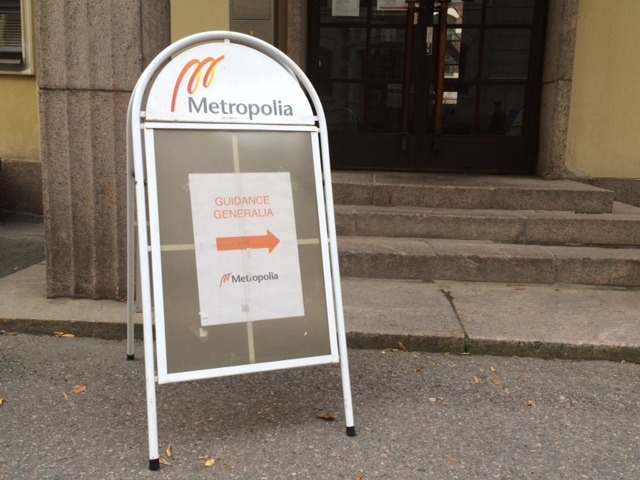
SIMHE-Metropolia services has now reached its next step – or even two of them – in making the Finnish education and higher education system more approachable and understandable for the immigrants living in Finland. We launched the monthly Guidance Generalia lecture series in June and now, after the round two in the end of August, it is time to evaluate the outcome. Don’t you Know, it’s all so simple from early day care to the doctoral level! Guidance Generalia lecture aims at unravelling the mysteries of the Finnish education system and how to enter in the higher education in particular. The lecture is open for anyone and is advertised on SIMHE’s For Immigrants website and through other networks. We are also introducing guest speakers this autumn from many relevant arenas such as TE-office, National Board of Education, Kela for Finnish Social Security System and so forth to help people to make the most of the events. For us, who have travelled through the system from early childhood day care to the higher education, all is very smooth and clear; this is how the story goes and we take this highly praised system for granted. However, for those, who come from the outside, it may come across as foggy and almost unreal: there are free meals in the primary and secondary levels of education and what does it even mean to have a dual model in the tertiary level? Overcoming the language barrier The first ever Guidance Generalia in June, set the mark for what we wish to reach. We have a service promise to master the lecture in Finnish and in English, simultaneously. It is even possible to have an interpret on our expense, if there is enough demand for additional languages on top of these two. The limits of our language were certainly not the limits of our world as the June lecture was managed in Finnish, in English and in Arabic with the help of an interpret. Or, perhaps, it was muddled through as having three different languages made it feel like being in an international airport at times. The message went through to the twenty something participants, even though them, the interpret and I were mopping sweat from our foreheads after two hours of intensive schooling. However, as we are able and capable to develop, the August lecture introduced the renewed state of the affairs with a new set of slides to help to overcome the language malarkey. We are in this together August setting was thus thoroughly planned and the session welcomed yet again some thirty participants. This time we were lucky in terms of lingua franca as all participants were able to follow the lecture in English. We managed to create a very reciprocal way of making the education system more familiar to the participants and the lecture passed by with many questions, comments and remarks. Participants were very pleased that someone offers such services just for them and for their needs. We were also happy to invite the first guest speakers, Bayazidi Saeed and Ahmad Moussa from Uudenmaan TE-Office where they work with highly educated immigrants to support their employment. Mr Saeed and Mr Moussa explained the role of TE-office in supporting education for immigrants during and after their integration program period. They gave an invaluable insight into the TE-office services for independent education. Expanding the cooperation Guidance Generalia has proven to add up substance to SIMHE’s service palette. It is also a very good forum to meet up with people to tackle questions that are general to all. Additionally, it enables us to reach those who need more personal support in their individual quest in the Finnish education system. The next session will take place in September with a guest speaker from the Finnish National Board of Education who will tell us more about recognition of international qualifications in Finland. We are also expanding our horizons as the lecture will be simultaneously streamed to participants in central Finland in cooperation with SIMHE-Jyväskylä and JAMK University of Applied Sciences.
To have someone who listens to me…
Supporting Immigrants in Higher Education, SIMHE-Metropolia, started its guidance services for educated immigrants, or those who are willing to apply for higher education, in early May 2016. Now that I have had a dozen or so customers visiting me, it is a good time elaborate the outcome by far. I wish to raise few issues that I find important when guiding people with little or no experience in the Finnish society, let alone in our education system and all that lies within. You are not dealing with the statistics when meeting someone face-to-face It is somewhat easy to hide behind the statistics and look into the immigration phenomenon through numbers, figures and percentages. There are currently over 200, 000 immigrants residing in Finland for various reasons and the amount is growing year by year. However, statistics do not count, when you have someone sitting in front of you in need of guidance and advice. At this point, your task is to listen to his or her individual life story and try to make people to see the difference that they are able to make for their lives. Immigrants are often seen as one pool of people and objects, not as capable individuals who are able to make their own decisions. All my customers have been highly educated and talented people who are just facing new circumstances they were not able to predict. They are ready to make a new start, even to take a step back in their already acquired competence level in order to fit in and fulfil the requirements of our society. My task is to provide the necessary facts and information to support the process. I am not being naïve as I know the existing hardships and obstacles on both sides, but giving options and possibilities is what matters here. Knowing me, knowing you is the best I can do Guidance is always about communication, seeking common grounds and establishing trust between people. I have worked with international degree students from various parts of the world for ten years, so the change in the clientele was not that dramatic to me. I have learnt through experience and my own education in intercultural communication that knowing yourself well is the key for understanding others. Also, guidance work is first and foremost done through your own personality traits for which I hope to come across as competent, down-to-earth kind of person with a tender heart. Yet this needs to be decided by my customers. Firstly, I feel humble and privileged to have this opportunity to be able to be one of those, who make Finland and its peculiarities more familiar and less haunting for immigrants. Secondly, my guidance work puts me in the learning curve too as every person needs to be treated not only as a member of a certain group, culture or ethnical background, but as a unique individual. My job is not to fortify the existing boundaries but rather lower them to help us to find the common platform to build our dialogue together. Thirdly, meeting people from other cultures gives you more than it takes from you as you broaden your horizons through every encounter. If you just let it happen. Like a beacon shimmering light at night How do I see the SIMHE project and its objectives after working in the project for three months? It seems to be well needed for sure and has been welcomed by many. There is a constant need for having a place where an immigrant-background people are able to seek for advice in the amazing maze of the Finnish education system and society when searching suitable paths for themselves. We are not to change the world, perhaps we only just tickle a corner of it, but I find SIMHE and its guidance services to have its stance among other similar activities. I somehow see SIMHE project like a beacon shimmering light at night; you do not see everything clearly at one glance, but you start to get the big picture by each beam of light. The more familiar you make the system and its demands and possibilities to immigrants, the easier it is for them to find their individual paths in Finland. It takes time, but it’s worth a go for us and them. We will have the first Guidance Generalia lecture in June, so stay tuned for hearing more about it soon!
Blog introduces information, tips and insights that help international talents with a higher education background to integrate and find their study and career paths in Finland. The blog is part of Metropolia’s #talentboost actions.
Outi Lemettinen (head editor)
Riikka Wallin
Anu Luoma
Email addresses: firstname.surname@metropolia.fi
Editorial Board handles all the publications of Various Variables blog before publishing.


Belongingness Career Career Boost careercoaching careers Connecting employability employment entrepreneur entrepreneurship Finnish as a second language Finnish Job Market Finnish work culture Finnish working life Finnish workplace norms Guidance higher education higher education institutions highly educated immigrants Immigrants Inclusion Integration International jobseekers in Finland international student international talent job search job searching skills language learning mapping of competences mentoring Networking networks online learning recognition of competences Self-employment SIMHE SIMHE-Metropolia Skills Society strengths Studying in Finland Support talent boost Work in Finland Working in Finland