
Author: vierailija
A language-aware Metropolia busts the myth of monolingualism

Learning Finnish can significantly enhance the study experience and job opportunities for international students and employees at Metropolia UAS. Many international students choose not to stay in Finland after graduation. Research shows that limited Finnish language skills can hinder their sense of inclusion, affecting workplace well-being, integration, and long-term residency (1). Learning Finnish is crucial for those wishing to stay in Finland. Proficiency in Finnish positively impacts students’ inclusion, well-being, and adaptability (2). In light of these findings, Metropolia has developed language guidelines emphasizing early Finnish language training in degree programmes (3). Even basic Finnish knowledge can be beneficial in daily life and leisure activities. International students often face difficulties securing internships or jobs in Finland. Even in English-speaking environments, situations requiring Finnish can arise, leading to feelings of shame and inferiority. The goal of the language guidelines is not to create a monolingual (Finnish or English) environment but to foster a multilingual Metropolia that embraces evolving language skills: Finnish-speaking students are encouraged to use and practice English more frequently, while international students are supported in learning Finnish alongside their other studies — not just in Finnish language courses, but throughout all their studies. A multilingual Metropolia: a place where everyone feels at home Language-aware thinking takes a respectful and approving attitude towards different languages and forms of language (4). At Metropolia, we encourage lecturers of degree programmes to incorporate multiple languages into their teaching, allowing international students to hear simple, frequently occurring Finnish expressions and routine phrases as part of their teaching in English (e.g., huomenta kaikille, nyt pidetään tauko, haetaan vähän kahvia) and to become familiar with key course concepts in Finnish — and in other languages that exist in the group — as well. When the group translates important concepts into different languages based on the group's linguistic backgrounds, it often reveals various aspects and nuances of the concept and thus deepens the learning experience. For instance, various aspects of ”early childhood education” are illuminated for the students when they collaboratively reflect on the meanings and connotations of the term "education" in different languages, e.g. kasvatus, education, utbildning, educazione, onderwijs. It is also important for international students to have opportunities to participate in language-supported internships and to engage with Finnish workplaces early in their language studies. This experience, supported by an internship pair and a language mentor, would greatly enhance their language acquisition. If there are Finnish speakers within an English-speaking study group, it would be beneficial for them to take an active interest in the Finnish language learning of international students. By doing so, they could provide opportunities for these students to practice Finnish in everyday communication during lunch or coffee breaks. Is it necessary to learn Finnish when everyone in Finland speaks English? If the entire Metropolia community exclusively communicates in English with the language learner from the beginning, there is a risk that the institution itself may inadvertently limit the learner's opportunity to acquire Finnish through authentic interactions (5). By incorporating Finnish into safe, informal interactions, in addition to formal language courses, it becomes easier to gradually extend language use to internships and other professional settings. This approach allows the learner's language skills to develop first in informal, low-stakes situations.Many international professionals who have lived and worked in Finland for an extended period have emphasized that learning Finnish was the key to accessing Finnish culture and achieving true integration. Even when work is conducted smoothly in English, managing everyday life can be significantly more challenging without Finnish language proficiency (6). Many international employees have emphasized that learning Finnish was the key to accessing Finnish culture and achieving true integration. Metropolia plays a pivotal role in supporting language learning The language guidelines highlight the crucial involvement of the higher education community in language learning process. A key aspect of developing language skills is Metropolia's provision of a safe and supportive environment for learners to use and practice Finnish. This is especially significant for students who are proficient in English, as they often face challenges in receiving support for learning Finnish: Finnish speakers tend to switch into English when they recognize that their interlocutor is a fluent English speaker or a language learner. It is essential to provide international students and staff with ample opportunities to practice the language, and they must also seize these opportunities (7). Successful language learners typically exhibit the following traits: a desire to learn, a positive attitude towards the learning process, and the courage to make and learn from mistakes — language is most effectively acquired through active use. Language is most effectively acquired through active use To facilitate language learning outside the language courses, it is essential that the surrounding community provides opportunities for learners to engage in meaningful interactions in the target language. A significant obstacle to language acquisition, particularly in bachelor programmes, is the absence of meaningful interactional opportunities in Finnish. Also, an ideology that downplays the value of Finnish language often isolates international students in an English-speaking environment, hindering their Finnish language development (8). Making student's language skills and goals visible The language guidelines emphasize the importance of the Language PSP (Personal Study Plan), which is completed collaboratively by the student and their tutor or supervisor (9). This plan outlines the language aspirations and expectations of international students and brings to light the various factors that influence language learning. Finnish, while often regarded as challenging, is not inherently more difficult than many other languages. The primary challenge in acquiring Finnish appears to be the difficulty foreigners face in actively using the language, even within Finland. The language courses, interaction opportunities, and support provided by higher education institutions alone are insufficient to ensure successful language acquisition. Learners themselves must engage with these opportunities, enroll in as many Finnish language courses as possible, and begin using Finnish, even if their proficiency is limited to a few phrases. It is also essential to dispel the myth of perfect language proficiency. None of us achieves perfection in any language; effective communication can occur even with an accent or minor errors. The essential goal is to be understood and to effectively convey one's message. A language-aware Metropolia recognizes the crucial role of language skills in students' integration into Finland and their employment prospects. It is also important to understand that multiple languages can be utilized depending on the context. For instance, courses may be conducted bilingually, and it would be beneficial if, in group assignments, students had the option to submit their work in Finnish, English, or a combination of both. A language-aware Metropolia acknowledges the value of diverse language skills and accepts that English and Finnish may be spoken with various accents and in different ways. Interaction with language learners may require Finnish speakers to slow down their speech and use gestures to facilitate understanding. Although this approach demands some adaptability from Finnish speakers, achieving mutual comprehension in Finnish can be greatly empowering for the language learner. International student, embrace the opportunity to learn Finnish and enhance your life in Finland! Three key considerations for international students learning Finnish:1. Proficiency in Finnish is crucial for securing employment and fully enjoying life in Finland.2. Begin speaking Finnish as early as possible, even if only using basic phrases. Start with routine greetings and simple inquiries to practice listening and speaking. Gradually incorporate more Finnish into your conversations as your skills improve.3. Enroll in as many Finnish language courses as possible and seek out internship opportunities where Finnish is the primary language. Actively request language support and mentors. Although learning Finnish requires considerable effort, it is a worthwhile investment that will yield significant benefits.Metropolia language guidelines in nutshell.More tips and ideas for planning and implementing multilingual situations and learning language in different kind of situations will soon be published on the Metropolia intranet. Stay tuned! Author Eveliina Korpela works as a senior lecturer at Metropolia UAS and as a researcher at the University of Helsinki in a project Multilingual Worklife and Means of Participation. She is currently developing multilingual practices and language learning at work also in Kielibuusti-project. She has co-published numerous Finnish language textbooks and, along with her research team, authored a Guide for a Multilingual Workplace (Monikielisen työyhteisön opas, Alma Talent, 2023). Sources Nikulin, M. 2019. Akateemisen maahanmuuttajan suomen kielen taidon tarve työssä ja arjessa. Lähivõrdlusi. Lähivertailuja, 29, 171–203. http://dx.doi.org/10.5128/LV29.06 Cf. Stilling, E. 2022. Med språket som strategiskt verktyg. Guide till ett språkutvecklande arbetssätt för chefer, HR-personal och beslutsfattare. Tukholma: Föreningen Vård- och omsorgscollege. https://vofront-files.vo-college.se/vofront_files/218c4845-cc38-4a38-84c0-8e88da116abe.p Language guidelines in nutshell. https://www.metropolia.fi/en/about-us/language-guidelines Kielibuusti-hankkeen sivut. (2024) https://www.kielibuusti.fi/en/employers/multilingual-workplace/steps-toward-language-awareness-in-the-workplace Cf. Lønsmann, D. 2015. Language ideologies in a Danish company with English as a corporate language: ‘it has to be English’. Journal of Multilingual and Multicultural Development, 36 (4), 339–356. Lehtimaja, I., Korpela, E., Komppa, J., Kotilainen, L. & Kurhila, S. 2023. Monikielisen työyhteisön opas. Helsinki: Alma Talent. Kirilova, M., & Lønsmann, D. 2020. Dansk – nøglen til arbejde? Ideologier om sprogbrug og sproglæring i to arbejdskontekster i Danmark. Nordand – Nordisk tidsskrift for andrespråksforskning , 15 (1), 37–57. https://doi.org/10.18261/issn.2535-3381-2020-01-03 Intke-Hernandez, M. 2021. Kielenoppija tarvitsee tuekseen kielitietoisuutta ja yhteisiä tekoja. Kieli, koulutus ja yhteiskunta, 12 (6). https://www.kieliverkosto.fi/fi/journals/kieli-koulutus-ja-yhteiskunta-joulukuu-2021/kielenoppija-tarvitsee-tuekseen-kielitietoisuutta-ja-yhteisia-tekoja Kielibuusti-hankkeen sivut. Kieli-HOPS. Language PSP. https://www.kielibuusti.fi/en/learn-swedish/language-learning-tips-and-resources/plan-your-language-learning-with-language-psp
Playing hide and seek with hidden job markets

A hidden job means an open position that has not been made public. Instead, potential candidates are found for example via headhunters or networks. Sometimes the employer is not even actively looking for a professional to join his/her team but a new position is created when a capable person offers his or her expertise at a suitable time. As many as 70-80% of employment opportunities in Finland are not advertised publicly but remain “hidden”. (1) According to Sitra’s survey 2016, less than a quarter (23%) of Finns found their current job by applying for a vacancy, while around 70% found work through other channels. (2) But where to find these hidden job markets? This blog will give you practical tips on where to start looking. Why Finland has hidden job markets? From the employer's point of view, the recruiting process via open job markets often is lengthy and expensive. It requires a lot of resources: advertisement, going through the applications organizing the interviews, and communicating the process status for the applicants. From the company's point of view the new hire is also always a risk. It’s easier to hire personnel internally. If the right person for the job can be found inside the company, it minimizes the risk of making a bad hire. Some companies prefer that their open positions and periods of hiring aren’t public knowledge. Perhaps the company is opening a new branch, for example, but does not want to share this information with the public and the competitors just yet. In these cases the company uses silent recruitment by looking for the suitable canditates through their networks, social media or with the help of a head-hunter. Where to look for a hidden job? Hints and tips for the jobseekers 1. Media and news Follow the media. Decide which media you wish to monitor. What are the most important regional newspapers, what are the most notable publications in your profession, which websites you should follow online and which social media networks are worthwhile to participate in? 2. List of fastest-growing Companies in Finland Look for growth companies. Growth companies often want and need to recruit new employees but they have very little time or money for the lengthy recruitment processes. Follow the news and check out startup companies (3). 3. Company expansions, reforms and news about designation Relocating to new premises, establishing new functions, winning bids or outsourcing projects often result in a need for new employees. Appointment news is always a source of opportunities. If a company is replacing its management it often results in changes at other levels of the company as well. On the other hand, many people who start in a new job leave behind a vacancy that probably has not been made public yet. 4. Social media Be present on social media. Many recruiters use channels such as LinkedIn when scouting for professionals. Be bold in your networking and be active in various groups. If a job seeking campaign on social media seems like a natural thing for you, give it a go. By sharing your home page or video-cv you gain visibility that may lead you to the right employer. 5. Networks Networking (4) is not just for social people but in today's world, everyone can find a suitable way to network. Networking takes on very diverse forms and it can be done even from your couch at home. Use the channels of networking that suit you: LinkedIn and other social media, exhibitions and conferences. Expand your network boldly and be active in different kinds of professional discussions, either in person or online. Remember to use your own professional networks and circle of acquaintances. Let your network know what you can do and what you are looking for. 6. Direct contact You should directly and boldly contact employers that interest you and send them an open application (5) and CV. Choose the targets you approach carefully before making contact. Think about why you want to work for that particular company. Think of yourself with the company, find a contact person to approach and think about what additional value your expertise could give them. Always tailor your application and CV to match the company or position you are applying for. 7. Headhunters, recruiting and HR companies and their recruitment platforms You should regularly update your information on the pages of different recruitment and headhunting companies and maintain active open applications in the electronic systems of the target companies. 8. Recruitment fairs and events Events and fairs (6) are a good and easy way of meeting interesting employers. 9. Universities' and UAS’s Career Services Career services at different universities/UAS offer support for job seeking and career planning. The services can vary slightly depending on the university/UAS. Check the possible career services of your home uni/UAS. 10. Open-minded attitude Don’t give up. A hidden job is always an open opportunity. Keep on trying with an open mind. Feeling embarrassed to ask for a job. Why? Psychologist and career coach Päivi Montgomery highlights in her latest book “ Työnhaun psykologia” that your jobseach and contact message is an advantage for the company. (7) You are offering your professional expertise to the employer. Be proud of yourself and your expertise. And remember to show it to the employer! Sources: 1. TEK (2020) Hidden jobs - what are they. https://www.tek.fi/en/news-blogs/hidden-jobs-what-are-they 2. Sitra (2016). Only one in four Finns finds employment by applying for a vacancy https://www.sitra.fi/en/news/only-one-four-finns-finds-employment-applying-vacancy/ 3. Startups in Finland Open Data Storehouse https://tietopankki.businessfinland.fi/anonymous/extensions/Startups/Startups.html 4. Riia Hoppania, Metropolia (2022) The Art of Networking – where to start if you don´t know anyone in Finland? Blog post. https://blogit.metropolia.fi/variousvariables/2022/08/25/the-art-of-networking-where-to-s 23.tart-if-you-dont-know-anyone-in-finland/ 5. TEK työkirja (2022) Tools for job-search. Top tips: Application letter. https://www.tek.fi/sites/default/files/attachments/tek_tyokirja_2022_online_spreads-1.pdf 6. Events by Helsinki Employment Services: https://tyollisyyspalvelut.hel.fi/en/current-matters/events 7. P. Montgomery (2022) Työnhaun psykologia. Helsinki. Readme.fi Bloggers: Timo Luoma works as a Career Coach in Metropolia SIMHE services supporting highly educated immigrants with their employment and study paths in Finland. They are working in a collaboration project with the employment services of Helsinki, Espoo and Vantaa-Kerava to increase employment among international professionals in the Helsinki region. In addition to career coaching, Timo’s responsibilities include coaching of students in Metropolia’s ICT Career Boost programme. Jaana Vaittinen works as a Career Coach in Metropolia SIMHE services supporting highly educated immigrants with their employment and study paths in Finland. They are working in a collaboration project with the employment services of Helsinki, Espoo and Vantaa-Kerava to increase employment among international professionals in the Helsinki region. Her responsibility is to guide business accounting professionals in Metropolia’s Career Boost programme.
Make sure that your CV is as professional as you are

Companies that recruit for expert positions expect to receive professional CVs. The time that is spent reading one job application and CV might be even less than one minute, says Hanna Sirot, HR Business Partner at Metropolia University of Applied Sciences (1). In this time, the applicant's core competence, work experience and education are quickly browsed. The more compact and clear the CV is, the better chances there are of getting it shortlisted. This is one fact that I have become to know as Business Coordinator at SIMHE (Supporting Immigrants in Higher Education). And my question to you is: Is your CV as professional as you are? To get invitations to job interviews you must first make a good CV. What you need is a high-quality general version of your CV that you can revise to match the position you are applying for. So, take some time to get your CV up to date. 1. Find a template that reflects your professionality A convincing CV is clear, brief and preferably sent as PDF format. You may start your CV updating process by choosing one of the ready-made CV templates you can find from the Internet. You can also find templates on Word: open a Word document, select File and choose More templates. Whatever template you choose, make your CV fit in 1 or 2 pages. It is easier for recruiters to get a quick understanding of your competence when you have listed the content clearly and briefly. 2. Create a general version Writing a general CV based on your professional background helps you to later modify it to meet the needs of a position you are interested in. When you have listed all relevant job experience, degrees and other expertise you have, you can use the same CV with small updates when sending it to different companies. Update this general version when it is necessary: when you start at a new job, your duties at work have changed, you have finished a study module, etc. This helps you to react fast to interesting job offers and submit your application in time. 3. Start with a brief introduction In the upper part of the CV, describe with a few sentences who you are, what you do for your profession and most importantly, what are your plans for the future. Explain why you are interested in this particular company and positions. Let your motivation shine! The purpose of this introductory section is to raise the recruiter's interest to read the rest of your application documents. It also helps keep your career on track. When your goals are written down it is more likely that you will follow your goals and accomplish them. 4. List only relevant experience Start updating your CV by filling in your professional and educational background. Mention only relevant degrees and job experience that add value to your profile and show the milestones in your career. List them in chronological order starting from the newest. This makes it easier for the reader to follow your latest achievements. Mention job titles, companies and units where you have been working. If there are many short periods at the same employer, is it possible to squeeze them together in a brief summary? 5. Add the important skills and strengths Strengths vary from field to field: punctuality is appreciated at accounting, creativity at game design. What are your strengths related to the work tasks you are applying for? Take a moment to identify and reflect your strengths. There are multiple free strength tests on the Internet. Try for example this Via Institute of Character’s Strengths Survey (2). Or check the Indeed Career Guige’s list of 36 strengths (3). Describe your language and IT skills. Have you accomplished modules or courses on your professional field? Determine your levels of language fluency: native, fluent, advanced, intermediate, beginner. Check the definition from Indeed Career Guide’s blog How To Include Language Skills on Your Resume (4) if you are unsure about the difference between native and fluent for example. 6. Add a professional photo to your CV Last but not least, attach a professional-looking photo of yourself. Photo is not compulsory but it helps recruiters to remember your application. It also creates a feeling of trust. Remember to keep the CV brief. Mention only relevant matters. Don’t forget your contact details: full name, telephone number and email address. Place them on a front page of the CV. If you are looking for more detailed instructions watch this 3 minutes video by Guardian Jobs (5). The quality of the CV is crucial: the better CV, the more invitations to interviews you will receive. And that is the first step in getting the job you prefer. Sources: 1. Sirot, Hanna. HR Business Partner at Metropolia University of Applied Sciences. 2. The Via Institute of Character. The Via Character Strengths Survey. https://www.viacharacter.org/survey/account/register 3. Indeed Editorial Team (2022). 36 Strengths To List in Your Resume (With Examples) https://www.indeed.com/career-advice/resumes-cover-letters/strength-in-resume 4. Indeed Editorial Team (2022). How To Include Language Skills on Your Resume https://www.indeed.com/career-advice/resumes-cover-letters/resume-language-skills 5. The Guardian Jobs (2019). How to write a CV - a Guide. https://jobs.theguardian.com/article/how-to-write-a-cv-video- Blogger: Maria Osamitsu works as Business Coordinator at SIMHE project. Her aim is to smooth the path for international talents to Finnish labor markets by creating relevant networks and strengthening customers’ job searching skills.
The Art of Networking – where to start if you don´t know anyone in Finland?

If you have ever been job hunting, I´m sure you have been told to network. If you have tried to find a job in Finland, you have probably heard that most jobs here are “hidden” and found via networks (1). You might even have first-hand experience that knowing someone has opened the doors for you. There is no doubt that networks are hugely important when looking for work. But where to find these important networks if you are new in the country and feel like you don´t know anyone? When I talk about the importance of networks with my career coaching clients, I quite often face a belief that networking means contacting random people and asking them to help you, or even to give you a job. If this has been your method too, you have probably faced mainly silence in respond. Networks build on trust (2) and in general people are more willing to help someone they already know. If you are too direct with your requests for help, it can turn against you (3). Building personal networks that are based on trust takes time (4) and unfortunately, there are no shortcuts. However, there are ways to start, even from the scratch, and here are three steps for you to get started. Step 1: Get involved Even if your main goal for networking is finding a job, don´t be too focused on purely professional networks (or the lack of them). All personal networks matter, so get involved with people also in other areas of life. If you are new in the country, it can sometimes be easier to start with other social networks, than the professional ones. It´s good to remember that everyone you meet, new friends, neighbors, the girl from the Finnish class, the guy from the cooking class or football team, has their own personal and professional networks. You never know who they might be able to connect you with. A study done by Rolle Alho showed that international students have formed important networks to the majority population for example by volunteering, attending networking events and meeting people in their hobbies (5). So, start with finding something meaningful to do, volunteer, study, find a hobby and participate social events. Read more about different study possibilities in Metropolia and elsewhere Course selection in adult education centers in capital area - Ilmonet Sportsnetwork connects people organizing sports & activities with those searching for groups to join. Find a mentor from Luckan´s Fika programme Step 2: Find ways to help others As mentioned before, networks are built on trust and the key ingredients of social networking are trust and reciprocity (7). Instead of focusing on how others can help you, think about ways you could help others. What skills, knowledge, and expertise do you have that could be beneficial to someone else? Could you use your professional expertise to help someone? Helping others can also be a great way of getting references that you can use in your job search later. You may even find potential future customers! Volunteering for NGOs and other associations can also be a great way of networking (6). General information about volunteering in Finland by InfoFinland Finnish development NGO´s on Fingo Facebook group: Volunteer Finland Step 3: Be interested in others I think we all agree that it feels quite nice when someone is showing genuine interest towards us. When they ask questions and pay attention to what we say. When they want to hear about our career stories or the tips or advice we can give. You just simply get a nice feeling about a person who is nice to you. When building networks, be that nice person! Pay attention to others and show interest. Instead of asking for direct help, ask how they did it. Listen and learn from the experiences of others. Whenever you have a chance, say something polite and encouraging. Forbes Councils Member Paul Schaut summarises it well in his blog post: The art of networking is about following the golden rule — treating others how you want to be treated. “ Sources: Sitra (2017). Työelämätutkimus 2017: Somen kautta voi löytää töitä tai tulla löydetyksi https://www.sitra.fi/uutiset/tyoelamatutkimus-2017-yli-puolet-suomalaisista-vahtanut-ammattia-tai-alaa/ Poutanen, M. (2011). Verkostot väylänä työelämään. Master’s Thesis. Helsinki University. https://helda.helsinki.fi/bitstream/handle/10138/26098/Verkostot%20vaylana%20tyoelamaan.pdf?sequence=2&isAllowed=y Schaut, P. (2021) The art of networking: It Comes Down To The Golden Rule. Forbes Technology Council. https://www.forbes.com/sites/forbestechcouncil/2021/12/08/the-art-of-networking-it-comes-down-to-the-golden-rule/?sh=2c824d7b7d54 Finnwards (2020) Job hunting In Finland: the importance of networks in job hunting in Finland. Blog post. https://www.finnwards.com/working-in-finland/job-hunting-in-finland-the-importance-of-networks/ Alho, R. (2020). ‘You Need to Know Someone Who Knows Someone’: International Students’ Job Search Experiences: Array. Nordic Journal of Working Life Studies, 10(2). https://doi.org/10.18291/njwls.v10i2.120817 Alho, R. (2020). ‘You Need to Know Someone Who Knows Someone’: International Students’ Job Search Experiences: Array. Nordic Journal of Working Life Studies, 10(2). https://doi.org/10.18291/njwls.v10i2.120817 Finnwards (2020) Job hunting In Finland: the importance of networks in job hunting in Finland. Blog post. https://www.finnwards.com/working-in-finland/job-hunting-in-finland-the-importance-of-networks/ Blogger: Riia Hoppania works as a Career Coach in Metropolia SIMHE services supporting highly educated immigrants with their employment and study paths in Finland. She is working in a collaboration project with the employment services of Helsinki, Espoo and Vantaa-Kerava to increase employment among international professionals in the Helsinki region.
Dip your toes or just dive right in: the Helsinki region invites you to explore entrepreneurship

One of Finland’s largest ever mergers and acquisitions, the purchase of Wolt by DoorDash (1), in November 2021 created a huge buzz again around the startup scene in Finland. With such record-breaking deals, it is easy to think that only few extraordinarily brilliant business minds could manage entrepreneurship and founding a startup. In the best-case scenario, with hard work, a clever idea and some luck, your business can indeed turn into a unicorn like Wolt. However, as an entrepreneur, you set the goals for your business. The unique appeal of entrepreneurship is that it can take different forms based on your interests and expertise. No matter what your vision for your business is, the Helsinki capital region is an ideal setting for developing your business idea. You certainly have plenty of support available around you. Should I? Could I? — Plunge into the idea of entrepreneurship The first step is to ask yourself: could entrepreneurship be something for me? We all start from somewhere, and baby steps are allowed along the way. Your skills and competence will grow by seeking information, experience and feedback. Once you have your business idea, you can determine the scale of your endeavour. You can start with anything from light entrepreneurship to visionary business-building with global reach. Entrepreneurship incorporates a huge variety of options. When contemplating the thought, you can explore the forms of enterprises in Finland e.g. on the InfoFinland website or in the Guide for Becoming an Entrepreneur on the NewCo Helsinki website. Polish the key: your attitude Secondly, as an entrepreneur, you need to be prepared to work on your attitude. In speaking with business and talent advisors and startup entrepreneurs, three main themes tend to come up: flexibility, openness, and adaptability. Teemu Seppälä, a Business Advisor for NewCo Helsinki, offers that to be successful as an entrepreneur, you need to find the balance of being open to feedback and confidence in your vision. Of course, any successful entrepreneur needs to have confidence in their abilities and, in some sense, be slightly stubborn. But as Teemu summarises his experience of working with thousands of startups, "you need to be open to feedback and criticism." This fail-fast mentality fosters quicker development and can help you crystallise your ideas, product, or initiative (2). Echoing Teemu's advice, Jochen Faugel, an experienced business coach and current Project Planner for the City of Helsinki initiative The Spouse Program, emphasises a similar must: "Learn from others, ask for advice, and appreciate all kinds of feedback; good and bad. Because success is not about having a great concept but your ability to implement it." Satomi Peltola, one of the founders of the Finnish zero-waste culinary startup Misola, stresses that openness not only represents being open to feedback from others but also a willingness to ask questions. As she says, “The City of Helsinki offers many services and support for entrepreneurs. When getting help, I decided early on not to be afraid of being embarrassed or looking ignorant.” No matter how well you draft your business plan, surprises tend to come along. "It is critical to be flexible and adaptable when becoming an entrepreneur. Not everything goes as planned, so you need to be willing to adjust to what comes your way.", pinpoints Bahman Doaeian, Co-Founder and Chief Business Officer of the MedTech startup Phonolyser. Build up your know-how through business advising services Thirdly, like Satomi points out, the region provides you with a wide range of services — thanks to strong national and regional commitment. Discover and utilise these services! The burgeoning startup scene in the Helsinki region is internationally renowned. The vibrancy of the scene is crucial to the cities in the region as well. Thus, they heavily invest in leveraging their entrepreneurs’ success. In practice, this translates into high-quality public services available for you, free of charge. For example, the City of Helsinki has committed to being a "hotbed of business opportunity in Europe." As the recently released Helsinki City Strategy for 2021-2025 explains, "Helsinki must be an enticing place for testing out new solutions in an urban environment. We effectively arrange innovation competitions, funds, and other tools." A vital component of the City of Helsinki's entrepreneurial initiatives is NewCo Helsinki. NewCo Helsinki is there to help you get started and to support you throughout your entrepreneurial journey. Their business advisors guide from translating your initial ideas into a business plan, starting a business, acquiring funding and even potentially taking your business abroad. You can book one-to-one sessions, join their numerous multilingual events and explore the extensive material bank available to you online. In the neighbouring cities similar services are provided by e.g. EnterpriseEspoo and YritysVantaa. The strong commitment reaches through to the national level as well. E.g. Business Finland creates a backbone for success with its services such as funding, support functions and information resources. It has developed for example a Startup Kit and launched with Finnish Immigration Service the Startup Permit for entrepreneurs who move to Finland. National funding is channelled also through TE services as startup grants for new entrepreneurs. You indeed have plenty to explore. Unlock the strength of the startup community through networks You definitely do not have to walk alone as an entrepreneur in the Helsinki region. The local startup community is known for its strong networks and geared to supporting each other to excel. The community is also highly international. Networks help you to develop your business know-how and to evaluate your business concept. Check out for example the following ways to build your networks and skills: Maria 01 campus: The leading startup campus in the Nordics provides its members with the tools, working spaces and knowledge for developing their businesses. The hub focuses on tech startups and investors. Recently Maria 01 was awarded with the Internationalisation Award for the year 2021 by the president of Finland. Coaching and training services and networking events such as those organised by Startup Refugees and The Shortcut Free entrepreneurship courses such as the Entrepreneurship Course by Startup Refugees and the Aalto University online course Starting Up developed in collaboration with Reaktor, Kiuas, Maki.vc and Aalto Ventures Program Open working spaces, such as Startup Sauna Startup accelerator and incubator programs and centers, such as Kiuas, Urban Tech Helsinki by the City of Helsinki, Aalto University, Metropolia University of Applied Sciences and University of Helsinki, and Health Incubator Helsinki Mentoring programs, such as the Mentorisi.fi program (for members of the interest and service organisation for small and medium-sized enterprises Suomen Yrittäjät) And yes, Helsinki is home of Slush, one of the world’s leading startup and tech events. Slush is all about world-class networking with your colleagues, investors and just about anybody interested in new trends. Are you a student? Build up your entrepreneurship skills already during your studies! Finally, if you are a student in a Finnish higher education institution, explore the opportunities available to you in your institution. As it happens, also higher education institutions want to encourage entrepreneurship and innovation in their students. Your time as a student is a valuable opportunity to not just develop your know-how, but to also build up your networks and try out new things with a low threshold. For instance, the Wolt CEO Miki Kuusi started his startup career already as a student, harnessing the drive of a creative student community to launch the now already renowned startup networking hubs Startup sauna and Slush (3). Having fun with your friends can turn into something meaningful! Often you have access for example to entrepreneurship courses and workshops courses developing your innovation thinking student entrepreneurship societies events and hackathons startup incubator programmes. Again, the cities collaborate with higher education institutions to encourage entrepreneurship through e.g. joint events, workshops and new initiatives. For instance, in January 2022 the City of Helsinki announced a new network of business incubators collaborating with the region's higher education institutions, Aalto University, University of Helsinki and Metropolia. As Jussi Laine, Project Manager of the Campus Incubators programme, says, "My goal is to create a framework on behalf of the city that enables sharing best practices between institutions and bringing the city's special expertise close to the institutions’ incubator activities". The Campus Incubators programme strives to create 100 new companies annually by connecting top researchers, the Helsinki region's startup ecosystem, and students in higher education. Next: write your story in the business ecosystem of the Helsinki region! To sum it up, you are in the place to be for gathering up the courage and knowledge to start your business. In fact, the Helsinki region ranks among the top 20 emerging startup ecosystems in the world (4). Precisely the scope of funding for startups, talented workforce and the strong startup network are seen as an asset for the region (5). There is room for everyone in the Finnish entrepreneurship thinking. While successful startup entrepreneurs can become rock stars of the business world attracting top talents’ eye to Finland, the vast majority of Finnish companies, 93 %, are small enterprises employing less than 10 people (6). On the other hand, Finnish entrepreneurship is internationalising also in terms of ownership. The number of immigrant-owned enterprises has grown dramatically in the past two decades. Immigrants’ self-employment rate is nowadays similar to natives. (7.) Dive in or simply just start by dipping your toes into the ocean of entrepreneurship. By trusting in your own skills and expertise, remaining open to failure, and utilising the resources and networks of the capital region, you can find the style of entrepreneurship that best fits you. Writers: Vejay Nair is a Project Planner for the City of Helsinki and a Communication Specialist from International House Helsinki. He relocated to Helsinki 5 years ago from San Francisco, USA, and completed his MA in Intercultural Encounters from the University of Helsinki in 2019. Marika Antikainen is a Project Planner in Metropolia. She works in a collaboration project with the employment services of Helsinki, Espoo and Vantaa-Kerava to increase employment among international professionals in the Helsinki region. Sources: Levingston, I. & David, R. 2021. Wolt’s $8 Billion DoorDash Sale Joins Largest Finland Deals. Bloomberg. Published on 10 November 2021. Giles, S. 2018. How To Fail Faster -- And Why You Should. Forbes. Published on 30 April 2018. Armstrong, S. 2015. The 2015 WIRED 100: Miki Kuusi (No.32). The Wired. Published on 29 Juy 2015. Startup Genome 2021. Rankings 2021: Top 100 Emerging Ecosystems. The Global Startup Ecosystem Report 2021. Published on 22 September 2021. Startup Genome: Finland – Greater Helsinki. Viewed on 22 December 2021. Suomen Yrittäjät. Entrepreneurship in Finland. Viewed on 22 December 2021. Fornaro, P. 2018. Immigrant Entrepreneurship in Finland. ETLA Raportit – Reports 83. ETLA Economic Research. Published on 13 September 2018.
Knowing your skills is crucial for your career ‒ how to get started?

We all have skills and strengths, but it’s not always easy to see close and recognise what we are good at. Especially if getting constantly rejected in job search, or having a longer gap in the resume, the focus can easily shift from the skills you have to those you lack. When you are under evaluation or in a competitive situation, it is quite natural to feel uncertain about your strengths (1). However, recognising your skills, and also your development needs, is absolutely crucial when you are searching for a job and building your career: To be successful in job search you need to be able to communicate your skills to the employers. To guide your career in a desired direction, you need to recognise the skills gaps and development needs you might have, and find a way to learn the skills needed. Recognising your skills will give you new ideas and help you find new ways on how and where to use your skills. Skills come in many shapes and forms There are many ways of categorising and labelling skills. You might have heard about hard skills and soft skills (2), employability skills (3), future skills needs (4) and so on. All kinds of skills are important, but these kinds of categories can help you to identify the skills you have. One commonly used categorisation is to make a distinction between job-specific (5) and transferable skills (6). Job-specific skills are the skills required to be able to work in certain profession or certain field. For example, if you work as an architect you need CAD skills. As a teacher, pedagogical skills are crucial for you to be able to do your work. Transferable skills are skills that are relevant to any job, no matter the professional field or the title. You can take transferable skills with you from one job to another. For instance, communication skills and analytical skills are relevant to an engineer as well as to a teacher and a marketing professional. Transferable skills are especially important to recognise if you are just starting your career or changing careers. These are typically situations in which you might not necessarily yet have a lot of concrete work experience in the field you are applying to. You develop new skills throughout life Skills are not something you learn only in school or while working. You gain new skills also when volunteering, while participating in social activities, in your hobbies and personal projects and just by living your everyday life. For example, while staying at home and taking care of your children, you might learn skills like patience, handling unexpected situations, negotiation skills and flexibility. When adapting to a new country and culture, one typically develops curiosity, productivity and resilience (7,8). Job search, then again, might improve your self-knowledge, networking skills and perseverance, for example. As you start identifying your skills, it’s good to remember that you don’t need to be an expert on something to be able to say that you have that skill. According to Blooms Taxonomy learning starts with remembering and understanding. After that you will move on to applying, analysing, evaluating and creating. So, you can be on a beginners’ level with some skills (you understand the skill, and you can maybe even apply it a little) and on an expert level with others (you are fluent in applying the skill and you can even analyse and evaluate it). (9) Skills will develop as you get to use them (10). How to get started with identifying your key strengths, skills and competencies? Luckily, a lot of tools and methods are available ‒ for free ‒ to help you identify and put your key skills and competences into words. Take a quiz. To recognise your personal strengths, try The VIA Survey of Character Strengths. The test is based on theories of positive psychology and it can give ideas on where your personal strengths lie. However, tests shoud always be taken with caution and critical review: they do not necessarily provide the ultimate truth, but should rather be used for ideas and inspiration on your journey. Ask a friend. It’s usually a whole lot easier to see skills in others rather than in yourself. Be bold and ask someone who knows you well to give you feedback on your skills. You can find some ideas on how to do this on the SITRA website. Review your biggest achievements. When we achieve something, we have used our skills and strengths to get there. Think about your biggest achievements. These can be related to work, family, hobbies, studies, anything you consider to be an achievement for you. What did you do and what skills did you use to make the achievement possible? Use tools like SkillMill app or Mid-life skills review. These tools will help you to make your skills visible to yourself. Study job ads and company web pages. These can offer you detailed information about the skills demands in companies, and give you information about the skills you need to develop next. However, it’s important to remember that you can apply for the job even if you don’t have all the skills the companies are asking for. Compare your skills to the skills requirements of your field. Trade unions and other influencer organisations can provide a lot of information about the skill requirements in your field, see for example Osaamispulssi by Technology Industries of Finland. You can also check the Deck of Skills Cards (PDF) for sector specific needs in Finland. These cards list the growing and key skills needs in each sector in 2035. Use curricula in your field of study to compare your skills to those of graduates in your field. European and Finnish higher education institutions tend to describe in the curricula the skills and competences each degree provides. Recognise the impact of your international experience. If you have international experience, Hidden Competences research by Demos Helsinki and CIMO, that is now part of Finnish National Agency for Education, is definitely an interesting read on the topic. Living, studying and working in another culture and country might have given you skills such as cultural knowledge, language skills, tolerance, curiosity, resilience and productivity. Seek guidance. You can, for example, book a one-on-one guidance discussion with Metropolia’s SIMHE career coaches and get help with identifying your skills and competence as well as your strengths and development needs. Other organisations such as other higher education institutions offering SIMHE services, trade unions in your field and employment services can also offer career guidance services. Recognising skills is one of the top skills of the future As the skills demands of work are constantly changing we also need to adapt and focus on developing new kind of skills. The report Osaaminen 2035 (PDF) by Finnish National Agency for Education shows that the skills earlier considered as “soft”, skills like creativity and problem-solving, are actually the hard skills of the future. It is not easy to predict which skills are “the must-have skills” in the future, but for example ability to learn and to develop personal competencies is definitely one of the most important ones. (11) Furthermore, the ability to recognise our skills is part of the general knowledge of the future (12). According to Towards lifelong learning report (PDF) by SITRA, making skills and competencies visible and utilising one's strengths is important not only to individuals, but also to communities. It’s about participation, involvement, agency and wellbeing. How we see our skills and what we think we are capable of doing will define our careers and future goals. (13) As the skills needs for work are constantly evolving, also your own skills set develops and changes over time. You use your skills, learn new ones and forget others. In the end, recognising your skills is also just another skill that can be learned, so let’s just get started! Knowing yourself is the beginning of all wisdom – Aristotle Are you interested in transferable skills and future skills needs? Read also our previous blog post by Marika Antikainen on the importance of sustainability in the future. Sources: Saatko osaamisesi esiin? 7 havaintoa taitojen tunnistamisesta. SITRA. Viewed on 8 November 2021. Hard skills vs. soft skills: What’s the difference. The Balance Careers. Viewed on 8 November 2021. What Are Employability Skills ‒ Definition & examples of Employability Skills. The Balance Careers. Viewed on 8 November 2021. Osaaminen 2035. National Forum for Skills Anticipation. The Finnish National Agency for Education. Raportit ja selvitykset 2019:3. Summary available in English. 2019. What Are Job-Specific Skills? The Balance Careers. Viewed on 5 November 2021. What Are Transferable Skills? The Balance Careers. Viewed on 5 November 2021. Hidden Competences. CIMO/Finnish National Agency of Education. Viewed on 8 November 2021. Hidden Competences publication (PDF). CIMO/Finnish National Agency of Education and the think tank Demos Helsinki. Published on 1/2014. What is Blooms Taxonomy. Blooms Taxonomy. Viewed on 8 November 2021. Saatko osaamisesi esiin? 7 havaintoa taitojen tunnistamisesta. SITRA. Viewed on 8 November 2021. Osaaminen 2035. National Forum for Skills Anticipation. Finnish National Agency for Education. Raportit ja selvitykset 2019:3. Summary available in English. 2019. Reveal your skills. SITRA. Viewed on 8 November 2021. Towards lifelong learning report (PDF). SITRA. Published on 3/2019. Blogger: Riia Hoppania works as a Career Coach in Metropolia SIMHE services. Before Metropolia Riia worked as a Career Coach in employment services in Vantaa. Riia has done specialisation studies in career planning and has certificates in solution-focused coaching and life coaching. Riia has a degree in business administration and she did her first career in retail and business where she worked as a manager for years.
Courage to Use Finnish – Growing into a Professional
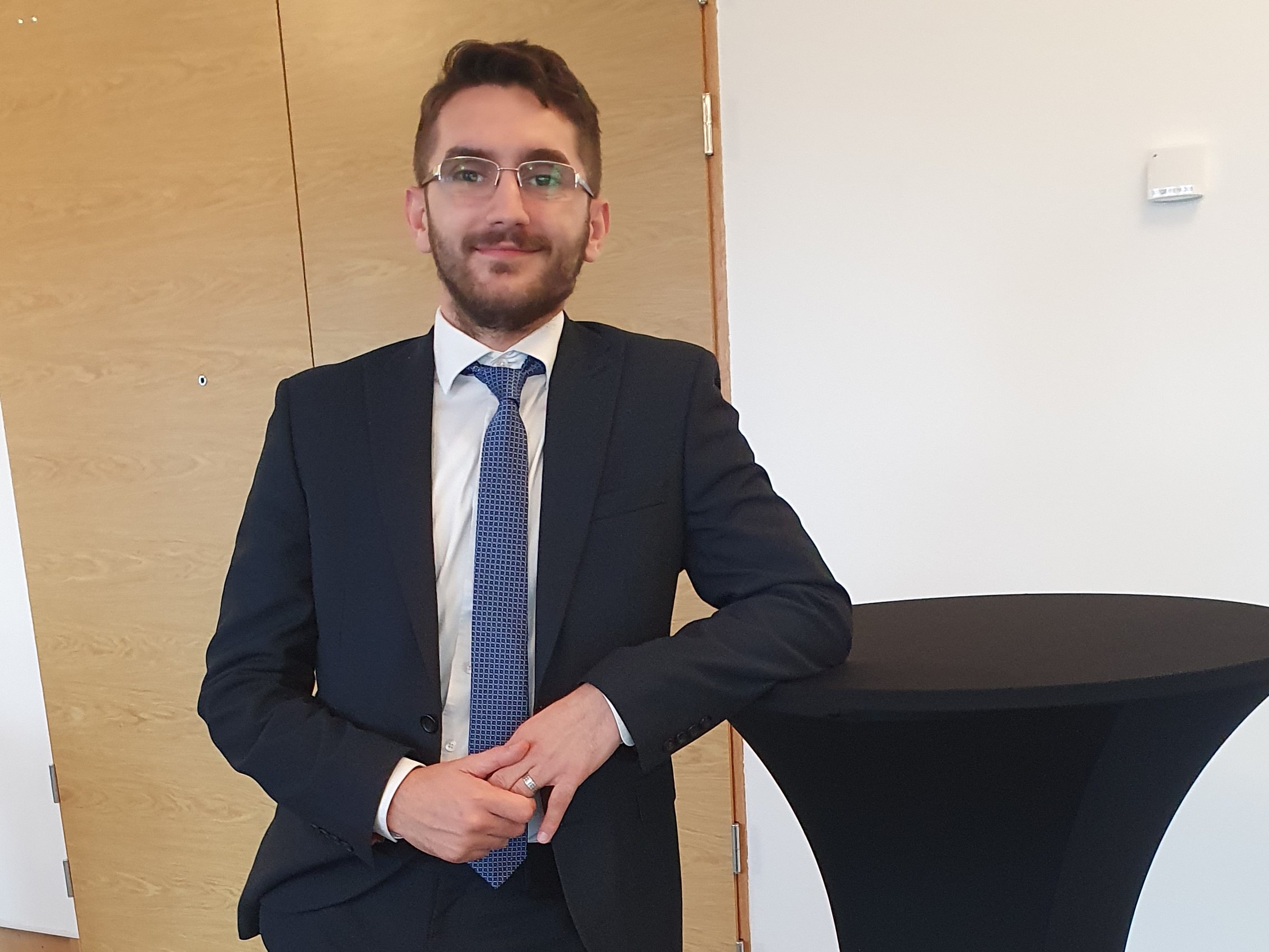
Immigration and emigration are sensitive topics to those who come to a new country and to those who accept the individuals. Those coming to a new country usually face struggle with integration and inclusion, especially when it comes to education and employment. The main barrier is often the language. My Finnish beginnings When I moved from Kosovo to Finland in July 2012, I started high school in Eira High School for Adults in Helsinki after less than a month. I, of course, started in an English-speaking program. Back then, I was completely new to my new home country and I was getting culture shocks almost every day, not only by Finland and the Finnish culture but by the international community within the program as well. I started learning basic Finnish immediately. However, after some time I noticed that my Finnish language progress was hindered by me speaking English all the time. I would switch to English completely when I did not remember a word in Finnish. When I started speaking Finnish with my friends who had the nerves to talk to me and correct me, it encouraged me to start switching from English speaking courses to Finnish ones. I started with Math where the need for complex vocabulary is not as relevant as in other subjects. Being in an international community in high school, I could hear every Finnish accent there is, which in hindsight benefited me massively as now I can easily understand different Finnish accents. Outside of school I started using Finnish in supermarkets and restaurants. When it came to the matriculation exams in Finnish language, I chose Finnish, Math, English and History. I barely passed them all, but did nonetheless. Even though my writing and spoken Finnish skills were not the best, I challenged myself, and I triumphed. Towards using the language at work My professional life in Finland has mostly consisted of working in Finnish speaking environments. When at the age of 18 I started a summer job working as a cleaner, I spoke only broken Finnish. By the next year I already saw an improvement in my spoken language skills. My Finnish was basic at the time but still it allowed me to access the coffee room discussions and gave me the necessary motivation one needs to continue learning. During my period when I worked as a security guard, I could no longer work with only broken Finnish, because the job required clear communication with people. For example, I could not use Google Translate in the spot, like I had when I worked as a cleaner. After the job as a security guard, I worked mainly in English for a while, gaining experience in Marketing and Content Creation. During my work placement in autumn 2020 at SIMHE services in Metropolia University of Applied Sciences, my professional Finnish has gone to another level. From the begining my focus was set into developing my Finnish in an office environment, also applying a model developed in SIMHE to support my language learning in a goal-oriented manner. This has boosted my confidence to use Finnish at work and improved my professional proficiency. Diverse workplace: not just the language, but also new perspectives and innovation Although employment might feel quite difficult for internationals in Finland, there is always hope and positive stories. I understand many of us search for jobs only in English, which are quite scarce, even though the number has been growing throughout the years. However, I would encourage everyone try and challenge yourself with Finnish. I have been through the process myself and I understand it is not easy and it gets tiring from time to time. It's good to keep in mind that we are trying to be professionals in a different country, which takes a lot of adapting and perseverance. At the end of the day, it is not all black clouds, because the international community is growing bigger and bigger in Finland, bringing a diverse set of skills to work communities. It’s good to understand that we as internationals not only represent our backgrounds and our culture, but we are skilled individuals as well, who bring innovation and other points of view to the table. Language is a barrier to be overcome, for sure - what we can do as foreigners is to try our best to adapt to the working culture and requirements in Finland. It takes courage to use Finnish as a beginner, but as long as you try, it shows professional motivation and opens a path to learning more. Ahmet Binaku is an intern at SIMHE Services and 4th year student in European Business Administration in Metropolia University of Applied Sciences (at the time of the writing)
Healthy Mind, Healthy Life – How to improve the sense of belongingness among highly educated immigrants in Finland?

Why is belonging so important for us? We all have the need of belonging to something. The basic need, according to Baumeister and Leary, is, the feeling of doing purposeful things and taking part. Whether it is inside your family, the workplace, or say, the local chess-club, the need to connect is vital. This feeling improves our well-being, and lowers the levels of loneliness and depression. Belongingness can be achieved through what you do, and as an adult, a big part of your everyday life is concerned with your work. So what would happen, if this sense would be taken away from you unwillingly? Or for example, if you could not work within the field of expertise you have? This is sadly, everyday life among many highly educated immigrants in Finland today. My question is, how can this happen, and how can we prevent this? Work as a part of one’s well-being As Burton and Waddell stated, upon discovering your own fields of interests in adulthood, work and your workplace becomes a big part of your everyday life. It is the source of your income, and satisfies many of your psycho social needs. Your own work is central for your identity and enables you to see where you stand in relation to others. Belongingness increases your willingness to work within groups by the group norms and rules. The closer you feel with your working community, the more purposeful you feel, and the more efficient and goal achieving you are. So we could almost say that work is key for one’s well-being. As I have been arguing, work improves your well-being, work links to belongingness, which on the other hand is an essential need for all humans. So what if the “work-piece” of the bigger puzzle falls apart, what is there left for you, can you feel purposeful at all? Arriving to a new country, is work the key to belongingness? As a refugee, you enter a so-called Limbo phase when leaving your home country. This is a very distressing time where your life is in an “in between phase” in the migration process before the asylum decision. You face uncertainty regarding your future, you have abnormal living arrangements and might even have economic challenges and limited access to activities. How do you achieve a feeling of safeness and belongingness, when your whole life is turbulent, at the same time the country you are in has an unfamiliar culture and language? I myself, as a previous exchange student know how important it is to find at least one stable pillar in your life when everything else is unfamiliar. In my case, my studies kept me going. As a highly educated immigrant, I would assume you would want to work somewhere where you feel you are valued for your own competences. The importance of pursuing a career in your own field of expertise cannot be stressed enough. As an immigrant, you already have a tenfold risk for developing post traumatic stress disorders and other symptoms of distress and depression. So why would you make the future even more disrupted by not allowing one to work who already possesses a higher education degree? Thoughts about the future and solutions for this? For Finland to be a more international country, we need to strive for a more international working force as well. The SIMHE-services have encountered several cases where highly educated immigrants want to continue their own career path, but because of the regulations or not finding a place, they cannot. They are so motivated in maintaining their skills and connect, that some would even work for free. A downgrade from your own field of expertise creates a feeling of self-worthlessness and increases lacks of motivation. Highly educated immigrants need to be recognized for their skills and degrees they possess. They need, just like anyone else, to feel the sense of belongingness, that they are a part of something. As an intern, and as a social psychology student, I sense that the services that SIMHE provides is of great importance, but could in the future also be done on a bigger scale. What is there left for us to do? How can we improve our integration of highly educated people in Finland? Did you, while reading this and after reviewing the SIMHE-Metropolia web page, come up with new ideas or questions regarding this topic? Or do you even already have a solution for us? We at SIMHE-Metropolia would like to hear more about your thoughts! Elsa Rinne, SIMHE Metropolia trainee, Social psychology student at Svenska Social- och Kommunalhögskolan vid Helsingfors Universitet
Blog introduces information, tips and insights that help international talents with a higher education background to integrate and find their study and career paths in Finland. The blog is part of Metropolia’s #talentboost actions.
Outi Lemettinen (head editor)
Riikka Wallin
Anu Luoma
Email addresses: firstname.surname@metropolia.fi
Editorial Board handles all the publications of Various Variables blog before publishing.



Belongingness Career Career Boost careercoaching careers Connecting employability employment entrepreneur entrepreneurship Finnish as a second language Finnish Job Market Finnish work culture Finnish working life Finnish workplace norms Guidance higher education higher education institutions highly educated immigrants Immigrants Inclusion Integration International jobseekers in Finland international student international talent job search job searching skills language learning mapping of competences mentoring Networking networks online learning recognition of competences Self-employment SIMHE SIMHE-Metropolia Skills Society strengths Studying in Finland Support talent boost Work in Finland Working in Finland