Strengthening youth’s trust in the future

9.12.2021
Tikissä
According to OECD (2021), Finland is a high-trust society, ranking among the top performers among the OECD countries. In other words, trust is a meaningful phenomenon in Finnish society.
What is trust?
Trust can be seen as a simple, but also a complex phenomenon. Trust can be an approach, like an emotion, attitude, cognitive choice or even an unconscious issue, depending on theories. Thus, trust is based on individuals’ emotions, experiences, thoughts and attitudes; it can also be explored from a wider perspective, like from its relational character.
There is evidence that Finnish people trust their families (as an institution) more than other institutions (1). In addition, young people also trust most people who are close to them. Trust in non-family members must be earned (2). However, there is evidence that if people just blindly trust anyone, it is likely that no one probably trusts them (3).
Trust and youth guidance
Improving youth’s trust in the future is important because trust has many positive consequences. It can strengthen young people's self-confidence in their own abilities, but also improve the ability to trust others.
The Finnish Government (4, 5) considers guidance to be very important. It has been pointed out that there is a special need for guidance for those groups who are currently underrepresented in the participation in continuous education. Further, people must be able to trust in the future and their own opportunities, and feel to be part of the environment as a meaningful resource. (6) For example, some studies of adolescents' trust experiences (7) suggest that ‘Relationship Education’ programs can make a difference. They can enhance young people's understanding of and willingness to trust. In other words, trust can be learned, and it is never too late to learn to trust, even if it can be, in some cases, challenging.
For example, Zitting (8) has pointed out that without peoples’ trust in public administration it is difficult to trust other people. This shows that ‘trust’ has its ‘to come full circle' effect. We cannot approach it from only one perspective, when a wider understanding of it is needed.
Who am I? What am I able to do? What am I capable of achieving?
These are the three main questions in the dialogue and guidance with young people in the FUTU project. Those questions are based on the theoretical understanding of the Social Pedagogical Approach to improve participation, agency and life management skills in everyday life practice. There is also an understanding of ‘future research' behind FUTU -projects’ understand of pedagogical guidance. Trust is one of the key elements, also to make the guidance relationship between a young person and an adult stronger. Successful guidance can empower and support participation and the feeling of meaningful belonging.
In the FUTU project, we will improve future-oriented guidance to support the young people to see alternative ways to build a positive and realistic future. The aim is to see one’s own future as something that includes positive options and is worth striving. Additionally, we promote and support youth’s active participation. The pessimistic shortsightedness will be transformed into aims, inspiration and encouragement regarding the future. The young people will be empowered to plan their own future.
According to some experts who took part in the FUTU project’s (9) digital training and workshops, trust as a part of youth guidance can be defined as follows:
“...If the future feels scary ...the facilitator can set goals that can be achieved for the future and make a “plan” to achieve them step by step. The higher the probability that a young person achieves even a small part of the set goal, the more likely it is to build confidence in their own skills and help them achieve even bigger goals in the future.”
“For example, ...do not promise uncertain things. Create a communal, supporting and open atmosphere.”
“Time is actively and regularly allocated to conversations, rather than leaving the client to ‘separately hope for conversation time’."
“Trust in the future can be increased in many different ways. If it is a matter of a young person's disbelief in themselves and their own actions, one can extract successes from the young person's own past and reflect them on the current situation: how have you succeeded in the past? What kind of things has it demanded?”
To sum up, according to the Youth Act (10) the aim is to promote young people’s skills and capabilities to function in society, support their growth, independence and sense of community, and support young people’s growth and living conditions. Nevertheless, studies have found (11) that realization of inclusion of children and young people requires special skills and attitudes from service professionals. Even though there are a lot of experts and professionals with a big heart and strong empathy skills, this challenge cannot be bypassed. Professionals need to have an understanding of trust as an important element of supportive guidance relationships, as well as an empowerment element in youth’s life - ‘trust resource’.
How Finnish society can support young people’s trust in the future?
A successful restructuring of services needs a stronger climate of dialogue and trust between state, regional and local actors. (4, 5, 6). Additionally, OECD (12) supports Finland paying more attention to people who are at risk for ‘feeling left behind’. OECD encourages Finland to understand the expectations and perceptions of different groups of society with respect to transparency and participation.
By understanding trust and its diverse nature, as well as the empowering nature of it, it can be utilized in guidance work to support young people in finding their own trust resources. By supporting young persons’ self-confidence, they can become more visible to themselves. It can make a difference while fighting giving up, hopelessness and pessimism in life. (2).
In the best case, trust can increase trust and improve young people's hope for the future. Trust is a serious element to take into consideration, while developing, designing and creating new services, methods and tools for youth well-being, participation and their quality of life.
References
Simola J., Westinen J., Pitkänen V. & Heikkilä, A. (2021) Luottamusta ilmassa, mutta kuinka paljon? Tutkimus eri sukupolvien luottamuksesta yhteiskunnan instituutioihin.
Raatikainen, E. & Poikolainen, J. (2020) Young men’s experiences of trust and distrust as a framework for their future. The Finnish Journal of Youth Research (“Nuorisotutkimus”) Vol 38, (2), 37–51.
Frowen, I. (2005) Professional Trust. British Journal of Educational Studies 53(1), 34–53.
Finnish Government (2020), 3.6 Fair, equal and inclusive Finland
Government Programme, Finnish Government, Helsinki, 3.6 Fair, equal and inclusive Finland (valtioneuvosto.fi)
Finnish Government (2020), 3.7 Finland that promotes competence, education, culture and innovation, Government Programme, Finnish Government, Helsinki, 3.7 Finland that promotes competence, education, culture and innovation (valtioneuvosto.fi)
McElroy-Heltzel, S.E., Jordan, T.R., Futris, T.G., Barton W.A., Landor, A.K. & Sheats, K.J. (2019) Sources of socialization for interpersonal trust: an exploration of low-income Black adolescents’ experiences, Journal of Youth Studies, 22:1, 124-137
Zitting, J. (2021) Luottamusta voi edistää parantamalla sosiaalista osallisuutta (DIAK.fi).
Creating Positive Future - FUTU project. Creating Positive Future - FUTU | Metropolia UAS
Youth Act (2017). Legislation - OKM - Ministry of Education and Culture, Finland
Peltola, M. & Moisio, M. (2020) Ääniä ja äänettömyyttä palvelukentillä. Katsaus lasten ja nuorten palvelukokemuksia koskevaan tietoon. Nuorisotutkimusverkosto.
OECD (2021) Drivers of Trust in Public Institutions in Finland. OECD Publishing, Paris.
Creating Positive Future - FUTU | Metropolia UAS Means to achieve the project goal are promotion of future-oriented positive thinking, life management skills and ability to take action. In addition, the project can support the young people into further vocational training and transition into the job market.
What Are Good Instructors Made Of?
14.9.2021
Hiiltä ja timanttia
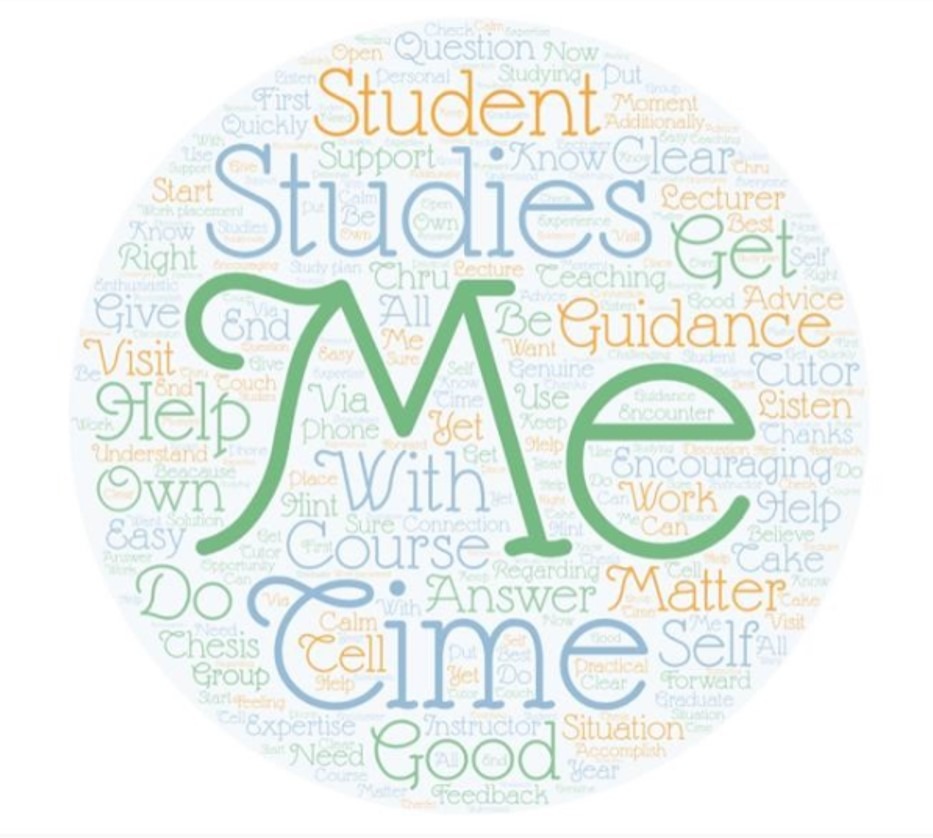
At the end of year 2020, Metropolia asked students and alumni to share their stories of good student guidance and counselling that they have received during their studies at Metropolia. This survey was a part of the on-going development project where a student-oriented guidance model is being created for Metropolia. The nearly 200 responses drew a picture of numerous Metropolia staff members as compassionate and versatile professionals as well as genuinely empowering and supportive instructors.
The development of student guidance is one of the goals in the current Metropolia strategy. One concrete part of it is building a student-oriented guidance model. The development of the model started in autumn 2020, and the goal is to complete the model during 2021.
One of the basic building blocks in the student-oriented guidance model is understanding that guidance belongs to everyone. It is not only top-down, information flowing from a teacher to a student, but guidance takes place in all encounters. In this article, we focus on the interaction and guidance between the teacher (instructor) and the student.
The quotes presented in this article were received from the student survey. The citations were edited to protect the privacy of the respondents, but the contents were not changed.
Good Guidance Needs Time, Attention and Respect
According to the classic view of Onnismaa (2007), good guidance needs time, attention and respect. In a guidance situation, the relationship between the instructor and the student is equal and confidential. Guidance should not be grounded on the instructor's assumptions or beliefs, but rather on solutions derived from facts, listening and interaction.
Good guidance strengthens the student's self-confidence and sense of agency.
There was a feeling that the situation will work out and they have faith in me.
No fuss, but straightforward nudging.
My thesis process was stretched, but the teacher didn’t blame me for it. Doing the work was more motivating when you were trusted and things were handled with a positive mindset.
In accordance with the holistic guidance model (Watts & Van Esbroeck 1998), guidance is a layered and comprehensive collaboration between different actors for the benefit of the guided person. These actors include teachers and guidance counsellors, tutors and student services coordinators, informaticians and janitors. The counselling of learning and studies includes also guidance of professional as well as personal growth.
I received individual guidance through a video call for information search within my field of studies and for using the school library.
I am rethinking my career choice. I received tips and advice from my guidance counsellor on putting my studies on hold and possibly resuming after the pause.
The different aspects of guidance are integrated into each other when everyone working with the student gives their share – either knowingly or unknowingly. The interaction between the student and the teacher plays a particularly important role in the student's learning process. In the survey answers guidance counsellors also came out as a significant supporters in students' study paths and lives.
Guidance Is Part of Every Teacher’s Work
Every teacher is involved in student guidance and counselling, whether they knowingly make a decision to do so or not. The guidance situation is always a threat and an opportunity at the same time - what the teacher does and says can have far-reaching consequences. Even after decades, someone still remembers the frustrated gust of an elementary school teacher: "You'll never be anything!" On the other hand, the teacher's supportive words can give the student faith in their own competence and support them in their life for a long time.
The teacher's feedback was sincere, so I knew it was true.
She heard and understood me and said I don’t have to do more than I’m able to.
The teacher didn’t allow me to get it too easy. Teacher should and must require performance based on what the student is capable of.
Whenever a teacher encounters a student, he or she influences the student's self-perception as a learner, student and person, but in addition the teacher has an influence on the student’s attitudes, motivation, self-confidence as well as perception of hope and faith. That is why it is important to think about and be aware of how you act in different guidance situations.
Consider these:
How do I influence this student through my own actions and my verbal and non-verbal communication?
Do I create hope or despair, courage or fear?
Do I teach life-long skills?
Do I offer quick advice and pre-chewed answers or do I respect the student's right to make choices and decisions about his or her own life, whether they are right or wrong in my opinion?
Does my guidance stem from compassion and genuine desire to help?
A Little Guide to Good Guidance
In the student survey, a few themes were often mentioned together with good guidance. These themes can be summarised as a four-item guide:
1. Stop and listen
Listening actively is sometimes easier said than done. However, the supportive effect of presence and active listening can be significant. Correspondingly, without these, the speaker may be left frustrated (Freese, 2021).
Compassion, a sense of personality. An equal, sincere encounter.
I remember the warmth and how easy it was to approach this teacher. The teacher encouraged me to get in touch.
2. Ask and encourage
Coaching is an approach where the coach helps the coachee to harness their strengths when targeting their goals. A coach operates with open-ended questions and refrains from ready-made answers. (Ruutu, 2020).
The instructor can also help the student to see things from new perspectives, which can already be a sufficient help to initiate the student´s own problem solving (Mattila, 2011). The instructor’s encouraging words concerning the student’s ability to move forward in a situation can be crucial. In fact, a strong self-reliance seems to protect well-being and reduce stress, according to some research (Ruutu, 2020).
The teacher challenged me to think.
I received good and encouraging, but above all critical and challenging guidance that changed my self-perception as a researcher and a professional in my own field.
In a difficult situation, I received gentle and encouraging guidance. I was able to put my studies on hold since I had clear plans for the future.
3. Focus on the encounter, not the tool
During the Covid pandemic the chance for real-life encounters was dramatically decreased. But luckily we have had the opportunity for genuine connection via online tools. The video call connection is more reminiscent of face-to-face interaction than we might have thought (Hietanen & co, 2020), and psychological security can be built in the encounter regardless of the medium (Raivio, 2021).
The guidance via Zoom went great. No rush at all, the teacher had enough time to figure out the basics.
I can email the teacher and the he will respond quickly. If necessary, he offers to explain in Teams if something is unclear.
When I needed help in recognition of prior learning, the teacher helped with it “hand in hand” via Zoom.
4. Trust in yourself and know your boundaries
There’s no requirement for the teacher to be an expert in all fields. A good instructor is a genuine, compassionate person who stays present and listens actively. A good instructor also knows their boundaries and when the student needs more specialised services. Respecting your boundaries is also a way of cherishing your own well-being.
Guidance is nor brain surgery nor rocket science. Even with a little guiding touch it’s possible to help the student to solve problems that would otherwise be difficult to overcome. Sufficient guidance could be for example as simple as asking questions or helping to break a bigger problem down into smaller parts (Säljö, 120). In fact, over-caring can make it difficult for the student to stay active and increase their sense of dependence (Lindqvist, 129).
The teacher knew how to prioritise, bring focus and encourage.
One challenge at a time, the teacher helped us move forward in our studies. He encouraged and supported us whenever we needed.
Developing Guidance Skills is a Part of Strategy Implementation at Metropolia
Metropolia's strategy 2021–2030 emphasises eg. respect for humanity and support for continuous learning. In addition, Metropolia's values – openness, community, high quality and expertise – are the core pillars of good guidance.
One of the goals in the student-driven guidance model is to enable the teacher and the student to meet each other honestly and intentionally. This kind of encounter requires time, attention and respect – which cannot take place if the student is only a part of a faceless student mass for the teacher. Genuine encounters require an open and confidential atmosphere. All members of the higher education community, both students and all staff, are responsible for creating and maintaining it.
We all have what it takes to be a good instructor. Often the tiniest consideration is enough: a smile and a sincere question “How are you?” can give the student the experience of being seen and heard. A good instructor is not expected to be perfect or to apply a particular top-down guidance role; the personal approaches to guidance are a richness!
Teachers enthusiasm inspired me.
No hyping or fake pushing but a lot of work!
You can talk to a teacher about things by the real names without interfering with issues of prestige and status.
Authors
Ulla Forsström, Paula Lindqvist, Mari Rupponen, Raisa Varsta, Anne Ojala-Soini and Anne-Mari Raivio are members of Metropolia's steering development group. The development of the learner-driven guidance model started in 2020, and the aim is to complete and use the model during 2021. The model's core idea is summed up in our service promise:
You will receive appropriate guidance on your own study path in a way that suits different situations and at the right time. Appreciating and interactive guidance supports your learning and goals at different stages of life.
Sources
Freese, Pekka 2021: Aktiivinen kuuntelu – Psykologi kertoo miksi, mitä ja miten. Read 22.4.2021.
Hietanen, Jonne O.; Peltola, Mikko J. & Hietanen, Jari K. 2020: Psychophysiological responses to eye contact in a live interaction and in video call (Wiley Online Library). Read 22.4.2021.
Lindqvist, Martti 2016: Auttajan varjo. Kustannusosakeyhtiö Otava, Otavan kirjapaino Oy, Keuruu.
Mattila, Antti S. 2011: Näkökulman vaihtamisen taito. WSOY, in co-operation Bonnier Books Finland. Printed in the EU.
Metropolian strategia 2021-2030.
Onnismaa, J. 2007: Ohjaus- ja neuvontatyö: Aikaa, huomiota ja kunnioitusta. Gaudeamus Helsinki University Press.
Raivio, Anne-Mari 2021: Voimavaraistava kohtaaminen – myös verkossa! In Varsta, R.; Raivio, A. & Ruotsalainen, T. (Eds.): Kohtaatko ihmisiä uralla? Voimavaraistava ohjausote (Theseus). 21–31. Metropolia Univeristy of Applied Sciences, Helsinki. Read 22.4.2021.
Ruutu, Sirkku 2020: Coachin työkalupakki. Alma Talent Oy, Balto Print, Lithuania.
Säljö, Roger 2004: Oppimiskäytännöt. Sosiokulttuurinen näkökulma. WSOY, WS Bookwell, Juva.
Watts A.G. & Van Esbroeck R. 1998: New Skills for New Futures. Higher Education Guidance and Councelling Services in the European Union. Fedora: VubPress.
Lue tämä blogikirjoitus suomeksi: Mistä on hyvät ohjaajat tehty?










Kommentit
Ei kommentteja