Mayamiko Kasonda did her exchange semester in Metropolia in Spring semester 2022 in the field of Health Care and Social Sciences. She is studying nursing in Daeyang University in her home country Malawi. Mayamiko’s university has an agreement with Metropolia within which students are chosen to come to Metropolia for an exchange period. Mayamiko was hoping she would be selected and when she got the information she was excited about being able to make her dream come true.
Study experience at Metropolia
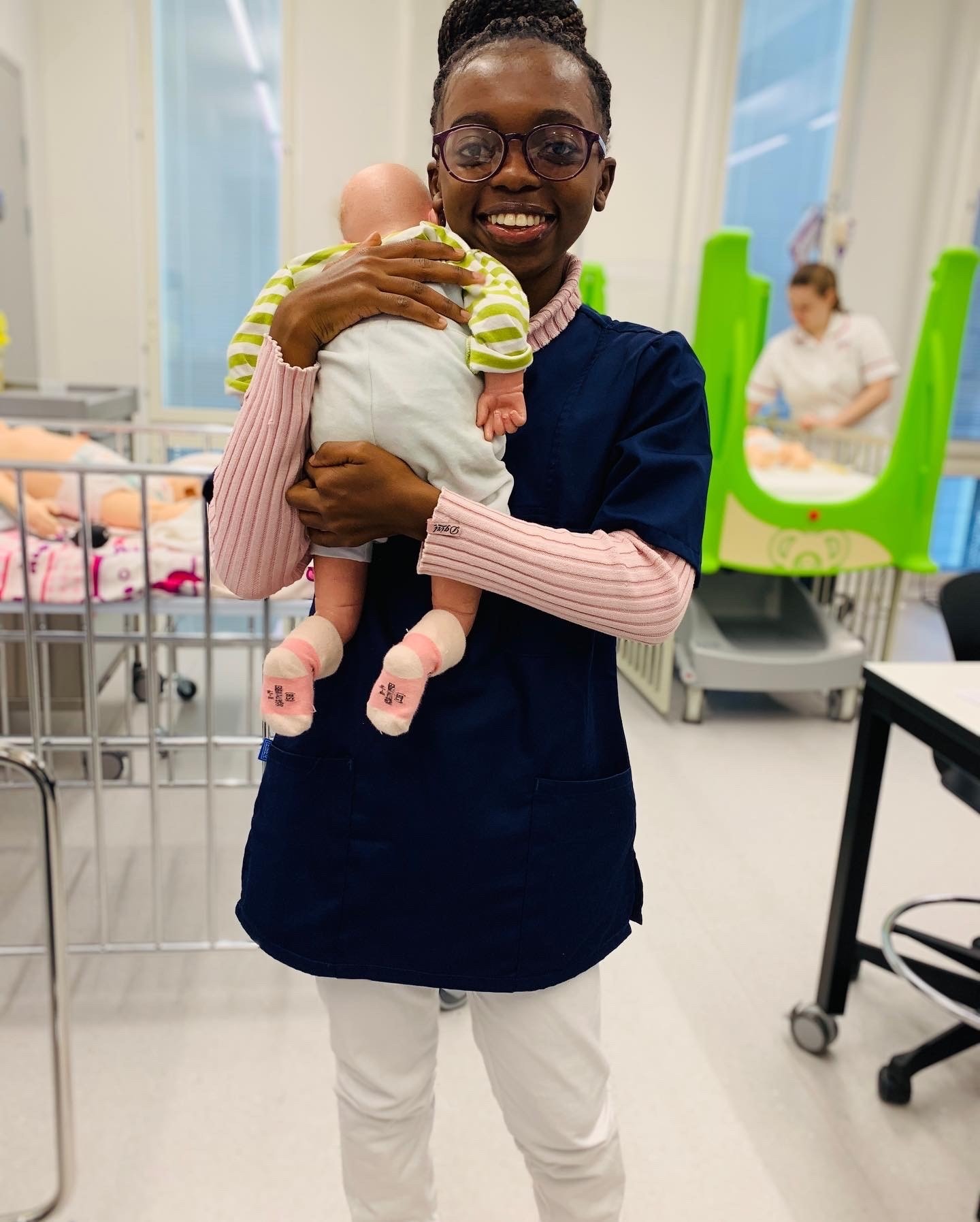
Mayamiko loves learning and describes studying in Metropolia as fun. Nursing studies in Metropolia consisted of theory and lab classes. Theory classes in Metropolia were more interactive than Mayamiko was used to. Lab classes were organized during the exchange on multiple different topics. Mayamiko got to practice emergency care, incubation, CPR and pediatric nursing, to name a few. Teachers have been very encouraging and guiding students throughout the courses. Being punctual is important in Finland and Mayamiko has also noticed this: “I like how people stick to time. Back home classes were extended easily and this hinders other plans”. Workload in Metropolia has been manageable, although assignments have been hard. Despite of this there has been more free time here than back at the home university. Best thing at Metropolia was interaction with other exchange students as well as Finnish students.
Free-time and Finnish Experience
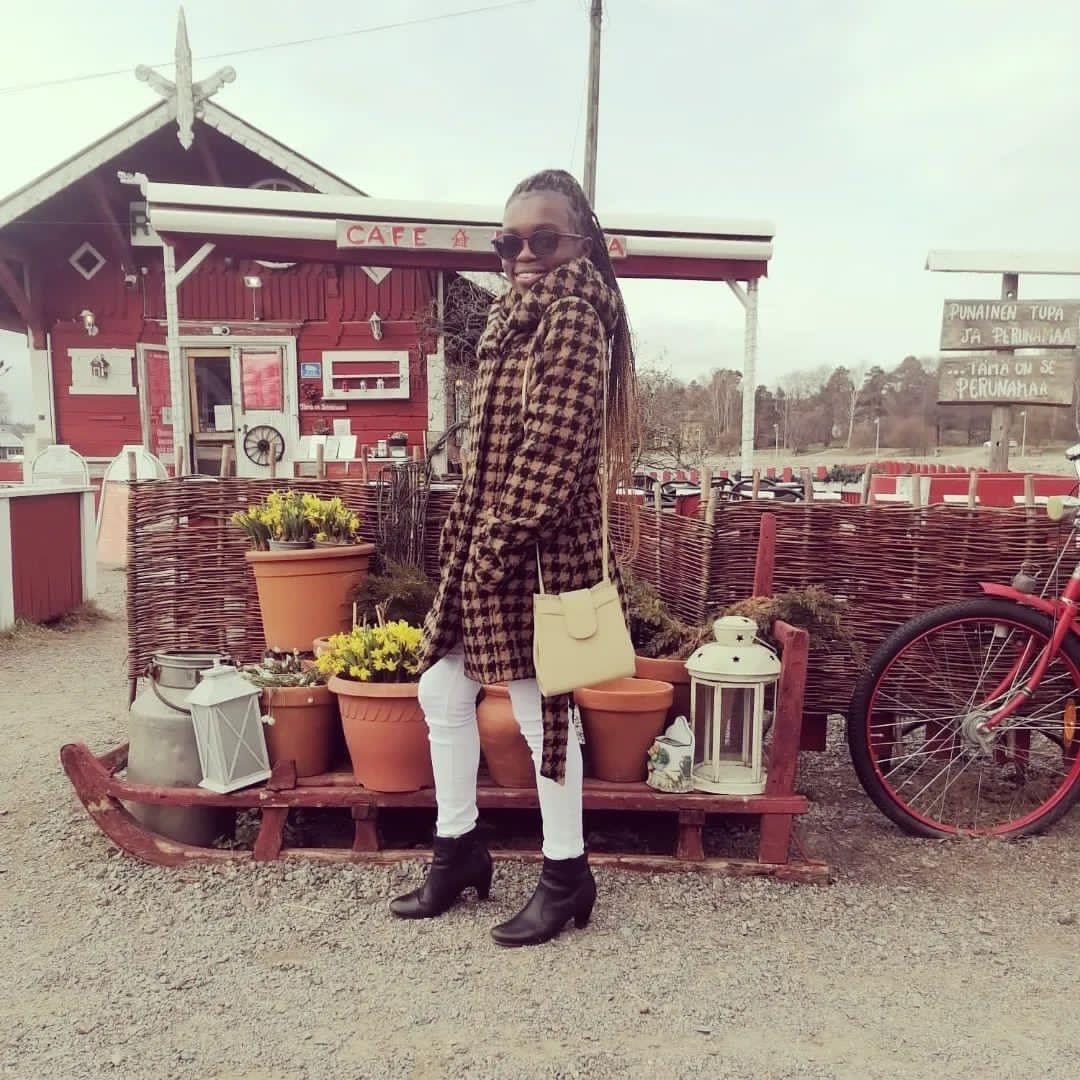
Mayamiko arrived to Finland in March when it was still winter: “Weather was challenging at first, when we got to Finland there was still some snow. With time I got used to it and was really nice to see snow!”. Despite the weather and staying warm indoors, Mayamiko was visiting places on the Helsinki Metropolitan area: “The HSL public transportation card allows to travel around, that was really good”. Mayamiko visited Suomenlinna Fortress Island, Café Regatta and Helsinki Central Library Oodi, to name a few. Mayamiko also applied for a tutor at Metropolia, who was helping her especially in the beginning by guiding her to the apartment and introducing to others.
Biggest challenge during Mayamiko’s exchange was the language. She picked up some words but that was not enough for a conversation. Finnish people are known for good knowledge of English and this was also helping Mayamiko during her stay a lot. She also learned to interact with people in a diverse way and to understand differences.
This November me and other Metropolia Business School students had the opportunity to participate in the HUMINT Student Conference hosted by the American University College Skopje in North Macedonia. The programme brought together students from across Europe for an intensive and inspiring week focused on diversity and inclusion, a topic that is deeply meaningful to me both personally and professionally. As someone who truly values inclusive practices in society, in the workplace and within my academic field, this programme felt like the perfect environment to continue learning and expanding my understanding.
Throughout the week I worked alongside students from France, Belgium, the Netherlands, Austria, Romania, North Macedonia and Finland. Being part of such a diverse group created a genuinely enriching learning environment where every conversation challenged assumptions and offered new perspectives. The curriculum combined academic insight with practical exposure. We engaged in peer group work where we explored themes connected to diversity, equity and inclusion. Guest speakers and company presentations offered valuable insight into how these principles are implemented within different organisational contexts. The programme also created many opportunities for networking with both fellow students and professionals, which helped build connections that extended beyond the classroom.
Taking part in the HUMINT Programme was an inspiring and transformative experience.
One of the aspects that made the week especially memorable was the cultural and social part organised by the local students. We explored Skopje together through a city tour and visits to museums, and we had the chance to enjoy shared dinners and evening events that showcased the warmth and hospitality of North Macedonia. These moments allowed us to connect not only academically but also personally, creating friendships and memories that will stay with me for a long time. Luckily I also received Erasmus+ Blended Intesive Programme funding that covered the majority of the occurred costs.
At the end of the programme each group presented a project linked to a topic within the diversity and inclusion field. My group focused on gender inclusivity in organisations. Preparing and delivering this presentation was a genuinely eye-opening experience, as it encouraged us to reflect on current challenges and innovations in the field while learning from the varied backgrounds of our team members. Presenting our work to the wider group was a moment of pride and motivation to continue developing my expertise in this area.
Taking part in the HUMINT Programme was an inspiring and transformative experience. It strengthened my passion for creating inclusive environments and gave me new tools for my studies and career in HR. Most of all it reminded me how powerful learning becomes when it is shared with people from different cultures who are committed to making a positive impact. I am grateful for this enriching experience and determined to continue promoting equality and inclusive practices in the future of workplaces.
Hi! My name is Augusto Asis de Barros, and I’m a student of International Business and Logistics and worked as an International Relations intern at Metropolia. During my studies at Metropolia, I had the opportunity to participate in various international exchanges in Germany and the Netherlands, which I discovered while exploring Metropolia's internal announcements website. Applying for the exchanges was easy and required little effort, since the instructions for mobility are straightforward to understand and cover all the most important requirements.
The first exchange I had the chance to go on was for a summer course in 2023, related to Industrial Heritage and Sustainability. It was a joint programme of the European Route of Industrial Heritage (ERIH), the Berlin Centre of Industrial Culture (bzi), and the Berlin University of Applied Sciences (HTW). This exchange helped me network with people from different backgrounds and cooperate to develop a concept or project related to both industrial heritage and sustainability. It was an experience full of learning, teamwork, and also a nice way to explore a big city like Berlin while learning together and visiting different sites related to industrial heritage, sustainability, and culture.
The exchange program helped me gain valuable knowledge and sparked my interest in industrial heritage. As a result, I co-founded a network for young professionals, which is now part of the European Route of Industrial Heritage. I feel like going on exchange opened the doors not only to new opportunities but also to career development and gave me a push to step out of my comfort zone, which, in my opinion, was very positive. Now, back in Finland, I continue to manage this non-profit network alongside my colleagues from Germany, which demonstrates how international mobility can help you become part of something bigger.
Another exchange opportunity I had was a summer course in 2023 about innovative and sustainable transportation in Germany, from FH Münster University of Applied Sciences. In this course, we were a group of many local and international students and traveled around different German cities like Bremen, Hamburg, and Berlin, where we visited many transportation industries. We learned how to use many different tools to become more creative and to learn about sustainability from different perspectives.
I feel like going on exchange opened the doors not only to new opportunities but also to career development and gave me a push to step out of my comfort zone, which, in my opinion, was very positive.
I have built many close friendships through international experience, which made me even more positive about the importance of traveling to other countries for study opportunities. Studying abroad made me more open to learning new things, socializing and it also contributed a lot to my cross-cultural and teamwork skills.
The last but not least international course I had was the hybrid course called the U!REKA Change Agents Programme, which took place in 2024 and had both online sessions and a short exchange in the city of Amsterdam at the Amsterdam University of Applied Sciences. U!REKA is an Urban Research and Education Alliance of European Universities of Applied Sciences, and they aim to cooperate to educate to contribute to a more inclusive, sustainable, intercultural and open-minded Europe.
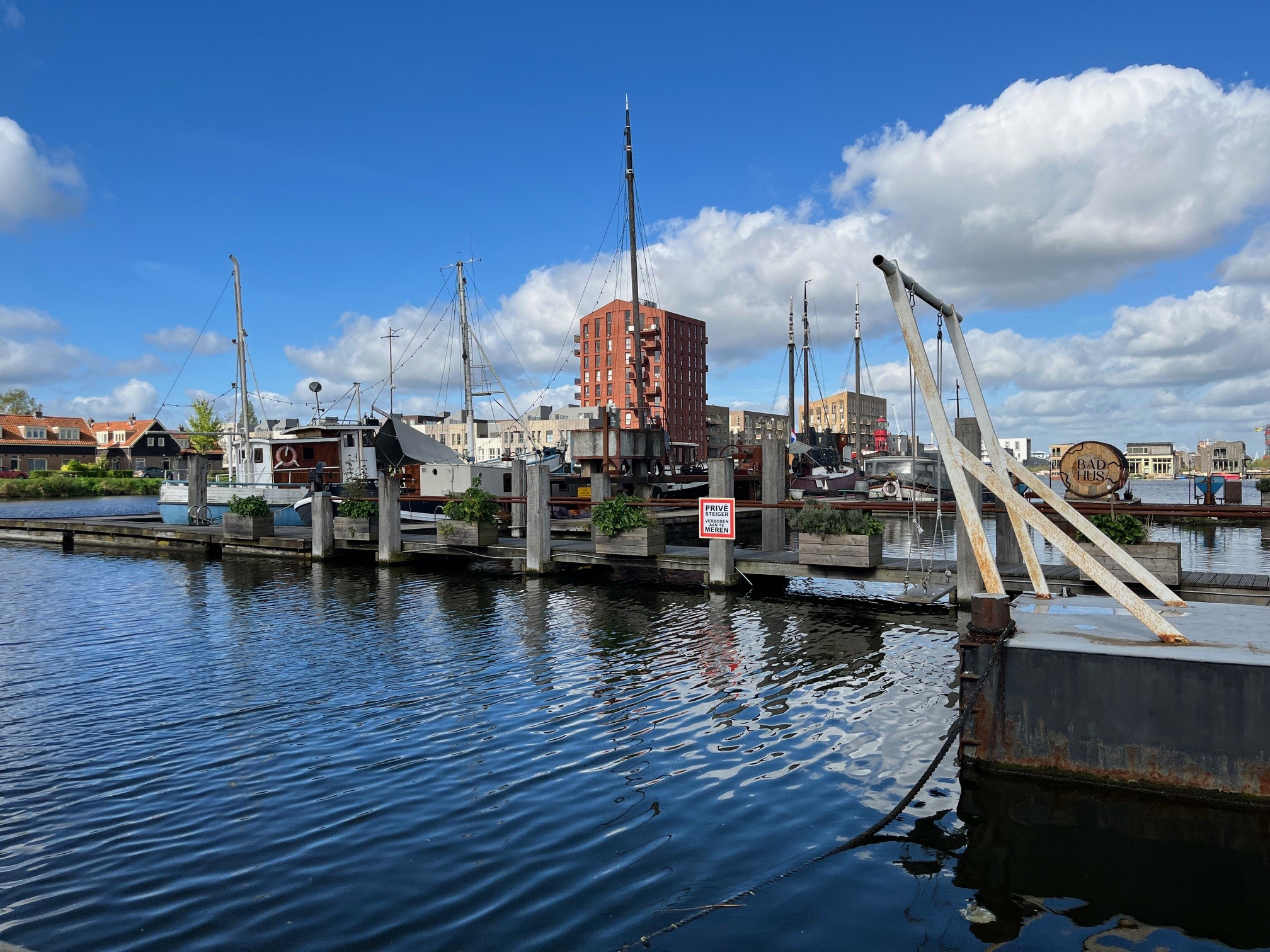
This programme was especially interesting because of its ambition to help us students develop sustainable development ideas related to the use of water in Europe. We had the chance to visit different sustainability-related facilities around Amsterdam, and these visits gave us a broader idea of sustainability and how Amsterdam approaches the use of water. We not only met people from many universities but also had the chance to become closer in our group of students from Finland. We also explored the city by bike, which was a new and valuable experience because Amsterdam has an amazing cycling infrastructure. The internationality of the city, how it is full of water channels and the many restaurants were things we enjoyed as a group.
Also, having the chance to learn from professionals from other universities was different and helped us understand more aspects of water and sustainability, and the different importance it has in other countries.
Overall, I highly encourage other students to explore international exchange opportunities offered by the university. These experiences can truly change the way you learn and understand the world. They are also a great way to expand your professional network, make new friends and learn about different cultures.
Check more about the exchange possibilities in Metropolia's study guide!
The story about student exchange was almost unrealistic for me. I am single mom of three kids. However, my oldest child is already 18 and my two small boys are living with me. Me and Robin started studying in the same year. I started with bachelor program in International Business and Logistics (IBL) at Metropolia, and he went to first grade at school. My youngest one was five years old in those days.
The idea about being an exchange student was a personal long-lasting dream, but somehow I felt it is not applicable for me. For me it was way too complicated to change a country, especially when having a lot of responsibilities at home already. Time went fast... Kids become more confident and I tried to apply for 6 months study exchange in Spain. The reason for choosing this country – I speak Spanish a little and would like to improve knowledge and get another European perspective to my study field.
However, I was already doing my final study year and long-term exchange did not anymore fit into my degree study plan. So, the exchange was not a possibility at that time and would have postponed my graduation. Then the idea sort of faded away, until on one day I got an email about FinBank challenge in Portugal, Blended Intensive Programme about Banking and Finance study with Setúbal Polytechnic Institute! The program promised to be intensive and during one week in Portugal should be presented innovation for banking sector related to design thinking and creativity. Additionally, we were able to meet with students from all over Europe online.
I applied and got selected!
I have been so lucky when Erasmus+ programme and International Relations Adviser in Metropolia nominated me as exchange student for this programme. That really meant a lot for me! Without funding from Erasmus+ Blended Mobility I couldn’t have been able to cover the expenses of travelling and living on top of my family's other expenses.
Our intensive finance course in Setúbal was held in May 2024. A great value is that Erasmus+ programme supports students with families with additional inclusion support. This made me feel that Metropolia cares about young parents a lot. My total financial support was almost 1200 euros as I was entitled for the inclusion support, travel grant and the program day support! This is really good form of support, if you know how to take care of the arrangements correctly!
This BIP about Finance was well organized by Portuguese colleagues. Professor Ana Rolo from Setúbal Polytechnic Institute provided each student team very good guidance. So, even though my major, Logistics sector is not that much finance and banking-oriented, but it was not difficult to get in to idea and join the team work and start learning!
Getting ready for an adventure!
From Metropolia we traveled to Portugal together in a group of five Metropolia Business School students. In the actual group work project, there were students from Norway, Portugal, Czech Republic, Romania and Belgium. Luckily, we quickly divided the tasks and got really motivated about the topic. Actually, our project was successfully completed one day before deadline.
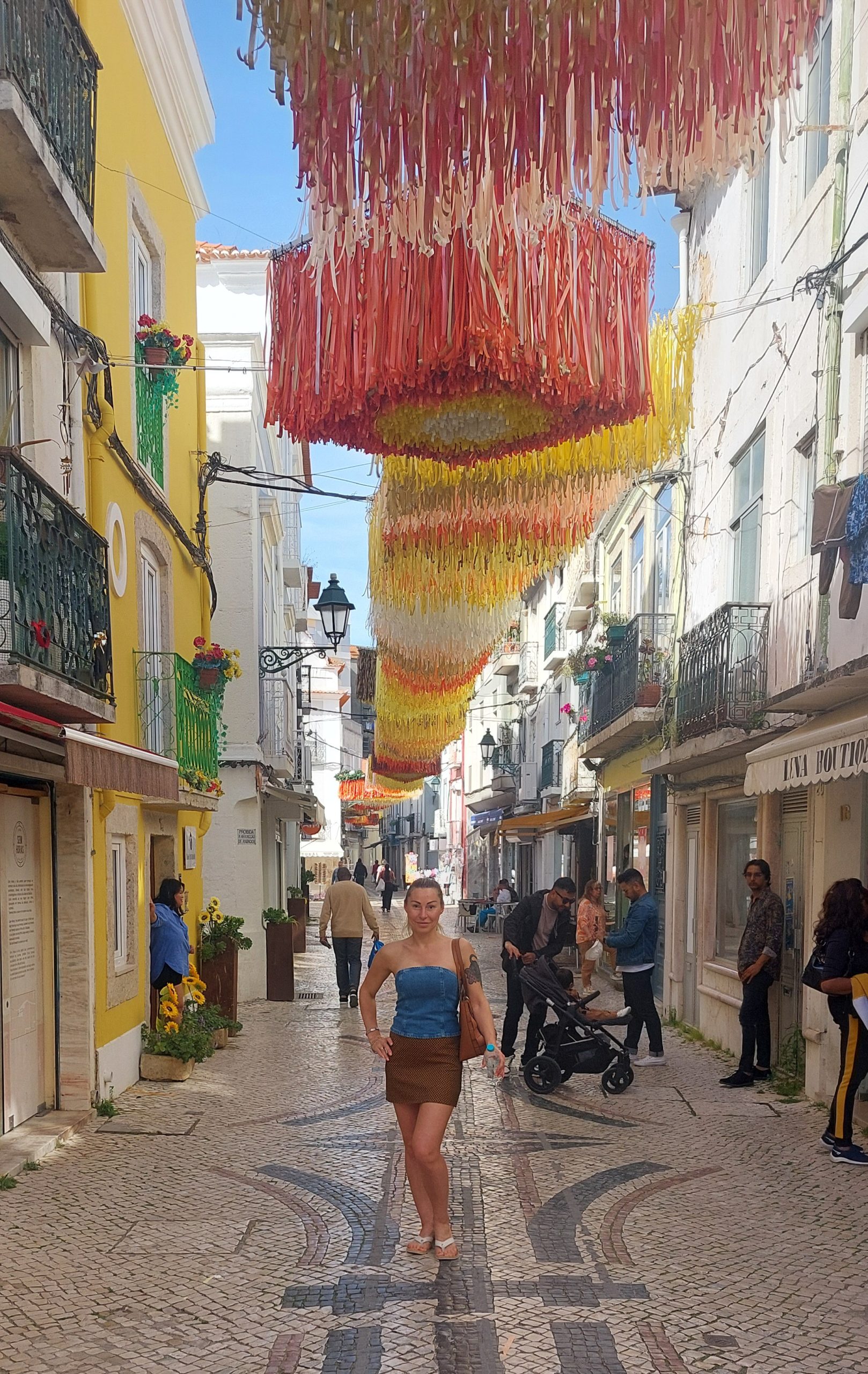
All in all, I was able to gather many lovely experiences from Portugal as the Instituto Politécnico de Setúbal created an amazing program for the students. For example, we visited Palácio da Bacalhôa located in São Simão, Azeitão, Setúbal, wine and cultural tour, went to some nice beaches by the ocean and even a natural park. Our lunch was in a most beautiful restaurant of the city - Casa da Baía.
The communication with professors was smooth as we were able to ask questions, but also the work in the group of students was highly enriching and brought some new perspectives! All in all, a brilliant experience from Erasmus+ programme. I’m so thankful for International Relations Adviser and exchange possibilities at Metropolia. Because of them - I could see the ocean.
Last but not least; Many greetings to my teammates who make amazing effort on presentation day!
Tips based on my experience:
Learn all the possible languages
Touch an ocean wave and make a wish
Choose the most interesting exchange programme for you. Make it happen!
Julia S.
Hundreds of highly educated foreign nurses are working in Finland in positions unrelated to their education, for example as a care assistant or as a practical nurse (1).” I worked as a care assistant one year and then I studied to become a practical nurse through an apprenticeship contract in Finland”, says Ronalyn, who completed the Career Boost Programme at Metropolia UAS in 2022 (2). Before moving to Finland, she studied four years getting a Bachelor´s level nursing degree in the Philippines.
Career Boost for Foreign Nurses
Over the years, universities of applied sciences have organised various qualification projects for foreign nurses (3). One such project, The Career Boost Programme started at Metropolia UAS in spring 2021 and it was organised by Oske project (4). The programme included:
Theoretical studies (approx. 30 ECTS) implemented mostly online. The studies are mandated by the National Supervisory Authority for Welfare and Health, Valvira,
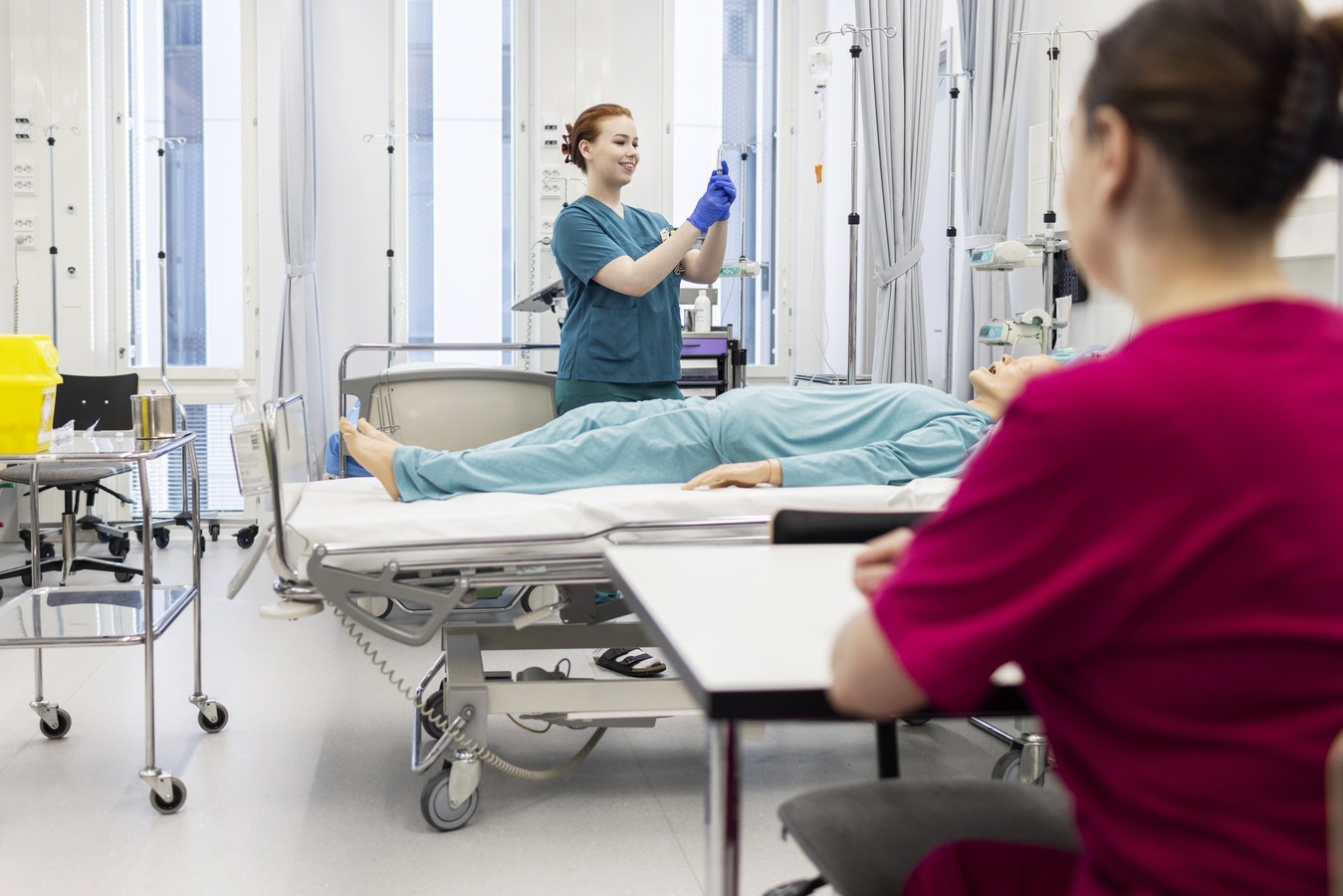
Clinical nursing training held in a simulation hospital at Metropolia.
Finnish language teaching integrated into the professional subject studies.
Supervised internship in healthcare facilities mandated by Valvira for approximately 10-12 weeks depending on the student's education and previous working experience.
Longing to Be a Nurse
Ronalyn just happened to bump into information about the Career Boost Programme on social media and she decided to have a career change after working as a practical nurse for a few years. Working as a practical nurse helped her learn Finnish language and gave her a good understanding of the Finnish care culture. “I missed working as a nurse and being at the hospital. As a care assistant or a practical nurse, you can only give basic care. I felt like my nursing skills and education were wasted. I even missed the smell of antibiotics”, Ronalyn chuckles.
Adult Learning requires Creativity
Adult learning can be challenging. One ECTS credit point equals 27 actual study hours. In the Career Boost programme, the students studied both Finnish language skills and the nursing practice at the same time. Most adult learners have a full-time job (practical nurses might have a three-shift rotation) and some might have a family with small children. The biggest challenge in adult learning seems to be coordinating different aspects of everyday life (5). “I asked from my boss to get night shifts. When there was a peaceful moment during the night shift, I studied” Ronalyn says. Students who are working full-time and taking care of everyday life responsibilities may need to find creative ways to fit studying into their schedules.
Flexible Learning Solutions
Adult learners need flexible ways to study. By offering flexible learning solutions, students can have more choices to reach their educational goals. The Career Boost Programme was open to participants from all over Finland. With the help of online learning, the students can develop their skills while continuing to work full-time. This can be crucial if the residence permit is work-based or studying full-time is not otherwise possible. However, online studies require a lot of self-management and adult students have to balance their personal life and uncompleted study tasks weighing on their mind (6.). “I was always stressed out”, Ronalyn remembers. Time management and good study strategies are therefore essential skills for successful learning (7).
Sharing Experiences
When teaching online, the challenge for teachers is to develop different ways of ensuring interaction with and between the students. Distance learning can be quite lonely, so it is important to create spaces where social relationships can be supported and where students can share experiences with their peers. This can give learners a sense of belonging to an online group, which can help them engage, participate and actively complete learning tasks (8). In the Career Boost Programme, the students had the opportunity to interact with the teachers in weekly online learning sessions on Zoom, where, in addition to studying a pre-determined topic, they had a chance to ask for advice and discuss the assignments.
“The teachers were very supportive”, Ronalyn reflects, “We had a Whatsapp group where you could get a quick answer to any matter.” In addition to distance learning, the students practiced nursing skills at Metropolia’s simulation hospital in Myllypuro, Helsinki. Ronalyn had to travel all the way from Northern Finland to the Myllypuro campus for the simulation days. Fortunately, she found an internship at a University Hospital closer to home and the supervised internship was paid for. “It's easier to get an internship during the summer”, Ronalyn advises new students.
Looking Forward
The Career Boost programme ended in December 2022. Overall 36 participants completed their qualification studies during the project. In the beginning of 2023, Metropolia UAS started a new programme for healthcare professionals, where nurses, biomedical laboratory scientists, midwives, physiotherapists and radiographers with a foreign bachelor's degree can complete qualification studies. Registration for the programme is ongoing. (9,10). The project, called “Terveysalan ammattilaisten pätevöitymispolku 2023-2024”, wants to support underemployed healthcare professionals to qualify their foreign degrees to get a job equivalent to their education. Although adult learning is sometimes demanding, it is a good opportunity to reach your professional goals.
“At the moment I still have a permanent position as a practical nurse because of my working permit issue, but I do gigs occasionally at the hospital. When I work as a licensed nurse, I feel free”, Ronalyn explains. “In the future, I hope I can get a permanent job as an anesthetic nurse or I could work at the OR. There you can see a whole new world in a small room.”
Sources:
1) Yle news 2022. https://yle.fi/a/3-12630299 Viewed on 16 March 2023.
2) Ronalyn. Participant in the Career Boost Programme at Metropolia UAS 2023. Interview.
3) Pitkänen, A-H, 2021. Pätevöitymiskoulutuksella Boostia sairaanhoitajapulaan. Blog post. https://blogit.metropolia.fi/montamuuttujaa/2021/11/29/patevoitymiskoulutuksella-boostia-sairaanhoitajapulaan/
4) Developing competence center functions for highly educated immigrants in the Helsinki region (Oske project). Webpage. https://www.metropolia.fi/en/rdi/rdi-projects/competence-center-of-helsinki-region Viewed on 16 March 2023.
5) Repo, S. 2010. Yhteisöllisyys voimavarana yliopisto-opetuksen ja -opiskelun kehittämisessä. Helsingin yliopisto. Käyttäytymistieteiden laitos. Kasvatustieteellisiä tutkimuksia 228. https://helda.helsinki.fi/bitstream/handle/10138/19875/yhteisol.pdf?sequence=2&isAllowed=y
6) Peltola M., Suorsa T. & Silvola J. 2022. ”Opinnot ikään kuin leijuvat olohuoneessamme” Etäopiskelijan arki oppimisen ja kehityksen ympäristönä ja neuvottelun paikkana. Aikuiskasvatus 3/2022. http://jultika.oulu.fi/files/nbnfi-fe202301306499.pdf
7) Repo S, Vuoksenranta S-T & Ruokolainen, O. 2014. Kuinka avoimen yliopiston opiskelija yhdistää opiskelun, työn ja perheen. Aikuiskasvatus 4/2014. https://journal.fi/aikuiskasvatus/article/view/94106/52784
8) Gillett-Swan, J. 2017. The challenges of online learning: Supporting and engaging the isolated learner. Journal of Learning Design. https://files.eric.ed.gov/fulltext/EJ1127718.pdf
9) Additional studies for obtaining the practice at the nurse. Studies for nursing graduates from abroad. Webpage. https://www.metropolia.fi/en/academics/study-opportunities-for-immigrants/additional-studies-nurse Viewed on 16 March 2023.
10) Study opportunities and competence development for immigrants. Webpage. https://www.metropolia.fi/fi/opiskelu-metropoliassa/maahanmuuttajille Viewed on 16 March 2023.
Blogger:
Anu-Helena Pitkänen works as a Career Coach in Metropolia SIMHE services supporting highly educated immigrants with their employment and study paths in Finland. She is working in a collaboration project with the employment services of Helsinki, Espoo and Vantaa-Kerava to increase employment among international professionals in the Helsinki region. She is responsible for guiding the healthcare professionals in Metropolia’s new project “Terveysalan ammattilaisten pätevöitymispolku 2023-2024.”
30.8.2022Kätilökouluttaja - The Voice of Midwifery
Opettajavaihto kansainvälisessa kumppanuudessa
Metropolia Ammattikorkeakoulun opetushenkilökuntaa osallistuu vuosittain opettajavaihtoon. Vaihtoja rahoitetaan korkeakoulujemme konsortiolle myönnetystä Erasmus+ globaalin liikkuvuuden tuesta, jota hallinnoi Opetushallitus. Yksi näin rahoitetuista opettajavaihdoista on Malawin ja Suomen välinen; sen päätarkoituksena on kehittää hoitotyön koulutusta kumppanimaassa. Malawi on pinta-alaltaan Suomea pienempi valtio Afrikan sisämaassa ja se sijaitsee Mosambikin, Tansanian ja Sambian välissä, eteläisessä Afrikassa. Asukkaita Malawissa on 19,1 miljoonaa ja sen pääkaupunki on Lilongwe. [1,2]
Opettajavaihdot kehittävät hoitotyön koulutusta vaihdon kohdemaassa, erityisesti Afrikassa, mutta vaihtojen on todettu olevan merkityksellisiä myös lisäämään kansainvälisyyttä hoitoalan tutkinnoissa, arvostusta lähtömaan terveydenhuoltoon ja koulutukseen sekä ammatillista kasvua opettajana. Vaihdossa olleet opettajat ovat toivoneet vaihtoaikojen olevan riittävän pitkiä, jotta vaihdosta saisi riittävästi irti. Lisäksi on toivottu riittävästi aikaa ennen ja jälkeen vaihdon. Näin mahdollistuisi orientoituminen vaihtoon lähtöön, vaihdon jälkeen kokemansa sisäistäminen sekä kokemuksensa hyödyntäminen oman opetuksen kehittämisessä ja kokemusten jakamisessa, esimerkiksi julkaisujen muodossa. [3]
[caption id="attachment_2280" align="alignleft" width="368"] Kuva 1. Kätilötyön lehtori Janni Koski pitämässä luentoa pre-eklampsiasta Bwaila Hospitalin opetustilassa.[/caption]
Kätilöopettajat Malawissa
Kirjoittajat olivat viikon opettajavaihdossa Malawin pääkaupungissa Lilongwessa viime keväänä. Meille oli sovittu opetusta kahdessa kätilöitä kouluttavassa oppilaitoksessa vaihtomme aikana - Kamuzu College of Nursing ja Daeyang University College of Nursing & Midwifery.
[caption id="attachment_2279" align="alignright" width="223"] Kuva 2. Kätilötyön lehtori Sanna-Mari Manninen aloittamassa luentoa aiheesta astma ja raskaus Kamuzu College of Nursing -koulun luentosalissa.[/caption]
Aiheiksi saimme astma ja raskaus sekä raskausmyrkytys eli pre-eklampsia. Lisäksi saimme ex-tempore yllätykseksemme myös kolmannen aiheen paikan päällä Malawissa. Olimme juuri kaivamassa etukäteen valmistelemiamme luentodioja koneeltamme paikallisen opettajan esitellessä meitä kätilöopiskelijaluokalle, kun hän yllättäen kertoikin luokalle aiheeksemme synnytyksen jälkeisen massiiviverenvuodon. Hetken katsoimme toisiamme, mutta kuten vanha sanonta sanoo, niin ”kyllä hätä keinot keksii”. Meillä ei tietenkään ollut luentodioja englanniksi, joten näytimme suomenkieliset luentodiamme aiheesta, mutta puhuimme tietysti englanniksi. Kaikki olivat tyytyväisiä lopputulokseen (kuvat 1 ja 2).
Vaihto-opiskelijat
[caption id="attachment_2276" align="alignleft" width="422"] Kuva 3. Metropolian kolmannen vuoden sairaanhoitajaopiskelija Asta Hietala esittelee huonettaan opiskelija-asuntolassa. Asta teki vaihdossa Malawissa lasten sairaanhoidon harjoittelun.[/caption]
Vaihtomme yhtenä tarkoituksena oli myös tutustua Metropolian opiskelijoiden Malawiin suuntautuvan opiskelijavaihdon järjestelyihin. Hoitotyön opiskelijoita oli vaihtomme aikana Malawissa Metropoliasta kaksi ja lisäksi yksi Karelia ammattikorkeakoulusta. Kävimme tutustumassa opiskelijoiden majoitukseen (kuvat 3 ja 4) ja ruokailuun (kuvat 5 ja 6). Samassa asuntolassa asuivat myös paikalliset kätilöopiskelijat. Kyselimme heiltä Malawin käytännöistä ja kuulimme, että kätilökouluun pääsevät vain lukion parhaiten menestyneet, noin 5% hakijoista. Erillisiä pääsykokeita ei kuulemma enää nykyisin järjestetä.
[caption id="attachment_2277" align="alignright" width="233"] Kuva 4. Malawissa vaihdossa ollut Metropolian neljännen vuoden kätilöopiskelija Sofia Abbiw oli parhaillaan pesemässä pyykkiä, kun saavuimme opiskelijoiden asuntolaan. Sofia suoritti vaihdossa äitiysneuvolaharjoittelun ja pääsi myös tutustumaan synnytyssaliin.[/caption]
[caption id="attachment_2278" align="alignleft" width="558"] Kuva 5. Kamuzu Nursing School ja Kamuzu Central Hospitalin vieressä ollut ”ravintola”. Ruokaloita ei ollut koululla eikä sairaalassa, joten opiskelijat ostivat päivän lämpimän ateriansa tällaisista katuravintoloista.[/caption]
[caption id="attachment_2268" align="alignleft" width="266"] Kuva 6. Opiskelijavaihdossa olleet Asta Hietala (vas.) ja Sofia Abbiw ostamassa päivän lämpimän ruokansa. Ruoka-annos maksoi vajaan euron ja mukana piti olla oma muovikippo.[/caption]
Sairaalavierailut
Tutustuimme paikallisiin sairaaloihin Kamuzu Central Hospitaliin, Bwaila Hospitaliin ja Daeyang Luke Hospitaliin, joissa meille kätilötyön opettajina esiteltiin erityisesti raskaana olevien, synnyttävien ja synnyttäneiden osastoja (kuvat 7 ja 8). Sairaalaharjoittelussa oleville opiskelijoille tarjottiin kertakäyttökäsineet, suojaessut ja kasvomaskit koulun puolesta. Olimme mukana, kun kaksi paikallista kätilöopiskelijaa kävi hakemassa näitä suojavarusteita koululta ja laskimme, että opiskelija sai käyttöönsä yhden essun, 1,5 kasvomaskia ja 5 paria hanskoja per päivä. Ei siis mitenkään liiaksi asti ottaen huomioon, että potilasmäärät sairaaloissa olivat paljon suuremmat kuin meillä Suomessa. Esimerkiksi Bwaila Hospitalissa oli sairaalan omien tilastojen mukaan noin 22000 synnytystä vuodessa, kun taas Suomen suurimmassa synnytyssairaalassa, Helsingin Naistenklinikalla, oli vuonna 2021 noin 9200 synnytystä [4].
[caption id="attachment_2269" align="alignnone" width="303"] Kuva 7. Bwaila Hospitalin välinehuoltoa ja vauvan laittopöytä. Instrumentit puhdistettiin liottamalla niitä saippuavedessä. Sairaalan seinät olivat täynnä erilaisia ohjeita.[/caption]
Meitä kierrätettiin sairaaloissa eri osastoilla; joillekin osastoille pääsimme vain kurkistamaan osaston käytävälle. Miehillä ja naisilla oli eri leikkausosastot. Dialyysihuoneessa, joka esiteltiin, oli arvioilta noin 20 dialyysilaitetta ja jokaiseen potilas kytkettynä. Näimme monia lasten osastoja, myös lasten teho-osaston. Koska sadekausi oli juuri päättynyt, yksi suuri syy lasten sairaalaan joutumiselle oli keuhkokuume. Myös malaria ja anemia olivat yleisiä syitä tulla sairaalaan. Auto-onnettomuuden uhriksi jääneitä lapsia näki myös paljon. Autoteiden varsilla ei ollut jalkakäytäviä eikä suojateitä. Ihmiset kävelivät suoraan autotien reunalla ja autot ajoivat pahimmassa tapauksessa ohi yli 100km/h vauhdilla. Ihmiset arvioivat ehtivätkö juosta autotien yli, osa ehti ja osa ei. Auton töytäisemäksi joutuneita lapsipotilaita oli paljon.
Potilaat oli sairaalassa lajiteltu eri huoneisiin sen mukaan, olivatko he sairaita tai vakavasti sairaita ja oliko keuhkokuume vai malaria vai mikä vaiva. Jokaisessa potilashuoneessa oli kahdeksan sänkyä ja vähintään se kahdeksan potilasta, mutta myös omaisia. Omaisten tehtävänä oli muun muassa ruokkia hoidettavana olevat sukulaisensa, sillä sairaala ei tarjonnut ruokaa potilaille. Omaiset kävivät myös ostamassa potilaille määrättyjä lääkkeitä, koska varsinkin julkisten sairaaloiden lääkevarastot olivat rajalliset. Lääkkeen saaminen sairaalassa edellytti siis usein sitä, että potilaan omaiset tai sukulaiset olivat sen apteekista ostaneet.
[caption id="attachment_2270" align="alignleft" width="264"] Kuva 8. Bwaila Hospitalin synnytysosaston tarkkailuhuone. Jokaisessa synnytyssalissa oli paikka kahdelle synnyttäjälle ja molemmat paikat olivat usein käytössä.[/caption]
Seikkailua vapaapäivänä
Vapaapäivänämme päätimme lähteä käymään eläinten suojelualueella. Maksoimme sisäänpääsyn (n. 2€) ja lähdimme kävelemään kapeita kinttupolkuja, joilla meni sikin sokin puiden juuria. Mieliimme tuli siinä kävellessämme, ettemme olleet hoksanneet kysyä, oliko siellä kenties käärmeitä, myrkyllisiä hämähäkkejä tai jotain muuta, jotka voisivat yllättäen purra meitä tai hypätä puusta niskaamme. Jokainen rasahdus, joka pusikosta kuului, pelotti. Hyvin nopeasti eteemme tulikin lauma apinoita, joita aluksi pelkäsimme, huomasimme kuitenkin pian, että ne näyttivät pelkäävän meitä enemmän kuin me niitä.
[caption id="attachment_2292" align="alignnone" width="290"] Kuva 9. Vierailemallamme eläinten suojelualueella oli runsaasti apinoita, joiden erikoisuutena oli siniset kivekset.[/caption]
Polku jatkui ja jatkui ja mietimme, kuinkahan kauan täällä pusikoissa menee ja kun vielä vastaan tuli varoituskyltti alueella liikkuvista krokotiileistä, meillä alkoi ”housujen puntit tutisemaan” entistä enemmän. Päätimme, että otamme seuraavan polun takaisinpäin ja pääsimmekin varmaankin noin tunnin pusikoissa pelkäämisen jälkeen takaisin lähtöpisteeseemme (kuvat 9 ja 10).
[caption id="attachment_2272" align="alignright" width="246"] Kuva 10. Täysin yllättäen eteemme tuli varoituskyltti krokotiileistä eläinten suojelualueella.[/caption]
Yhteistyö jatkuu
Olimme oikein tyytyväisiä opettajavaihtoomme Malawissa. Yhteistyö Daeyang kätilökoulun kanssa jatkuu tänä syksynä suomalaisten ja malawilaisten kätilöopiskelijoiden yhteisillä simulaatio-opetuksilla. Odotammekin innolla, miten nämä virtuaalisimulaatiot teknisesti onnistuvat ja millaista palautetta saamme niihin liittyen Metropolian ja Daeyang koulun kätilöopiskelijoilta.
LÄHTEET:
[1] Globalis. Malawi. Saatavilla: www.globalis.fi/Maat/malawi [Luettu 12.6.2022].
[2] The Common Wealth. Malawi. Saatavilla: www.thecommonwealth.org/our-member-countries/Malawi [Luettu 12.6.2022].
[3] Law K, Muir N, Thompson K. An evaluation of a European teacher exchange programme. Nurse Educ Today. 2011;31(1):76-81.
[4] Suomen virallinen tilasto (SVT): Perinataalitilasto - synnyttäjät, synnytykset ja vastasyntyneet [verkkojulkaisu]. Helsinki: Terveyden ja hyvinvoinnin laitos (THL). Saatavilla: http://www.stat.fi/til/sysyvasy/index.html [Luettu: 8.8.2022].
KIRJOITTAJAT:
Sanna-Mari Manninen ja Janni Koski ovat kätilötyön lehtoreita Metropolia Ammattikorkeakoulussa
VALOKUVAT:
Janni Koski ja Sanna-Mari Manninen
Maaliskuun 22. päivä kaksi Metropolia ammattikorkeakoulun kätilötyön lehtoria lähti henkilökuntavaihtoon Afrikkaan, Malawiin. Afrikka oli molemmille ennen kokematon maanosa, eikä matkalle lähtemisen jännitystä yhtään vähentänyt lentoyhtiömme lentoturma kahta viikkoa aiemmin tai Malawia ja sen naapurimaita kohdannut akuutti tulvakatastrofi. Näistä huolimatta matkalle oli mukava lähteä, sillä matkakumppaneinamme olivat Karelia ammattikorkeakoulun kansainvälisyyden huippuosaajat.
Malawin tasavalta on 17 miljoonan asukkaan valtio eteläisessä Afrikassa, jonka naapurivaltioita ovat mm. Sambia ja Mosambik. Maa kuuluu maailman köyhimpiin valtioihin ja sen keskeisimpiä elinkeinoja ovat kotitarveviljely ja maatalous. Keskimääräinen elinajanodote on 60 vuotta. Malawin kuuluisa nähtävyys on Malawijärvi, jonka David Livingstone löysi 1859.
Vierailumme isäntinä Malawissa toimivat Kamuzu College of Nursing -korkeakoulun ja Daeyang Universityn henkilökunta. Meille suunniteltu monipuolinen ja antoisa ohjelma sisälsi yhteistyöneuvotteluja edellä mainittujen opetusorganisaatioiden kanssa, sekä vierailuja erilaisiin sairaaloihin ja terveysasemille. Ero terveydenhuollon ympäristöissä on maidemme välillä toki suuri, mutta malawilaisen terveydenhuoltohenkilöstön osaaminen: tiedon taso ja ennen kaikkea taito toimia lähes ilman hoitotyön välineistöä ja tarvikkeita tekivät meihin vaikutuksen. Ohjelmamme sisälsi myös luentojen pitämistä kätilöopiskelijoille. Luennot olimme suunnitelleet opetusteknologian varaan, mutta Malawissa yleisesti esiintyvät sähkökatkot asettivat omat haasteensa ja jouduimme improvisoimaan esitykset uudelleen.
Äitiysterveyden megatrendit Suomessa ja Malawissa
Molemmat maat kantavat huolta äitiensä terveydestä ja hyvinvoinnista. Luentojemme aiheina olivatkin äitiysterveyden megatrendit, kuten syntyvyys ja synnyttäjien ikä, lapsikuolleisuus, tupakointi ja muut seksuaaliterveyden aiheet. Keskustelu näistä oli antoisaa, ja havaitsimme että teemat ovat molemmissa maissa yhteisiä, mutta niihin liittyvät ongelmat ovat päinvastaista.
Malawissa syntyvyys on suurta, kun taas Suomessa se on hyvin alhaista ja edelleen laskevaa: Malawilainen nainen saa elämänsä aikana keskimäärin viisi lasta ja ensimmäisen lapsensa hän saa usein jo teini-iässä, 15-vuotiaana. Suomessa synnyttäjien keski-ikä lähestyy 30-vuotta ja lasten lukumäärä myös jää alhaiseksi (THL 2018, perinataalitilasto). Toisaalta Suomessa vastasyntyneen kuolema on huomattavan harvinaista, kun Malawissa lapsikuolleisuus on yksi maailman korkeimmista. Lapsen menettämisen suru on siis osa usean malawilaisen äidin elämää. Merkittävimpiä syitä vastasyntyneiden menehtymisiin ovat ennenaikaisen synnytyksen komplikaatiot, keuhkokuume, ripulitaudit sekä malaria. Raskauden aikaisen tupakoinnin suhteen malawilaiset ovat meitä huomattavasti parempia, sillä yksikään heidän lasta odottavista äideistään ei tupakoi.
Seksuaaliterveyden edistämiseen liittyvistä asioista, kuten raskauden keskeytyksestä ja ehkäisystä, keskusteleminen oli haastavaa. Keskustelu jäi usein lyhyeksi, sillä vaikka vastapuoli ei halunnut torpata aiheesta keskustelua kokonaan, ei hän myöskään halunnut rohkaista meitä jatkamaan.
[caption id="attachment_1588" align="aligncenter" width="380"] Sairaalan keittiö[/caption]
Päällimmäisinä kokemuksina mieleemme jäivät paikallisen terveydenhuoltohenkilöstön hieno osaaminen niukoista resursseista huolimatta, isäntiemme sydämellinen vieraanvaraisuus ja helteisen Afrikan huikaisevat maisemat. Kokemus oli vaikuttava ja rankkakin, ja mietimme usein millaista olisi ollut kuulua tohtori Livingstonen retkikuntaan. Matka jäi taakse, mutta yhteistyö Malawiin jatkuu.
Kirjoittajat, Maija-Riitta Jouhki ja Sari Haapio, ovat Metropolia ammattikorkeakoulun kätilötyön lehtoreita sekä äitiyshuollon tutkijoita. Kuvat Maija-Riitta Jouhki.







Comments
No comments