
Year: 2022
Singapore, an Asian roundtrip in the city state
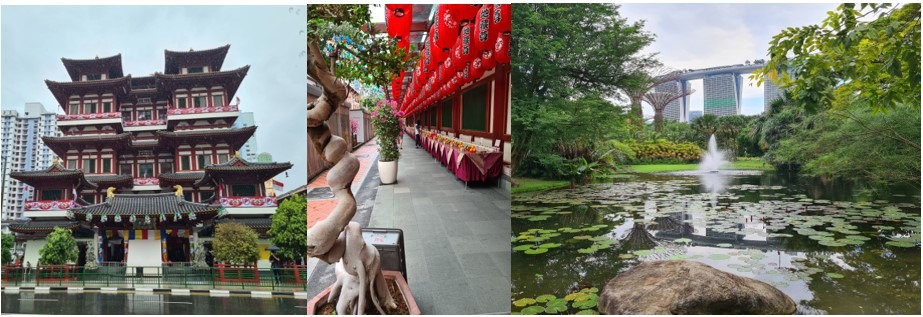
As a part of the Metropolia UAS and Singapore Institute of Technology (SIT) joint project Dosis, we were the lucky ones to have the chance to attend an intensive exchange week in Singapore. There were five of us students and three professors from Metropolia UAS who traveled to Singapore for a one week express exchange. In the Dosis project students from both Universities work together to create scoping reviews on various topics. The express exchange to Singapore was the culmination of our joint article projects and a dedicated time for face-to-face workshops and learning experiences after working together remotely for a year or so. *We met some of the students and the SIT professors earlier in the spring as they were visiting Finland on their behalf. Eventually it turned out that the four months from the approval to attend to the express exchange turned out to pass quite fast, and finally on 12th of August we arrived in Singapore. After the weekend of getting to know our way in Singapore, the actual intensive week started by an introduction to SIT’s Dover campus. We were given a tour of the SIT campus where we got to see our Singaporean fellows’ studying facilities. We also got to see some innovation and learning empowering tech. Later on, we workshopped some focal points of our article manuscripts, expected to be submitted later this year. During the intensive week, collaboration among Finnish and Singaporean health tech enterprises and the participating Universities was promoted to foster the possibilities of new joint projects. Relating to that objective SIT organized a seminar with Finnish and Singaporean enterprises and other health care and technology related keynote speakers. They brought out their views to the current state-of-the-art and future perspectives of advancements in health care digitalization and in health tech. The collaboration between the health tech industry and Universities also included company visits to Phillips's, Siemens Healthineers' and SenseTime's Singaporean headquarters and showrooms. During the visits, the health tech companies demonstrated their visions of developing technological solutions in improving the patients' experiences during treatments and stay in hospital and creating more seamless care pathways from home to hospital and back. The companies presented the possibilities of technologies such as virtual and augmented reality in training the future health care professionals to get acquainted with the technologies before moving on to actual clinical practices. SenseTime provided us with an overview of the use of artificial intelligence technologies centered more to our everyday lives. For understandable reasons the practical demos were focused on the technologies that are already applied, rather than the technological advancements that are possibly emerging in the future. The visits and seminars before and during the intensive week have enlightened us that the scoping reviews and other investigatory work conducted related to the Dosis project is operating at the cutting edge when it comes to advancements in health tech. The project overall has provided us with fair insight to the application of artificial intelligence in medical imaging and other medical applications, that are state-of-the-art or just emerging somewhere in the near or distant future. Cultural exchange Alongside the official project program, we experienced Singapore and its corners through local eyes. The students who visited Finland earlier in the spring treated us with genuine Singaporean hospitality and guided us through experiences we would not have experienced relying only on the typical tourist guides of Singapore. Singaporean food, sightseeing and souvenirs - our friendly Singaporean hosts shared tips and helped us get the most out of our stay. Thai style steamboat dining experience, best hawker food courts, hipster shopping streets, best underground places to try out Singaporean and Asian specialities such as frog porridge, chili crabs and durian fruit, you name it! We will never forget the hospitality of our Singaporean fellow students, some of them who had already graduated, and still came to meet us, thank you Shawn, Darren, Melissa, Chris and Zhuo and the professors Frank and Cheryl, and other SIT staff (special thanks to Desmond and Charmaine). ❤️ Blog post written by the Metropolia students: Ella Lonka, Janina Saarinen, Arttu Sundell, Emilia Larmala ja Mika Nieminen
Incoming Student Story: Mayamiko Kasonda from Malawi
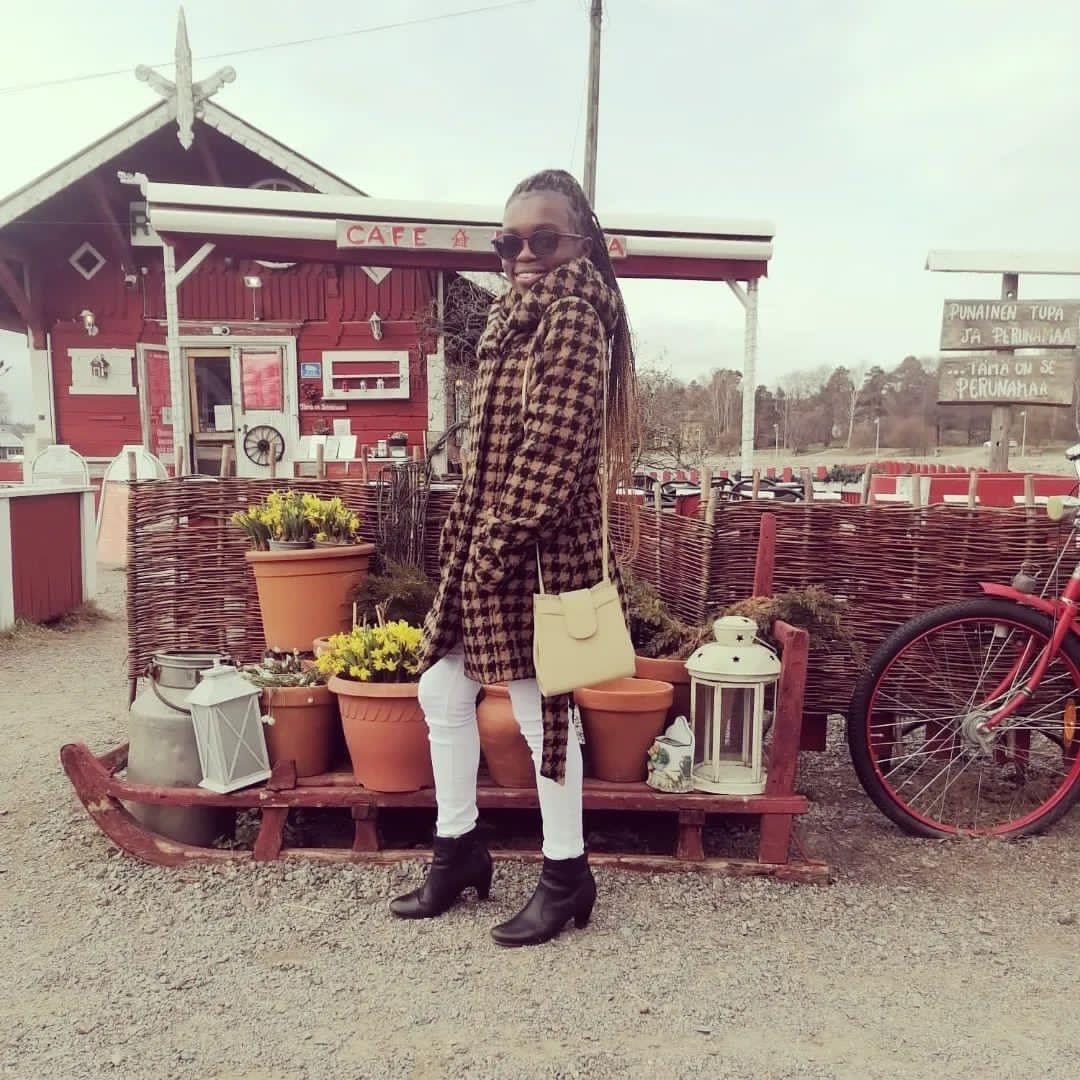
Mayamiko Kasonda did her exchange semester in Metropolia in Spring semester 2022 in the field of Health Care and Social Sciences. She is studying nursing in Daeyang University in her home country Malawi. Mayamiko’s university has an agreement with Metropolia within which students are chosen to come to Metropolia for an exchange period. Mayamiko was hoping she would be selected and when she got the information she was excited about being able to make her dream come true. Study experience at Metropolia Mayamiko loves learning and describes studying in Metropolia as fun. Nursing studies in Metropolia consisted of theory and lab classes. Theory classes in Metropolia were more interactive than Mayamiko was used to. Lab classes were organized during the exchange on multiple different topics. Mayamiko got to practice emergency care, incubation, CPR and pediatric nursing, to name a few. Teachers have been very encouraging and guiding students throughout the courses. Being punctual is important in Finland and Mayamiko has also noticed this: “I like how people stick to time. Back home classes were extended easily and this hinders other plans”. Workload in Metropolia has been manageable, although assignments have been hard. Despite of this there has been more free time here than back at the home university. Best thing at Metropolia was interaction with other exchange students as well as Finnish students. Free-time and Finnish Experience Mayamiko arrived to Finland in March when it was still winter: “Weather was challenging at first, when we got to Finland there was still some snow. With time I got used to it and was really nice to see snow!”. Despite the weather and staying warm indoors, Mayamiko was visiting places on the Helsinki Metropolitan area: “The HSL public transportation card allows to travel around, that was really good”. Mayamiko visited Suomenlinna Fortress Island, Café Regatta and Helsinki Central Library Oodi, to name a few. Mayamiko also applied for a tutor at Metropolia, who was helping her especially in the beginning by guiding her to the apartment and introducing to others. Biggest challenge during Mayamiko’s exchange was the language. She picked up some words but that was not enough for a conversation. Finnish people are known for good knowledge of English and this was also helping Mayamiko during her stay a lot. She also learned to interact with people in a diverse way and to understand differences. Tips from Mayamiko: Be open-minded to others Be open to learning new things Have fun!
Incoming Student Story: Carolina Hurtado Arias from Mexico
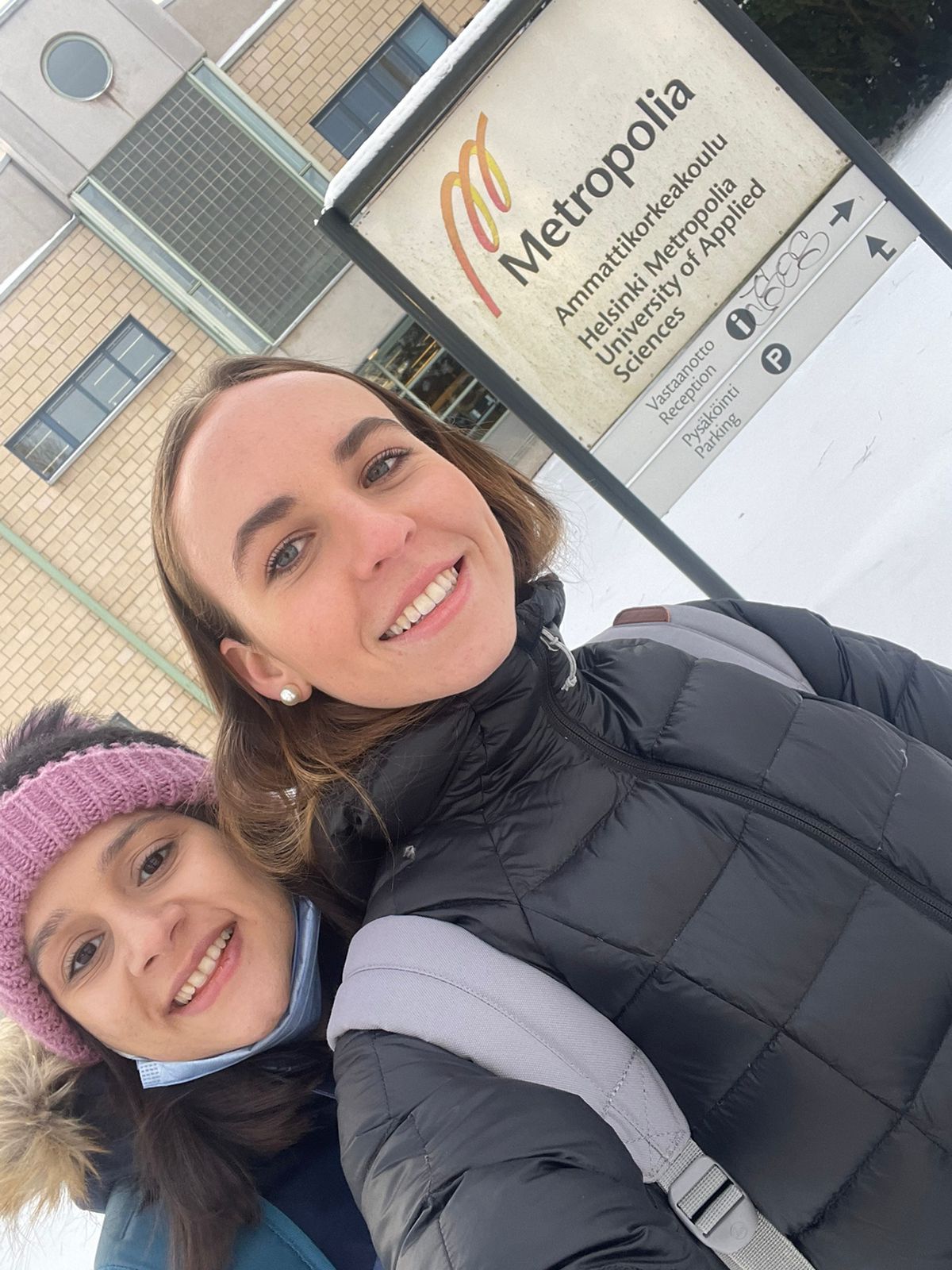
Carolina Hurtado Arias did her exchange semester in Metropolia during the academic year 2021-2022 studying International Business. Her original exchange destination was Japan but due to Corona, it was postponed and finally canceled. She wanted to go somewhere very different than her home country Mexico. Carolina had heard good things about Finland being the “Happiest country in the world” and its education system and public transportation and was curious of experiencing it herself. Metropolia was her home university Universidad Panamericana’s partner and the choice was then clear. After the acceptance Carolina did a lot of research on studies at Metropolia as well as on things to see in Finland. She was not nervous about coming alone to Finland: “I read that people can speak English very well and that Finland is a safe country to visit”. Upon arrival to Finland weather was the biggest shock: “It was so cold and a lot of snow in January! The daylight was also too short! This kind of weather does not exist in Mexico”. Also Finnish people seemed a bit cold and serious in comparison to Latin cultures but if you asked help for anything, people were always nice. Study Experience at Metropolia Some course topics in International Business were already familiar from home while some were completely new. Courses involved a lot of group work and Carolina got to work together with some Finnish students in addition to exchange students. Relationship between the students and teachers was very different than what she was used to: “In Finland we did not need to use any titles for the teachers and everything was more casual. Some teachers even took their shoes off when they came to the class to be more comfortable”. Carolina got to experience the specialty of University of Applied Sciences while doing a project in Corporate Financial Management, where they had to choose a company and everything that was learned throughout the course had to be applied to the chosen company. Deadlines for the end of the semester were given already in the first weeks and students were given freedom to work within these deadlines. Free-time and Finnish Experience Carolina was actively doing things during her exchange: “I rested only on five days. The other days I was studying and on free days I just checked the map and went to visit different places”. Carolina visited a lot of different parks and museums in Helsinki and traveled also around Finland in some bigger cities such as Lahti, Tampere and Turku. She also went to Lapland where the highpoint was swimming in the Arctic Ocean. Traveling to Baltic countries and Sweden was also very easy from Helsinki. Carolina applied for a student tutor for Metropolia and said it was very helpful. Her tutor was helping her a lot in the beginning of her stay and they also became close friends and were hanging out together during her exchange semester. Exchange semester in Finland was an eye-opening experience for Carolina. She got to see a completely different culture and see how different things are to her home country. Especially important was to see how universities in Finland can be accessed for free and how government is supporting students financially. Public transportation system HSL was also functioning very well: “Back in Mexico transportation system has no schedules and the driver decides if they want to stop or not”. Exchange semester also taught Carolina things about other cultures and how to communicate with different people in a different language. After concluding her studies in Mexico, Carolina hopes to be able to come back to Europe to continue her studies. Tips from Carolina: Don’t be scared - Helsinki is a very international city and everyone seems to be happy to host you in their city. Don’t stop doing what you want even if you would be alone. You will find someone who is in the same situation as you and I am sure you will become good friends. Get out of your comfort zone!
Incoming Student Story: Rafał Bartosiak from Poland
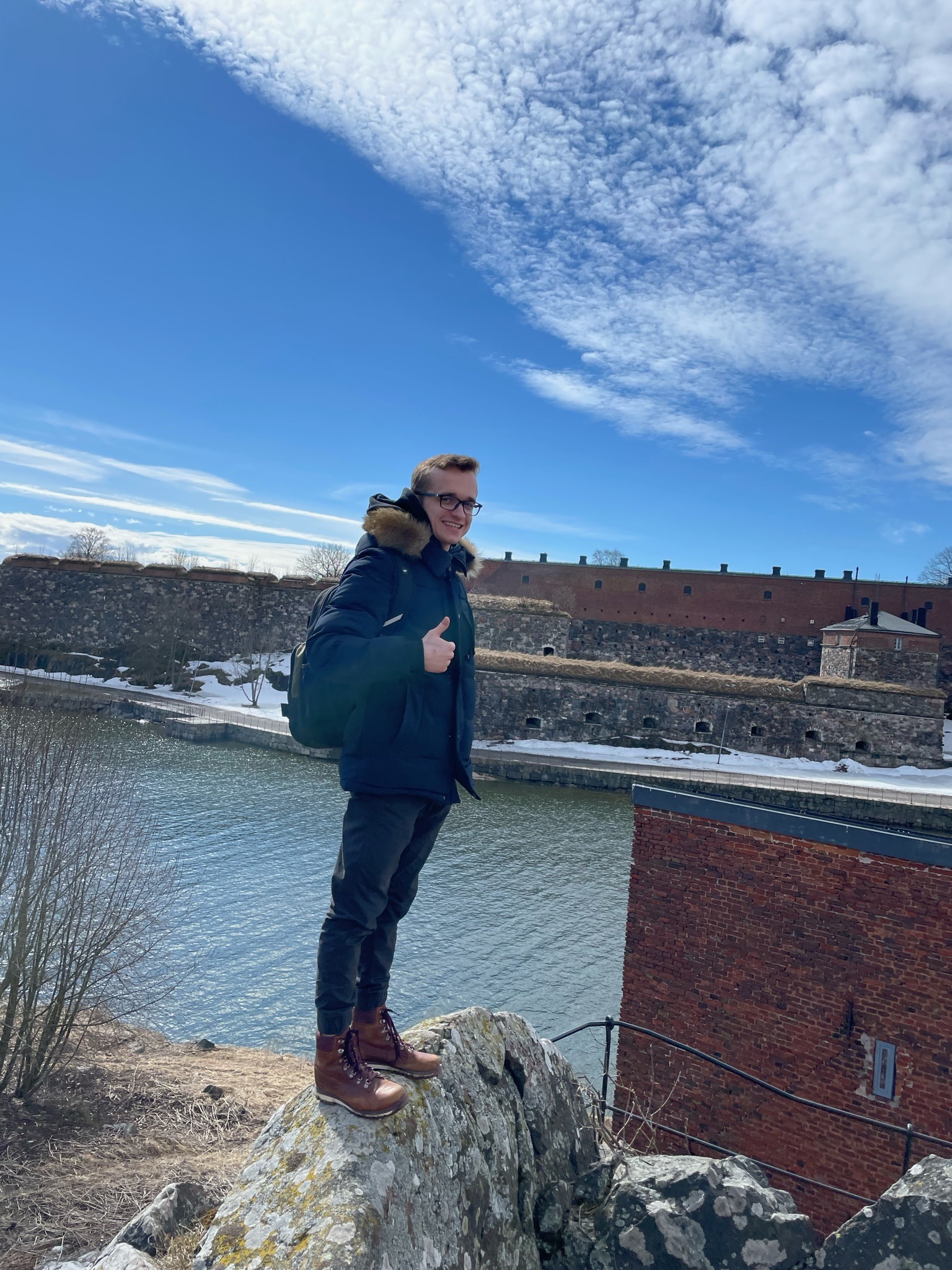
Rafał Bartosiak participated in an exchange semester during academic year 2021-2022. He was studying Electronics in the Field of Technology. Doing an exchange semester abroad was an obligatory part of Rafał’s degree program in his home university Lodz University of Technology in Poland. The exchange process started with an internal application period and Rafał was chosen to apply to Metropolia. “For a couple of years, I had been interested in how it looks in Northern Europe and I wanted to hear Finnish language myself. I also wanted to experience one of the best education systems in the world as well as be in a country where I can easily manage in English”. Finland turned out to be a great destination for Rafał who prefers cold and wanted to see nature. Study Experience at Metropolia Study experience in Metropolia surprised Rafał positively. Metropolia as University of Applied Sciences offered a different kind of perspective to a traditional university: studying is just not about the theory but especially about using it in practice. Learning methods did not differ much to his home country as they included both group and individual work, but lab working was freer in Metropolia. Electronics courses are worth 15 ECTS In Metropolia and exchange students participate on two courses during the exchange semester. Rafał found the big course sizes good: “It was nice to be able to focus only on one subject specifically at once”. Rafał also noticed that students don’t get pressed to study in Finland but they are expected to take responsibility over their own schedules and success. Rafał got to be a part of the Finnish student union tradition to Metropolia’s student union METKA. He took part into some events organized by METKA but the best thing was to be able to wear the student overalls. In the spring semester the biggest event was the Vappu (May 1st) celebration. METKA also organized tutoring for exchange students and Rafał also had a tutor who was, for example, welcoming him on the airport and brought Rafał to his student dorm in Finland. Free-time and Finnish Experience Rafał enjoyed especially the Finnish nature and sauna during his stay: “I fell in love with sauna and in the end went to sauna twice a week!”. Rafał was amazed by the amount of forests in Finland and the good air quality even in Helsinki city. He was also able to travel a lot within Finland: he went to Lapland and saw the northern lights as well as to Turku and Tampere. Helsinki itself offered also a lot of nice destinations, such as Seurasaari, Suomenlinna and Mustikkamaa islands, as well as the important landmarks Helsinki Cathedral and Temppeliaukio church. Besides this Rafał also traveled to the Baltic countries and Lofoten in Norway. Tips from Rafał: Go to sauna a lot - most student houses from HOAS have a common sauna that students can reserve for free! Try to travel a lot - go especially to Lapland in the winter! Apply for a tutor Use the HSL app for public transport
Incoming Student Story: Bence Márta from Hungary
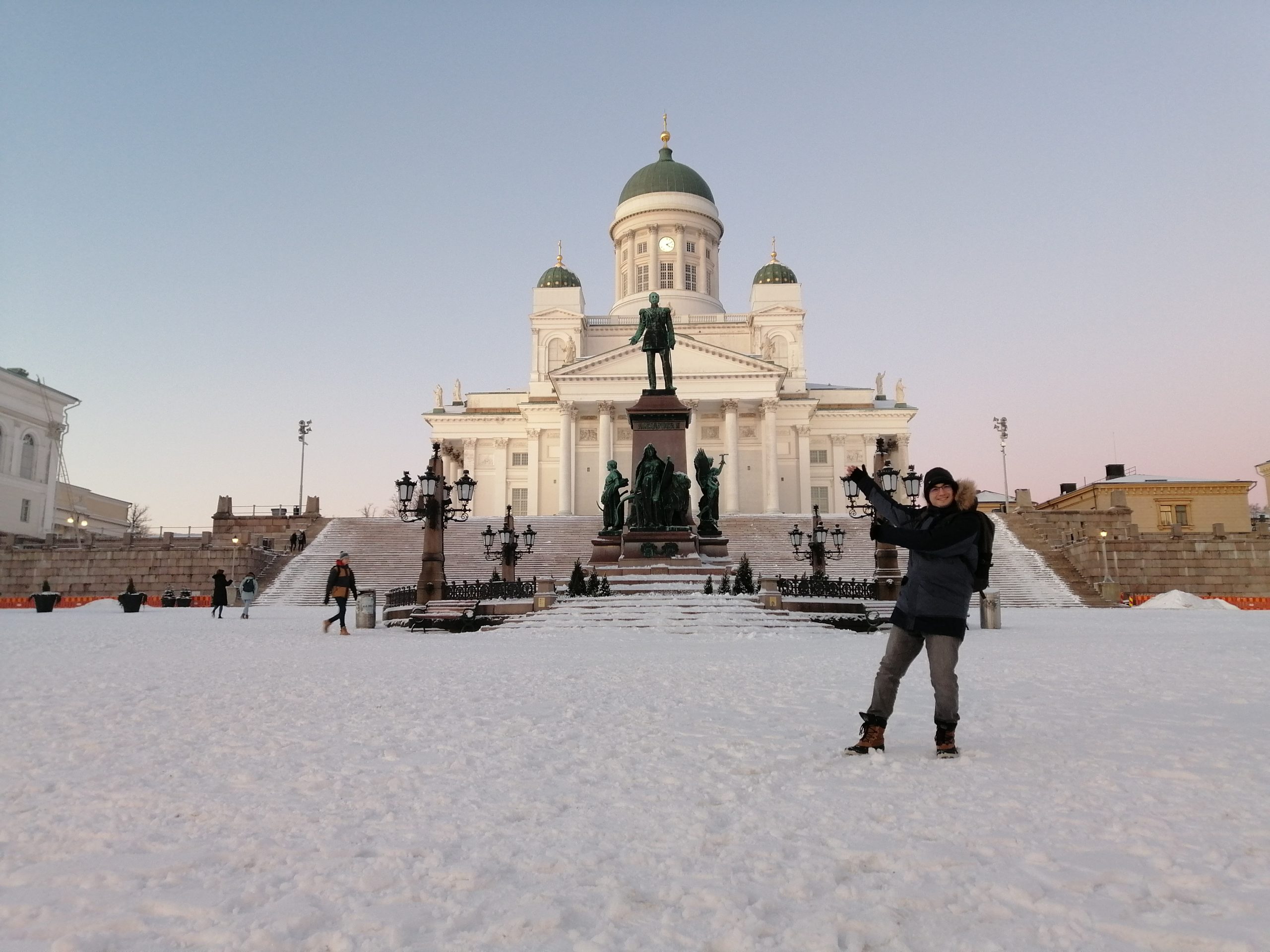
Bence Márta did his exchange semester in Metropolia during academic year 2021-2022 and was studying Electronics in the Field of Technology. He wanted to live in a bigger city and experience a different style of life as he was used to in his home country Hungary where he studies on a bit more rural campus of Óbuda University. Helsinki seemed like an interesting option as it is a big city but still a calm place. On top of this Metropolia offered interesting and fitting courses and his choice was clear. Study Experience at Metropolia After the acceptance Bence started to learn basic sentences in Finnish, using for example Duolingo, and read things about the Finnish culture. As the spring semester in Finland starts already in the beginning of January, he had to do a lot of exams for his home country in December so he can come to Finland and focus only on the studies in Metropolia. Studying in Metropolia turned out to be less stressful than at home. Electronics courses in Metropolia are worth 15 ECTS and like other exchange students, Bence also chose two courses for his exchange: “It was good to have big concepts and focus only on one thing at the time. With the big courses there was no need to multitask all the time”. Students were organizing their tasks independently with the deadlines and teachers were supportive. As Bence had to continue studies home parallel with the exchange, the flexible arrangement also gave him the opportunity to finish the assignments earlier, giving time to do the studies for the home university while still having a decent amount of free time. The fact the Electronics studies were not only for exchange students, helped a lot with getting to know some local students. Best things about studying in Metropolia were getting to know some Finnish students on the classes as well as doing group work: “Everybody had their strengths and you could learn things from each other”. In addition to the Electronics studies Bence also studied some Finnish in Metropolia: “It was hard! Luckily there was some similarities to Hungarian. But in the end, I could understand some basics and tried to use it in basic situations”. Free-time and Finnish Experience During his free-time Bence traveled a lot and visited different places, such as Turku, Oulu and Santa Claus village in Rovaniemi. In addition to this he visited the Baltic countries on a trip with other exchange students and also Norway multiple times during organized trips and by himself and was able to improve his language skills. Helsinki Metropolitan area also offered a lot to visit: a lot of parks, Suomenlinna Fortress Island as well as Nuuksio and Sipoonkorpi National Parks. Bence also got a taste of Finland in forms of food like Mämmi, the Finnish Easter specialty, salty liquorice and famous Fazer chocolate. Tips from Bence Apply for a tutor Try to get to know Finnish people - they are amazing once they warm up! Visit also other cities in Finland, not just Helsinki Don’t spend too much money on alcohol but rather on traveling Try to spend as much time in the nature as you can
First month in Copenhagen!
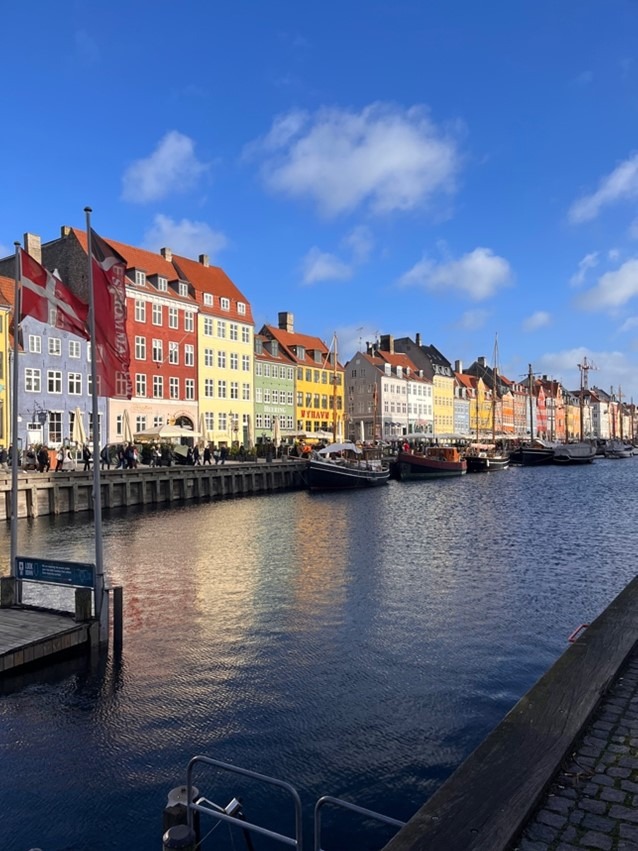
It’s almost the end of the first month of my exchange period, so I thought it would be good time to tell how life is in Copenhagen. So far everything is going really well, and I’m slowly starting to feel like I’m actually living here, instead of being in a really long vacation. Sometimes I already find myself thinking in English which I knew was going to happen sooner or later, but I never thought it would happen during the first month. I think the main reason for that is the fact that I haven’t met any other Finnish speaking people here, so the only times I use Finnish is when I’m talking to my family. First week here was an orientation week which was mostly about paperwork and getting to know our campus and Copenhagen in general. We got lot of information about how everything works here in case of sickness, what is the easiest way to use public transport and of course about the biking culture. We also had few team building events where we got to know each other little better. In the end of the week our team building event was a Tango lesson, which turned out to be really fun event. The first few lectures that we’ve already had have been very interesting, even though they’ve had similar topics to the courses I already had in Finland. Getting new perspective on welfare systems by hearing stories from other countries has given a great view on how we handle things at home. And I guess that is one of the main reasons why everyone should consider studying semester abroad. Also the lecturers we’ve had so far have been besides very good at teaching, they have been very good at performing and seemed to be very enthusiastic about the subjects that they are teaching. So it has been exciting to be in classes as well. The teaching itself in here is very similar to Finnish way of teaching. We have lectures which are about different theories and practical examples, guest teachers and few field visits also. We do a lot of group works which is very familiar to me, but not to all of my classmates. Our campus is KP’s smallest one and the only campus that has students from one degree, so everyone at our campus are studying social work. Besides being a small campus, its also pretty old but I find it very cozy. Student lunches here are a bit different compared to Finland, and they are prized by weight. It’s also a bit more expensive so most of us bring our own lunches to school. Student culture in Copenhagen is very different compared to Finland. Most of our University's campuses host Friday Bars every Friday in campus which is a great way to meet fellow student from other campuses as well. Some other Universities also host parties during the week at their campuses, but it takes a bit of luck to be able to go there as well. One thing that other exchange students here find interesting about Finnish student culture is overalls and patches and if there’s deeper meaning behind them. Everything’s going really well and besides going to school we’ve also had time to explore Copenhagen as well and we’ve already visited many beautiful places. During the first weeks we’ve visited some tourist attractions such as Glyptoteket, Nyhavn, Christianborg’s tower and of course, The Little Mermaid. The first month here has gone by very fast but it also feels like I’ve been here longer than I have. Living without Covid restrictions has also been weird sometimes, but mostly liberating. The first month has so far taught me so much about myself and the world around so I’m really looking forward to the next months as well.
Student Stories: Berlin Sustainable Week, Service Design Project
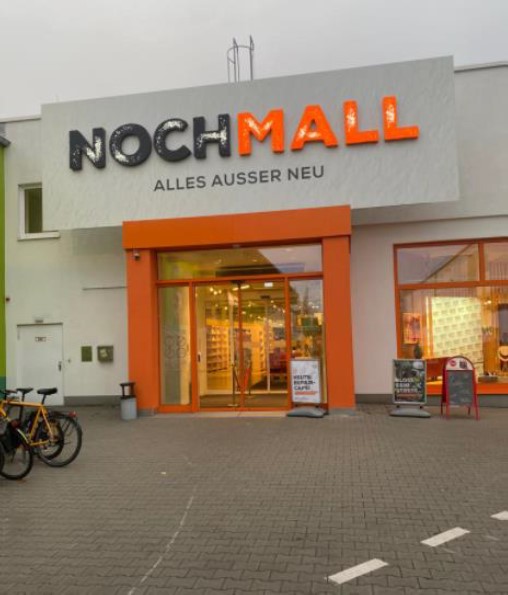
Metropolia's student Janike Heimonen wrote us a blog post of the project she participated in Berlin. Service Design Project I got selected to participate on the Sustainability Week Program 2, Service Design Project organized by Berlin School of Economics and Law. During the program we worked as a team and our team was given a task to design a new shopping experience for students to increase attractiveness of BSRs second hand shop NochMall. The research process took place in seven phases and focused on solving the problem of low brand awareness and targeting the students living in Berlin. The seven phases of the project In the first phase, our group researched and analyzed what are BSR and NochMall, by going through available documents and webpages. Second research phase consisted of us visiting the NochMall and exploring how the in-store experience, premises, product offering, and understanding the concept behind NochMall (Figure 1). Third phase of the process was to analyze a study on second hand shopping from 2020 with 6000 participants. The study highlighted how more and more consumers buy second hand. The study also showed that almost half of the surveyed people look for the second hand purchases from the flea markets. Sustainability was one of the main motivations for a second-hand shopping and majority of the respondents emphasized buying second-hand clothing due to the environmental and the pricing reasons. In the Fourth phase, we brainstormed and worked on the questions for the interviews for the key stakeholders of NochMall, such as: Marketing Manager, Operations Manager, Lead, customers, and employees. Once the questions were defined the interviews took place via phone, Teams and by interviewing the employees and customers in the store. The interview findings are emphasized in the Figure 2. What stood out was that NochMall should raise its awareness towards students and people in general and that the company is open for all sort of ideas (not limited to only one development idea). The fifth phase consisted on co-creating the personas based on the interviews and choosing two ideal “Personas”. Persona is an individual or composite-representation which helps to flesh out the user to whom the design is for. In our case we chose “Operations Manager Melanie Gille” and a customer “22 years old Jonas”. The Personas are described more in details in Figure 3. In the Sixth phase, we brainstormed and workshopped with all of our ideas, and then we ranked them as a group in order to find the elements to focus on. This was probably most difficult part as we had to find the consensus and agree on which items to focus on. The result was reached by voting and democracy. The selected focus areas were influencer marketing, Poetry Slam (Events), flea Markets and co-operation with the University by marketing in the campus (donation box concept-idea). Once we had selected the focus areas, we further developed those by taking into consideration the personas and the given problem regarding how to raise awareness within the students. We also tested the ideas for the other students, gained some valuable feedback, built on it and designed a prototype to demonstrate the University coop and donation box idea to increase the awareness within the students. (Figure 4). And for the final part, our team presented our ideas for NochMall's Lead and Operations Manager. After the presentations we had the opportunity to talk with both of them and further demonstrate our ideas, answer to their questions and receive their feedback. The methodology behind the study In the the study we used Service Design Methods. Service Design Network (2021) defines service design as an activity of planning and organizing people, infrastructure, communication, and material components of service to improve quality and interaction between service provider and customers. (Service Design Network, 2021). “The purpose of service design methodologies is to design according to the needs of customers or participants, so that the service is user-friendly, competitive and relevant to the customers.” (Service Design Network). HYVE's Service design process HYVE (2021) emphasizes how service design is about designing the ecosystem that deliver meaningful experience to the user across physical and digital touchpoints. They highlight how the approach should be integrative and human, and collaborative and agile to reach the maximum impact during the development process. It is also recommended on getting deep insights on customer experience, to identify innovation opportunities beyond traditional product offering, and to create holistic experiences across physical and digital touchpoints. The aim being the shift from product-oriented to service-oriented business model. They also describe the service design process starting from discover phase, following define, create & test, design and deliver phases (Figure 5). (HYVE, 2021.) The double diamond design process Design Council (2021) introduces the double diamond design process, which covers the same areas as described in the HYVE’s service design process: discover, define, develop, and deliver (Figure 6). The double diamond design process describes the four phases as follows: The discover phase emphasizes the start of the project which is a period of discovery, inspiration and insights gathering to identify user needs and developing initial ideas. The definition phase focuses on making sense of all the possibilities identified in the discover-phase. The goal of the second phase is to develop a brief that emphasize the fundamental design challenge to the organization. The development-phase builds up of the following elements: brainstorming, prototyping, multi-disciplinary working, visual management, development methods and testing. The fourth is a deliver phase which focus on final testing, approval, launch, targets, evaluation, and feedback. (Design Council, 2021.) Design Council provides tools for each phase, such as user journey mapping, user diaries, service safari and user shadowing for discover phase; persona, brainstorming and design brief for define phase; service blueprinting, experience prototyping and business model canvas for develop phase; and scenarios for deliver phase. Service design is used to analyze customer’s rising expectations. When improving current services and user experience, the development needs can be identified by using the Double Diamond Develop and focusing on Define parts. Personas and Service Blueprints ensure that the updated version of the product will serve the customers well and deliver added value. The solutions used in our project As a solution for the problem of raising the awareness especially within the Berlin area students, the selected four elements were presented to NochMall: Influencer Marketing: Instagram accounts of Helen Fares and Rosa Kocht Grun could be used to increase overall brand awareness, build credibility, SEO and ROI, drive purchase decisions and increase sales Hosting Events: Poetry Slam to attract more similar minded people with similar values to NochMall Flea Markets: Join Flea Market or Host Flea Market in order to sell more products and gaining the attention for the BSR NochMall New Donation Box design The case company was satisfied with the ideas and have promised to inform the further ideas and actions. It will remain to be seen whether the case company will implement some of these elements or not. The experience Overall, the studying trip to Berlin was a great opportunity and I feel thankful for being able to be part of it. I also got to meet fellow students and the studying coordinator for the very first time after more than 1,5 years of studying, as we are the “COVID19 year” students, and have been completing all the studies online due to the pandemic. It was great to meet, discuss, brainstorm, and exchange ideas, to work and laugh together live. I warmly recommend each and everyone of you to explore these kinds of opportunities and take those if offered. It is definitely worth it and I can promise that you will not regret. For the last part i included a picture of the group below. References: BSR Webpage and materials. Retrieved 25/11/2021. Design Council (2015). Design Methods for Developing Services. (e-publication). Retrieved 25/11/2021. https://www.designcouncil.org.uk/resources/guide/design-methods-developing-services HubSpot, (2021). Personas. (Website). Retrieved 25/11/2021. https://www.hubspot.com/make-my-persona Madplum Creative (2021). Enhancing Customer Experience Through Intentional Design. (Blog). Retrieved 25/11/2021. https://madplumcreative.com/enhancing-the-customer-experience-through-intentional-design/ Service Design Academy (2021): Service Blueprinting. (Online video). 22.05.2018. Retrieved 25/11/2021. https://www.youtube.com/watch?v=xSCXHU2bK2U Service Design Tools (2021). (Webpage). Retrieved 25/11/2021. https://servicedesigntools.org/tools

BIP Culture Denmark Electronics Erasmus exchange Exchange studies Feel Finland Finnish nature Germany Health care and social services HealthTech Hungary incoming student exchange Malawi MBS Double Degree MBS Exchange Mechanical engineering Media design Metropolia Business School Mexico Music Nursing occupational therapy Poland Service Design Short exchange SIngapore Student Stories Sustainability Technology