
Achieving Sustainability Through Reshoring
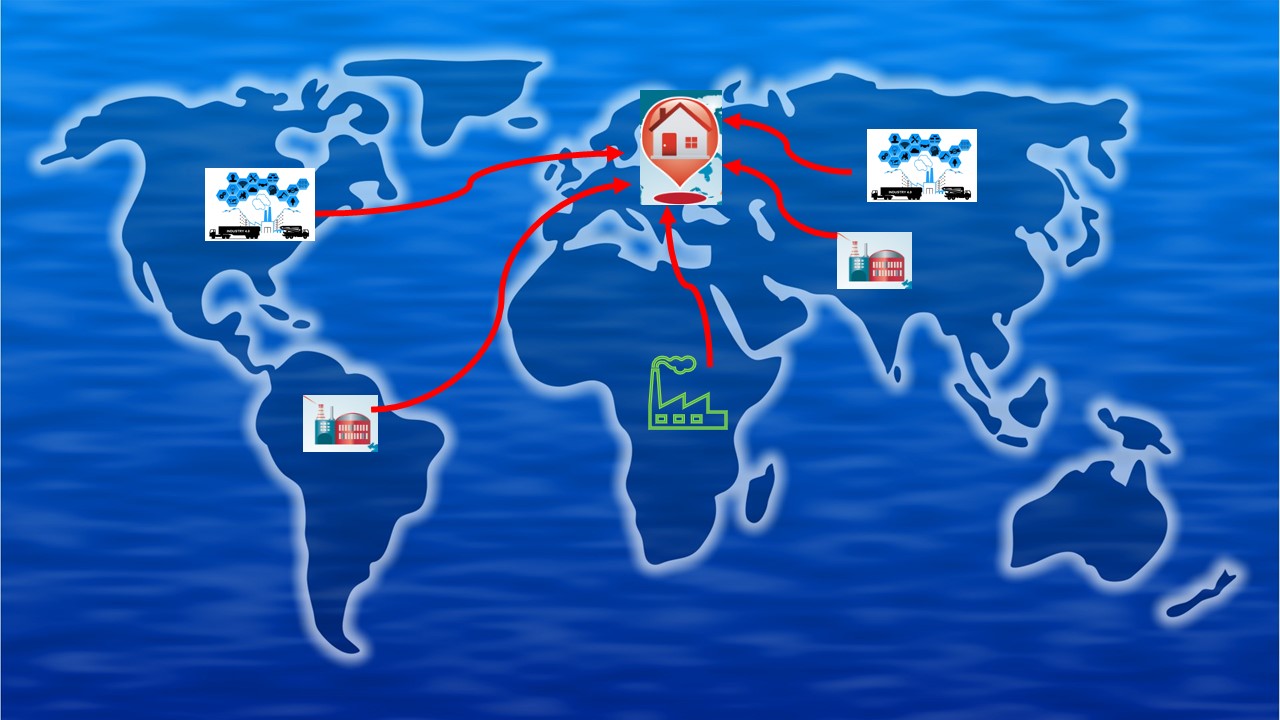
Globalization and the new global economic system have brought enormous benefits and lifted millions out of poverty across the globe. But it has also started posing significant risks. Particularly the transportation of people and goods illustrate the achievements and the drawback of globalization. Role of location Humans have been traveling and trading across vast distances for centuries. However, in the XX century, globalization had increased exponentially especially due to advancements in travel. Travel has literally made the world smaller. The XX century led not only to the rise in global transportation, but also of the world wide web, the end of the cold war, trade deals, and new rapidly emerging economies - all these factors combined creating a system that has made nations dependent on each other. To such an extent that, if a nation is hit with a disaster, the effect is felt on the other side of the globe very fast. This interdependence was recently recognized (just think of one example, covid-19), and it has led to a new phenomenon that firms and people operating them have started exploring alternatives closer to their homes. Firms have accepted that cheap price will not help them against volatility in global markets. Moreover, as the industry’s supply chains lengthened, transporting the products over thousands of miles significantly increased the strain on the environment caused by moving goods around the world. Reshoring - what is it? In business, risk avoidance and vulnerability of supply chains, as well as sustainability concerns started to overweight. Businesses started looking for opportunities in closer locations. This new phenomenon is called reshoring, in other words, a kick-start to bringing the industries back locally. Reshoring, or the act of relocating a firm’s manufacturing operations back to the country of origin or nearby, is gaining popularity in the 2020s. Reshoring offers a chance for businesses to gain a viable balance of environmental sustainability and economic reward. Reducing the Length of the Supply Chain To combat the challenges related to distances, many firms have invested in proximity manufacturing, commonly known as “local for local”. This is a strategy that focuses on creating goods near the locations in which they will be sold. Proximity manufacturing enhances sustainability through greenhouse gas reduction. Increasing Regulatory and Environmental Compliance In previous decades, firms directed their manufacturing toward less developed countries. It was motivated by lower labor costs, as well as less stringent regulations. Less stringent environmental regulations resulted in creating “pollution havens”, a phenomenon in which firms in high-wage countries export dirty manufacturing processes to low-wage countries in an effort to avoid the costs associated with strict environmental laws. This migration to low-cost countries is particularly potent within CO2-intensive sectors, such as steel refinement and cement production. The changes in EU regulations (EU 2023) made it mandatory for all somewhat big companies (500 people employed and more) to publish their corporate sustainability reports, and the situation has started changing. It does not matter anymore where the company pollutes since the results are anyhow made visible and published via the calculations and reporting of CO2 emissions across all three scopes: scope 1, scope 2, and scope 3 (which includes CO2 emissions from all supplies). For this reason, it is imperative that firms commit to reducing their carbon emissions and environmental footprint toward less harmful operations. Compliance with the new EU regulations (EU 2023) is a tangible method for accomplishing this goal. Innovating for Becoming Agile and Local A third way how reshoring allows for greater sustainability is commonly known as agile manufacturing. This is an approach that allows rapid responses to consumer needs. Agile manufacturing plus automation can provide a competitive advantage for firms that produce their products locally. In fact, a key element to successfully integrating agile manufacturing is the availability of effective human capital. (Agile, Vorne 2023) The level of efficiency provided by agile manufacturing not only reduces the environmental footprint of an organization through waste reduction but also allows for more sustainable operations through the elimination of unnecessary resource usage. Finally, to stay competitive when producing locally, the firms also have to accelerate innovation in their products and sourcing. Eliminating Geopolitical Risks Also, the trade war between U.S. and China combined with the Covid-19 pandemic has moved companies to actually start considering re-shoring seriously. For example, a robust, secure, domestic industrial base for lithium-based batteries requires access to a reliable supply of raw, refined, and processed material inputs for lithium batteries. In such a business context, the goal is to reduce Europe/U.S. battery manufacturing dependence on scarce materials or materials controlled by unreliable partners. This is necessary for basic risk management, in order to develop a stronger and more secure supply chain. Also, as people around the world are becoming aware of the environmental impact and companies are becoming ever more sensitive to reputational damages, it becomes critical that things are done right in all parts of the supply chain, both upstream and downstream. For example, in the case of producing lithium batteries, it means that new mineral extraction must be held up to modern environmental standards, according to the best-practice labor conditions, based on conducting rigorous community consultation, including with tribal nations through government-to-government collaboration, - and all that begin done while recognizing the economic costs of manufacturing, waste treatment, and processing. A Way Forward The new trend does not mean that globalization will cease or it will be reversed. However, it has definitely slowed down, which is not entirely bad news considering the rapidly rising temperatures and constantly increasing CO2 levels around the globe (WMO 2023). Reshoring enables firms to be more sustainable, and sustainability keeps firms economically and socially viable. This is exactly what the society is looking forward to. At the same time, we must remember that shifting away from commonly accepted offshore supply chains and manufacturing is anything but easy. It requires a clear vision, accountability, and most importantly, commitment from companies to take up the challenge of changing the status quo and willingness to evolve in the ever-changing business landscape. In other words, taking meaningful steps to make the world a better place, and walk the talk. About the author: Satish Kumar is currently a Senior Sourcing Engineer at Valmet Automotive and a graduate of the Master´s Programme in Business Informatics. His interests are related to developing sustainable supply chains. Satish is co-teaching in the “Corporate Social Responsibility” course at Metropolia Summer School in Business in 2023: https://www.metropolia.fi/en/academics/summer-studies/masters-summer-school. References: Agile Manufacturing. Overall Equipment Effectiveness Manufacturing Made Easy by Vorne, https://www.vorne.com/learn/tools/overall-equipment-effectiveness/ Bloom, J. (2020). Will coronavirus reverse globalisation? BBC News, April 2, 2020. https://www.bbc.com/news/business-52104978 Bové, A.-T. and Swartz, S. (2016). Starting at the Source: Sustainability in Supply Chains. McKinsey & Company, https://www.mckinsey.com/capabilities/sustainability/our-insights/starting-at-the-source-sustainability-in-supply-chains EU (2023). Corporate Sustainability Reporting. European Commission: What EU is doing and why. https://finance.ec.europa.eu/capital-markets-union-and-financial-markets/company-reporting-and-auditing/company-reporting/corporate-sustainability-reporting_en WMO, World Meteorological Organization (2023). Global Temperatures Set to Reach New Records in Next Five Years. Press-release. May 17, 2023. https://public.wmo.int/en/media/press-release/global-temperatures-set-reach-new-records-next-five-years
Ethics in Medical History: How can we understand the history and the choices they made?
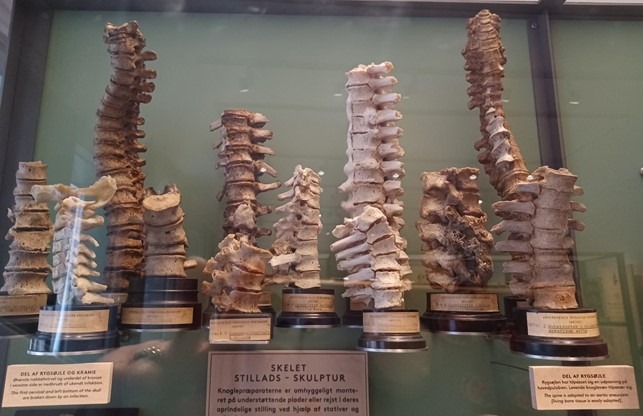
This blog reflects on my impressions ranging from disgust to respect in the Medical Museum of Copenhagen when exploring history and cultural well-being on the study trip with CRASH Master´s students of Metropolia. “The Body Collected” exhibition in the Medicinsk Museion presented the body parts collected from the 18th century to the present. The newest exhibits include dnas, cells and biopsies from bio banks, and the older ones were body parts, deformed foetuses, bones, skeletons, organs, tumours, lungs and so on. Visit to museum in a study trip to Copenhagen I took the stairs down to see the Indsamlade Menneske (“The Body Collected”) exhibition. The first element catching my eye was a full-term foetus in her mother’s womb. The birth had been obstructed due to the placenta being attached to other tissues and thus blocking the way out. I could clearly see the baby's face, hair, finger nails, all the possibilities of a new person being born. And why can I explore these samples, which were collected up to 200 years ago? It made me think if it is ethical to present these now? and what kind of ethical questions existed 200 years ago? Asking questions is a relevant part of ethics I can only imagine what has happened to the mother since her body was left in the hospital. Family might have been poor, or the mother was ill, or she might have gotten pregnant by the wrong man, or without being married. No matter what was the reason, their bodies were left to science, because no one paid the hospital fees and did not collect their corpses for burial; and this is how surgeons learnt the anatomy of the human body and learnt to practise their profession. This was also the way, ethical or unethical, how hospitals operated, and this is how medical science developed. I noticed a lot of unpleasant emotions and thoughts rising in my mind during this visit to the museum. Should I watch these at all? Can I be interested in the anatomy of a human, when it is presented via dead human beings and surely without consent? How many of the human rights and the laws are violated by portraying deceased person’s body parts? I do not have answers to these questions. I can only understand the history from the perspective of my time. This all seems so unethical considering modern time values and guidelines and legislation. From disgust to respect I continued my tour of the exhibition. Slowly, my disgust started to melt down. First, my emotion changed to wonder and interest, then to curiosity and finally to huge respect. It really hit me deeply. I realised that we would not have modern medicine without these scientists. They had the courage to explore human bodies in this way and teach the next generations by exploring these samples. It is way too easy to judge them with today’s ethical criteria and standards. Before these samples, the physicians were trained by exploring animal bodies. But we all can see the difference in the accuracy comparing, for example, the humans’ and the pigs’ anatomy. How many of us would be alive without the development and the research of these earlier generations? The driving motive behind these actions and modern science is nevertheless exactly the same, human’s need to learn, explore, develop, and they have the scientific enthusiasm. All these, of course, in addition to the influence of such much more down-to-earth factors as professional competition, need for funding, reputational considerations, personal ambitions, etc. just like nowadays. Later in the exhibition, I noticed that the museum had a separate room for ethical questions. They pondered on the same questions as I did. They asked from the audience if it is ethically bearable to have these collections presented to the public. The visitors’ answers varied from absolute “no” to “yes, of course”. My opinion swung to acceptance during the 30 minutes I spent watching these beautiful and remarkable samples. What did I learn from ethics? My main learning point was very simple and yet quite revolutionary on a deeper personal level. This experience touched on my physical body, my emotions, my thoughts and my biases. I felt my judgement and the resistance were melting away. My conclusion was that it is not fair to interpret history with current values and criteria. Who am I to say 200 years later that those actions were unethical? I felt that seeing the exhibition offered me a mindset change. I understood the proportionality of ethics, and how all actions need to be evaluated related to that time and place when these actions happened with their participants. How will this insight and experience influence me? How can I generalise this insight to a wider level? I came up with the following reflections from my part. What is ethical at this, modern time? What is ethical in our society and community? What are our values? In politics, values change every four years with the new elections, at least partly. Then, how about science? If science is based on our current understanding and knowledge, how should I think of what happened 20 years ago, and how will it be in 200 years to come? I can only come to the conclusion that ethics and our understanding of ethics needs to be re-evaluated and it transforms constantly. And yes, historical structures need to be dismantled, like the colonisation and the patriarchy. We need to be prepared to ask difficult and unpleasant questions, and see those unbearable painful injustices that happened in our society. Similarly, we will be embarrassed and judged by future generations for the actions of today. But without stepping into the unknown areas and taking risks, there is no development, no creativity, and no new insights. It is for the future generations to judge us. So, be fearless! Be the future-maker and take actions based on the values and ethics of our time and our understanding! Like Sanna Marin, the Prime Minister of Finland, encouraged us all to do in her speech at the New York University’s Commencement 17.5.2023 where she was recognized for her own courage. Similarly, we need to honour those who were before us and our time. They did their very best with all the understanding, the experience and the knowledge they had. Let’s consider their work and actions with respect and learn from them. It sends a clear message to our generation: be bold to change and yet honour the history! Why am I writing this? I’m one of the hope-holders for the future. I believe in the good in human beings. I see it in people’s willingness to respect our future by finding the ways to save our nature and planet. They try their best to find a harmonious and sustainable way of living with other living organisms on earth. So, what does this have to do with my experience in the Medical Museumn? I believe, it is exactly the same. Our enthusiasm is to learn, know, understand, develop, cure, find solutions, and ground them to the solid base of science, rather than contribute to prejudice of randomness. We strive to mix the knowledge and experiences with creativity to generate something new. We have the courage for new approaches, the tolerance of not knowing, but exploring constantly, and we have the attitude of respecting others and capacity to empathy; the ability to use our instincts and heart among the scientific knowledge. When wandering in the exhibition, I connected to those persons and their imaginary stories, not only their collected body parts in the exhibition. Those persons have a meaning even hundreds of years after their death. They help me to understand the core of ethics, develop my professional and personal thinking, and ground my own life actions more on respect. In short, I have had inspirational moments with ethical questions in my life, work, studies and research! and I encourage you to do the same. About the writer Hanne Aura is a student in CRASH, Master’s Programme in Creativity and Arts in Social and Health Fields. She has a work history over 30 years, in such roles as nursing in psychiatric care, as a nursing expert and counsellor, as a specialist in social and health care data system development, as a key account manager, and as a therapeutic worker utilising embodiment and other creative approaches. Presently, she is a practitioner and student of the counsellor of Systemic Constellation. References Medicinsk Museion (2023). Medical Museion of København Universitet, Copenhagen. Web-site of the museum: https://www.museion.ku.dk/en/forside/ The Body Collected: Exhibition (2023). Medical Museion of København Universitet, Copenhagen. Web-site of the exhibition: https://www.museion.ku.dk/en/the-body-collected/ Also available as a virtual tour: https://www.museion.ku.dk/en/product/the-body-collected-en/ Speech by Prime Minister Sanna Marin at the New York University commencement on 17 May 2023. Prime Minister´s office (17.5.2023). https://vnk.fi/en/-/speech-by-prime-minister-sanna-marin-at-the-new-york-university-s-commencement-17.5.2023
Designing for Sustainability in Berlin. A master´s study trip to “International Week on Sustainability 2022”
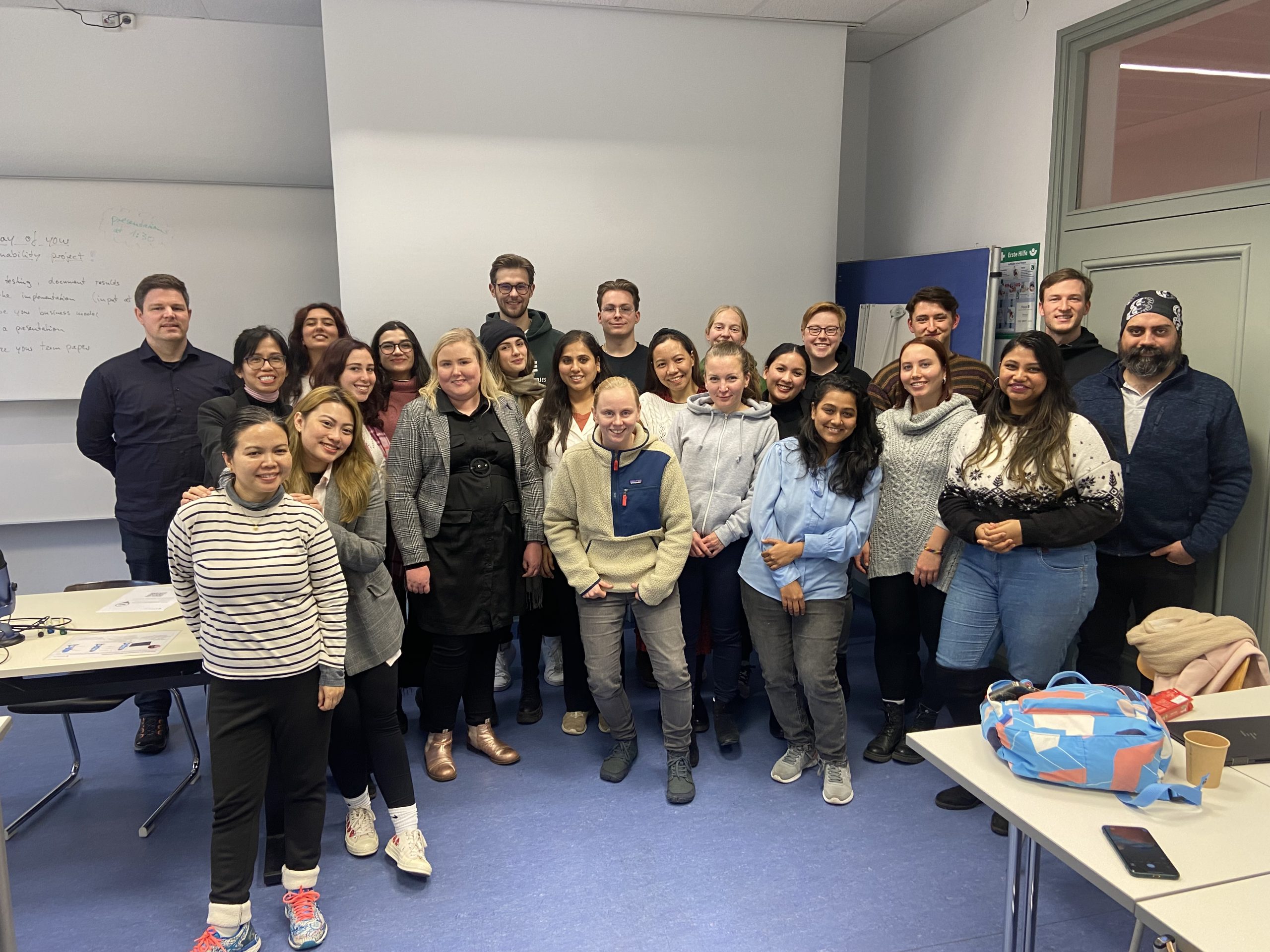
The Berlin School of Economics and Law (1) organizes the annual International Week on Sustainability (IWS) since 2019 with the goal is to integrate sustainability into the higher education curriculum. This year 2022, HWR invited master’s students from Metropolia for the second time to participate in the design and development of sustainable solutions together with companies and students from other countries in a series of workshops that lasted for 4 days, 18-21 November 2022. Our group of 10 master´s students was excited to get an approval from Meropolia´s International office. Additionally, the IWS study trip offered a chance to earn 3ECTS while solving real-world sustainability concerns, so we longed to go and try. The final argument in favor of the trip was its destination, as Berlin represents significant historical legacy, making it a unique opportunity to visit and experience it, difficult to pass by. Fast forward to November, it felt surreal to land at Berlin airport, and we were too excited to feel exhausted. Even the rain, slushy streets, and chilly air could not dim our spirits. In Berlin, we were all determined to expand our knowledge and make new connections. Day 1. Opening Day and Kick-off The program kick-off took place in HWR Startup Incubator Space located in the Siemens industrial park. It started with a briefing with project partners from Startup Incubator Berlin, which featured the startups in the sustainability field. The introduction also included a brief review of Service Design methods and tools covered by Prof. Christian Klang of HWR. There were about 30 participants coming from different academic and business fields who were assigned to five working teams. Each team selected one of the following challenges: 1) incentivizing nature-based solutions to climate change; 2) making travel sustainable and meaningful; 3) incentivizing CO2 reduction during commute; and 4) communicating vegan food delivery effectively. Teams put their hands to work on the challenge they had selected. The startups sat down with the teams to explain their projects and share their motivations and visions. Ideas poured in as each team concentrated on solving the issues and gathering data. Day 1 came to a close with more questions than answers. Day 2 and 3. Ideation and Prototyping Day 2 sessions were held on the HWR campus (2). As we had grown accustomed to the modern design of Metropolia´s campuses, the large corridors, arched hallways, and marble floors in the HWR campus were a little surprising. Teams worked seriously to build and test their prototypes. It became obvious that cooperation is essential to the success of the projects and this is where online tools for team collaboration became critically useful. Ideas and information were together put in an online board to make sure that good ideas and critical pieces of information are not missed out. The challenge was to make business sense out of all the ideas and information that we had, as we quickly realized that bright ideas and passion were necessary but not enough. We kept reminding ourselves that we needed to find solutions that would be viable, feasible, doable, and would make business sense for our partner startup. The second day ended with coffee and laughter, as we watched the first snowfall of the year covering HWR. On Day 3, we went to The Morp Company, a consulting firm that offers sustainability advice. A brief workshop on the use of the business model canvas as a tool to address corporate sustainability concerns was held and received very well as a hands-on new tool. Day 4. Pitch for Impact Day 4 was a pitching day. As teams presented their ideas and answered questions from partner startups and other participants, it was inspiring to see the variety of proposed solutions. There were no earthshaking proposals, but the teams focused on concepts that made real business sense and would advance true sustainability. Although the solution reports still need to be finalized, we felt a sense of accomplishment for having done something worthwhile as the last session ended. Discovering Berlin In all honesty, finding our way to the session locations in the morning was a bit challenging. Because of this, coffee and Google Maps have become our close allies. When in Berlin, we didn’t just snap pictures. We needed to get out there, interact, and connect. Berlin is blissful for shoppers and vibrant for foodies and art lovers. A frequent conversation starter during this trip was “Is this your first time in Berlin?” It was easy to say “Yes” in response to this question. “How do you find Berlin?” and “Which sites have you visited?” were the typical follow-up queries. With each passing day, we would find ourselves giving different answers because Berlin is too diverse to describe in a few words. Despite our time constraints due to working 4 full days on projects, we were nevertheless able to visit some famous sites. We were lucky to witness the start of Berlin's Christmas market and were able to sample local food including currywurst, kebab, stollen cake, and local wine. We had our taste of misadventure too during the first attempt to visit the Brandenburg gate, as we ended up at a factory site due to our over-reliance on Google Maps. On the last day of the trip, it was difficult to bid Berlin goodbye. Armed with new knowledge and filled with the brilliant sparks of Berlin, we boarded our plane to return to Finland. References The Berlin School of Economics and Law (Hochschule für Wirtschaft und Recht, HWR, Berlin) is one of the largest universities of applied sciences in Berlin. It was founded in 2009 as a result of merged of two other big higher education institutions, and it now enjoys more than 150 partners around the globe, including Metropolia UAS, its long-time partner. Read more about HWR from its web-pages: https://www.hwr-berlin.de/en/ Berlin School of Economics and Law, Badensche Str. 52, 10825 Berlin. The picture below shows the marble floors and grand interiors of this campus. About the author Karen Espiritu is a 1st year MBA student in Business Informatics at Metropolia Business School. Karen is a certified project manager and a result-driven professional who is passionate about fostering organizational sustainability on all three fronts: economic, social, and environmental. She enjoys blogging in her spare time and is an active student ambassador of Metropolia. Her video about IWS-2022 in Berlin can be found here: https://www.youtube.com/watch?v=DPiUds0fVvo

The editorial team will provide the content of the Masterminds blog before publication.
The editorial team started its work at the beginning of 2022.
Pia Koirikivi, chief editor in Masterminds blog, Pedagogical Specialist
Minna Kaihovirta, Manager of Dialog
Iira Lankinen, Principal Lecturer
Riikka Wallin, Publications Specialist
Zinaida Grabovskaia, Senior Lecturer
Salla Kivelä, Principal Lecturer
Ai technology Business Informatics Master’s Program circular economy continuous delivery Corporate Social Responsibility CRASH cultural well-being Demand Forecasting digital transformation electric car engineering ethichs IPR Machine Learning Master's Degree in Procurement Master's Thesis Master Degree Programme in Business Informatics Masters programme master student Master studies master thesis Master’s Programme in Creativity and Arts in Social and Health Fields Metropolia Business School online studies patent management remote studies Reshoring ride-sharing Security software student experience study abroad Study exchange study trip Supply Planning Sustainability technology
