
Ethnographic writing and Qualified Empathy: skills for social service professionals, working in urban areas

What do you get when two Social Work lecturers from different countries, involved in developing professionals’ urban social work skills, want to work more closely together, but they're locked in their respective homes? — We Zoom, of course! Virtual exchange supports intercultural competences, research and practice! As a part of a workshop series held by my colleague Dorthe Høvids, we found our first opportunity to collaborate around some of our research and teaching areas by using materials created for the Urban SOS project. Dorthe is a social anthropologist and researcher focusing on using ethnographic methods to explore muslim immigrant’s lived experiences in Europe and Denmark as well as lecturing in the social work degree programme at University College Copenhagen. Our common Erasmus project, Urban SOS, brings together educational institutions and work-place organizations—who work in the cities with social issues caused by processes of migration, urbanization and the unequal accumulation of economic growth in many urban areas. During the project collaborations, we realized that our different curriculums offered Ethnographic writing in Denmark and Qualified Empathy in Finland. Shortly, ethnographic writing uses sensory detail and storytelling techniques to describe and bring a topic closer to a reader. Qualified empathy involves the ability of a responder to engage, identify with, develop an understanding and then to distance oneself from an emotionally charged situation or experience in order to assist without secondary trauma or burnout becoming an issue. Both of these skills are core in our research project so we decided to broaden our student’s exposure through a virtual workshop. After introducing the two skills and doing an immersive listening exercise about a homeless man in Copenhagen, we had a discussion about the relevance and necessity for ethnographic writing and qualified empathy skills in their future careers in the social services sector with about 30 students from Denmark and Finland on Zoom. The conversation was lively as ethnographic writing and qualified empathy were unfamiliar to many of the students. The feedback was positive and the students shared that they were inspired and learned a lot about the topics during the discussion. Phronesis and value based analysis As stated earlier, we based our workshop on the Urban SOS project as well as our research and teaching areas. The project aims to teach educators and professionals a new way of investigating our quickly expanding urban areas. We apply a phronetic analysis model, as developed by Bent Flyvbjerg (2012). Phronetic analysis seeks to clarify values, interests, and power relations as a basis for praxis. Flybjerg (2012) argues that social science should always involve at least episteme (i.e., abstract theory and concepts) and phronesis (analysis of values and concrete practices)—the combination is what makes ‘it’ matter. Social science and it’s practitioners must produce value-based deliberations with clear and relevant references to practice. Only by doing so will we ensure that we push our societies in an ethically articulated direction when making decisions and implementing projects, methods, solutions etc. The alternative is that we blindly follow a societal development that we find unjust or even unethical. Inherent to this argument is an ethical responsibility and a political (or at least normative) motivation of supporting social change through research and education—thus, as phronetic researchers and practitioners, we willingly give up on the idea that our actions, research, and even education, is, or should be, neutral or objective. Instead, it must be transparent, responsible and developed through dialogue. (Rauhala, Høvids & Lehto-Lundén 2020) He uses four value-rational questions when investigating a specific place, system or organization: Where are we going? Who gains and who loses, and by which mechanisms of power? Is this development desirable? What, if anything, should we do about it? In the project, we map and analyse intersections between urbanisation, social issues in Europe, and the lived (human) experiences (Rauhala, Høvids & Lehto-Lundén 2020). We are developing a new transnational and interactive platform and educational materials for educators, students and practitioners. We argue that we cannot Writing reflectively to develop ‘qualified’ empathy As the project partners create, reflect and write together as part of our project work, we keep coming back to the idea that in order to be present in our encounters as professionals with people living and struggling in the urban context we need to be able to empathically understand their situation in context in order to identify ways to support them. One of the ways in which to develop this more targeted type of empathy is to write reflectively. There is no greater example of reflective writing than ethnographic writing due to its depth and detail. Ethnography is a type of writing common in the social sciences, especially anthropology. Ethnographic writing uses narrative immersion to share experiential information, alongside objective description and interview data. When we tell stories, we use our own understanding of other people’s lived experiences. This helps us to move into a more empathic and non-judgemental mind-set; the beginning of a search for meaning but not its end result. Empathy is not the same as understanding, but it is a step on the way to understanding. This brought us back to the issue of empathic understanding. ‘Qualified’ empathy for reducing burnout and stress Qualified Empathy is a concept and model created as part of a NordPlus project called ”Qualified Empathy”. The project took place at Helsinki Metropolia University of Applied Sciences, with partners in Norway and Denmark as a way to develop diverse and creative teaching and learning methods to help social work students learn and develop more professional or targeted empathy skills. Qualified Empathy is defined as the ability to reflectively and emotionally separate oneself from another and to understand the context; then in an intentional process, focus on understanding of the other person’s viewpoint both cognitively and emotionally. The three phases of this are: We feel like us, I feel like you (”as if ”) and I know better how you feel, but I am not you. In the first phase we acknowledge that we belong to certain groups, we identify with them in some way. In the second phase we try to move out of our own ‘shared group’ understanding of the world and closer to the other person’s understanding; to see the situation through their eyes. This shift helps us to develop a greater ‘felt’ understanding from their perspective. In the third phase, once we begin to feel this connection, we need to draw back and acknowledge that we are not the other person so that we do not over identify and become emotionally involved. We need to be able to access our own critical thinking skills and our knowledge of the service system and legislation in order to assist them in creating the best path forward for themselves. To these initial three phases, we added the additional dimension of action which we see as a critical part of a Qualified Empathy professional’s process. It is an admirable thing to be regarded as empathic but if it stops there, without action, the benefit may only be felt by the worker and not by the individual, group or community they are working with. For the professional, proper use of empathy has been shown to reduce burnout and protect against secondary traumatic stress, which is a common concern for students or social workers new to the field. Final take-aways The workshop with the Finnish and Danish students was fun and full of discussion. The main take-away’s from the students were: Learning new concepts and discussing with students from a different national context but similar educational path was interesting and helpful as a way to support our understanding of our profession on both a local and a global level. Interacting with other students, listening to a story of a homeless person, and discussing how the story could be viewed through the lens of ethnography and qualified empathy was valuable and instructive. This was a more comprehensive look at skills often overlooked but necessary for professionals when hearing about or encountering traumatic situations. From our perspective as teachers, we received lots of feedback that this kind of exchange between students from different national contexts was fun and helped the students to practice intercultural dialogue in a third language and put faces to others studying the same profession in another country. Based on this experience we will be developing a longer Virtual Exchange which will address the student’s desires for longer interaction time with each other. This also reinforced for us the idea that these skills may be beneficial for more than just social services students and professionals. We invite other interested parties to get acquainted with these methods and to explore how they might be adapted and beneficially applied in their fields. For us, this was an afternoon well spent for a university lecturer! Author Leigh Anne Rauhala is a Licensed Clinical Social Worker (FL-USA) turned Social Work Educator living in Finland. Her background is in the Mental Health sector working with severe and persistent mental disorders in the Community Health Care setting prior to moving to Finland. She has been teaching Bachelor of Social Services students since 2007. She serves as the Mobility Contact for Social Services students and is involved in several international teaching and research projects focusing on Social Work in Urban Contexts (Urban SOS) and Teaching Qualified Empathy. References Austring, B. D. & Sørensen, M. 2006. Æstetik og læring – en grundbog om æstetiske læreprocesser (Aesthetics and learning – a textbook on aesthetic learning processes). Copenhagen, Denmark: Hans Reitzels Forlag, 83–101 Bundgaard, H. Overgaard Mogensen, H. and Rubow, C., (2018). Antropologiske Projekter. En grundbog. Frederiksberg: Samfundslitteratur. Erasmus+ Strategic Partnership Grant, 2019. URBAN-SOS: towards a trans-disciplinary, inclusive sustainable future Project nr 2019-1-NL01-KA203-060543 Flyvbjerg, B. (2012). Making Social Science Matter: Why Social Inquiry Fails and How it Can Succeed Again. UK: Cambridge University Press Geertz, Clifford (1973). "Thick Description: Toward an Interpretative Theory of Culture." In: The Interpretation of Cultures. New York: Basic Books”Qualified Empathy” (2015–2017, NORDPLUS) Raatikainen, E., Rauhala, L., & Mäenpää, S. (2017) Qualified Empathy : A key element for an empowerment professional. Sosiaalipedagoginen aikakauskirja. Rauhala, L., Høvids, D. J. & Lehto-Lundén, T. (2020). Urban-SOS: Notes on a Framework for Phronetic Analysis. Unpublished paper. Wagman, M. A., Geiger, J. M., Shockley C. & Segal, E. A. 2014. The Role of Empathy in Burnout, Compassion Satisfaction, and Secondary Traumatic Stress among Social Workers. Social Work 60 (3), 201–209. Williams, C., 2016. Social Work And The City: Urban Themes In 21St-Century Social Work. UK: Palgrave Macmillan.
“The feedback has given me new views on my capabilities and strengths as well as pushed me to work harder for the group”
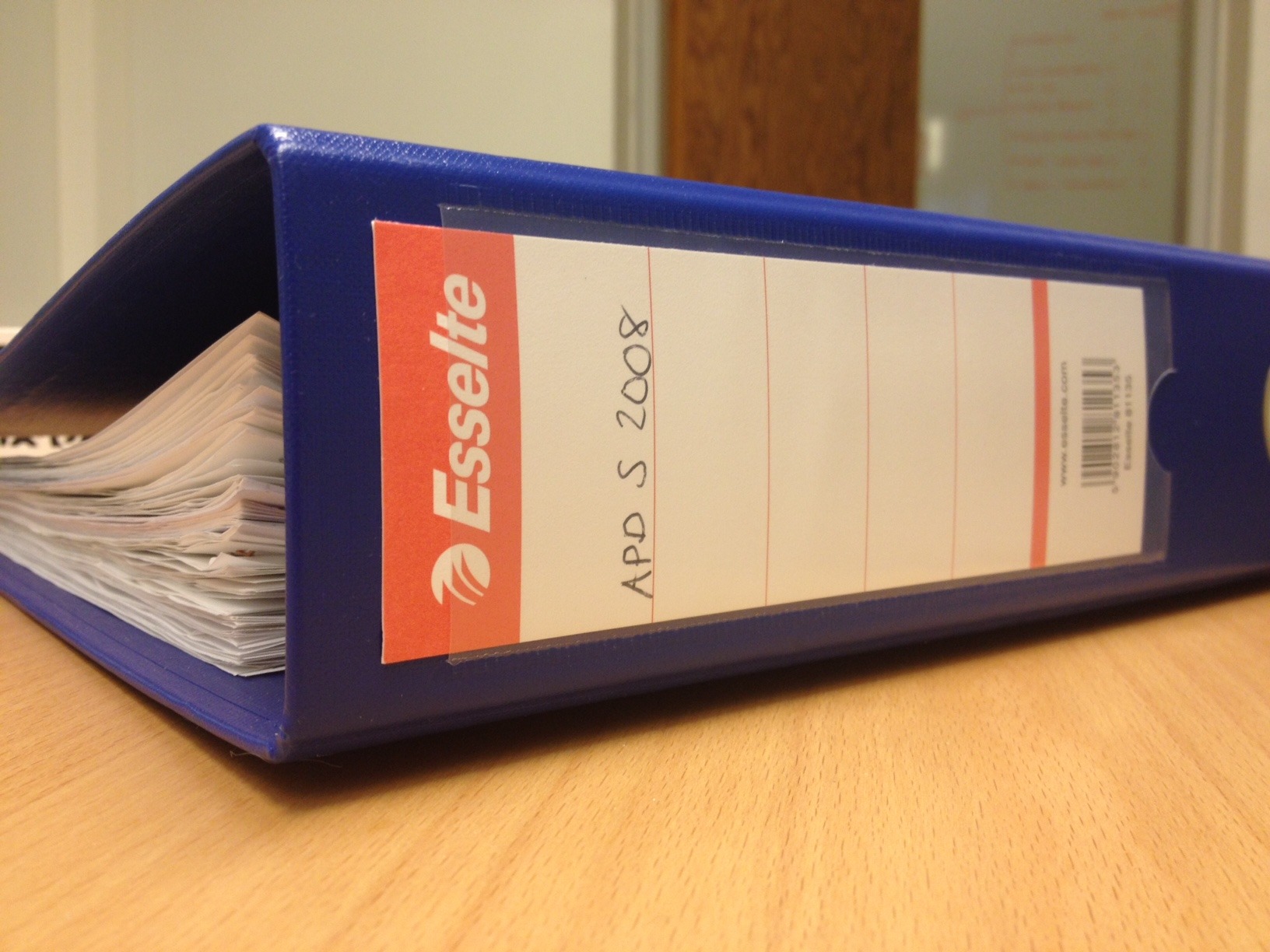
Kaivoin viime viikolla pitkästä aikaa vanhoja opetusmappejani. Oppimisen palautehankkeemme on vienyt minua erilaisin suuntiin viimeisen vuoden aikana, viime viikkoina siihen on liittynyt avaruus ja ilmiöpohjainen oppiminen. En löytänyt mapeistani sitä mitä etsin, mutta löysin jotain paljon arvokkaampaa ja olin tyytyväinen siihen, että annoin vuosi sitten muuttaessani Otaniemestä Bulevardille näille vanhoille mapeille vielä mahdollisuuden. Olin kymmenisen vuotta sitten puuhaamassa kollegoitteni kanssa kokoon uutta kurssia, jonka lähestymistapa oli hyvin oppimislähtöinen ja toteutus projektimuotoinen. Olimme olleet silloin vierailulla hollantilaisissa yliopistoissa ja saaneet sieltä vettä myllyyn. Halusimme luoda projektikurssin, jonka pääpaino oli oppimisprosessissa eikä niinkään projektin lopputuotteessa. Tavoitteena oli tukea valmistumisvaiheessa olevien opiskelijoiden työelämätaitoja, kuten projektityötaitoja, reflektointitaitoja, vuorovaikutustaitoja, dialogitaitoja jne. Hollannin matkan seurauksena syntyi sitten kurssi, jonka yhdestä toteutuksesta olin koonnut nyt löytämäni mapin. Kurssilla panostimme oppimisprosessiin, sen ohjaamiseen ja vuorovaikutuksen laatuun. Oppimisprosessin etenemisen kannalta palaute oli ratkaisevassa asemassa. Kurssilla harjoittelemme palautteen antamista ja vastaanottamista, puhuimme omien vahvuuksien ja kehittymiskohteiden tunnistamisesta ja arvioimme omaa ja toisten työtä. Dialogi oli kurssin perusperiaate. Erilaisten tehtävien kautta syntyneet reflektiot, pohdinnat ja arviot sekä niistä saatu palaute auttoi opiskelijoita eteenpäin ja meitä opettajia seuraamaan oppimisprosessin etenemistä ja muokkaamaan toimintaamme sen mukaisesti viikoittain. Palautteet puhuttiin auki ja mietittiin, mihin annettu ja saatu palaute johti ja ennen kaikkea miten se vaikutti projektin seuraaviin askeliin ja seuraavan viikon työskentelyyn. Ei se helppoa ollut, mutta mielekästä se oli puolin ja toisin. Otsikkona olevan tekstin kirjoitti yksi opiskelijoistani kurssin viimeisessä palautesessiossa. Siellä jokainen pohti ensin kirjallisesti omaa suoritustaan ja kurssia, minkä jälkeen kukin kirjoitti jokaiselle ryhmän jäsenelle henkilökohtaisen vertaispalautteen. Tätä kaikkea seurasi vielä yhteinen keskustelu. Palautepäivä oli intensiivinen ja opettavainen. Kurssi oli kaikille osallistujille, opettajille ja opiskelijoille, merkityksellinen ja sen aikana syntyi osaamista kaikkien osapuolten näkökulmasta. Otsikon kirjoittanut opiskelija jatkoi: “I got more self-confidence for my skills and abilities after the first peer evaluation. I also started to see that I have some special knowledge/skills that the others in the group didn’t have.” Tämä oli minulle opettajana merkki onnistumisesta.
This blog reflects on the role of higher education both in the present and in the future. It explores the significance of higher education as an educator, regional influencer, developer of working life, and innovator, featuring pedagogical content, experiments, and developmental endeavours as its core. The bloggers are staff members from the Metropolia University of Applied Sciences and other experts in the field.
Johanna Tirronen, chief editor, Senior Lecturer
Sonja Holappa, Seniori Lecturer
Merja Hintsa, Publishing Specialist






Ai ammattikorkeakoulu ammattikorkeakouluopetus ammattikorkeakoulupedagogiikka Blended learning circular economy co-creation collaboration covid-19 dialogi digital learning platforms Erasmus exchanges fashion higher education higher education institution inclusive internationalisation innovaatio innovation innovator international classroom international cooperation internationalisation internationalisation at home kehittäminen kestävä kehitys learning space oppiminen osteopathy palaute service design student services student wellbeing study ability sustainability teacher wellbeing teaching traffic light service model TSLM univeristy studies universities of applied sciences university of applied sciences virtual exchange virtual exchanges vuorovaikutus