Traffic Light Service Model: a visual counselling tool in Metropolia Student Wellbeing Services

A significant number of higher education students face difficulties during their university studies. Loneliness, isolation from social networks, lack of academic study skills and problems with study motivation have been found to have a detrimental effect on progress in studies (Klemola et al., 2020). Self-regulation and co-regulation skills have also been linked to study exhaustion in university studies (Räisänen, 2021). In addition, the COVID-19 pandemic, which lasted for almost three years, has contributed to a decrease in enthusiasm for learning and a strong increase in study burnout (Salmela-Aro & Uotinen 2022). Especially first-year higher education students are at risk of burnout in the beginning of their studies, and have a strong need for study guidance (Hyytinen et al. 2022). Students in Metropolia University of Applied Sciences have also experienced study burnout. During the last academic year 2021–2022, 650 students contacted Metropolia Student Wellbeing Services, and on an average, had three meetings with a study psychologist, student wellbeing advisor or wellbeing coach. According to the reporting of the Student Wellbeing Services counselling professionals, approximately one in six of these students had worries related to exhaustion and fatigue, and one in five students had study stress listed as at least one of the reasons for seeking support from Student Wellbeing Services. Due to the ongoing decrease in higher education students’ wellbeing we decided to address this challenge in Metropolia Student Wellbeing Services and develop a custom-oriented model for low-threshold counselling services. Study ability and wellbeing in Metropolia Student Wellbeing Services The ability to study refers to the student's ability to work (Kunttu, 2021). Studying can be considered as the daily work of a full-time student with its own specific features. The concept is similar to work ability, which in turn, has been viewed through the relationship between work and the resources of the individual. Correspondingly, study ability is formed through the interaction of the student and factors related to studying. The Finnish Institute of Occupational Health (FIOH) and the Finnish Student Health Service (FSHS) have developed a Study Ability Model which, in addition to the student’s own personal resources, consists of study skills, study environment and teaching and counselling activities (Figure 1). The model for ability to study was first created by Kristina Kunttu in FSHS and then the FIOH published it in a student health guide in 2006. The model for ability to study was based on the work ability model. (Kunttu, 2021.) Metropolia’s Student Wellbeing Services utilize the FSHS’s model for ability to study as a counselling tool. The development of the Traffic Light Service Model (TLSM) has the same idea as the traffic light poster for coping at work published by Mieli ry (2022). Mieli ry's traffic lights remind the work community to follow and listen to the sensations of their own body, follow the warning signs given by their thoughts, feelings and bodily symptoms, and, if necessary, stop and take a breath. Metropolia’s TLSM combines both of these models. Shared, visual and simple model for counselling In Metropolia's TLSM for study wellbeing, three customer groups (the three different colors of the lights) provide a refined understanding of the so-called student-customer's ability to study and study wellbeing. It is more appropriate to design and develop customized services for three different target groups than to look at all students as one customer group that, in reality, has different service needs and a variety of factors affecting their study ability and wellbeing experience. The Student Wellbeing Services team in Metropolia supports students when they are concerned about issues related to their ability to study or study wellbeing. This includes topics such as: time management study skills motivation concentration problems difficult or unexpected life situations stress and exhaustion relationship worries minor concerns about mood or anxiety. Finnish Student Health Service, one's own communal health center or other healthcare providers respond to challenges concerning students' mental health. If students would need more of therapeutic support, their ability to study has clearly decreased or they have long-term or recurring mental health issues, they are guided to contact health care providers instead of the Metropolia Student Wellbeing Team. In Metropolia's Student Wellbeing Services, student wellbeing advisors, study psychologists and a wellbeing coach support and guide students in challenges related to personal life, coping or studying. Over the past year, the Student Wellbeing Services’ team has been developing customer-oriented services, and as part of this created their own Traffic Light Service Model for student wellbeing. In the TLSM model, the key elements are students’ ability to study and their sense of wellbeing, and the green, yellow and red light services offered to support them (Figure 2). Green light services are meant for students whose study ability and wellbeing experience are good. Studies are progressing in a goal-oriented manner (40–60 ECTS credits/academic year) and the wellbeing experience is also good (8–10/10 on a scale of 0–10, 10 being the highest value). The study ability and wellbeing experience are good and therefore guidance counselling provided by the degree program and other study support activities, e.g. tutoring, student associations and peer-support, are sufficient measures to promote the student's higher education studies. Yellow light services are for those students whose study ability and wellbeing experience have decreased. Their progress in studies has slowed down because of individual reasons (20–<40 ECTS/academic year) and/or the personal sense of wellbeing is only moderate (4–7/10 on a scale of 0–10). The students contact Student Wellbeing Services themselves or they are guided to use the service by staff members or student health care. Student wellbeing advisors, study psychologists and the wellbeing coach offer 1-5 individual counselling sessions aimed at restoring the study ability, promoting wellbeing and reconnecting with one’s studies. During and after the individual counselling process students can be guided to use both green and red light services. Students whose studies are progressing poorly or have been interrupted (< 20 ects/academic year or less) and/or whose wellbeing experience is poor (0–3/10 on a scale of 0–10) are included in the scope of red light services. In red light services, students usually need frequent and stronger support from for example Finnish Student Health Service (FSHS), other social and health services or public or non-governmental organizations to regain their ability to study, improve their wellbeing and continue their studies. Depending on the individual situation, sometimes the short-term individual counselling process provided by Metropolia Student Wellbeing Services is enough to boost study ability and wellbeing, but often this kind of low-threshold counselling service can help relieve the student’s situation while waiting for access to FSHS or other social and health services. Examining traffic light colours in counselling Compared to regular traffic lights, in the Traffic Light Service Model the order of the lights is the opposite, as the green light is at the top and the red light is at the bottom. With the unusual arrangement of the lights, we want to emphasize the importance of preventive counselling work in higher education. The more preventive services are invested in and the students have good study ability and wellbeing, the less health care or rehabilitation services are needed later. When developing the TLSM, it has been acknowledged that the student's ability to study can be good and, at the same time, the wellbeing experience may be poor or, on the contrary, the ability to study may be weakened but still the wellbeing experience may be good at the same time. The TLSM takes into consideration the pace in which the studies are progressing and the student’s personal experience of their wellbeing. The TLSM helps the employees of the Student Wellbeing Services design customer-oriented services for students who have similar concerns about their ability to study or study wellbeing. The advantages of the Traffic Light Service Model outweigh the disadvantages by far In Metropolia's Student Wellbeing Services, two student wellbeing advisors, three study psychologists and a wellbeing coach tested the TLSM during counselling meetings in March 2023. At the end of the test period, the team made a summary identifying the following advantages and disadvantages regarding the use of the TLSM model during individual counselling processes. Advantages of using the Traffic Light Service Model A visual tool in guidance and counselling helps the student and the counsellor to stay focused and keep the goals of the process actively in mind. It helps to recognize obstacles and steps forward in improving one’s study ability and wellbeing. The model provides the student with an opportunity to evaluate subjectively the study ability and wellbeing experience. Students can recognize the different factors affecting their wellbeing and notice that even though one area of their life could be in the red light area, other areas could be ok in green area. The model is a tool for observing and recognizing the change in study ability and wellbeing. “to paint a big picture”: how study ability and wellbeing have been before, how they is now, and how they could be in the future difficult phases in one’s study path are not just disturbing ruptures rather they become like a chapter or a theme in the big story of one’s university years helps to see the value of the process in improving one’s study ability and wellbeng The model helps in guiding students to utilize other services (e.g. study coordinator, student health services, social worker etc.). This way, it is easier for the student and the counsellor to decide which topics to work on during the short-term individual counselling process in the Student Wellbeing Services. It works for both the student and the counsellor as a way to build common understanding of the student’s life situation, study ability and wellbeing experience. TLSM is simple enough and easy to use in the beginning, during or the end of the counselling meeting. It can be used in different phases of the counselling process for initial evaluation and goal setting or for evaluating the change process. Disadvantages of using the Traffic Light Service Model The model is not suitable during initial phases of crisis interventions, especially the first meeting. However, it would be usable in the end of the intervention when the focus has shifted to recovery and returning back to studies. TLSM does not provide information about students’ study ability and wellbeing on a general level. The color of the traffic light and the evaluation can change quickly during the counselling process. University students seek individual counselling for study ability and wellbeing in many different situations. The TLSM helped to keep the focus of individual counselling meetings in the study context. The most prominent advantage was the simplicity and flexibility of the model as a visual counselling tool. As noted above, difficulties in one or several areas of life could make the wellbeing experience or study ability weak momentarily. The situation can still improve rather quickly even during short-term individual counselling provided by Student Wellbeing Services. To sum up, not everyone in the red light area of the TLSM need further referrals to health care or other support services, and oftentimes students use these services simultaneously. Would you like to be our Traffic Light Service Model development partner? Concerns about study exhaustion and burnout of higher education students during their studies have grown over the past few years. For this reason, educational organizations should include elements that support mental health as a natural part of their structures, operating culture and educational content. It has been noted that the personnel of educational organizations should have stronger knowledge and competences to address mental health worries among university students. At the same time, we should improve and ensure the accessibility of well-functioning student health care and low-threshold counselling in student wellbeing services and promote multidisciplinary cooperation between different professionals and service providers. This way, by preventing problems and identifying study exhaustion and burnout at an early stage, delays in studies could be reduced and the transition to further studies and working life accelerated. (Falck & Ärling 2020.) Metropolia has responded to the above-mentioned development proposals for study ability and wellbeing by launching the development of the above-mentioned customer-oriented Traffic Light Service Model for study wellbeing. The development of the TLSM is a fairly new project in Metropolia Student Wellbeing Services. TLSM helps to create a shared framework for guidance personnel to promote student wellbeing and coordinate support services. The aim is to further develop the TLSM with the help of our students in order to strengthen positive study experience and wellbeing. At the same time, there is an opportunity to develop guidance and counselling services among the team's employees and the communication about the services will also become easier with both customers and network partners through a shared and simple service model. The Traffic Light Service Model described here is the first version (1.0), and the development of customer-oriented student wellbeing services is still in the start-up phase. Metropolia's Student Wellbeing Services team welcomes feedback from students, staff members and networks for further development of the model. Authors Katri Luukka works as a wellbeing coach and a principal lecturer in Metropolia Student Wellbeing Services. As a wellbeing coach, Katri uses solution focused working methods in client work. Katri is interested in developing student wellbeing services through service design. Katri has a PhD degree in health science and a masters degree in health science education. She is also a solutions focused psychotherapist. Further information about the Traffic Light Service Model: katri.luukka@metropolia.fi. Noora Mononen works as a study psychologist in Metropolia Student Wellbeing Services. Noora’s main areas of interest are individual counselling and developing international students’ wellbeing. Noora has a masters degree in psychology and education and has previously specialized in career counselling. Noora is currently in cognitive-analytical psychotherapy training. References Falk, S. & Ärling, M. (2020). Voimaa opiskeluun – otetta ohjaukseen: Voimaa opiskeluun -hankkeen loppujulkaisu. Diakonia-ammattikorkeakoulu. Finnish student health service (2023). Ability to study. Retrived 30.3.2023. Hyytinen, H., Tuononen, T., Nevgi, A. & Toom, A. (2022). The first-year students' motives for attending university studies and study-related burnout in relation to academic achievement. Learning and individual differences 97, 102165. Klemola, U., Ikäheimo, H. & Hämäläinen, T. (2020). OHO-opas – opiskelukykyä, hyvinvointia ja osallisuutta korkeakouluihin. OHO!-hanke. Kunttu, K. (2021). Opiskelukyky. Teoksessa Kunttu, K., Komulainen, A., Kosola, S., Seilo, N., Väyrynen, T., Aalto-Setälä, R. & Ripatti-Toledo, T. (toim.). Opiskeluterveys. 2., uudistettu painos. Helsinki: Kustannus Oy Duodecim. 37-53. MIELI ry (2022). Työssäjaksamisen liikennevalot. Retrieved 30.3.2023. Räisänen, M. (2021). The interaction between self- and co-regulation of learning and study-related exhaustion during university studies. Tiedepolitiikka 46(3), 35. Salmela-Aro, K. & Uotinen, S. (2022). The pandemic put university students’ study engagement to the test and greatly increased burnout. University of Helsinki. Retrieved 30.3.2023.
Creating International Classrooms through Virtual Exchange

Metropolia’s International Relations organised a project in 2021 to support teachers in setting up virtual exchanges as part of their teaching. The project resulted in ten virtual exchange implementations that benefitted hundreds of students at Metropolia University of Applied Sciences. What is virtual exchange? Virtual exchange is a form of internationalisation at home. It’s a way to internationalise the curriculum and offer students an opportunity to interact and collaborate online with peers from partner institutions abroad. During virtual exchanges students gain different perspectives on issues related to their field of study and at the same time develop their transversal skills, such as cross-cultural communication. In addition to students, virtual exchanges provide international experiences for teachers as well. Virtual exchange collaboration can help teachers develop and expand their networks globally. Virtual exchanges help make internationalisation more inclusive. Despite the multitude of opportunities and travel grants that are available for students to enable them to travel abroad for student exchanges during their studies, not every student feels that a mobility period abroad is a viable option for them, for a variety of reasons. Virtual exchanges that are part of Metropolia degree programs provide a very accessible way to internationalise the curriculum, making internationalisation more equal and inclusive for all students. The COVID-19 pandemic has understandably resulted in significantly decreased student mobility numbers and numerous cancelled travel plans during the last couple of years. On the other hand, the pandemic has also resulted in increased distance teaching and learning; higher education institutions all over the world have been on a forced learning curve in their use of online teaching tools and development of online pedagogy (1). Although virtual exchanges have existed long before the COVID-19 pandemic, the pandemic created a situation where many higher education institutions for the first time started to truly look for ways to bring global engagement into their teaching and learning online and found the solution in virtual exchanges. What support did teachers receive? To encourage and enable the planning and organisation of virtual exchanges at Metropolia, the International Relations channelled working hour resources to teachers who had a plan for developing a virtual exchange with a partner institution abroad. The virtual exchanges were required to have the characteristics of COIL, short for Collaborative Online International Learning, which is an established and widely used model for virtual exchange and emphasises collaborative teaching and learning and intercultural interaction between the students (2). During 2021, Metropolia teachers also had the opportunity to participate in a COIL training that was organised by the European U!REKA network of universities of applied sciences. In addition to COIL skills, the training provided teachers an opportunity to find partners for setting up virtual exchanges. Apart from the U!REKA COIL training, the International Relations organised meetings where each teacher reported on their progress, successes and possible challenges. The meetings were also a means for sharing best practices and peer support. In addition, we set up a Microsoft Teams channel where the teachers were able to access support material, share advice and peer support and get tips of useful resources and trainings. What was the achievement in numbers? Ten virtual exchanges took place during the spring and autumn semesters of 2021 through the project. One to three Metropolia teachers were generally involved in implementing one virtual exchange. In most cases, the virtual exchange formed an independent implementation in itself, but there were also some smaller virtual exchange components, such as international workshops, that were integrated into existing Metropolia implementations. Most of the virtual exchanges were completely new collaborations, with the exception of a couple of implementations that had previously been organised onsite, involving physical mobility of students and teachers, and were now organised online for the first time. Altogether 30 Metropolia partner institutions collaborated in the virtual exchanges. Usually one or two international partners were involved in setting up one virtual exchange, but there was also a bigger virtual exchange that involved more than ten partner institutions. The majority of the partner institutions were European. However, also institutions from South Africa, Singapore, Canada and Mexico, for example, participated in the collaborations. Several of the Metropolia teachers reported that they intend to continue virtual exchange collaboration with these institutions also in the future. More than 400 Metropolia students from 13 different degree programmes benefitted from virtual exchanges organized in this project. Combining the number of Metropolia and partner institution students, the number is close to an impressive 700. What to consider when implementing a virtual exchange? Teachers reported their most significant successes and challenges in interim and final reports. The most common challenges were related to time differences and scheduling issues collaborative use of online learning platforms, such as Moodle, and differences in the level of language skills between the participants from different institutions. Many teachers noted that when implementing virtual exchanges, extra attention must be paid to various ice-breaking activities in the beginning of the virtual exchange to facilitate the interaction between the students. The ice breakers used ranged from virtual picnics to virtual tours of each other’s homes. Student feedback was mostly very positive. Students reported that they were inspired by the approaches, experiences and ideas of the teachers and students of the partner institution and that it had built their confidence when they had been challenged to present and answer questions in English in front of a large audience online. Some teachers also noted that the students’ learning from the virtual exchange had been evident in other courses afterwards. One of the virtual exchanges that was part of a larger project even resulted in several peer reviewed articles written by the students, which students found extremely motivating. Leigh Ann Rauhala was one of the Metropolia teachers who participated in the project. She implemented a virtual exchange for social services students and has described it in a Hiiltä ja timanttia blog article Ethnographic writing and Qualified Empathy: skills for social service professionals, working in urban areas. Katja Ahopelto, second year student of Business and Logistics, participated in the Metropolia Business School’s International Project Week which was organised virtually for the first time, and writes of her experience in the School’s Blog: Virtual International Project Week 2021 through the eyes of a student. Will virtual exchanges still be needed after the pandemic? I don’t believe virtual experiences can ever replace the immersive, transformative learning experience of moving abroad for a period of time to study and live inside another culture, nor do they need to replace it. I believe that traditional student exchanges abroad will continue and start to increase in number again when the pandemic subsides. Instead of alternatives to mobilities, virtual exchanges should be seen as another important tool for internationalising the learning experiences of students also after the pandemic. This was evident also in the feedback from the teachers in our project; most of them reported that they plan to continue to organize virtual exchanges also in the future. The inclusive nature of virtual exchange makes it a very important tool for internationalisation at home. Mobility periods abroad and virtual exchanges at home are very different experiences and tools that do not cancel each other out, but rather complement each other, as vital components in an ecosystem for internationalisation in higher education institutions. They help make internationalisation of the curriculum stronger and more versatile than before. Metropolia and other Finnish universities of applied sciences have outlined that the ability to work in multicultural and international environments and networks should be a shared competence of all our graduates (3) and it is imperative that we strive to ensure this, making use of all the new and older tools at hand. Therefore, Metropolia’s International Relations is organising another project in 2022 to support more teachers in setting up virtual exchanges. Author Niina Huovinen is Head of International Relations at Metropolia University of Applied Sciences and leads Metropolia’s team of passionate internationalization professionals. Enabling international experiences for students and facilitating connections between experts in Metropolia and abroad brings her great joy. References OECD 2021. The State of Higher Education - One year into the COVID-19 pandemic. OECD Publishing. (pdf) Rubin, Jon 2017. Embedding Collaborative Online International Learning (COIL) at Higher Education Institutions, An Evolutionary Overview with Exemplars. Internationalisation of Higher Education, Volume No. 2. DUZ Acadmic Publishing Arene 2022. Recommendation on the shared competencies of universities of applied sciences and their application. Arene. (pdf)
Integrating through Simulation – Boss Fight in English Communication Class 💥
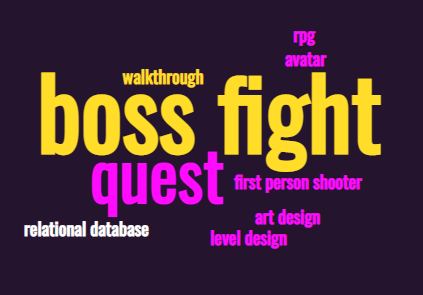
Close your eyes and imagine a group of people having a team meeting to kick-off a game development project. A glance at the meeting agenda reveals items such as assigning a project manager, discussing the different skills and roles needed for the project and brainstorming on an initial game idea. For the game idea, you hear someone mentioning a 2D platformer with a boss fight. Now imagine all this taking place in an English communication class full of engineering students and on an online platform. Is it working, are they learning and are they enjoying it? Yes, yes and yes. In this blog text, I’ll be discussing integrating and simulating English studies successfully into any study module in any discipline by providing an example from a game development study module at Metropolia UAS. Quest for Meaningful and Inspiring Learning Experiences Universities of Applied Sciences are by default focused on project and problem based learning, which means simulating projects and solving problems typical for worklife is at the center of most learning. This approach has a solid foundation in research, which claims that students (and teachers!) are more motivated and learn more in integrated and simulated learning contexts (see e.g. Loepp 1999; Terenzini 2020). Integrating subjects is not a new idea and several well-established models, such as the interdisciplinary model or the problem-based model, exist for different types of contexts and school levels (Loepp 1999). Well-executed integration is not something to be taken for granted despite following a model, but typically requires strong personal commitment and dedication from the individual teachers involved. In Metropolia University of Applied Sciences, game development (Metropolia, 2021) is one of the four 15cu study modules, aka themes, IT engineering students complete during their first year of studies. Game development was considered an important theme as Finnish gaming companies are attractive employers for IT students, thanks to the success of Rovio and Supercell to mention a few. The current game development theme has been designed to include the following courses/topics: C# object oriented programming Basics of relational databases Game development tools and project implementation Communication in English and development of presentation skills Concept of StartUp business model Basics of Mathematics and Physics. When the gaming theme was first created in connection with a curriculum revision 7 years ago, a great amount of work by the teachers went into integrating the different subjects into a gaming project. It wasn’t a very structured and formal process, but looking back now we managed to address many of the questions suggested by best practice to arrive at a meaningful and inspiring entity, which is work-life oriented. Key Questions to Answer As listed by Steamedu (2021), some of the key questions that merit close attention when creating a module are: Why is this module needed? What is the purpose/goals of the module? What is the content of the module? What is the expected result? What kind of module is this? (e.g. exploratory, design, expressive, project based, combination etc.) When will the activities of the module take place, what is the time frame? Where does the module take place? In which learning environments? What tools are needed to successfully complete the module? E.g. equipment, tools, materials, financial resources, technology, online tools, books, human resources, etc. How is the module evaluated for module quality and outcome, learning outcomes, effectiveness of project methods What are the risks associated with the module? Answering these questions and planning the theme further made me realize it would be possible to engage in true integration and I remember the excitement and inspiration I felt right from the very beginning. The excitement hasn’t faded either. Working together with the other teachers on this integrated module has been highly rewarding all these years. The module has also been developed further every year in the spirit of continuous development and I personally feel I’ve managed to create a course structure and content I’m truly satisfied with as the course additionally simulates work-life as closely as possible. Course Walkthrough My focus in the latter part of this text is on providing my readers a walkthrough on how English communication was integrated into the game development theme through the gaming project where students develop a game in teams in 8 weeks only, and how the English communication part has developed just recently. I will share my insights with you here for a structured approach to simulating work-life in the classroom, in my case from the communication point of view. For the English course, the early-year course contents were agreed upon with the other English communication teachers involved in the game development module. From the start, it was clear we would let the students work on their projects in class in English, with them using the skills and knowledge they had acquired in their other game development courses, for example programming, taught in Finnish. The only subjects in the gaming module, which proved to have no real common ground for integration with the English course, were math and physics. Other components of the English class included for instance project communication skills, presentation skills, reporting skills and making CV’s in English. All of these centered on teaching how to communicate about the gaming project at the final seminar organized at the end of the 8-week project. An example of animated presentation slides by one team from this fall is found here. (Blatter et al. 2021). Towards True Simulation Later, my own classes started to evolve even more towards simulating work life in game development. The four specific questions I asked myself when continuously developing the structure and content of my classes are shown below. These questions are of course applicable for any job in any field by just changing the term game developer with a different job. What is a typical work day in the life of a game developer? Which aspects of this work can be easily simulated in my class? Which aspects need modifying in order to work in my class? And most importantly, how can I make the students come to class and start working without the necessity of a lengthy teacher briefing first? I felt this was significant mainly because this is how most work takes place: people come to work and start working without anybody telling them every time what to do. To come up with answers to my questions I went looking for a precise answer to my first question by googling “What does a typical work day look like for a game developer?” Naturally, I got several hits and this is for instance what gaming industry expert Jason W. Bay (2016) has to say about it in his podcast aimed at wannabe game developers: Once everybody is in the office, it’s pretty common to have a team meeting, especially for studios that use Scrum as a development method. Teams will usually have a morning stand-up meeting to talk about what they accomplished the day before, what they’re going to accomplish today, and discuss any problems that might be blocking their progress. After that, everybody goes back to their desks to handle email, plan their day, and get to work. Most of the day is spent doing the core part of the job. Artists will spend that time planning and creating the game art. Programmers will spend the time writing and debugging source code. Designers might spend it by writing documentation or putting together game levels and so on. Current Course Core Based on this description and working out answers to my questions 2 and 3 to modify the required parts, my course (in Zoom due to the pandemic) is currently built around team meetings at the beginning of classes where the students plan what they’re going to accomplish that day and who needs to do what. They then go on to work, alone or together, on the tasks they specified and before class is over, get together with their team to discuss progress made and any problems they encountered. If a solution was found, they spend some time advising each other on how to avoid similar problems. The game-related tasks can be anything from coding and art design to building relational databases. As the very last thing in every class, students share their progress with the class, in brief, by showing their Trello or Microsoft planner which they use to manage their whole project in a visually pleasing way in one platform, available to all team members at all times. Classroom Turned into Workplace My question number 4 got solved by adopting this repetitive way of working through team meetings, as I am now able to have students come to class and know exactly what to do completely on their own. What’s more, they are using the IT and other skills they’ve learnt in courses taught by other teachers in the module, but now communicating about them in English in order to work on their projects. To me, this way of working is as close as it gets to integrating courses and simulating real life gaming workplaces. Since the course contents continue to feature presentation skills, reporting skills and such as before, I obviously spend class time on teaching these skills, but in each class actual work on the tasks, whether game related or communication skills related, starts by having a meeting and deciding on which tasks to work on that particular day. Challenges Two challenges remain for this type of integration: In the ideal situation, all students would work on all aspects of the gaming project, but in practice one student tends to work on coding, another one on game art and yet another on something else, according to their personal skills. This of course emulates work-life in gaming in a great way, but is not the best way in terms of learning purposes, which would require all students spend time working on coding, for instance. Monitoring what students are doing during class is difficult in Zoom, even though it is possible to visit the breakout rooms. This is mainly because students spend a great amount of time also watching tutorials and looking for information online. This means there might be total silence in the room when I go there. In the classroom, it is easier to see at one glance what is going on with different teams. This is why I recommend contact lessons for this type of activity. In my experience, and despite the challenges, the best way to increase the level of motivation and inspiration of teachers and students alike is by integration and simulation. It makes learning (and teaching!) fun and exciting, just like playing a game. Today, all this is easier than ever thanks to advances in digital technology. Wanna play? References Bay J. 2016. What is a typical day in the life of a video game developer? Blatter J., Oksanen S., Virtanen R. 2021. Final Presentation (Google slides) Loepp F. 1999. Models of Curriculum Integration. Metropolia. 2021. Study Guide. Information and Communication Technology. Game Development. (in Finnish) Steamedu. 2021. GUIDELINES FOR INTEGRATING DIFFERENT SUBJECTS Terenzini P. 2020. Six characteristics that promote student learning (opinion)
This blog reflects on the role of higher education both in the present and in the future. It explores the significance of higher education as an educator, regional influencer, developer of working life, and innovator, featuring pedagogical content, experiments, and developmental endeavours as its core. The bloggers are staff members from the Metropolia University of Applied Sciences and other experts in the field.
Johanna Tirronen, chief editor, Senior Lecturer
Sonja Holappa, Seniori Lecturer
Merja Hintsa, Publishing Specialist








Ai ammattikorkeakoulu ammattikorkeakouluopetus ammattikorkeakoulupedagogiikka Blended learning circular economy co-creation collaboration covid-19 dialogi digital learning platforms Erasmus exchanges fashion higher education higher education institution inclusive internationalisation innovaatio innovation innovator international classroom international cooperation internationalisation internationalisation at home kehittäminen kestävä kehitys learning space oppiminen osteopathy palaute service design student services student wellbeing study ability sustainability teacher wellbeing teaching traffic light service model TSLM univeristy studies universities of applied sciences university of applied sciences virtual exchange virtual exchanges vuorovaikutus