
Year: 2021
Integrating through Simulation – Boss Fight in English Communication Class 💥
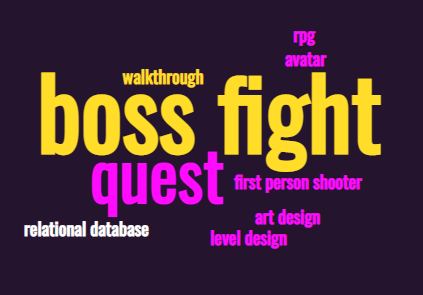
Close your eyes and imagine a group of people having a team meeting to kick-off a game development project. A glance at the meeting agenda reveals items such as assigning a project manager, discussing the different skills and roles needed for the project and brainstorming on an initial game idea. For the game idea, you hear someone mentioning a 2D platformer with a boss fight. Now imagine all this taking place in an English communication class full of engineering students and on an online platform. Is it working, are they learning and are they enjoying it? Yes, yes and yes. In this blog text, I’ll be discussing integrating and simulating English studies successfully into any study module in any discipline by providing an example from a game development study module at Metropolia UAS. Quest for Meaningful and Inspiring Learning Experiences Universities of Applied Sciences are by default focused on project and problem based learning, which means simulating projects and solving problems typical for worklife is at the center of most learning. This approach has a solid foundation in research, which claims that students (and teachers!) are more motivated and learn more in integrated and simulated learning contexts (see e.g. Loepp 1999; Terenzini 2020). Integrating subjects is not a new idea and several well-established models, such as the interdisciplinary model or the problem-based model, exist for different types of contexts and school levels (Loepp 1999). Well-executed integration is not something to be taken for granted despite following a model, but typically requires strong personal commitment and dedication from the individual teachers involved. In Metropolia University of Applied Sciences, game development (Metropolia, 2021) is one of the four 15cu study modules, aka themes, IT engineering students complete during their first year of studies. Game development was considered an important theme as Finnish gaming companies are attractive employers for IT students, thanks to the success of Rovio and Supercell to mention a few. The current game development theme has been designed to include the following courses/topics: C# object oriented programming Basics of relational databases Game development tools and project implementation Communication in English and development of presentation skills Concept of StartUp business model Basics of Mathematics and Physics. When the gaming theme was first created in connection with a curriculum revision 7 years ago, a great amount of work by the teachers went into integrating the different subjects into a gaming project. It wasn’t a very structured and formal process, but looking back now we managed to address many of the questions suggested by best practice to arrive at a meaningful and inspiring entity, which is work-life oriented. Key Questions to Answer As listed by Steamedu (2021), some of the key questions that merit close attention when creating a module are: Why is this module needed? What is the purpose/goals of the module? What is the content of the module? What is the expected result? What kind of module is this? (e.g. exploratory, design, expressive, project based, combination etc.) When will the activities of the module take place, what is the time frame? Where does the module take place? In which learning environments? What tools are needed to successfully complete the module? E.g. equipment, tools, materials, financial resources, technology, online tools, books, human resources, etc. How is the module evaluated for module quality and outcome, learning outcomes, effectiveness of project methods What are the risks associated with the module? Answering these questions and planning the theme further made me realize it would be possible to engage in true integration and I remember the excitement and inspiration I felt right from the very beginning. The excitement hasn’t faded either. Working together with the other teachers on this integrated module has been highly rewarding all these years. The module has also been developed further every year in the spirit of continuous development and I personally feel I’ve managed to create a course structure and content I’m truly satisfied with as the course additionally simulates work-life as closely as possible. Course Walkthrough My focus in the latter part of this text is on providing my readers a walkthrough on how English communication was integrated into the game development theme through the gaming project where students develop a game in teams in 8 weeks only, and how the English communication part has developed just recently. I will share my insights with you here for a structured approach to simulating work-life in the classroom, in my case from the communication point of view. For the English course, the early-year course contents were agreed upon with the other English communication teachers involved in the game development module. From the start, it was clear we would let the students work on their projects in class in English, with them using the skills and knowledge they had acquired in their other game development courses, for example programming, taught in Finnish. The only subjects in the gaming module, which proved to have no real common ground for integration with the English course, were math and physics. Other components of the English class included for instance project communication skills, presentation skills, reporting skills and making CV’s in English. All of these centered on teaching how to communicate about the gaming project at the final seminar organized at the end of the 8-week project. An example of animated presentation slides by one team from this fall is found here. (Blatter et al. 2021). Towards True Simulation Later, my own classes started to evolve even more towards simulating work life in game development. The four specific questions I asked myself when continuously developing the structure and content of my classes are shown below. These questions are of course applicable for any job in any field by just changing the term game developer with a different job. What is a typical work day in the life of a game developer? Which aspects of this work can be easily simulated in my class? Which aspects need modifying in order to work in my class? And most importantly, how can I make the students come to class and start working without the necessity of a lengthy teacher briefing first? I felt this was significant mainly because this is how most work takes place: people come to work and start working without anybody telling them every time what to do. To come up with answers to my questions I went looking for a precise answer to my first question by googling “What does a typical work day look like for a game developer?” Naturally, I got several hits and this is for instance what gaming industry expert Jason W. Bay (2016) has to say about it in his podcast aimed at wannabe game developers: Once everybody is in the office, it’s pretty common to have a team meeting, especially for studios that use Scrum as a development method. Teams will usually have a morning stand-up meeting to talk about what they accomplished the day before, what they’re going to accomplish today, and discuss any problems that might be blocking their progress. After that, everybody goes back to their desks to handle email, plan their day, and get to work. Most of the day is spent doing the core part of the job. Artists will spend that time planning and creating the game art. Programmers will spend the time writing and debugging source code. Designers might spend it by writing documentation or putting together game levels and so on. Current Course Core Based on this description and working out answers to my questions 2 and 3 to modify the required parts, my course (in Zoom due to the pandemic) is currently built around team meetings at the beginning of classes where the students plan what they’re going to accomplish that day and who needs to do what. They then go on to work, alone or together, on the tasks they specified and before class is over, get together with their team to discuss progress made and any problems they encountered. If a solution was found, they spend some time advising each other on how to avoid similar problems. The game-related tasks can be anything from coding and art design to building relational databases. As the very last thing in every class, students share their progress with the class, in brief, by showing their Trello or Microsoft planner which they use to manage their whole project in a visually pleasing way in one platform, available to all team members at all times. Classroom Turned into Workplace My question number 4 got solved by adopting this repetitive way of working through team meetings, as I am now able to have students come to class and know exactly what to do completely on their own. What’s more, they are using the IT and other skills they’ve learnt in courses taught by other teachers in the module, but now communicating about them in English in order to work on their projects. To me, this way of working is as close as it gets to integrating courses and simulating real life gaming workplaces. Since the course contents continue to feature presentation skills, reporting skills and such as before, I obviously spend class time on teaching these skills, but in each class actual work on the tasks, whether game related or communication skills related, starts by having a meeting and deciding on which tasks to work on that particular day. Challenges Two challenges remain for this type of integration: In the ideal situation, all students would work on all aspects of the gaming project, but in practice one student tends to work on coding, another one on game art and yet another on something else, according to their personal skills. This of course emulates work-life in gaming in a great way, but is not the best way in terms of learning purposes, which would require all students spend time working on coding, for instance. Monitoring what students are doing during class is difficult in Zoom, even though it is possible to visit the breakout rooms. This is mainly because students spend a great amount of time also watching tutorials and looking for information online. This means there might be total silence in the room when I go there. In the classroom, it is easier to see at one glance what is going on with different teams. This is why I recommend contact lessons for this type of activity. In my experience, and despite the challenges, the best way to increase the level of motivation and inspiration of teachers and students alike is by integration and simulation. It makes learning (and teaching!) fun and exciting, just like playing a game. Today, all this is easier than ever thanks to advances in digital technology. Wanna play? References Bay J. 2016. What is a typical day in the life of a video game developer? Blatter J., Oksanen S., Virtanen R. 2021. Final Presentation (Google slides) Loepp F. 1999. Models of Curriculum Integration. Metropolia. 2021. Study Guide. Information and Communication Technology. Game Development. (in Finnish) Steamedu. 2021. GUIDELINES FOR INTEGRATING DIFFERENT SUBJECTS Terenzini P. 2020. Six characteristics that promote student learning (opinion)
Ethnographic writing and Qualified Empathy: skills for social service professionals, working in urban areas

What do you get when two Social Work lecturers from different countries, involved in developing professionals’ urban social work skills, want to work more closely together, but they're locked in their respective homes? — We Zoom, of course! Virtual exchange supports intercultural competences, research and practice! As a part of a workshop series held by my colleague Dorthe Høvids, we found our first opportunity to collaborate around some of our research and teaching areas by using materials created for the Urban SOS project. Dorthe is a social anthropologist and researcher focusing on using ethnographic methods to explore muslim immigrant’s lived experiences in Europe and Denmark as well as lecturing in the social work degree programme at University College Copenhagen. Our common Erasmus project, Urban SOS, brings together educational institutions and work-place organizations—who work in the cities with social issues caused by processes of migration, urbanization and the unequal accumulation of economic growth in many urban areas. During the project collaborations, we realized that our different curriculums offered Ethnographic writing in Denmark and Qualified Empathy in Finland. Shortly, ethnographic writing uses sensory detail and storytelling techniques to describe and bring a topic closer to a reader. Qualified empathy involves the ability of a responder to engage, identify with, develop an understanding and then to distance oneself from an emotionally charged situation or experience in order to assist without secondary trauma or burnout becoming an issue. Both of these skills are core in our research project so we decided to broaden our student’s exposure through a virtual workshop. After introducing the two skills and doing an immersive listening exercise about a homeless man in Copenhagen, we had a discussion about the relevance and necessity for ethnographic writing and qualified empathy skills in their future careers in the social services sector with about 30 students from Denmark and Finland on Zoom. The conversation was lively as ethnographic writing and qualified empathy were unfamiliar to many of the students. The feedback was positive and the students shared that they were inspired and learned a lot about the topics during the discussion. Phronesis and value based analysis As stated earlier, we based our workshop on the Urban SOS project as well as our research and teaching areas. The project aims to teach educators and professionals a new way of investigating our quickly expanding urban areas. We apply a phronetic analysis model, as developed by Bent Flyvbjerg (2012). Phronetic analysis seeks to clarify values, interests, and power relations as a basis for praxis. Flybjerg (2012) argues that social science should always involve at least episteme (i.e., abstract theory and concepts) and phronesis (analysis of values and concrete practices)—the combination is what makes ‘it’ matter. Social science and it’s practitioners must produce value-based deliberations with clear and relevant references to practice. Only by doing so will we ensure that we push our societies in an ethically articulated direction when making decisions and implementing projects, methods, solutions etc. The alternative is that we blindly follow a societal development that we find unjust or even unethical. Inherent to this argument is an ethical responsibility and a political (or at least normative) motivation of supporting social change through research and education—thus, as phronetic researchers and practitioners, we willingly give up on the idea that our actions, research, and even education, is, or should be, neutral or objective. Instead, it must be transparent, responsible and developed through dialogue. (Rauhala, Høvids & Lehto-Lundén 2020) He uses four value-rational questions when investigating a specific place, system or organization: Where are we going? Who gains and who loses, and by which mechanisms of power? Is this development desirable? What, if anything, should we do about it? In the project, we map and analyse intersections between urbanisation, social issues in Europe, and the lived (human) experiences (Rauhala, Høvids & Lehto-Lundén 2020). We are developing a new transnational and interactive platform and educational materials for educators, students and practitioners. We argue that we cannot Writing reflectively to develop ‘qualified’ empathy As the project partners create, reflect and write together as part of our project work, we keep coming back to the idea that in order to be present in our encounters as professionals with people living and struggling in the urban context we need to be able to empathically understand their situation in context in order to identify ways to support them. One of the ways in which to develop this more targeted type of empathy is to write reflectively. There is no greater example of reflective writing than ethnographic writing due to its depth and detail. Ethnography is a type of writing common in the social sciences, especially anthropology. Ethnographic writing uses narrative immersion to share experiential information, alongside objective description and interview data. When we tell stories, we use our own understanding of other people’s lived experiences. This helps us to move into a more empathic and non-judgemental mind-set; the beginning of a search for meaning but not its end result. Empathy is not the same as understanding, but it is a step on the way to understanding. This brought us back to the issue of empathic understanding. ‘Qualified’ empathy for reducing burnout and stress Qualified Empathy is a concept and model created as part of a NordPlus project called ”Qualified Empathy”. The project took place at Helsinki Metropolia University of Applied Sciences, with partners in Norway and Denmark as a way to develop diverse and creative teaching and learning methods to help social work students learn and develop more professional or targeted empathy skills. Qualified Empathy is defined as the ability to reflectively and emotionally separate oneself from another and to understand the context; then in an intentional process, focus on understanding of the other person’s viewpoint both cognitively and emotionally. The three phases of this are: We feel like us, I feel like you (”as if ”) and I know better how you feel, but I am not you. In the first phase we acknowledge that we belong to certain groups, we identify with them in some way. In the second phase we try to move out of our own ‘shared group’ understanding of the world and closer to the other person’s understanding; to see the situation through their eyes. This shift helps us to develop a greater ‘felt’ understanding from their perspective. In the third phase, once we begin to feel this connection, we need to draw back and acknowledge that we are not the other person so that we do not over identify and become emotionally involved. We need to be able to access our own critical thinking skills and our knowledge of the service system and legislation in order to assist them in creating the best path forward for themselves. To these initial three phases, we added the additional dimension of action which we see as a critical part of a Qualified Empathy professional’s process. It is an admirable thing to be regarded as empathic but if it stops there, without action, the benefit may only be felt by the worker and not by the individual, group or community they are working with. For the professional, proper use of empathy has been shown to reduce burnout and protect against secondary traumatic stress, which is a common concern for students or social workers new to the field. Final take-aways The workshop with the Finnish and Danish students was fun and full of discussion. The main take-away’s from the students were: Learning new concepts and discussing with students from a different national context but similar educational path was interesting and helpful as a way to support our understanding of our profession on both a local and a global level. Interacting with other students, listening to a story of a homeless person, and discussing how the story could be viewed through the lens of ethnography and qualified empathy was valuable and instructive. This was a more comprehensive look at skills often overlooked but necessary for professionals when hearing about or encountering traumatic situations. From our perspective as teachers, we received lots of feedback that this kind of exchange between students from different national contexts was fun and helped the students to practice intercultural dialogue in a third language and put faces to others studying the same profession in another country. Based on this experience we will be developing a longer Virtual Exchange which will address the student’s desires for longer interaction time with each other. This also reinforced for us the idea that these skills may be beneficial for more than just social services students and professionals. We invite other interested parties to get acquainted with these methods and to explore how they might be adapted and beneficially applied in their fields. For us, this was an afternoon well spent for a university lecturer! Author Leigh Anne Rauhala is a Licensed Clinical Social Worker (FL-USA) turned Social Work Educator living in Finland. Her background is in the Mental Health sector working with severe and persistent mental disorders in the Community Health Care setting prior to moving to Finland. She has been teaching Bachelor of Social Services students since 2007. She serves as the Mobility Contact for Social Services students and is involved in several international teaching and research projects focusing on Social Work in Urban Contexts (Urban SOS) and Teaching Qualified Empathy. References Austring, B. D. & Sørensen, M. 2006. Æstetik og læring – en grundbog om æstetiske læreprocesser (Aesthetics and learning – a textbook on aesthetic learning processes). Copenhagen, Denmark: Hans Reitzels Forlag, 83–101 Bundgaard, H. Overgaard Mogensen, H. and Rubow, C., (2018). Antropologiske Projekter. En grundbog. Frederiksberg: Samfundslitteratur. Erasmus+ Strategic Partnership Grant, 2019. URBAN-SOS: towards a trans-disciplinary, inclusive sustainable future Project nr 2019-1-NL01-KA203-060543 Flyvbjerg, B. (2012). Making Social Science Matter: Why Social Inquiry Fails and How it Can Succeed Again. UK: Cambridge University Press Geertz, Clifford (1973). "Thick Description: Toward an Interpretative Theory of Culture." In: The Interpretation of Cultures. New York: Basic Books”Qualified Empathy” (2015–2017, NORDPLUS) Raatikainen, E., Rauhala, L., & Mäenpää, S. (2017) Qualified Empathy : A key element for an empowerment professional. Sosiaalipedagoginen aikakauskirja. Rauhala, L., Høvids, D. J. & Lehto-Lundén, T. (2020). Urban-SOS: Notes on a Framework for Phronetic Analysis. Unpublished paper. Wagman, M. A., Geiger, J. M., Shockley C. & Segal, E. A. 2014. The Role of Empathy in Burnout, Compassion Satisfaction, and Secondary Traumatic Stress among Social Workers. Social Work 60 (3), 201–209. Williams, C., 2016. Social Work And The City: Urban Themes In 21St-Century Social Work. UK: Palgrave Macmillan.
This blog reflects on the role of higher education both in the present and in the future. It explores the significance of higher education as an educator, regional influencer, developer of working life, and innovator, featuring pedagogical content, experiments, and developmental endeavours as its core. The bloggers are staff members from the Metropolia University of Applied Sciences and other experts in the field.
Johanna Tirronen, chief editor, Senior Lecturer
Sonja Holappa, Seniori Lecturer
Merja Hintsa, Publishing Specialist








Ai ammattikorkeakoulu ammattikorkeakouluopetus ammattikorkeakoulupedagogiikka Blended learning circular economy co-creation collaboration covid-19 dialogi digital learning platforms Erasmus exchanges fashion higher education higher education institution inclusive internationalisation innovaatio innovation innovator international classroom international cooperation internationalisation internationalisation at home kehittäminen kestävä kehitys learning space oppiminen osteopathy palaute service design student services student wellbeing study ability sustainability teacher wellbeing teaching traffic light service model TSLM univeristy studies universities of applied sciences university of applied sciences virtual exchange virtual exchanges vuorovaikutus